Laminate flooring is popular because it looks clean, feels smooth, and is often easier to care for than many other floor types. But when water gets under it, the situation can turn serious fast. The surface may look fine at first, yet moisture trapped below can cause swelling, warping, mold, and lifting.
| Method | Purpose | Tools Needed | |
|---|---|---|---|
| Stop the water source | Prevent further leakage or damage | Plumbing shut-off tools | |
| Remove surface water | Reduce immediate moisture on floor | Towels, mop, wet vacuum | |
| Improve airflow | Start drying trapped moisture | Fans, open windows | |
| Use dehumidifier | Extract hidden moisture from air and flooring | Dehumidifier | |
| Lift affected planks (if needed) | Access and dry trapped water underneath | Pry tool, gloves | |
| Dry subfloor thoroughly | Prevent mold and structural damage | Heater, air mover, moisture meter | |
| Monitor dryness | Ensure complete drying before reinstalling | Hygrometer or moisture meter |
The good news is that in many cases, you can save the floor if you respond early and use the right drying methods. The key is to stop the water source, remove moisture, and fully dry both the laminate and the subfloor. If you do that carefully, you can often prevent bigger repairs later.
Understanding Laminate Flooring and Water Damage
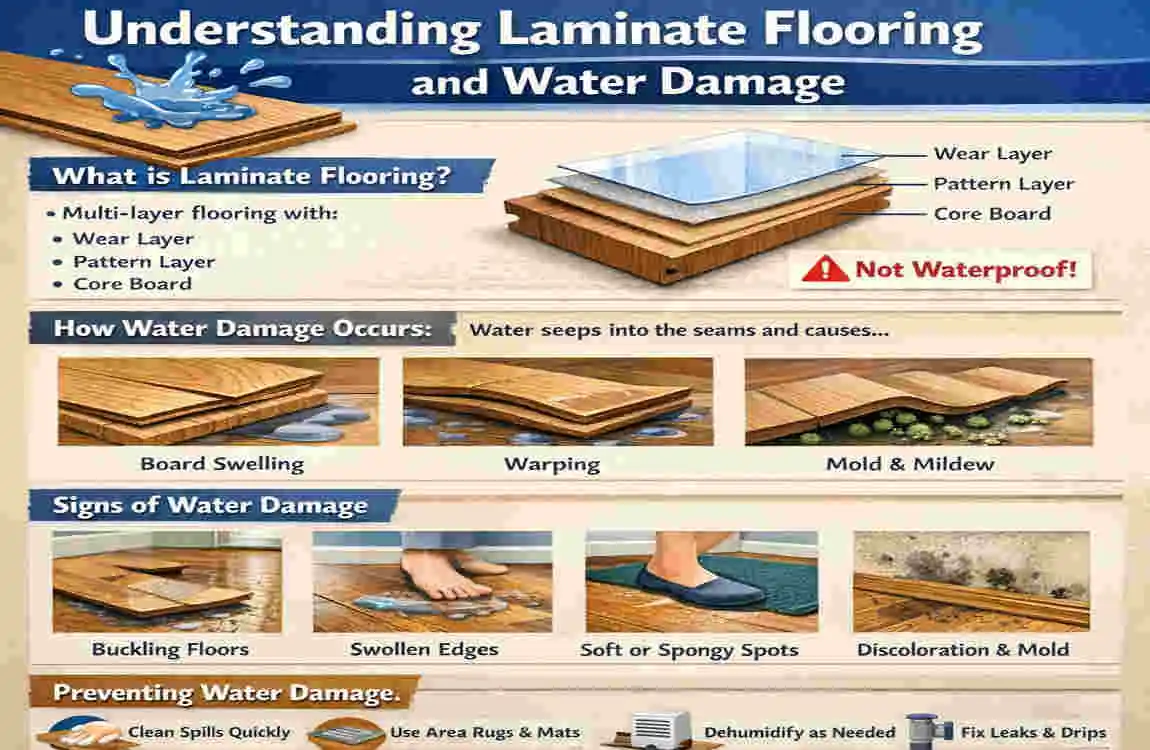
What is Laminate Flooring?
Laminate flooring has several layers, including a wear layer on top, a core layer in the middle, and a backing layer underneath. It is designed for daily use, but it is not fully waterproof.
That means surface spills may be okay if cleaned quickly, but water sitting under the planks is a different problem.
How Water Gets Under Laminate Flooring
Water can get under laminate from spills, leaking pipes, flooding, high humidity, or poor installation. Even small gaps around the edges can let moisture slip in over time.
Why Water Under Laminate Is Dangerous
Once water reaches the core, the boards can swell and lose shape. Mold and mildew may also grow beneath the floor, and the floor may start to buckle or lift. In some cases, the subfloor itself can be damaged too.
Early Signs of Water Under Laminate Flooring
Watch for soft or spongy spots, bubbling, dark stains, musty smells, gaps between planks, or noisy creaks when walking.
These signs often mean water is trapped below the surface. If you notice even one of them, it is smart to check the area right away.
Immediate Steps to Take When You Discover Water
Stop the Water Source
If a leak or plumbing issue is causing the problem, turn off the water supply right away. Quick action can stop the damage from spreading.
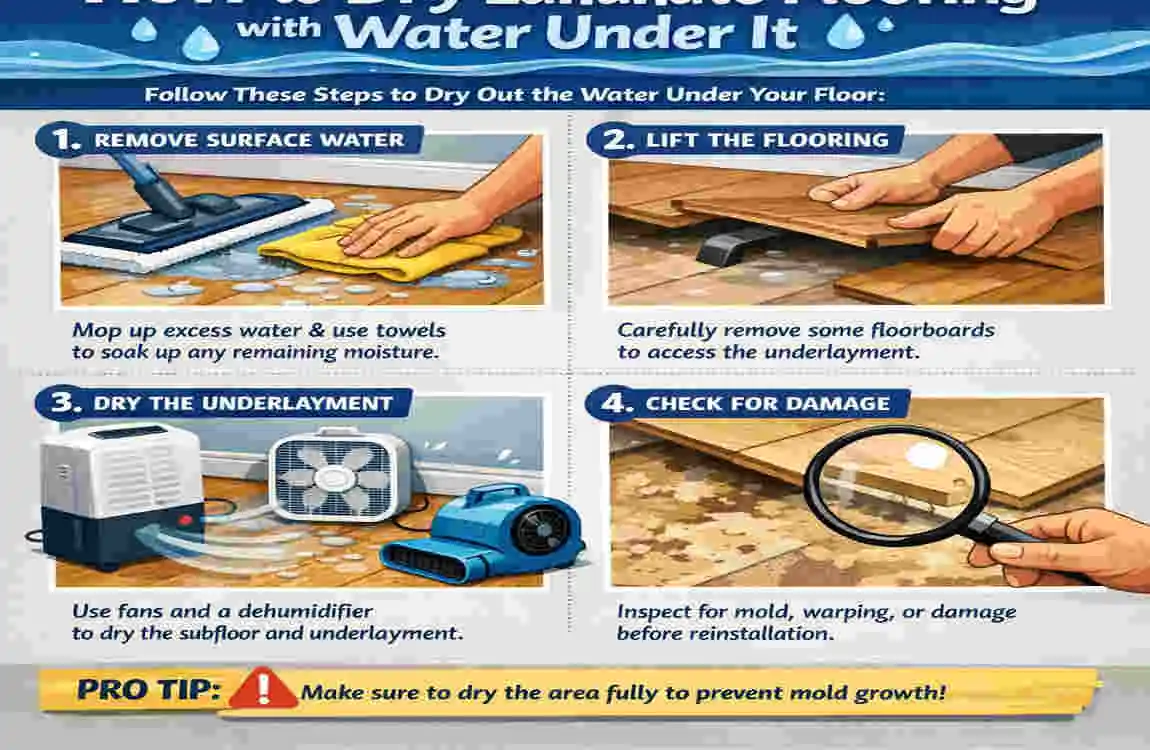
Remove Surface Moisture
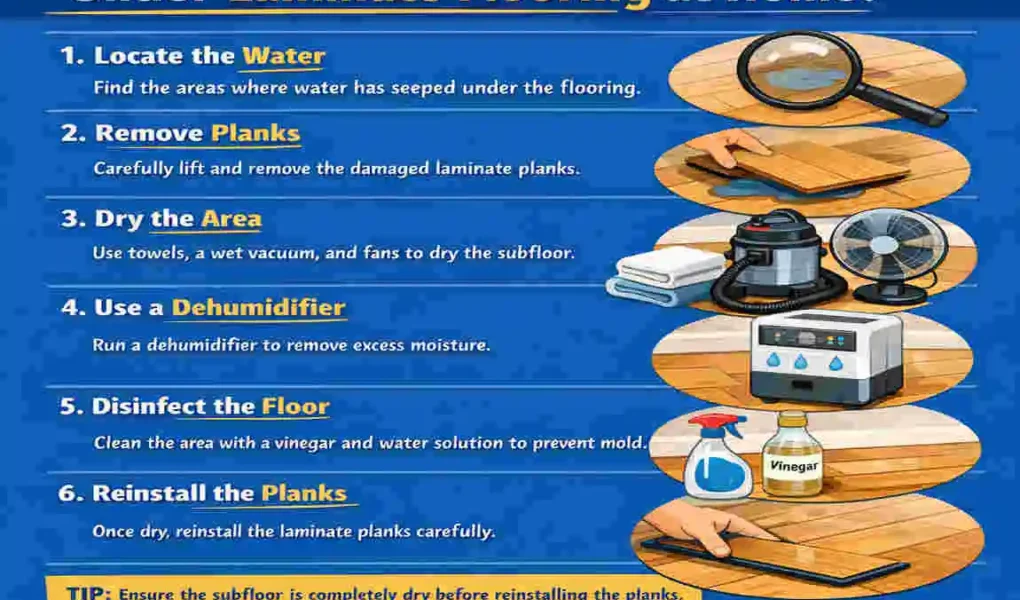
Use towels, mops, or a wet vacuum to remove all standing water from the floor. This will not fix the trapped moisture below, but it helps reduce the total amount of water in the room.
Move Furniture and Rugs
Take rugs, mats, and furniture away from the wet area. These items can trap moisture and slow drying.
Lift Flooring Carefully If Needed
If the water has clearly gone under the planks, you may need to lift some boards to help the area dry. Do this gently so you do not damage the locking edges.
How to Dry Laminate Flooring with Water Under It
Air Drying Method
Open windows and doors if the weather allows it. Then place fans around the room to keep air moving. Cross ventilation works best because it pushes damp air out and brings fresh air in.
Dehumidifier Method
A dehumidifier is one of the best tools for enclosed spaces. It pulls extra moisture from the air and helps the floor dry faster. Try to keep indoor humidity between 30% and 50% for better results.
Wet Vacuum Extraction
If water is still trapped near the surface, a wet vacuum can help remove it. Use it carefully and only when the floor is safe to clean this way.
Heat Drying Method
You can use gentle heat or warm air blowers, but be careful. Too much heat can make laminate warp or separate. Always use low, steady warmth instead of harsh direct heat.
Lifting Boards for Better Drying
If the damage is more severe, lifting a few planks may be the best option. This gives you access to the subfloor and helps everything dry more evenly. Once the area is fully dry, reinstall the boards only when you are sure the moisture is gone.
Using Baking Soda or Moisture Absorbers
For light dampness, baking soda or moisture-absorbing products can help reduce odors and a little extra humidity. These are best for mild cases, not heavy water damage.
Drying Subfloor Properly
The subfloor matters just as much as the laminate. If it stays wet, mold can grow, and the floor may fail again later.
A wooden subfloor may dry differently from a concrete one, so check both carefully. Before putting the laminate back, make sure the area feels dry and does not smell damp. If possible, check moisture levels to avoid reinstalling too early.
How Long Does It Take to Dry Laminate Flooring?
Drying time depends on how much water entered the floor. Light moisture may dry in a day or two; moderate damage may take several days; and severe flooding can take one to two weeks or require replacement.
Ventilation, humidity, temperature, and water levels all affect the timeline.
Mistakes to Avoid When Drying Laminate Flooring
- Ignoring hidden moisture
- Using too much heat
- Reinstalling too soon
- Skipping subfloor inspection
- Leaving damaged planks in place when they should be removed
These mistakes often make the problem worse instead of better.
When You Should Replace Instead of Dry
Sometimes drying is not enough. If the boards are badly swollen, badly warped, or separating at the edges, replacement may be the better option.
You should also consider replacing the floor if mold has formed beneath it or the subfloor has been damaged. In those cases, trying to save the planks may not be worth the risk.
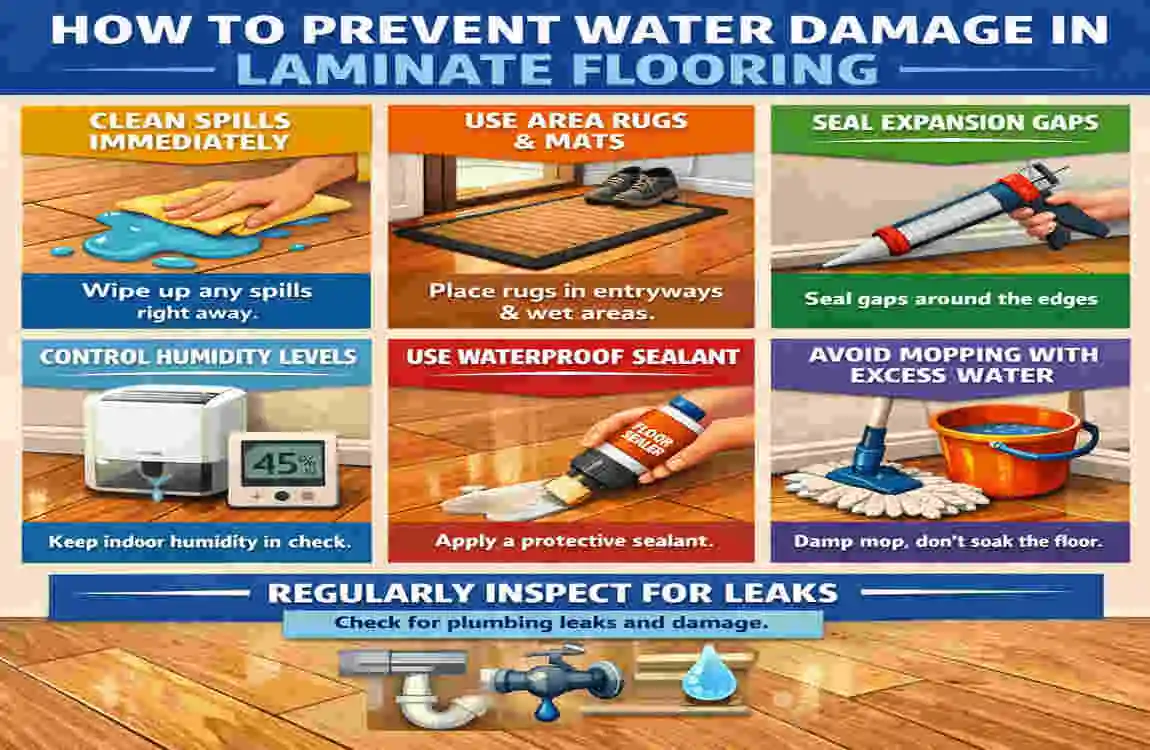
How to Prevent Water Damage in Laminate Flooring
Proper Installation Tips
A good installation makes a big difference. Moisture barriers and expansion gaps help protect the floor and reduce future problems.
Household Prevention
Clean spills quickly and use mats near sinks, doors, and other wet areas. These small habits can prevent bigger damage later.
Plumbing Maintenance
Check pipes, taps, and appliances regularly for leaks. A small leak caught early is much easier to fix than a damaged floor.
Humidity Control
Keep indoor humidity under control, especially in damp climates. A dehumidifier can help protect your floors over time.
Professional Help vs DIY Repair
If the damage is small, you may be able to handle it yourself. But if the floor is badly swollen, moldy, or covering a large area, it is better to call a flooring expert.
Professionals have more advanced drying equipment and can also help you assess whether the floor can be saved. If the damage came from a leak or flood, your insurance may also be involved.
Frequently Asked Questions
Can laminate flooring be saved after water damage?
Yes, sometimes it can. If the damage is small and you act fast, drying methods may save it.
How do you dry laminate flooring without removing it?
Use fans, a dehumidifier, and good airflow. These methods work best when the water has not soaked too deeply.
Will mold grow under a wet laminate?
Yes, mold can grow if the area stays damp for too long. That is why fast drying is so important.
Can fans alone dry water under laminate?
Fans help, but they may not be enough on their own. A dehumidifier often makes a big difference.
How do you know if the subfloor is still wet?
Look for damp smells, cool or wet spots, and slow drying in the same area. If needed, lift a plank and check underneath.