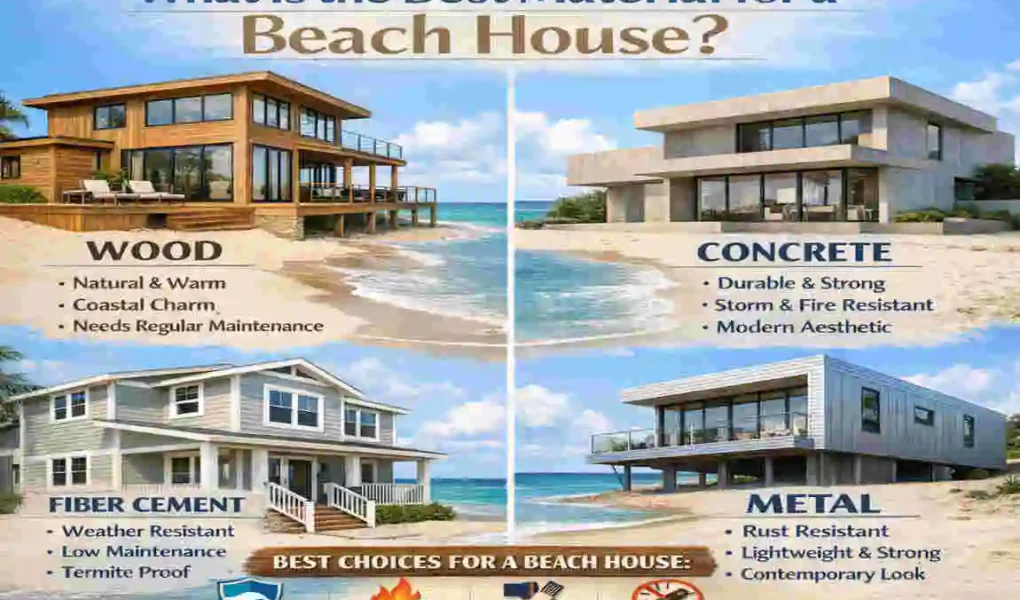
You can imagine morning coffee with an ocean view, open windows, soft breezes, and a relaxed lifestyle that feels far away from city stress. But the beauty of coastal living comes with a real challenge: the ocean is hard on buildings.
Salt in the air, strong winds, intense sun, humidity, and storm surge can wear down a home much faster than most people expect. A material that performs well inland may start failing early near the coast. Wood can warp. Metal can rust. Paint can peel. Fasteners can corrode. Even concrete can struggle if it is not designed properly.
That is why the real question is not just, “What is the best building material for a beach house?” It is also, “Which materials work together to protect the home for the long term?”
The best coastal homes are not built with one magic material. They are built with a smart system of materials chosen for moisture resistance, wind strength, corrosion protection, and low maintenance. When you make those choices carefully, you protect not only the home itself, but also your budget, your time, and your peace of mind.
Why Coastal Homes Need Special Materials
Salt Spray Changes Everything
If you live near the beach, salt is always working against your home.
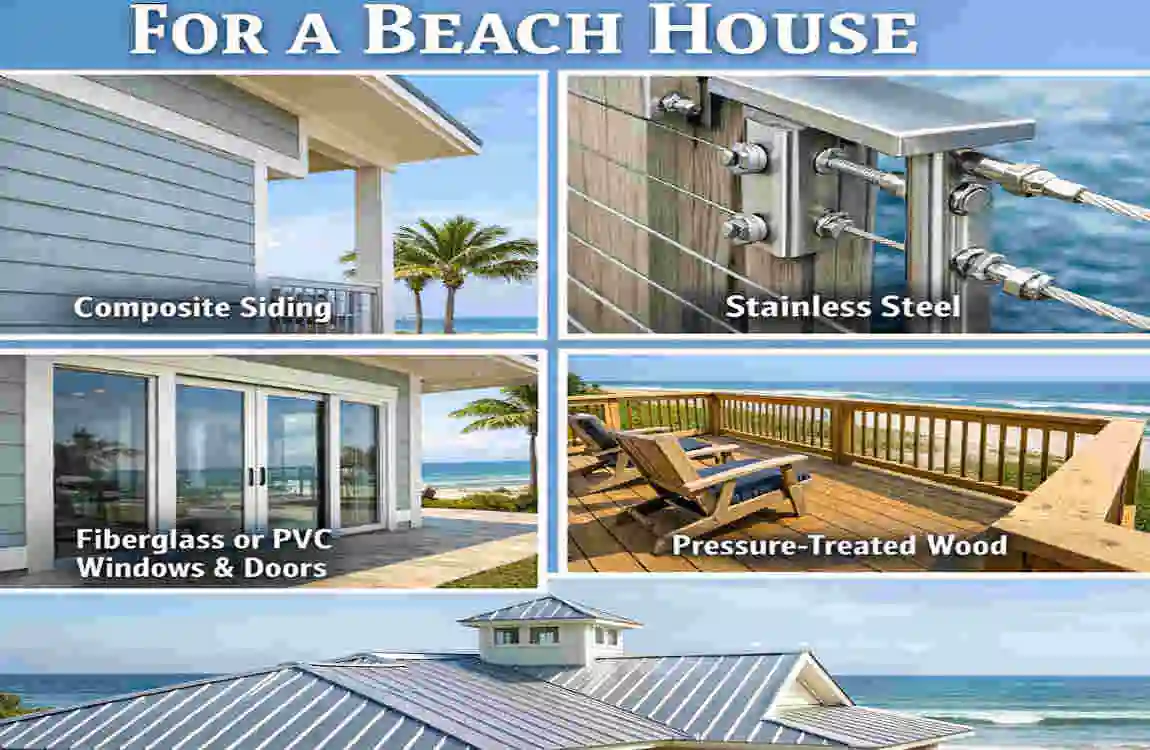
It settles on surfaces, gets into tiny cracks, and slowly attacks metal, coatings, and even some types of concrete and wood finishes. Over time, it can cause rust, discolouration, swelling, and structural wear. That is why coastal homes need more than standard construction choices.
A regular bolt, nail, or bracket may look fine at first. But with repeated exposure to salty air, it can lose strength much faster than expected. Once corrosion starts, it does not just affect appearance. It can weaken the structure and lead to expensive repairs later.
Wind and Moisture Put Constant Pressure on the Home
Beach houses often face stronger winds than inland homes. If storms roll in, the pressure on the roof, walls, windows, and doors increases further. That means every part of the structure has to be built to resist uplift, impact, and shifting forces.
Then there is moisture.
Humidity aalongthe coast stays high for long periods, acreatinga perfect environment for mould, rot, mildew, and swelling. Materials that absorb water can break down quickly. Joints can loosen. Paint can bubble. Flooring can buckle. Once moisture gets into the structure, the repair work can become expensive and messy.
The Cost of Choosing the Wrong Material
Many homeowners try to save money by choosing cheaper materials at the outset. At first, that can feel smart. But in a beach house, low upfront cost often leads to high long-term cost.
If you need to repaint more often, replace siding sooner, repair rusted hardware, or fix water damage after every major storm season, the home becomes much more expensive over time.
That is why the best coastal building strategy is usually to invest more at the beginning and maintain less later. Durable materials may cost more upfront, but they often save money, time, and stress over the life of the house.
The Foundation: Strength Against the Elements
Why the Foundation Matters So Much
The foundation is the base of everything. If it is weak, the rest of the home suffers.
In a beach house, the foundation must withstand moisture, shifting ground, potential flooding, and salt exposure. That means it needs to be strong, stable, and well-protected. The wrong foundation material can lead to cracking, settling, and water intrusion.
The best foundation choice for a beach house is usually reinforced concrete. It handles moisture better than many other materials and provides the strength needed to support a home in a harsh environment.
Concrete as the Coastal Standard
Concrete is one of the most trusted materials for coastal foundations because it offers mass, stability, and resistance to water. It can be formed into slabs, piers, stem walls, and elevated systems depending on the site and the flood requirements.
A properly designed concrete foundation helps support the structure during storms and reduces the risk of movement when the soil gets wet. That matters a lot near the coast, where ground conditions can change more quickly than people expect.
But concrete is not automatically perfect. It must be designed correctly, mixed properly, and protected from cracking and moisture intrusion. If not, water can seep in and cause problems over time.
Why Reinforcement Is Essential
Concrete is strong under compression but much weaker under tension. That is why rebar, or steel reinforcement, is so important.
Rebar helps the concrete resist cracking and adds structural strength. In coastal construction, reinforcement is not optional. It is part of making the foundation work as a long-term system.
When reinforcement is installed correctly, the foundation can better withstand shifting loads, wind pressure, and the stress from storms or minor soil movement. It gives the structure a much better chance of staying stable over the years.
Sealants and Protective Details Matter
Even the strongest foundation can be weakened if water keeps entering small gaps.
That is why specialised sealants are so important. They help seal joints, reduce moisture entry, and protect vulnerable areas from salt and water. This is especially useful around cracks, seams, edges, and any point where materials meet.
You should also think about drainage. A beach house foundation should move water away as efficiently as possible. Good grading, proper drainage systems, and smart elevation design all work together with the foundation material itself.
Best Foundation Takeaway
If you want the short answer, here it is:
A reinforced concrete foundation is usually the best choice for a beach house.
It is strong, durable, moisture-resistant, and well-suited for coastal stress. When combined with reinforcement, sealants, and proper drainage, it provides the house with a reliable foundation that can withstand the elements.
Structural Framing and Exterior Durability
Framing Is the Hidden Backbone of the House
When people think about building materials, they often focus on what they can see: siding, roofing, windows, and trim. But the framing inside the walls matters just as much.
The frame is the skeleton of the house. It holds the roof, supports the walls, and helps the entire home resist wind and movement. In a beach house, the framing material needs to be both strong and smartly protected.
The two common options are steel framing and engineered wood framing, including laminated wood products.
Steel Framing: Strong but Needs Protection
Steel can be a very good choice for coastal construction because it is strong, straight, and stable. It does not warp or shrink like natural wood. That makes it attractive for homes that need precise structure and excellent load support.
However, steel has one major issue near the ocean: rust.
Without proper coatings and corrosion-resistant treatment, steel can degrade when exposed to salty air and moisture. That means if you choose steel, you must make sure it is protected with the right finishes and installed with coastal conditions in mind.
Steel is often best used where strength and dimensional stability matter most, but only if the corrosion risk is addressed from the start.
Laminated Wood: Flexible and Familiar
Engineered wood, including laminated wood products, can also work well in coastal homes. It offers a more traditional building approach, and it can provide a good balance of strength and flexibility.
One advantage of laminated wood is that it can handle certain stresses better than basic lumber. It is also easier to work with in many residential projects, which can help keep construction simpler and more familiar for builders.
But wood still needs careful protection in a beach environment. Even engineered products need attention to moisture control, ventilation, and sealing. If water gets trapped, the material can still suffer over time.
Which Framing Option Is Better?
The answer depends on the home, the location, and the exposure level.
- Steel may be better when maximum strength and straightness are priorities.
- Laminated wood may be better when flexibility, cost, or building familiarity matter more.
For many beach houses, the best decision is not a simple either-or choice. Builders often use a combination of methods to get the best performance while managing cost and maintenance.
Fibre Cement Siding: A Coastal Favourite
If there is one exterior material that often stands out for beach houses, it is fibre cement siding.
This material is made to look like traditional siding while offering much better resistance to salt, moisture, insects, and fire. It does not rot like wood, and it does not give pests the same advantages. That makes it a very practical option for coastal homes.
Another advantage is appearance. Fibre cement can give you a clean, classic look without demanding the same level of maintenance as wood siding. You can paint it, style it, and use it in many architectural designs.
For homeowners who want something durable yet attractive, fibrefibre cement is often one of the best exterior wall choices.
Why It Outperforms Traditional Wood Siding
Wood siding can look beautiful, but near the beach, it often requires too much upkeep. Salt air can wear down finishes. Moisture can cause swelling. Repainting becomes more frequent. Repairs can start piling up.
Fibre cement handles those conditions much better. It is less likely to warp or degrade, and it gives homeowners more peace of mind. If you want the look of a finished, polished coastal home without constant maintenance, this material deserves serious attention.
Fibreglass for Windows and Doors
Windows and doors are weak spots in many homes, especially near the coast. They must deal with wind pressure, moisture, and frequent temperature changes. They also need to remain light enough to operate well over time.
That is where fibreglass becomes very useful.
Fibreglass frames are strong, stable, and resistant to warping. They also perform well in harsh weather because they do not swell or shrink as much as some other materials. That helps windows and doors stay sealed and functional.
In a beach house, that matters a lot. A frame that shifts even slightly can let in moisture or reduce energy efficiency. Fibreglass gives you a better chance of keeping the opening tight, secure, and long-lasting.
A Good Exterior System Is a Team Effort
The best exterior for a beach house is not just one product. It is a group of materials working together.
You want:
- A strong frame
- Durable siding
- Corrosion-resistant fasteners
- Well-sealed openings
- Smart detailing around corners, joints, and edges
When these parts work together, your beach house becomes much more resilient. That is the real goal.
Roofing Systems for Coastal Climates
The Roof Has to Do Heavy Work
A roof in a beach house is not just a cover. It is a shield.
It must withstand strong winds, shed heavy rain quickly, withstand salt exposure, and remain intact through storm season. If the roof fails, the rest of the house becomes vulnerable fast.
That is why roof material is one of the most important decisions in coastal construction.
Clay and Concrete Tiles
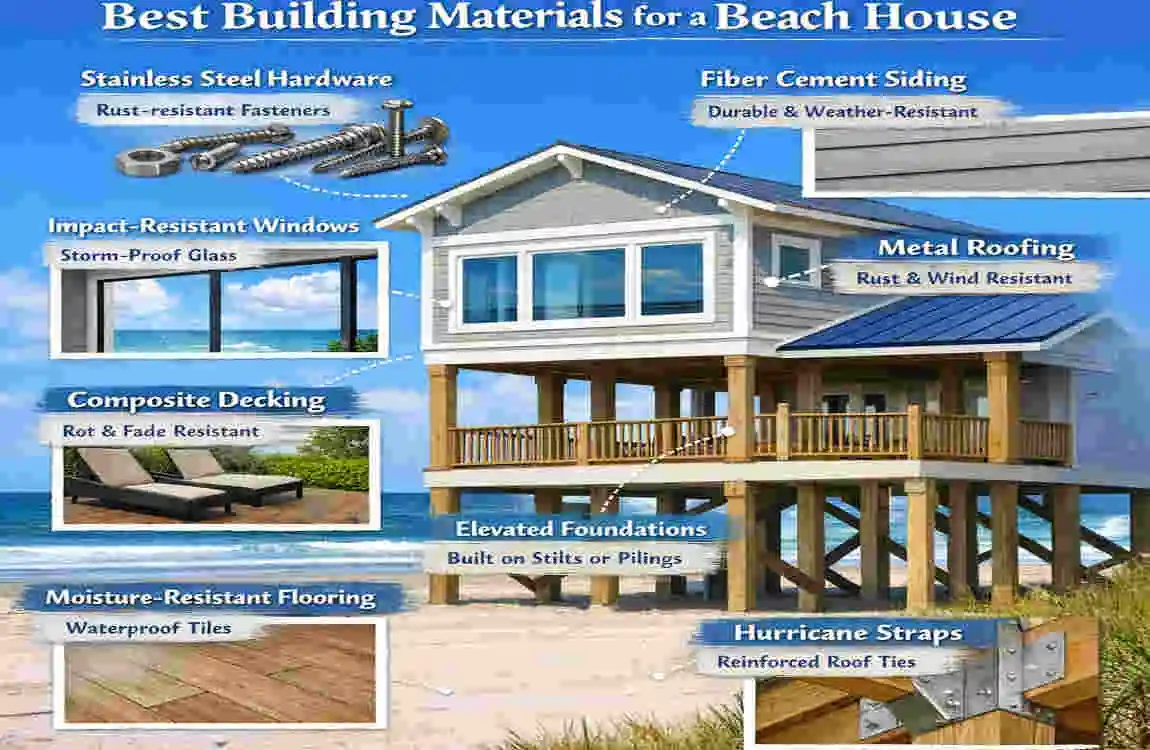
Clay and concrete tiles are popular in many coastal regions, and for good reason. They are heavy, durable, and naturally resistant to wind uplift when installed correctly.
Their weight helps them stay in place during strong storms, and they also offer a classic look that complements beachside architecture. Concrete tile can be especially practical because it is strong and long-lasting. Clay tile offers a distinct aesthetic and also performs well in warm coastal climates.
Still, these tiles need a proper roof structure underneath them. Their weight means the framing must be designed to support them. If done properly, they can be an excellent choice for a beach house.
Metal Roofing
Metal roofing is another strong option for beach homes, especially when properly treated to enhance corrosion resistance.
It is lightweight compared to tile, reducing stress on the structure. It also sheds water quickly, which is useful during heavy rain. With the right finish, metal roofing can resist rust and hold up well in salty air.
Another benefit is that metal roofing can support a cleaner runoff path. Water does not sit on the surface as long, which helps reduce water-related wear.
The main issue is quality. If you use untreated or poorly finished metal, it can corrode too quickly in a coastal setting. So the choice is not just “metal or no metal.” It is “the right coastal-grade metal or nothing.”
Thermo-Acoustic Roofing Options
Newer roofing systems sometimes include thermally and acoustically insulating materials designed to reduce noise and improve comfort inside the home. This can be very helpful during storms, when wind and rain can become loud.
These systems are appealing because they do more than protect the house. They can also make the living environment in a beach house calmer and more comfortable, which can make a big difference during rough weather.
Roofing Takeaway
If you want the strongest roof strategy for a beach house, focus on:
- Wind resistance
- Corrosion resistance
- Fast water shedding
- Proper installation
- Long-term maintenance needs
The roof should not just look good; it should also be functional. It should survive seasons of salt, sun, rain, and storm pressure.
Maintenance-Free Exterior Features
Why Low-Maintenance Materials Matter at the Coast
One of the biggest joys of owning a beach house is the relaxation it offers. But if your home constantly needs work, that joy can disappear fast.
That is why low-maintenance exterior materials are so valuable. They save time, reduce upkeep, and help the home stay beautiful without constant repairs. In a coastal setting, this is not a luxury. It is a practical strategy.
PVC and WPC for Decks, Trim, and Railings
PVC and WPCs (wood-plastic composites) are very useful for beach house exteriors. These materials are commonly used for decking, trim, railings, and other decorative or functional features.
Their biggest advantage is that they do not behave like natural wood. They are far less likely to warp, rot, crack, or absorb moisture. That makes them ideal for wet, salty, and sunny conditions.
The the weather constantly hits a deck near the beach. The sun weakens and finishes. Rain brings moisture. Salt air adds extra stress. PVC and WPC materials help reduce maintenance costs and keep the exterior cleaner for longer.
Aluminum in High-Corrosion Areas
Aluminium is often used where weight matters and corrosion resistance is a priority. It is lighter than many other metals and can perform well in areas with high salt exposure.
You may find it used in windows, railings, screens, and structural details where a strong but lightweight material is helpful. With the right coating or finish, aluminium can be a smart choice for coastal environments.
It still needs good design and proper care, but it generally holds up better than many basic metals in beach conditions.
Polyurethane Stone as a Modern Alternative
Natural stone has always been admired for its beauty and strength. But in coastal homes, it can be heavy, expensive, and sometimes more complicated to maintain.
Polyurethane stone, or PU stone, gives homeowners a more modern alternative. It is designed to look like stone while offering better moisture resistance and easier handling.
That makes it useful for feature walls, decorative facades, and accent areas where you want the look of stone without the same weight and upkeep challenges. In a beach house, that combination can be very appealing.
The Best Low-Maintenance Strategy
When choosing exterior features, think about how each material behaves over time.
Ask yourself:
- Will it absorb moisture?
- Will it warp in the sun?
- Will it corrode in salty air?
- Will it need frequent painting or sealing?
If the answer to most of those questions is yes, the material may not be the best fit for a beach house. The best coastal materials are the ones that keep working with very little drama.
Comparison Table: Best Building Materials for a Beach House
Building Part Best Material Choice: Why It Works Well at the Coast: Main Caution
Foundation Reinforced concrete Strong, stable, and moisture-resistant. Must be sealed and properly reinforced.
Framing Steel or laminated wood, strong and suitable for coastal loads. Steel needs corrosion protection
Exterior siding: fibre cement that resists salt, insects, and moisture. Needs proper installation and finishing.
Windows and doors Fibreglass Stable, strong, and wind-resistant Higher cost than basic options
Roof: Clay tile, concrete tile, or treated metal. Good wind performance and durability. Must be installed for local wind conditions.
Decking and trim PVC or WPC, low maintenance and moisture-resistant. It can cost more than basic wood.
Decorative stone looks like PU stone, is lightweight, and is moisture-repellent. Should be used where appropriate, not everywhere.
Fasteners and connectors made of corrosion-resistant metals help protect the entire structure. Must be matched to the environment.
This table gives you a clear picture of the best overall direction: mix materials based on function, not just appearance.
Expert Insights and Construction Tips
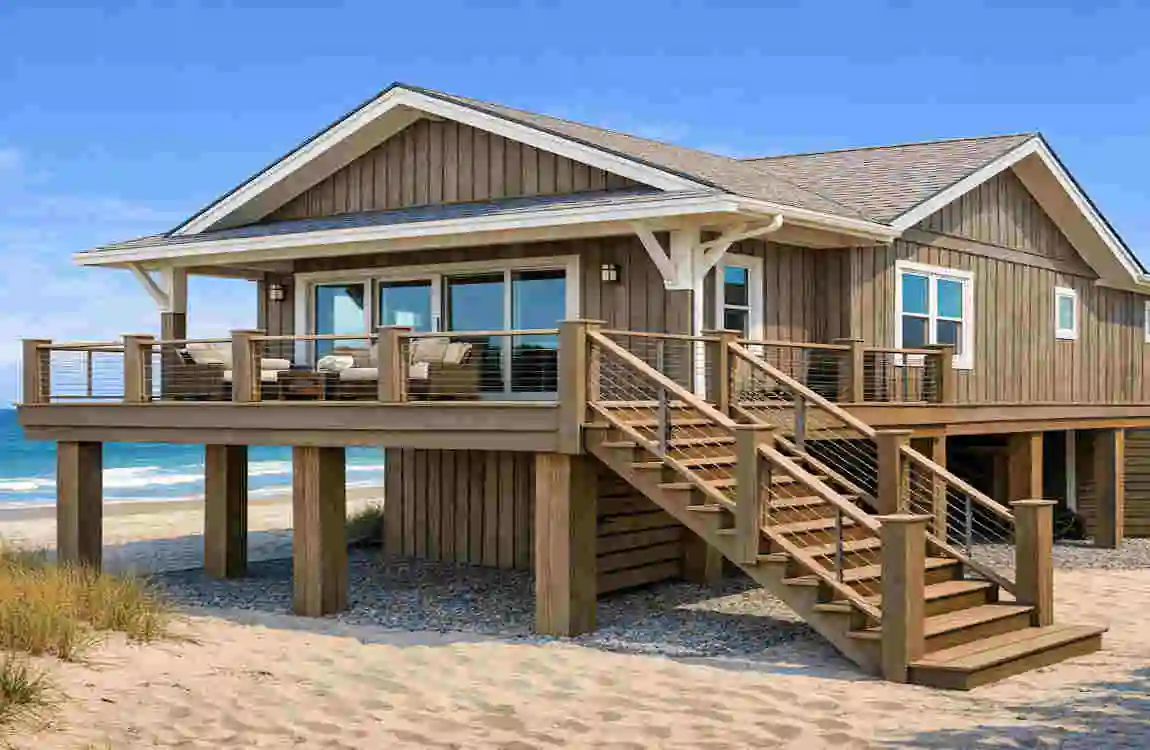
Design for Durability from the Start
The best beach house is not just built well. It is planned well.
That means choosing a builder or architect who understands coastal construction, local codes, and weather conditions. A home designed for the coast should consider elevation, drainage, wind exposure, corrosion risk, and ventilation from day one.
It is much easier to design for durability at the beginning than to fix problems later.
Think in Terms of Local Conditions
There is no single perfect material for every beach house.
A calm shoreline in a mild climate will not need the same approach as a storm-prone coast with high humidity and aggressive salt exposure. That is why “best” is always a context-dependent word.
You should think about:
- How close the house is to the water
- How often do storms hit the area
- Whether the site is elevated
- What the local building codes require
- How much maintenance do you want to handle
The right answer for one property may not be the right answer for another. Good coastal building is specific, not generic.
Measure Twice, Build Once
“Measure twice, build once.”
That old saying matters even more at the beach. A small mistake in material selection can lead to large repair costs later. Before construction starts, every major decision should be carefully reviewed for durability, exposure, maintenance, and local climate performance.
If you want a beach house that truly lasts, slow planning is better than fast regret.
Use the Right Fasteners and Hidden Details
People often focus on the visible parts of the house, but hidden details matter just as much.
Fasteners, connectors, flashing, seals, and joints all need to be carefully selected. If these parts fail, the best siding or roof in the world will not save the house. Coastal building success often comes down to the little things that nobody notices at first.
Prioritise Maintenance Ease
A beach house should support your lifestyle, not burden it.
That is why many owners prefer materials that need less repainting, less sealing, and fewer replacements. Every hour you save on maintenance is an hour you can spend enjoying the home.
That is the real promise of smart material selection: less work, more living.
Frequently Asked Questions
What is the most cost-effective material for a beach house?
The most cost-effective material is usually the one that gives you the best long-term value, not the lowest purchase price.
For example, fibre cement siding may cost more than basic wood siding at the start, but it can save money over time because it resists rot, salt damage, and pests. The same idea applies to reinforced concrete foundations and treated roofing materials. If you replace cheap materials often, the savings disappear quickly.
How often should coastal exterior materials be inspected?
A beach house should be inspected at least once or twice a year, and also after major storms.
You should check for rust, loose seals, cracked siding, roof damage, peeling finishes, and signs of moisture intrusion. The coast is harsh, so small problems can grow quickly if you ignore them.
Can I use wood in a beach house?
Yes, you can use wood in a beach house, but it must be handled carefully.
Pressure-treated wood, engineered wood, and well-sealed wood products can work in some applications. The key is protecting it from constant moisture and salt exposure. If you use wood without the right treatment and maintenance, it can fail much faster than expected.
Is metal roofing good for beach houses?
Yes, metal roofing can be excellent for beach houses if it is treated to resist corrosion.
It is lightweight, sheds rain well, and performs well in windy conditions. But low-quality metal or poor coatings can pose problems near saltwater. The product quality and installation matter a lot.
What is the biggest mistake people make when choosing beach house materials?
The biggest mistake is choosing materials based only on appearance or upfront price.
A beach house needs durability first. If a material cannot handle salt, moisture, wind, and sun, it will likely cost more in repairs later. Smart coastal building focuses on the home’s full life, not just the day it is finished.
| Material Category | Primary Benefit | Coastal Advantage | Ideal Use Case |
|---|---|---|---|
| Reinforced Concrete | High structural integrity | Resists flooding & moisture | Foundations & main structure |
| Fiber Cement | Fire & rot resistance | Withstands salt spray | Siding & exterior cladding |
| Treated Metal | High durability | Excellent wind & water runoff | Roofing |
| Fiberglass | Minimal thermal expansion | Corrosion-proof frames | Windows & entry doors |
| PVC / Composites | Low maintenance | Will not rot or warp | Decking, trim & railings |
| Aluminum | Lightweight & rust-proof | Ideal for high-salt areas | Railings & accent fixtures |