It is Saturday morning. You have your favorite playlist on, a cup of coffee waiting, and you spend a good two hours wiping down surfaces, vacuuming carpets, and polishing the coffee table until it gleams. You feel accomplished. The house smells fresh. But then, you walk into the living room on Sunday afternoon—less than 24 hours later—and there it is. A fine, grey layer of film has already settled back onto the TV stand.
Here is the truth: You are not imagining it, and you certainly aren’t alone. Dust is a relentless opponent. In fact, the average six-room home collects approximately 40 pounds of dust every single year. That is the weight of a medium-sized dog in dirt, skin cells, and debris floating around your living space.
But where is it all coming from? While some dust is inevitable, excessive buildup often points to hidden issues within your home’s ecosystem. In this guide, we are going to uncover 7 sneaky culprits—backed by HVAC experts and home hygiene science—that are likely turning your home into a dust magnet. From the humid corners of Lahore to dry, sealed modern apartments, we will explore why this happens and, more importantly, give you actionable, quick fixes to banish the dust for good.
Poor Ventilation and Airflow Issues
When we think about dust, we usually think about dirt. However, the movement of that dirt is dictated entirely by air. One of the primary reasons your home feels like a dust trap is likely poor ventilation.
The Science of Stagnant Air
Think of your home’s air like a river. When a river flows, it carries sediment along. When the water stops moving, that sediment sinks to the bottom. The air in your home works the same way.
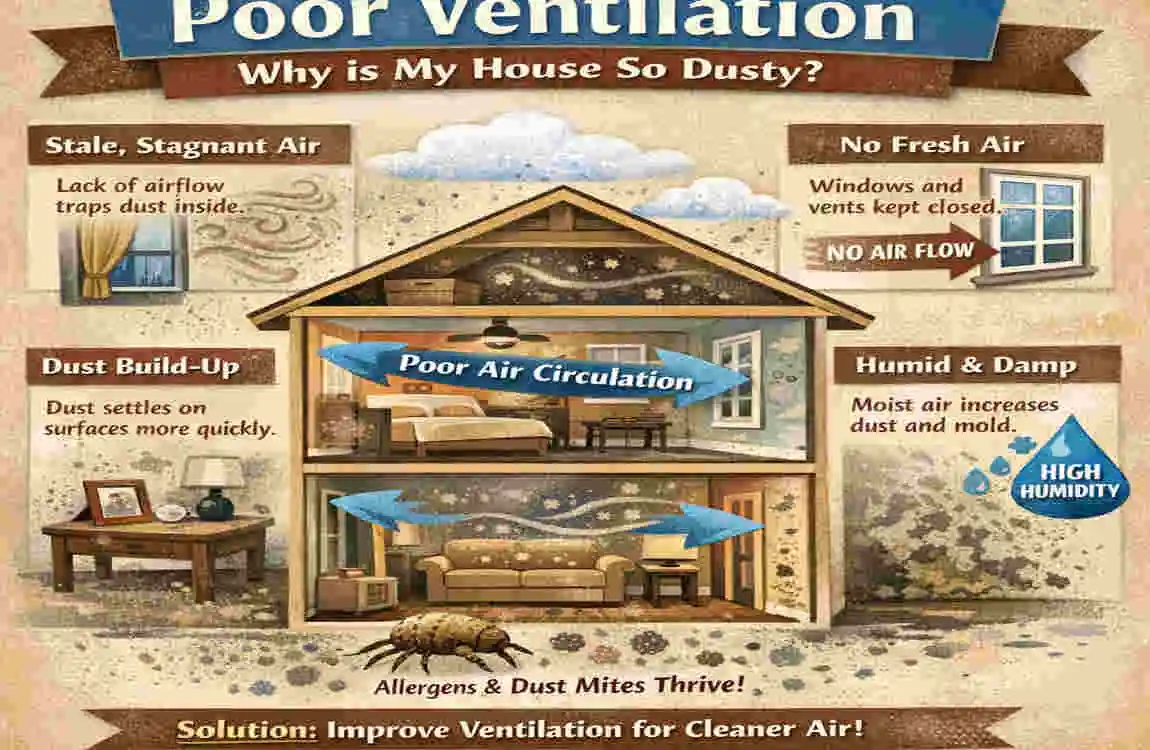
In a well-ventilated home, air is constantly circulating. It moves through your intake vents, passes through a filter (which traps dust), and comes out clean. However, if you have stagnant air, dust particles have nowhere to go but down. They settle onto your baseboards, your ceiling fans, and your furniture.
The Problem with Modern “Sealed” Homes
Ironically, newer homes or recently renovated spaces can be more prone to this than older, drafty houses. Modern construction focuses on energy efficiency, which means sealing the house tight to keep heat or cool air inside. While this is great for your electricity bill, it creates a “vacuum seal” effect. Without fresh air exchange or robust internal circulation, the same dusty air just sits in the room, getting heavier and dirtier by the day.
Regional Factors: The Stagnant Humid Air
If you live in a region like Lahore, particularly during the monsoon season or the heavy smog months, keep windows permanently shut to avoid outdoor pollution. While this keeps smog out, it traps indoor pollutants. If your HVAC system isn’t actively cycling that air, poor circulation can increase dust buildup by 20-30%.
High Humidity Levels
You might be wondering, “What does water have to do with dry dust?” The answer is: everything. Humidity is a binding agent, and it is a major, often overlooked reason for a dusty home.
How Moisture Makes Dust “Sticky”
Dust particles are microscopic. In a dry environment, they are light and can easily be sucked into an air return vent for filtration. However, when the relative humidity in your home rises above 50%, those tiny particles absorb moisture.
When dust absorbs water, two things happen:
- It gets heavy: The particles become too heavy to float in the air currents toward the filter, so they drop immediately onto your surfaces.
- It gets sticky: Damp dust clumps together. This creates those dreaded “dust bunnies” under the bed much faster than usual.
The Mold and Mite Connection
High humidity doesn’t just make dust settle; it creates more of it. Dust mites—microscopic creatures that live in our textiles—thrive in humid environments. Their waste products are a significant component of household dust. Furthermore, high moisture encourages mold growth. As mold releases spores into the air, those spores eventually settle as—you guessed it—dust.
The Local Angle: Managing Tropical Humidity
For homeowners in climates with intense humid seasons, such as Pakistan’s monsoon season, this is a double-edged sword. You can’t open the windows because it is humid outside, but the air inside is becoming a soup of heavy particles. If your home feels muggy and your shelves are constantly grey, your problem isn’t dirt—it’s moisture.
Dirty Air Filters & HVAC Issues
If your home has a central heating or cooling system, your HVAC unit is essentially the “lungs” of your house. Imagine trying to breathe through a thick wool blanket; that is exactly what happens to your home when filters are clogged.
The Recirculation Cycle
The standard air filter in your HVAC system is your first line of defense. Its job is to trap airborne particles before the air is redistributed into your rooms.
- When it works: Air enters, dust is trapped, clean air exits.
- When it fails: If a filter is clogged, the system struggles to pull air through. This creates a pressure drop that can actually force dust around the filter or pull accumulated dust off the filter and shoot it back into your living room.
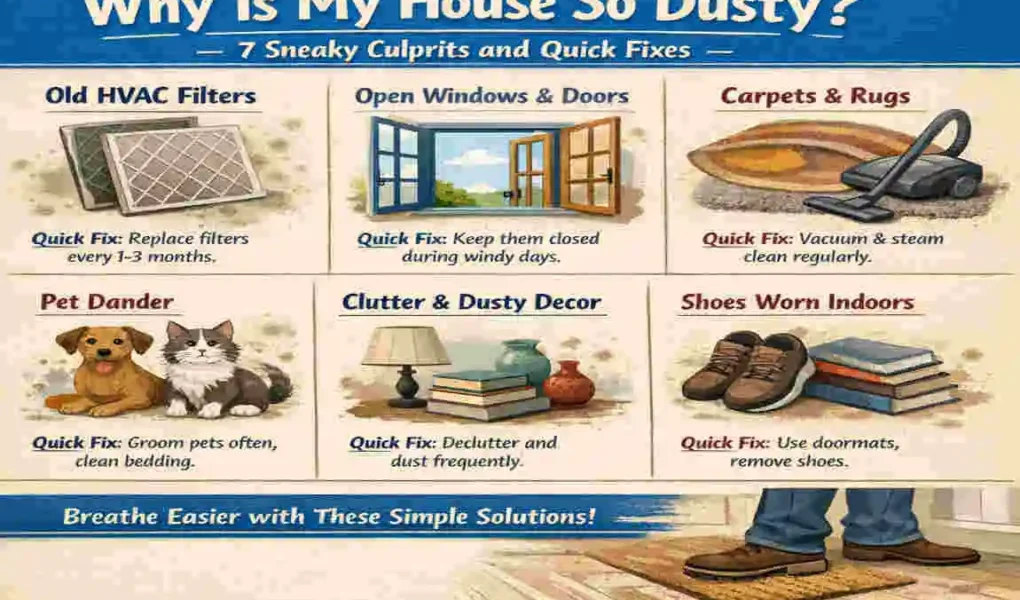
Experts recommend changing your air filters every 1 to 3 months. If you have pets or live in a dusty city, you should be checking them monthly. A grey, matted filter is a guarantee that your system is recirculating dirt rather than removing it.
Leaky Ducts: The Attic Infiltrator
Sometimes the issue isn’t the filter but the pipes (ducts) that carry the air. Ductwork often runs through attics, basements, or crawl spaces—areas that are notoriously dusty and dirty.
If your ducts have holes, gaps, or loose connections (which is common in older homes), the system creates a suction effect (the Venturi effect). It pulls dusty, dirty air from your attic or crawlspace, then blasts it into your bedrooms. You could have the cleanest floors in the world, but if your ducts are sucking in attic insulation and dust, you will never win the battle.
Pet Dander and Human Shedding
This is the part where things get a little gross, but it is necessary to understand the biology of your home. A massive percentage of the dust in your home is actually you.
The “Shedding” Reality
Humans are constantly renewing their skin. The average person sheds approximately 1.5 grams of dead skin cells every single day. That might sound small, but over a year, that adds up to enough skin to feed a colony of dust mites for a lifetime. In dry winters, like those in Lahore or northern regions, our skin becomes drier and flakes off more easily, becoming airborne dust almost instantly.
The Pet Factor
If you have furry friends, multiply that dust factor by ten. It isn’t just the visible clumps of fur you see rolling across the floor like tumbleweeds; it is the dander.
- Dander is composed of microscopic flecks of skin shed by cats, dogs, rodents, and birds.
- Because dander is lighter than fur, it stays airborne longer and sticks to furniture, curtains, and walls.
- Even pets that don’t “shed” much fur still produce dander.
If you notice that the rooms your pets spend the most time in are the dustiest, you have found your culprit. While we love our pets, they are walking dust factories.
Drafty Windows & Outdoor Infiltration
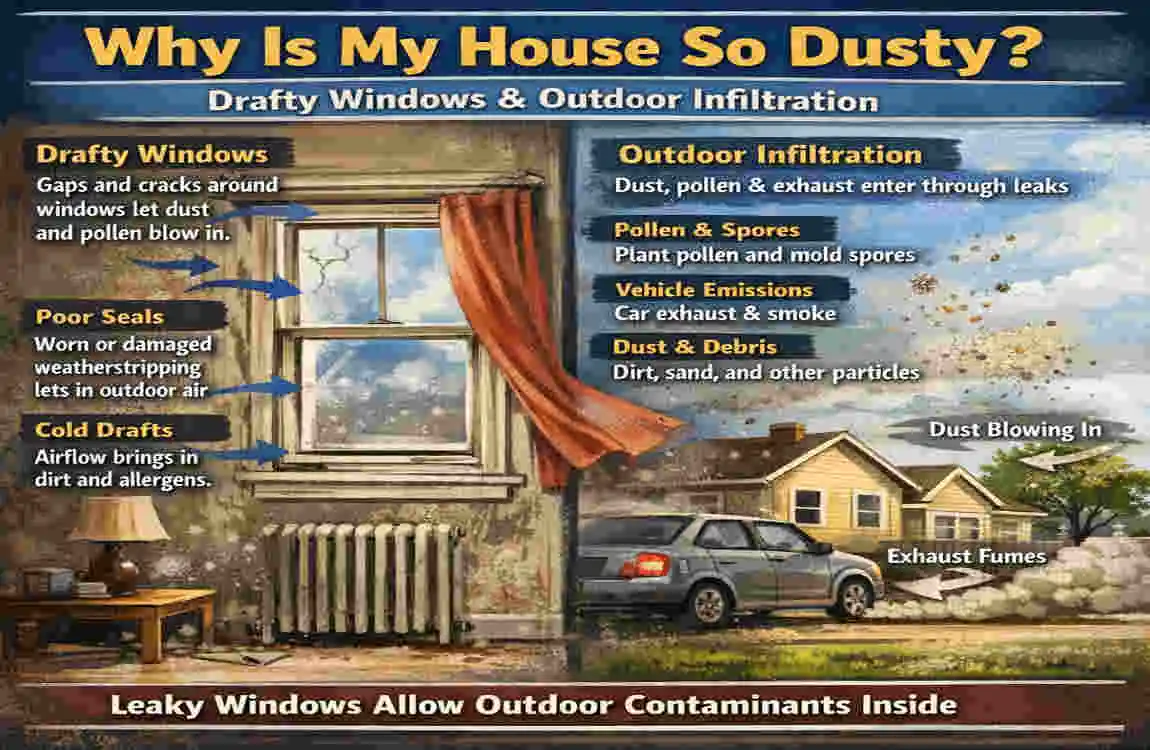
Sometimes, the call is coming from outside the house. While we all love fresh air, opening your windows—or having windows that don’t seal properly—is an open invitation for the outside world to settle on your coffee table.
The Urban Dust Mix
If you live in a busy urban area or near a main road, the “dust” entering your home is a complex, gritty cocktail. It includes:
- Pollen: Especially high in spring.
- Soil particles: Blown in from nearby construction or dry fields.
- Tire rubber and exhaust: In cities like Lahore, black soot-like dust is often a result of vehicle emissions and microscopic rubber particles from traffic.
The “Stack Effect” of Drafty Windows
Even if your windows are closed, they might be betraying you. Gaps in window frames or worn-out weatherstripping allow outdoor air to seep in. On windy days, pressure differences force outdoor air through these tiny cracks, carrying fine particulate matter along.
Evidence suggests that keeping windows open during high-traffic or high-pollen-count periods can nearly double indoor dust accumulation. If you run your finger along a windowsill and it comes up black rather than grey, that is a sure sign of outdoor infiltration (pollution/soot) rather than just indoor household dust.
Textiles and Fabrics (The Dust Traps)
Look around your room. How many soft surfaces do you see? Carpet, heavy curtains, throw pillows, upholstered sofas, blankets? While these make a home cozy, they are also the biggest culprits in dust accumulation.
The Fiber Shedding Phenomenon
Textiles contribute to dust in two ways:
- They trap it: Carpets act like a giant sponge. They hold onto dust, dander, and dirt deep within their fibers. When you walk across the carpet, you disturb this settled dust, launching it back into the air to settle elsewhere.
- They create it: Fabrics degrade over time. Every time you sit on the sofa or draw the curtains, microscopic fibers break off. This “fiber dust” contributes significantly to the total dust volume in a room.
Carpet vs. Hardwood: The Data
To understand just how much impact your flooring choice has, consider the dust accumulation on different surface types.
Surface Type, Dust Accumulation Potential, “Stickiness” Factor, Cleaning Difficulty
Wall-to-Wall Carpet High (2-3g per sq ft/week) Acts like a velcro trap; holds dust deep in fibers. Hard: Requires heavy-duty HEPA vacuuming.
Upholstery (Fabric) Medium (1g per sq ft/week) Absorbs oils and skin cells; releases dust when sat on. Medium: Hard to wash; requires vacuum attachments.
Hardwood / Tile Low (0.5g per sq ft/week) Dust sits on top; does not get trapped. Easy: A quick microfiber mop removes it.
If you are suffering from chronic allergies or excessive dust, your vintage carpet might be the enemy.
Everyday Indoor Sources
Finally, we have to look at the seemingly innocent activities of daily life. Sometimes the dust comes from the things we bring inside or the things we do.
The “Paper Trail”
Do you have stacks of magazines, old newspapers, or cardboard boxes lying around? Paper products degrade surprisingly fast. The friction of moving boxes or flipping pages releases tiny paper fibers into the air. If you have a home office full of files, you will notice it is often dustier than the kitchen.
Cooking Residue
When you cook with oil or grease, tiny droplets become airborne. These droplets eventually land on cabinets and countertops. While this is technically “grease,” it acts as a magnet for airborne dust. The dust sticks to the grease, creating a stubborn, fuzzy layer that is incredibly hard to wipe off.
The “Shoe” Effect
In many cultures, removing shoes at the door is standard practice—and for good reason. Shoes track in dirt, dried mud, pesticides, and biological waste from the streets. Once that mud dries on your floor, it crumbles into fine dust that gets kicked into the air every time someone walks by. In urban environments, street dust is gritty and abrasive, causing wear and tear on your floors and making your house dirty.
Quick Fixes Overview: Your Dust-Banishment plan
Now that we have identified the sneaky culprits, let’s talk about solutions. You don’t need to live in a bubble to have a clean home. Here is a holistic plan to reduce dust, ranging from immediate changes to long-term upgrades.
Phase 1: Immediate Wins (Do This Today)
- Switch to Microfiber: Stop using feather dusters! They just spread the dust around. Use a damp microfiber cloth that uses electrostatic charge to trap and lift dust.
- The “Top-Down” Rule: Always dust from the highest point (ceiling fans, the top of shelves) down to the lowest point. This ensures that dust that falls is caught when you clean the lower levels.
- Institute a “No Shoes” Policy: Place a high-quality doormat at the entrance and ask visitors to leave their street shoes at the door.
Phase 2: Maintenance (Weekly/Monthly)
- Upgrade Your Vacuum: Invest in a HEPA-filtered vacuum cleaner. Standard vacuums often suck up dust and blow the microscopic particles right back out the exhaust. HEPA filters trap 99.97% of particles.
- Wash Textiles: Wash throw blankets, pillow covers, and curtains once a month.
- Groom Pets: Brush your pets weekly to catch the hair before it hits your floor.
Phase 3: Long-Term Investments (The Pro Moves)
- Air Purifiers: Place an air purifier in high-traffic rooms (like the living room or bedroom). Look for one with a high CADR (Clean Air Delivery Rate) suitable for your room size.
- Dehumidifiers: If you live in a humid region, keeping indoor humidity between 40-50% will prevent dust from sticking and mites from breeding.
- Seal Your Ducts: Hire an HVAC professional to inspect your ductwork for leaks. Sealing these gaps can drastically reduce dust and lower your energy bills.
Frequently Asked Questions (FAQs)
Why is my house so dusty even after I just cleaned it? This is usually due to recirculation. If you dust with a dry cloth or feather duster, you are likely launching the dust into the air. It floats for a few hours and then settles right back down. Additionally, if your ceiling fans are running while you clean, they push that dust back onto surfaces immediately.
How can I reduce dust in a humid climate like Lahore? Humidity makes dust heavy and sticky. The best defense is a dehumidifier. By lowering the moisture levels, dust becomes drier and easier for your air conditioner’s filter to catch. Also, ensure your AC filters are cleaned regularly, as wet, dusty filters can promote mold growth.
Do air purifiers actually help with dust? Yes, but they are not magic wands. An air purifier will capture airborne dust, preventing it from settling. However, it cannot remove dust that is already stuck to your rug or shelf. They are best used as a preventative measure alongside regular vacuuming.
What is the best type of filter for my HVAC? Look for filters with a MERV rating between 8 and 11. This is the “sweet spot” that catches dust and pet dander without restricting airflow too much. Going higher (MERV 13+) is great for filtration but can strain older HVAC systems, so check your manual first.