Are you feeling the pinch of rising housing costs? You are certainly not alone. Today, more and more people are looking into smaller living spaces to save money, reduce their carbon footprint, or live closer to bustling city centers. Downsizing has become a huge trend, but it brings up a very important and practical question: how many people can live in a 1 bedroom house?
Whether you are a young couple trying to save up for a larger home, a single parent with a young child, or a group of close friends trying to split the rent, this is a question you cannot ignore. Knowing the answer is not just about making sure everyone has enough breathing room. It actually matters for a lot of very serious reasons.
First and foremost, there are legal consequences to consider. If you squeeze too many people into a small space, you might find yourself on the wrong side of the law. Secondly, comfort and livability are huge factors. You want your home to be a relaxing sanctuary, not a crowded waiting room. Finally, if you are a renter, your rental agreements and landlord rules will play a massive role in who can stay with you.
What Does “Occupancy Limit” Mean?
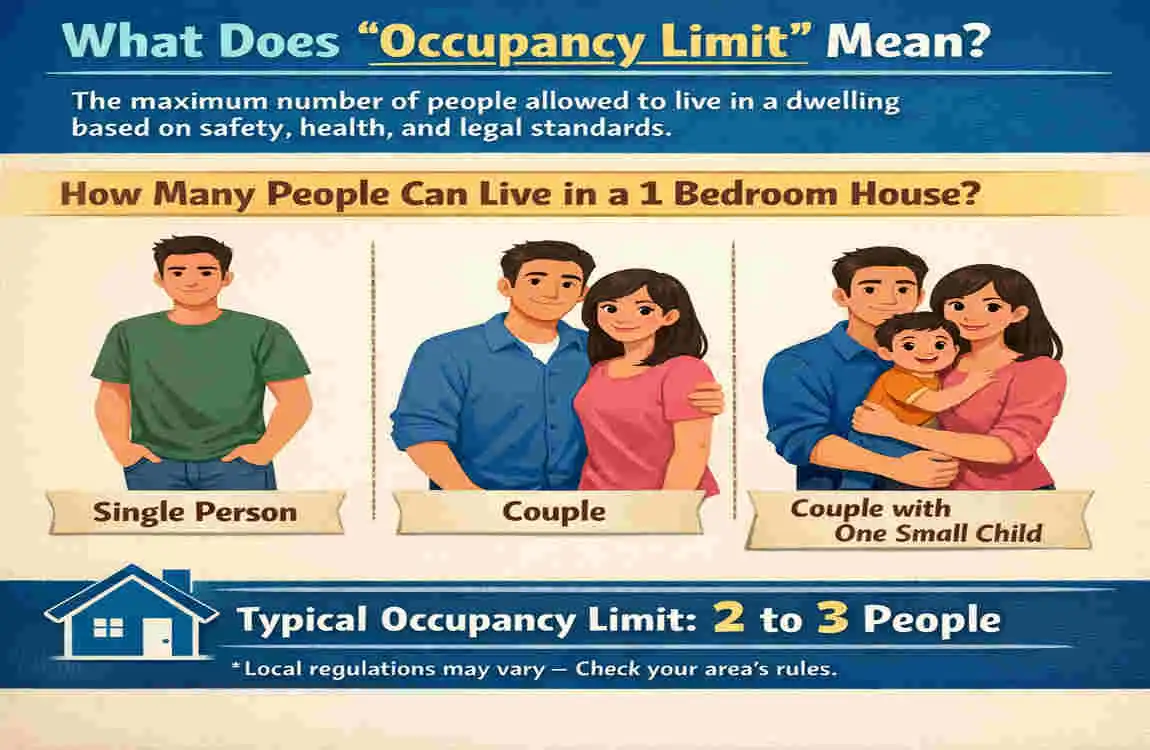
Before we can answer exactly how many people can live in a 1 bedroom house, we need to understand what an “occupancy limit” actually is. In everyday language, an occupancy limit is simply the maximum number of human beings allowed to live, sleep, and reside in a specific home or apartment.
However, this concept can be broken down into three distinct categories that you need to be aware of:
Legal Occupancy: This is the hard-and-fast rule set by the government. These are the laws that dictate how many people can safely live in a space based on health codes, fire safety, and sanitation. Breaking these rules is against the law.
Lease-Based Occupancy: This is the rule set by your specific landlord or property management company. Even if the law says you can have three people in your home, your landlord might write a rule in your lease that only allows two. When you sign the lease, you agree to its terms.
Practical or Comfortable Occupancy: This is the unspoken rule of personal comfort. The law might say you can legally fit four people into your apartment, but practically speaking, you might feel like you are stepping on each other’s toes with just two people.
So, who exactly gets to set these rules? It is usually a combination of three authorities. Government housing authorities set the broad, national guidelines to ensure everyone has basic human rights and safe living conditions. Then, local municipalities (like your city or county council) tweak those rules to fit the specific needs of your local area. Finally, landlords and property managers get the final say on their own private property, provided they do not violate any fair housing laws in the process.
Legal Occupancy Rules Explained
Understanding the law does not have to be complicated. While legal jargon can sometimes feel overwhelming, the rules regarding how many tenants allowed per bedroom are generally based on simple math and common sense. Let us break down the most common legal frameworks used to determine how many people can share a home.
The “2-Person Per Bedroom” Rule
The most widely used guideline across the country is the “two-person per bedroom” rule. This is exactly what it sounds like. Housing authorities generally agree that a standard bedroom is built to safely and comfortably house two people.
This rule works as a baseline for almost all rental properties. For example, if you are looking at a two-bedroom apartment, the baseline occupancy would be four people. Therefore, if you are asking how many people can live in a 1-bedroom house, this rule dictates that two people is the standard, accepted number. It is simple, easy for landlords to enforce, and generally ensures that the home does not become overcrowded.
The “2 + 1 Rule” (Common Standard)
While the two-person rule is a great starting point, life is rarely that simple. What happens if a couple has a baby? Or what if someone needs to sleep on the sofa bed in the living room? This is where the “2 + 1 Rule” comes into play.
This standard suggests that a home can legally house two people per bedroom, plus one additional occupant who sleeps in a separate living area. For example, if you have a one-bedroom house, you would calculate it like this: two people in the bedroom, plus one person in the living room. Under this rule, three people could legally share a one-bedroom space. This is a very popular guideline used by landlords who want to offer flexibility to their tenants.
Minimum Square Footage Requirements
Sometimes, counting bedrooms is not enough. Not all bedrooms are created equal! A massive main bedroom in the suburbs is very different from a tiny, cramped room in a busy city center. Because of this, many housing codes focus on square footage rather than just the number of rooms.
The typical standard in many regions requires at least 70 square feet of bedroom space for the first person occupying the room. If two people are sharing that same bedroom, the required space usually jumps up. Furthermore, some local laws require at least 50 square feet per child.
Why does size matter so much legally? It all comes down to health and safety. Overcrowding laws housing officials want to make sure you have enough clean air to breathe, enough space to escape in case of a fire, and enough room to maintain proper sanitation.
Local Law Variations
Here is the most crucial thing to remember: rules differ drastically depending on where you live. A bustling metropolis like New York city or London will have very different housing codes compared to a quiet, rural farming town.
Some cities are incredibly strict, measuring homes down to the exact inch before allowing tenants to move in. Other areas are much more lenient, relying mostly on the landlord’s discretion. Because of these massive variations, it is of the utmost importance that you check your local housing codes or city ordinances before making any big moving decisions.
A Quick Summary of Occupancy Rules:
Rule Type: Simple Explanation, Example for a 1-Bedroom Home
2-Person Rule: Two people are allowed per official bedroom. A couple living together (2 people).
2 + 1 Rule: Two people in the bedroom, plus one in the living area. Two parents and a teenager on the sofa bed (3 people).
Square Footage Occupancy is based on the total size of the rooms—two adults in a large 150 sq ft bedroom.
How Many People Can Live in a 1 Bedroom House? (The Main Answer)
Now that we have laid the groundwork, let us directly answer the big question: how many people can live in a 1-bedroom house?
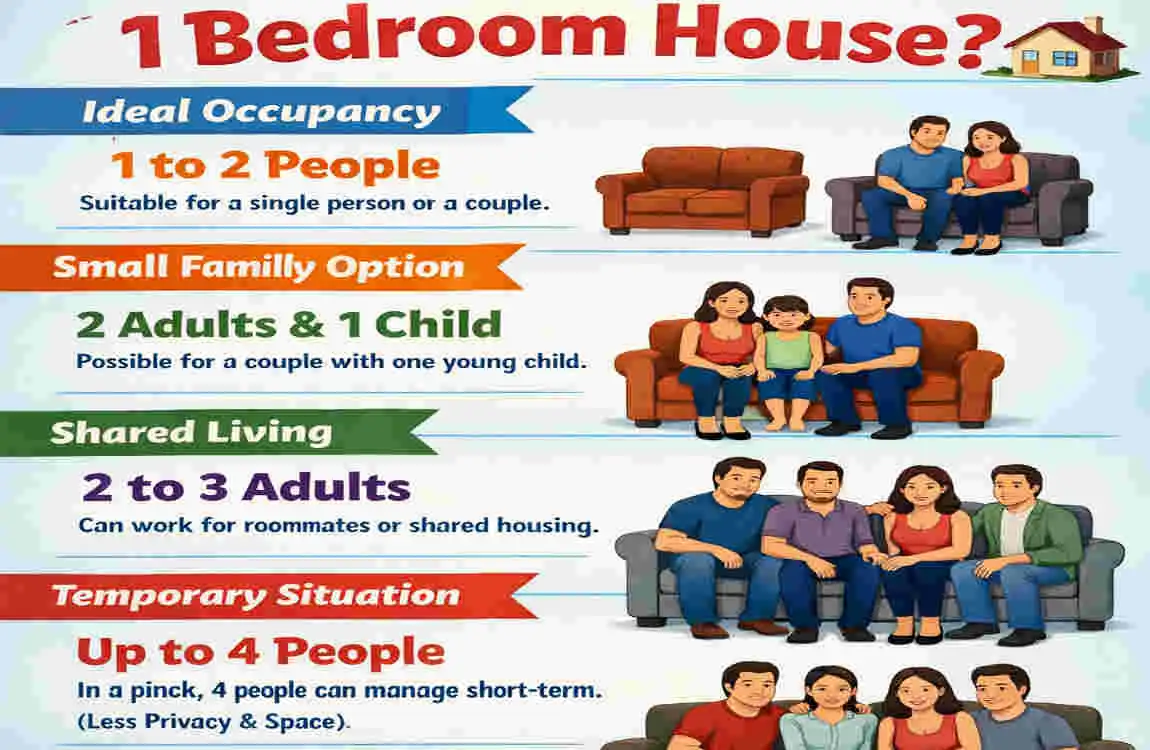
In most standard situations, the typical legal range is 2 to 3 people. This is the most common answer you will find across various housing authorities and property management companies. Two people can comfortably and legally share the single bedroom, and depending on the specific rules of your area and lease, a third person may be allowed to utilize the living room space.
However, this number is not carved in stone. Several specific factors will affect the final number of people allowed in your home:
- Size of the home: A sprawling 900-square-foot luxury one-bedroom apartment can naturally hold more people than a tiny 400-square-foot cottage.
- Age of occupants: Housing laws often treat infants and toddlers differently from full-grown adults.
- Local regulations: Your city might have strict anti-overcrowding laws that limit the home to two people, no exceptions.
Let us look at a few real-world scenarios to see how this plays out:
The Couple: Two adults sharing a one-bedroom home is the most standard, universally accepted setup. Landlords love it, the law allows it, and it provides a comfortable living situation.
The Couple with a Child: If a couple has a baby or a young toddler, they are almost always legally protected and allowed to stay in a one-bedroom home. However, as the child grows older, local laws might eventually require the family to upgrade to a two-bedroom home for privacy reasons.
The Roommates: Can three college friends rent a one-bedroom apartment, with two in the bedroom and one in the living room? Yes, but only if the landlord explicitly allows it in the lease, and the local square footage laws permit it.
Factors That Affect Occupancy Limits
We have established that 2 to 3 people is the standard answer. But to truly understand maximum occupancy rental rules, we need to dive deeper into the specific factors that can change this number.
Size of the Bedroom and Living Space
The sheer physical size of your home is the biggest determining factor. Larger layouts inherently allow for more flexibility. If your one-bedroom house has a massive living room, a separate dining area, and a large eat-in kitchen, a landlord is much more likely to approve a third occupant.
Think about the difference between a tiny studio apartment (where the bedroom, living room, and kitchen are all one single room) versus a spacious one-bedroom house with distinct, separate rooms. Even if both have technically “one bedroom,” the spacious house can safely accommodate more human activity.
Age and Relationship of Occupants
The age of the people living in the home changes everything. Under overcrowding laws, housing departments generally recognize that babies do not take up much space. Therefore, an infant sleeping in a crib in the parents’ bedroom usually does not count against the legal occupancy limit in the same way an adult would.
Furthermore, the relationship between the occupants matters. A married couple is expected to share a bed and a bedroom. However, if you have three unrelated adults trying to cram into a single bedroom, landlords and housing authorities might raise safety and privacy concerns.
Local Housing Codes
We touched on this earlier, but it is worth repeating: local geography plays a massive role. Urban areas that are dealing with severe housing shortages might have slightly more lenient rules to keep people off the streets. Conversely, suburban areas might have very strict occupancy laws to prevent large groups of unrelated people from renting out single-family homes and causing noise complaints.
Always remember that strict versus lenient jurisdictions can be just a few miles apart. Moving across town could completely change your legal standing!
Landlord and Lease Agreements
Even if the city says you can have three people in your house, your landlord might disagree. Landlords have the right to include lease clauses that limit the number of occupants to protect their property from excessive wear and tear. More people mean more water usage, more strain on the HVAC system, and more foot traffic on the carpets.
If you sign a lease that states “Maximum of two occupants,” you are bound by that contract. Bringing in a secret third roommate is a violation of your lease, and the penalties can be severe.
Safety Considerations
At the end of the day, occupancy limits are not just about landlords being greedy or cities being controlling. They are about human safety. Fire safety laws are incredibly strict. Every person in a home needs a clear, unobstructed emergency exit in case of a fire.
If a one-bedroom house is cluttered with too many beds, cots, and people, it creates a massive overcrowding risk. In an emergency, people could trip, exits could be blocked, and tragedy could strike. Fire marshals take this very seriously, which is why maximum occupancy rules exist in the first place.
Can a Family Live in a 1 Bedroom House?
This is a question that weighs heavily on many young parents. Housing is expensive, and many couples wonder if they can stay in their current one-bedroom apartment after their baby is born.
The short answer is: Yes, but with limitations.
Most fair housing laws strongly protect families with children. It is generally considered illegal for a landlord to discriminate against you or force you to move out simply because you had a baby. Typical, widely accepted setups include:
- Parents + 1 child: This is very common and usually accepted by both landlords and the law.
- Parents + infant: As mentioned, babies taking up space in a crib are rarely penalized.
These legal protections for families are vital. They prevent unfair evictions and help families save money during those crucial early years.
However, you must be aware of when cozy family living crosses the line into illegal overcrowding. As your child grows up, the dynamic changes. Once a child reaches a certain age (often around school age or adolescence, depending on local laws), the state may mandate that they have their own separate sleeping area for privacy and psychological well-being. At that point, living in a one-bedroom house may no longer be legally permissible.
What Happens If You Exceed Occupancy Limits?
Let us say you decide to ignore the rules. You rent a one-bedroom house and move yourself, your partner, your cousin, and a friend into the space. What is the worst that could happen?
Exceeding occupancy limits is a risky game that can lead to severe consequences. If you are caught, you could face:
- Lease Termination: This is the most immediate threat. If you violate your lease, your landlord has the right to tear up the contract.
- Eviction: Following lease termination, you could be formally evicted. Having an eviction on your public record makes it incredibly difficult to rent another home in the future.
- Fines or Penalties: In some jurisdictions, the city can actually fine you or the landlord for violating health and safety codes.
How do people get caught? Usually, it comes down to inspections and complaints. If you have too many people living in a small space, you are likely generating more trash, making more noise, and taking up more parking spaces. Annoyed neighbors are often the first ones to call the landlord or the city to complain. Once a landlord does a routine maintenance inspection, your secret will be out. Landlords enforce these rules strictly because they can be held liable if a fire breaks out in an illegally overcrowded home.
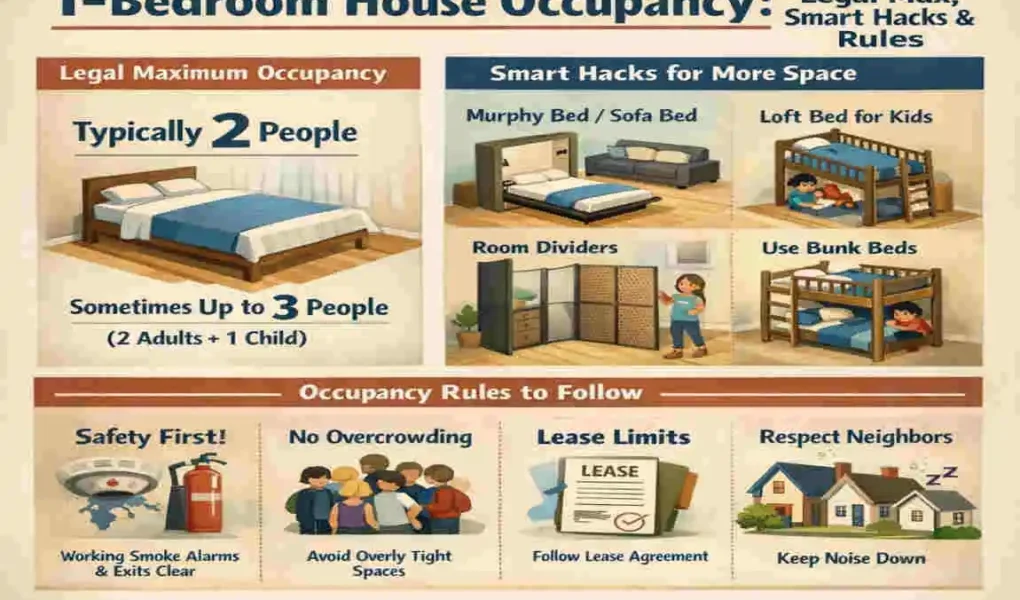
Smart Space Hacks for Living in a 1 Bedroom House

If you have figured out how many people can live in a 1-bedroom house legally, and you are ready to make it work with two or three people, your next challenge is comfort. Small space living requires immense creativity.
You need to maximize every single square inch of your home. By utilizing some clever design tricks, you can make a tiny one-bedroom feel organized, spacious, and incredibly comfortable. Here are some of the best ways to achieve that.
Multi-Functional Furniture
When you are tight on space, your furniture needs to work double-duty. Every item you bring into the house should serve more than one purpose.
Here are some top multi-functional ideas:
- Sofa Beds: These are absolute lifesavers. During the day, you have a stylish, comfortable living room. At night, it transforms into a cozy sleeping space for a third occupant or a guest.
- Foldable Tables: Forget the massive, heavy dining room table. Opt for a drop-leaf table or a wall-mounted foldable desk that can be tucked completely away when you are not eating or working.
- Storage Beds: Do not waste the space under your mattress! A bed with built-in pull-out drawers is the perfect place to store bulky winter clothes, extra blankets, and shoes.
Creative Room Dividers
Privacy is the hardest thing to find when sharing a small space. If you have a third person sleeping in the living room, or if you need a quiet corner to read, creative room dividers are your best friend.
You do not need to build permanent walls. Hanging thick, sound-dampening curtains from a ceiling track can instantly create a private “second bedroom” at night. Sliding panels or Japanese-style shoji screens look elegant and can be pushed aside during the day. Even strategically placed open bookshelves can act as a wall, providing both privacy and extra storage space.
Vertical Storage Solutions
When you run out of floor space, you have to look up! Most people completely ignore the top half of their rooms.
Installing sturdy wall shelves all the way up to the ceiling draws the eye upward (making the room look taller) and gives you massive amounts of space for books, decor, and storage boxes. Hanging organizers over doors, inside closets, and even in the kitchen can keep clutter off the counters and floors.
Decluttering Strategies
You cannot organize clutter; you can only get rid of it. If you are going to live in a one-bedroom house, you must adopt a slightly minimalist approach. You do not have the room to hoard unnecessary items.
Make a habit of aggressively decluttering every few months. If you have not used it in a year, donate it or sell it. Furthermore, it relies heavily on seasonal storage. When it is summer, your heavy winter coats and thick boots should be packed away in vacuum-sealed bags under the bed, not taking up precious space in your main closet.
Shared Space Optimization
Finally, surviving small space living is as much about behavior as it is about furniture. You need to optimize how you share the space with your housemates.
Establish rotating schedules for the bathroom in the morning so no one is fighting over the shower before work. Create defined zones for each person. Even if the zone is just a small desk in the corner, knowing that you have a tiny space that is 100% yours goes a long way in preventing arguments and maintaining your sanity.
Tips for Staying Within Legal Limits
Living in close quarters can be wonderful, but you always want to make sure you are doing things by the book. Staying within the bounds of the law gives you peace of mind and protects you from sudden evictions. Here are some actionable tips to ensure you stay on the right side of the rules:
- Always check local housing laws: Before you even sign a lease, jump online and search for your specific city’s housing code. Look up “maximum occupancy rules” for your area. Being informed is your best defense.
- Read your lease carefully: Never skim a legal document. Read every single clause of your rental agreement. Look for specific numbers regarding occupancy and long-term guests.
- Communicate with your landlord: If your living situation changes—for example, if you have a baby or if your partner moves in—tell your landlord. Honesty is always the best policy, and many landlords are happy to update the lease if you are a good, reliable tenant.
- Avoid unofficial occupants: It might be tempting to let your friend “crash on the couch” for a few months to help pay rent, but unofficial occupants are the number one reason people get evicted.
- Keep documentation if needed: Keep copies of your lease, written permissions from your landlord, and any correspondence regarding your living situation in a safe, easily accessible folder.
Renting vs Owning: Does It Change Occupancy Rules?
You might be asking yourself, “Do these rules only apply if I rent? What if I buy my own one-bedroom condo or house?”
This is a fantastic question. The short answer is yes, the rules do change slightly, but you are never entirely free from the law.
When renting, you are bound by two layers of rules: the law and the landlord’s rules. You have to navigate strict lease agreements, and you have to deal with landlord enforcement. If the landlord says two people maximum, that is the end of the discussion, even if the city allows three.
When owning, you eliminate the landlord layer. You have significantly more flexibility. You can knock down interior non-load-bearing walls, you can buy whatever furniture you want, and you do not have to ask permission to have your partner move in. However, you are still subject to local laws. If the city’s fire code says a one-bedroom house can only hold three people safely, you cannot legally move six people into your home just because you own it.
Additionally, if you buy a condo or a home in a planned community, you must obey HOA (Homeowners Association) rules. HOAs are notorious for having incredibly strict occupancy limits to preserve the neighborhood’s quiet atmosphere, and they can fine you heavily for breaking them.
Frequently Asked Questions (FAQ Section)
How many people can legally live in a 1-bedroom house?
In most cities and states, the legal limit is between 2 and 3 people. This is generally calculated using the “two people per bedroom” rule, sometimes allowing for one extra occupant in the main living space, depending on local laws.
Can 4 people live in a 1-bedroom house?
While it is physically possible, it is usually not legal. Fitting four people into a one-bedroom home almost always violates minimum square footage laws and fire safety codes. Unless the bedroom is exceptionally massive, a landlord will rarely approve four occupants.
Can roommates share a 1-bedroom legally?
Yes, two unrelated roommates can absolutely share a one-bedroom apartment, provided the lease allows it. Many college students do this to save money, with one person taking the bedroom and the other creating a private sleeping space in the living room.
Does a living room count as a bedroom?
Usually, no. Legal definitions are very strict about what constitutes a bedroom. To be considered a legal bedroom, a room typically must have a door that closes, a window that opens to the outside (for fire escape purposes), a minimum ceiling height, and sometimes a built-in closet. Therefore, sleeping in the living room does not magically turn a one-bedroom house into a two-bedroom house on paper.
Can a baby increase occupancy limits?
Infants and babies are often treated differently under the law. Because they sleep in cribs and do not require large amounts of square footage, landlords are generally not allowed to count them against the strict adult occupancy limits. A couple with a newborn can legally and safely remain in a one-bedroom home.