In 2026, the world of home design has transformed into a powerhouse industry. Residential architecture now drives a massive $500 billion global market, blending style, cutting-edge sustainability, and smart technology in ways we could only dream of a decade ago. But if you are a homeowner, a budding designer, or just someone dreaming of a better living space, you might ask the fundamental question: What is residential architecture exactly?
At its core, residential architecture is the discipline and art of designing homes and living spaces. It isn’t just about putting a roof over your head; it is about prioritizing comfort, functionality, aesthetics, and the environment. It is the process where an architect or designer translates human needs into physical structures, creating spaces that feel safe, welcoming, and uniquely yours.
Core Principles of Residential Architecture
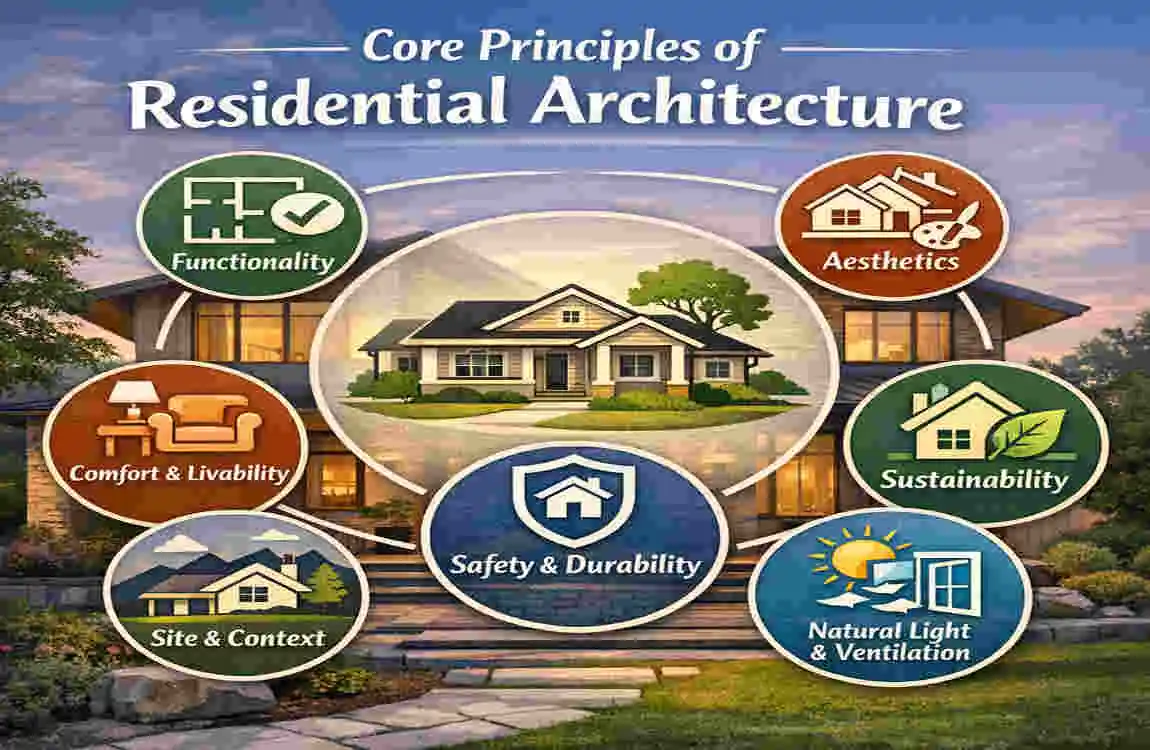
To truly understand residential architecture, we need to examine the pillars that support it. It is not just about making things look pretty; it is a balancing act between several critical factors.
Functionality
The most beautiful home in the world is useless if you can’t live in it comfortably. Functionality is about layouts that optimize flow. Think about open-plan kitchens that allow you to cook while talking to your family in the living room. It is about placing the laundry room where it makes sense, not in a dark corner of the basement. A functional design ensures that the house works for you, not against you.
Aesthetics
This is the “wow” factor. Aesthetics involves the balance of form, proportion, and materials. It is how the light hits the texture of a stone wall, or how the roofline complements the horizon. Whether you prefer a rugged industrial look or a sleek modern vibe, the visual appeal creates an emotional connection to the space.
Sustainability
In 2026, sustainability is no longer optional; it is essential. This principle focuses on energy-efficient features like passive solar design, which uses the sun’s energy to heat your home naturally. It involves choosing materials that don’t harm the planet and designing systems that reduce water and electricity waste.
User-Centric Design
Finally, great architecture is user-centric. It focuses on adaptability. Can the home grow with a family? Is it designed for aging in place, with wider doorways and accessible bathrooms? A user-centric home evolves as your life changes.
The 5 Pillars of Residential Design:
- Functionality: Does the layout flow?
- Aesthetics: Is it visually pleasing?
- Sustainability: Is it eco-friendly?
- Durability: Will it stand the test of time?
- Context: Does it fit its surroundings?
A Brief History of Residential Architecture
Understanding where we are going requires knowing where we have been. The history of our homes is a fascinating journey through time.
Ancient Roots
Our story begins with ancient roots. From the sturdy Roman villas designed around central courtyards to the humble medieval cottages made of wattle and daub, early architecture was driven by protection and available materials. People built with what they had, creating strictly regional styles.
The Industrial Era
As we moved into the Industrial Era, things changed rapidly. Mass production enabled the production of new materials, such as glass and steel. This era brought us the ornate Victorian homes with their intricate details, followed by the Craftsman movement, which pushed back against industrialization by celebrating hand-worked wood and stone.
The 20th Century Shift
The 1900s saw a massive shift toward Modernism. Architects like Frank Lloyd Wright introduced the Prairie style, which focused on horizontal lines and blending the home with the landscape. This era stripped away the ornaments and focused on clean lines and function.
Transition to Today
In the post-2000s period, we saw the integration of technology. The internet and smart tech have defined the transition to today. We moved from simply building structures to creating “machines for living,” where the house itself is connected and responsive.
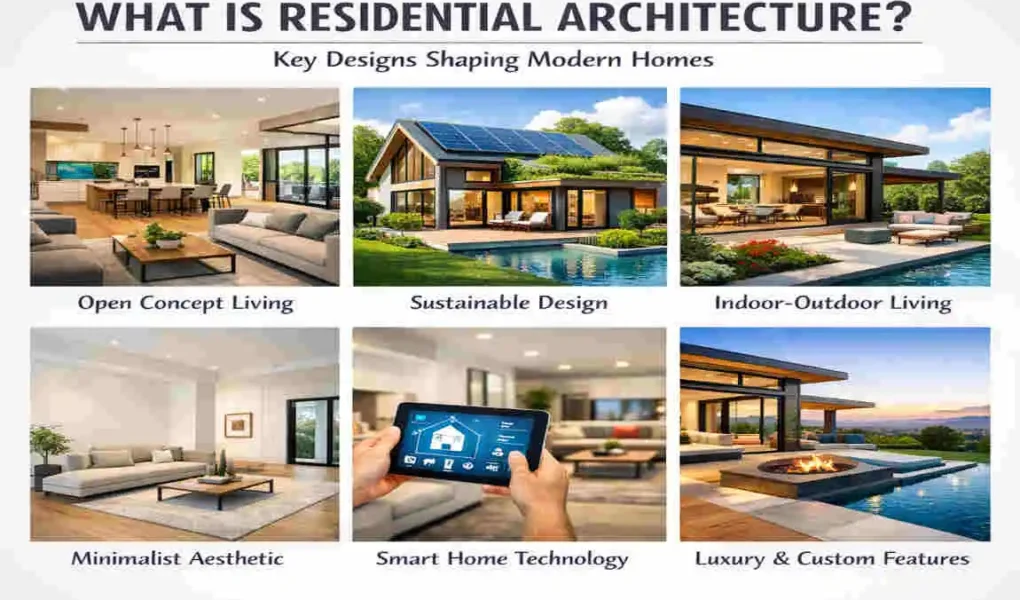
Key Designs Shaping Modern Homes
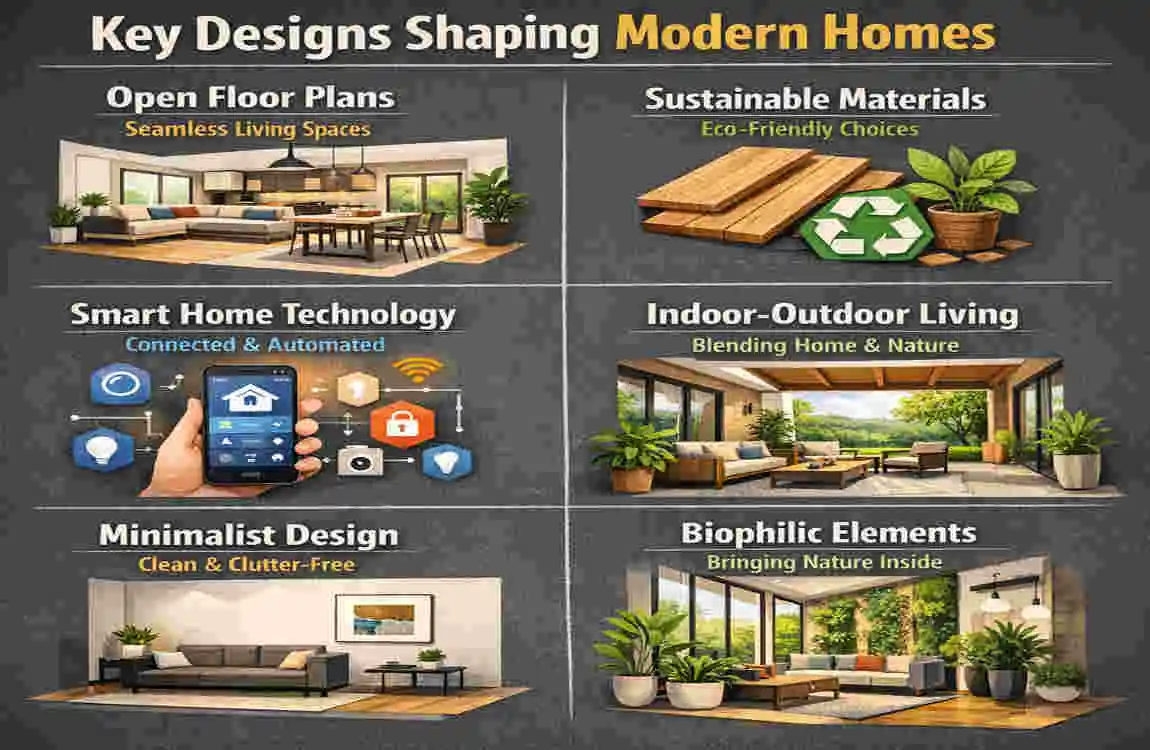
Now, let’s get into the exciting part. What do homes look like today, and where are they heading? Here are the key styles that are defining residential architecture in 2026.
Minimalist and Contemporary Residential Architecture
If you love the idea of “less is more,” minimalist architecture is likely your dream style. This design philosophy has taken the world by storm, influencing everything from graphic design to our living rooms.
Contemporary design focuses on the here and now. It features clean lines, neutral palettes, and an uncluttered ethos. You won’t find heavy drapes or ornate moldings here. Instead, picture floor-to-ceiling windows that flood the space with natural light and flat roofs that create a sharp, geometric silhouette.
A great example of this can be seen in modern Tokyo micro-apartments. In dense urban areas, architects are mastering the art of making small spaces feel huge through clever storage and minimalist furniture. These homes prove that you don’t need square footage to have luxury; you need smart design.
Pros and Cons of Minimalist Design:
- Pro: Creates a calming, stress-free environment.
- Pro: Easy to clean and maintain.
- Con: Can feel cold or impersonal if not balanced with texture.
- Con: Requires strict discipline to keep clutter away.
Sustainable and Eco-Friendly Designs
Sustainable residential architecture is the superhero of the housing market. As we face climate challenges, homeowners are demanding houses that give back to the environment rather than just taking from it.
We are seeing a rise in the number of net-zero homes. These are houses that produce as much energy as they consume, usually through solar panels, wind turbines, and high-efficiency insulation. Green roofs, covered in vegetation, are becoming common to help insulate the home and manage rainwater.
Materials play a huge role here. Architects are using recycled steel and fast-growing bamboo instead of old-growth timber. According to the EPA, energy-efficient homes can save up to 40% on energy costs, providing significant long-term savings for your wallet.
Key Features:
- Solar integration.
- Rainwater harvesting systems.
- Non-toxic paints and finishes.
Open-Plan and Biophilic Styles
Have you ever walked into a home and felt like you were still outside? That is the magic of Biophilic design. This style is all about blurring the indoor-outdoor boundaries.
It uses features such as central atria, massive sliding glass doors, and living walls (walls covered in plants) to connect residents with nature. The benefits are scientifically proven. Biophilic design promotes improved mental health, lower stress levels, and better sleep cycles by providing abundant natural light.
Open-plan layouts complement this by removing walls between the kitchen, dining, and living areas. This allows light to travel through the entire house, making it feel airy and spacious.
Why Choose Biophilic?
- Health: connecting with nature boosts immunity and mood.
- Aesthetics: Plants and natural light are timelessly beautiful.
- Value: These homes often sell for a Premium due to their “sanctuary” feel.
Smart Homes and Tech-Integrated Architecture
Welcome to the future. Tech-integrated architecture isn’t just about sticking an Alexa in the corner; it is about building the technology into the walls.
These homes are IoT-ready (Internet of Things). We are talking about voice-controlled lighting systems that adjust the color temperature based on the time of day to help your circadian rhythm. We are seeing AI security systems that can distinguish between a delivery driver and a potential intruder.
Imagine a Nest-integrated luxury villa that preheats the floors before you wake up and locks all the doors automatically when you leave. In 2026, the house is a proactive member of the family.
Pros and Cons of Smart Homes:
- Pro: unmatched convenience and security.
- Pro: Energy management automation saves money.
- Con: High initial setup cost.
- Con: Vulnerability to technical glitches or hacking (though security is improving).
Luxury Custom and Farmhouse Modern Hybrids
There is a fascinating trend merging the rustic with the ultra-modern. The Modern Farmhouse style has evolved into a Luxury Hybrid.
This style takes the cozy, nostalgic elements of a farmhouse—like shiplap walls and gabled roofs—and pairs them with high-end, modern finishes. We are seeing marble islands in kitchens that also feature rustic wooden beams. We are seeing home theaters tucked away behind barn doors.
Interestingly, this style adapts well to different climates. For example, in places like Lahore, architects are adapting this rustic-modern hybrid to the climate of the Punjab. They use the farmhouse aesthetic but incorporate local materials and cooling techniques, creating a home that looks global but functions locally.
Key Elements:
- High ceilings with exposed beams.
- Mix of industrial metal and warm wood.
- Large, inviting porches.
Modular and Prefab Residential Architecture
Forget the old stigma of “mobile homes.” Modular and Prefab architecture is sophisticated, sleek, and smart. These homes are built in sections in a factory and then assembled on-site.
The biggest advantage is speed and cost. Because they are built indoors, weather delays aren’t an issue, and they are often 30% cheaper than traditional builds. They are also future-proof. Many modular designs allow you to buy “expandable units.” Start with a one-bedroom module, and when you have kids or get a raise, you buy and attach another room.
Why Modular is Winning:
- Speed: Move in months sooner.
- Waste Reduction: Factories produce less waste than construction sites.
- Quality Control: Precision engineering ensures tighter seals and better insulation.
Emerging Trends in Residential Architecture 2026
What is on the horizon? If you are planning a build this year, you need to know these 7 emerging trends.
Adaptive Reuse
Why build new when you can renew? We are seeing old factories, warehouses, and even shipping containers being turned into stunning lofts and homes. It preserves history while offering modern living.
Wellness-Focused Design
Homes are becoming health retreats. We are seeing spa-like bathrooms with steam showers, meditation corners, and air-purification systems integrated into the ventilation system.
Climate-Resilient Architecture
With the weather becoming unpredictable, designs are adapting. This includes flood-proof elevations (building homes on stilts or raised platforms) and storm-resistant cladding.
Multigenerational Layouts
As housing costs rise and families stay closer, layouts are changing. Homes are being designed with “in-law suites” or separate wings to comfortably accommodate grandparents, parents, and kids under one roof.
VR Design Previews
Before a single brick is laid, clients walk through their future homes in VR (Virtual Reality). This lets you change the paint color or move a wall without paying a dime.
Biodegradable Materials
We are moving beyond sustainability to regeneration. Architects are experimenting with materials like mycelium (mushroom roots) bricks that are strong but biodegradable at the end of the building’s life.
Urban Micro-Homes
As cities get crowded, urban micro-homes are optimizing vertical space. These are tiny footprints with tall ceilings, utilizing lofts and fold-away furniture to live big in small spaces.
Materials and Innovations Driving Residential Designs
The stuff our homes are made of is changing. It is no longer just a choice between wood and brick.
Material Comparison Table
Material Durability Cost Eco-Impact Best Use Case
Traditional Wood Moderate Moderate Low (if sourced sustainably) Framing, Aesthetics
Concrete High Low/Moderate High (CO2 heavy) Foundations, Industrial looks
Composite Lumber High High Low (uses recycled plastic) Decking, Siding
Bamboo Moderate Moderate Very Low (Rapidly renewable) Flooring, Accents
Innovations
Beyond these materials, innovations are reshaping construction. 3D-printed walls are a reality. Massive printers can “print” the concrete shell of a house in 24 hours, drastically reducing labor costs. We are also seeing self-healing concrete that contains bacteria that produce limestone to fill cracks when water enters. This extends the building’s life and reduces maintenance costs.
How Residential Architecture Impacts Property Value
Does good design pay off? The answer is a resounding yes. High-quality residential architecture significantly boosts resale value.
According to recent realtor statistics, a well-designed home with a clear architectural style can sell for 10-20% more than a generic “cookie-cutter” house. Buyers are willing to pay for functionality and beauty.
Furthermore, ROI (Return on Investment) on specific features is high. Investing in sustainable features like solar panels or high-grade insulation can add an immediate $15,000 to $20,000 to your home’s value, not to mention the monthly savings on utility bills. Good architecture is an asset, not just an expense.
Choosing the Right Residential Architecture for Your Home
With so many choices, how do you pick? It can be overwhelming. Here is a quick guide to help you narrow it down.
Assess Your Needs (The Quiz)
Ask yourself these questions:
- Lifestyle: Do you host big parties (Open plan) or prefer quiet privacy (Traditional)?
- Location: Are you in a rainy city (Sloped Roofs) or a desert (Flat Roofs, Solar)?
- Budget: Do you need a custom build (High Cost) or a modular solution (Lower Cost)?
- Future: Do you plan to retire here? (Single-story or elevator-ready).
Pro Tips
Always hire certified architects. It might seem like an extra cost, but they save you money by avoiding design errors. Look for professionals who specialize in the style you love. If you want a Modern Farmhouse, don’t hire a specialist in Brutalist concrete structures.
Case Studies: Iconic Modern Residential Architecture Examples
To visualize what residential architecture at its best looks like, let’s look at three distinct examples.
The Prairie Style (Frank Lloyd Wright)
Wright’s Robie House is the grandfather of modern open plans. Its low-pitched roofs and overhanging eaves were designed to blend into the flat prairie landscape, proving that a home should be of the hill, not on the hill.
The Case Study Houses
In the mid-20th century, architects experimented with glass and steel to create affordable, modern homes in California. These houses defined the “California Cool” aesthetic—light, airy, and seamlessly connected to the outdoors.
The 2026 Lahore Project (Modern Localism)
A recent project in Lahore, Pakistan, shows a rising trend. This residence uses deep verandas (a traditional cooling method), but builds them with sleek reinforced concrete and smart-glass technology. It is a perfect example of how modern residential architecture respects local climate while embracing global tech.
FAQs: What Is Residential Architecture?
What is residential architecture exactly?
Residential architecture is the design and engineering of spaces specifically for living. It encompasses everything from single-family homes and townhouses to apartment complexes, focusing on safety, functionality, and style tailored to the residents’ needs.
What are the main residential architecture styles?
The most popular styles in 2026 include Minimalist/Contemporary, Modern Farmhouse, Mid-Century Modern, Industrial, and Biophilic (nature-focused) design.
How much does residential architecture cost?
Fees vary, but architects typically charge between 8% to 15% of the total construction cost. For a custom home, this is an investment that ensures the property’s structural integrity and resale value.
Is sustainable residential architecture worth it?
Absolutely. While the upfront cost of solar panels or high-grade windows is higher, the energy savings (often 40%+) and tax incentives make it financially worthwhile. Plus, it significantly increases property value.
What are the 2026 residential architecture trends?
Major trends include adaptive reuse of old buildings, wellness-focused interiors (such as air purification systems), smart home automation, and modular and prefab construction methods.
How to find residential architects near Lahore?
To find architects in a specific region like Lahore, check local listings on platforms like Houzz or ArchDaily, look for firms that are members of the Institute of Architects Pakistan (IAP), and review portfolios to ensure their style matches your vision.