
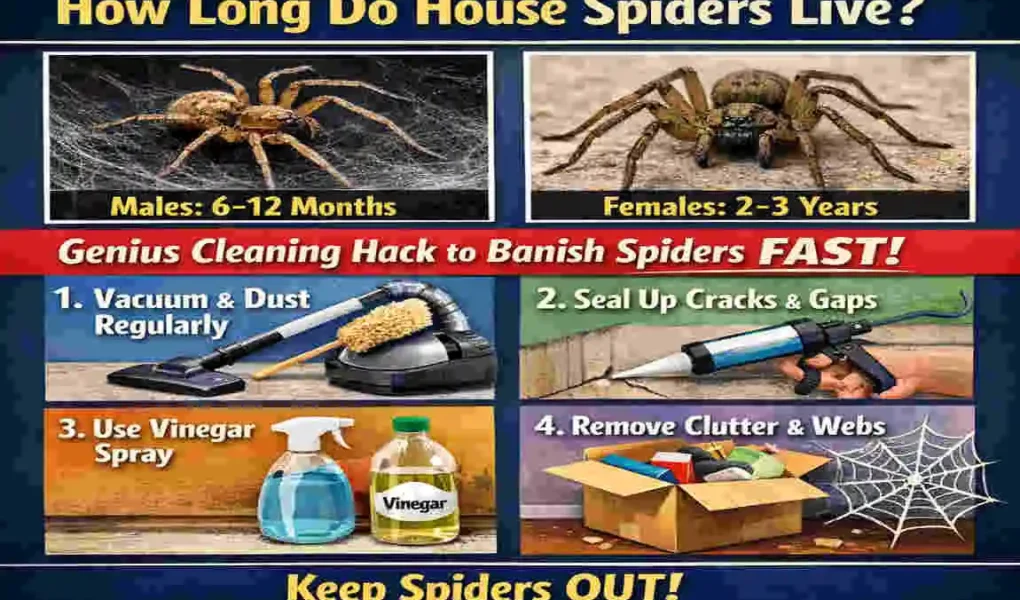
It is 11:30 PM. You have just walked into the kitchen for a late-night glass of water. You flick on the light, and there, scuttling across your pristine floorboards, is a dark, eight-legged shadow. Your heart skips a beat. You grab a paper towel, or maybe a shoe, but by the time you look back, it’s gone. It has vanished under a cabinet or into a crack in the baseboard.
This isn’t about dousing your home in toxic chemicals. We are going to focus on a simple, natural solution using ingredients you likely already have in your kitchen. Whether you are dealing with the occasional straggler or a seasonal invasion, this guide is your roadmap to a spider-free sanctuary.
House Spider Lifespan Basics: How Long Do They Really Stick Around?
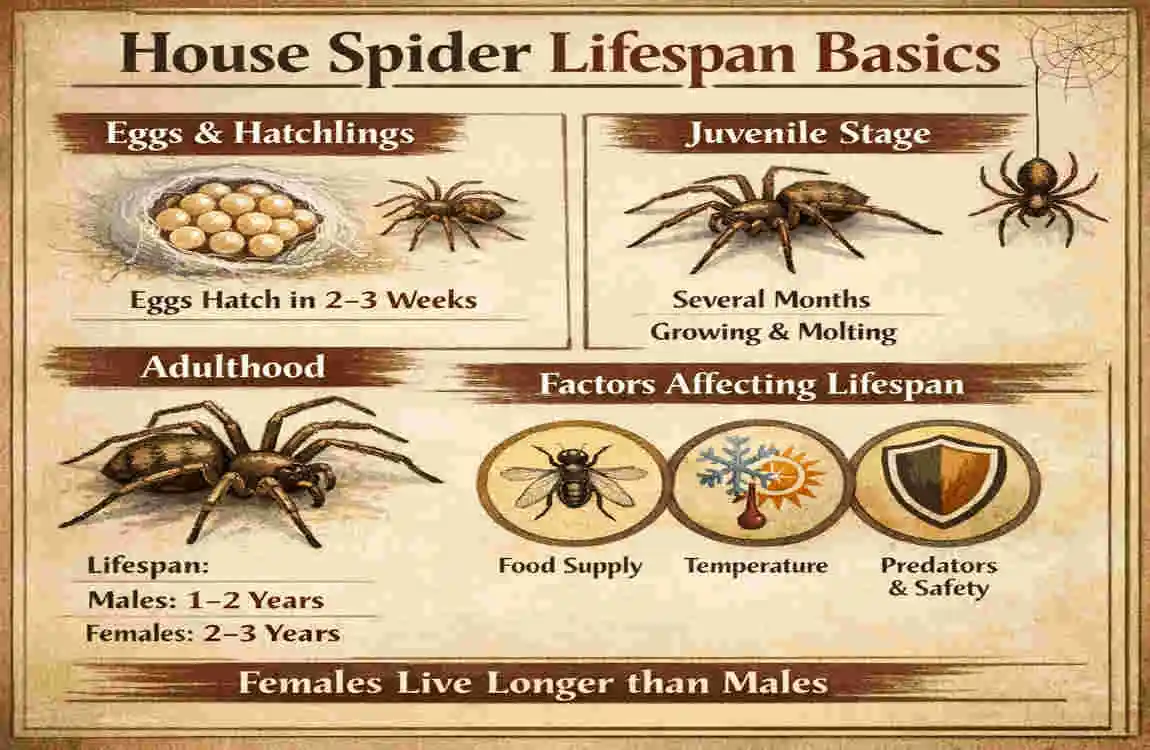
To defeat the enemy, you have to understand the enemy. One of the biggest misconceptions homeowners have is that spiders are seasonal pests that “die off” when winter ends. Unfortunately, indoors, the seasons don’t matter much.
Generally speaking, common house spiders typically live 1 to 2 years, depending on the species and the conditions inside your home. However, that is just an average. In a protected indoor environment—where there are no predators (like birds) and the temperature is climate-controlled—some species can live significantly longer.
Lifespan Breakdown by Species
Different spiders have different life expectancies. Here is what you are likely up against:
- Common House Spider (Parasteatoda tepidarioria): This is the standard “cobweb” spider you find in corners. They generally survive for about 1 year, though some females can push past that mark if food is plentiful.
- Cellar Spiders (Daddy Longlegs): These spindly creatures are tougher than they look. They can easily live for 2 to 3 years in a damp basement or garage.
- Wolf Spiders: These hunters don’t spin webs; they chase prey. While they are often seen as outdoor spiders, if they get inside, they can live for several years, growing larger with each molt.
The Gender Gap: Females Rule the Roost
There is a stark difference in the lifespans of male and female spiders. If you see a spider wandering across your living room floor in the middle of the carpet, it is almost certainly a male. Why? Because he is looking for a mate.
Male spiders have a tragic life trajectory. They reach maturity, leave their webs, and roam your house looking for a female. Once they mate, their purpose is fulfilled. Many die shortly after mating, or purely from exhaustion and lack of food during their search. Females, on the other hand, are the long-term residents. They stay hidden in their webs, conserving energy, eating, and laying eggs. A female house spider is the one likely to hit that 2-year mark.
Factors That Boost Survival
Why do they live so long in your house?
- Climate Control: Spiders are cold-blooded. Your heating and air conditioning keep them in a “Goldilocks” zone—not too hot, not too cold.
- No Predators: Outside, a spider has to worry about birds, wasps, and larger animals. Inside your home, they are at the top of the food chain (until you find them).
- Consistent Food Supply: If you have other bugs—flies, silverfish, or moths—you are running an all-you-can-eat buffet for spiders.
The Life Cycle Stages
Understanding their growth helps you catch them before they multiply.
- The Egg Stage: It starts with a sac. One silky sac can hold hundreds of eggs. This stage lasts a few weeks.
- Spiderlings: These are the tiny, almost transparent babies. They often disperse by “ballooning” (floating on silk threads).
- The Molting Phase: To grow, spiders must shed their exoskeleton. This is when they are most vulnerable. A spider that reaches maturity in your home has successfully molted several times, likely hidden in a dark closet or behind furniture.
- Adulthood: This is the reproductive phase. Once established, they focus on web maintenance and egg-laying.
Why Spiders Thrive in Homes: It’s Not Just Bad Luck
You might be wondering, “Why me? Why is my house the designated spider hangout?” The truth is, your home offers specific amenities that spiders are genetically programmed to seek out. It usually comes down to three things: Shelter, Moisture, and Food.
The Hunt for Clutter and Corners
Spiders are agoraphobic; they hate open spaces. They crave contact on their bodies—a sensation called thigmotaxis. They want to feel a wall or a floor against them.
This is why clutter is a spider’s best friend. Piles of clothes on the floor, stacks of cardboard boxes in the garage, or disorganized shelves in the basement create a labyrinth of safe havens. Dark, undisturbed spots are prime real estate. If you rarely dust behind your nightstand, a spider has likely set up a condo there.
Moisture is a Magnet
Like all living things, spiders need hydration. While they get some moisture from their prey, they are attracted to humid environments.
- Bathrooms: You will often find spiders in the tub or sink, not because they came up the drain (a common myth), but because they climbed in looking for water and couldn’t climb back out on the slippery porcelain.
- Basements: The naturally high humidity in basements makes them the perfect breeding ground for Cellar Spiders.
The “Restaurant” Theory
The most critical factor is prey. Spiders are predators. They do not eat plants or crumbs; they eat other bugs. If you have a high number of house spiders, it is a symptom of a different problem: you have a high population of other insects.
They are there because the hunting is good. Flies entering through torn screens, ants trailing in the kitchen, or silverfish in the attic provide a steady diet.
Seasonal Invasions
While they live indoors year-round, you might notice a surge in sightings during the fall. As temperatures drop outside, spiders (and the bugs they eat) look for warmth. They enter through cracks in the foundation, gaps under doors, and poorly sealed windows.
Risks of House Spiders: Friend or Foe?
Before we get to the genius cleaning hack house spiders hate, we need to address the fear. Are these long-term tenants dangerous?
For the vast majority of U.S. households, the answer is no. Most house spiders are harmless. In fact, they are beneficial because they eat pests like mosquitoes and flies. However, that doesn’t mean you want them sleeping above your head.
Venom vs. Danger
Here is a fact: Almost all spiders have venom. That is how they subdue their prey. However, very few have mouthparts strong enough to pierce human skin, and even fewer have venom that is medically significant to humans.
Comparison: Harmless vs. Harmful
To help you assess the risk, here is a quick breakdown of common home invaders:
Spider Type Lifespan Bite RiskHome Prevalence
Common House Spider 1-2 Years Low (Rarely bites, harmless) High
Daddy Longlegs 2-3 Years None (Cannot bite humans) High
Wolf Spider 1-3 Years Low (Painful like a bee sting, but not toxic) Moderate
Brown Recluse 2-4 Years Moderate/High (Necrotic venom, seeks clutter) Low (Region specific)
Black Widow 1-3 Years High (Neurotoxic, but they are shy/non-aggressive) Rare indoors
Note: If you suspect a Brown Recluse or Black Widow infestation, the DIY hacks below can help deter them, but professional intervention is safer.
The Genius Cleaning Hack House Spiders HATE
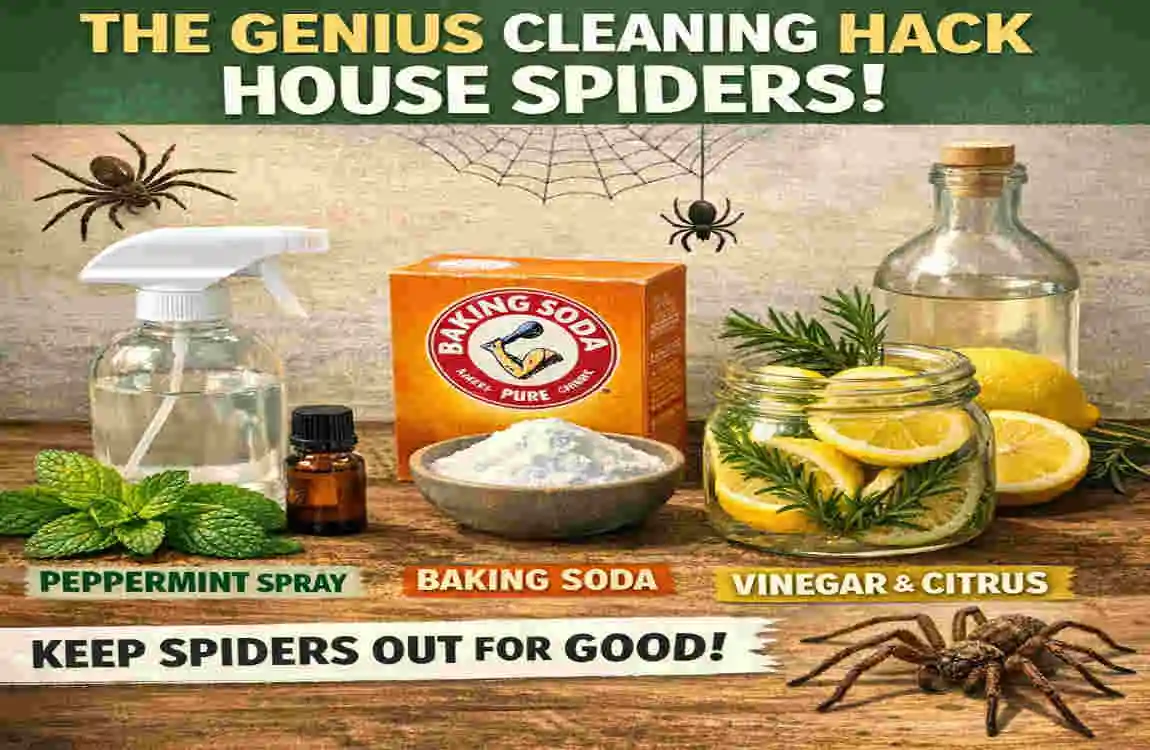
Now, for the main event. You want them gone, but you don’t want to spray toxic pesticides where your kids and pets play.
Enter the genius cleaning hack house spiders cannot stand: The Peppermint & Dish Soap Disruptor.
Why This Works
To understand why this hack is “genius,” you have to understand spider biology. Spiders do not have noses. They “smell” and sense their environment through taste receptors on their legs.
Peppermint Oil: To a spider, it’s like walking into a room filled with tear gas. It is incredibly overwhelming. The strong scent disrupts their ability to sense prey and communicate, forcing them to retreat to clearer air (i.e., outside your house).
Dish Soap: Oil and water don’t mix. If you just put peppermint oil in water, it will float to the top. The dish soap acts as an emulsifier, breaking the surface tension and allowing the oil to mix evenly throughout the spray. Furthermore, if the spray hits a spider directly, the soap breaks down their exoskeleton’s coating, dehydrating them.
The Recipe
Here is exactly how to make this potion.
Ingredients:
- 10–15 drops of high-quality Peppermint Essential Oil.
- 1 tablespoon of liquid Dish Soap (any brand works, but citrus-scented adds an extra kick).
- 1 cup of warm water.
- 1 Spray Bottle.
Instructions:
- Pour the warm water into the spray bottle.
- Add the dish soap.
- Add the drops of peppermint oil.
- Screw the lid on tight and shake vigorously. You need the soap to integrate the oil fully.
How to Apply the Hack
Strategy is key here. Do not just spray the air like an air freshener.
- Target Entry Points: Spray along the bottom of all exterior door frames. Spray the windowsills.
- The Corners: Hit the upper corners of every room (where cobwebs form) and the dark corners of baseboards.
- Behind Furniture: Pull the sofa and bed away from the wall and mist the area behind them.
Frequency: For an active infestation, spray once a day for 3-5 days. For maintenance, spray once a week.
Pro Tip: If you have cats, be careful with peppermint oil, as it can be irritating if ingested. In that case, substitute peppermint for a 50/50 vinegar-water mix (see below).
Additional Natural Remedies
If peppermint isn’t your style, or if you want to double down on your defenses, other natural methods work alongside the genius cleaning hack house spiders despise.
The Vinegar Spray
Vinegar is the Swiss Army knife of cleaning. It contains acetic acid, which burns spiders on contact and destroys their webs.
- How to use: Mix white vinegar and water (50/50 ratio) in a spray bottle.
- Best for: visible spiders. If you see one, spray it directly. It is kinder than squashing but lethal to the spider.
Diatomaceous Earth (DE)
This is a white powder made from fossilized remains of tiny aquatic organisms. To us, it feels like baby powder. To a spider, it is like walking on broken glass.
- How to use: Sprinkle a thin line of food-grade DE along baseboards, in the basement, or behind appliances.
- Mechanism: It cuts the spider’s exoskeleton, causing them to dehydrate and die.
Citrus Peels
Spiders famously hate citrus.
- How to use: Rub leftover lemon or orange peels on your baseboards and windowsills. It’s a great way to polish wood and repel bugs at the same time.
Comparison of Methods
Hack Speed of Results CostEffectiveness
Peppermint Hack Fast (Immediate repellent) Low High
Vinegar Spray Medium (Contact killer) Very Low Medium
Diatomaceous Earth Slow (Takes days to kill) Medium High (Long lasting)
Prevention Strategies: The Long Game
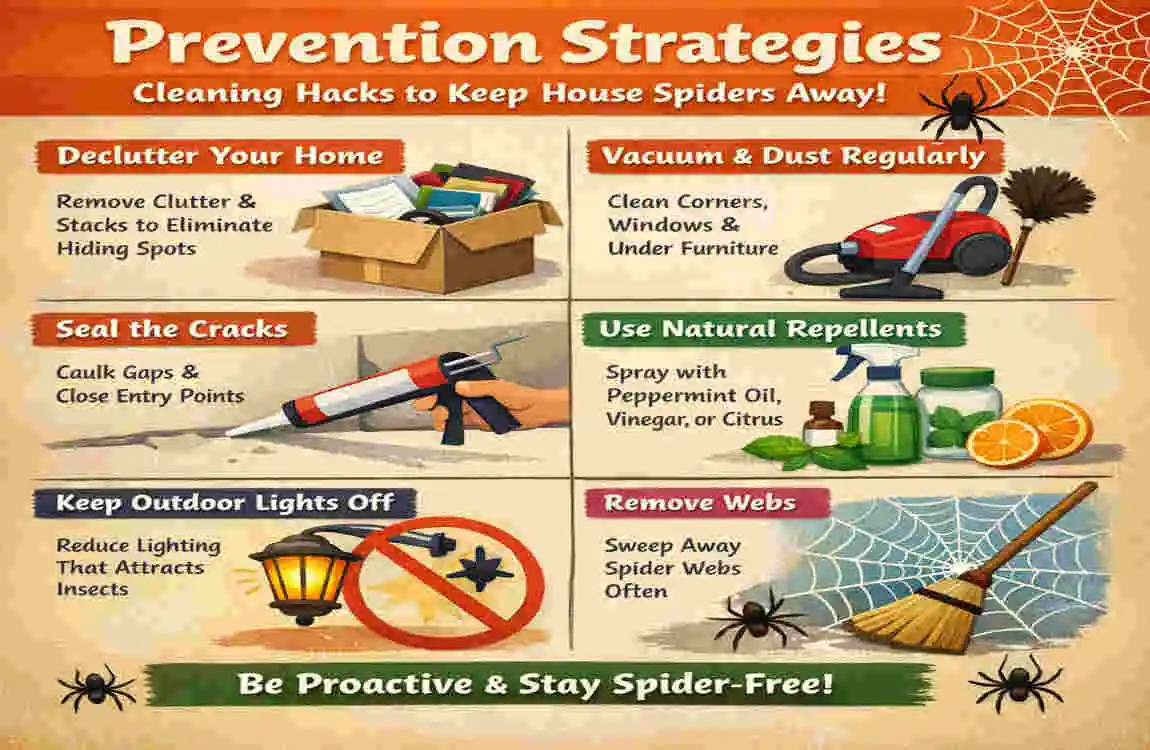
The genius cleaning hack house spiders hate is excellent for kicking them out, but how do you keep them out? You need to make your home inhospitable to them.
The Monthly Declutter
Since spiders live for years, they settle into undisturbed areas.
- Action plan: Once a month, move items that sit on the floor (laundry baskets, shoes, boxes). Vacuum behind them. This destroys webs and egg sacs, breaking the lifecycle.
Seal the Envelope
If you can see daylight under your front door, a spider sees a welcome sign.
- Action plan: install door sweeps on exterior doors. Use silicone caulk to seal cracks around window frames and where utility pipes enter the house.
Manage the Lights
Insects are attracted to bright white exterior lights. Spiders follow the insects.
- Action plan: Switch your porch lights to yellow “bug bulbs” or sodium vapor lights. They attract significantly fewer flying insects, which means fewer spiders hanging around your doorway waiting for dinner.
When to Call the Pros
While the genius cleaning hack house spiders dislike is effective for 90% of homes, there are times when you need backup.
If you wake up with unexplained bites, if you spot a Brown Recluse (identifiable by the violin shape on its back), or if you are finding new webs every single day despite cleaning, you may have a severe infestation within your walls. In these cases, professional pest control services can utilize heat treatments or specialized baits that reach where sprays cannot.
Here is a quick FAQ section covering the most common questions about the genius cleaning hack house spiders dislike, along with tips to make your efforts more effective.
Frequently Asked Questions: Mastering the Genius Cleaning Hack
Does vacuuming up cobwebs actually stop spiders from coming back?
Yes, it does! Vacuuming is not just about aesthetics; it is a strategic eviction. When you hoover up a web, you are removing the spider’s home and potential egg sacs, which prevents the next generation from hatching in your corners . Since spiders do not view old, abandoned webs as competition, they will happily move in next to old ones if you leave them . For a clever trick, cover your duster or vacuum attachment with an old pair of pantyhose; this allows you to swipe up webs in one go and simply toss the stocking away without touching the mess .
How often do I need to use the peppermint spray hack?
Consistency is the secret ingredient here. While natural repellents like peppermint oil are highly effective, they don’t last forever like chemical pesticides . For the best results, you should reapply the spray weekly, or immediately after you finish your dusting and cleaning routine . If you are dealing with a heavy infestation, you might want to spray daily for the first few days to establish a strong scent barrier .
I’m terrified of spiders. How do I clean a room without chasing them toward me?
This is a very common fear! A smart strategy is to spray your repellent (like the peppermint or vinegar mix) around the door frame before you start cleaning the room . This creates a barrier so you don’t accidentally chase the spider out of the room and into the rest of the house . Once the perimeter is secure, use the wand attachment on your vacuum to clean corners and cracks from a safe distance .
Are there other household items besides peppermint oil that work?
Absolutely. If you don’t have essential oils, white vinegar is a fantastic alternative. The smell dissipates quickly for humans but lingers for a spider’s sensitive detection system, and it is safe for use around children and pets . Another surprising hack involves WD-40. You can spray a light coating of WD-40 around the perimeter of your exterior windowsills; this slippery substance discourages spiders from spinning webs and entering through window gaps .
Is it better to kill them or move them?
If you have the stomach for it, the “capture and release” method is humane and effective for harmless species. You can gently trap the spider under a cup, slide a piece of paper underneath, and release it outdoors . However, for thorough elimination of an infestation, routine cleaning that involves vacuuming up spiders and their egg sacs is the most effective way to ensure they don’t return .


