If you are a homeowner, you already know that replacing your roof is one of the biggest and most stressful financial decisions you will ever make. It is right up there with remodeling a kitchen or buying a new car. You look up at your house and wonder, “Do I really need to spend this much money?” You are not alone in feeling this way. Every day, people just like you are forced to confront the tricky debate of initial expenses versus lifetime value.
We are currently living in an era where homeowners face rising energy bills, unpredictable weather, and increasingly severe storms. You want a roof that will protect your family, keep your home comfortable, and ideally, not drain your bank account over the next few decades. This brings us to the classic showdown between traditional asphalt shingles and modern metal roofing.
For generations, asphalt shingles have been the undisputed king of the residential roofing market. They are familiar, they look nice, and they come with an attractive price tag right out of the gate. But lately, metal roofs have been stealing the spotlight. Why? Because while they ask for more money upfront, they promise a lifetime of durability, incredible long-term savings, and serious protection against the elements.
When you dive into the true metal roof vs shingles cost, you have to look beyond the initial quote your contractor hands you. You have to consider the big picture. This means factoring in your monthly utility bills, the inevitable maintenance, and the roof replacement value over the lifespan of your home. You also have to think about the heavy installation costs and how often you will have to pay them.
Upfront Costs Breakdown
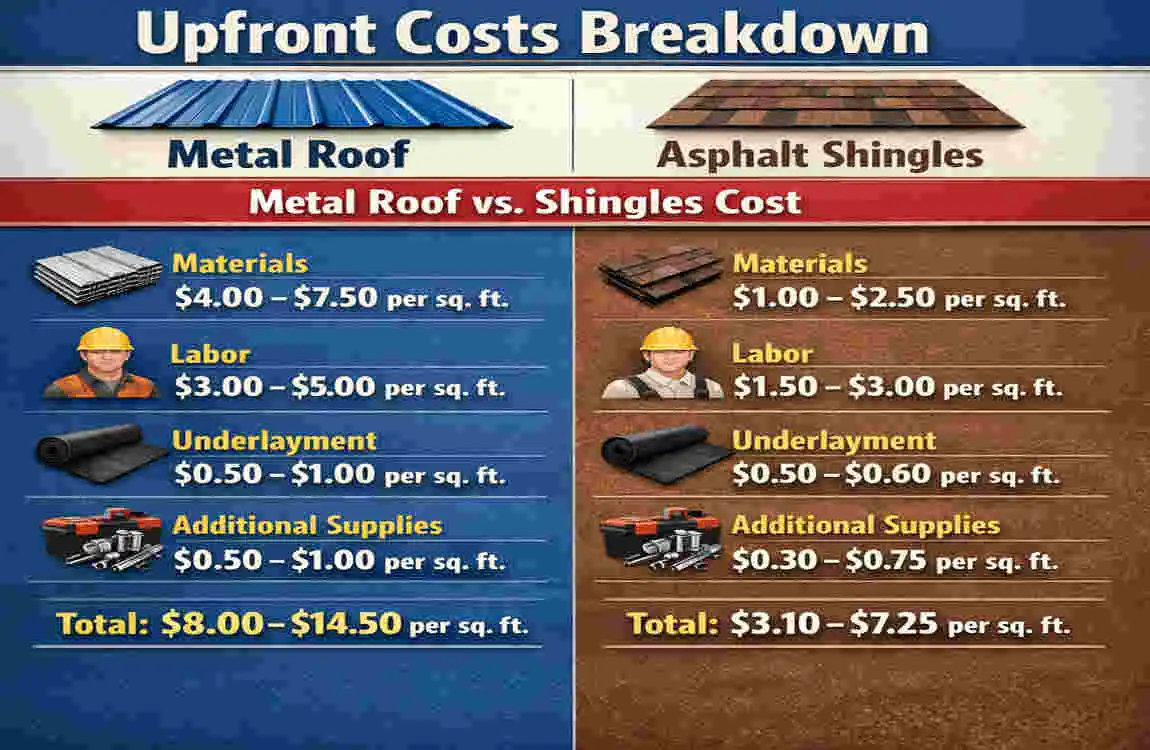
When you start calling contractors for quotes, the first thing that will hit you is the vast difference in the upfront price tag. It can be shocking if you are not prepared for it. Let’s take a closer look at what you are actually paying for when the roofing crew shows up at your house.
Metal Roof Pricing: The Premium Investment
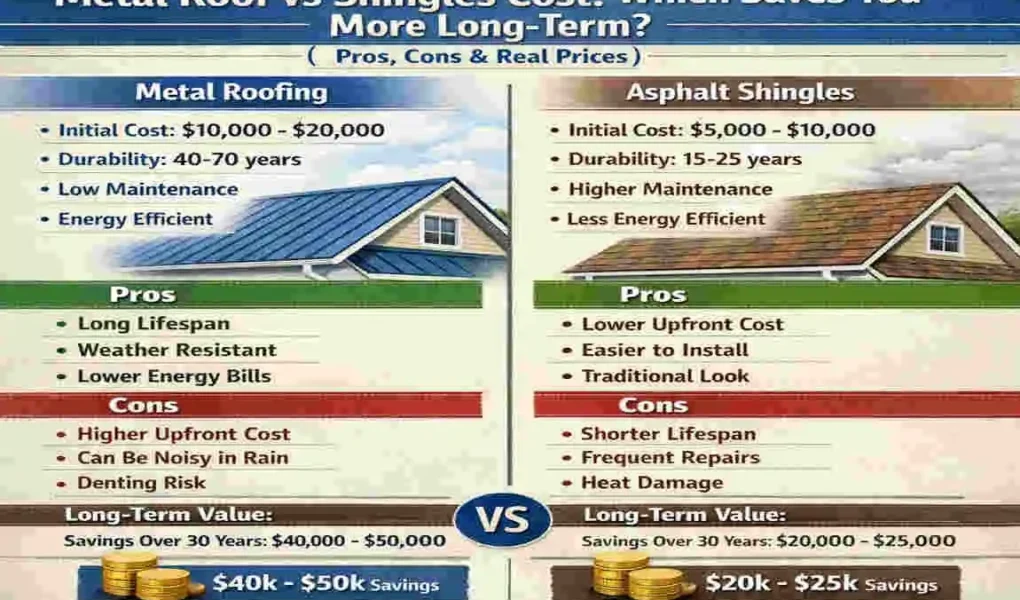
If you want to put a metal roof on your house, you need to prepare yourself for a premium price tag. On average, you can expect to pay anywhere from $10 to $18 per square foot fully installed.
Let us put that into a real-world perspective. If you have a standard, middle-class home with about 2,000 square feet of roof space, you are looking at a total bill ranging from $20,000 to $36,000. That is a serious chunk of change. But where exactly is all that money going?
First, the material itself plays a huge role. Most residential metal roofs are made from either steel or aluminum. Steel is the more common and affordable option, while aluminum costs a bit more because it will never rust—making it perfect if you live near the salty air of the ocean.
Next, you have to consider the gauge, which is simply a fancy word for thickness. A lower gauge number means a thicker, stronger, and more expensive metal panel. A 24-gauge panel will cost you more than a thinner 29-gauge panel, but it will also stand up much better to hail and falling branches.
The style of the metal roof also dictates the price. The two main styles are corrugated metal and standing seam. Corrugated metal features wavy panels with exposed screws. It is cheaper, but those exposed screws can eventually loosen and cause leaks. Standing seam is the premium option. It features flat panels with raised seams that interlock, completely hiding the fasteners from the harsh weather. This hidden-fastener system requires highly skilled labor to install, which drives up the initial installation costs, but it offers vastly superior weather protection.
Shingles Pricing: The Budget-Friendly Entry
Now let us look at the traditional route. Asphalt shingles are famous for being friendly to your wallet upfront. For a standard shingle roof, you will typically pay between $5 and $8 per square foot for the materials and the labor combined.
For that same 2,000-square-foot roof we mentioned earlier, your total cost will likely land between $10,000 and $16,000. When you compare that to the metal roof, you can instantly see why so many people choose shingles. It allows you to protect your home and satisfy your mortgage lender without emptying your entire savings account.
However, just like metal, not all shingles are created equal. You generally have two choices: 3-tab shingles and architectural shingles.
The 3-tab shingles are the absolute cheapest option on the market. They are flat, thin, and usually only last about 15 to 20 years. Architectural shingles are slightly more expensive, but they are much thicker and layered to give your roof a beautiful, three-dimensional look. They also last longer, usually pushing the 25 to 30-year mark.
It is also important to note that global and regional variations can affect these prices. For example, if you look at international markets like Pakistan, specifically in bustling areas like Lahore, the roofing market operates a bit differently. Asphalt shingles often have to be imported, which adds shipping costs and market adjustments to the final price. Even in the local U.S. market, your price will fluctuate based on the cost of oil, since asphalt is a petroleum-based product.
The Long-Term Cost Comparison: Which Wins Over Time?
Looking at the initial price tag is only half the battle. If you truly want to understand the metal roof vs shingles cost, you have to think like an investor. You have to project the costs over the entire lifespan of your home.
Imagine you are going to live in your current house for the next 50 years. Let’s break down exactly what your roof is going to cost you over those five decades. We have put together a simple table to give you a clear, side-by-side comparison of the long-term financial reality.
Aspect Metal Roof Shingles
Average Lifespan 50 to 70 years 20 to 30 years
Replacement Cycles 1 installation in 50 years 2 to 3 installations in 50 years
Total 50-Year Cost ~$25,000 (just one install) ~$30,000+ (multiple installs)
Energy Savings Up to 25% lower cooling bills Minimal heat reflection
Calculating Your Return on Investment (ROI)
When you look at the table above, the math becomes incredibly clear. Yes, the metal roof hurts your bank account more on day one. But over a 50-year period, it actually pays for itself.
If you buy a shingle roof today for $12,000, you might think you scored a great deal. But in 20 or 25 years, you are going to have to tear that roof off and buy a brand-new one. And guess what? Due to inflation, that next shingle roof is not going to cost $12,000 anymore. It might cost $18,000. Then, 25 years after that, you will have to do it all over again. By the time 50 years have passed, you have easily spent over $30,000, dealt with the headache of multiple construction projects, and filled up the local landfill with tons of old asphalt.
A metal roof, on the other hand, is generally a “one and done” project. You pay the $25,000 upfront, and you never have to worry about replacing your roof again for the rest of your life.
Factoring in Maintenance and Repairs
We also have to talk about the hidden costs of homeownership: maintenance and repairs.
Shingle roofs are notoriously needy. Strong winds can rip individual shingles right off your roof. Hail can knock the protective ceramic granules off the shingles, exposing the asphalt underneath to the harsh sun. Over a decade, it is very common for a homeowner to spend $1,000 or more just patching up bare spots, fixing leaks, and replacing blown-off shingles.
Metal roofing is remarkably self-sufficient. Unless a massive tree falls directly onto your house, a metal roof requires very little attention. You should spend around $500 per decade to have a professional come out, inspect the flashing, and make sure the protective coatings are holding up.
When you combine the lack of replacement cycles with the drastically lower maintenance costs, the long-term savings of a metal roof become impossible to ignore.
Pros and Cons of Metal Roofs
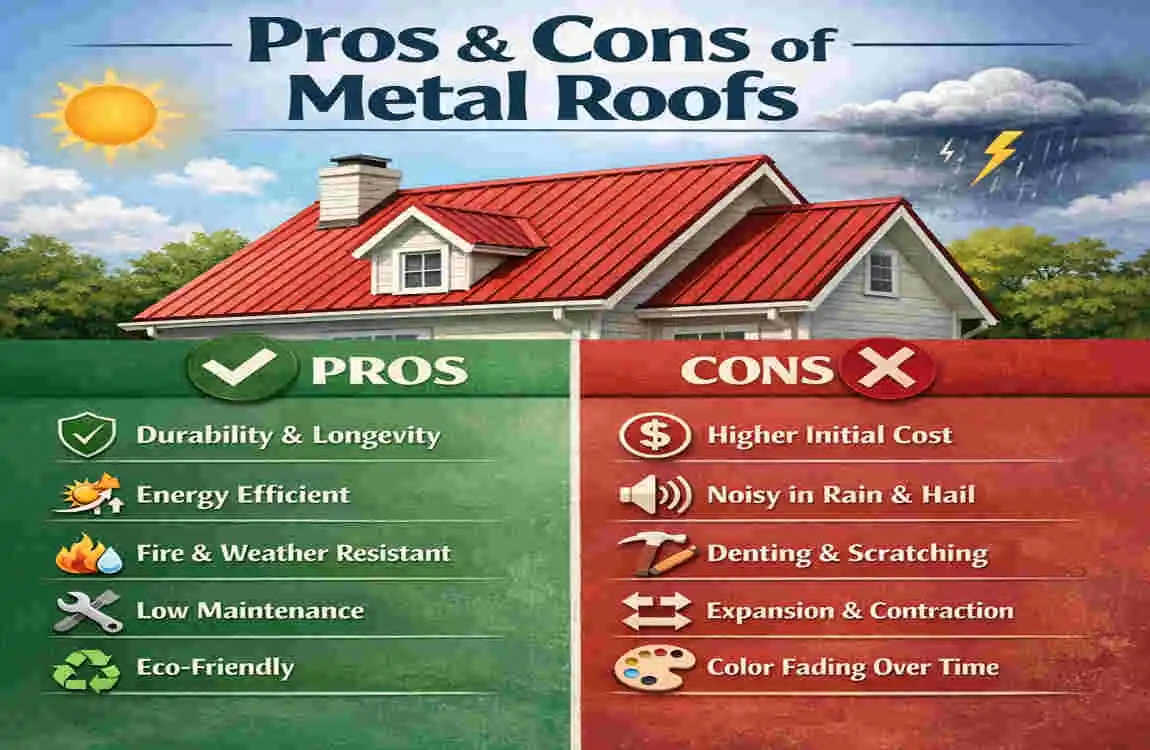
Every building material in the world has its strong points and its weak points. To make an informed decision, you need to look at both sides of the coin. Let us explore what makes metal roofing so amazing, and what might make you hesitate.
Key Pros of Metal Roofing
First and foremost, metal roofs offer exceptional durability. We are talking about tough, battle-ready protection for your home. A high-quality, properly installed metal roof can withstand wind gusts of 140 miles per hour or more. That is equivalent to a Category 4 hurricane! If you live in an area prone to severe weather, this kind of wind resistance is absolute gold. They are also highly resistant to hail damage, especially if you choose a thicker gauge steel.
Another massive benefit is energy efficiency. Metal is highly reflective. During the boiling hot summer months, a metal roof acts like a mirror, bouncing the sun’s radiant heat away from your home. This means your attic stays cooler, your air conditioning system does not have to work as hard, and you can see your monthly cooling bills drop significantly.
If you care about the environment, metal is the way to go. It offers eco-friendly recyclability. Most metal roofs are made from at least 25% recycled material, and when they finally do reach the end of their lifespan half a century from now, they are 100% recyclable.
Finally, a beautiful metal roof boosts your home’s curb appeal and can increase your resale value by 6% to 10%. Buyers love knowing they will not have to replace the roof anytime soon.
Key Cons of Metal Roofing
The most obvious drawback is the higher initial outlay. As we have discussed, you need a healthy budget to afford the upfront installation costs. This can put a serious strain on families who are already stretching to make ends meet.
Another common concern is noise. Some people worry that a metal roof will sound like a drum solo during a heavy rainstorm. While it is true that metal is louder than asphalt when struck by rain or hail, modern installation techniques usually solve this. Contractors install the metal over a solid wood deck and layer it with heavy insulation, which muffles the sound to a gentle patter.
You also have to worry about potential dents. If you choose a very thin, cheap metal panel (like a 29-gauge) and your neighborhood gets hit by golf-ball-sized hail, your roof may look a bit bruised. It will still keep the water out, but the cosmetic damage can be annoying.
Lastly, you have to navigate your local Homeowners Association (HOA). Some strict neighborhoods have rules against metal roofs because they want every house to look uniform. Always check your local bylaws before signing a contract!
Pros and Cons of Shingles
Now let us give asphalt shingles their fair time in the spotlight. There is a reason they are still the most popular roofing material in North America. They offer plenty of benefits, but they also come with a few frustrating realities.
Key Pros of Shingles
The biggest advantage of asphalt shingles is the affordable entry point. If your roof springs a leak right before the holidays and you are tight on cash, shingles offer a reliable way to protect your home without taking out a massive second mortgage.
They are also incredibly easy and DIY-friendly. If you are a handy person with a ladder, a hammer, and some safety gear, you can actually learn to patch or even replace shingle roofs yourself. You cannot say the same for a standing seam metal roof, which requires specialized tools and years of apprenticeship to master.
Shingles also give you wide color and style options. Whether you want a rustic slate look, a warm terracotta vibe, or a clean charcoal gray, there is a shingle designed to match your vision. They mimic traditional architectural styles beautifully, ensuring your home blends seamlessly into almost any neighborhood aesthetic.
Furthermore, because they are so common, you will never struggle to find a contractor. Almost every roofing company in your town knows exactly how to install and repair asphalt shingles.
Key Cons of Shingles
The biggest flaw of the asphalt shingle is its vulnerability to the environment. They are highly prone to moss and algae growth, especially if you have large trees shading your roof. This can leave ugly black streaks across your home.
They also suffer heavily from UV damage. Over the years, the relentless baking of the sun dries out the asphalt, causing the shingles to curl up at the edges, crack, and become brittle.
This leads to a significantly shorter life expectancy in hot and humid climates. For example, in sweltering global regions like Punjab, the intense summer heat can cut the lifespan of an asphalt roof down drastically. The shingles cannot survive the constant thermal shock of heating up during the day and cooling down at night.
Because of this vulnerability, you are going to face frequent repairs. Replacing missing shingles after a windy thunderstorm or patching up brittle sections becomes a routine chore. Over time, these constant little repair bills slowly erode the initial savings you enjoyed on day one.
Real-World Price Examples and Case Studies
To truly grasp the metal roof vs shingles cost debate, it helps to step away from the abstract theories and look at some real-world examples. Let us examine how these numbers play out in actual scenarios.
The Standard U.S. Average
In the United States, we can look at averages adjusted for current global economic trends. If you own a standard suburban home with 2,000 square feet of roof, a complete tear-off and installation of a brand-new metal roof will generally run you $16,000 to $28,000.
If you opt for a standard architectural asphalt shingle roof for that exact same house, your bill will likely be between $8,000 and $14,000.
Global Market Adjustments: The Lahore Example
It is fascinating to see how local markets change these dynamics. Let us take the bustling city of Lahore as an example. In regions like this, asphalt shingles are not the native, default building material.
If a homeowner in Lahore wants the Western look of asphalt shingles, those materials often have to be imported. Meanwhile, the steel used for metal roofs also faces global shipping pressures. You will often see an import steel markup of around 20% in these markets. However, the local labor costs to install the roof are significantly lower—sometimes hovering around just $2 to $4 per square foot. This creates a unique dynamic where the material is the primary cost driver, rather than the labor, completely shifting the ROI calculation for homeowners in South Asia.
The Florida Hurricane Case Study
Let us look at a case study from the hurricane-prone coast of Florida. A homeowner had to replace their shingle roof every 15 years due to relentless wind damage, intense UV radiation, and severe humidity. Over 30 years, they paid for two complete shingle tear-offs and countless emergency repairs after tropical storms, spending well over $35,000 in total.
When they finally upgraded to a standing seam metal roof, they paid $25,000 upfront. Not only did the metal roof survive the next three major hurricanes without losing a single panel, but their homeowner’s insurance premiums dropped because of the added wind protection. Over the next 30 years, that Florida home is projected to save over $10,000 in repair, replacement, and insurance costs compared to sticking with shingles.
Crucial Factors Affecting Your Choice
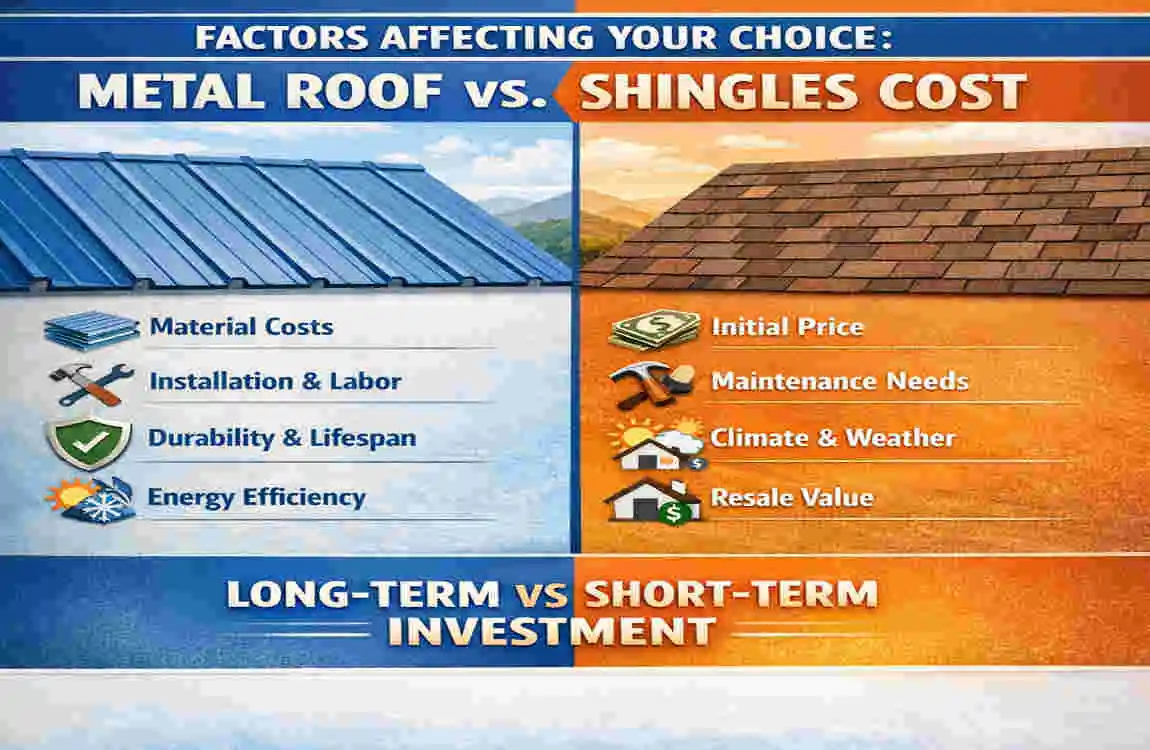
You cannot make this decision based on price alone. What works for a homeowner in snowy Maine might be a terrible idea for a homeowner in sunny Arizona. You have to look at the unique context of your own life and property.
Here are the critical factors you need to weigh:
- Your Local Climate: This is massive. Metal absolutely excels in extreme weather. If your town gets battered by hailstorms, hurricane-force winds, or massive blizzards, metal sheds snow easily and locks down tight against the wind. If you live in a mild, quiet climate, shingles are fine.
- Your Roof Pitch: “Pitch” is roofing terminology for how steep your roof is. If your roof is almost flat, shingles are a bad idea because water will pool beneath them and cause rot. Metal roofs, specifically standing seam styles, can be installed on much lower slopes and still effectively shed water.
- Your Home Value: Are you living in a high-end luxury neighborhood or a modest starter home? You want your roof to match the value of the property. Putting a $40,000 copper metal roof on a $150,000 house does not make financial sense.
- Your Personal Budget: At the end of the day, cash is king. If you cannot secure the financing or save the cash for a metal roof, shingles remain a dignified, reliable way to keep your family dry.
Your Action Checklist:
- Assess your 50-year horizon. How long do you plan to live here?
- Call your insurance agent to ask about premium discounts for metal roofs.
- Evaluate your current cooling bills.
- Ask yourself: Am I looking for true metal roof vs shingles cost savings over time, or just a quick fix today?
Maintenance and Energy Impacts Over Time
We touched on this briefly, but the day-to-day reality of living under these two different materials is vastly different.
When you own a metal roof, your maintenance routine is practically nonexistent. It involves minimal cleaning. You should spray off some accumulated dirt or tree sap once a year to keep it looking shiny. Furthermore, modern metal roofs come with incredible factory finishes, like Kynar 500. These are self-healing coatings that resist fading, chalking, and rust for decades. You sit back and let the roof do its job.
When you own a shingle roof, you have to be vigilant. You should be doing annual inspections. You have to climb up the ladder to check the caulking around your chimney, make sure the rubber boots around your vent pipes are not cracked, and apply sealants to any exposed nail heads. You also have to keep your gutters meticulously clean, because if water backs up under the shingles, your roof deck will rot.
From an energy standpoint, the differences are striking. A quality metal roof often earns a “cool roof” rating from environmental agencies. By reflecting the sun’s harsh rays instead of absorbing them into your attic, a metal roof actively works to cool your house. Homeowners frequently report that a cool metal roof slashes their monthly energy bills by 10% to 25%. Shingles, especially dark-colored ones, soak up the heat and radiate it straight into your living room.
Frequently Asked Questions (FAQs)
We know that roofing is a complex topic, and you probably still have a few questions rolling around in your mind. Here are some of the most common questions homeowners ask us when deciding between metal and asphalt.
What is the average metal roof vs shingles cost per square foot?
On average, a fully installed metal roof will cost you between $10 and $18 per square foot, depending on whether you choose corrugated panels or standing seam. Asphalt shingles are significantly cheaper upfront, usually running between $5 and $8 per square foot for materials and labor.
Do metal roofs increase home value?
Absolutely. Upgrading to a metal roof can yield a solid Return on Investment (ROI), typically increasing your home’s resale value by 1% to 6%. Prospective buyers love the aesthetic appeal, the energy savings, and the peace of mind knowing they will not have to replace the roof during their lifetime.
Can you install a metal roof directly over old shingles?
In many local building codes, yes! Because metal is so lightweight, contractors can often install the new metal panels directly over a single layer of existing asphalt shingles. This saves you a tremendous amount of money on tear-off labor and keeps tons of old asphalt out of the local landfill. However, your roof deck must be structurally sound to do this.
Will a metal roof make my house hotter in the summer?
This is a very common myth. Actually, the exact opposite is true! Metal reflects radiant heat from the sun, whereas dark asphalt shingles absorb it like a sponge. A metal roof will keep your attic much cooler, reducing the strain on your air conditioner and lowering your monthly utility bills.
Are metal roofs dangerous during a lightning storm?
No, metal roofs are perfectly safe during lightning storms. While metal does conduct electricity, a metal roof is not any more likely to be struck by lightning than a shingle roof. In fact, if lightning does strike, a metal roof is much safer because it is non-combustible and will not catch fire, unlike petroleum-based asphalt.
How do I know if my roof pitch is right for shingles?
Asphalt shingles rely on gravity to shed water. Therefore, they should only be installed on roofs with a pitch of 2:12 or steeper (meaning the roof rises 2 inches for every 12 inches of horizontal run). If your roof is flatter than that, water can pool and seep backward under the shingles. In low-pitch scenarios, a standing seam metal roof is a much safer, watertight choice.