Are you thinking about giving your bedroom a fresh new look with oil-based paint? You’re not alone! More and more people are turning to oil paints for their home interiors because of their durability and beautiful finish. But before you grab that paintbrush, it’s essential to consider health and safety concerns, especially in your bedroom.
Understanding Oil Paint and Its Composition

What is Oil Paint?
Oil paint is a type of paint that uses oil as its base. It’s been around for centuries and is known for its rich, vibrant colors and long-lasting finish. But what exactly goes into making oil paint?
At its core, oil paint consists of pigments, which give the paint its color, and a drying oil, such as linseed or walnut oil. These oils help the paint to dry and form a durable film on the surface.
How Oil Paint Differs from Water-Based Paints
You might be familiar with water-based paints, such as latex or acrylic. These paints use water as their base and are generally easier to clean up and have lower levels of harmful chemicals. But oil paint is a different story.
Oil paint dries much more slowly than water-based paints, which can be both a blessing and a curse. On one hand, it gives you more time to work with the paint and blend colors. On the other hand, it means the paint may take longer to cure and fully release its fumes.
Common Solvents and Additives
To thin oil paint and make it easier to work with, artists often use solvents such as turpentine or mineral spirits. These solvents can help to clean brushes and thin the paint, but they can also release harmful fumes into the air.
In addition to solvents, oil paints may also contain additives such as driers, which help the paint dry faster, and stabilizers, which help prevent separation. While these additives can be helpful, they can also affect the paint’s overall chemical composition.
Why Oil Paints Are Valued
So, why do people love oil paints so much? For starters, they offer a beautiful, rich finish that’s hard to beat. Oil paints can create a smooth, even surface that’s perfect for showcasing your favorite colors and designs.
Plus, oil paints are incredibly durable. Once they’ve fully cured, they can withstand years of wear and tear without fading or chipping. This makes them an excellent choice for high-traffic areas or frequently used rooms.
Health Concerns of Using Oil Paint Indoors
Understanding VOCs
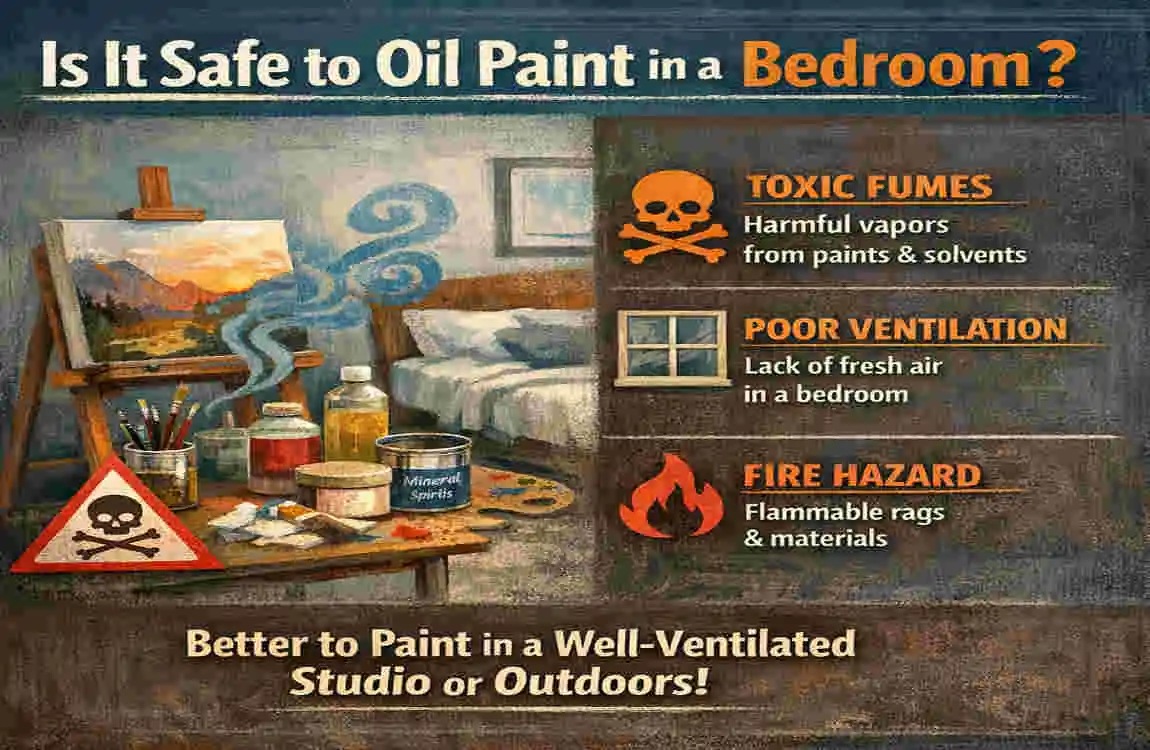
When using oil paint indoors, one of the biggest concerns is the release of volatile organic compounds (VOCs). VOCs are chemicals that readily evaporate into the air and are found in many household products, including paint.
When you use oil paint, the solvents and additives in the paint can release VOCs into the air. These VOCs can cause a range of health problems, from mild irritation to more serious long-term effects.
Short-Term Symptoms
If you’re exposed to high levels of VOCs from oil paint, you might experience some short-term symptoms. These can include headaches, dizziness, nausea, and respiratory irritation. In some cases, you might even feel lightheaded or have trouble breathing.
These symptoms are usually temporary and will go away once you’re no longer exposed to the VOCs. However, if you’re working with oil paint in a small, enclosed space like a bedroom, the concentration of VOCs can be much higher, worsening these symptoms.
Long-Term Health Risks
While the short-term symptoms of VOC exposure can be uncomfortable, the long-term health risks are even more concerning. Prolonged exposure to VOCs has been linked to a range of serious health problems, including respiratory issues, liver and kidney damage, and even cancer.
If you’re planning to use oil paint in your bedroom, it’s essential to consider the potential for long-term exposure. You’ll spend a lot of time in your bedroom, sleeping and relaxing, which means you’ll breathe in those VOCs for hours on end.
Risks in Bedrooms
Bedrooms are particularly concerning when it comes to using oil paint because they’re often small, enclosed spaces. This means that the VOCs from the paint can build up more easily and reach higher concentrations.
Plus, you’re more likely to be exposed to these VOCs for more extended periods of time in your bedroom. You might spend 8 hours or more sleeping in your bedroom each night, which means you’ll be breathing in those fumes for a significant portion of your day.
Sensitive Groups
Some people are more sensitive to the effects of VOCs than others. Children, pregnant women, the elderly, and individuals with respiratory conditions like asthma or COPD may be more susceptible to the health risks of oil paint.
If you or someone in your household falls into one of these sensitive groups, it’s essential to take extra precautions when using oil paint in your bedroom. Consider safer alternatives or take steps to minimize your exposure to VOCs.
Is It Safe to Oil Paint in a Bedroom? – Key Considerations
Evaluating Safety
So, is it safe to oil paint in your bedroom? The answer depends on a few key factors, including ventilation, drying time, paint quality, and your personal sensitivity to VOCs.
If you have a well-ventilated bedroom with good airflow, the risks of using oil paint may be lower. However, if your bedroom is small and enclosed, the VOCs from the paint can build up more easily and pose a greater health risk.
Factors Influencing Safety
The quality of the paint you use can also make a big difference. Some oil paints are formulated with lower levels of VOCs, making them safer to use indoors. Look for paints labeled as “low-VOC” or “no-VOC” for the safest options.
The paint brand you choose can also affect safety. Some brands may use higher-quality ingredients and manufacturing processes that result in lower VOC emissions. Do your research and choose a reputable brand that prioritizes safety and health.
When It Might Be Acceptable
In some cases, it might be acceptable to use oil paint in your bedroom if you take the proper precautions. For example, if you have a large, well-ventilated bedroom and you use a low-VOC oil paint, the risks may be lower.
However, even in these cases, it’s essential to take steps to minimize your exposure to VOCs. This might mean opening windows and using fans to circulate fresh air, or even temporarily relocating to another room while the paint dries.
When to Avoid Oil Painting
On the other hand, there are some situations where it’s best to avoid using oil paint in your bedroom altogether. If your bedroom is small and poorly ventilated, or if you or someone in your household is particularly sensitive to VOCs, it’s best to choose a safer alternative.
Additionally, if you’re pregnant or have young children, it’s a good idea to err on the side of caution and avoid using oil paint in your bedroom. The potential health risks outweigh the benefits of using oil paint in these cases.
Real-Life Experiences and Expert Recommendations
Many people have successfully used oil paint in their bedrooms without experiencing any health problems. However, others have reported symptoms like headaches, dizziness, and respiratory irritation after using oil paint in a small, enclosed space.
Experts generally recommend taking a cautious approach when using oil paint in bedrooms. They suggest using low-VOC or no-VOC paints, ensuring good ventilation, and taking steps to minimize exposure to fumes. If you’re unsure about the safety of using oil paint in your bedroom, it’s always best to consult with a professional.
Essential Safety Tips for Using Oil Paint in a Bedroom
Preparing Your Bedroom
If you do decide to use oil paint in your bedroom, it’s important to take some essential safety precautions. Start by preparing your bedroom for painting.
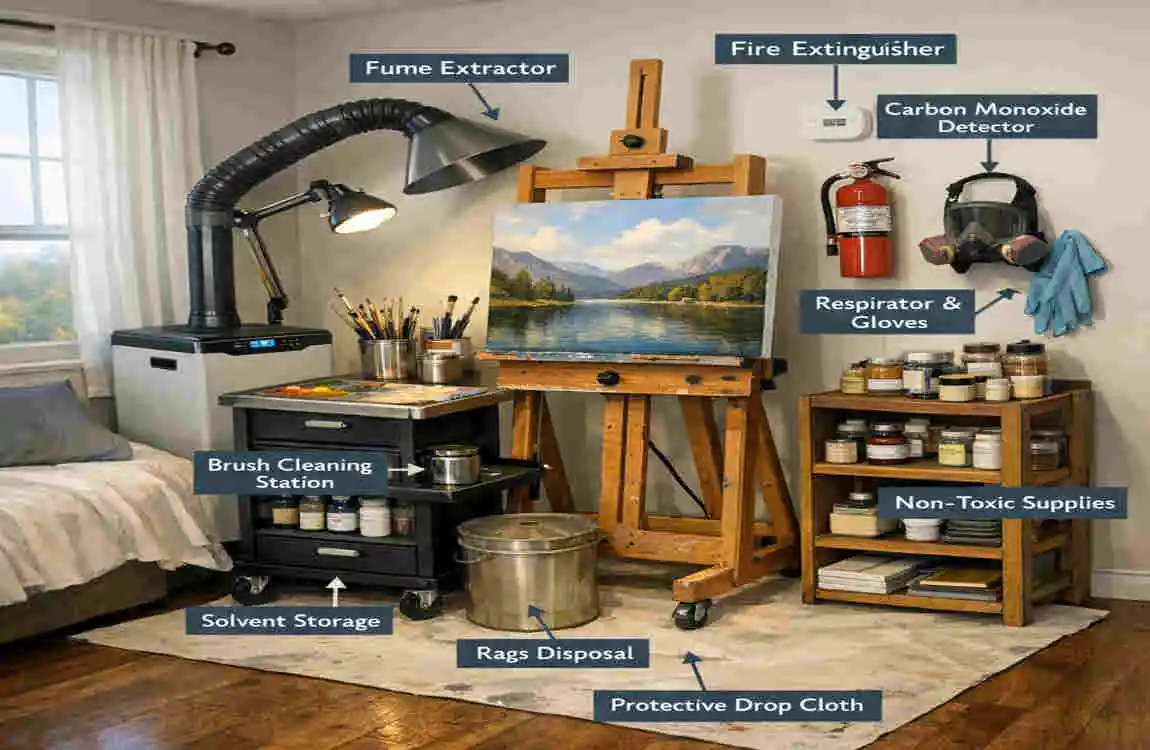
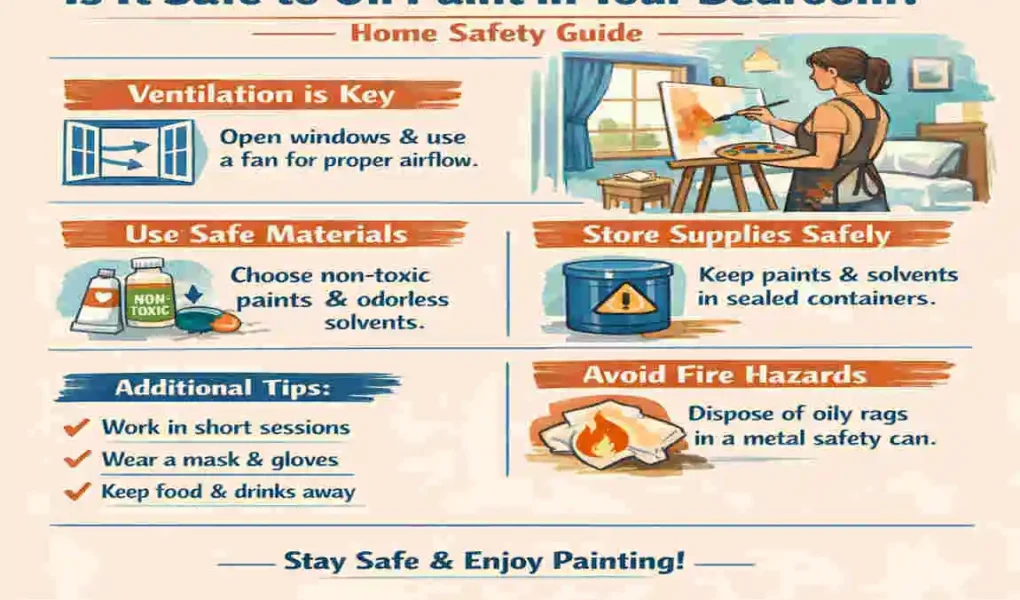
Remove as much furniture as possible from the room to minimize the surface area where paint fumes can cling. Cover any remaining furniture, your bedding, and floors with drop cloths or plastic sheeting to protect them from paint spills and splatters.
Using Respirators and Masks
When working with oil paint, it’s a good idea to wear a respirator or mask designed to filter out paint fumes. These masks can help reduce your exposure to VOCs and other harmful chemicals in the paint.
Look for a mask with a rating of N95 or higher, which means it can filter out at least 95% of airborne particles. Make sure the mask fits snugly over your nose and mouth, and replace the filters regularly to ensure maximum protection.
Ventilation Strategies
Ventilation is key when using oil paint in your bedroom. Open windows and use fans to circulate fresh air throughout the room while you’re painting. Set up a cross-breeze by opening windows on opposite sides of the room.
Consider using an air purifier with a HEPA filter to help remove VOCs and other airborne particles. Run the air purifier continuously while you’re painting and for several days afterward to keep the air clean and fresh.
Duration of Ventilation
It’s essential to keep your bedroom well-ventilated, not just while you’re painting, but also after the paint has been applied. Oil paint can take several days or even weeks to cure and release its fumes fully.
Keep windows open and fans running for at least 24-48 hours after painting, or longer. Consider temporarily relocating to another room while the paint dries to minimize your exposure to VOCs.
Choosing Safer Paint Options
One of the best ways to minimize the risks of using oil paint in your bedroom is to choose a safer paint option. Look for oil paints labeled as “low-VOC” or “no-VOC,” which have lower levels of harmful chemicals.
Some brands also offer “odorless” or “non-toxic” oil paints, which may be safer to use indoors. Do your research and read reviews from other users to find the safest and most effective paint for your needs.
Proper Disposal of Paint and Solvents
When you’re finished painting, it’s essential to dispose of any leftover paint and solvents properly. Never pour paint or solvents down the drain, as they can contaminate waterways and harm the environment.
Instead, check with your local waste management agency for guidelines on safely disposing of paint and solvents. Many communities have special facilities or events for disposing of hazardous household waste, including paint and solvents.
Post-Painting Care
Even after the paint has dried, it’s a good idea to take some extra precautions to keep your bedroom toxin-free. Avoid sleeping in the room for at least 24-48 hours after painting, or longer if possible.
Consider using an air purifier with a HEPA filter to keep the air clean and fresh. Open windows and use fans to circulate fresh air for several days or weeks after painting.
Seeking Professional Help
If you’re unsure about the safety of using oil paint in your bedroom, or if you experience symptoms such as headaches, dizziness, or respiratory irritation, it’s a good idea to seek professional help.
A healthcare provider can help you determine if your symptoms are related to paint exposure and recommend the best course of treatment. A professional painter or indoor air quality specialist can also provide guidance on using oil paint safely in your home.
Alternatives to Oil Paint for Bedroom Walls

Low-VOC and Zero-VOC Latex Paints
If you’re concerned about the health risks of using oil paint in your bedroom, there are plenty of safer alternatives to choose from. One popular option is low-VOC or zero-VOC latex paint.
Latex paint is a water-based paint that’s generally safer to use indoors than oil paint. Low-VOC and zero-VOC latex paints have even lower levels of harmful chemicals, making them an excellent choice for bedrooms and other living spaces.
Natural Paints and Eco-Friendly Options
Another alternative to oil paint is natural paint, made from plant-based ingredients such as clay, chalk, and natural pigments. These paints are generally safer and more eco-friendly than traditional oil paints.
Some natural paints are also labeled “low-VOC” or “no-VOC,” meaning they contain even lower levels of harmful chemicals. Look for paints certified by organizations like Green Seal or the GREENGUARD Environmental Institute for the safest and most eco-friendly options.
Comparing Durability, Finish, and Safety
When choosing paint for your bedroom, consider durability, finish, and safety. Oil paints are known for their durability and rich, vibrant finish, but they can pose health risks when used indoors.
Latex paints, on the other hand, may not be as durable as oil paints, but they’re generally safer to use indoors. Natural paints can offer a unique, eco-friendly alternative, but they may not provide the same level of durability or finish as oil or latex paints.
Recommendations for Bedrooms
For bedrooms, it’s generally best to prioritize safety and choose a low-VOC or zero-VOC latex paint or a natural, eco-friendly paint. These paints can create a safe, healthy environment for sleeping and relaxing while still offering a beautiful, durable finish.
If you’re set on using oil paint in your bedroom, make sure to take all the necessary safety precautions, including proper ventilation, wearing a respirator or mask, and choosing a low-VOC or no-VOC paint. And if you experience any symptoms or concerns, don’t hesitate to seek professional help.
Common Myths and About Oil Paint Safety in Bedrooms
Oil Paint is Always Toxic Indoors
One common myth about oil paint is that it’s always toxic and unsafe to use indoors. While it’s true that oil paints can release harmful VOCs, not all oil paints are created equal.
Many modern oil paints are formulated with lower levels of VOCs and other harmful chemicals, making them safer to use indoors. By choosing a low-VOC or no-VOC oil paint and taking the right safety precautions, you can minimize the risks of using oil paint in your bedroom.
Oil Paint Fumes Dissipate Quickly and Pose No Risk
Another myth is that oil paint fumes dissipate quickly and pose no risk to your health. In reality, oil paint can take several days or even weeks to fully cure and release its fumes.
During this time, the VOCs from the paint can build up in your bedroom and pose a health risk, especially if the room is small and poorly ventilated. It’s important to keep your bedroom well-ventilated and take other safety precautions to minimize your exposure to these fumes.