

You’ve just flipped on the bathroom light, and there it is—a lightning-fast creature with way too many legs darting across the floor. If this scenario sounds familiar, you’ve likely encountered a house centipede. While they may look intimidating, you might wonder, “Are house centipedes poisonous?” The good news is that house centipedes are not lethally poisonous to humans. Their venom, used to immobilize prey, is mild and rarely causes more than a minor sting.
What Are House Centipedes? Identification Guide
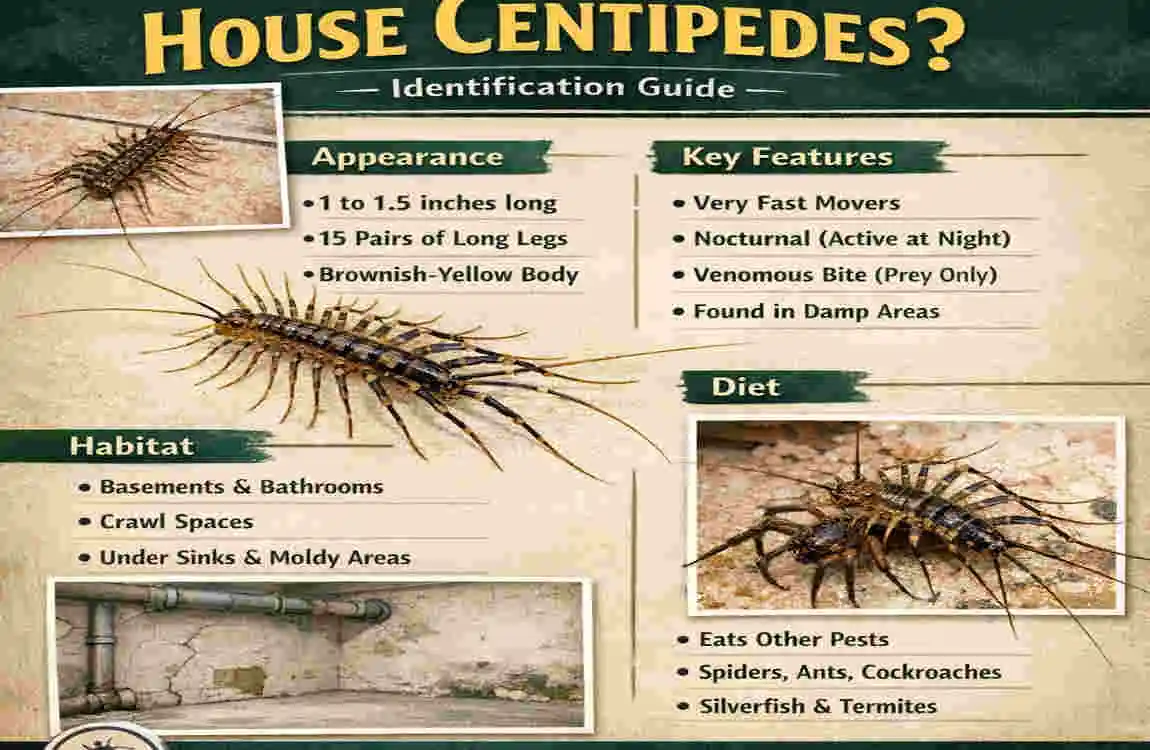
House centipedes are fascinating creatures, but their creepy appearance often overshadows their beneficial role in nature. Here’s how to identify them and understand their behavior.
House Centipede Appearance and Traits
House centipedes, scientifically known as Scutigera coleoptrata, are easy to recognize. They have long, flattened bodies measuring 1 to 1.5 inches (excluding their legs). Their bodies are yellowish-gray with dark stripes running along their back. What sets them apart is their 15 pairs of long, delicate legs that fan out like a feather—a feature that helps them move incredibly fast, sometimes up to 1.3 feet per second!
Key Traits:
- Length: 1-1.5 inches (body only)
- Color: Yellow-gray with dark stripes
- Legs: 15 pairs, thin and elongated
- Behavior: Nocturnal, fast runners, and excellent climbers
House Centipedes vs. Other Centipedes
Not all centipedes are created equal. While tropical centipedes can grow large and deliver painful bites, house centipedes are much milder by comparison. Here’s how they stack up:
Feature House Centipedes Tropical Centipedes
Size 1-1.5 inches Up to 12 inches
Venom Potency Mild Moderate to severe
Habitat : Damp indoor spaces , forests, jungles
Behavior : Shy, non-aggressive , Defensive, may attack
Where Do They Hide in Homes?
House centipedes thrive in dark, damp environments. Common hiding spots include:
- Bathrooms: Check under sinks, behind toilets, and near drains.
- Basements: They love the moist, cool conditions.
- Garages and Crawlspaces: Any area with high humidity is prime real estate.
Pro Tip: If you frequently spot centipedes, inspect your home for cracks, leaks, and excess moisture. These are their main entry points.
Are House Centipedes Poisonous? The Truth Revealed
Now that you can identify house centipedes, it’s time to address the big question: Are they poisonous?
Do House Centipedes Bite Humans?
Yes, house centipedes can bite, but it’s rare. They only bite when provoked or handled roughly. Their bites involve two small fangs that inject venom. However, this venom is designed for tiny prey, such as insects, not humans.
House Centipede Venom Effects on Humans
For most people, a house centipede bite feels like a mild bee sting. Common symptoms include:
- Redness
- Swelling
- Itchiness
These effects usually subside within a couple of hours without medical treatment. Severe allergic reactions are extremely rare.
Are House Centipedes Dangerous to Pets and Kids?
While house centipedes are not dangerous, their bites can cause minor irritation to pets or children. Keep an eye on any bite symptoms, but rest assured that their venom is not harmful enough to cause serious health issues.
Why Do House Centipedes Invade Homes?
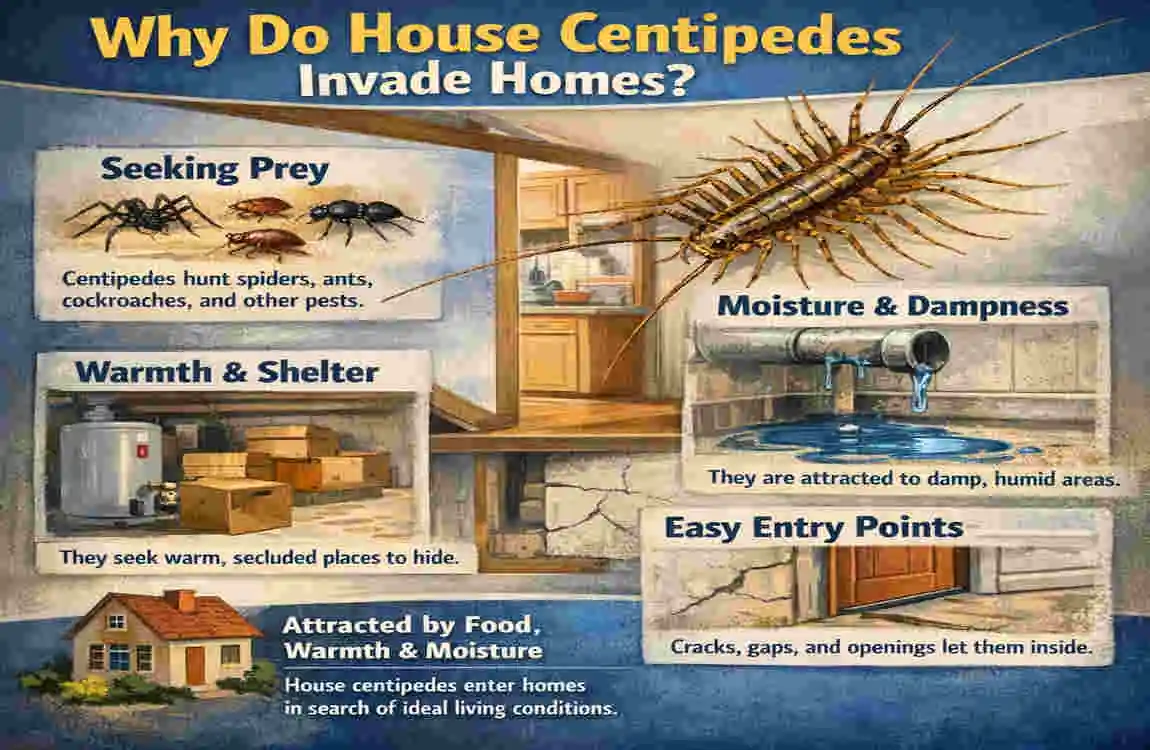
Understanding why centipedes invade your home is the first step to preventing them.
Key Reasons for Infestation:
- Moisture: House centipedes thrive in areas with 70-80% humidity.
- Food Source: They hunt pests like spiders, flies, and cockroaches.
- Seasonal Changes: They often migrate indoors during spring and fall.
- Entry Points: Cracks in walls, poorly sealed windows, and open drains provide easy access.
- Clutter: Piles of boxes or papers create hiding spots.
Pro Tip: Reducing humidity and sealing cracks can significantly lower your chances of an infestation.
Safe Cleaning Tips: How to Banish House Centipedes Fast
Now that you know what attracts house centipedes, let’s get rid of them! Follow this step-by-step cleaning routine.
Step-by-Step Cleaning Routine
- Declutter and Dry Out:
- Remove clutter, such as cardboard boxes and piles of laundry.
- Fix leaks and use a dehumidifier to reduce indoor humidity below 50%.
- Natural DIY Sprays:
- Mix a vinegar-and-water solution (1:1) or use peppermint/tea tree oil sprays to repel centipedes naturally.
- Spray along baseboards, cracks, and damp areas.
- Vacuum and Trap Them:
- Use a HEPA vacuum to remove centipedes and their eggs.
- Place sticky traps in common hiding spots.
- Seal Entry Points:
- Use caulk to fill cracks in walls and weatherstrip doors and windows.
- Deep Clean Drains and Pipes:
- Pour a mixture of baking soda and vinegar down the drain, then run boiling water.
- Alternatively, use enzyme-based cleaners to break down organic matter.
Best Cleaning Products for House Centipede Removal
Here’s a handy comparison of effective products:
ProductTypeProsPrice Range
Diatomaceous Earth Natural Powder Dehydrates pests, pet-safe $10-20
Peppermint Oil Spray Essential Oil Eco-friendly, repels pests $8-15
Sticky Traps Adhesive Trap Easy to use, no chemicals $5-10
Pro Tip: Using natural products is safer for homes with pets and children.
Prevention Strategies: Keep Them Gone for Good
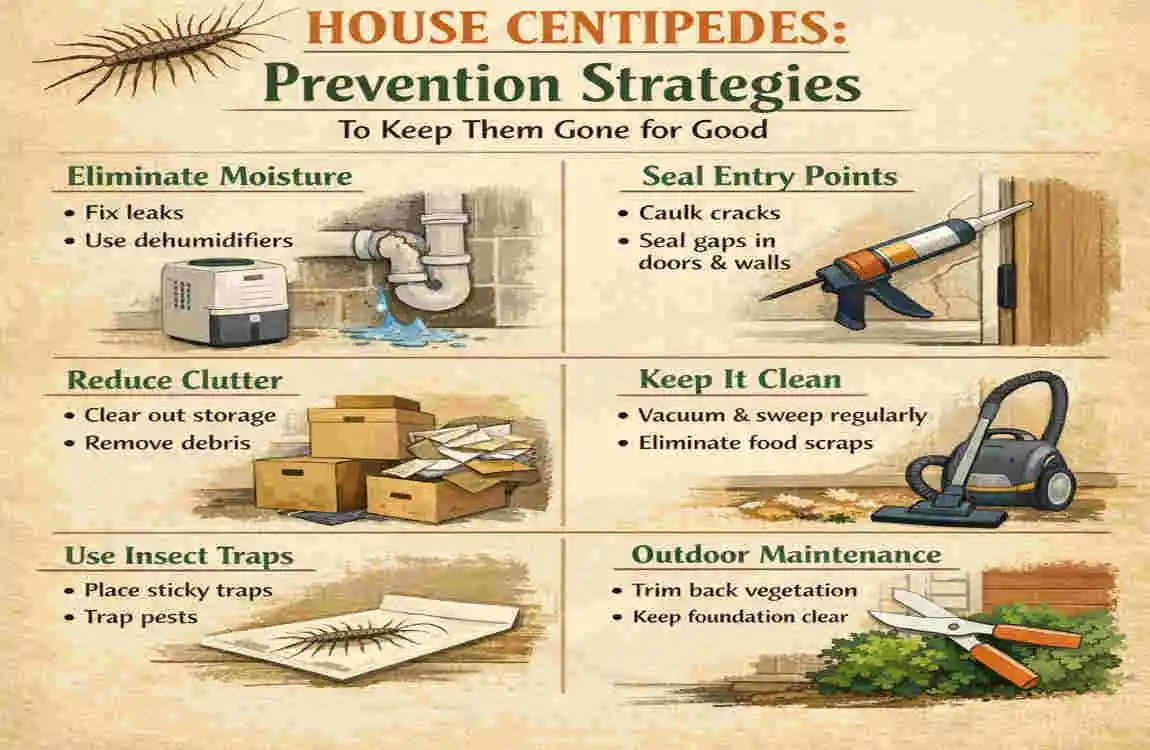
Once you’ve eliminated house centipedes, take these steps to prevent their return.
Long-Term Habitat Denial
- Dehumidify: Use dehumidifiers or silica gel packs to maintain dry conditions.
- Ventilate: Ensure proper air circulation in bathrooms and basements.
- Seal Cracks: Regularly inspect and seal any potential entry points.
Eco-Friendly vs. Chemical Options
While chemical pesticides are effective, they can pose risks to pets and children. Opt for eco-friendly alternatives, such as essential oil sprays or Diatomaceous Earth, to keep your home safe.
FAQs: Busting Myths About House Centipedes
Are house centipedes poisonous to touch?
No. Their venom is only delivered through a bite.
How fast do cleaning tips work?
Results are typically visible within 48 hours when following the steps correctly.
Can house centipedes climb walls?
Yes, their long legs and body structure make them excellent climbers.