Tired of cold showers ruining your mornings? You’re not alone. Many homeowners face the challenge of limited or no hot water in their bathrooms, especially during colder months. The solution? Installing a water heater in your bathroom shower. This not only ensures warm, comfortable showers but also adds convenience and value to your home.
A bathroom water heater offers several advantages, including instant hot water, reduced energy consumption, and compact designs that fit even in small spaces. Whether you’re considering a DIY installation or hiring a professional, this guide walks you through everything you need to know to install a water heater in a bathroom shower.
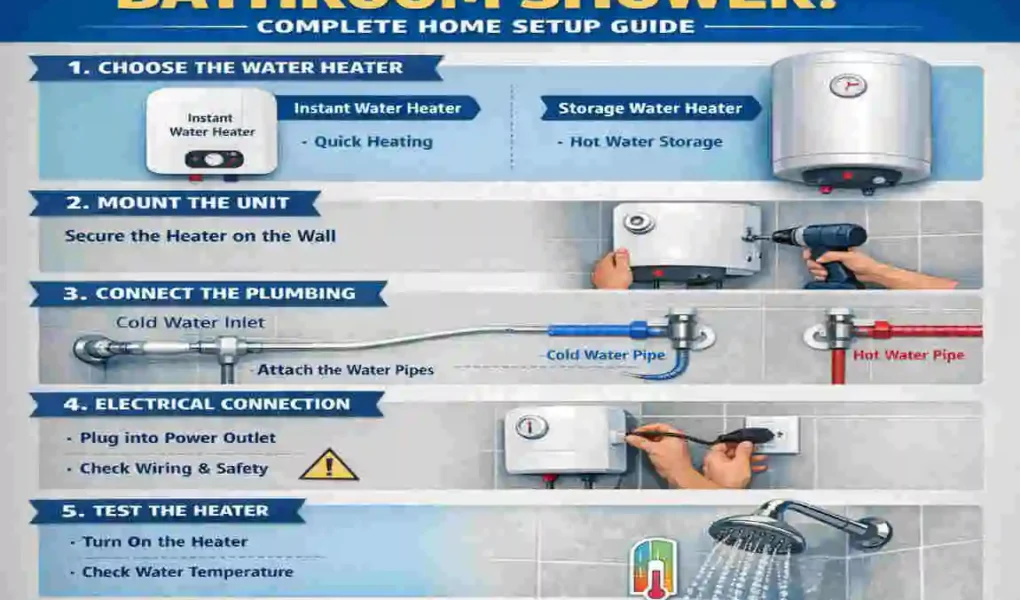
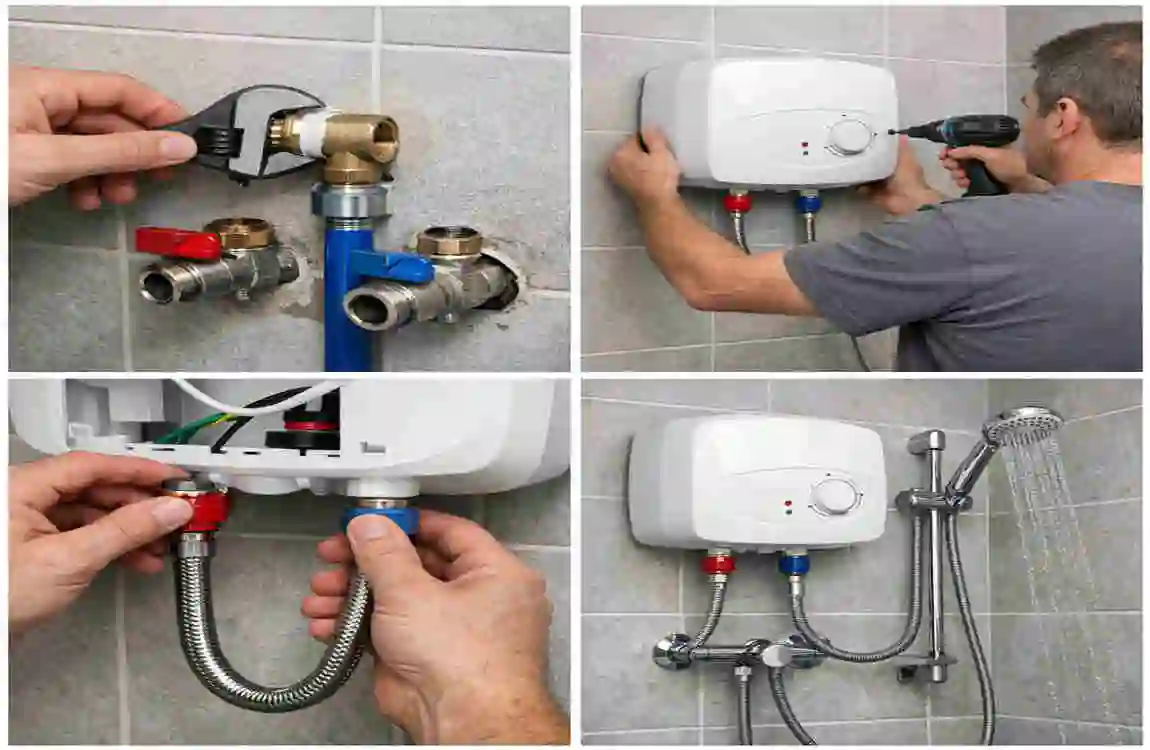
| Step | Action | Tools/Materials Needed | Key Tips | Time |
|---|---|---|---|---|
| Prep Area | Turn off water/power, clear space | Screwdriver, voltage tester | Check local codes; wear safety gear | 10 min |
| Mark & Mount | Drill holes, secure brackets 2m high | Drill, level, wall plugs | Use solid wall; 25-35cm wall gap | 15 min |
| Connect Water | Cold inlet bottom, hot to shower | Teflon tape, flex hoses (1/2″ BSP) | Wrap threads; test for leaks | 20 min |
| Wire Electrical | 240V to junction box, add ELCB | Wire strippers, 15mA breaker | Ground properly; hire electrician if unsure | 25 min |
| Install Shower | Connect mixing valve & head | Shower hose, sealing gaskets | Hand-tighten only; flush lines first | 15 min |
| Test System | Power on, check flow/temp | None | Run 10 sec to clear debris; monitor 24hrs | 10 min |
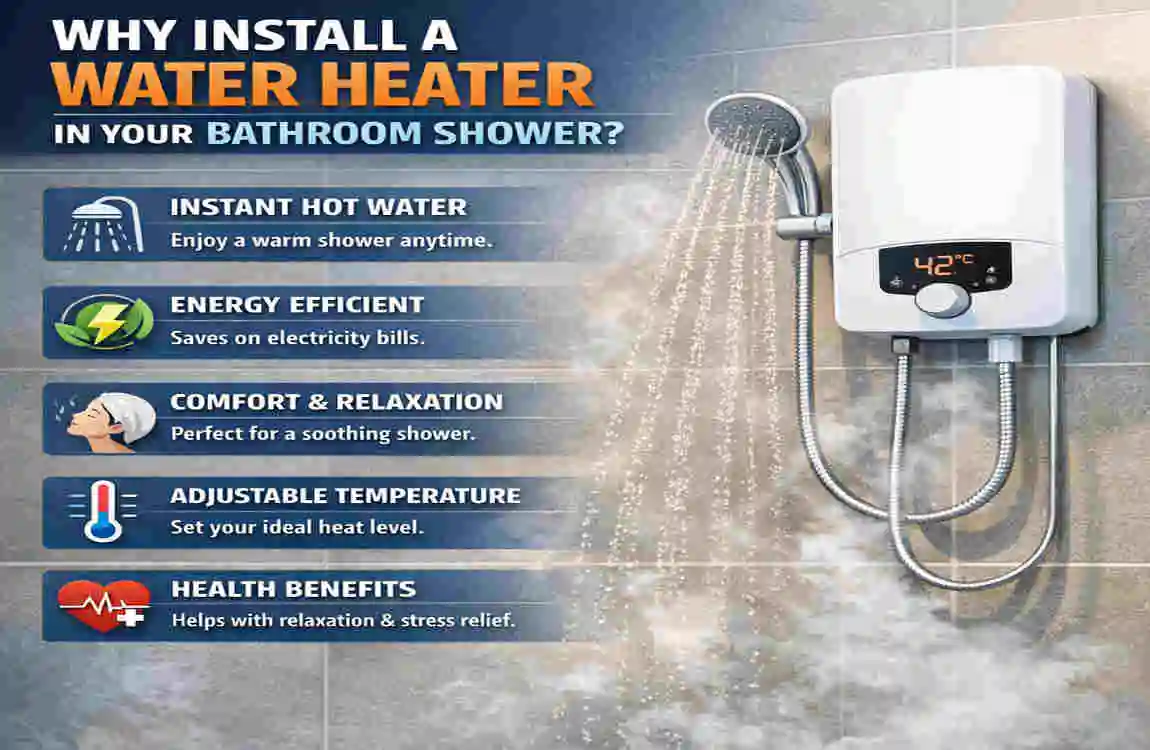
Why Install a Water Heater in Your Bathroom Shower?
Trending Home Upgrade Reasons
In today’s busy world, having hot water on demand is no longer a luxury—it’s a necessity. Modern water heaters, especially tankless and instant models, can heat water within seconds, reducing wait times by up to 80%. This is especially important for households with multiple members who need quick access to hot water.
Energy efficiency is another driving factor. As energy costs continue to rise in 2026, many homeowners are turning to tankless water heaters, which can save 30% on energy bills compared to traditional central systems. These heaters heat water only when needed, eliminating the energy waste of keeping a storage tank warm.
Key Benefits for Homeowners
Installing a water heater in your bathroom shower offers numerous benefits:
- Instant Hot Showers: No more waiting for the central water heater to heat up.
- Compact Design: Modern heaters are sleek and space-saving, making them ideal for even the smallest bathrooms.
- Durability: UV-resistant and corrosion-resistant designs ensure a longer lifespan, even in humid environments.
- Local Adaptability: Perfect for regions with variable water pressure or hard water issues.
By upgrading to a bathroom water heater, you’re not just improving functionality but also adding a touch of modern convenience to your home.
Types of Water Heaters for Bathroom Showers
Instant vs. Tankless vs. Storage Options
Choosing the right type of water heater for your bathroom depends on your household’s needs, budget, and available space. Below is a comparison table to help you decide:
TypeHeat TimeCapacityBest For Home UseCost Range
Instant On-demand Unlimited Quick showers $150–$400
Tankless 10-20 sec Endless flow Families with high usage $300–$800
Storage Tank 20-30 min 10-20 liters Backup for occasional use $100–$250
Choosing Your Bathroom Layout
When selecting a water heater for your bathroom, consider your bathroom’s layout and plumbing system. For instance:
- Pipe Compatibility: Most water heaters are designed to fit 1/2″ BSP standard pipes.
- Space Constraints: Vertical wall-mounted units are ideal for saving space in compact bathrooms.
- Durability: Look for heaters with ceramic heating elements, which resist scaling and are ideal for hard-water areas.
Essential Tools and Materials
Must-Have Kit List
Before starting the installation process, gather the following tools and materials:
-
- Tools Required: Drill, screws, and mounting brackets.
- Adjustable wrenches and pipe cutters.
- Wire strippers and a voltage tester.
- Materials Needed: Teflon tape, ELCB (Earth Leakage Circuit Breaker), and pipes.
- Showerhead and inlet/outlet connectors.
Step-by-Step: How to Install a Water Heater in a Bathroom Shower
Prep Your Bathroom Space
- Turn Off Utilities: Shut off the main water supply and electricity in the bathroom to ensure safety.
- Clear the Area: Remove any obstacles near the installation site and clean the wall where the heater will be mounted.
- Mark Mounting Points: Use a pencil or marker to mark the drilling locations based on the heater’s mounting brackets.
Mounting the Water Heater
- Drill Holes: Use a drill to create holes at the marked spots. Insert wall plugs for a secure fit.
- Secure Brackets: Attach the mounting brackets to the wall using screws, ensuring they are level.
- Install the Heater: Place the water heater on the brackets and secure it tightly.
Plumbing Connections
- Connect Inlet & Outlet Pipes: Attach the cold-water inlet pipe to the bottom of the heater and the hot-water outlet pipe to the showerhead.
- Seal Joints: Apply Teflon tape to all pipe joints to prevent leaks.
Electrical Wiring
- Run Wiring: Connect a 240V power supply to the heater.
- Install Circuit Breaker: Add an ELCB to protect against electrical shocks.
- Grounding: Ensure the heater is properly grounded to avoid hazards.
Final Testing
- Flush the System: Turn on the water supply and allow water to flow through the heater to remove any debris.
- Power On: Switch on the heater and test its functionality by running hot water through the shower.
- Check for Leaks: Inspect all connections and joints for leaks and make adjustments as necessary.
Safety Tips and Common Mistakes to Avoid
Critical Precautions
- Do Not Skip Grounding: Always ground the electrical system to avoid shocks.
- Avoid Splash Zones: Install the heater away from areas where it may come into direct contact with water.
- Use an ELCB: This device automatically cuts off power in the event of an electrical leak, ensuring safety.
Common Mistakes
- Improper Venting: Although most electric water heaters don’t require venting, ensure proper airflow around the unit.
- Loose Connections: Double-check all plumbing and electrical connections to prevent leaks or malfunctions.
Cost Breakdown and ROI
Here’s a breakdown of the typical costs involved in installing a water heater in your bathroom:
FactorAverage Cost ($)Notes
Water Heater 150–800 Instant/tankless options
DIY Installation 20–50 Tools/materials extra
Professional Installation 100–300 Includes warranty
While the initial investment may seem significant, energy savings and convenience ensure that the heater pays for itself within 1-2 years.
Maintenance for Long-Lasting Performance
To ensure your water heater lasts for years, follow these maintenance tips:
- Descaling: Clean the heating element quarterly if you live in a hard water area.
- Professional Checkups: Schedule annual inspections to identify potential issues early.
- Seal Protection: Apply waterproof seals to components to prevent moisture-related damage.
FAQs
How to install a water heater in a bathroom shower safely?
Follow the step-by-step guide above, or hire a professional for electrical wiring.
Do instant water heaters require venting?
No, electric instant models don’t require venting.
What is the lifespan of a water heater?
With proper maintenance, most water heaters last 5-10 years.