
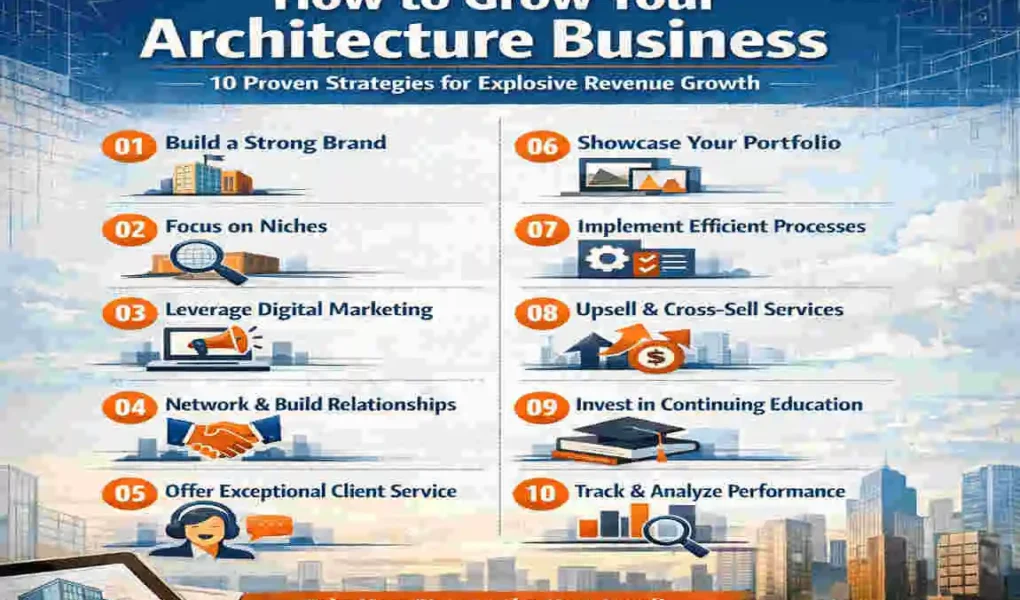
Have you ever looked at your architecture firm and wondered why, despite your incredible talent, your revenue seems stuck in neutral? You are definitely not alone. The global architecture market is projected to reach $400 billion by 2028. Yet, behind that massive number lies a harsh reality: nearly 70% of architecture firms struggle to scale beyond their small circle of local projects.
You already know how to design breathtaking spaces, manage complex blueprints, and solve spatial problems. But knowing how to design a building is very different from knowing how to grow an architecture business. If you are dealing with stagnant revenue, struggling to acquire new clients, or constantly losing bids to larger, more established firms, it is time to change your approach.
The old days of relying purely on word-of-mouth are over. To truly scale an architecture practice today, you need a proactive, modern business strategy. You need a system that brings in high-paying clients on autopilot while you focus on what you do best.
Build a Niche Specialization for Premium Pricing

When you try to be everything to everyone, you end up being memorable to no one. One of the fastest ways to grow an architecture firm is to stop being a generalist and start being a specialist.
Why Generalizing Hurts Your Revenue
Imagine a client wants to build a state-of-the-art, eco-friendly office building. Are they going to hire a general architect who does a little bit of everything, or hire the firm famous for designing green commercial spaces? They will choose the specialist every single time, and they will gladly pay a Premium for that expertise.
How to Claim Your Niche
Building a niche specialization means focusing your marketing and skill set on a specific type of design. This could be sustainable residential homes, modern commercial retrofits, or even luxury healthcare clinics.
To start, conduct some basic market research. Look at your past projects. Which ones were the most profitable? Which ones did you enjoy the most? Once you find your sweet spot, get certified in that area and build a portfolio of case studies around it.
The Financial Benefit of Specializing
Specialists can easily charge 30% to 50% higher fees because their specialized knowledge reduces the client’s risk. For example, “Firm X” completely doubled its annual revenue simply by pivoting to focus exclusively on eco-friendly corporate offices.
Master Digital Marketing to Attract High-Value Leads
You can be the most talented architect in your city, but if your ideal clients cannot find you online, your business will not grow. Mastering digital marketing is non-negotiable if you want to understand how to grow an architecture business in today’s digital age.
Make Your Website Work for You
Your website should not just be a pretty digital brochure; it needs to be an active lead-generation machine. Make sure your website is optimized for search engines. Write engaging, simple content that answers the exact questions your potential clients are typing into Google.
Leverage Local SEO and Social Media
Next, make the most of your Google My Business profile. Keep it updated with fresh photos of your projects, gather client reviews, and ensure your contact details are perfectly accurate.
Do not ignore targeted advertising, either. Running carefully crafted Facebook or LinkedIn ads can put your firm directly in front of real estate developers and wealthy homeowners.
Track Everything With the Right Tools
You do not have to guess what works. Use simple tools to guide your digital strategy:
- Keyword Tools: Use platforms like Ahrefs to find out what people are searching for.
- CRM Systems: Use a Customer Relationship Management (CRM) tool like HubSpot to keep track of every single lead.
Set a goal to achieve a 20% lead conversion rate. Consider a real example from a Lahore-based architecture firm. By simply revamping their local SEO and running targeted LinkedIn ads to local property developers, they doubled their high-ticket consultations in just three months.
Leverage Networking and Partnerships for Referrals
While digital marketing generates cold leads, networking generates warm referrals. These are the people who already trust you because someone they know recommended you. To scale an architecture practice, you must build a web of strategic partnerships.
Step Outside Your Office
Do not just network with other architects; network with the people who hire architects. Join local real estate investment groups, construction builder associations, and business chambers. Becoming an active member of groups like your local AIA chapter is great, but branching out to where the money flows is even better.
Create Win-Win Partnerships
Build relationships with general contractors, structural engineers, and interior designers. When you refer clients to them, they will naturally refer clients to you.
You can also co-host a free webinar or a local workshop. For example, team up with a local builder to present a seminar on “How to Maximize ROI on Commercial Property Renovations.” This positions both of you as local experts.
Track Your Networking Efforts
Networking should not be a guessing game. Use your CRM to track where your referrals are coming from. If a specific real estate agent sends you three clients in a year, you need to know that so you can nurture that relationship. One firm tracked its networking data and realized that focusing on just three key developer relationships grew its project pipeline by an incredible 40%.
Implement a Client Referral Program That Pays Off
Your past clients are sitting on a goldmine of potential new business for you. A happy client is your best salesperson, but you actually have to ask them to sell for you. Implementing a structured client referral program is a brilliant business growth strategy for architecture firms.
Designing a Simple Referral Program
Do not make it complicated. Once a project is completed, send your client a friendly post-project survey. Ask them how their experience was and if they are happy with their new space.
If they give you glowing feedback, present your referral program. Offer them a meaningful incentive, such as a 10% commission or a significant discount on future maintenance and design work for any new client they send your way who signs a contract.
Put It on Autopilot
You can easily automate this process so you do not have to think about it. Use simple software tools like Referral .Candy to automatically track who refers whom and when payouts or rewards are due.
This strategy is incredibly powerful. One boutique architecture firm doubled its client base over two years without spending a single dime on advertising, simply by rewarding past clients for spreading the word.
Diversify Revenue with New Service Offerings
If you only offer one service—like drafting building plans—your income is severely limited by how many buildings are being built. To grow your architecture business revenue consistently, you need to diversify what you sell.
Offer More Than Just Blueprints
Think about the additional needs your clients have before, during, and after a project. Can you add consulting services to help clients find the right plots of land? What about offering high-end 3D rendering services to help them visualize the space before construction begins?
Adding interior design services or permit-expediting services is also an excellent way to capture more money from the same client.
Create Recurring Income Packages
Architecture is notoriously project-based, which means revenue fluctuates. Smooth out your cash flow by creating recurring income packages. You could offer annual building maintenance inspections or post-occupancy evaluations to ensure the building is performing as designed.
Here is a quick breakdown of how new services can boost your bottom line:
New Service Offering, Difficulty to Implement, Potential Revenue Increase, Client Benefit
High-End 3D Rendering Low (if software trained) 10% – 15% per project Better visualization of final space
Permit Consulting Medium (requires local knowledge) Fixed fee per project Saves client time and massive frustration
Interior Design High (requires specific skills) 20% – 30% per project. Complete, cohesive design experience
Annual Property Check-ins, Low Recurring Yearly Income, Peace of mind, and building longevity
Pursuing architecture business growth through diversification ensures that when the market slows down in one area, you still have money coming in from another.
Invest in Advanced Tools for Efficiency and Upsells
Time is money in the architecture world. If your team is using outdated software or manual processes, you are leaving thousands of dollars on the table. Investing in advanced technology is a critical step to scale an architecture practice.
Upgrade Your Software Stack
If you are still doing things the old-fashioned way, it is time to upgrade. Software like Revit, AutoCAD, and BIM 360 (Building Information Modeling) are no longer just fancy extras; they are industry standards.
BIM, for example, is like building the entire project in a smart 3D world before anyone ever picks up a hammer. It allows you to catch expensive mistakes early and coordinate perfectly with engineers.
Efficiency Equals More Clients
When you invest in these tools, the impact on your business is immediate. Firms that adopt advanced design software often see project times cut by up to 25%.
Think about that ROI (Return on Investment) calculation for a moment. If you cut your design time by 25%, your team can take on 25% more projects in a year without hiring a single extra person. Furthermore, these advanced tools allow you to offer the Premium 3D rendering upsells we discussed in the previous strategy!
Hire and Train Top Talent Strategically
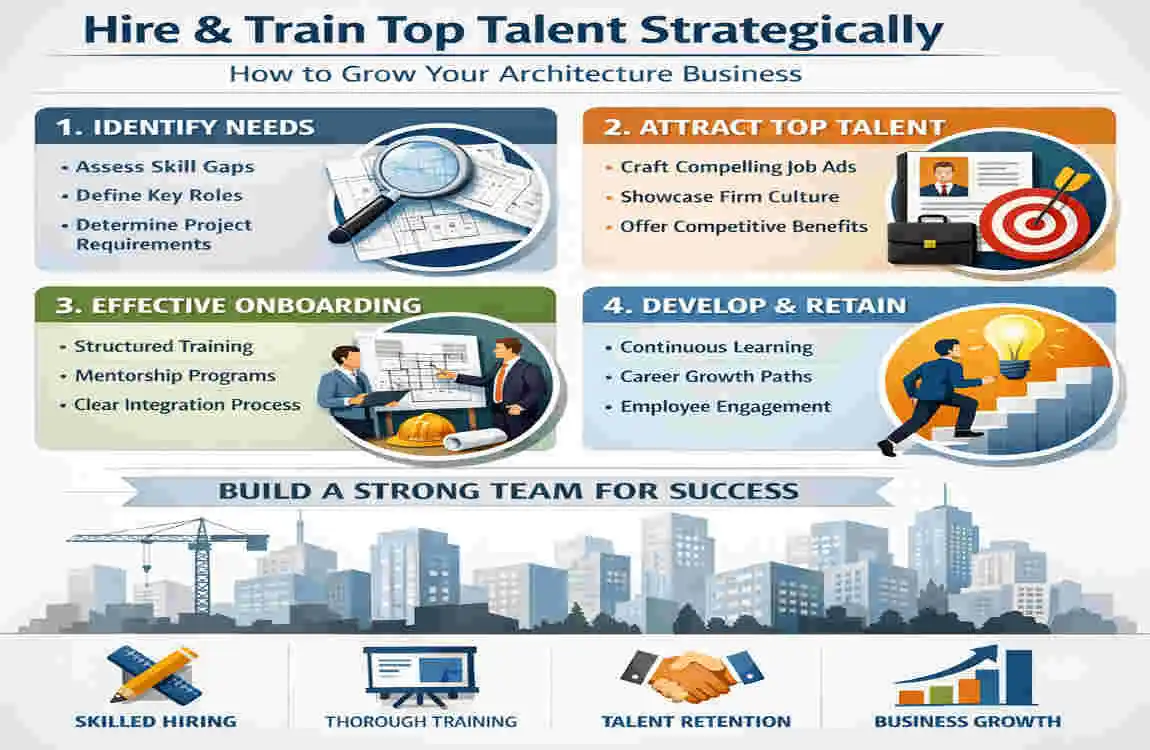
You cannot grow an architecture firm all by yourself. Eventually, you will hit a ceiling where there are not enough hours in the day. The only way to break through that ceiling is to build a stellar team.
Where to Find the Best Talent
Finding good architects and drafters can be tough. Do not just rely on local job boards. Look into freelance platforms to hire specialists on a project-by-project basis. This keeps your overhead low while you test the waters.
Also, build relationships with local architecture schools. Hiring fresh graduates lets you train them in your firm’s specific culture and methodology before they pick up bad habits elsewhere.
Keep Your Best People Happy
Turnover is incredibly expensive. Once you find great talent, you must retain them. Offer attractive incentives, such as profit-sharing, for the projects they manage. Provide clear paths for mentorship and career advancement so they do not feel the need to leave to advance.
Scale Tip: Outsource the Busywork
Here is a secret to rapid growth: stop doing administrative work. You are a highly trained architect. Your time should be spent designing and closing high-value clients. Outsource your bookkeeping, your social media posting, and your calendar management to virtual assistants so you can focus entirely on growth.
Focus on Repeat Business and Long-Term Contracts
It is a well-known business fact: acquiring a new client costs up to 5 times as much as retaining an existing one. If you are constantly chasing new clients and ignoring your past ones, you are burning money.
Turn One-Time Projects into Lifelong Clients
Just because the ribbon is cut and the building is open does not mean your relationship with the client has to end. Focus on generating repeat business by staying in touch.
Offer maintenance packages that include annual reviews of the building’s performance. Create loyalty programs for commercial clients who might need multiple locations designed over the next few years.
The Power of the Annual Check-In
Implement a simple strategy: the annual check-in. Reach out to past clients once a year. Send them a nice card, take them to coffee, or send a thoughtful email. Ask them how the space is working for them.
Often, families outgrow their homes and need renovations, or businesses expand and need their offices redesigned. Because you stayed in touch, you will be the absolute first person they call for those lucrative upsell renovations.
Expand Geographically with Smart Marketing
Are you dominating your local market? Great. Now it is time to look over the fence. Expanding your geographic reach is a fantastic growth strategy for an architecture business, and it has never been easier, thanks to modern technology.
The Magic of Virtual Consultations
You no longer need a physical office in a city to design a building there. With tools like Zoom and virtual reality walk-throughs, you can easily tap into remote markets.
For instance, a firm located in Lahore successfully expanded its reach by offering high-end design consultations to wealthy expatriates and developers in the Middle East. They handled the design virtually and partnered with local engineers on the ground for execution.
Local SEO for New Territories
To make this work, you need to tell Google that you operate in these new areas. Create specific landing pages on your website targeting your new geographic locations.
Combine this local SEO strategy with highly targeted paid ads that appear only to people searching in those specific regions. We have seen firms use this exact strategy to go from a strictly local operation to a national player in just 18 short months.
Track Metrics and Optimize with Data-Driven Decisions
You cannot improve what you do not measure. If you want to know how to grow architecture business revenue consistently, you must fall in love with your data. Making decisions based on “gut feelings” is how businesses stagnate; making decisions based on hard data is how businesses explode.
Know Your Key Performance Indicators (KPIs)
Start tracking a few vital metrics today:
- Client Acquisition Cost (CAC): Exactly how much money in marketing does it take to get one signed contract?
- Customer Lifetime Value (CLV): How much revenue does an average client bring you over the entire course of your relationship?
- Win Rate: Out of all the proposals you submit, what percentage do you actually win?
Use Simple Tools to Track Progress
You do not need a degree in data science to track these. Use Google Analytics to see where your website traffic is coming from. Use accounting software like QuickBooks to track project profitability down to the very last cent.
The Quarterly Review Framework
Make it a habit to sit down every 90 days for a deep dive into your numbers. Look at what marketing channels are working and pour more money into them. Look at which project types are losing money and cut them out. By rigorously applying this data-driven framework, achieving 20% to 30% annual growth becomes a realistic and achievable target.