
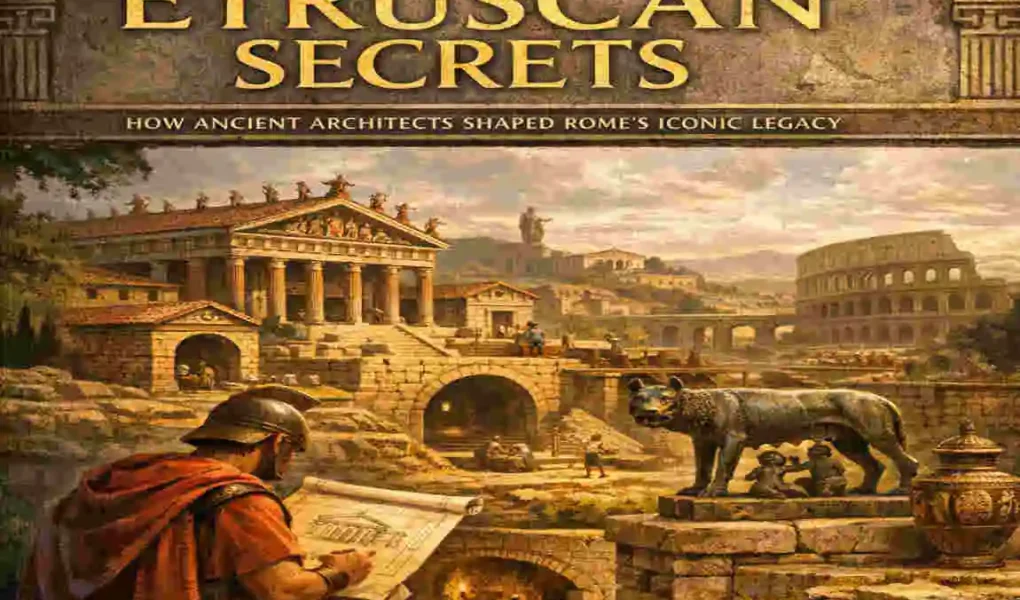
Ever stood beneath a grand Roman arch and wondered how the Etruscans influenced Roman architecture to create such timeless wonders as the Colosseum? The answer lies in the genius of a civilization that predated Rome but laid the groundwork for its monumental achievements. From innovative engineering to sacred temple designs, the Etruscans shaped the architectural language that Rome would adopt, adapt, and amplify.
Who Were the Etruscans? A Quick Primer
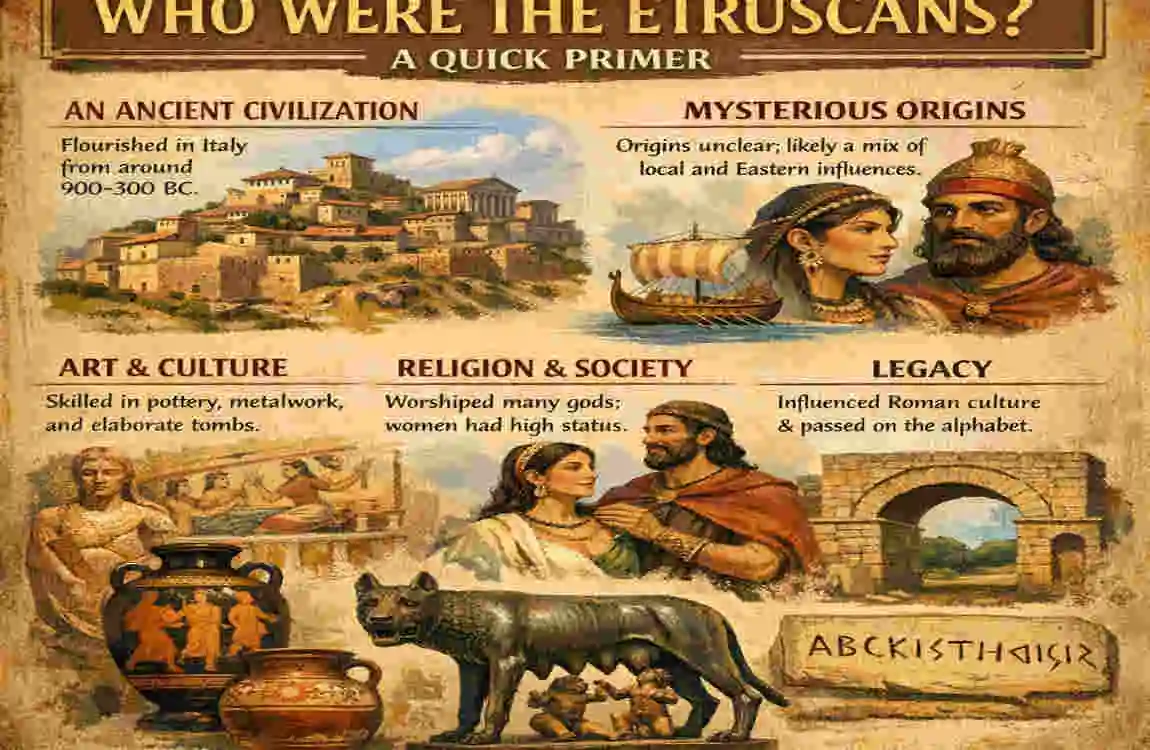
Before we explore their architectural impact, it’s important to understand who the Etruscans were and why their culture mattered so much to Rome.
Origins and Timeline
The Etruscans flourished between the 8th and 3rd centuries BCE, mostly in the region we now call Tuscany. They were a powerful civilization that thrived long before Rome rose to dominance. Their cities were bustling centers of trade, artistry, and innovation.
Society Snapshot
Etruscans were not just warriors—they were skilled metallurgists, master artists, and savvy traders. Their society was complex, with a rich religious life and advanced technologies. These features made them influential neighbors and, eventually, overlords to early Rome.
Why They Mattered to Rome
Around 300 BCE, Rome conquered the Etruscan cities, but the cultural exchange didn’t end there. Instead, the Romans absorbed many Etruscan traditions, especially in architecture and urban planning. This fusion laid the foundation for Rome’s future grandeur.
The Engineering Marvels: Arches, Vaults, and the True Arch
One of the most famous questions in history is how the Etruscans influenced Roman architecture through engineering. The answer lies in the remarkable invention of the true arch—a structure that changed the game.
The True Arch: A Revolutionary Technique
Unlike the Greek post-and-lintel system, which relied on horizontal beams supported by columns, the Etruscans perfected the voussoir arch. These arches use wedge-shaped stones that lock together, distributing weight evenly and enabling spans up to 3 times as long.
An excellent example is the tombs in Cerveteri, where corbelled vaults demonstrate early mastery of arch construction.
Roman Adoption and Expansion
The Romans took this Etruscan innovation and ran with it. They applied the true arch to build monumental aqueducts, such as the Cloaca Maxima, one of the world’s earliest sewer systems. The arch enabled the Romans to build longer, higher bridges and tunnels, transforming urban infrastructure.
Ponte di Augusto Bridge: A Blueprint for Durability
The ancient Ponte di Augusto bridge showcases the Etruscan blueprint for durable, elegant spans. Its design principles directly influenced Roman engineering, setting standards for centuries.
Why This Matters Today
If you’re involved in home or business renovations, you might notice the timeless appeal of arches. These forms aren’t just decorative—they carry centuries of engineering wisdom that balance strength and beauty. Incorporating arches into your designs echoes this ancient legacy.
Hydraulic Engineering: Draining Rome’s Foundations
Water management was vital for any ancient city, especially one growing as fast as Rome. Here, the Etruscans’ hydraulic engineering played a crucial role.
Cloaca Maxima: Rome’s Great Sewer
Built under the Etruscan king Tarquinius Priscus, the Cloaca Maxima was a vaulted tunnel system that drained marshes and controlled flooding. This early sewer system prevented disease and kept the city livable.
Influence on Roman Baths and Urban Life
The design of these vaulted drainage tunnels inspired the complex plumbing of Roman baths, which required sophisticated water control. Archaeologists have uncovered sections dating back to the 6th century BCE, proving the Etruscan roots of this innovation.
Temples and Urban Planning: Blueprints for Eternity
When we think of Roman temples and cities, much of their layout and house design traces back to Etruscan models.
Podium Temples: Raised and Majestic
The Etruscans built temples on raised platforms, called podiums, with stairs leading up from the front. This design emphasized the temple’s sacred nature and controlled how visitors approached.
Roman temples, such as the Capitoline Temple, adopted this style, retaining features like wooden columns and terracotta roofs.
City Layouts: The Grid and the Forum
Etruscan cities often followed grid plans with central public spaces called forums. Rome’s famous Forum Romanum echoes the design of Etruscan cities like Veii, showing a clear line of architectural inheritance.
Case Study: Temple of Jupiter Optimus Maximus
This temple stands as a prime example of Etruscan influence. It combined religious ritual with architecture, incorporating:
- Centralized altars for offerings.
- Symbolic orientation based on augury (omens).
- Massive defensive walls, like the Servian Walls, protect the sacred precinct.
Religious Architecture: From Tuscan to Triumph

Etruscan religious buildings also shaped Roman temple aesthetics in subtle but important ways.
Tuscan Order Columns: Simple Yet Strong
The Tuscan order columns, characterized by their unfluted shafts and plain capitals, were simpler than Greek Doric columns. Romans adapted this style, which became the basis for their own Doric order, blending strength with elegance.
Decorative Terracotta Sculptures
Etruscan temples often featured terracotta sculptures on pediments and roofs, adding color and storytelling elements. This decorative tradition influenced Roman temple facades, making them more vibrant and expressive.
Iconic Roman Landmarks: Etruscan DNA Revealed
Many of Rome’s most famous landmarks carry unmistakable signs of Etruscan architectural techniques.
Colosseum and Amphitheaters
The complex vaulting techniques used in the Colosseum’s corridors stem from Etruscan tomb designs. These vaults allowed for large crowds and durable structures.
Pantheon Dome
The famous Pantheon dome evolved from Etruscan corbelling methods. While the Romans innovated with concrete and the oculus, the basic idea of layered support has Etruscan roots.
Triumphal Arches
Roman triumphal arches, like the Arch of Titus, are direct descendants of Etruscan tomb facades, blending commemorative symbolism with architectural form.
Landmark Etruscan Feature Borrowed Roman Innovation
Colosseum Vaulted corridors Massive scale & concrete use
Pantheon Corbelling technique , Oculus dome & concrete dome
Aqueducts , arches, and sewer systems , multi-tiered spans and height
Vitruvius on Etruscan Precedence
The Roman architect Vitruvius credited the Etruscans for many architectural advances, noting their precedence in arches and temple design. His writings give us primary historical insight into this deep influence.
Cultural Fusion: Why Etruscan Influence Lasted
The Etruscan impact didn’t vanish with their political decline; it was woven into Rome’s identity.
Assimilation Factors
- Elite intermarriage between Romans and Etruscans connected the two cultures.
- Early Roman kings, such as the Tarquins, were Etruscans who ruled Rome and guided its early development.
Legacy Through Archaeology
Sites like the Banditaccia Necropolis reveal Etruscan art and architecture that Romans admired and emulated, preserving this legacy for centuries.
Modern Echoes: Etruscan Secrets in Today’s Architecture
You might be surprised how many modern buildings still echo Etruscan designs!
Home Design Inspiration
Arches found in Lahore villas or Mediterranean-style homes trace back to Etruscan and Roman precedents. These shapes add elegance and structural strength.
Sustainability Lessons
Ancient drainage systems inspire modern home urban planners fighting flooding. The principles of vaulted tunnels and water control remain relevant.
DIY Tip: Build Your Own Mini Etruscan Arch
Try constructing a small arch for your patio using wedge-shaped stones or bricks. It’s a fun, hands-on way to appreciate this ancient engineering marvel.
FAQ: How Did Etruscans Influence Roman Architecture?
- How did the Etruscans influence Roman architecture?
- They introduced arches, vaults, temple designs, and fundamental principles of urban planning that shaped Rome’s durable, majestic buildings.
- What was the biggest Etruscan contribution?
- The true arch—allowing Rome to build aqueducts, bridges, and amphitheaters on an unprecedented scale.
- Did Romans credit Etruscans?
- Yes, historians like Vitruvius recognized and celebrated Etruscan architectural innovations.
- Are there examples today?
- Absolutely. Modern vaulted ceilings in stadiums and homes reflect Etruscan-inspired engineering principles.