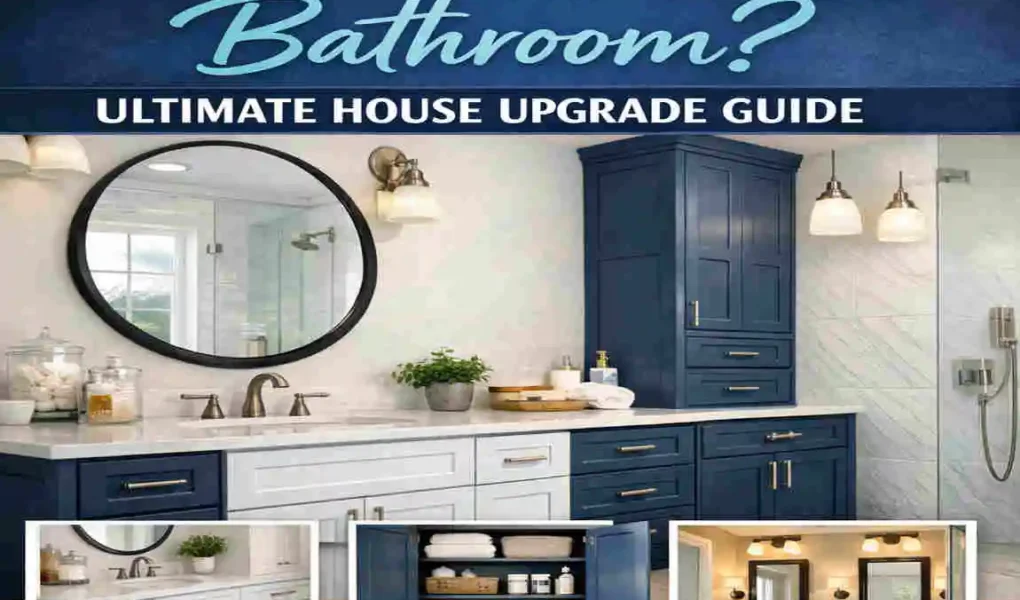
Staring at your cramped bathroom vanity, you’ve probably wondered: Can you use kitchen cabinets in a bathroom to save money and gain style? The idea sounds smart—kitchen cabinets often come in great designs and at better prices than traditional bathroom vanities. But is it really a good fit.
Did you know? An average bathroom remodel can cost between $10,000 and $25,000, while kitchen cabinets are often 30–50% cheaper per linear foot than bathroom-specific vanities. This cost difference alone makes kitchen cabinets a tempting alternative for budget-conscious homeowners.
Can You Use Kitchen Cabinets in a Bathroom?

Yes, But Not All Kitchen Cabinets Are Bathroom-Ready
Before you rush out to buy kitchen cabinets for your bathroom, it’s important to understand the key differences between kitchen and bathroom cabinetry.
- Kitchen cabinets are designed to resist grease, heat, and everyday kitchen wear. They don’t typically prioritize moisture resistance.
- Bathroom cabinets need to withstand high humidity, frequent splashes of water, and mold risks.
Here’s a quick comparison table to help you see these differences clearly:
Feature Kitchen Cabinets Bathroom Cabinets
Material Focus : Heat & grease-resistant woods/veneers , Moisture & mold-resistant woods/composites
Durability in Moisture Moderate (not waterproof) High (sealed & treated)
Cost per Linear Foot $100–$300 $200–$500
Warranty Coverage: Typically, no moisture warranty. Often includes a moisture warranty.
When It Makes Sense (And When It Doesn’t)
Using kitchen cabinets in the bathroom is a great idea in certain cases:
- Ideal scenarios:
- Powder rooms or guest bathrooms with less humidity.
- Well-ventilated bathrooms with good exhaust fans.
- Budget-conscious remodels where style and cost matter.
- Red flags:
- Steamy master bathrooms with poor ventilation.
- Bathrooms are prone to water splashes or leaks.
If your bathroom stays dry and well-aired, kitchen cabinets can be a stylish, sturdy, and affordable choice.
Pros and Cons of Using Kitchen Cabinets in Your Bathroom
Top Pros of Kitchen Cabinets in Bathrooms
Using kitchen cabinets in your bathroom doesn’t just save money—it comes with several other benefits:
- Cost savings: Kitchen cabinets typically cost 30–50% less than bathroom-specific vanities.
- Customization: Suppliers like IKEA and Home Depot offer endless sizes, finishes, and styles, letting you tailor your bathroom exactly how you want.
- Durability upgrade potential: Solid wood kitchen cabinets often last longer than cheap melamine bathroom vanities.
- Aesthetic versatility: From modern farmhouse to sleek contemporary, kitchen cabinets offer a wide range of looks.
- Storage options: Kitchen cabinets come with smart internal organizers, pull-out drawers, and adjustable shelves.
- Ease of replacement: If you want to upgrade later, kitchen cabinets are widely available and easy to swap out.
- Eco-friendly choices: Many kitchen cabinet suppliers offer sustainable wood options.
Key Cons and How to Mitigate Them
Of course, no solution is perfect. Here are some drawbacks and tips to overcome them:
- Moisture vulnerability: Kitchen cabinets aren’t made for humidity. Use waterproof sealants and finishes to protect them.
- No built-in humidity features: Bathrooms benefit from fans and vapor barriers—make sure to install these.
- Warranty voids: Using kitchen cabinets in bathrooms might void manufacturer warranties. Check before you buy.
- Hardware rust risk: Replace kitchen cabinet hinges and handles with rust-proof options.
- Size adjustments: Kitchen cabinets may need to be cut for plumbing fixtures.
- Potential warping: Without sealing, wood can warp or swell when exposed to moisture.
- Limited bathroom-specific features: Kitchen cabinets might lack integrated sinks or backsplash options.
Here’s a quick pros/cons table for easy reference:
Pros Cons Mitigation Tips
Cost-effective, vulnerable to moisture. Apply waterproof sealants
Customizable Warranty may be voided. Confirm warranty before purchase
Durable solid wood options . Hardware may rust. Use rust-proof hinges and screws
Stylish and versatile. Size/plumbing modifications needed. Plan precise measurements & cuts
Smart storage solutions. No built-in ventilation. Install exhaust fans and vapor barriers
Material Breakdown: Which Kitchen Cabinets Work Best in Bathrooms
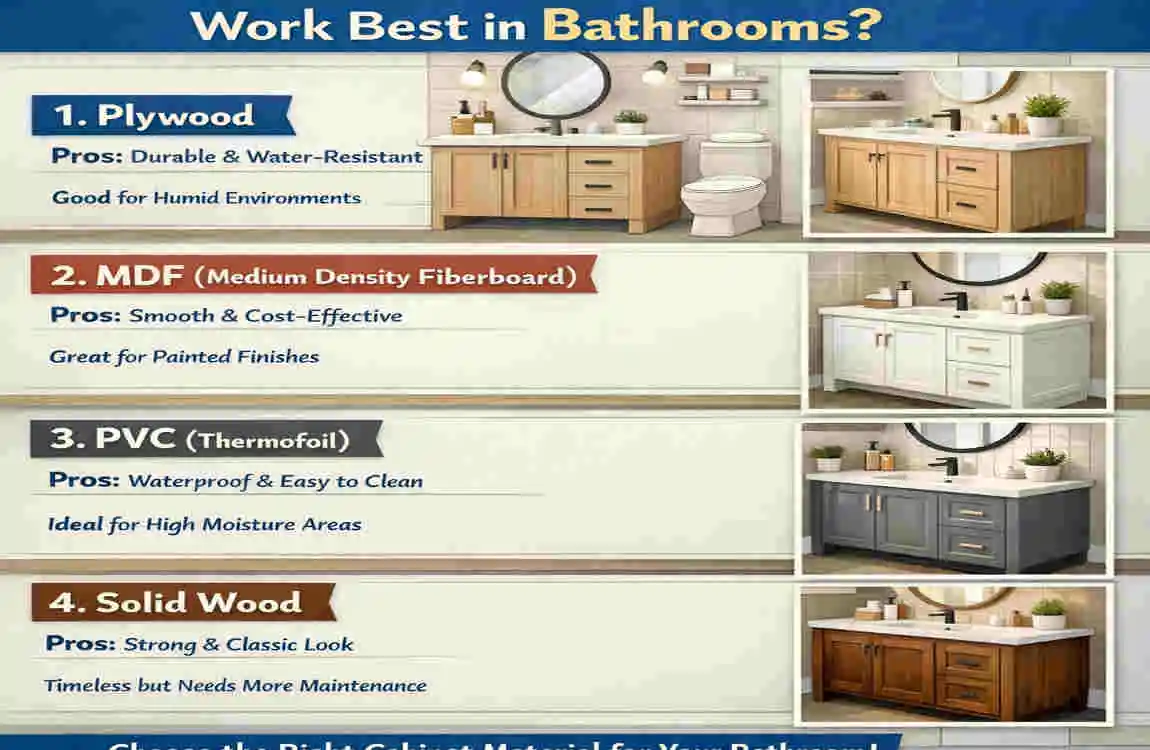
Best Materials for Bathroom Use
Choosing the right materials is critical for success when repurposing kitchen cabinets in your bathroom. Here’s a breakdown of the best candidates:
- Solid Wood (Oak, Maple, Cherry):
- Pros: Strong and long-lasting, ages beautifully, and is easy to refinish.
- Cons: Can warp or swell if not properly sealed.
- Tips: Use multiple coats of polyurethane or marine-grade sealants for moisture protection.
- Plywood vs. Particleboard:
- Plywood is your best friend. It’s more stable in humid environments and less prone to swelling than particleboard.
- Particleboard is cheaper but absorbs moisture quickly, which can lead to damage.
- Laminate and Thermofoil:
- Budget-friendly options that offer a moisture-resistant outer layer.
- Look for high-quality laminate with sealed edges to prevent water infiltration.
Finishes and Sealants That Make It Waterproof
Proper finishing can transform kitchen cabinets into bathroom-ready pieces. Here’s a simple step-by-step guide:
- Clean and sand cabinet surfaces to ensure sealant adhesion.
- Apply primer or wood conditioner if needed.
- Use a high-quality polyurethane varnish—apply 2–3 coats, allowing each coat to dry before the next.
- Seal all edges, undersides, and backs, especially areas exposed to water.
- Consider a marine-grade varnish for extra moisture resistance.
Example: A moisture test on a sealed, solid-wood cabinet showed no warping after 3 months in a humid bathroom, compared to untreated cabinets that swelled visibly.
Avoid These Materials
- Unsealed MDF (Medium-Density Fiberboard): Absorbs water quickly and swells.
- Cheap veneers that peel or bubble when exposed to moisture.
- Cabinets with untreated particleboard cores.
Step-by-Step Installation Guide: Kitchen Cabinets in Your Bathroom
Prep Your Bathroom Space
Before installation, it’s crucial to prepare your bathroom properly:
- Measure twice: Account for plumbing, wall space, and standard cabinet height (usually 34.5 inches for base cabinets).
- Check ventilation: Ensure your bathroom has a strong exhaust fan or window.
- Gather tools: level, drill, shims, waterproof sealant, caulk, rustproof screws, safety goggles, and dust masks.
Modifying Kitchen Cabinets for Bathrooms
Follow these detailed steps for a smooth installation:
- Remove doors and hardware from the kitchen cabinets for easy handling.
- Apply waterproof sealant (2–3 coats on all surfaces, including insides and backs).
- Add adjustable legs or shims to level cabinets on uneven floors.
- Cut out openings for plumbing pipes and sinks using a jigsaw or hole saw.
- Install heavy-duty wall anchors to support cabinet weight in moist areas.
- Reattach doors and hardware using rust-proof hinges and screws.
- Caulk all seams and joints with waterproof silicone caulk to prevent moisture intrusion.
- Recheck the level and adjust the legs or shims as needed.
- Install countertops and sinks per the manufacturer’s instructions.
- Final inspection: Turn water back on, check for leaks, and test cabinet stability.
Common Mistakes to Avoid
- Ignoring vapor barriers behind cabinets.
- Using untreated particleboard.
- Skipping sealant coats on backs and undersides.
- Overlooking ventilation needs.
- Installing cabinets without leveling properly.
Design Ideas and Real-Life Examples
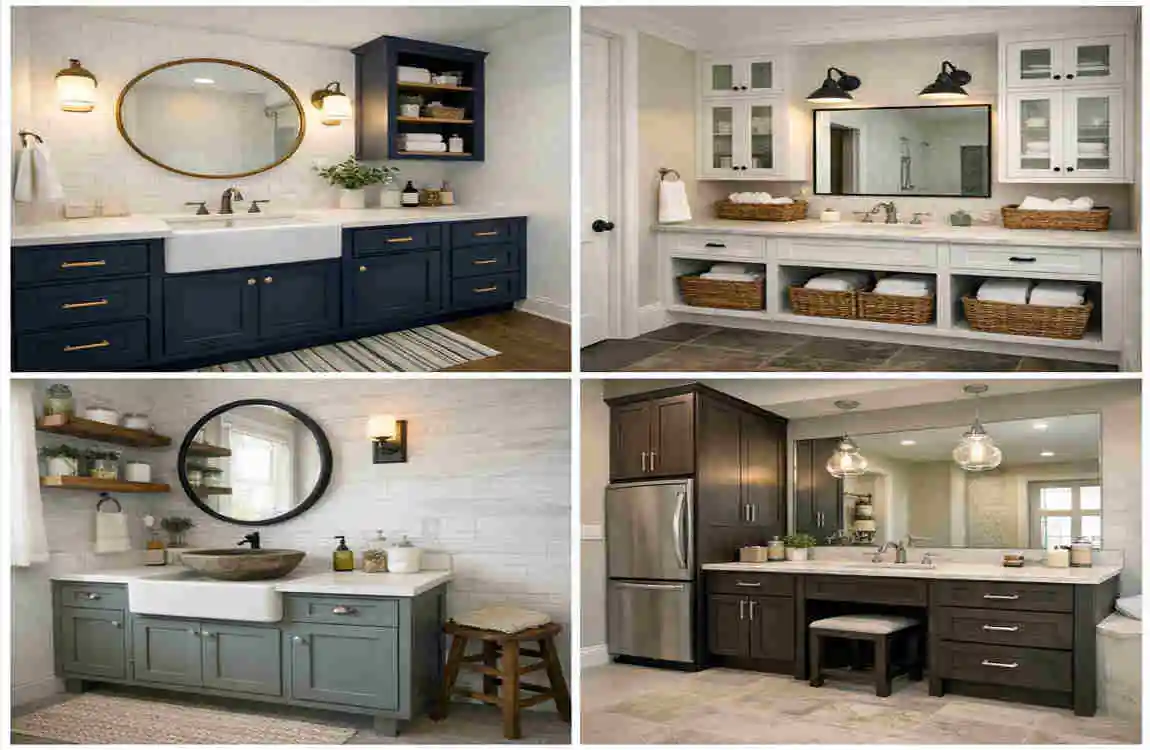
Stylish Ways to Integrate Kitchen Cabinets
Here are some inspiring ideas to help you visualize kitchen cabinets in your bathroom:
- Shaker Style: Classic and clean, perfect for spa-like bathrooms. Use white or soft gray paint for a calming vibe.
- Flat-Panel Modern: Sleek and minimalist, ideal for contemporary spaces with matte or glossy finishes.
- Floating Cabinets: Mount kitchen cabinets off the luxury floor for a trendy, airy look. Great for small bathrooms.
- Two-Tone Combos: Use darker kitchen cabinets below with lighter wall colors or tiles for contrast.
Budget Breakdowns
Remodel Level, Estimated Cost, Features Included
Low $500 Basic kitchen base cabinet, minimal modifications
Mid $1,500 Custom sealant, adjusted plumbing cuts, new hardware
High-End $3,000 Premium solid wood cabinets, floating install, designer finishes
Cost Savings and ROI Analysis
How Much Can You Save?
Using kitchen cabinets in bathrooms can cut your cabinet costs by nearly half. For example, a kitchen cabinet might cost $150 per linear foot, while a bathroom vanity starts at $300+.
ROI example: Home remodel studies show bathroom upgrades can boost home value by 60–70% of the remodel cost. By saving on cabinetry, you keep more budget for other upgrades or profit.
Cabinet Type Cost per Linear Foot Typical Warranty Moisture Resistance
Kitchen Cabinets $100–$300 , Usually no moisture coverage , Moderate
Bathroom Vanities $200–$500. Usually includes a moisture warranty. High
Maintenance and Longevity Tips
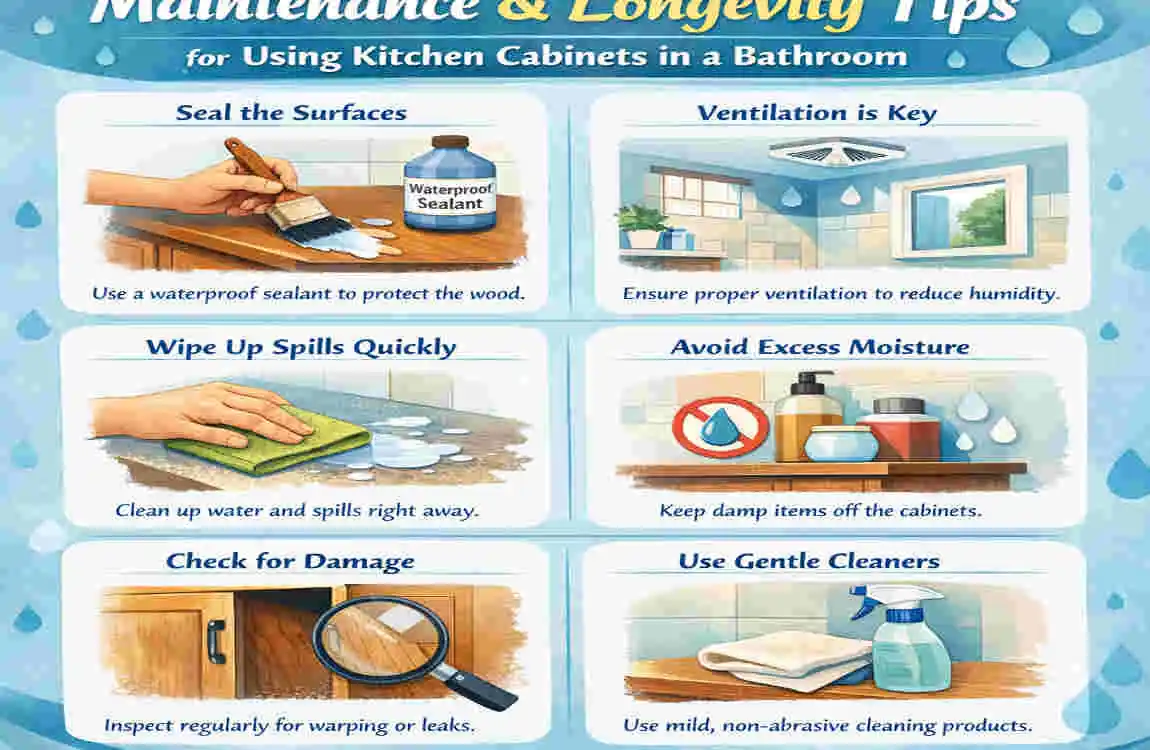
Keeping Your Upgrade Fresh
To ensure your kitchen cabinets last in the bathroom, follow these simple maintenance tips:
- Wipe down cabinet surfaces monthly with a damp cloth.
- Reseal with polyurethane once a year to maintain moisture resistance.
- Keep your bathroom well-ventilated using exhaust fans or open windows.
- Fix leaks and drips immediately to prevent water damage.
Alternatives If Kitchen Cabinets Aren’t Right
If you decide against kitchen cabinets, consider these options:
- Custom bathroom cabinets designed for moisture.
- IKEA bathroom cabinet hacks tailored with moisture protection.
- Floating shelves or open storage units for a minimalist look.
FAQs
Q1: Can you use kitchen cabinets in a bathroom?
Yes, you can! But make sure to seal them properly and ensure your bathroom has good ventilation to prevent moisture damage.
Q2: Are kitchen cabinets waterproof?
No, kitchen cabinets are usually not waterproof. They require sealing and finishing to handle bathroom humidity.
Q3: How do you seal kitchen cabinets for bathroom use?
Apply 2–3 coats of polyurethane or marine-grade varnish on all surfaces, including backs and undersides, and seal edges with silicone caulk.
Q4: Will using kitchen cabinets void their warranty?
Possibly. Many manufacturers don’t cover moisture damage if cabinets are installed in bathrooms. Always check before purchase.
Q5: Can I install a sink on kitchen cabinets in the bathroom?
Yes, but you may need to cut plumbing holes and reinforce the cabinets to support the sink’s weight.