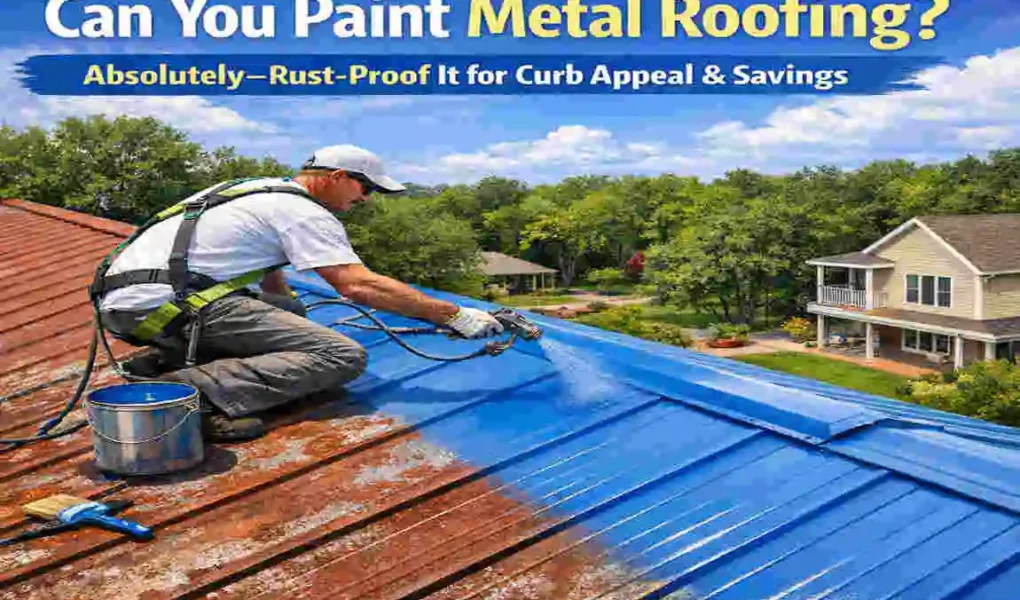
If you have been staring up at your home, wondering if that faded, chalky metal roof is doomed to look tired forever, I have great news for you. The answer is a resounding yes. You can absolutely paint metal roofing, and if you do it right, it is one of the smartest investments you can make for your home’s exterior.
Many homeowners assume that once the factory finish on a metal roof starts to peel or fade, the only option is a costly replacement. That is not true. By painting your metal roof, you aren’t just slapping on a new color; you are adding a fresh layer of protection. You are sealing out moisture, fighting back against rust, and potentially lowering your energy bills.
Why Paint Metal Roofing? Top Benefits for Homeowners
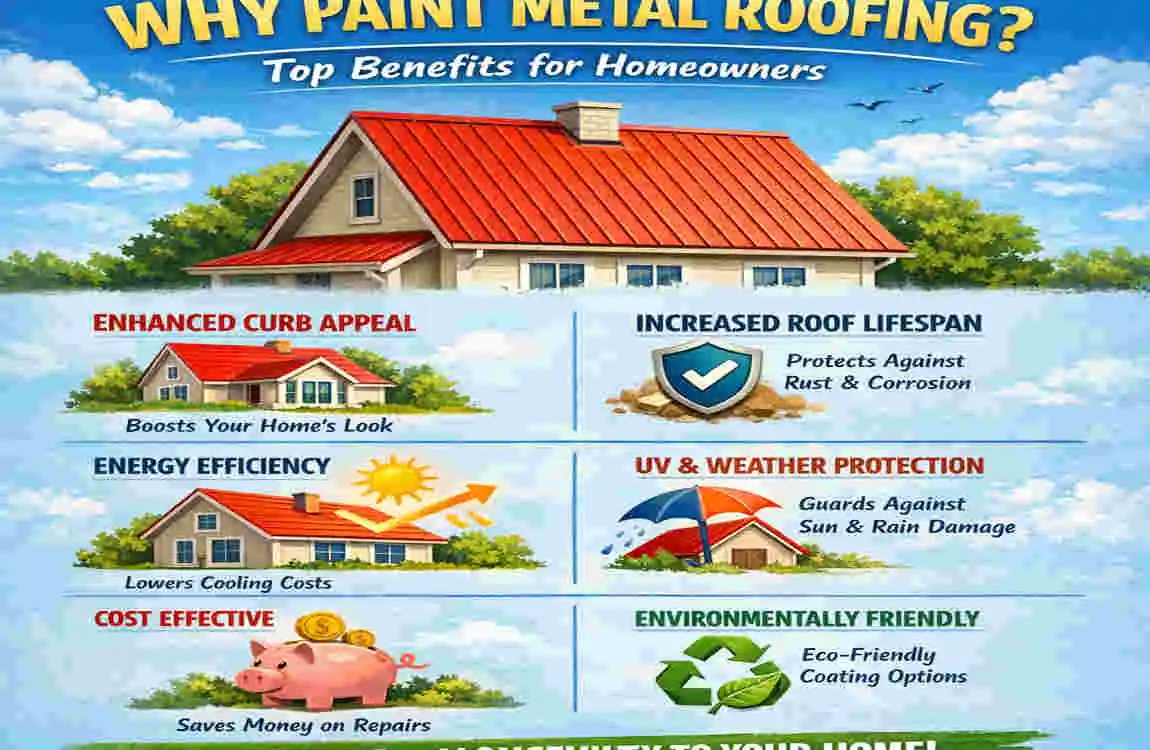
You might be thinking, “Is it really worth the effort?” Painting a roof is a big job, but the payoff is huge. It’s not just about vanity; it’s about economics and longevity. Here is why painting your metal roofing is a brilliant move.
An Instant Boost in Curb Appeal
First impressions matter. Over time, UV rays from the sun break down the coating on metal roofs, leaving them looking dull, chalky, or uneven. A fresh coat of high-quality paint can completely transform your home’s aesthetic. You can switch from a dated forest green to a modern charcoal gray or a sleek matte black. It makes the house look well-maintained and modern, which is crucial if you are thinking about selling in the near future.
Powerful Rust-Proofing
Metal has one arch-nemesis: Rust. Once the factory protective coating wears thin, moisture touches the bare metal, and corrosion begins. Painting is rust-proofing. By applying a specialized primer and topcoat, you are creating a barrier that locks out moisture and oxygen. This simple act can extend the life of your existing roof by 10 to 20 years.
Massive Cost Savings
Let’s talk numbers. Replacing a metal roof is expensive—often costing between $8 and $15 per square foot, depending on materials and labor. Painting, on the other hand, usually costs a fraction of that, often landing between $1 and $3 per square foot. You are essentially getting a “new” roof for 15-20% of the price of a replacement.
Energy Efficiency
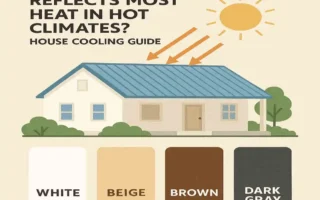
Did you know your roof color affects your electric bill? Old, dark, or bare-metal roofs absorb a lot of heat, which is transferred right into your attic and living space. Modern metal roof paints often come with “cool roof” technology. These reflective paints bounce the sun’s rays away from your home. This can lower roof surface temperatures significantly and cut your cooling costs by up to 15-20% during those hot summer months.
Can You Paint Any Metal Roof? Types and Suitability
Before you run out and buy gallons of paint, we need to pause and assess. While the answer to “can you paint metal roofing” is yes, there are exceptions. Not every roof is ready for a makeover immediately.
Identifying Your Roof Type
Most residential metal roofs fall into a few categories:
- Standing Seam: These have raised interlocking seams and are excellent candidates for painting.
- Corrugated Panels: The classic “wavy” metal. These are easy to paint but take longer to clean due to their ridges.
- Screw-Down Panels: These are very common. You need to be careful around the fasteners (screws) to ensure they are sealed tight.
Assessing the Condition
You need to get up there (or use binoculars) and look closely. If the metal is structurally sound but looks ugly, you are good to go. However, if you see gaping holes, rusted panels that are all the way through, or loose panels that flap in the wind, paint won’t fix them. You need repairs first.
Also, consider the material. Galvalume and Galvanized Steel are the most common and take paint well. Aluminum is also paintable but requires a specific primer to ensure adhesion.
When NOT to Paint
There are times when you should put the brush down:
- Severe Structural Rust: If the rust has eaten through the metal, you need to replace the panel.
- Warranty Issues: If your roof is relatively new (less than 20 years old), check your paperwork. Sometimes applying DIY paint can void the manufacturer’s warranty.
Roof Suitability Table
To make this clearer, here is a quick breakdown of compatibility:
Roof Type/Material, Paint Compatibility, Preparation Difficulty, Potential Lifespan Extension
Galvanized Steel High Moderate (Needs rust removal) 15+ Years
Galvalume Moderate High (Must weather for 6+ months first) 10-15 Years
Aluminum High Low (Needs etching primer) 15+ Years
Rusty Corrugated Moderate High (Heavy scrubbing required) 5-10 Years
Prep Work: Essential Steps Before Painting Metal Roofing
I cannot stress this enough: Preparation is 80% of the job. If you skip the prep work, your expensive paint will peel off in sheets within a year. You need a clean, stable surface for the paint to grab onto.
Safety First
Roofs are dangerous. Period. Before you start, ensure you have a sturdy extension ladder. If your roof has a steep pitch, do not attempt this without a safety harness and rope system. Also, check the weather. You want a dry stretch of days with temperatures between 50°F and 85°F. Painting on a scorching-hot roof causes the paint to dry too quickly and crack; painting on a wet roof spells disaster.
The Deep Clean
You need to remove years of dirt, pollen, mildew, and chalky oxidation.
- Pressure Washing: Use a pressure washer set to about 1,500-2,000 PSI. You want to clean it, not dent the metal or blast water under the seams.
- Chemical Cleaning: For tough grime, mix a solution of TSP (Trisodium Phosphate) and water. This acts as a heavy-duty degreaser. If you have mildew (black spots), add a little bleach to the mix. Scrub the surface with a stiff-bristle broom and rinse thoroughly.
Removing the Rust
If you paint over rust, it will continue to grow underneath the paint, eventually bubbling up like a blister.
- Use a wire brush or a sandpaper sponge to scour away loose, flaky rust.
- Once the loose stuff is gone, wipe it down.
- Pro Tip: If the rust is stubborn, use a vinegar solution or a specialized “rust converter,” which chemically turns rust into a paintable black surface.
Tightening and Repairing
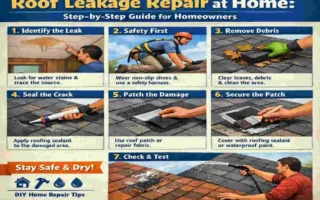
While you are cleaning, check every screw. Metal expands and contracts with heat, which can wiggle screws loose over time. Tighten them up. If a rubber washer on a screw looks cracked or missing, replace the screw. If there are small cracks in the metal seams, apply a urethane roof sealant to patch them up before painting.
Choosing the Best Paint for Metal Roofing
Do not—I repeat, do not—use leftover wall paint from your living room. Metal roofs experience extreme temperature swings. They get sizzling hot in the sun and cold at night. This causes the metal to expand and contract. Standard house paint will crack under this movement. You need paint that is elastomeric, meaning it is flexible.
Top Paint Types
Acrylic Latex (High Quality)
This is the industry standard for residential metal roofs. High-quality 100% acrylic latex paint is breathable, durable, and environmentally friendly. It holds its color well and resists fading. Look for brands that specify “Direct-to-Metal” (DTM) or “Metal Roof Paint.”
Elastomeric Paint
This is a thicker, rubber-like coating. It is fantastic for older roofs with small pinhole leaks because it seals them shut. It creates a seamless, waterproof membrane. It is more expensive but offers incredible protection.
Oil-Based Alkyd
While durable, these are becoming less common because they don’t hold their gloss as well as acrylics over time, and they can become brittle and crack as the roof expands. Stick to Acrylic or Elastomeric if possible.
Key Features to Look For
- Rust Inhibition: Ensure the label says it prevents rust.
- UV Resistance: Essential for preventing color fade.
- Reflectivity: Look for “Energy Star” ratings if you want to save on cooling bills.
Recommended Brands: Professional painters often swear by brands like Sherwin-Williams (Sher-Cryl), Behr Premium Direct-to-Metal, or specialized roof coating brands like KST Coatings.
How to Paint Metal Roofing: DIY Step-by-Step Guide
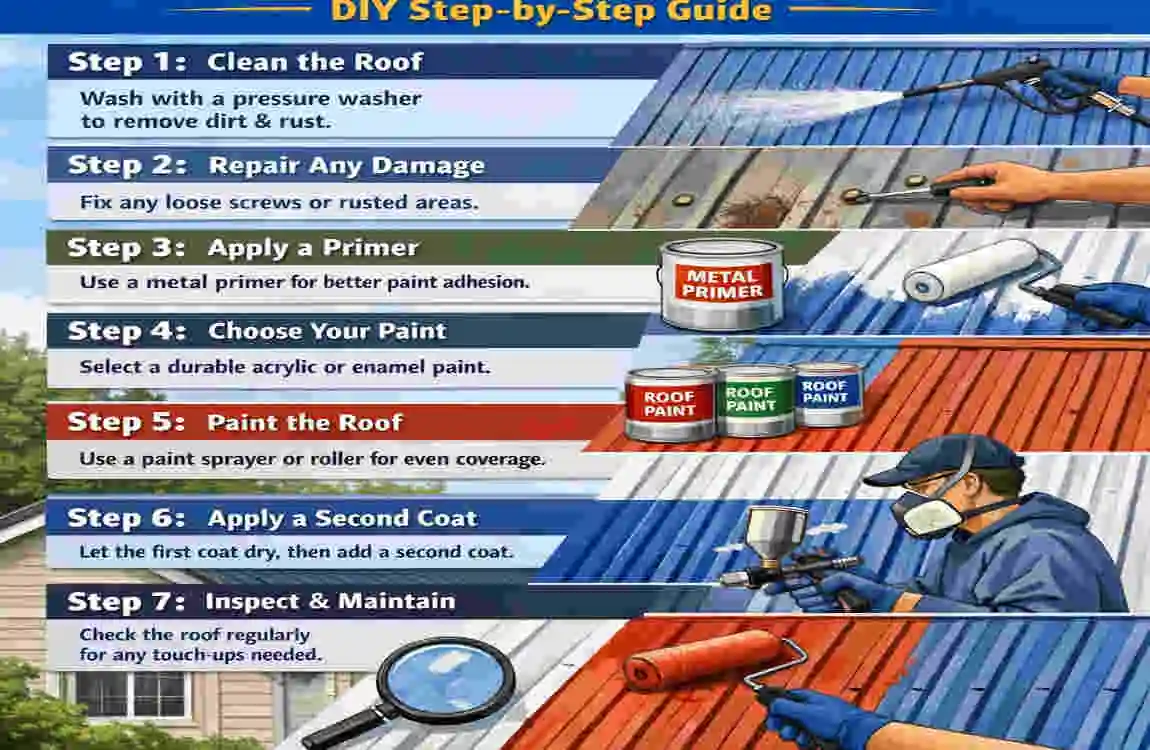
Ready to transform your home? Here is your step-by-step game plan.
Tools You Will Need
- Airless paint sprayer (Recommended for the smoothest finish).
- Paint rollers (3/4 inch nap for corrugated metal) and brushes for edges.
- Metal primer (Rust-inhibitive).
- Metal roof paint.
- Masking tape and plastic sheeting (to protect gutters and siding).
Priming (The Anchor)
Never skip primer, especially on an older roof.
- Select the right primer: Use a galvanized metal primer.
- Apply: Spot-prime any areas where you removed rust. Then, apply a full coat of primer over the entire roof.
- Wait: Let it dry completely according to the can instructions (usually 4-6 hours).
The Base Coat
Now for the color.
- Mix well; the pigment settles to the bottom. Stir your paint thoroughly.
- Start from the top: Always start at the peak (ridge) of the roof and work your way down towards the eaves. This prevents you from painting yourself into a corner or having drips ruin your lower work.
- Spraying vs. Rolling: If you are using a sprayer, keep the gun about 12 inches from the surface and move in a steady, sweeping motion. If rolling, ensure you get into all the grooves and ridges.
The Top Coat
One coat is rarely enough.
- Check the first coat: Look for thin spots or “holidays” (missed spots).
- Apply the second coat: This provides the true shell of protection and ensures the color is rich and even.
- Seal the seams: Pay extra attention to the seams and screw heads, as these are the first places leaks start.
DIY vs. Hiring a Pro
If your roof is a simple, low-slope structure, a DIY approach can save you $1,500 to $3,000. However, if you have a steep, multi-story roof, the risk of injury is not worth the savings. Professionals have the insurance, the scaffolding, and the heavy-duty sprayers to get it done in a day.
Maintenance and Long-Term Savings After Painting
Congratulations! Your roof looks amazing. But don’t just walk away and forget about it. A painted metal roof is low-maintenance, not no-maintenance.
Post-Paint Care
- Annual Wash: Once a year, give your roof a gentle wash with a garden hose to remove acidic leaves, bird droppings, and dirt. This keeps the paint fresh.
- Trim Trees: Keep branches cut back. A scratching branch can wear through your new paint in a single windy storm.
- Inspect: Every spring, do a quick visual check for any scratches or peeling. Touch them up immediately with a small brush.
The Return on Investment (ROI)
Let’s look at a real-world scenario. Imagine you spend $1,500 on materials to paint your roof yourself.
- Replacement Avoidance: You avoided a $10,000 replacement bill.
- Energy Savings: If your new white or light-colored roof lowers your electric bill by $20/month, that is $240 a year back in your pocket. Over 10 years, the paint job effectively pays for itself in energy savings alone.
- Home Value: If you sell, a gleaming roof adds thousands to the perceived value of the home compared to a rusty one.
Common Mistakes to Avoid When Painting Metal Roofing
I have seen many DIY projects go wrong because of simple errors. Here is how to avoid the “oops” moments.
- Painting Over Dew: Do not start too early in the morning. If there is morning dew on the metal, the paint won’t stick. Wait until the sun has completely dried the surface.
- Skipping the Rinse: After using chemical cleaners, you must thoroughly rinse the roof. If cleaner residue is left behind, it acts like a film that prevents the paint from bonding.
- Using the Wrong Roller: If you are rolling, use a thick nap roller. A thin roller won’t get paint into the metal’s texture, leaving you with a patchy job.
- Ignoring the Weather Forecast: You need at least 24 hours of dry weather after you finish painting for the coating to cure. If it rains three hours after you finish, your paint will wash into the gutters.
FAQs: Can You Paint Metal Roofing? Quick Answers
Can you paint metal roofing that has already been painted? Yes, absolutely. You need to ensure the old paint isn’t peeling. If it is, scrape off the loose flakes and sand the edges smooth before applying your new primer and paint.
How long does paint last on metal roofing? If you prep correctly and use high-quality acrylic or elastomeric paint, it should last 10 to 15 years before needing a touch-up.
Does painting metal roofing void the warranty? It can. If your roof is still under its original warranty (often 20-40 years), check with the manufacturer. Some warranties are voided if you apply non-approved coatings.
Can you paint metal roofing in winter? Generally, no. Most paints require temperatures to be at least 50°F (10°C) to cure properly. If it’s too cold, the paint won’t bond and will fail.
Is spraying better than rolling? For metal roofs, spraying is usually better. It provides a more uniform, factory-like finish and gets into the crevices of corrugated metal much easier than a roller.