Have you ever looked out at your blooming flowerbeds and wondered, ‘Can you keep bees in your house garden in the UK without breaking the law?’ If so, you are definitely not alone.
Across the United Kingdom, our vital pollinator populations have been facing a steep decline. According to leading botanical and beekeeping associations, habitat loss and climate changes are making it harder for our buzzing friends to thrive. Because of this, more and more homeowners are stepping up to help by bringing a hive right into their own backyards.
By setting up a hive, you are not just helping the environment; you are also helping the bees. You are also setting yourself up for some amazing benefits. Imagine harvesting your own pure, golden honey, boosting the yield of your garden vegetables through superior pollination, and enjoying the deeply relaxing, eco-friendly hobby of beekeeping.
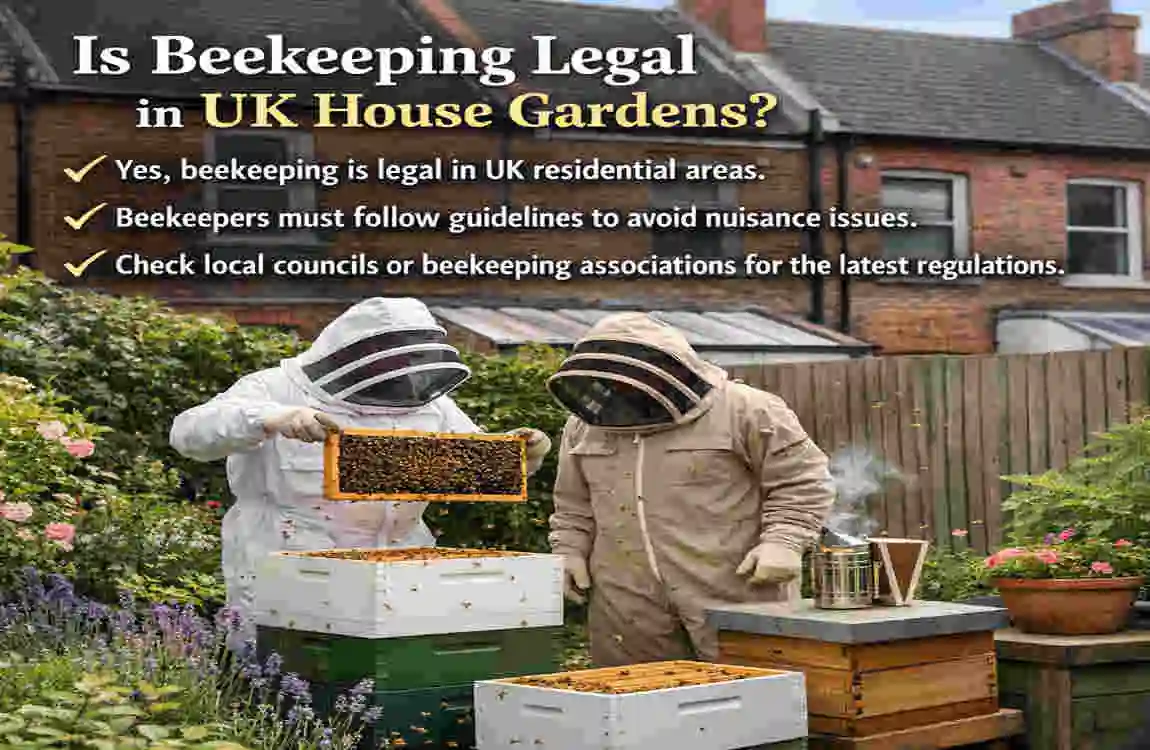
Is Beekeeping Legal in UK House Gardens?
If you are eager to start your beekeeping journey, your very first thought is probably about the legal side of things. You might be asking yourself, “Yes, you can keep bees in your house garden UK, but do I need special permission to do it?”
The fantastic news is that there is absolutely no national ban on keeping bees in residential gardens across the UK. You have every right to pursue this hobby on your own property.
However, your local council’s bylaws generally govern beekeeping and common sense regulations rather than strict national permits, especially if you plan to keep fewer than five hives.
Let us break down the most important legal facts you need to understand.
Bees Are Not Classified as Livestock
You might be surprised to learn that the law does not view honey bees as livestock in the same way it views chickens, pigs, or sheep. Because of this, hobbyist beekeepers do not have to register with the Department for Environment, Food & Rural Affairs (DEFRA) just to put a single hive in their garden. You can buy your equipment and get started.
The Environmental Protection Act 1990
While you are free to keep bees, you still have a legal responsibility to your community. Under the Environmental Protection Act 1990, local councils can take action if your bees become a “statutory nuisance.”
What does a statutory nuisance mean in everyday language? It means your bees are actively and consistently interfering with your neighbors’ right to enjoy their own property. For example, if your bees constantly swarm into your neighbor’s chimney, or if you place the hive so close to their patio that they cannot sit outside without getting stung, you could face complaints.
As long as you manage your bees responsibly and keep them from becoming a hazard to the public, the law is completely on your side.
Regional Variations Across the UK
While the general rules are similar, there are slight regional differences depending on where you live.
- England and Wales: Local council bylaws are your main point of reference. Nuisance laws are the primary thing to watch out for.
- Scotland: The Scottish Government strongly encourages registration with the local bee health database to help track diseases. However, it remains largely voluntary for hobbyists.
- Northern Ireland: You must register your apiary (your bee yard) with the Department of Agriculture, Environment and Rural Affairs (DAERA). This is a unique requirement specific to Northern Ireland to help protect local bee health.
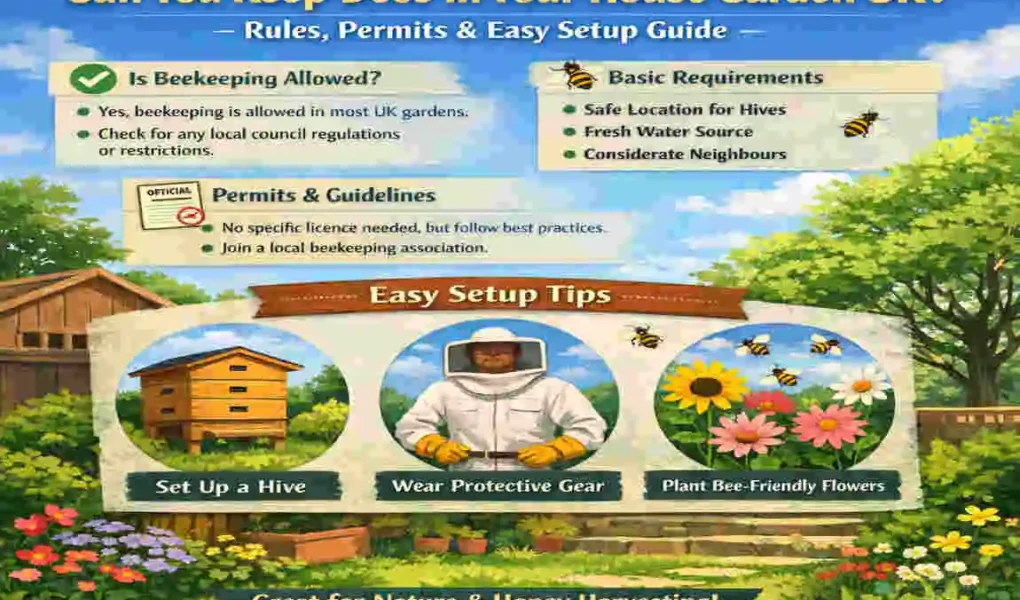
Do You Need Permits for Bees in Your UK Backyard?
There is a common myth circulating in gardening circles that you need a complex, expensive license to keep bees. Let us bust that myth right now: there is no central permit required for the question, “can you keep bees in your house garden UK?”
For the average hobbyist setting up one or two hives in a standard garden, you do not need a permit. However, there are a few specific situations in which you will need to seek permission or complete paperwork.
When You Have More Than Five Hives
If you catch the beekeeping bug and decide to expand your apiary to more than five hives, or if you plan to sell honey commercially, you shift from being a hobbyist to a serious producer. At this stage, it is highly recommended (and sometimes required by local bylaws) to register your apiary with the National Bee Unit (NBU). This helps the government monitor bee diseases nationwide.
Listed Buildings and Conservation Areas
Do you live in a historically listed building or a designated conservation area? If so, the rules change slightly. While you still do not need a “bee permit,” you might need council planning permission for the physical structure of the hive itself.
Conservation areas have strict rules about what can be added to the landscape. A brightly colored wooden box might violate those rules, so it is always best to check with your local planning officer first.
Allotments and Shared Gardens
If you do not have a private house garden and want to use a rented allotment or a shared community garden, you absolutely need permission. You must read your tenancy agreement or leaseholder contract. Many allotment committees welcome bees, but they usually require you to prove you have taken a beekeeping course and hold liability insurance.
Your Step-by-Step Permit and Permission Checklist
To make sure your urban beekeeping backyard setup goes smoothly, follow this simple checklist:
- Contact your local council: Visit your local council’s planning portal and search for “beekeeping.” Check if there are any specific local bylaws governing your street or neighborhood.
- Join a beekeeping association: Affiliate yourself with a recognized group, such as the British Beekeepers Association (BBKA). They offer fantastic advice, and membership usually includes public liability insurance—a massive bonus if a neighbour ever complains.
- Check biosecurity rules: If you are importing bees from outside your local region (which is rare for beginners but possible), you may need to complete a TB10 form to ensure you aren’t bringing in foreign diseases. Always try to buy local bees!
Benefits of Keeping Bees in Your House Garden UK
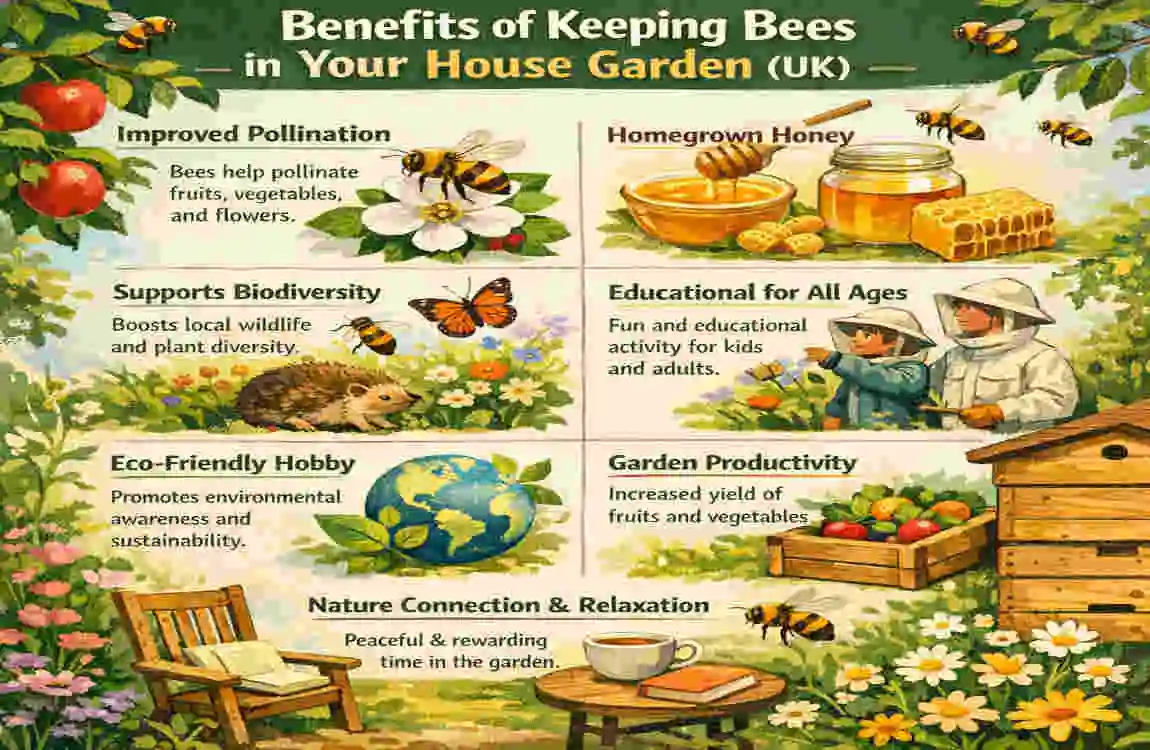
Now that we have cleared up the legalities, let us talk about the fun stuff. Why should you go through the effort of setting up a honey bee garden setup? The rewards of this fascinating hobby are vast, touching on everything from environmental conservation to personal well-being.
Incredible Eco Perks
First and foremost, keeping bees is a massive win for the environment. Honey bees are some of the most efficient pollinators on the planet. By having a hive in your garden, you will notice a dramatic difference in your own plants.
Did you know that introducing a bee colony can boost your garden’s fruit and vegetable yields by up to 30%? Your apple trees will hang heavier with fruit, your courgettes will grow larger, and your flowerbeds will burst with vibrant colors as the bees transfer pollen from bloom to bloom. You are directly supporting the local ecosystem.
Personal Gains and Low-Cost Therapy
Beekeeping is incredibly rewarding on a personal level. There is a deep, mindful peace that comes with inspecting a hive. When you open the box, move slowly, breathe calmly, and focus entirely on the gentle hum of the colony. Many urban beekeepers describe this as a form of low-cost therapy, a perfect way to unplug from screens and reconnect with nature.
Furthermore, you are actively increasing biodiversity in your local neighbourhood, providing a haven for insects struggling in the wild.
The Sweet Return on Investment
We cannot forget the most delicious benefit: fresh, raw honey! A single healthy hive in a UK garden can produce anywhere from 20 to 40 pounds of honey in a good year.
If you consume a lot of honey, the return on investment is fantastic. Urban beekeeping in UK house gardens can easily save you over £200 a year on Premium, store-bought honey. Plus, nothing tastes quite as sweet as the honey produced from the nectar of your very own garden flowers.
Choosing the Right Spot in Your UK House Garden
You have decided to take the plunge. You know the laws, and you are excited about the benefits. The next big question is: where exactly should you put the hive?
Finding the right location is critical to whether you can keep bees in your house garden in the UK. The spot you choose will determine how happy your bees are and how happy your neighbors remain.
The Ideal Hive Location
Your bees need a spot that makes their daily foraging as easy as possible. You should look for a sunny location, particularly in the morning. Morning sun warms up the hive and encourages the worker bees to get out and start foraging early in the day.
The spot also needs to be sheltered from harsh winter winds. A solid wooden fence or a thick hedge behind the hive is perfect for blocking cold drafts.
Ideally, you want the hive to be at least two to three meters away from your property boundaries. You also want to ensure the flight path (the direction the entrance faces) points away from footpaths, patios, and children’s play areas.
What to Avoid at All Costs
There are a few places you should definitely avoid when placing your hive.
- Neighbour Boundaries: Placing a hive within 2 meters of a shared fence is a recipe for nuisance complaints. As bees take off and land, they need space to gain altitude.
- Damp Areas and Ponds: Bees do not like damp conditions. Avoid placing the hive in a soggy dip in your lawn or directly next to a large garden pond where humidity is high.
- Highways and Busy Roads: Do not point the hive entrance toward a busy road. Flying bees can easily collide with cars, which diminishes your colony’s numbers.
A Pro Tip for Hive Placement
If you are struggling to visualize the best spot, open up your computer and use Google Earth. Searching for “house garden bee hive placement UK” on gardening forums shows that many pros use satellite imagery to map out their gardens.
Looking at your property from above allows you to see where the sun hits at different times of the day, where the natural windbreaks are, and how close you actually are to your neighbor’s back door. It is a brilliant, modern tool for a traditional hobby!
Essential Beekeeping Equipment for Beginners
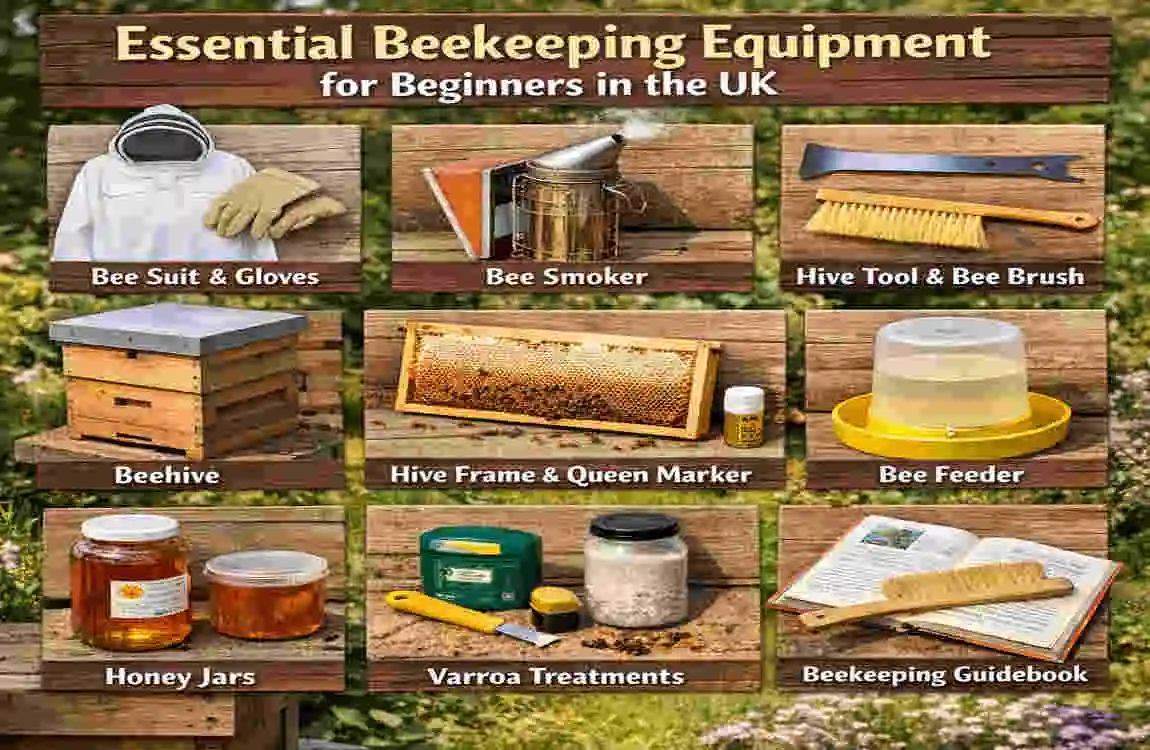
Before you can welcome your buzzing guests, you need to gather your tools. It is easy to get overwhelmed by all the gadgets available online. Still, you really only need a few essentials to set up a simple home garden in the UK.
Let us break down the starter kit you will need and look at the realistic costs involved.
Your Beginner Beekeeping Starter Kit
- The Hive: This is the bees’ home. In the UK, the “National Hive” is the most popular style for beginners because its parts are easy to find. Some people prefer the “Warré Hive” for a more natural approach.
- Beekeeping Suit: Safety first! You need a full-body suit with a veiled hat to protect your face and neck from stings. Do not skimp on this; a high-quality suit builds confidence.
- The Smoker: This metal canister is used to puff cool smoke into the hive. The smoke masks the bees’ alarm pheromones, keeping them calm while you inspect them.
- Hive Tool: This looks like a small crowbar. Bees glue everything together with a sticky substance called propolis. You will need this tool to pry the wooden frames apart.
- The Bees: You will typically buy a “nucleus colony” (often called a “nuc”). This is a mini-colony that comes with a queen, worker bees, and a few frames of honeycomb ready to transfer into your main hive.
Budget Breakdown
Here is a simple table outlining the estimated costs for a beginner in the UK:
Equipment Item Description Estimated Cost (£)
National Hive Complete wooden hive (base, boxes, roof). £150 – £300
Protective Gear Full suit, thick leather gloves, veil. £80 – £120
Essential Tools Smoker, hive tool, bee brush. £30 – £50
Nucleus Colony Live bees with a mated queen (via BBKA). £150 – £200
Miscellaneous Feeders, sugar syrup, varroa treatments. £40 – £60
As you can see, you can expect a total budget of right around £450 to £730. This means you can comfortably build an easy house garden setup UK for well under £800. While it is an upfront investment, remember that the hive and tools will last for many years!
Step-by-Step Guide: Setting Up Bees in Your House Garden UK
You have checked the rules, found the perfect sunny spot, and bought your equipment. Now comes the most exciting part: actually getting the bees!
To help you succeed, we have broken down the setup process into four manageable phases. Follow this guide to ensure your honey bee garden setup goes flawlessly.
Preparation of the Site and Equipment
Do not wait until the bees arrive to build your hive. Woodwork can be fiddly, so take your time. Assemble your hive boxes, paint the outside with a bee-friendly, non-toxic wood preserver to protect it from the wet UK weather, and set up your hive stand.
The hive needs to be raised off the ground by about a foot to keep dampness away and make it harder for mice to get in. Ensure the stand is perfectly level. Once your hive is built and situated in that sunny, sheltered spot you chose earlier, you are ready for the live animals.
Installing the Hive and Nucleus Colony
The best time to start keeping bees in the UK is in the spring, typically between April and May. This gives the colony the entire summer to build up their strength and store honey before winter arrives.
When you purchase your nucleus colony, it will arrive in a small travel box. Put on your beekeeping suit, light your smoker, and gently open the travel box. Carefully lift out the wooden frames covered in bees and place them directly into the center of your new National Hive. Fill the sides with new, blank frames for the bees to build on. Close the roof, provide them with a little sugar syrup in a feeder to give them an energy boost, and leave them alone for a week to settle in.
The First Inspections
Beekeeping is not a “set it and forget it” hobby. You need to check on your bees regularly. In spring and summer, aim for an 8-day inspection cycle. Why eight days? Because it takes a bee colony a specific number of days to create a new queen and prepare to swarm. Checking every 8 days lets you spot the signs before they fly away!
During these inspections, you will puff a little smoke, open the roof, and pull out the frames. You are looking for three main things:
- Is the queen laying eggs? (Look for tiny white specks at the bottom of the honeycomb cells).
- Do they have enough space, or do you need to add another box?
- Are there signs of disease or pests?
Remember to move slowly. If you are calm, the bees will remain calm.
Harvesting the Honey
If your colony has thrived, by late July or August, you will have surplus honey! It is crucial to remember that you can only take the extra honey. The bees need enough stores to survive the cold UK winter.
You will remove the frames where the wax caps are sealed over the honey, brush the bees off gently, and take the frames into your kitchen. Using a hot knife, you will uncap the wax and spin the frames in a honey extractor (which you can often rent from a local bee club). Watching that clear, golden liquid pour into a jar from your very own garden is a feeling you will never forget!
Common Challenges & Solutions for UK Urban Beekeepers
When people ask, “can you keep bees in your house garden UK,” they also want to know about the downsides. Like any hobby involving nature, beekeeping comes with its share of challenges. Being prepared is the key to managing them easily.
Managing and Preventing Swarms
Swarming is the natural way a bee colony reproduces. When a hive gets too crowded, the old queen will take half the bees and fly away to find a new home—sometimes landing in a neighbor’s tree! While this is natural, it is bad news for urban beekeepers.
The Solution: You prevent swarming by giving the bees plenty of space. Add new boxes (called supers) before the hive gets full. If you see them building peanut-shaped “queen cells” during your 8-day inspection, you can perform an artificial swarm, which involves splitting the colony into two separate hives to trick them into thinking they have already swarmed.
Battling Pests: The Varroa Mite
The biggest threat to UK honey bees is a tiny, reddish-brown parasite called the Varroa mite. Think of them as tiny ticks that latch onto the bees, weakening them and spreading dangerous viruses. Left unchecked, Varroa will destroy a colony over the winter.
The Solution: You must monitor mite levels. Urban beekeepers use specific, safe treatments late in the summer, such as Apiguard (a thymol-based gel), to knock down the mite population before winter. Regular treatment is a non-negotiable part of modern beekeeping.
Keeping the Neighbors Happy
The biggest challenge in urban backyard beekeeping setups is managing human relationships. Neighbours may be fearful of bees, worried about stings or allergies.
The Solution: Communication is your best tool. Talk to your neighbors before the bees arrive. Explain your safety measures. Erect a two-meter-high fence or trellis near the hive; this forces the bees to fly up and over head-height when they leave, keeping them out of people’s faces. And, of course, a complimentary jar of fresh honey goes a very long way toward securing a neighbour’s goodwill!
UK Beekeeping Regulations: Neighbors, Safety & Best Practices
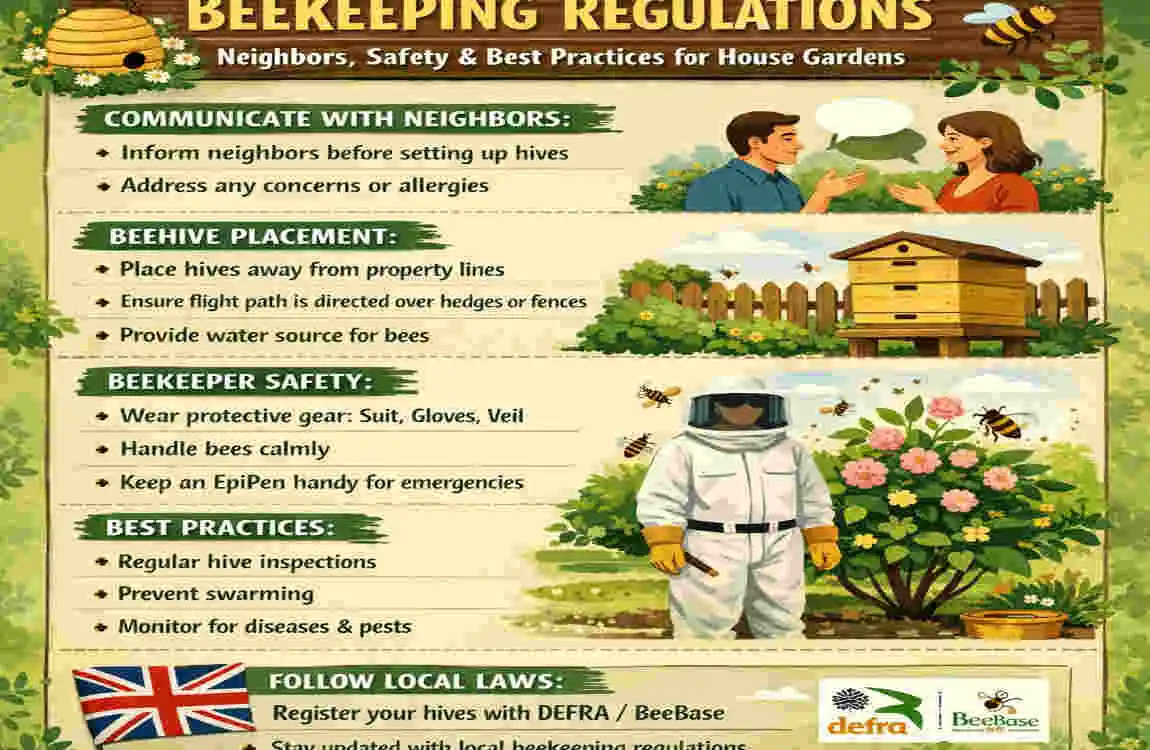
To ensure a harmonious environment, you must adhere to some established best practices. These aren’t just polite suggestions; they are the unwritten rules that keep backyard beekeeping viable for everyone.
Respecting Neighbor Rights and Managing Liability
As we mentioned earlier, a flight path should never cross a public walkway or a neighbor’s patio at head height. The general rule of thumb in the UK is to maintain a distance of at least 2 meters from property boundaries.
However, accidents can happen. A bee might sting a neighbor’s visiting guest. Because of this, public liability insurance is highly recommended. By joining the British Beekeepers Association (BBKA), your membership automatically includes £10 million in public liability insurance. It offers incredible peace of mind for a very small annual fee.
Health and Safety Precautions
You must be realistic about stings. If you keep bees, you will eventually get stung. It is part of the job. However, you must prioritise the safety of others in your household.
If you have young children or pets, you need to create a physical barrier around the hive area. A simple wooden picket fence or mesh enclosure prevents a curious toddler or an energetic dog from knocking the hive over. Furthermore, ensure no one in your immediate family has a severe, life-threatening anaphylactic allergy to bee venom before you bring a hive home.
Following the Seasonal Calendar
UK beekeeping is entirely dictated by the seasons.
- Spring: You will focus on swarm prevention and feeding weak colonies.
- Summer: You will focus on adding space for honey storage and harvesting.
- Autumn: You will focus on treating for Varroa mites and feeding the bees sugar syrup so they have enough weight to survive the cold.
- Winter: You will strap the hive down to protect it from storms, add mouse guards to the entrance, and largely leave the bees completely alone until spring returns.
Sticking to this timeline ensures your bees remain healthy and docile.
Costs, Maintenance & Scaling Up Your UK Bee Garden
You know the upfront costs, but what does it take to maintain your honeybee garden year after year? Let us look at the long-term reality of this hobby.
Annual Running Costs
Once you have bought your suit, hive, and tools, the annual costs drop significantly. You will generally only need to spend between £100 and £200 per year. This budget covers essential items like winter feeding syrup sugar, Varroa mite treatments, new wooden frames to replace old, dirty ones, and perhaps a few glass jars for your honey harvest. It is a highly affordable hobby once the initial setup is complete.
Weekly Maintenance Time
Many beginners worry that bees will take up all their free time. The reality is quite the opposite. During the active season (April to August), you only need to dedicate about 1 hour per week per hive to inspections. During the winter, you will spend barely an hour a month checking on them. It is perfectly suited for busy professionals or families.
Scaling Up Your Apiary
Once you master one hive, you will likely want more! Keep two hives rather than one. Having two allows you to compare them. If one is struggling, you can borrow resources (like a frame of healthy eggs) from the strong hive to save the weak one.
Scaling up is easy. You buy another wooden hive. You don’t even need to buy more bees; you can create a second colony by doing an artificial swarm split from your first hive, effectively doubling your apiary for free!
FAQs: Can You Keep Bees in Your House Garden UK?
Can you keep bees in your garden in the UK without permission?
Yes, in the vast majority of cases, if you own your home and garden, you do not need formal planning permission or a central government permit to keep a few hives for a hobby. However, if you rent your property, live in a listed building, or use a shared allotment, you must first seek permission from the landlord or the council. How many hives are allowed in a UK residential garden?
There is no strict legal numerical limit. However, the Environmental Protection Act 1990 dictates that your bees must not become a nuisance. For a standard UK suburban garden, keeping one to three hives is generally considered the safe, acceptable maximum. Anything more than that greatly increases the traffic of flying bees and the risk of neighbor complaints.
What are the best bees for small UK gardens?
In urban environments, you want bees known for their docility and calm. UK backyard beekeepers highly favor the Buckfast bee and the Carniolan bee because they are gentle on the comb and less prone to aggressive stinging compared to wilder strains. Always ask your local breeder for a docile strain suited for urban environments.
Are there fines for illegal beekeeping in the UK?
Because beekeeping itself is not illegal, there are no fines just for having a hive. However, if your local council determines your hive is a “statutory nuisance” under the Environmental Protection Act, they can issue an abatement notice ordering you to move or remove the bees. If you ignore this legal notice, you may be taken to court and heavily fined. 5. What is the proper winter care for house garden bees in the UK?
During a UK winter, bees do not hibernate; they cluster tightly together to keep the queen warm. Your job is to ensure they are safe from the elements. You must ensure they have enough heavy sugar syrup stored before the cold hits. You should strap the hive down with a ratchet strap to prevent winter gales from blowing the roof off, insert a metal mouse guard across the entrance to stop rodents from moving in, and then leave the hive unopened until the warm days of spring return.