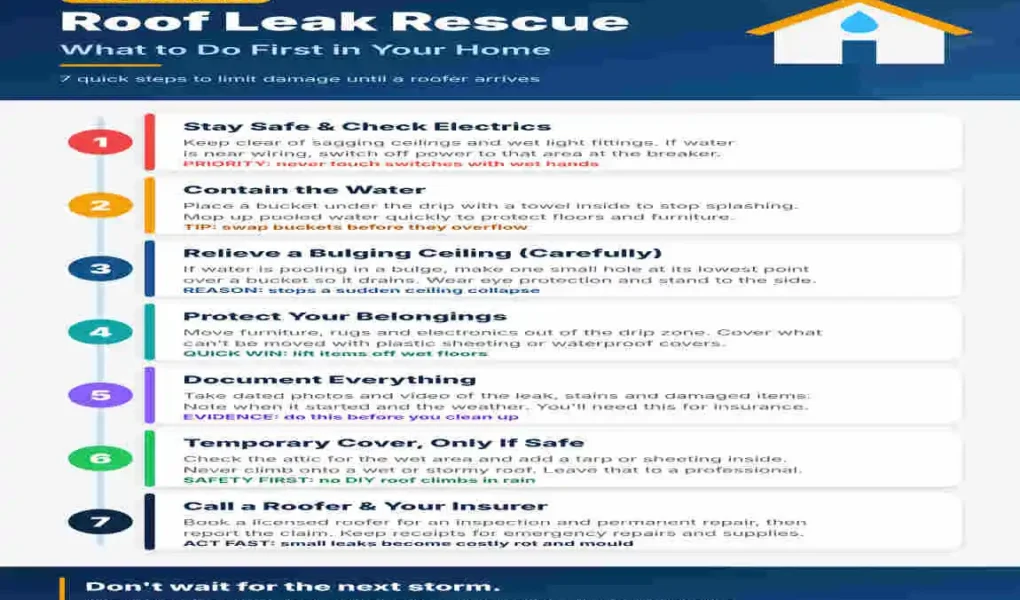
If your roof is leaking, move people and valuables away from the water, catch the drips with a bucket, photograph everything, and call your insurer and a licensed roofer. Cover the damaged area with a tarp only if you can do it safely from the ground or a stable position. Dry any wet materials within 24 to 48 hours to help prevent mold, and hold off on permanent repairs until your insurer has seen the damage.
Is a Roof Leak an Emergency?
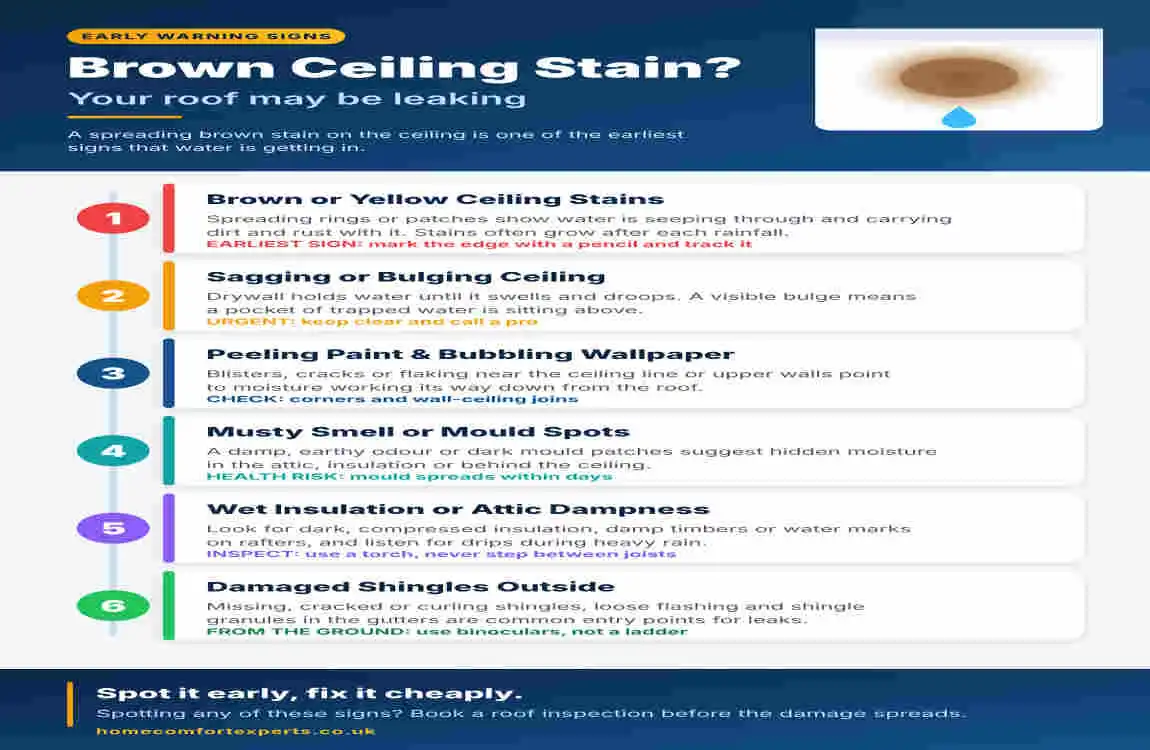
Usually, yes. Roofing marketplace Angi lists any water appearing in your attic or anywhere inside your home, and large puddles of standing water on the roof, as signs of a true roofing emergency. Even a slow drip can soak insulation, rot timber and feed mold behind the walls, so treat every active leak as urgent.
9 Steps to Take When Your Roof Leaks
Keep everyone safe first
Move your family and pets to a dry, stable part of the house. If water is dripping near light fittings, ceiling fans, outlets or wiring, keep away from it and switch off the power to that area at the breaker if you can reach the panel safely. Water and electricity together are a real hazard, so call a qualified electrician if you are unsure.
Contain the water inside
Place buckets or large pots under the drip and lay towels around them. Put a sponge or folded towel in the bucket to cut the splashing noise. Move furniture, rugs, electronics and important papers out of the drip zone.
If the ceiling is bulging with trapped water, many roofers suggest making a small puncture in the lowest point of the bulge with a screwdriver, directly over a bucket, so the water drains in a controlled way instead of bringing the whole ceiling down. Only do this if you are well away from light fixtures and wiring, and wear eye protection.
Document everything before you clean up
Take clear photos and videos of the leak, the stained ceiling, damaged belongings and, if you can see it safely from the ground, the roof itself. Note the date and time. Roofing manufacturer GAF advises homeowners to document everything, including receipts, photos and a home inventory, because it helps the claims process run smoothly.
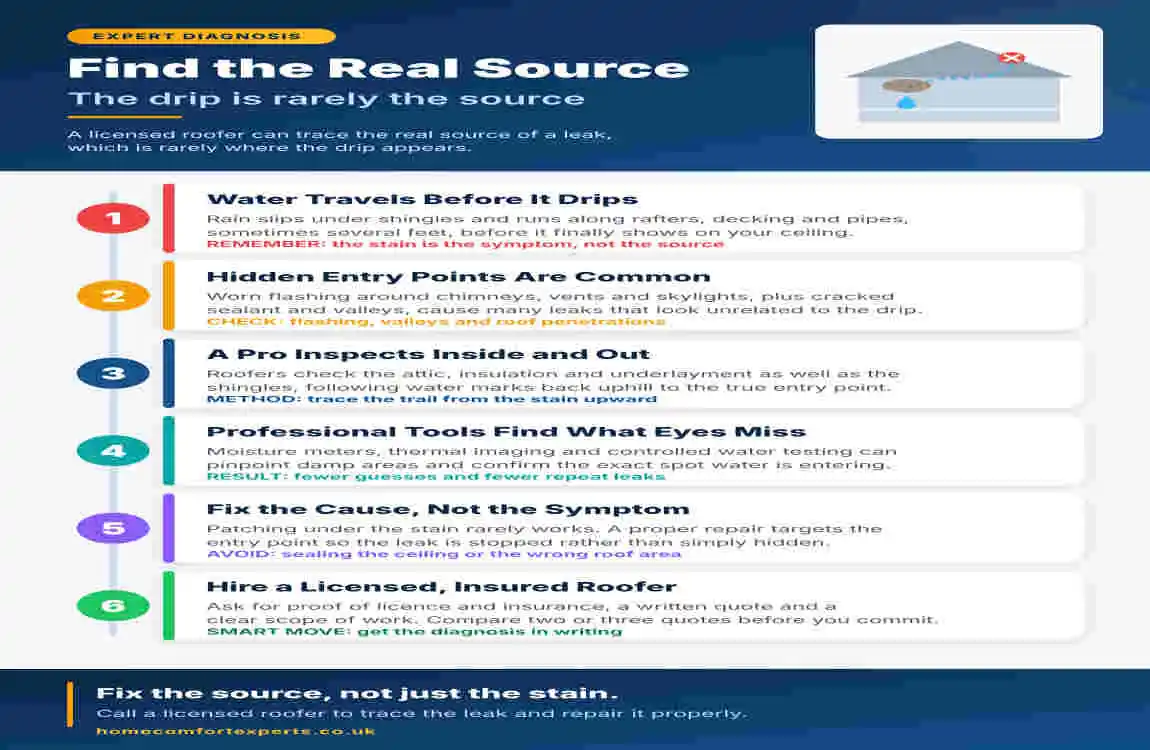
Find where the water is really coming in
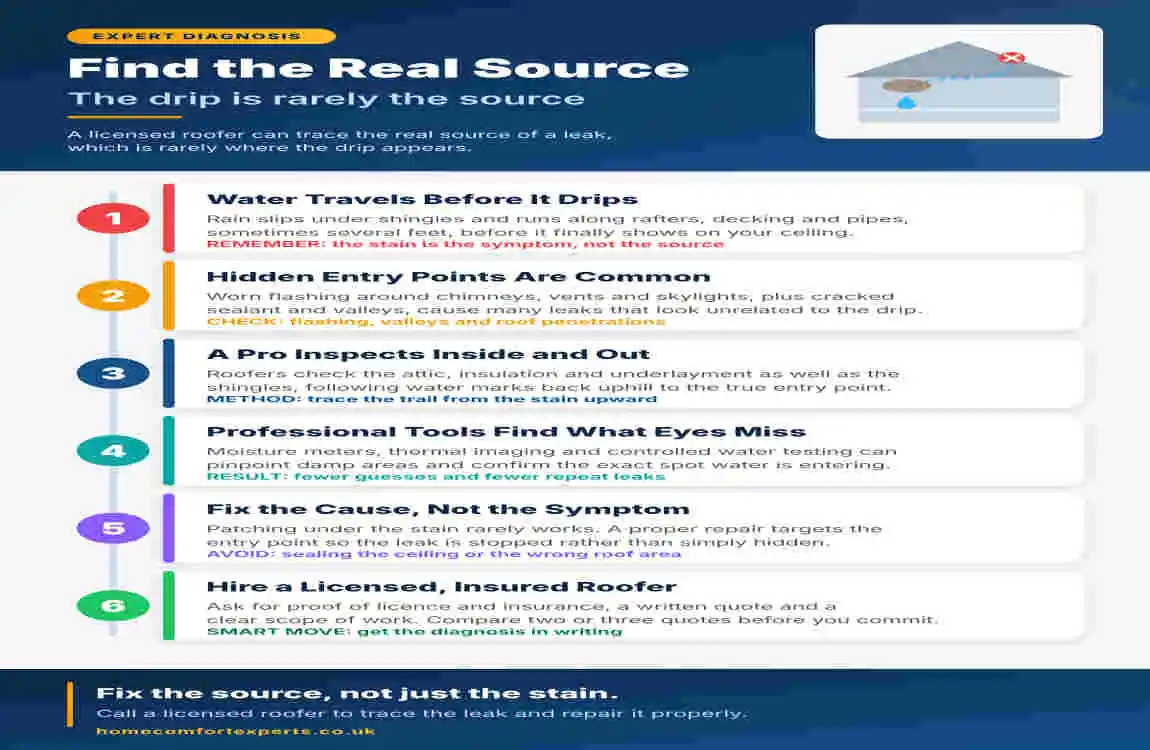
The drip is almost never directly under the hole. Water travels along rafters, pipes and decking before it shows up. If you can reach your attic safely, look for damp insulation, dark stains on the underside of the roof deck, or daylight coming through. Common culprits include broken or missing shingles, cracked flashing around chimneys and vents, blocked gutters and worn pipe seals.
Do not climb onto the roof
This is the step people skip, and it is the one that sends people to hospital. The National Roofing Contractors Association (NRCA) recommends that homeowners only inspect a roof from ground level, because the risk of falling is too great without proper safety systems. Use binoculars from the yard instead.
Cover the damage temporarily, only if it is safe
A heavy-duty outdoor tarp, pulled tight, extended well beyond the damaged area and secured so wind cannot lift it, can keep rain out until a roofer arrives. Insurance regulators encourage this step: the Connecticut Insurance Department says to try to prevent further damage by covering roofs with tarp or other waterproof materials, and to keep every receipt for emergency repairs. If the slope is steep, wet or icy, skip it and hire a professional. Angi puts the average cost of a professional emergency tarp job at about $450, which is far cheaper than a ruined ceiling.

Call your insurance company
Report the claim as soon as you can. The California Department of Insurance calls temporary repairs to prevent further damage one of the most important things to do after a loss, and notes that payments for them are part of the total settlement. Ask your insurer whether they want to inspect before any permanent work begins. Making permanent repairs roof first can complicate a claim.
Hire a licensed, insured roofer
Book a professional inspection even if the leak seems minor. Trained roofers spot damage that homeowners miss. Ask for proof of licence and insurance, get at least two written quotes, and be wary of anyone who knocks on your door after a storm pushing expensive “temporary” work. The California Department of Insurance specifically warns about contractors who encourage large spending on temporary repairs.
Dry everything within 24 to 48 hours
Speed matters for mold. The U.S. Environmental Protection Agency (EPA) advises drying water-damaged areas and items within 24 to 48 hours, and says that if mold is already growing, you must clean it up and fix the water problem or it will most likely return. Run fans and a dehumidifier, lift wet carpet, and remove soaked insulation. The Centers for Disease Control and Prevention (CDC) adds that painting or caulking over mold will not stop it growing. For large areas (the EPA’s guidance points to more than about 10 square feet of mold), bring in a remediation professional.
Get a lasting repair, then prevent the next one
Once the cause is confirmed, fix it properly: replace damaged shingles, reseal or replace flashing, clear gutters and, if the roof is near the end of its life, ask your roofer for an honest repair-versus-replace opinion. GAF’s homeowner guidance stresses that prompt attention to a leak protects both your roof’s lifespan and your property investment.
Common Causes of Roof Leaks
| Cause | What it looks like | Who should fix it |
|---|---|---|
| Broken or missing shingles | Bare patches, curled or cracked shingles | Roofer |
| Damaged flashing | Staining near chimneys, vents or skylights | Roofer |
| Clogged gutters | Overflow, water backing up under the edge | Homeowner or gutter pro |
| Worn pipe boots and seals | Drips around plumbing vents | Roofer |
| Ice dams (cold climates) | Icicles and meltwater backing up under shingles | Roofer |
| Storm or tree damage | Holes, lifted sections, debris | Roofer and insurer |
What NOT to Do With a Roof Leak
- Do not walk on a wet, damaged or steep roof.
- Do not ignore a small stain. Slow leaks cause the worst hidden damage.
- Do not throw away damaged items before photographing them.
- Do not paint over ceiling stains until the leak is fixed and the area is dry.
- Do not sign a contract on the spot with a door-knocking contractor.
Frequently Asked Questions
How long can a roof leak go unfixed?
Not long. Mold can start within 24 to 48 hours of materials getting wet, according to the EPA, and repeated wetting rots timber and insulation. Arrange a temporary cover right away and a professional repair as soon as possible.
Does homeowners insurance cover a roof leak?
Often it does when the leak comes from a sudden event such as storm, wind or fallen-tree damage. Leaks from long-term wear and tear are commonly excluded, and coverage varies by policy, so check your policy and call your insurer promptly. GAF also notes that policies vary and recommends confirming your specific coverage with your carrier.
Can I fix a roof leak myself?
You can safely handle the inside work: containing water, moving belongings, drying and documenting. Work on the roof itself is best left to professionals, as the NRCA advises against homeowners climbing up to inspect or repair damage.
What is the cheapest way to stop a roof leak temporarily?
A properly secured outdoor tarp is the usual low-cost emergency measure. Angi estimates a professional emergency tarp job at around $450 on average, and your insurer may reimburse reasonable costs if the loss is covered, as long as you keep receipts.
Why is my ceiling leaking when it is not raining?
Water can sit in insulation or travel along framing for hours or days before it appears. Condensation, plumbing leaks, and melting snow or ice can also cause drips on dry days, so a professional inspection is worth booking.
Who do I call first for a roof leak?
Call a licensed roofer for the repair and your insurance company to open a claim. Do both on the same day if you can, and take photos before anything is moved or repaired.
The Bottom Line
A roof leak feels chaotic, but the right order of actions keeps it manageable: stay safe, contain the water, document, cover if safe, call your insurer and a roofer, dry everything fast, then repair properly. Act in the first day and you can often turn a stressful emergency into a straightforward repair.
Sources
- U.S. EPA: A Brief Guide to Mold, Moisture and Your Home
- CDC: Mold Cleanup Guide
- NRCA: Caution When Repairing Roof Systems After Severe Weather
- GAF: Roofing Insurance Claims
- GAF: When to Schedule a Roof Leak Repair
- California Department of Insurance: Residential Property Claims Guide
- Connecticut Insurance Department: Claims Disaster Guide (PDF)
- Angi: A Complete Guide to Dealing With Emergency Roof Repair