If you have ever stepped into the shower in your Miami home only to be greeted by a frustrating trickle of water, you already know the pain. Or maybe you live in the Orlando suburbs and your lawn sprinklers barely mist the grass during the dry season. Low water pressure is one of the most common and annoying plumbing problems Florida homeowners face, affecting everything from your morning routine to your home’s irrigation system.
Here is the thing most people do not realize: the ideal water pressure for a residential home falls between 40 and 60 PSI. Anything below that range and you will notice weak showers, slow-filling washing machines, and underperforming sprinkler systems. Anything above 75 PSI risks damaging your pipes and appliances. The problem is that many Florida homes, especially older ones, struggle to maintain even 35 PSI consistently.
So what is the solution? A home water pressure pump in Florida can transform your daily water experience. These devices, commonly called booster pumps, take your existing water supply and increase the pressure to a comfortable, usable level. But not just any pump will do. Florida’s unique combination of high humidity, coastal salt air, sandy soil, and the ever-present threat of hurricanes means you need a model built to withstand these conditions.
Florida Water Pressure Challenges
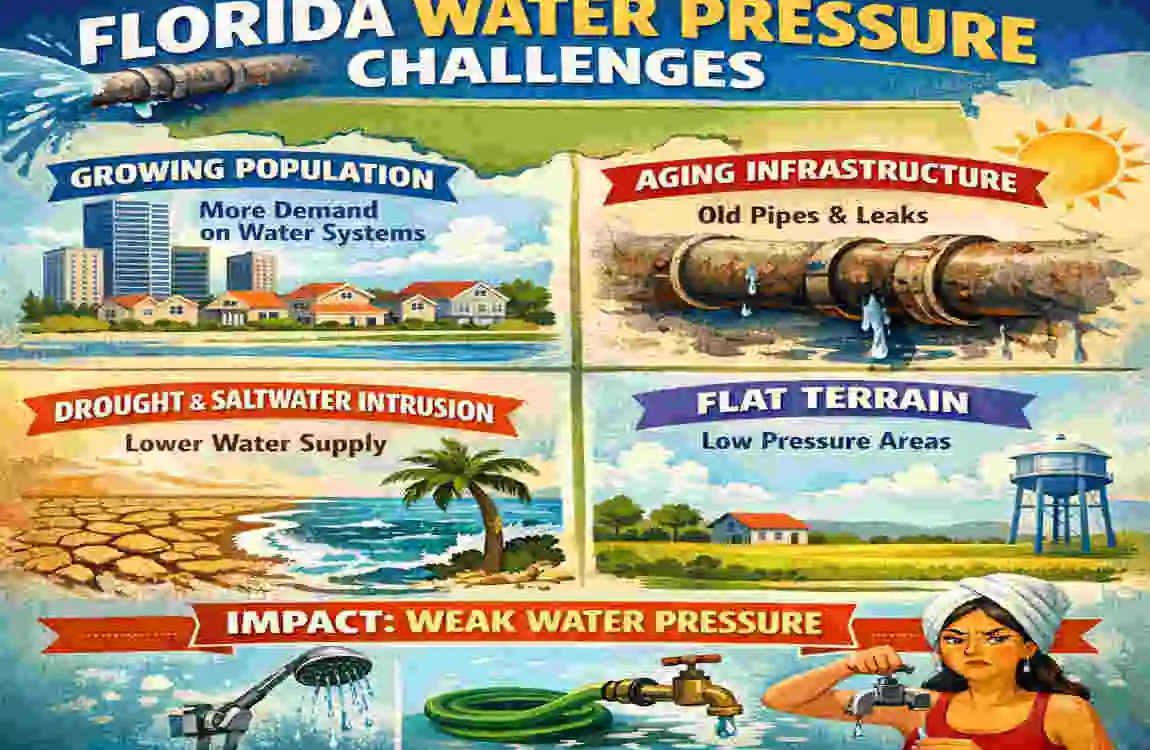
Living in the Sunshine State comes with plenty of perks, but strong water pressure is not always one of them. Florida’s geography, climate, and infrastructure create a perfect storm of factors that can leave your faucets running weak. Understanding these challenges is the first step toward fixing the problem with the right Florida residential water booster.
Urban Pressure Problems
If you live in a city like Miami, Tampa, Jacksonville, or Orlando, you might assume your municipal water supply should deliver consistent pressure. Unfortunately, that is not always the case. Many of Florida’s urban water systems rely on infrastructure that is decades old. Aging pipes, growing populations, and increased demand during peak hours all contribute to pressure drops.
In densely populated neighborhoods, you might notice your water pressure dip significantly in the mornings and evenings, when everyone is showering, running dishwashers, and watering lawns at the same time. Homes at the end of a municipal supply line tend to get hit the hardest. Statistics show that Florida homes average between 35 and 50 PSI, which is below the ideal range of 50 to 60 PSI for comfortable daily use.
Rural and Well Water Struggles
Step outside the cities, and the challenges shift. Rural Florida homeowners who rely on private well systems face a completely different set of issues. Well pumps can lose efficiency over time, especially in Florida’s sandy soil and high water tables. Sand infiltration can clog pump components and significantly reduce output.
Many rural homes in areas like the Panhandle, Central Florida, and the agricultural regions around Lake Okeechobee depend entirely on their well pump for every drop of water. When that pump starts to struggle, it affects drinking water, bathing, cooking, and irrigation simultaneously. A dedicated Florida well pump booster can make a dramatic difference in these situations.
Coastal Salt Air Exposure
Florida has over 1,300 miles of coastline, and if your home is near the coast, salt air is silently attacking your plumbing. Salt accelerates corrosion on metal pipes, fittings, and pump components. Standard pumps that might last a decade in a landlocked state can deteriorate in just a few years in coastal Florida.
This is why choosing a corrosion-resistant Florida pump is not optional for coastal homeowners. It is essential. Stainless steel housings and composite materials are your best friends when it comes to fighting the effects of salty, humid air.
Hurricane and Storm Risks
Let us not forget the big one: hurricane season. From June through November, Florida homeowners live with the reality that a major storm could disrupt water service for days or even weeks. Power surges during storms can damage pump electronics, and flooding can compromise ground-level installations. A hurricane-proof water pump setup, including proper elevation and surge protection, is a smart investment for any Florida home.
Common Causes of Low Water Pressure in Florida Homes
Before you rush out to buy a booster pump, it is worth understanding exactly why your water pressure is low. Sometimes the fix is simpler than you think, and other times a pump is exactly what you need. Here are the most common culprits Florida homeowners regularly encounter when fixing low PSI.
Municipal Supply Drops
Your city’s water utility can only push so much water through the system. During peak usage times, especially in summer when irrigation demand skyrockets, municipal pressure can drop noticeably. If your home sits at the far end of a supply line or in a neighborhood with heavy water use, you will feel it the most.
Clogged Filters and Sediment Buildup
Florida’s water, particularly well water, carries sediment, minerals, and sometimes sand. Over time, these particles accumulate in filters, aerators, and pipes. A clogged whole-house filter alone can cut your pressure by 10 to 15 PSI. Regular maintenance can help, but if the problem is systemic, a booster pump addresses it at the source.
Pipe Corrosion and Deterioration
Older Florida homes, especially those built before the 1990s, may have galvanized steel or copper pipes that have corroded internally. This corrosion narrows the pipe diameter, restricting water flow and reducing pressure. The humid Florida climate accelerates this process significantly.
Leaks in the System
Even a small, undetected leak can cause a gradual pressure loss throughout your home. Florida’s shifting, sandy soil can stress underground pipes, causing cracks and leaks that are hard to spot without a professional inspection.
How to Test Your Water Pressure
Testing is simple. Pick up a PSI gauge at any hardware store for about $5 to $10. Screw it onto an outdoor hose bib or the faucet under your kitchen sink. Turn the water on fully and read the gauge. Your goal is 50 PSI or above. If you are consistently reading below 40, a booster pump is likely your best solution.
Here is a quick reference table for common causes:
CauseSymptomFlorida Impact
Low municipal PSI Weak showers, slow faucets Very common in Miami and Tampa metro areas
Well pump failure: No irrigation, inconsistent flow; affects rural homes statewide.
A humid climate and salt air accelerate pipe corrosion, fluctuating pressure, and discolored water.
Clogged filters, gradual pressure decline, are common with sandy well water
Hidden leaks, unexplained pressure drops, sandy soil shifts, stress pipes
Peak demand drops, pressure loss during mornings and evenings, and widespread in suburban developments
Benefits of Installing a Booster Pump
Once you understand the problem, the benefits of a water pressure pump for a home in Florida become crystal clear. A quality booster pump does far more than make your shower feel better, although that alone is worth it for many homeowners.
Consistent Water Flow Throughout Your Home
The most immediate benefit is reliable, even pressure at every fixture—no more choosing between running the dishwasher and taking a shower. A booster pump ensures that multiple fixtures can operate simultaneously without noticeable pressure drops.
Better Appliance Performance
Modern appliances like tankless water heaters, reverse osmosis systems, and high-efficiency washing machines all require adequate water pressure to function properly. Low PSI can cause these expensive appliances to underperform or even malfunction. A booster pump protects your investment.
Improved Irrigation
Florida’s dry season can be brutal on lawns and gardens. If your sprinkler system is not getting enough pressure, you end up with brown spots, uneven coverage, and wasted water. A properly sized booster pump ensures your irrigation system delivers water where it needs to go, efficiently.
Energy Savings with Variable Speed Models
Modern energy-efficient home pump models with variable-frequency drives adjust their speed in response to demand. This means they use less electricity when you only need a small boost and ramp up when demand increases. Over time, this can save you significantly on your energy bills.
Return on Investment
Most homeowners find that a booster pump pays for itself within one to two years through improved water efficiency, reduced appliance wear, and lower utility costs. When you factor in the comfort and convenience, the ROI is even more compelling.
Types of Water Pressure Pumps for Florida Homes
Not all booster pumps are created equal, and choosing the right type for your specific situation is crucial. Here is a breakdown of the main categories you will encounter when shopping for the best booster pump Florida homeowners recommend.
Single-Stage Centrifugal Pumps
These are the most basic and affordable options. A single-stage pump uses one impeller to boost pressure. They work well for homes that need a modest pressure increase of around 20 to 30 PSI. If your pressure is only slightly below the ideal range, a single-stage pump might be all you need.
Best for: Small homes, apartments, or situations where you only need a minor boost.
Multi-Stage Booster Pumps
A multi-stage booster pump uses multiple impellers stacked in series to achieve higher pressure gains. These are the workhorses of the booster pump world and are ideal for larger Florida homes, multi-story buildings, or situations that require a significant pressure increase.
Best for: Larger homes, multi-story properties, and homes with extensive irrigation systems.
Self-Priming Pumps
Self-priming pumps are designed to draw water even when there is air in the line. This makes them particularly well-suited for Florida well systems, where air pockets can be a common issue. They can start pumping without needing to be manually primed each time.
Best for: Well water systems, rural Florida properties, and installations where the pump sits above the water source.
Variable Frequency Drive (VFD) Pumps
VFD pumps represent the Premium tier of booster pump technology. They use an electronic controller to adjust the motor speed in real time based on water demand. When you turn on a single faucet, the pump runs at low speed. When multiple fixtures are running, it ramps up. This results in consistent pressure, quieter operation, and significant energy savings.
Best for: Homeowners who want the best performance, lowest energy costs, and quietest operation.
Here is a comparison table to help you visualize the differences:
TypePSI BoostBest For Florida Fit
Single-Stage Centrifugal 20-30 PSI Small homes, minor boosts Affordable entry option
Multi-Stage Booster 40-70+ PSI Larger homes, multi-story High performance for demanding setups
Self-Priming 30-50 PSI Well systems, ideal for rural Florida well pumps
VFD Smart Pump 40-70 PSI (adjustable) All home sizes Quiet, energy-efficient, Premium choice
Top Water Pressure Pump Recommendations for Florida (2026)
Now for the part you have been waiting for. After researching dozens of models and considering Florida-specific factors like corrosion resistance, humidity tolerance, noise levels, and storm readiness, here are our top five picks for the best water pressure pump for a home in Florida in 2026.
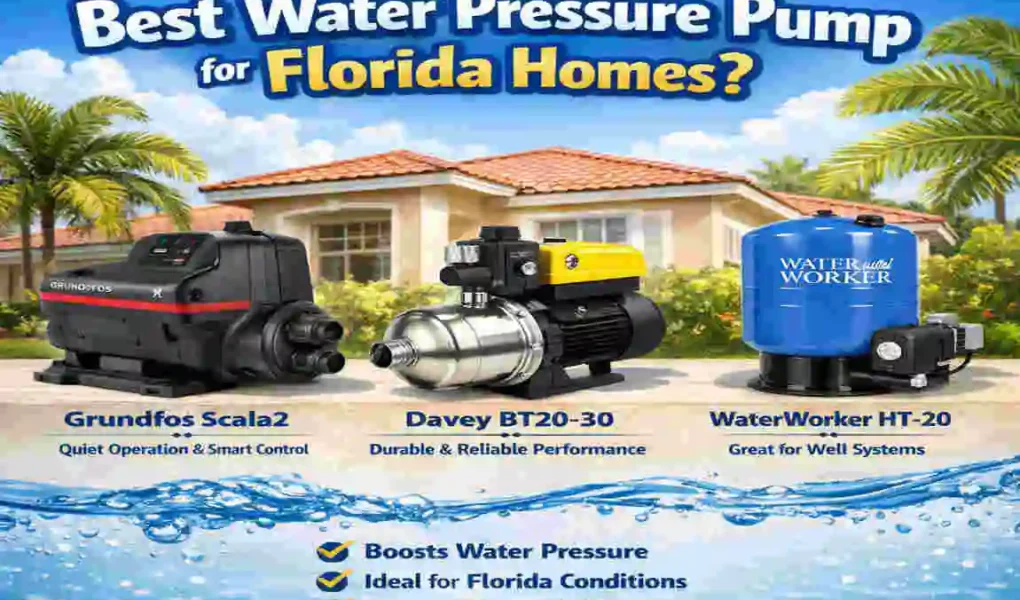
Grundfos Scala2 — Best Overall
The Grundfos Scala2 consistently earns the top spot for Florida homeowners, and for good reason. This compact, all-in-one booster pump delivers up to 70 PSI. It features intelligent technology that automatically adjusts to your home’s water demand.
Key Features:
- Self-priming capability up to 26 feet
- Built-in variable speed drive for energy efficiency
- Smartphone app control for monitoring and adjustments
- Extremely quiet operation at under 47 dB
- Stainless steel and composite construction for corrosion resistance
Pros: The Scala2 is whisper-quiet, making it perfect for garage or utility room installations. Its app-based control lets you monitor performance and adjust settings from your phone. The corrosion-resistant materials make it an excellent choice for coastal homes in Florida. It handles everything from a single faucet to multiple fixtures running simultaneously without breaking a sweat.
Cons: The price tag is the main drawback. At around $800, it is one of the more expensive residential booster pumps on the market. However, most homeowners agree that the performance and longevity justify the cost.
Florida Win: The humidity-proof construction and intelligent pressure adjustment make the Grundfos Scala2 Florida homeowners’ favorite. It is built to last in the state’s demanding conditions.
Price: Approximately $750–$850
Pedrollo 3CRm100 — Best Budget Option
If you want solid performance without spending a fortune, the Pedrollo 3CRm100 is an excellent choice. This 0.75 HP multi-stage pump delivers reliable pressure boosting at a fraction of the cost of Premium models.
Key Features:
- Multi-stage design for consistent pressure
- 0.75 HP motor
- Stainless steel impellers
- Compact footprint
Pros: The Pedrollo pump’s home-use reputation is built on reliability and value. It delivers consistent pressure boosting for small to medium-sized homes. The stainless steel impellers resist corrosion well, which is important for Florida’s humid environment. At around $400, it is accessible for most budgets.
Cons: It lacks the smart features and variable speed drive of the Grundfos. It is also slightly louder during operation. You will not get app control or automatic demand adjustment.
Florida Win: A solid, no-frills booster pump that handles coastal conditions reasonably well at a price that will not break the bank.
Price: Approximately $350–$450
RAFSUN RUC-Urus — Best for High Power Needs
For homes that need serious pressure boosting, the RAFSUN RUC-Urus delivers with a 63-meter (approximately 200-foot) head. This makes it ideal for larger Florida homes, multi-story properties, or homes with extensive irrigation systems.
Key Features:
- 200-foot maximum head pressure
- Heavy-duty motor construction
- Suitable for both municipal and well water sources
- Durable housing for outdoor or garage installation
Pros: The raw power of this pump is its biggest selling point. If you have a large property with multiple bathrooms, a pool system, and extensive landscaping, the RAFSUN Urus can handle it all. It is built tough enough to serve as a storm-ready water pump for Florida homes.
Cons: It consumes more energy than variable speed models and can be louder during operation. It is also larger, so you will need adequate installation space.
Florida Win: When a major storm disrupts water service and pressure drops across the grid, this pump can keep your home functioning normally.
Price: Approximately $500–$650
FloTec FP5712 — Best Multi-Stage Reliability
The FloTec FP5712 is a trusted name in residential water boosting. This multi-stage pump can deliver up to 110 PSI, making it one of the most powerful residential options available.
Key Features:
- Multi-stage design with up to 110 PSI capability
- 1 HP motor
- Stainless steel construction
- Built-in pressure switch
Pros: The FloTec FP5712 is a reliable workhorse that has been proven in thousands of Florida homes. Its high PSI capability means it can handle even the most demanding setups. The stainless steel construction provides good corrosion resistance for humid and coastal environments.
Cons: It is not a variable speed model, so it runs at full power regardless of demand. This means slightly higher energy costs compared to smart pumps. Installation can be more involved due to its size.
Florida Win: If you need maximum pressure and rock-solid reliability, this pump delivers. It is a particularly good choice for homes with both domestic water needs and irrigation demands.
Price: Approximately $450–$600
VFD Smart Pump — Best Premium Choice
For homeowners who want the absolute best in technology and efficiency, a VFD (Variable Frequency Drive) smart pump is the Premium choice. Several manufacturers now offer residential VFD models that represent the cutting edge of booster pump technology.
Key Features:
- Variable speed motor adjusts to real-time demand
- Digital pressure display and controls
- Extremely energy-efficient operation
- Ultra-quiet at low speeds
- Smart home integration capability
Pros: A VFD smart pump is the most energy-efficient option available. It uses only the power it needs at any given moment, reducing pump-related energy costs by 30-50% compared to fixed-speed models. The quiet operation at low speeds makes it barely noticeable in daily use.
Cons: These are the most expensive residential booster pumps, often running $900 to $1,200. The electronic components can be sensitive to power surges, so a surge protector is essential in storm-prone Florida.
Florida Win: The combination of energy efficiency, quiet operation, and intelligent pressure management makes this the ideal choice for Florida homeowners who want a set-it-and-forget-it solution.
Price: Approximately $900–$1,200
Buyer’s Guide: How to Choose the Right Pump
Shopping for a water pressure pump for a home in Florida can feel overwhelming with so many options available. This buyer’s guide breaks down the key factors you need to consider before making your purchase.
Determine Your Home’s GPM Needs
GPM (gallons per minute) measures flow rate, and your home’s size determines how much you need. A small home with one or two bathrooms typically needs 10 to 12 GPM. A larger home with three or more bathrooms, a kitchen, laundry, and irrigation might need 15 to 20 GPM or more. Make sure the pump you choose can deliver the GPM your household demands.
Calculate Your PSI Gap
Use that inexpensive PSI gauge we mentioned earlier to measure your current pressure. Then determine your target pressure, which should be between 50 and 60 PSI for most homes. The difference is your PSI gap. Most residential booster pumps can add 25 to 50 PSI to your existing supply. Choose a pump rated to cover your gap with some headroom.
Consider Motor Power
Pump motors are rated in horsepower (HP), typically ranging from 0.5 HP to 2 HP for residential models. A 0.5 HP pump is fine for small homes with modest boosting needs. Larger homes with high GPM requirements should consider 0.75-1.5 HP models. Only the largest residential setups need 2 HP.
Prioritize Materials for Florida Conditions
This cannot be stressed enough: material selection is critical in Florida. Look for pumps with stainless steel housings, composite impellers, and corrosion-resistant fittings. Avoid pumps with exposed cast iron components if you live anywhere near the coast. The salt air will eat through them faster than you might expect.
Your Pre-Purchase Checklist
Before you buy, run through this checklist:
- Test your current PSI with a gauge and document the reading
- Check your home’s electrical setup — verify whether you need 115V or 230V
- Review the warranty — aim for at least 2 to 5 years of coverage
- Check the noise rating — look for pumps under 60 dB, especially for garage installations
- Measure your installation space — make sure the pump physically fits where you plan to install it
- Confirm GPM requirements — count your fixtures and calculate peak demand
- Verify compatibility — ensure the pump works with your pipe size (typically 3/4″ or 1″)
Installation Guide for Florida Homes
Installing a booster pump ranges from a manageable DIY job to one that definitely requires a professional, depending on your comfort level with plumbing and electrical work.
DIY vs. Professional Installation
If you are handy with tools and have basic plumbing knowledge, you can install most booster pumps yourself. However, electrical wiring, especially for 230V models, should always be handled by a licensed electrician. Professional installation in Florida typically costs between $200 and $500, depending on the job’s complexity and your location.
For most homeowners, we recommend at least consulting with a professional, even if you plan to do the physical installation yourself. A plumber can confirm your pump selection is appropriate and identify any potential issues with your existing plumbing.
Basic Installation Steps
Here is a general overview of the installation process:
- Shut off the main water supply to your home completely
- Choose your installation location — typically near the main water entry point in your garage or utility room
- Mount the pump securely using the manufacturer’s bracket or a sturdy platform
- Connect the inlet and outlet plumbing using appropriate fittings and Teflon tape
- Wire the electrical connection according to the manufacturer’s specifications
- Prime the pump if required (some models are self-priming)
- Turn on the water supply slowly and check for leaks
- Adjust the pressure settings to your desired PSI
- Test multiple fixtures simultaneously to verify performance
Florida-Specific Installation Tips
Florida’s unique conditions require some extra precautions during installation:
Hurricane preparation is essential. Secure your pump with hurricane straps or bolts to prevent it from shifting during a storm. If your home is in a flood-prone area, elevate the pump at least 12 inches above the expected flood level. Consider installing a waterproof enclosure if the pump is in an exposed location.
Electrical protection matters in a state with frequent lightning storms. Install a dedicated surge protector on the pump’s electrical circuit. This small investment can save you hundreds of dollars in potential storm damage to the pump’s electronic components.
Ventilation is important in Florida’s humid climate. Make sure the installation area has adequate airflow to prevent moisture buildup around the pump’s motor and electrical connections.
Maintenance Tips for Florida Pump Owners
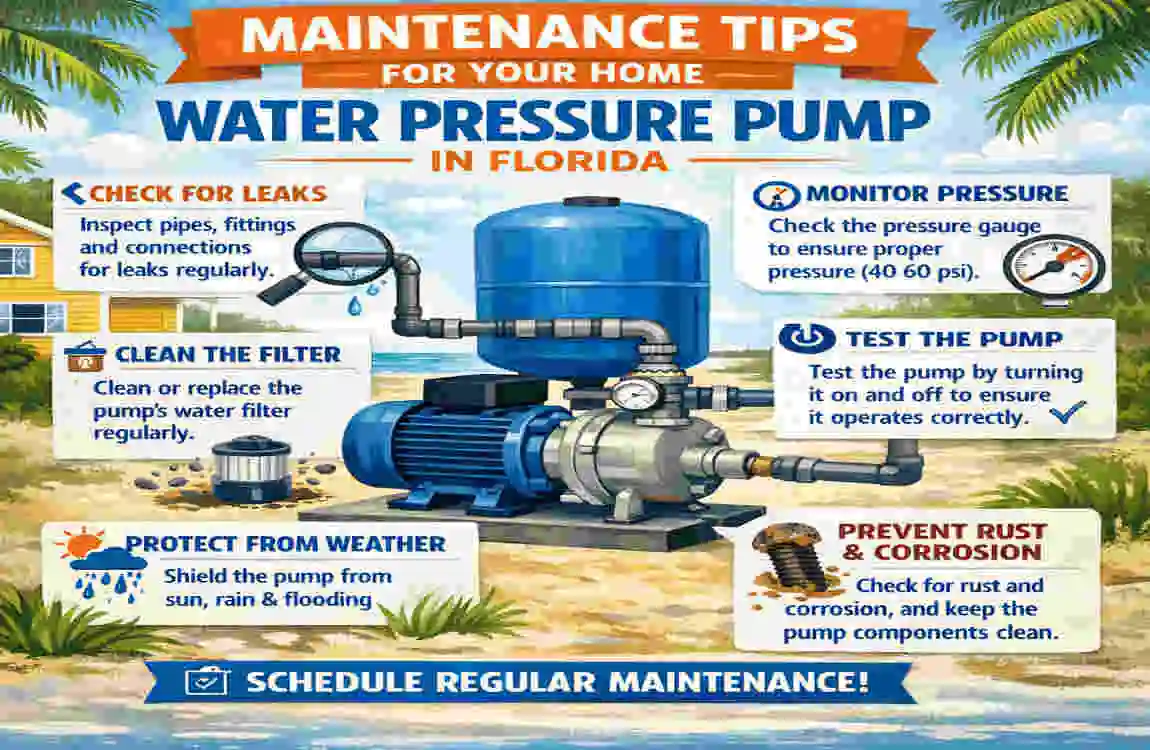
A well-maintained booster pump can last 10 to 15 years or more in Florida, but neglect can dramatically shorten its lifespan. Here is what you need to do to keep your pump running smoothly.
Regular Filter Cleaning
Suppose your system includes a pre-filter; clean or replace it every 3 to 6 months. Florida’s water, especially well water, can contain sediment that clogs filters quickly. A clogged filter forces your pump to work harder, reducing efficiency and increasing wear.
Annual Inspection
Once a year, take a few minutes to inspect your pump and its connections. Look for signs of corrosion, especially around fittings and electrical connections. Check for small leaks at pipe joints. Listen for unusual noises during operation, which can indicate worn bearings or impeller issues.
Pressure Monitoring
Keep an eye on your PSI gauge readings over time. A gradual decline in output pressure can indicate internal wear, a developing leak, or a clogged filter. Catching these issues early prevents more expensive repairs down the road.
Humidity and Corrosion Prevention
In Florida’s humid environment, moisture is your pump’s silent enemy. Keep the area around your pump as dry as possible. Consider using a dehumidifier in enclosed spaces. Apply a light coat of corrosion inhibitor spray to exposed metal fittings annually, especially if you live in a coastal area.
Seasonal Considerations
While Florida rarely freezes, the northern parts of the state can occasionally see frost. If you live in North Florida, know where your pump’s drain plug is and be prepared to protect it during rare cold snaps. For the rest of the state, the main seasonal concern is hurricane preparation — make sure your pump is secured, and your surge protector is functioning before each storm season.
Cost Analysis: What to Expect
Understanding the full cost picture helps you budget appropriately and appreciate the long-term value of investing in a quality booster pump.
Upfront Costs
The pump itself will run between $300 and $1,200, depending on the model and features. Budget models like the Pedrollo start around $350, mid-range options like the FloTec and RAFSUN fall in the $450 to $650 range, and Premium picks like the Grundfos Scala2 and VFD smart pumps range from $750 to $1,200.
Professional installation adds $200-$500 to your total. If you need electrical work, add another $100 to $300 for an electrician. All in, most Florida homeowners spend between $500 and $1,700 for a complete booster pump setup.
Ongoing Costs
A typical residential booster pump adds approximately $40 to $60 per year to your electricity bill, depending on usage and the pump’s efficiency. Variable speed models can cut this by 30 to 50 percent. Filter replacements and minor maintenance add another $20 to $40 annually.
Cost vs. Value
When you weigh the costs against the benefits — improved comfort, better appliance performance, healthier landscaping, and protection of your plumbing system — a booster pump is one of the best home improvement investments a Florida homeowner can make. Most families recoup their investment within 1 to 2 years through improved water efficiency and reduced appliance wear.
Frequently Asked Questions
What is the ideal water pressure for a Florida home?
The ideal range is 50 to 60 PSI for most residential applications. Anything below 40 PSI will feel noticeably weak, and anything above 80 PSI can damage pipes and appliances. Florida building codes generally recommend staying within the 40-80 PSI range.
Is the Grundfos Scala2 better than Pedrollo pumps?
It depends on your budget and needs. The Grundfos Scala2 offers superior technology, including variable-speed operation, app control, and quieter performance. The Pedrollo is a reliable, straightforward pump at nearly half the price. For coastal Florida homes where corrosion resistance is critical, the Grundfos has a slight edge in materials and construction.
Can I install a booster pump myself?
Basic plumbing connections are manageable for a handy homeowner. However, electrical wiring should be done by a licensed electrician, especially for 230V models. If you are unsure about any part of the process, hiring a professional is the safer and often more cost-effective choice.
Do booster pumps work with well water in Florida?
Absolutely. Self-priming models like the Grundfos Scala2 are particularly well-suited for Florida well systems. Just make sure to install a proper sediment filter before the pump to prevent sand and debris from damaging the impellers.
How do I protect my pump during a hurricane?
Secure the pump with hurricane straps, elevate it above potential flood levels, and install a surge protector on the electrical circuit. Consider turning the pump off and disconnecting it from power during a direct hurricane threat to prevent surge damage.
How long do booster pumps last in Florida?
With proper maintenance, a quality booster pump should last 10 to 15 years in Florida. Coastal homes may see slightly shorter lifespans due to exposure to salt air, which is why choosing corrosion-resistant materials is so important.
Will a booster pump increase my water bill?
A booster pump increases pressure, not consumption. You may actually use less water because your fixtures and appliances operate more efficiently at proper pressure. The small increase in electricity cost is typically offset by improved water efficiency.