Have you recently looked around your living space and found yourself asking, “Which type of flooring is best for a home?” If so, you are definitely not alone. The floor beneath your feet does so much more than give you a place to stand. It entirely dictates the aesthetic vibe of your rooms, significantly impacts your daily comfort, and plays a massive role in your property’s overall resale value.
As we dive into the top 2026 renovation trends, it is clear that homeowners are no longer willing to compromise. Modern buyers and renovators want warmth, sustainability, and ultra-tough surfaces that can handle the chaos of everyday life. But with so many options crowding the market, making the right choice can feel completely overwhelming.
Key Factors to Consider Before You Buy
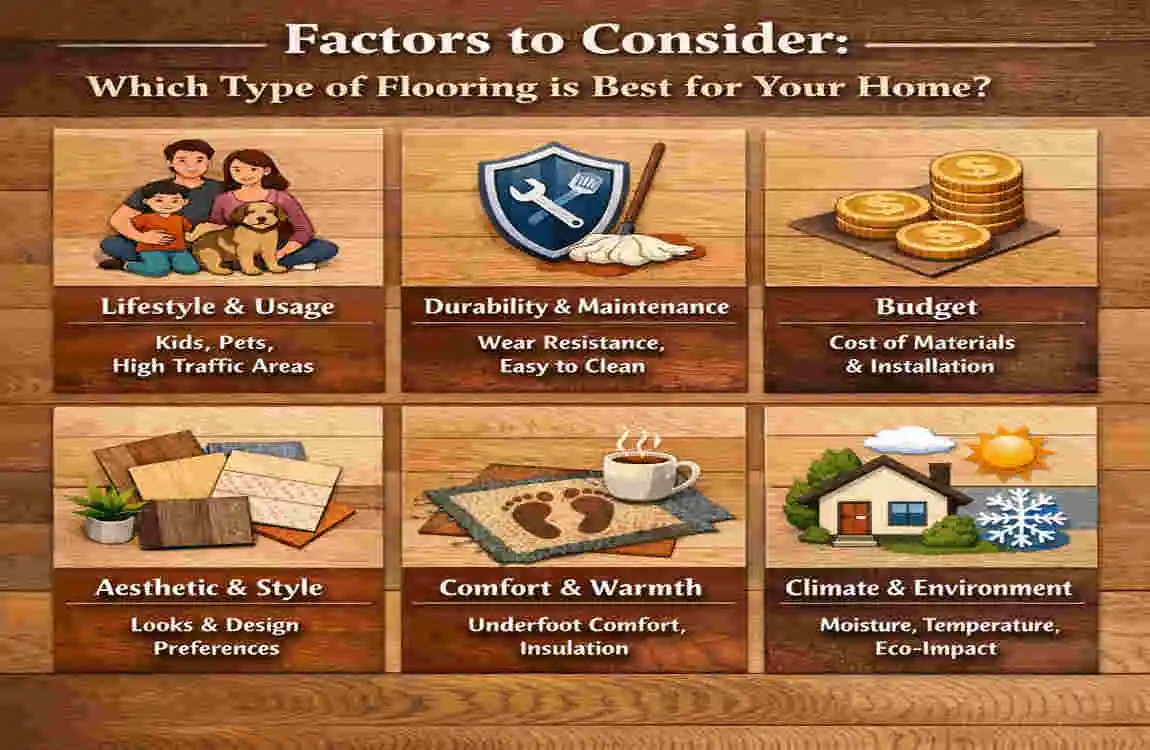
Before we break down the specific materials, we need to establish the ground rules. Choosing the perfect flooring isn’t just about picking the prettiest color in the showroom. You need to weigh three major factors to ensure your investment stands the test of time.
Durability and Daily Wear
Durability is usually the number one concern for busy families. You need to look for scratch resistance to handle pet claws, moving furniture, and dropped toys. If you are looking at synthetic options like vinyl, pay close attention to the wear layer. A wear layer is the clear protective coating on top of the plank. For a busy home, you will want a wear layer of 12-20 mil (a mil is a thousandth of an inch) to ensure maximum protection against scuffs and fading.
Finding Your Perfect Style
Your floors anchor your interior design. Today’s modern flooring options can mimic the incredibly realistic textures of wood or natural stone. A major trend right now is using wider, longer planks. These oversized planks create a spacious, airy, and seamless feel, instantly making small rooms look vastly larger.
Balancing the Budget and ROI
Budgeting for new floors means looking past the sticker price. You have to calculate both the material and installation costs, which generally range anywhere from $3 to $15 per square foot, depending on your selection. Moreover, think about the lifespan ROI. A cheaper floor might save you money today, but if you have to replace it in five years, a slightly more expensive, 50-year floor would have been the smarter financial move.
Quick Comparison Matrix
Here is a quick look at how different materials stack up based on your lifestyle needs:
Factor High Durability Stylish Versatility Budget Range
Homes w/ Pets/Kids Vinyl, Tile LVP, Laminate $3 – $7 / sq ft
Luxury Look Hardwood Engineered Wood $8 – $15 / sq ft
Cozy Comfort Carpet, Cork All Styles $2 – $10 / sq ft
Hardwood Flooring: The Timeless Classic
When people dream of their perfect house, they almost always picture gorgeous, sweeping hardwood floors. It is the gold standard of real estate, and for very good reason.
Overview of Hardwood
Hardwood floors consist of solid planks of timber milled from a single piece of wood, typically using popular species like oak, maple, hickory, or walnut. Because it is solid wood all the way through, a well-maintained hardwood floor can easily last 50+ years. It is an heirloom-quality feature for any house.
Durability Expectations
Hardwood scores very high on long-term durability simply because it is refinishable. If your floor gets scratched up after ten years, you don’t replace it; you sand it down and apply a fresh coat of finish. However, it does have moderate moisture sensitivity. Solid wood expands and contracts with humidity, making it a poor choice for wet environments. It performs best in living rooms, dining rooms, and hallways.
Style and Aesthetics
Nothing quite matches the timeless grains and authentic warmth of real wood. Whether you prefer a light, natural stain for an airy modern vibe or a deep, dark espresso stain for rustic elegance, hardwood delivers.
Budget and ROI Breakdown
Expect to pay between $8 to $15 per square foot, fully installed. While it is on the higher end of the budget spectrum, it offers a Premium ROI.
Pros and Cons of Hardwood:
- Pros: It consistently boosts your home’s resale value by 5% to 10%. It is also naturally hypoallergenic since it doesn’t trap dust or dander.
- Cons: It is prone to scratches from large pets with unclipped nails. Furthermore, it should never be installed in basements below grade due to moisture issues.
Installation and Maintenance Tips: Always hire a professional for solid hardwood installation, as it requires precise nailing and subfloor preparation. For daily maintenance, stick to a dry dust mop. Never use a steam mop on solid hardwood, as the extreme heat and moisture can permanently warp the planks.
Luxury Vinyl Plank (LVP): The Resilient Champion
If you are looking for the absolute best balance of toughness and beauty, Luxury Vinyl Plank (LVP) is dominating the top flooring options lists for 2026. It has revolutionized the home improvement industry.
Overview of LVP
LVP consists of multiple layers of synthetic materials, including a rigid waterproof core, a high-definition photographic layer, and a tough wear layer. These composite planks are designed to mimic real wood or stone with stunning accuracy, and they boast a reliable 20-year lifespan.
Durability Expectations
When it comes to durability, LVP is absolutely top-tier. It is highly scratch-resistant and 100% waterproof. This makes it the ideal, stress-free choice for spill-prone kitchens, busy bathrooms, and potentially damp basements.
Style and Aesthetics
Thanks to advancements in 3D printing technology, LVP offers incredibly realistic textures. You can feel the faux wood grain or the gentle clefts of natural stone. The pattern possibilities are virtually endless, allowing you to achieve a luxury aesthetic on a working-class budget.
Budget and ROI Breakdown
LVP is incredibly budget-friendly, typically ranging from $3 to $7 per square foot. Because many LVP options feature a floating click-lock mechanism, it is extremely DIY-friendly, which can save you thousands of dollars in installation labor.
Pros and Cons of LVP:
- Pros: It is virtually pet-proof and kid-proof. It also tends to be much quieter and softer underfoot compared to real wood or tile.
- Cons: It is a synthetic plastic product, meaning it is less eco-friendly than natural options and cannot be refinished once the wear layer is gone.
Real Example: Imagine a high-traffic family home with two golden retrievers and three toddlers running around. In this scenario, LVP in the main living areas allows the parents to wipe away spilled juice and muddy paw prints without a single moment of panic. It provides peace of mind that real wood cannot offer.
Laminate Flooring: The Budget-Friendly Beauty
Laminate flooring has been around for decades, but if you haven’t looked at it recently, you will be shocked by how far it has come. It remains a fantastic option for homeowners who want the wood look without breaking the bank.
Overview of Laminate
Similar to LVP, laminate features a high-resolution photographic layer protected by a clear wear layer. However, the core is usually made of densely compressed wood byproducts (fiberboard) rather than plastic. Thankfully, the newest generation of laminate features heavily improved waterproof cores, making it much more resilient than the laminate of the early 2000s.
Durability Expectations
Laminate is exceptionally scratch and impact-resistant. Dropping a heavy pan on laminate is less likely to leave a dent than dropping it on real hardwood. It is a fantastic choice for busy entryways and active playrooms.
Style and Aesthetics
Laminate is the king of wood-look affordability. It offers crisp, beautiful visuals that closely mimic the look of Premium oak, hickory, and chestnut planks.
Budget and ROI Breakdown
You can usually find high-quality laminate for just $2 to $5 per square foot. It utilizes a simple floating installation method, meaning it snaps together easily over an existing subfloor without glue or nails.
Pros and Cons of Laminate:
- Pros: It is incredibly low-maintenance and highly fade-resistant, meaning rooms with heavy sunlight won’t suffer from discolored floors over time.
- Cons: While the tops are water-resistant, the seams and edges are generally not fully waterproof. If standing water seeps into the seams, the wood-fiber core can swell and bubble.
Best for: Laminate is the undisputed champion for bedrooms and home offices on tight budgets. It gives you a Premium look where extreme moisture isn’t a daily threat.
Porcelain and Ceramic Tile: The Indestructible Shield
When you ask, “Which type of flooring is best for a home that sees extreme moisture?”, the answer is almost always tile. It is an ancient building material that still holds up beautifully in modern homes.
Overview of Tile
Porcelain and ceramic tiles are made from natural clay that is fired in a kiln at blazing hot temperatures. Porcelain is fired longer and hotter than ceramic, making it denser and even more impervious to water.
Durability Expectations
Tile boasts a literal lifetime durability. When installed correctly, a tile floor can easily outlive the house itself. It is entirely waterproof, highly stain-resistant, and virtually scratch-resistant for normal household use. It is the ultimate shield for the wettest zones in your home.
Style and Aesthetics
Modern tile offers an incredible range of aesthetics. You can choose crisp, geometric modern grids, visually striking mosaic patterns, or massive, large-format tiles that minimize grout lines and make spaces look like a five-star hotel lobby.
Budget and ROI Breakdown
Tile materials and installation generally run between $4 to $10 per square foot. Keep in mind that labor is a significant part of this cost, as laying tile requires specialized tools, mortar, and precision. You must also account for long-term grout maintenance.
Pros and Cons of Tile:
- Pros: It is completely waterproof and stays wonderfully cool during hot summer months.
- Cons: It is very hard and cold underfoot, making it uncomfortable to stand for long periods unless you invest in radiant floor heating. It almost always requires professional installation.
Pro Tip for Specific Climates: If you live in a notoriously hot and muggy area—like Lahore’s humid climate—tile is an absolute lifesaver. It won’t warp in humidity, it won’t harbor mold, and it provides a much-needed cool surface when temperatures skyrocket.
Engineered Wood: The Smart Compromise
Do you love the authenticity of solid hardwood but hate the moisture limitations? Engineered wood was invented specifically to bridge that exact gap, offering the best of both worlds.
Overview of Engineered Wood
Unlike solid wood, engineered planks are constructed with a real wood veneer securely glued to a highly stable, multi-ply backing (similar to high-grade plywood). This unique construction makes it incredibly dimensionally stable and highly humidity-resistant.
Durability Expectations
Because the top layer is actual hardwood, it acts just like it. Depending on the thickness of that top veneer, engineered wood can be sanded and refinished 3 to 5 times over its lifespan. It is infinitely better than solid wood for basements or homes built on concrete slabs.
Style and Aesthetics
Because the visible layer is real wood, it provides a 100% authentic look. You get the same gorgeous grain patterns and rich stains as solid wood, without the constant fear of warping or buckling.
Budget and ROI Breakdown
Pricing sits comfortably in the middle-to-high tier, ranging from $6 to $12 per square foot. It retains excellent resale value because buyers recognize it as genuine wood flooring.
Pros and Cons of Engineered Wood:
- Pros: Many styles feature a click-together floating design for easier installation. It is also more eco-friendly than solid wood, as it uses far less of the slow-growing, Premium hardwood trees.
- Cons: Cheaper variations have a very thin top veneer, which severely limits how many times you can refinish it before you sand down into the plywood core.
Cork Flooring: The Eco-Friendly Cushion
If you want to step outside the traditional box and prioritize sustainability and physical comfort, you absolutely need to consider cork flooring.
Overview of Cork
Cork is a completely natural, renewable resource. It is harvested by carefully shaving the bark from living cork oak trees, so the trees are never cut down and continue to grow. This harvested bark is then compressed into comfortable, cushioned planks.
Durability Expectations
Cork is surprisingly resilient. While it is softer than wood, it possesses a “memory” that allows it to bounce back from minor dents caused by shoes or dropped items. However, it must be properly sealed with polyurethane to protect it from moisture and deep scratches.
Style and Aesthetics
Cork provides a distinctly warm, unique, and earthy texture. It brings a cozy, organic aesthetic to a room that is impossible to replicate with synthetic materials.
Budget and ROI Breakdown
Cork is moderately priced, generally costing between $5 to $9 per square foot.
Pros and Cons of Cork:
- Pros: It is incredibly leg-friendly. Standing on a cork reduces back and joint strain, making it a joy to use in the kitchen. It also contains microscopic air pockets, making it a fantastic natural thermal and acoustic insulator.
- Cons: It is prone to fading if exposed to heavy, direct sunlight. Additionally, to keep it waterproof and fresh, you will likely need to re-seal it every year or two.
Carpet Flooring: The Cozy Retreat
Despite the booming popularity of hard surfaces, traditional wall-to-wall carpet still holds a very special place in our homes. When you want ultimate coziness, nothing else compares.
Overview of Carpet
Carpet consists of woven loops or cut soft fibers attached to a backing. Today’s modern carpets are leaps and bounds ahead of the shaggy floors of the past, offering highly engineered comfort.
Durability Expectations
Modern carpets use advanced, stain-resistant synthetic fibers (such as nylon or triexta) that repel spills very well. With proper vacuuming and occasional deep cleaning, a high-quality carpet can last 10 to 15 years.
Style and Aesthetics
Carpet offers patterns, colors, and textures galore. From low-pile geometric loops to ultra-plush frieze styles, you can dictate exactly how soft and stylish you want a room to feel.
Budget and ROI Breakdown
Carpet remains highly economical, ranging from $3 to $10 per square foot. Just remember to factor in the cost of a high-quality foam padding, as the pad underneath is what actually provides that luxurious squish.
Pros and Cons of Carpet:
- Pros: It is unbeatable for noise-absorbing qualities, making it great for second-story rooms. It keeps spaces physically warm and cozy.
- Cons: It can trap dust and allergens, making it tough for allergy sufferers. Even with modern treatments, it remains the toughest flooring type to clean after major liquid spills.
The Ultimate Flooring Comparison Table
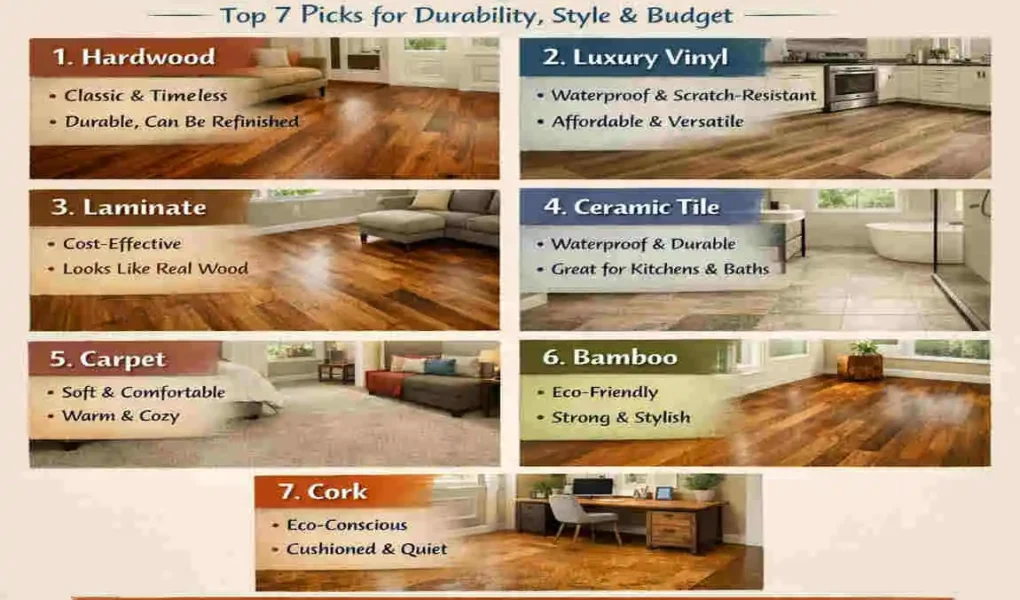
So, which type of flooring is best for a home? Let’s look at a visual grid detailing these criteria to help you finalize your decision.
Flooring Type Durability (1-10)Style Score (1-10)Cost per sq ft Best Rooms Pets/Kids OK?
Hardwood 8 10 $8 – $15 Living Rooms Moderate
LVP (Vinyl) 9 9 $3 – $7 Kitchens Yes
Laminate 7 8 $2 – $5 Bedrooms Yes
Tile 10 7 $4 – $10 Bathrooms Yes
Eng. Wood 8 9 $6 – $12 Dining Rooms Good
Cork 6 8 $5 – $9 Kitchens Moderate
Carpet 5 9 $3 – $10 Bedrooms No
The Final Analysis: When looking at the big picture, LVP (Luxury Vinyl Plank) wins the overall title for the best balance. It offers tremendous durability (a solid 9/10), exceptional style versatility, and sits at a highly approachable price point. It safely accommodates children and pets without sacrificing the visual appeal of a modern home. If budget is less of an issue and long-term resale is the primary goal, Solid and Engineered Hardwood take the silver and bronze medals.
Room-Specific Recommendations
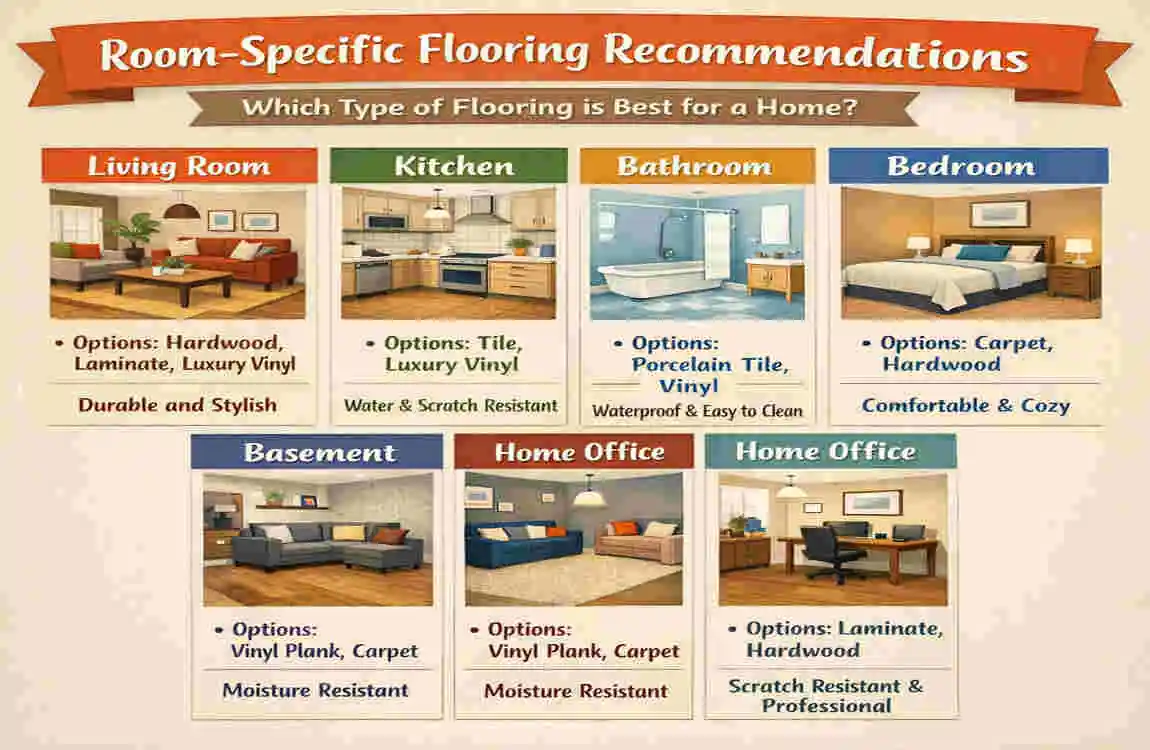
You do not have to use the same flooring throughout your entire house. In fact, matching the material to the room’s function is the smartest way to design your home.
Kitchens and Bathrooms: These are your high-moisture, high-spill zones. You absolutely need waterproof materials here. LVP and Tile are the undisputed champions for these spaces. They allow you to cook, splash, and clean without worrying about warping your foundation.
Living and Dining Rooms: These are your showpiece areas. You want to impress guests while maintaining everyday comfort. Hardwood, Engineered Wood, or high-quality Laminate are perfect here. They bring visual warmth and structural elegance to the spaces where you entertain the most.
Bedrooms and Private Retreats: When you step out of bed on a cold winter morning, you want something soft and welcoming underfoot. Carpet remains the most popular choice for bedrooms due to its warmth and sound-dampening qualities. Cork is an amazing alternative if you want hard floors but still want that cushioned, thermal insulation.
Breaking Down the Budget
Understanding how flooring impacts your wallet is critical. Here is a simplified breakdown of what you can expect across different budget tiers:
- Low Budget (Under $5 per sq ft): If you are flipping a house on a shoestring budget or covering a massive square footage quickly, look straight to Laminate and Carpet. You can achieve beautiful results without draining your savings.
- Mid-Range Budget ($5 to $10 per sq ft): This is the sweet spot for most standard home renovations. LVP and Cork live heavily in this tier. You get maximum durability, excellent warranties, and stunning visuals.
- High Budget (Over $10 per sq ft): If you are building a custom forever home or renovating a luxury property, invest in Solid Hardwood, Premium Engineered Wood, or Custom Artisan Tile. You pay more upfront, but the equity boost is undeniable.
Essential Maintenance Tips
No matter which type of flooring is best for a home according to your tastes, you still have to take care of it! Proper maintenance is the key to longevity.
General Upkeep: Regardless of the material, get into the habit of sweeping or vacuuming daily. Dirt and tiny pebbles act like sandpaper under your shoes, slowly dulling the finish of any floor. Furthermore, always avoid excess standing water, even on waterproof floors, to prevent slip hazards and baseboard damage.
Type-Specific Care:
- Wood & Laminate: Use felt pads under all heavy furniture legs to prevent gouging. Avoid harsh chemical cleaners; use pH-neutral wood floor sprays.
- Tile: Keep an eye on your grout lines. Scrub them twice a year with a baking soda paste and reseal the grout annually to prevent dark discoloration.
- Vinyl/LVP: A damp microfiber mop with warm water and a splash of mild dish soap is all you need to keep LVP looking brand new.