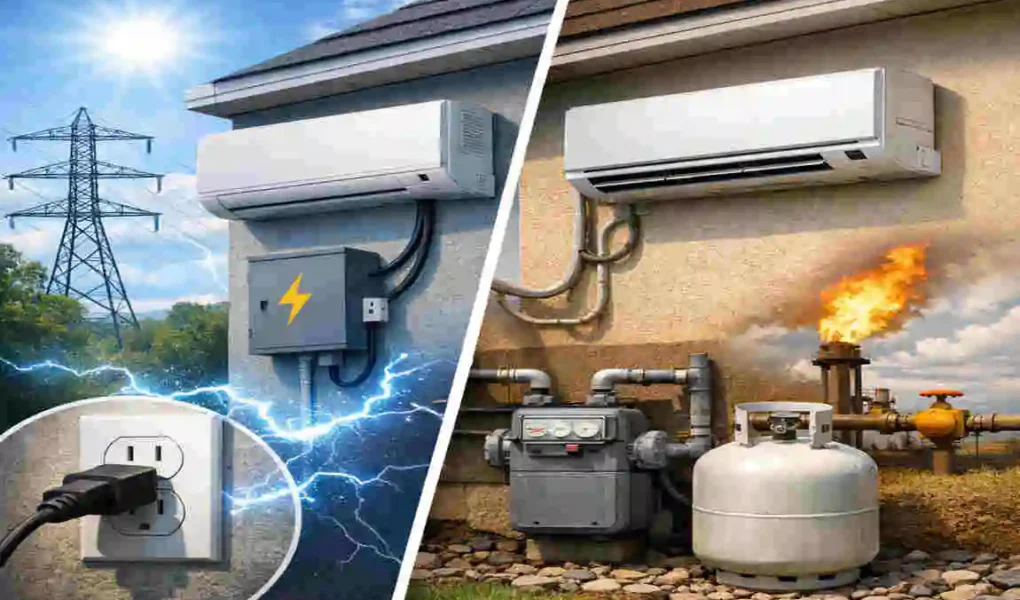
It is mid-July , and the temperature outside has just hit a blistering 45°C. You walk into your home, grab a cold drink, and immediately reach for the remote to turn on your trusty air conditioning unit. As that glorious, icy breeze hits your face, a thought might cross your mind as you think about your upcoming utility bills: Do air conditioners use gas or electricity to keep your house this comfortable?
It is a fantastic question and one that many homeowners ask when trying to manage their energy expenses during peak summer heatwaves. Let us give you the short answer right up front: the vast majority of air conditioners run entirely on electricity for cooling. However, if you have a hybrid system that also provides heating during those chilly January nights, gas might step in to help warm your home.
How Air Conditioners Work: Gas vs Electricity Basics
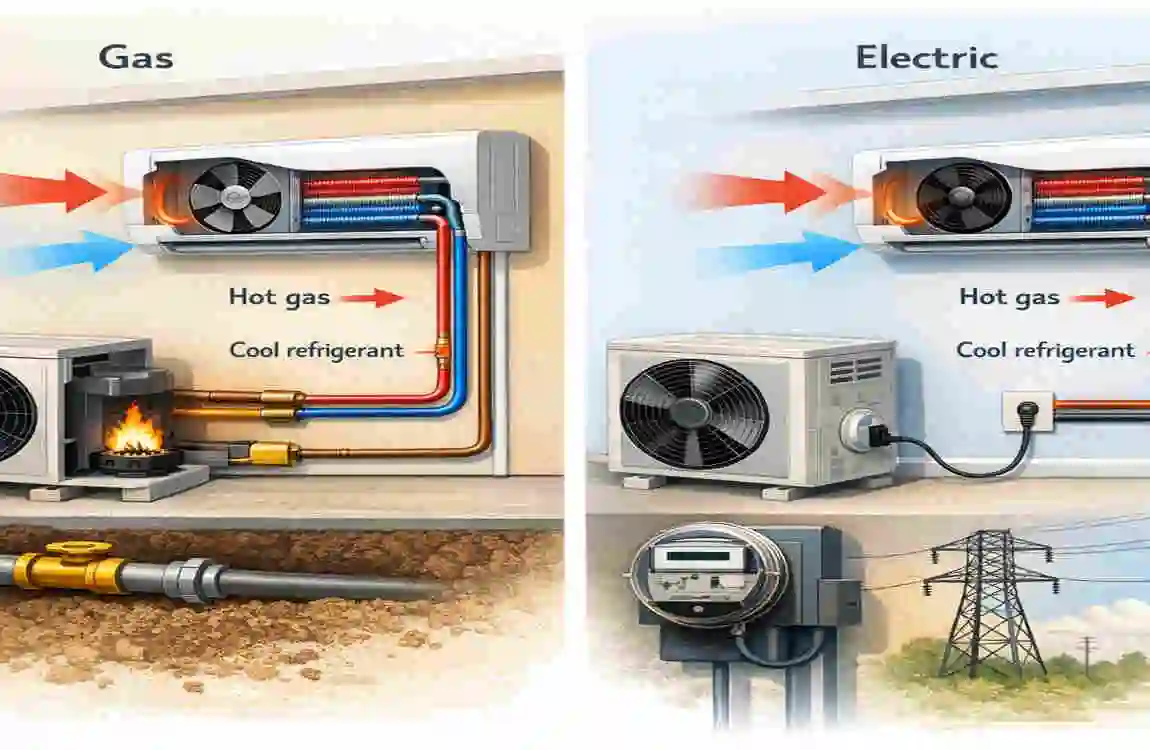
To truly understand the answer to “do air conditioners use gas or electricity,” we need to take a quick peek under the hood of your cooling system. Do not worry—we will keep the science simple, straightforward, and easy to grasp.
The Magic of the Refrigeration Cycle
Most people think that an air conditioner “creates” cold air, just as a furnace creates heat by burning fuel. But that is actually a misconception! Your air conditioner does not create cold air at all. Instead, it works by absorbing the heat from inside your house and moving it outside. We call this the refrigeration cycle.
Think of your air conditioner like a giant sponge. But instead of soaking up water, it soaks up heat. The heart of this system is the compressor, which serves as the engine of the entire operation. This compressor is entirely electric-powered. It pumps a special heat-transfer fluid—known as refrigerant—through a series of copper coils.
As this fluid travels through the indoor coils, it absorbs the heat and humidity from your living room. Then, it travels to the outdoor unit, where the compressor squeezes the fluid, forcing it to release all that trapped heat into the hot air. Because no burning or combustion is happening in this cooling process, there is absolutely no need for natural gas.
The Vital Role of Electricity
So, where does the electricity come in? Electricity is the lifeblood of your cooling system. It powers several critical components that keep the cold air flowing:
- The Compressor: As mentioned, this electric pump works hard to circulate the heat-transfer fluid.
- The Blower Fan: This electric fan pushes the newly cooled air through your home’s ductwork or directly into the room.
- The Exhaust Fan: Located in the outdoor unit, this fan blows the extracted heat away from your house.
- The Thermostat: The brain of the operation, which uses a small amount of electricity to monitor the room’s temperature and tell the system when to turn on and off.
Depending on the size of your unit, a standard residential air conditioner will use between 1,000 and 5,000 watts of electricity while running.
Busting the “Gas” Myth
You might hear AC technicians talk about “checking the gas” or “recharging the gas” in your unit. This terminology is exactly why so many people ask, “Does my home AC use gas or electricity?”
When a technician refers to “gas,” they are not talking about the natural gas or Sui gas you use to cook on your stove. They use everyday language to describe the refrigerant (e.g., R-410A or R-32). This refrigerant is a chemical compound that alternates between liquid and gaseous states to absorb and release heat. It is not a fuel that burns; it is simply a fluid that travels in a closed loop. As long as there are no leaks in your copper pipes, that “gas” will last for the entire lifespan of your air conditioner!
Now that we know cooling is an electric game, let us transition to the different types of systems available on the market and why this matters so much for your house’s energy costs.
Types of Home AC Systems and Their Power Sources
Not all air conditioners are built the same. Depending on the size of your home, your budget, and whether you need heating in the winter, the type of system you choose will dictate its power source. Let us explore the most common types of cooling systems you will find in homes today.
AC TypePower SourceBest For HomesProsCons
Central AC Electricity (cooling); Gas/Electric (heating via furnace) Large houses and bungalows. Even whole-house cooling. High upfront installation cost and requires ductwork.
Window/Portable Units Electricity only Apartments, single rooms, or small homes Very affordable, plug-and-play installation Can be noisy and blocks window views.
Ductless Mini-Split Electricity only Zone cooling (e.g., individual bedrooms) Extremely energy-efficient (SEER 20+) Higher upfront price per unit compared to window ACs
Heat Pumps Electricity (reversible cooling and heating) Mild winters and hot summers Heats and cools in one unit, very eco-friendly Less effective in extreme freezing temperatures below 0°C.
Gas-Fired AC (rare) Natural gas Homes with existing high-capacity gas lines Lower fuel costs in areas where gas is incredibly cheap Noisier, very rare for residential use, requires outdoor venting.
Do Central ACs Use Gas or Electricity?
If you live in a large, multi-story home, you might have a central air conditioning system. So, do central ACs use gas or electricity? The answer is a bit of a hybrid.
During the scorching summer months, a central AC runs 100% on electricity. The large outdoor unit (the condenser) and the indoor blower fan draw power directly from your home’s electrical panel to cool the house. However, central systems are often paired with furnaces for winter heating. In many setups, this furnace burns natural gas to generate heat and uses the same electric blower fan to push that warm air through your vents. So, while the cooling is electric, the heating half of your central HVAC system might rely heavily on gas.
Window and Portable Air Conditioners
If you live in a smaller apartment or want to cool a single bedroom, you probably rely on a window unit or a portable AC on wheels. These systems are incredibly straightforward: you plug them directly into a standard wall outlet. They rely entirely on electricity and are not connected to your home’s gas lines. While they are great for quick, localized cooling, they lack the efficiency to cool an entire house.
Ductless Mini-Split Systems (Inverter ACs)
In cities like , the ductless mini-split—often called an “inverter AC”—is the absolute king of home cooling. You see these rectangular units mounted high up on bedroom walls everywhere. They use a sleek indoor unit connected to a larger outdoor compressor via copper pipes.
These units run strictly on electricity. Modern DC Inverter models are incredibly popular because they dynamically adjust their electrical power consumption, saving you a fortune on utility bills compared to older, non-inverter models.
Heat Pumps: The All-Electric Marvels
A heat pump looks and acts exactly like a traditional air conditioner. Still, it has a secret weapon: a reversing valve. In the summer, it uses electricity to remove heat from your home. In the winter, it reverses the flow, using electricity to pull ambient heat from the outside air and pump it into your home. Because they merely move heat rather than burning fuel to create it, heat pumps are 100% electric and incredibly environmentally friendly.
Gas-Fired Air Conditioners
Wait, do gas-fired air conditioners actually exist? Yes, but they are exceptionally rare in residential settings. These systems use an “absorption chiller” process. Instead of an electric mechanical compressor, they use a heat source—usually a natural gas flame—to boil a liquid solution (often ammonia and water) to drive the cooling cycle. You will mostly see these in large commercial buildings, hospitals, or industrial facilities where heavy-duty natural gas lines are available, and electricity is prohibitively expensive. For the average homeowner, a gas-fired AC is neither practical nor common.
Electric vs Gas HVAC: Costs, Efficiency, and Home Impact
Now that we know the mechanics, let us talk about your wallet. Choosing the right AC power source has a massive impact on your monthly household budget, especially when electricity and gas rates fluctuate.
Breaking Down the Running Costs
In a hot climate, cooling will be your biggest expense. Running a standard 1.5-ton electric inverter AC typically costs between PKR 20 and PKR 50 per hour, depending on your set temperature, your room’s insulation, and the current electricity tariffs. If you are running multiple units across a large house, these costs multiply quickly.
On the heating side, things look different. If you use a gas hybrid system (like a gas heater or a gas-fired furnace) during the chilly winter months, you can often save 20% to 30% compared to using electric space heaters. Natural gas has traditionally been a cheaper fuel for generating raw heat. However, in recent years, gas shortages and price hikes have started to close that gap.
Measuring Home Cooling Efficiency
When we talk about the efficiency of an electric AC, we look at its SEER (Seasonal Energy Efficiency Ratio). Think of SEER like the miles-per-gallon rating on a car. The higher the number, the less electricity it uses to cool your home.
Standard electric ACs start around 14 SEER. Still, modern, ultra-efficient ductless mini-splits can achieve SEER ratings of 20 to 25. Gas absorption chillers, on the other hand, measure efficiency differently (using a Coefficient of Performance or COP) but generally cannot compete with the sheer energy-sipping nature of a high-SEER electric heat pump.
The Home Impact: Local WAPDA Rates vs Gas Availability
If you live, you know that managing utility bills is a constant balancing act. With electricity rates soaring past PKR 40 per unit (kWh) in peak slabs, running electric cooling is a serious investment.
However, natural gas is no longer the cheap, abundant resource it once was. Winter gas load shedding means relying purely on a gas furnace can leave your house freezing when the pressure drops. This reality makes all-electric, highly efficient inverter heat pumps even more attractive, as they provide reliable heating and cooling from a single source.
Home Cooling Trends: The Rise of Solar-Hybrids
As we navigate 2026, the biggest trend sweeping across hot climates is the adoption of solar-hybrid electric ACs. Because frequent power outages and load shedding remain a frustrating reality, homeowners are investing heavily in solar panels.
Since almost all residential air conditioners run on electricity, pairing a high-efficiency inverter AC with a home solar system is a match made in heaven. During blazing, sunny afternoons, your solar panels generate free electricity that powers your AC directly. This allows you to cool your home through the hottest parts of the day without drawing a single watt from the expensive national grid!
Specific Cost Calculator
To give you a practical perspective, let us look at the estimated monthly cost of running a standard 1.5-ton Inverter AC (drawing roughly 1.5 kW at peak, but averaging 1 kW once the room is cool) for 8 hours a day.
ComponentCalculation MetricEstimated Value
Daily Usage 8 Hours / Day 8 kWh (units) consumed per day
Monthly Usage 8 units x 30 days 240 units consumed per month
Estimated Grid Rate PKR 40 per unit (approx) PKR 40 / kWh
Total Monthly Cost 240 units x PKR 40 = PKR 9,600 per month (per AC unit)
Pros and Cons for Your Home Cooling Needs
Deciding how to heat and cool your home requires weighing the benefits and drawbacks of both electric and gas systems. Let us break down the pros and cons so you can make the best choice for your family’s comfort.
Electric AC Systems (Cooling & Heat Pumps)
When we answer the question, “Do air conditioners use gas or electricity?” we are mostly talking about these all-electric champions.
The Pros:
- Highly Reliable: Electric systems are mechanically straightforward and have fewer dangerous failure points than systems that burn combustible fuels.
- Lower Maintenance: Without burners, flues, or gas lines to inspect, electric ACs and heat pumps are generally cheaper and easier to maintain.
- Eco-Friendly: They produce zero on-site carbon emissions. If you power them with rooftop solar panels, your cooling is essentially 100% green.
- Safe: There is absolutely no risk of carbon monoxide poisoning because nothing is burning inside the unit.
The Cons:
- Higher Summer Bills: Electricity is expensive. When the heatwave hits and your compressor runs all day, your utility bill will spike significantly.
- Vulnerable to Outages: If the power grid goes down and you do not have a robust solar setup or a heavy-duty generator, an electric AC becomes a useless wall decoration.
Gas-Involved Systems (Hybrid Furnaces)
While your cooling will remain electric, choose a gas-heating system for the heating season.
The Pros:
- Cheaper Winter Heat: Depending on local tariffs, burning natural gas can provide a powerful, enveloping warmth at a lower operational cost than electric resistive heating.
- Better for Freezing Climates: Gas furnaces deliver blazing-hot air quickly, which is ideal when temperatures drop well below freezing.
- Outage Resilience: While the blower fan still needs a small amount of electricity to push the air, the heavy lifting of generating heat is done by gas. A small backup UPS can run a gas furnace fan during a blackout.
The Cons:
- Safety Hazards: Because you are burning a fossil fuel, there is always a small risk of gas leaks or deadly carbon monoxide buildup if the heat exchanger cracks.
- Strict Venting Requirements: Gas systems require proper exhaust flues to vent dangerous combustion gases outside your home, complicating the installation.
- Gas Pressure Issues: In cities with severe winter gas shortages, your powerful furnace might refuse to ignite due to low pipeline pressure.
The Best Fit for Your Home: If you live or a similarly hot climate, an all-electric DC Inverter AC (Heat Pump) is hands-down your best bet. It provides powerful cooling in the summer and uses highly efficient electric reversing technology to keep you warm in the mild winters, bypassing the need for unpredictable natural gas lines entirely.
Signs Your Home AC Uses Gas or Electricity
If you have just moved into a new house or a rented portion, you might be staring at the equipment and wondering about your AC power source. How can you tell whether your system relies solely on electricity or has a gas-burning component hidden away? Here is a simple guide to sleuthing out the answer.
Check the Labels on the Outdoor Unit
Grab a flashlight and walk outside to your large condenser unit. Look for the manufacturer’s metal data plate attached to the side. This sticker is a treasure trove of information. It will list the voltage, the amperage, and the type of refrigerant (the “gas” we talked about earlier, like R-410A). If you see terms like “Volts,” “Amps,” and “Phase,” you are looking at a machine that runs completely on electricity.
Inspect for a Furnace
Head inside your house and locate your indoor blower unit. Is it just a small box mounted high on the wall? If so, it is a 100% electric ductless mini-split.
If you have a large metal cabinet sitting in a closet, a basement, or on the roof, and it’s connected to heavy metal ductwork, you need to look more closely. Do you see a thick, often yellow-coated pipe running into the bottom of the cabinet? That is a natural gas line. Do you see a metal exhaust pipe (a flue) running out of the top of the cabinet to vent air outside? If so, you have a gas furnace paired with your electric central AC!
The DIY Flame Test
If you want to do a quick DIY test during the winter, turn your thermostat to “Heat” and crank the temperature up. Stand by the indoor unit. Do you hear a clicking sound followed by a soft “whoosh,” and can you see a blue flame glowing through a small viewing window? If there is a flame, you are burning gas to create heat. If there is no flame, but warm air eventually starts blowing out, you have an all-electric heat pump.
Review Your Utility Bills
Take a look at your monthly utility statements. Do your electricity bills skyrocket in the summer, while your gas bills stay flat? That means your cooling is electric. Do your gas bills jump drastically in December and January? That means your house is relying on gas to keep warm.
Energy-Saving Tips for Any Home AC System
Whether you are cooling a small apartment or a massive estate, air conditioning consumes a lot of energy. Because we have established that the answer to “do air conditioners use gas or electricity” is overwhelmingly electric, you need strategies to keep your electric meter from spinning out of control.
Here are 10 highly effective, actionable steps to optimize your system and cut your energy bills by 15% to 30%.
Upgrade to a Smart Thermostat
Old dial thermostats are notoriously inaccurate. By upgrading to a smart, Wi-Fi-enabled thermostat, you can program your AC to follow your exact daily schedule. You can set the AC to turn off when you leave for work and turn back on 30 minutes before you arrive, ensuring you come home to a cold house without running it all day.
Clean the Air Filters Regularly
This is the simplest yet most overlooked maintenance task in any home. Air filters trap dust, pet hair, and dander so it does not get into your expensive air conditioner. But a clogged filter forces your AC’s blower motor to work twice as hard to push air through. Cleaning or replacing the filter every single month can slash your electricity usage by 5% to 15%. In a dusty city like , this is absolutely crucial.
Embrace Inverter Technology
If your air conditioner is over ten years old, it is likely a standard “on/off” model. These old clunkers roar to life at 100% capacity, shut off completely when the room hits the set temperature, and roar back to life when the room warms up again. This constant starting and stopping draws massive amounts of electricity. Modern DC Inverter ACs smoothly ramp their compressor speed up and down, keeping the room perfectly cool while using 40% less electricity!
Optimize Your Home Insulation
Do not let your precious, expensive cold air slip through the cracks around your windows and doors! Adding simple weatherstripping, installing heavy blackout curtains, and ensuring your roof is properly insulated can reduce the amount of heat that radiates into your home. The better your home holds cold air, the less your AC has to work.
Utilize Ceiling Fans (The Hack)
If you want to feel cooler without dropping the thermostat, turn on a ceiling fan. The moving air creates a wind-chill effect on your skin, making a room feel up to 4 degrees colder than it actually is. This means you can comfortably set your AC to 26°C instead of a freezing 22°C, saving significant energy while still staying comfortable.
Keep the Outdoor Unit Clear
Your outdoor compressor unit needs to breathe. If you have it surrounded by bushes, tall grass, or stacked boxes, it cannot properly exhaust the heat it pulls from your house. Keep a two-foot clearance around the entire unit.
Try the Night Setback Mode
When you sleep, your body temperature naturally drops, so you do not need the house to be quite as cold. Most modern AC remotes feature a “Sleep Mode” or a “Night Setback.” This Mode gradually increases the temperature by one degree every hour for the first few hours of the night. You stay perfectly comfortable under the covers, and your AC runs significantly less.
Block Out the Sun
The afternoon sun, streaming through your windows, acts like a greenhouse, pumping heat into your home and forcing your AC to work overtime. Close your blinds, pull your thick curtains shut, or install solar-reflective window tinting to block those punishing UV rays from ever entering the house.
Cook Smartly
Remember that any heat you create inside your house is heat your AC has to remove. Avoid turning on a large oven or boiling massive pots of water during the hottest part of the afternoon. Opt for a microwave, a slow cooker, or better yet, grill outside!
Schedule Annual Maintenance
Just like a car needs an oil change, your air conditioner needs a tune-up. Having a professional clean the coils, check the refrigerant levels, and ensure all electrical connections are tight will keep your system running at peak efficiency all summer long.
Maintenance Guide: Gas or Electric AC Care
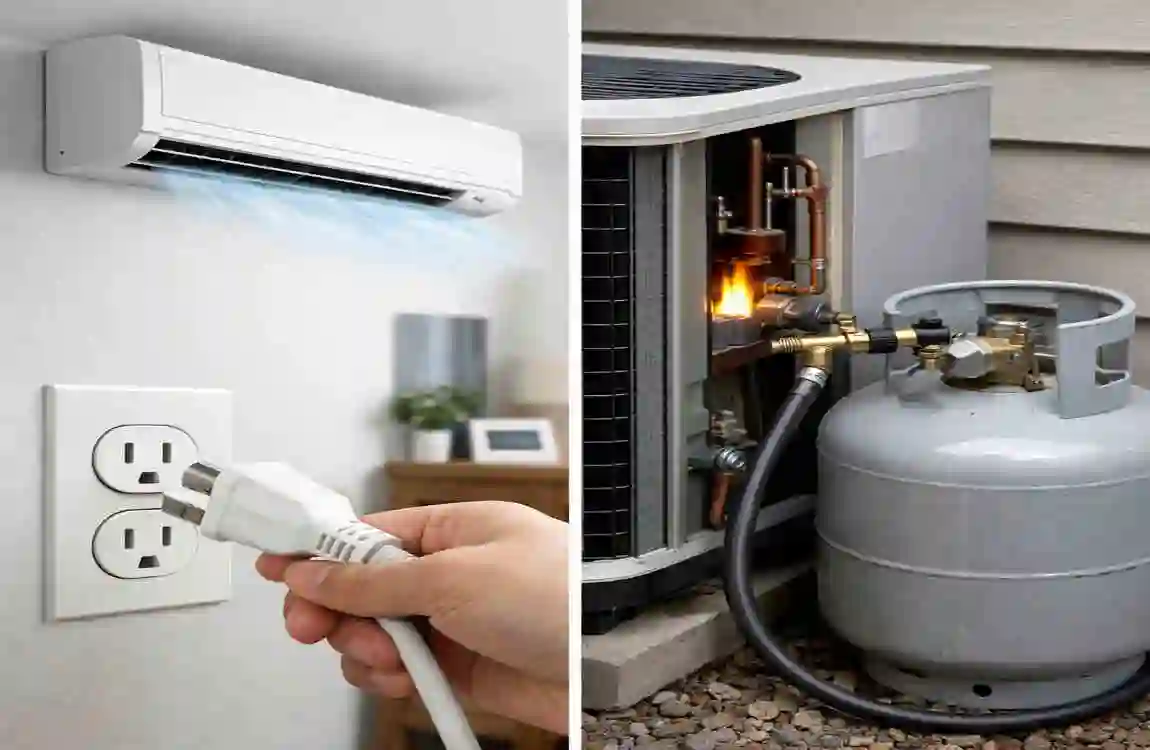
Since your AC power source is mostly electric, maintaining it is vital for keeping utility costs low. Whether you have an electric inverter unit on your wall or a massive central AC paired with a gas furnace, proper care extends the life of your equipment by years.
Maintaining an Electric Air Conditioner
When it comes to the electric side of your system (the cooling), the biggest enemy is dirt.
- The Indoor Unit: You should remove the plastic mesh filters every two weeks, wash them in the sink with warm water and mild soap, let them dry completely, and pop them back in.
- The Outdoor Unit: Once a year, before the intense summer heat sets in, use a gentle hose spray (never a high-pressure washer) to clean the delicate aluminum fins on the outdoor condenser unit. Mud and dust act like a blanket, trapping the heat inside the coils.
- The Drain Line: Keep an eye on the PVC pipe dripping water outside. If this gets clogged with algae or dust, water will back up and ruin your indoor walls. Pouring a little bit of white vinegar down the line occasionally keeps it clear.
Caring for Gas-Involved Systems
If you have a gas furnace that runs in the winter, the stakes are slightly higher due to safety concerns.
- Annual Combustion Checks: You must have a professional inspect the heat exchanger for cracks that could allow deadly carbon monoxide to escape.
- Burner Cleaning: The gas burners can become clogged with soot over time, leading to an inefficient, yellow flame rather than a hot, clean blue flame.
- Flue Inspection: Ensure the metal exhaust pipe venting the combustion gases outside is intact and not blocked by bird nests or debris.
A comprehensive annual service from a trusted technician usually costs between PKR 5,000 and PKR 10,000. It is a small price to pay to ensure your family’s safety and to keep your system running flawlessly.
FAQ Schema (SEO Boost)
Do air conditioners use gas or electricity for cooling? Air conditioners use electricity to power the compressor and fans that drive the cooling process. They do not burn gas to cool your home. The “gas” technicians often refer to is actually a chemical refrigerant (like R-410A) that absorbs heat, but it is not a fuel source.
Can a home air conditioner run on natural gas? While exceptionally rare in residential settings, gas-fired air conditioners do exist. They use an absorption chiller process powered by a natural gas flame. However, for 99% of homeowners, an air conditioner is entirely electric.
Why does my AC technician say I need to “recharge the gas”? When a technician talks about recharging the gas, they mean your system is low on chemical refrigerant due to a leak in the copper piping. This refrigerant is a fluid that cycles between liquid and gas states to remove heat from your home. It is not natural gas used for fuel.
Does my central heating and cooling system use both gas and electricity? It very well might! In many homes, a central HVAC system uses a large electric air conditioner to cool the house in the summer, and a separate gas furnace to heat the house in the winter. In this setup, cooling is 100% electric, while heating is powered by natural gas.
Which is cheaper to run: a gas heater or an electric heat pump? This depends heavily on local utility rates. Traditionally, natural gas was much cheaper for winter heating. However, modern DC Inverter electric heat pumps are incredibly efficient, often making them cheaper to run than a gas heater, especially if your home utilizes solar power to offset electricity costs.
Does a window AC unit use gas? No, a window AC unit is a self-contained system that runs entirely on electricity. You plug it into a standard wall outlet, and its electric compressor and fans handle all the cooling without a gas line connection.