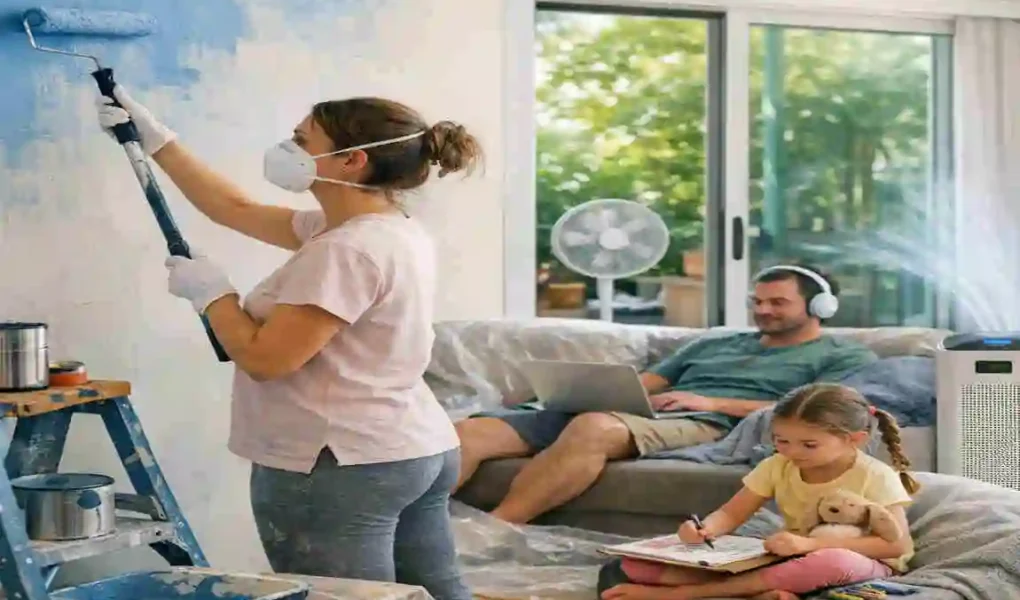
You are standing in the middle of your living room, a half-empty can of “Sunset Peach” at your feet and a roller in your hand. The transformation is incredible, and you can already see your vision coming to life. But then, it hits you—that sharp, stinging, chemical smell. Your eyes start to water just a little bit, and a tiny headache begins to bloom behind your temples. You start to wonder, can you stay in the house while painting, or are you accidentally breathing in something that could hurt you?
It is a relatable scenario for millions of DIY enthusiasts every year. According to data from environmental agencies, millions of people tackle home painting projects annually, yet nearly 20% of them report experiencing physical symptoms, from dizzy spells to itchy throats. We often focus so much on the color palette that we forget about the air quality.
So, let’s get straight to the point: Can you live in the house while painting? The short answer is: not safely without taking very specific precautions. While you don’t necessarily need to check into a hotel for a single accent wall, staying inside during a major whole-house paint job without a plan is a recipe for trouble.
Understanding the Risks: Why Staying Inside During Painting Can Be Dangerous
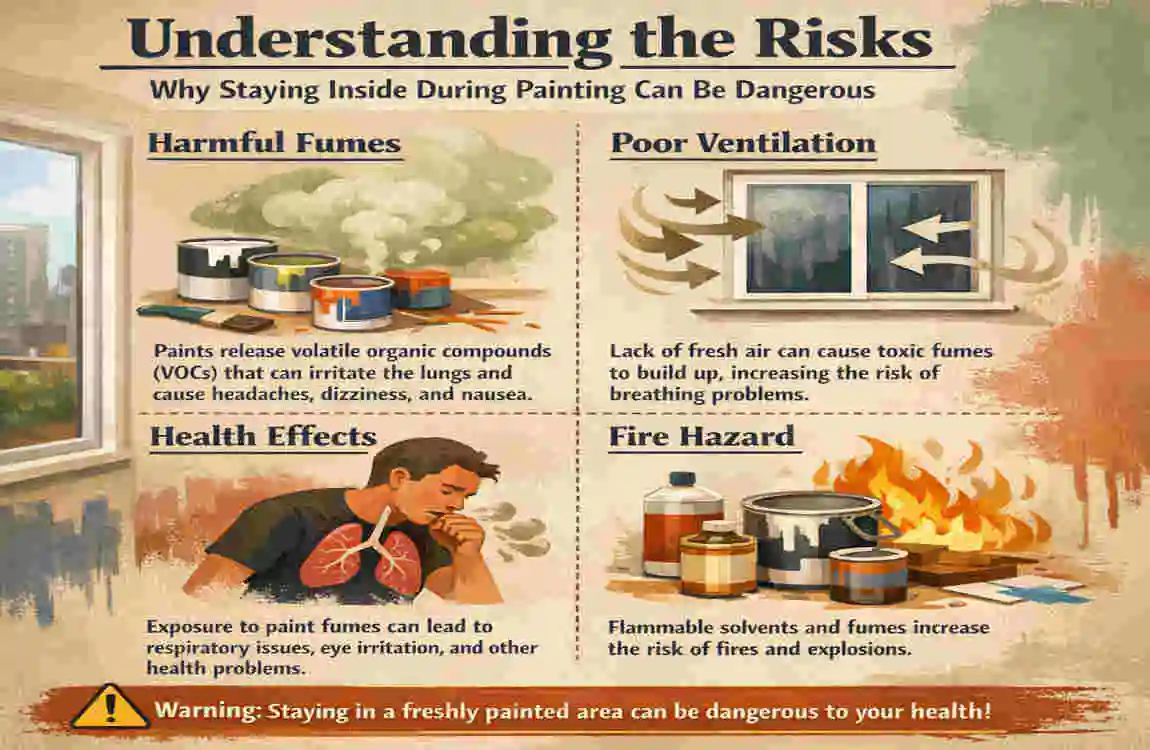
When you open a can of paint, you aren’t just looking at liquid color. You are looking at a complex mixture of pigments, binders, and solvents. As the paint dries, those solvents evaporate into the air. This process is called “off-gassing,” and the chemicals released are known as Volatile Organic Compounds (VOCs).
What Exactly Are VOCs?
Think of VOCs as invisible ghosts that haunt your room long after the painter has left. These are carbon-based chemicals that readily vaporize or form gases at room temperature. Common VOCs found in traditional paints include formaldehyde, benzene, and toluene.
While they help the paint spread smoothly and dry quickly, they aren’t exactly “friendly” to human biology. When you stay in a house that is currently being painted, you are essentially sitting in a soup of these evaporating chemicals.
Short-Term Health Risks of Staying in the House While Painting
Even if you are a healthy adult, you will likely feel the effects of paint fumes if the area isn’t ventilated. The most common immediate reactions include:
- Headaches and Dizziness: This is your brain’s way of telling you it needs more oxygen and fewer chemicals.
- Eye, Nose, and Throat Irritation: You might feel a scratchy sensation in your throat or notice your eyes turning red and watery.
- Nausea: For many, the strong scent of oil-based paints can lead to an upset stomach or even vomiting.
Long-Term Concerns and Respiratory Issues
If you are exposed to these fumes over a long period—perhaps you are doing a massive renovation that takes weeks—the risks become more serious. Chronic exposure to VOCs has been linked to respiratory problems, kidney damage, and even damage to the central nervous system.
For people who already struggle with asthma or COPD, paint fumes can trigger a severe attack. The lungs are already sensitive, and the irritating nature of VOCs can cause the airways to tighten, making it incredibly difficult to breathe.
Who Is Most at Risk?
Not everyone reacts to paint the same way. Some people are much more “vulnerable” than others:
- Infants and Children: Their lungs are still developing, and they breathe more rapidly than adults, meaning they take in more toxins per pound of body weight.
- The Elderly: Older adults often have weaker respiratory systems and may take longer to recover from chemical irritation.
- Pregnant People: There is significant concern regarding how VOC exposure might affect fetal development. Most doctors recommend that pregnant women avoid fresh paint, especially oil-based varieties.
- Pets: Your dog or cat has a much stronger sense of smell than you do. What smells “strong” to you is absolutely overwhelming to them. Furthermore, birds are extremely sensitive to air quality and can actually die from fumes that a human might barely notice.
Expert Answer: Can You Stay in the House While Painting? It Depends
If you ask a professional painter, “Can I stay here tonight?” they will probably give you a nuanced answer. It isn’t a simple “yes” or “no.” Instead, it depends on three major factors: the type of paint, the size of the project, and the duration of your stay.
The Verdict on Paint Types
The type of paint you choose is the biggest “deciding factor” in whether you can stay in your home.
- Oil-Based Paints: These are the “heavy hitters.” They are durable and great for trim, but they contain high levels of VOCs. If you are using oil-based paint, experts almost universally recommend staying out of the house for at least 24 to 72 hours.
- Latex (Water-Based) Paints: These are much more common for walls today. They have lower VOC levels and dry faster. You can often stay in the house while painting one room, provided you keep the door closed and the windows open.
- Zero-VOC Paints: The gold standard for safety. If you use these, the risk is minimal, and you can usually sleep in the house the same night (though perhaps not in the room that was just painted).
Room Size and Painting Volume
Are you painting a small bathroom or the entire downstairs open concept? The volume of paint matters. One gallon of paint in a large, airy room will disperse its fumes much more easily than five gallons of paint in a cramped hallway. If you are doing a “whole-house refresh,” the concentration of VOCs will be much higher, making it unsafe to stay inside.
Duration of Exposure
There is a big difference between walking into a painted room to grab a book and sleeping in that room for eight hours. When you sleep, your breathing slows, but you still inhale whatever is in the air. Never sleep in a room that has been painted within the last 24 hours, even if the paint feels dry to the touch. Off-gassing is most intense on the first day of drying.
Myth-Busting: “I Have a Fan On, So I’m Fine”
One of the biggest myths in home improvement is that a single ceiling fan is enough to clear out paint fumes. This is false. A ceiling fan moves the “dirty” air around the room; it doesn’t actually remove the chemicals. To be safe, you need “active displacement,” which means pulling in fresh air and pushing out the chemical-laden air.
Fresh Air Solutions: How to Ventilate Properly While Painting
Ventilation is your best friend when it comes to painting safety. If you can control airflow, you can significantly reduce VOC concentrations in your living space. Here is how the pros do it.
Best Ventilation Tips for Safe Painting
To create a safe environment, you need to think about “cross-ventilation.” This means opening windows on opposite sides of the house to create a natural breeze that carries the fumes away.
- The Box Fan Trick: Don’t just point a fan at the wall. Instead, place a box fan in a window facing outward. This creates a vacuum effect, sucking the fumes out of the room and pushing them outside.
- Open Interior Doors (Selectively): If you are painting one room, keep that door closed to the rest of the house, but keep the window in that room wide open. If you are painting the whole house, open everything up to let the air move freely.
- Use HEPA Air Purifiers: While they aren’t a total solution, a high-quality air purifier with a carbon filter can help trap some of the VOC molecules.
Essential Tools for a Safe Painting Setup
Before you crack open that lid, make sure you have these items on hand:
ToolPurposeEstimated Cost
Box Fan to exhaust fumes out of the window $20 – $50
HEPA Air Purifier To filter out remaining particles and odors $100 – $300
Extension Cords : To ensure fans reach the best window spots, $10 – $20
Painter’s Tape to seal off doors of rooms not being painted $5 – $15
Air Quality Monitor To check VOC levels in real-time $50 – $150
A Step-by-Step Ventilation Guide
- : Before you start, open at least two windows in the room.
- : Position one fan to blow air into the room from a clean source and another fan in a different window to blow air out.
- : Keep the fans running, not just while you paint, but for at least 6 to 12 hours after you finish the last coat.
- If you have a central HVAC system, turn it off or close the vents in the room you are painting to prevent the fumes from being sucked into the ductwork and spread to the rest of the house.
Timeline: How Long to Stay Out After Painting and When It’s Safe to Return
One of the most common questions homeowners ask is: “When can I move my furniture back and go to sleep?” The answer depends entirely on the “dry time” and the “cure time.” Just because paint isn’t sticky doesn’t mean it has stopped releasing chemicals.
Post-Painting Air-Out Timeline
The general rule of thumb is to wait until the “new paint smell” is completely gone. However, if you want to be scientific about it, follow these guidelines:
- Oil-Based Paint: Wait at least 72 hours. These paints take a long time to dry and release high levels of VOCs for days.
- Latex/Water-Based Paint: Wait 24 to 48 hours. While they dry to the touch in a few hours, the chemical release remains high for the first full day.
- Zero-VOC Paint: You can usually return it in 2 to 24 hours. These are the safest, but you still want some fresh air to clear out the moisture from the paint.
Factors That Speed Up (or Slow Down) the Process
- Humidity: High humidity is the enemy of drying paint. If it’s a muggy day, the paint will stay “wet” longer, and the chemicals will linger. Use a dehumidifier if necessary.
- Temperature: Paint dries best between 60°F and 80°F. If it’s too cold, the solvents won’t evaporate properly.
- Air Movement: As we discussed, more fans mean a faster “air-out” time.
The “Smell Test” vs. The “Meter Test”
Your nose is a decent guide, but it can be fooled. After a while, you might experience “olfactory fatigue,” where you get used to the smell and think it’s gone when it isn’t. If you are highly sensitive or have a baby in the house, consider using a digital air quality monitor. These devices give you a “VOC reading.” Once the number drops to a safe level, you know for sure that it’s okay to move back in.
Safer Painting Alternatives: Low-Risk Products and Methods
If the thought of moving out for three days sounds like a nightmare, you should look into safer paint alternatives. The industry has come a long way, and you no longer have to choose between “beautiful color” and “breathable air.”
The Rise of Low-VOC and Zero-VOC Paints
In the past, eco-friendly paints were thin and didn’t cover well. That is no longer true. Many of the top-rated paints on the market today are specifically designed to be low-emission.
- Low-VOC Paints: These contain significantly fewer volatile compounds than traditional paints (usually less than 50 grams per liter).
- Zero-VOC Paints: These have essentially no VOCs (less than 5 grams per liter). These are the best choices for nurseries, bedrooms, and homes with pets.
Top Brands to Consider
Many reputable brands offer “health-conscious” lines. Look for labels like Benjamin Moore Natura or Sherwin-Williams Harmony. These products are often “GreenGuard Gold” certified, meaning they have been tested for over 10,000 chemicals and found to be safe for sensitive environments like schools and hospitals.
Why It’s Worth the Extra Cost
You might notice that Zero-VOC paint costs about 10% to 20% more than the “cheap stuff.” At the same time, it might feel like a hit to your wallet, think of it as an investment in your health. You are saving money on potential medical bills, air purifiers, or hotel rooms while your house airs out. Plus, these high-end paints often have better coverage, meaning you might only need two coats instead of three.
Special Scenarios: Painting with Kids, Pets, or in Small Spaces
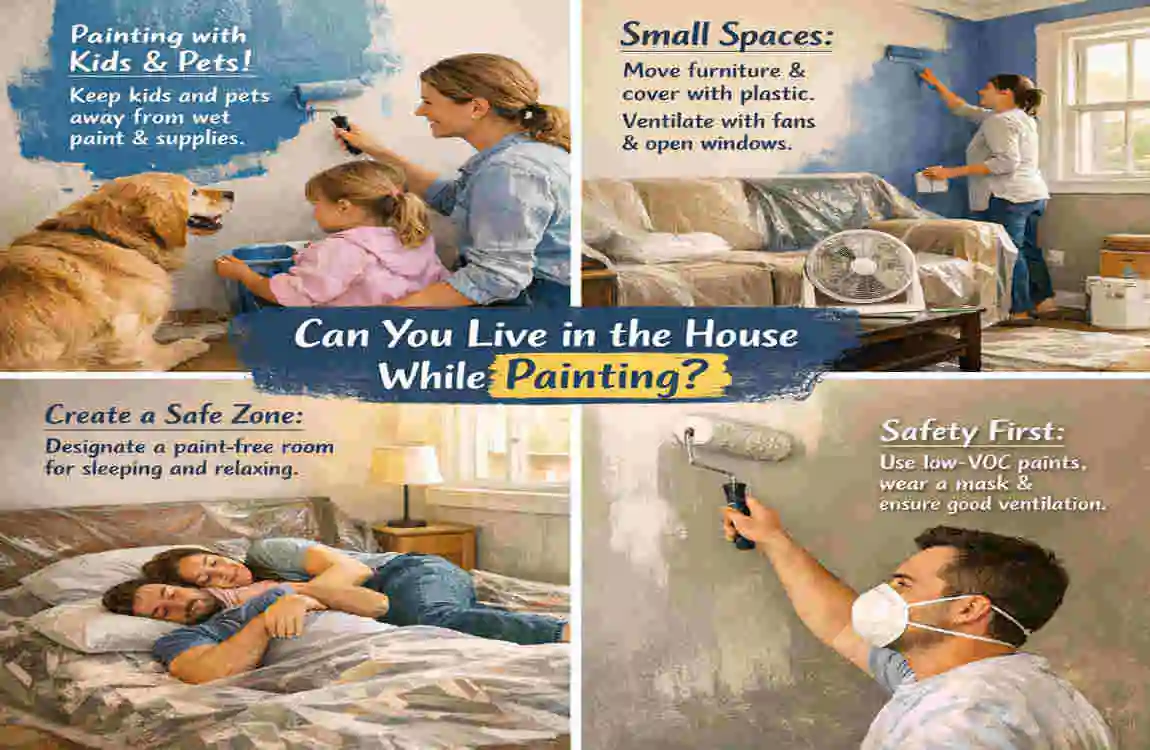
Every home is different, and sometimes a “standard” painting job becomes a bit more complicated because of who lives there or the building’s layout.
Staying Safe with Family and Pets
If you have small children, the best advice is to have them stay at a grandparent’s or a friend’s house for the weekend. Even with low-VOC paint, the disruption and the lingering odors can be tough on little ones.
For pets, the danger is twofold: fumes and wet paint. A curious cat might walk through a wet tray and then lick its paws, ingesting toxic chemicals. Always keep pets in a completely separate part of the house with the door sealed, or better yet, take them to a “pet hotel” for 48 hours.
The Apartment and Small Space Challenge
If you live in a studio apartment, you can’t exactly “go to another room.” In this case, ventilation is your only defense. If you cannot achieve a strong cross-breeze, consider hiring a professional who uses specialized extraction equipment, or plan your project for a time when you can spend the entire day and evening out of the house.
Painting in the Winter
Painting in winter is tricky because you don’t want to leave the windows wide open and risk freezing your pipes. To handle this:
- Work in sections. Paint one room at a time and seal it off.
- Use a “window crack” method. Open the window just a few inches and place a fan there.
- Turn up the heat slightly. Warmer air helps the paint cure faster, but make sure you are still venting that air outside.
FAQs: Common Questions About Staying in the House While Painting
Can you stay in the house while painting with fans on? Yes, for small projects using latex or Zero-VOC paint. However, if you are using oil-based paint or painting multiple rooms, fans may not be enough to keep VOC levels safe for sleeping.
Is it safe to sleep in a freshly painted room? No. You should wait at least 24 hours for latex paint and 72 hours for oil-based paint before sleeping in a room. Even if it doesn’t smell “bad,” the VOC levels are highest during the first night.
How long after painting can I bring my dog or cat back? Wait at least 24 to 48 hours. Pets are more sensitive to fumes and are at risk of touching or licking wet paint. Ensure the “new paint smell” is gone before letting them back into the area.
What if I have asthma? Should I leave the house? Yes. If you have a respiratory condition, it is strongly recommended that you stay indoors. At the same time, the painting is being done, and stay away for at least 48 hours after the job is finished.
Does an air purifier help with paint smells? Yes, but only if it has an activated carbon filter. Standard HEPA filters catch dust and dander, but they don’t stop chemical vapors. A carbon filter is designed to “soak up” those gas molecules.