
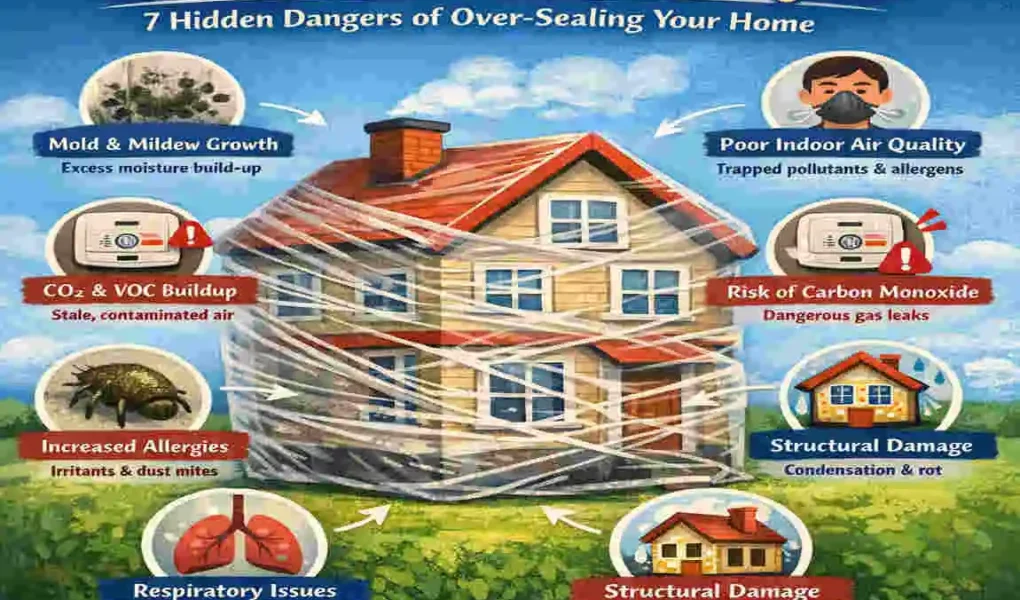
Have you ever found yourself shivering in a drafty living room and thinking, I need to seal every single crack in this place? In our modern pursuit of ultimate energy efficiency and cozy comfort, it is incredibly common for homeowners to go absolutely crazy with caulking, spray foam, and weatherstripping. We want to keep the freezing winter winds out and trap that expensive, air-conditioned goodness inside during the summer. But this modern obsession brings up a very important and often overlooked question: can a house be too airtight?
The short answer is a resounding yes. In fact, in our rush to save a few dollars on heating and cooling, many well-intentioned homeowners end up completely over-sealing their homes. When you seal a house up like a Tupperware container, you do keep the drafts out. However, you also trap excessive moisture, dangerous chemical pollutants, and stale air right there inside the living space with you.
Historically, older homes were notoriously drafty. They had single-pane windows, uninsulated attics, and gaps under the doors. While this was terrible for the heating bill, it actually allowed the house to “breathe.” Fresh air naturally infiltrated the living space, carrying away indoor pollutants and excessive humidity. Today, we build homes so incredibly tight that they can no longer breathe on their own. The benefits of modern airtightness—like incredible energy efficiency, perfect temperature control, and blocking out noisy street traffic—are fantastic. But without a dedicated strategy for fresh air, these benefits quickly morph into massive liabilities.
| Danger | Description | Potential Impact |
|---|---|---|
| Poor Indoor Air Quality | Traps pollutants, VOCs, allergens, and CO2 with no fresh air exchange. | Health issues like respiratory problems and fatigue. |
| Moisture Buildup | Excess humidity from cooking, showers, and breathing can’t escape. | Condensation on windows, walls, and ducts . |
| Mold and Mildew Growth | Trapped moisture creates ideal conditions in hidden areas like roofs or walls. | Structural damage and serious health hazards . |
| Combustion Equipment Risks | Older gas appliances pull exhaust into the home due to negative pressure. | Carbon monoxide poisoning in airtight setups . |
| Trapped Toxic Gases | Radon, formaldehyde, or chemical off-gassing from materials get sealed in. | Long-term exposure risks like cancer or irritation . |
| Energy Inefficiency | Over-sealing without balance causes HVAC strain and temperature swings. | Higher bills despite sealing efforts . |
| Structural Damage | Persistent dampness erodes wood, drywall, and insulation over time. | Costly repairs from rot or weakened frames . |
What Does “Too Airtight” Mean?
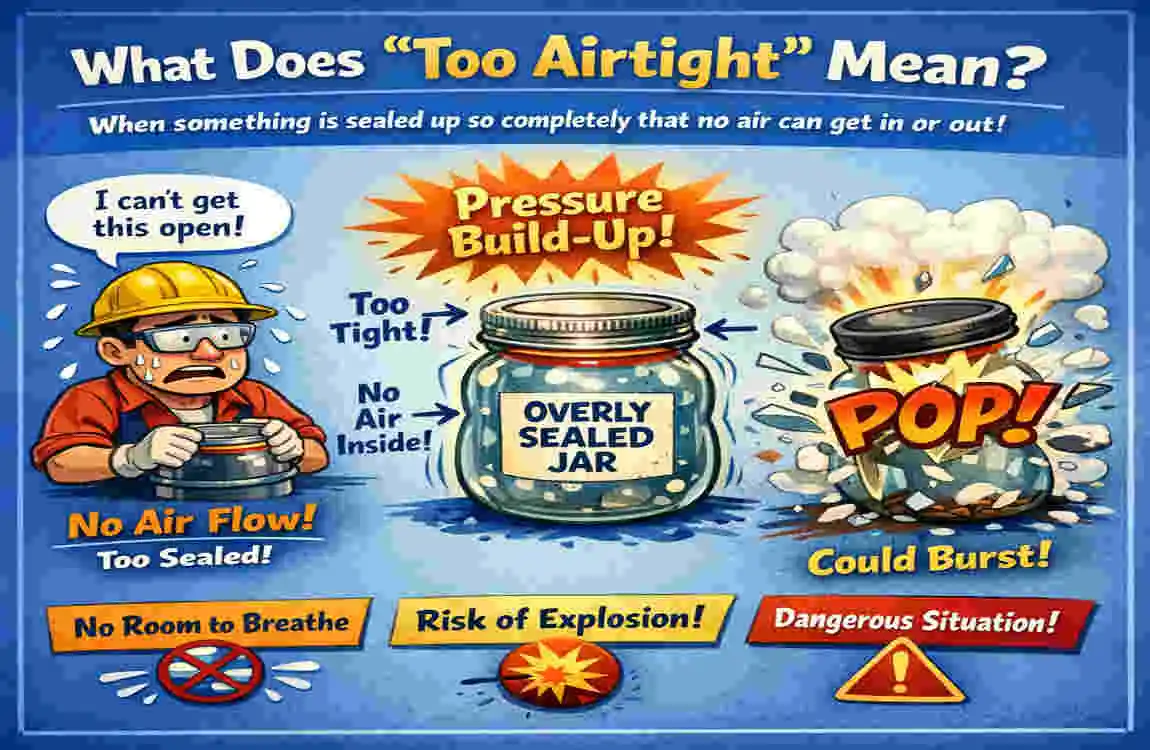
Before we can fully understand the dangers, we need to break down exactly what “airtight” really means in the construction and home renovation world. Let’s step away from the technical jargon and keep things incredibly simple.
Airtightness refers to how much air leaks into or out of your home through unintentional gaps, cracks, and holes in the building’s shell (often called the building envelope). To measure this, home performance professionals use a specialized piece of equipment called a “blower door.” They temporarily seal a powerful fan into your front doorway, turn it on to depressurize the house, and measure exactly how much air gets sucked in through all the hidden leaks in your walls, roof, and foundation.
This test gives us a crucial metric: Air Changes per Hour (ACH). Specifically, it is usually measured at a pressure of 50 Pascals, giving us a rating known as ACH50. Think of this number as how many times the entire volume of air inside your house is completely replaced by outside air in a single hour under test conditions.
So, what are the ideal levels? For standard, well-balanced older homes, an ACH50 rating between 3 and 5 is generally considered the “sweet spot.” At this level, your home is reasonably energy-efficient but still has enough natural leakage to let indoor pollutants escape.
However, modern building trends are pushing extreme limits. With the rise of “net-zero” goals, green building codes, and passive house certifications, new homes are being built to be incredibly tight. We are seeing homes clock in at below 1 ACH50. At this extreme level, the house is practically a sealed submarine. If your home falls below 1 ACH, it absolutely needs mechanical ventilation.
Unfortunately, many ambitious DIYers and even some fast-paced builders focus entirely on sealing the home to hit these impressive numbers, completely ignoring Indoor Air Quality (IAQ). When you prioritize sealing over breathing, too airtight house dangers start to compound rapidly.
7 Hidden Dangers of Over-Sealing
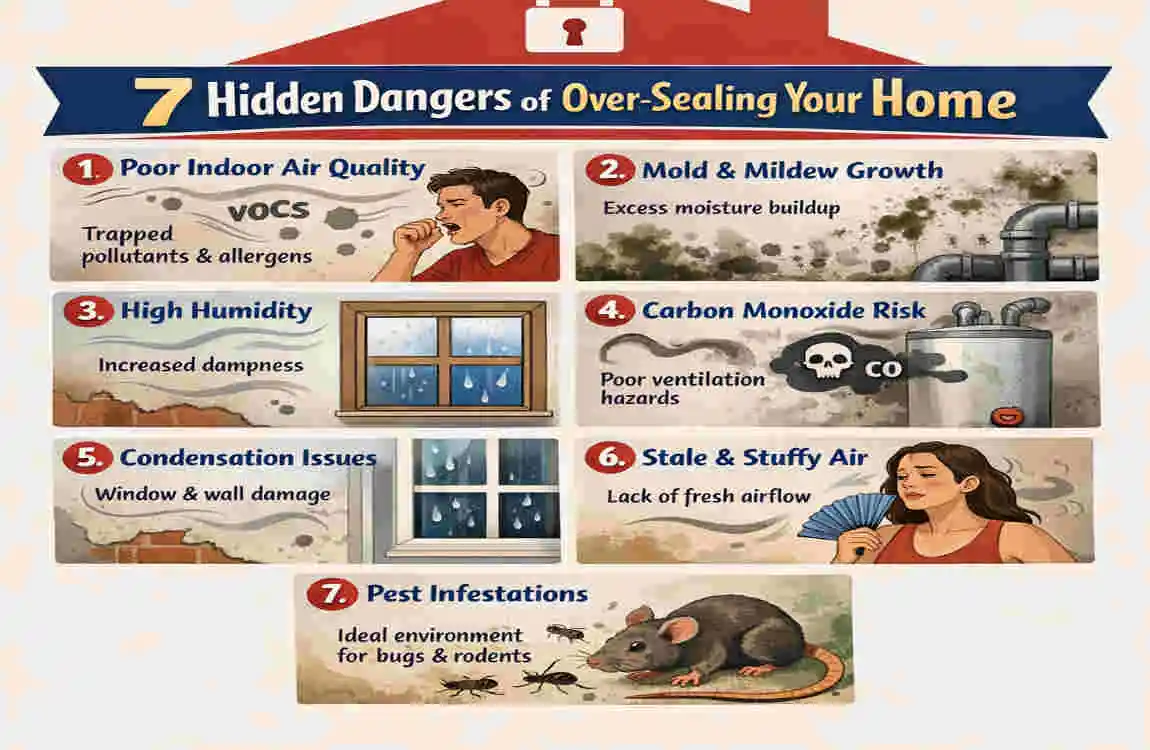
When you lock down every single point of ventilation in your property, you might assume you are just keeping the bad weather out. Sadly, you are actually locking bad elements in. Let’s break down the seven most severe excessive airtightness risks you might be unknowingly facing right now.
Danger : Moisture Buildup and Condensation
Think about your daily routine for a moment. You wake up and take a hot shower. You boil water on the stove for your morning pasta or oatmeal. You run a load of laundry, start the dishwasher, and even sit around breathing and sweating. Every single one of these mundane, everyday activities releases a massive amount of invisible water vapor into your indoor air.
In a traditional, slightly leaky home, this humid air drifts out through tiny gaps around your windows or up through the attic vents, disappearing harmlessly into the neighborhood. But in a tightly sealed home? That moisture has absolutely nowhere to escape.
Without the tiny, unintentional leaks needed for natural venting, the water vapor quickly saturates the indoor air. The very first symptom you will likely notice is “weepy windows.” When the warm, moist indoor air collides with the cold glass of your winter windows, the vapor rapidly cools and turns back into liquid water. You will wake up to find thick condensation blurring your view, puddles of water pooling on your window sills, and damp curtains. If you are constantly wiping down your windows to see outside, you are experiencing the textbook definition of home ventilation problems. Over time, this trapped humidity doesn’t just ruin your view; it sets the stage for our next, much more sinister danger.
Danger : Mold and Mildew Growth
Where there is persistent, stagnant water, mold is never far behind. Once your home becomes a trapped, humid environment due to over-sealing, it transforms into the ultimate breeding ground for harmful fungi. Mold and mildew absolutely thrive in warm, damp, still conditions—exactly the kind of environment created when the answer to “can a house be too airtight” becomes a harsh reality in your living space.
This isn’t just about a little bit of unsightly black fuzz in the corner of your bathroom shower. Hidden moisture can lead to massive mold colonies growing out of sight behind your drywall, underneath your expensive hardwood floors, and thick across your basement ceiling joists.
The consequences of this hidden growth are staggering. Living in a damp, mold-infested environment is linked to a shocking 19% higher risk of developing severe respiratory issues. It heavily exacerbates existing conditions like asthma and chronic allergies, leaving residents constantly coughing, sneezing, and feeling unwell.
Furthermore, mold doesn’t just eat away at your health; it quite literally eats your house. Fungi break down organic materials like wood and drywall. Fixing this isn’t cheap. Dealing with the structural damage and professional remediation caused by runaway mold can easily cost homeowners well over $1,000 yearly in repairs and mitigation.
Danger : Poor Indoor Air Quality
We tend to think of air pollution as an outdoor problem—smog over a city, exhaust from cars, or smoke from factories. But the shocking truth is that the air inside your house can frequently be two to five times more polluted than the air outdoors.
Every single day, we introduce a cocktail of chemicals and irritants into our living spaces. We spray chemical cleaning supplies on our counters. Our brand-new couches, carpets, and fresh paint constantly “off-gas” Volatile Organic Compounds (VOCs). We shed skin cells, our pets drop dander and hair, dust mites multiply in our bedding, and we constantly exhale carbon dioxide (CO2).
In a properly ventilated home, fresh breezes sweep these pollutants out. But when over-sealing home techniques are taken too far, these contaminants are trapped. They bounce from wall to wall, accumulating in higher and higher concentrations every single day.
This leads to a widely recognized phenomenon known as “Toxic Home Syndrome,” which currently affects millions of unaware families. You are forced to constantly rebreathe a concentrated soup of chemicals, allergens, and stale CO2. The symptoms of this poor indoor air quality are often mistaken for general burnout or minor illnesses. If you frequently suffer from unexplainable headaches, chronic fatigue, brain fog, or constantly irritated eyes while sitting on your couch, your airtight home is suffocating you.
Danger : Rising Energy Bills Ironically
One of the greatest ironies of the modern green building movement is that trying too hard to save energy can actually end up wasting it. You probably bought all that spray foam and caulk specifically to lower your utility bills. So, how on earth can over-sealing make your energy bills rise?
The culprit, once again, is trapped humidity. When moisture cannot escape your heavily sealed home, the indoor humidity levels skyrocket. Air conditioners do not just lower the temperature of the air; they also have to extract humidity from the air to make your home feel comfortable.
When your house is excessively airtight and incredibly humid, your HVAC system has to work twice as hard to constantly wring the water out of the air before it can effectively cool the room. This leads to a wildly imbalanced HVAC system. The unit will strain under the constant pressure of humidity fluctuations, turning on and off rapidly in an inefficient cycle known as “short-cycling.”
Because the system is constantly fighting a losing battle against trapped indoor moisture, it draws significantly more electricity. This constant, heavy strain can waste 25% to 40% more energy than a properly balanced system. You end up paying significantly higher utility bills to run an exhausted, inefficient machine, completely canceling out the financial benefits of your air-sealing efforts.
Danger : Combustion Appliance Risks
Of all the excessive airtightness risks, this is undoubtedly the most dangerous and potentially life-threatening. If your home utilizes any appliances that burn fuel—such as gas stoves, natural gas water heaters, oil furnaces, or traditional wood-burning fireplaces—you need to pay very close attention to your home’s ventilation.
Combustion appliances require a steady supply of oxygen to burn their fuel efficiently, and they produce dangerous exhaust gases, primarily deadly carbon monoxide (CO), as a byproduct. In a normal home, this hot, toxic exhaust safely rises up through a chimney or metal flue and escapes into the outdoor sky.
However, incredibly tight homes can create dangerous pressure imbalances. Let’s say you turn on a powerful exhaust fan over your kitchen stove, or your clothes dryer is pushing air outside. Because your house is so tightly sealed, new air cannot easily get in to replace the air being pushed out. This creates a powerful negative pressure vacuum inside your home.
This vacuum can literally suck the deadly carbon monoxide exhaust backward, pulling it right down the chimney or flue and dumping it straight into your living room. This terrifying phenomenon is known as “backdrafting.” Carbon monoxide is completely odorless, colorless, and tasteless. Without natural leaks to equalize the air pressure, backdrafting is deadly in tight homes, making this one of the most critical reasons to monitor your sealing efforts.
Danger : Structural Decay Over Time
We mentioned earlier that mold can cause damage, but trapped moisture in an airtight house goes far beyond just surface-level fungal growth. It attacks the very bones of your property.
When a house cannot breathe, hidden moisture slowly accumulates inside the wall cavities, up in the dark corners of the attic, and deep within the floor joists. Think about your foundation or crawlspace. The bare earth beneath your home constantly releases water vapor. In a house with adequate airflow, this vapor rises and is eventually whisked away. But when a home is sealed too tightly at the top, that rising vapor gets trapped inside the lower framework.
The wood framing acts like a giant sponge, slowly soaking up this inescapable humidity year after year. Eventually, the wood becomes permanently saturated, leading to severe wood rot.
Furthermore, damp, rotting wood acts as a massive neon welcome sign for destructive pests. Termites, carpenter ants, and powderpost beetles specifically seek out moist, decaying timber to build their nests and feed. Over time, your home’s structural decay happens entirely out of sight. You might think your home is in pristine condition because the paint looks fresh, while the foundational beams holding up your living room are slowly turning to mush.
Danger : Health Impacts on Residents
Ultimately, the most profound answer to the question “can a house be too airtight” lies in the direct impact it has on the human beings living inside it. Buildings are meant to be safe havens, but an over-sealed house can slowly become a trap that continuously degrades your long-term health.
Beyond the immediate headaches from VOCs and the asthma triggers from mold, there are long-term cumulative health impacts to consider. One of the most serious long-term threats is radon gas accumulation. Radon is a naturally occurring, completely invisible radioactive gas that slowly seeps up from the soil and bedrock beneath your foundation.
In a leaky, older home, radon gas dilutes with fresh outdoor air and escapes harmlessly. However, heavily sealed homes act as giant vacuums, trapping the radon gas inside the basement and lower living levels. Prolonged exposure to high levels of accumulated radon is the second leading cause of lung cancer worldwide, right behind smoking.
Furthermore, the constant, unrelenting exposure to trapped dust mites, pet dander, and bacterial accumulations can cause residents who have never had allergies before to develop chronic sensitivities suddenly. If your family is constantly battling lingering colds, mysterious breathing problems, or waking up every single morning with a stuffy nose and a scratchy throat, your airtight home might be the silent culprit.
Signs Your Home Is Too Airtight
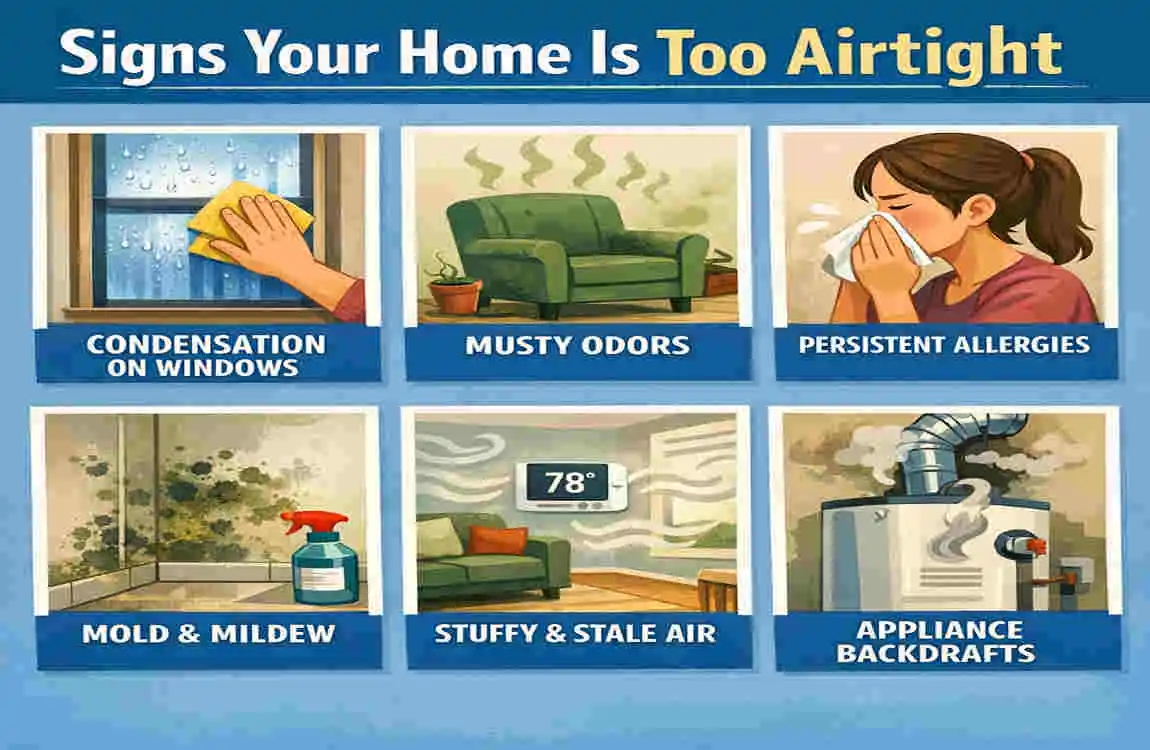
Are you starting to wonder if your own property is suffering from these hidden threats? Before you panic and start tearing the weatherstripping off your front door, take a moment to evaluate your living environment. Here is a quick, practical checklist of the most common warning signs indicating you might have serious home ventilation problems:
- Persistent Stuffiness: The air inside your home consistently feels heavy, stale, or “dead,” especially right when you walk in the front door after being outside for a few hours.
- Window Condensation: You routinely find thick fogs, water droplets, or actual puddles of water on the interior of your windows, particularly during the colder winter months.
- Musty Odors: You frequently notice a distinct, earthy, “old basement” smell lingering in your primary living areas, closets, or behind heavy furniture, even though you clean regularly.
- High Indoor Humidity: If you purchase a cheap digital hygrometer, the indoor humidity routinely reads above 60%, regardless of the season or how much you run the air conditioner.
- HVAC Short-Cycling: Your central heating and cooling system constantly turns on for a few brief minutes, loudly shuts off, and then turns right back on again in a frantic attempt to balance the heavy, humid air.
If you are nodding along to three or more of these symptoms, your home is likely crying out for a breath of fresh air.
Solutions: Balance Airtightness with Ventilation
So, what is the ultimate verdict? Can a house be too airtight? Yes, absolutely—but only if you fail to provide it with proper mechanical ventilation. You don’t have to give up your dreams of low energy bills and a draft-free living room. The golden rule of modern building science is simple: “Build it tight, but ventilate it right.”
You can keep all that fantastic insulation and detailed air sealing, provided you actively manage how fresh air enters and exits your home. Here are the best ways to restore harmony to your indoor environment:
- Install HRV/ERV Systems for Fresh Air Exchange: This is the ultimate solution. Heat Recovery Ventilators (HRVs) and Energy Recovery Ventilators (ERVs) are brilliant mechanical lungs for your home. They constantly pull stale, polluted air out of your house while simultaneously drawing fresh, clean air in from the outside. The magic is in the heat exchange core: as the two air streams cross (without physically mixing), the system transfers the heat (and in ERVs, the humidity) from the outgoing air to the incoming air. This means you get a constant flow of fresh air without losing all the expensive heating or cooling you just paid for!
- Use Exhaust Fans and Dehumidifiers: Engage in active spot-ventilation. Make it a strict household rule to run your bathroom exhaust fans for at least 20 minutes after every single shower to pull the steam out. Always use your kitchen range hood when boiling water or cooking over gas. If certain rooms remain stubborn, deploy a standalone dehumidifier to pull the ambient moisture down to a safe 40-50% range.
- Pro Blower Door Test + Sealing Audit: Don’t just guess. Hire a certified home performance professional to conduct an energy audit and a blower door test. They can pinpoint exactly how tight your home is and recommend the perfect ventilation strategy customized for your exact square footage.
To help you decide on your next steps, here is a quick breakdown of your ventilation options:
System TypeCostAir Changes/HourBest For
HRV/ERV Systems $2,000+ 0.35+ (Highly Controlled) Extremely tight homes and modern energy-efficient builds.
Mechanical Exhaust Fans ~$200 per unit Variable (Spot specific) Bathrooms, kitchens, and localized high-humidity zones.
Natural Vents & Windows Free Low & Unpredictable Very mild climates where opening windows year-round is viable.
FAQs
Even with all this information, you might still have a few lingering questions about too airtight house dangers. Here are quick answers to the most frequently asked questions we hear from homeowners:
Can a house be too airtight? Yes, it absolutely can, but only if it lacks proper ventilation. Sealing a house tightly is fantastic for energy efficiency, but without a dedicated system to bring fresh air inside, you will quickly suffer from trapped moisture, dangerous pollutants, and mold growth.
How do I test my home’s airtightness? You need to hire a professional to perform a Blower Door test. They will depressurize your home to exactly 50 Pascals of pressure and measure the airflow, giving you a precise Air Changes per Hour (ACH) rating.
How do I fix over-sealing in my home? You don’t need to undo your hard work by poking holes in your walls! The best fix is to add mechanical ventilation, specifically an ERV or HRV system, which will continuously cycle fresh air into your home without ruining your energy efficiency.
What is the optimal airtightness level? For an incredibly efficient, healthy home, aiming for 1 to 3 ACH50 is fantastic, provided that you pair that tight seal with a continuously running HRV or ERV system to manage the indoor air quality.