You are sitting at your kitchen table, looking over a brand-new estimate from a local roofing contractor. Your eyes scan down the page, past the materials and labor sections, until you hit a line that completely stops you in your tracks. The quote says you need “20 squares” of shingles to finish the job.
If you are like most homeowners, your first thought is probably, “Wait, what is a square in roofing?” You might even look up at your house and wonder how on earth a sloped, triangular roof translates into a “square.” Do not worry—you are certainly not alone in this confusion!
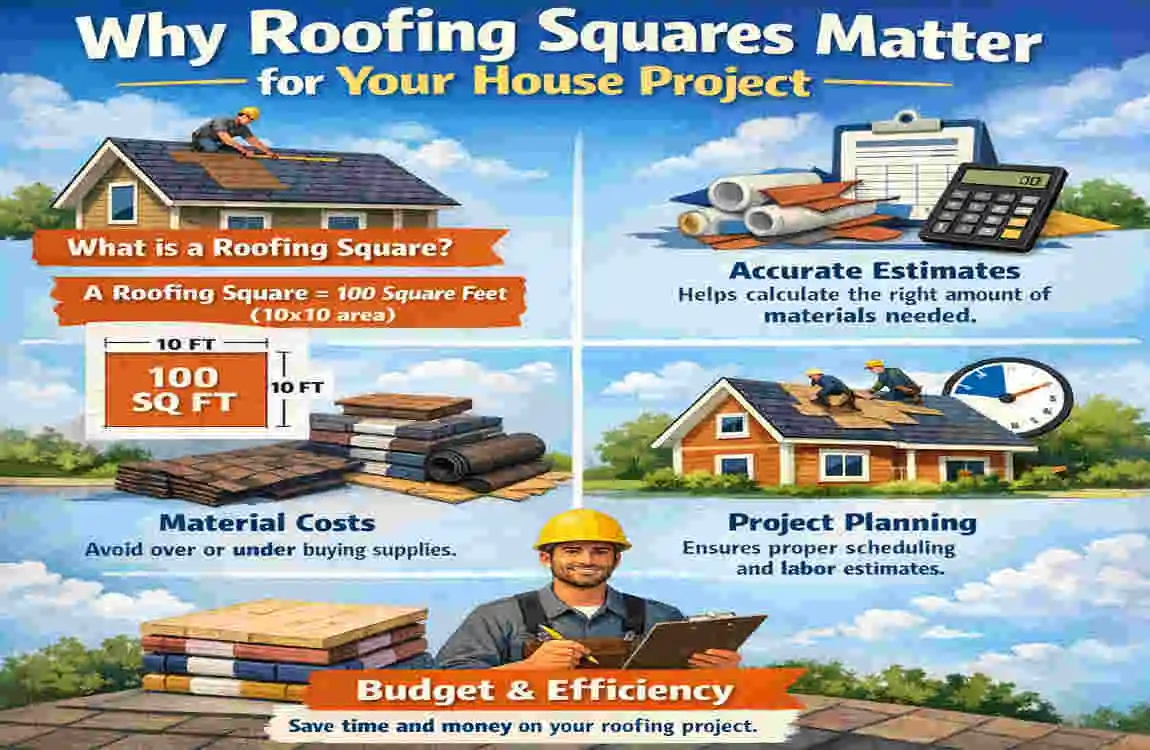
To put it simply, a roofing square is a standard unit of measurement equal to exactly 100 square feet of roof surface. It is a fundamental industry term that simplifies how professionals estimate materials, calculate labor, and present costs for your house projects.
Understanding this essential terminology is one of the best ways to empower yourself as a homeowner. When you know how to read your quote properly, you instantly gain the confidence to avoid overpaying, manage DIY projects effectively, and communicate like a pro with your contractors.
What Is a Square in Roofing? Simple Definition
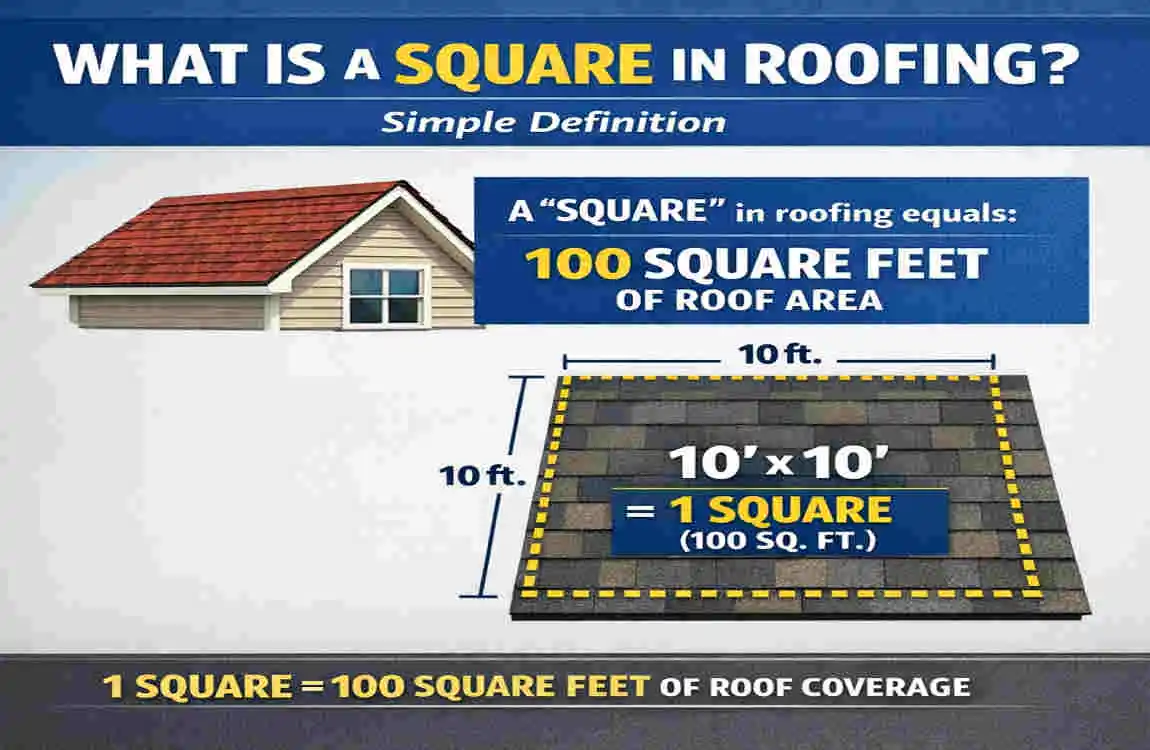
When you hear a contractor talk about a “square,” they are not talking about the physical shape of your roof. Your roof could be shaped like a rectangle, a triangle, or a complex dome. In the roofing world, the word “square” is simply a unit of area.
One roofing square equals exactly 100 square feet of surface area.
To visualize this, imagine a space that measures 10 feet wide by 10 feet long (10 x 10 = 100). Think of it as the size of a small guest bedroom or a standard home office floor. No matter what geometric shape that 100 square feet takes on your roof—whether it is a long, skinny strip at the edge or a wide block near the chimney—it still counts as one square.
This definition is the golden rule of the roofing industry. Whether you are dealing with asphalt shingles, metal panels, or clay tiles, everything is ordered, priced, and installed by the square.
Why Use ‘Square’ Instead of Square Feet?
You might be wondering, “Why don’t roofers just use square feet like everyone else?” It is a highly practical question! The primary reason is that roofs are incredibly large surfaces.
If a contractor were to quote a medium-sized home using square feet, they might tell you that you have 3,000 square feet of roof area. When you start calculating material costs per square foot, labor costs per square foot, and waste factors per square foot, the numbers become unnecessarily massive and clunky. Using the “square” shorthand keeps the numbers small, manageable, and easy to communicate during quick bids.
Furthermore, building materials are packaged to align with this measurement. For example, traditional asphalt shingles are intentionally packaged so that three bundles equal exactly one roofing square. This makes inventory and ordering a breeze. Instead of trying to calculate how many individual shingles you need for thousands of square feet, a roofer knows that if your roof is 30 squares, they need to order 90 bundles of shingles.
Finally, using squares makes it incredibly easy to factor in the industry-standard waste factor. Because roofs have angles, valleys, and overlapping edges, roofers have to cut materials to fit. This cutting creates waste. Typically, contractors add a 10% to 15% waste factor to your total. Adding 10% to “30 squares” is a quick mental math calculation (3 extra squares) that keeps projects moving quickly.
Square vs. Other Measurements
It is incredibly easy to confuse a roofing square with other types of measurements you might encounter during a home renovation. Let’s clear up that confusion right now so you can speak the language perfectly.
Square vs. Square Feet: As we mentioned, square feet are highly granular. Measuring a roof in square feet is like measuring the distance between two cities in inches. It is accurate, but it is not the most practical way to communicate. A square groups those tiny square feet into blocks of 100.
Square vs. Board Feet: If your roofer finds wood rot and needs to replace the underlying wooden decking or trusses, they will likely start talking about “board feet.” While a roofing square measures a two-dimensional surface area (length times width), a board foot is a measurement of volume used exclusively for lumber. It factors in length, width, and the thickness of the wood. You will never buy shingles in board feet, and you will never buy lumber in roofing squares!
Square vs. Square Meters: If you live in or source materials from countries that use the metric system, you might come across square meters. One roofing square (100 square feet) is equal to 9.29 square meters. While the international standard leans metric, the North American and closely related roofing industries firmly stick to the classic 100-square-foot square.
Step-by-Step: How to Measure a Roofing Square for Your House
Now that you know what a square in roofing is, how do you actually figure out how many squares are sitting on top of your house? Measuring a roof might seem like a job reserved strictly for the pros, but with the right guidance, a careful beginner can map out a solid estimate.
By measuring your roof yourself, you can double-check quotes from contractors and ensure you are getting a fair and honest deal. Let’s walk through the steps together to weave this technical process into an easy-to-follow narrative.
Tools Needed (Tape Measure, Ladder, App)
Before you start climbing, you need to gather your tools. Safety and accuracy are your top priorities here.
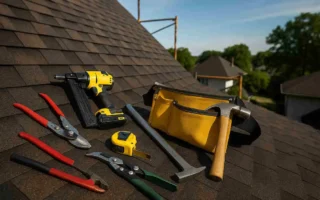
- A Reliable Tape Measure: You will need a standard locking tape measure that extends at least 25 to 30 feet. If you are measuring from the ground (which we highly recommend for safety), a measuring wheel or a long fiberglass tape measure works beautifully.
- A Sturdy Ladder: If you must access the roof or the eaves to get an exact measurement, ensure you have an extension ladder that extends at least three feet past the edge of your roofline. Always have a partner hold the base of the ladder!
- Paper, Clipboard, and Pencil: You will need to sketch a rough “bird’s-eye view” of your house to write down your measurements for each section.
- Smartphone Apps (The Modern Way!): If you do not want to climb a ladder, technology has your back. There are amazing, beginner-friendly roofing apps available today. Applications like RoofScope or specialized drone-mapping software can calculate your roof’s surface area using satellite imagery or drone photos. Many of these apps offer a free trial or a low-cost one-time report, which is much safer than walking on steep shingles!
Basic Calculation Formula
If you are measuring manually, the calculation process is straightforward. We are going to break your roof down into simple geometric shapes—mostly rectangles.
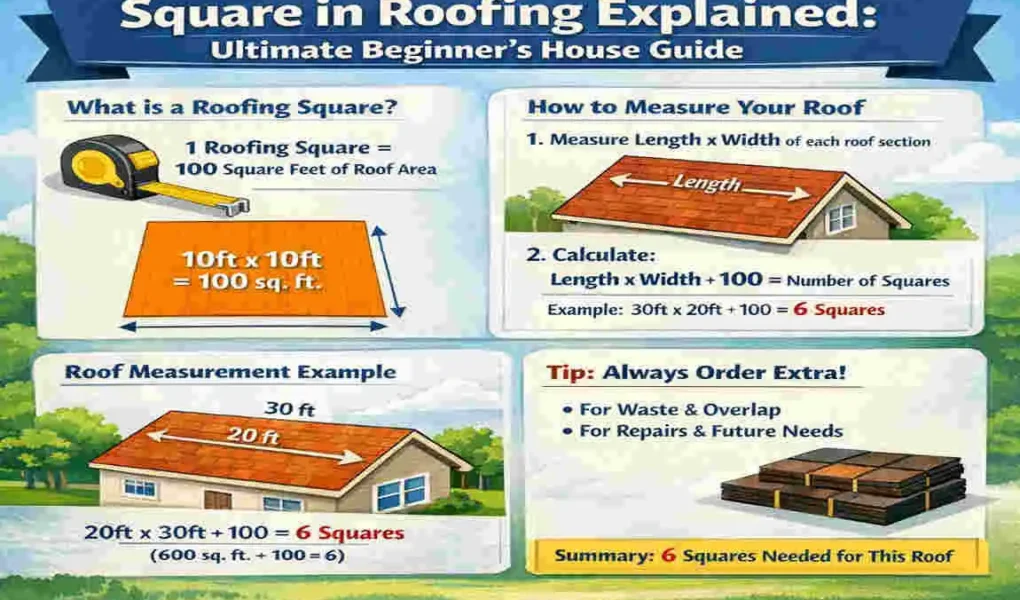
Step : Measure the Length and Width of Each Roof Plane. Think of your roof as a collection of flat, tilted rectangles (called planes). Measure the length of the first rectangular plane (from the edge of the roof to the opposite edge) and the width (from the gutter up to the top ridge).
Step : Multiply to Find the Square Footage. Multiply the length by the width to get the total square footage of that specific plane. Example: 50 feet long x 20 feet wide = 1,000 square feet.
Step : Add Up All the planes. Repeat this process for every single flat section of your roof. Once you have the square footage for every section, add them all together to get your total roof square footage. Example: Front roof plane (1,000 sq ft) + Back roof plane (1,000 sq ft) + Garage roof (500 sq ft) = 2,500 total square feet.
Slope and Pitch Impact
Here is where many beginners make a massive mistake: Your home’s interior floor plan square footage is NOT the same as your roof’s square footage.
Why? Because your roof is angled, and it overhangs the exterior walls.
The angle of your roof is called its pitch or slope. Pitch is calculated by how many inches the roof rises vertically for every 12 inches it runs horizontally. For example, a roof that rises 6 inches for every 12 inches is called a “6/12 pitch.”
Because of this angle, a sloped roof actually has a much larger surface area than the flat floor underneath it. If you only measure the flat footprint of your house (the length and width of your foundation), you must apply a slope multiplier to get the true roofing square count.
Check out this handy calculation table to see how pitch drastically changes the numbers:
Roof Pitch Slope Multiplier Example Area Increase
Flat (0/12) 1.00 1000 sq ft = 10 sq
Low (3/12) 1.03 1030 sq ft = 10.3 sq
Medium (6/12) 1.54 1540 sq ft = 15.4 sq
Steep (12/12) 1.94 1940 sq ft = 19.4 sq
As you can see from the table, if your house has a steep 12/12 pitch, your roof surface area is nearly double the size of your home’s flat footprint! Always remember to multiply your flat measurements by the correct slope multiplier before you divide by 100 to get your squares.
Why Roofing Squares Matter for Your House Project
Now that you are comfortable with the basic math, let’s talk about the real-world application. Why does mastering the roofing square matter for your specific house project?
In short: It gives you control. When you understand how a contractor arrives at their numbers, you protect your wallet and ensure your project runs smoothly without surprise material shortages.
Material Ordering Examples
Everything on the roof is ordered by the square. This doesn’t just apply to the top layer of shingles; it applies to almost every layer of the roofing system. Here is how that plays out when you are placing an order for materials:
Asphalt Shingles: Asphalt shingles are the most common residential roofing material globally. As a general rule, standard three-tab or architectural asphalt shingles are sold in bundles, and it takes exactly 3 bundles to cover one square (100 square feet). Example: If you calculate that your roof is 20 squares, you will multiply that by 3. You need to order 60 bundles of shingles to complete the job.
Underlayment: Before the shingles go down, your roofer must install a protective barrier called underlayment (often synthetic felt or tar paper). Underlayment comes in massive rolls rather than bundles. A standard roll of underlayment typically covers 4 squares (400 square feet). Example: For that same 20-square roof, you would divide 20 by 4, meaning you need to order 5 rolls of underlayment.
Metal Roofing: If you are upgrading to a sleek, durable metal roof, the math changes slightly based on the supplier, but the baseline remains the square. Metal panels are often pre-cut to your roof’s length, but they are priced and invoiced by the square foot. If a metal supplier charges $400 per square, and you have a 20-square roof, you instantly know your baseline material cost is $8,000.
Common Mistakes Beginners Make
When homeowners try to estimate their own roofing squares, they frequently fall into a few common traps. By keeping these in mind, you can ensure your estimates match the professionals’.
Forgetting the Waste Factor, roofs are not perfectly square boxes. Roofers have to cut shingles to fit around chimneys, along the edges of the roof, and down the valleys. The cut-off scraps cannot be reused, meaning they are thrown away. If you order exactly 20 squares for a 20-square roof, you will run out of materials before the job is done! Always add at least a 10% waste factor. For a 20-square roof, order 22 squares worth of material.
Ignoring Valleys, Dormers, and Overhangs. It is easy to measure the walls of your house and stop there. But remember, your roof hangs over your exterior walls by a foot or two (the eaves). Additionally, if your home has dormer windows sticking out of the roof or complex intersecting angles (valleys), these areas require extra material and create more waste. If your roof is complex, bump your waste factor up to 15%.
Using Only Flat Measurements As we discussed in the pitch section, never assume your 2,000-square-foot single-story home means you need exactly 20 squares of roofing. If you forget to multiply by the pitch factor, you will be drastically short on materials.
Roofing Square Costs: Budget for Your Home
Let’s get down to the topic that every homeowner cares about the most: the budget. How much is a roofing square going to cost you in today’s market?
Pricing a roof involves two major components: Materials and Labor. Both of these are calculated per square. By understanding this, you can look at a contractor’s quote and immediately see if they are overcharging you for labor or marking up the materials too heavily.
Per-Square Pricing (2026 Rates)
As we navigate 2026, inflation, supply chain normalization, and local climate factors all play a role in pricing. The cost of a roofing square can vary depending on where you live. For instance, homes in regions facing intense heat or heavy monsoon seasons (like the Punjab climate in Lahore) might require specialized underlayment or higher-grade reflective shingles, which adjust the cost.
Here is a realistic breakdown of average costs per square foot in 2026:
Asphalt Shingles: Asphalt remains the most budget-friendly option.
- Materials: You can expect to pay between $100 and $150 per square for standard architectural shingles.
- Labor: Professional installation generally runs between $250 and $400 per square.
- Total: This brings your total installed cost to roughly $350 to $550 per square.
Metal Roofing: Metal is more expensive upfront, but lasts decades longer.
- Materials: Ranging from $300 to $500 per square, depending on whether you choose corrugated steel or Premium standing seam panels.
- Labor: Metal requires specialized skills, pushing labor to $200 to $300 per square.
- Total: Expect a total of $500 to $800 per square installed.
Tile Roofing: Clay or concrete tiles offer incredible beauty and durability, but are heavy and difficult to install.
- Materials: Premium tiles cost $400 to $600 per square.
- Labor: The intense labor pushes installation costs to $300 to $500 per square.
- Total: A hefty total of $700 to $1,100 per square.
Here is a quick reference table to help you compare:
Material Type Material Cost/Square Labor Cost/Square Total/Square
Asphalt Shingles $100-150 $250-400 $350-550
Metal Roofing $300-500 $200-300 $500-800
Tile $400-600 $300-500 $700-1100
Square House Example
Let’s put these numbers into perspective with a practical example. Imagine you have a small home, a detached garage, or a new room addition that measures exactly 10 square feet (including the pitch multiplier and waste factor).
If you choose a standard asphalt shingle roof, you will multiply those 10 squares by the total average cost per square ($350 to $550). Your total estimated budget for the 10-square project will land right between $3,500 and $5,500.
Pro Tips to Save Money: If you want to keep costs on the lower end of that spectrum, consider buying your materials in bulk if you have multiple properties. Additionally, try to book your roofing project during the “off-season.” Roofers are incredibly busy during the late summer and fall. If you schedule your installation for late winter or early spring, many companies will offer a discounted per-square labor rate to keep their crews working.
Are you curious about the exact numbers for your region? Get direct Lahore quotes from our local experts today!
Expert Tips for Accurate Square Measurements
To round out your knowledge, I want to share some expert tips that seasoned professionals use every single day. We are refining our approach here to ensure you get professional-standard advice.
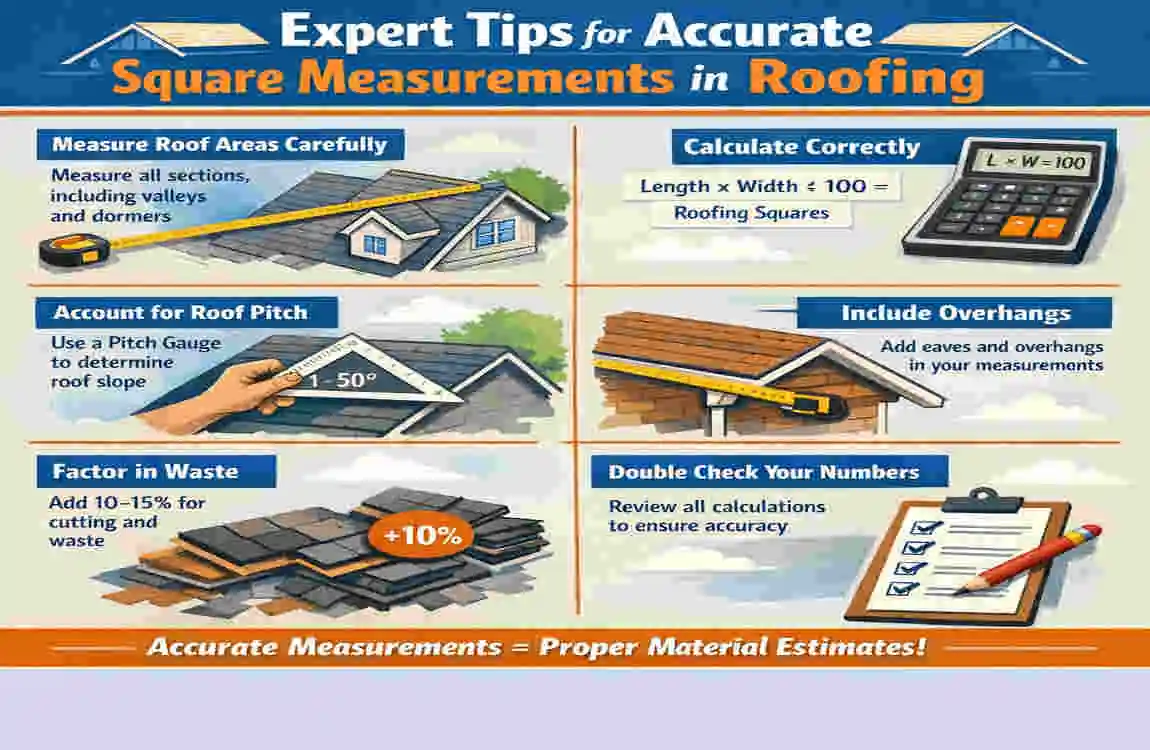
Know When to Hire a Pro for Complex Roofs. If your house is a standard gable design (a simple A-frame), measuring it yourself is a breeze. However, if you have a massive Victorian-style home with multiple intersecting rooflines, steep drops, skylights, and turrets, do not try to do the math yourself. The complex geometry introduces too much room for error. Bring in a professional who uses advanced 3D modeling software to get the exact square count.
Leverage Drone Technology We mentioned it earlier, but it is worth repeating: Drones are revolutionizing the roofing industry. Many top-tier roofing companies now use drones to fly over your property and snap high-resolution photos. Software then converts these images into a hyper-accurate 3D model, spitting out the exact number of squares, pitch angles, and waste factors within minutes. It eliminates human error entirely.
Generous Waste Factor for Peace of Mind. While 10% is the standard waste factor for a basic roof, experienced roofers often bump this up to 15% or even 20% for highly intricate roofs with multiple valleys. It is always better to have one extra bundle of shingles left over (which you can store in your garage for future storm damage repairs) than to force your crew to stop working for three hours because they ran out of materials.
FAQs
Even with all this information, you likely have a few quick questions bouncing around. Let’s answer the most frequently asked questions beginners have about roofing squares.
What is a square in roofing exactly? A roofing square is simply a unit of measurement used by contractors and suppliers that equals exactly 100 square feet of surface area. It does not refer to the shape of the roof, just the mathematical area. It is used to standardize material ordering and labor costs.
How many squares on a 2000 sq ft house? It depends on your roof’s pitch and overhangs! If you have a perfectly flat roof, it would be 20 squares (2000 ÷ 100). However, most homes have sloped roofs. A 2000 sq ft home with a standard 6/12 pitch slope will actually require roughly 30 squares of shingles, plus a 10% waste factor, bringing the total order to about 33 squares.
Does slope affect squares? Yes, absolutely! Slope (or pitch) dictates how steep your roof is. The steeper the roof, the more surface area it has compared to the flat floor plan underneath it. You must multiply your home’s flat square footage by a slope multiplier before calculating your final roofing squares.
Can I mix and match materials by the square? While you can, it is highly unadvised. Your roofing system is designed to work as a cohesive unit. Measuring your underlayment, ice and water shield, and shingles by the same square count ensures all materials cover the exact same surface area properly without weak points.
Are siding and drywall measured in squares, too? Siding is frequently measured and sold in squares (100 square feet), much like roofing! However, drywall and interior flooring are almost exclusively measured in standard square feet because the spaces are smaller and easier to calculate individually.
What happens if I order too many squares? If you order materials yourself and have full bundles of unopened shingles left over, most major roofing supply companies will allow you to return them with a small restocking fee. However, it is always wise to keep at least half a square (one or two bundles) in your shed for future patch jobs.