You’ve parked your camper in the perfect spot, ready to enjoy a peaceful, nature-filled getaway. Then, in the middle of the night, you hear the unsettling sound of scurrying feet. Mice have invaded your camper! Not only do these pesky creatures chew through wires and contaminate your food, but they also pose health risks by spreading diseases. For RV enthusiasts, this scenario is all too common.
Fortunately, there’s good news. You don’t need to rely on harsh chemicals or dangerous traps to keep mice out of your camper. Simple, natural home remedies are affordable, eco-friendly, and safe for pets and children. These solutions are perfect for the RV lifestyle and can be easily implemented with household items.
| Remedy | How to Use | Why It Works |
|---|---|---|
| Peppermint Oil | Soak cotton balls in peppermint oil and place in vents, corners, storage areas, and entry points. Refresh every 1-2 weeks. | Mice hate the strong menthol scent, which overwhelms their senses and drives them away without harm. |
| Dryer Sheets | Stuff unfolded sheets into gaps, cabinets, and under sinks; replace monthly. | The fabric softener chemicals emit odors repulsive to mice while leaving a fresh smell for humans. |
| Irish Spring Soap | Place shavings or whole bars near doors, windows, and potential nests; grate for wider coverage. | Strong deodorant scent repels rodents; popular among RV owners for its availability and persistence. |
| Cayenne Pepper or Hot Sauce | Sprinkle powder around baseboards or mix sauce with water for spray on entry points. | Capsaicin irritates mice noses and mouths, creating an uncomfortable barrier they avoid. |
| Coffee Grounds | Spread used grounds in bowls or bags around the camper’s perimeter and inside cabinets. | Bitter, strong aroma masks food scents and deters mice from nesting or foraging. |
| Steel Wool | Stuff into small holes and gaps around pipes, vents, and doors; secure with caulk if needed. | Mice can’t chew through the sharp fibers, physically blocking entry while being cheap and accessible. |
| Mothballs | Place in sealed pouches in storage compartments (use sparingly due to fumes). | Naphthalene fumes are toxic and off-putting to mice, preventing them from settling in unused areas. |
Why Mice Target Campers
What Attracts Mice to Campers?
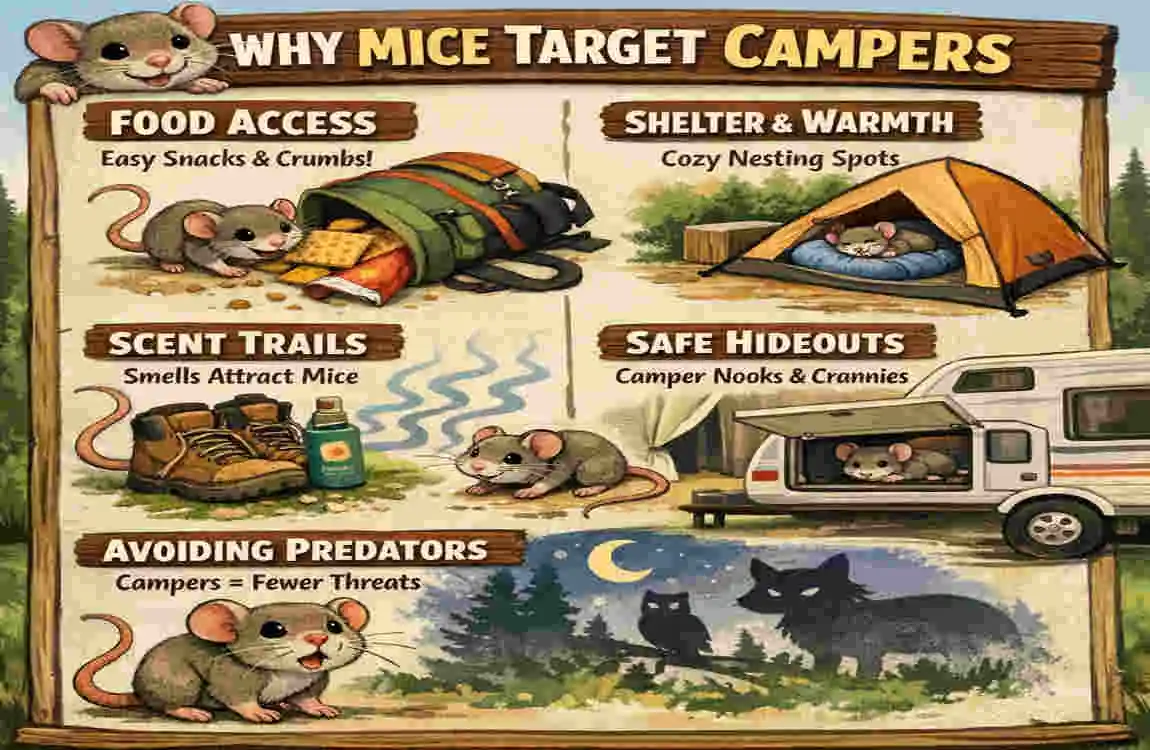
Mice are opportunistic creatures. Campers provide the perfect environment for them to thrive because they offer:
- Food Crumbs: Tiny bits of food left behind act as a feast for these critters.
- Warmth: Campers, especially in colder months, are cozy shelters.
- Entry Points: Mice can squeeze through openings as small as a dime, making it easy for them to enter.
Seasonal Risks
The risk of mice entering your camper increases significantly during fall and winter. As temperatures drop, mice look for warm places to nest, and your stored camper becomes an attractive option. According to RV forums, 30% of unused campers experience rodent infestations during these seasons.
Signs of an Infestation
If you suspect mice in your camper, here are common signs to watch for:
- Droppings in cabinets or on countertops.
- Gnaw marks on wires, furniture, or food packaging.
- Scratching or scurrying sounds, especially at night.
- A musky, unpleasant odor.
Understanding why mice target campers is the first step towards prevention. Now, let’s prepare your camper and explore effective remedies.
Prep Steps Before Applying Remedies
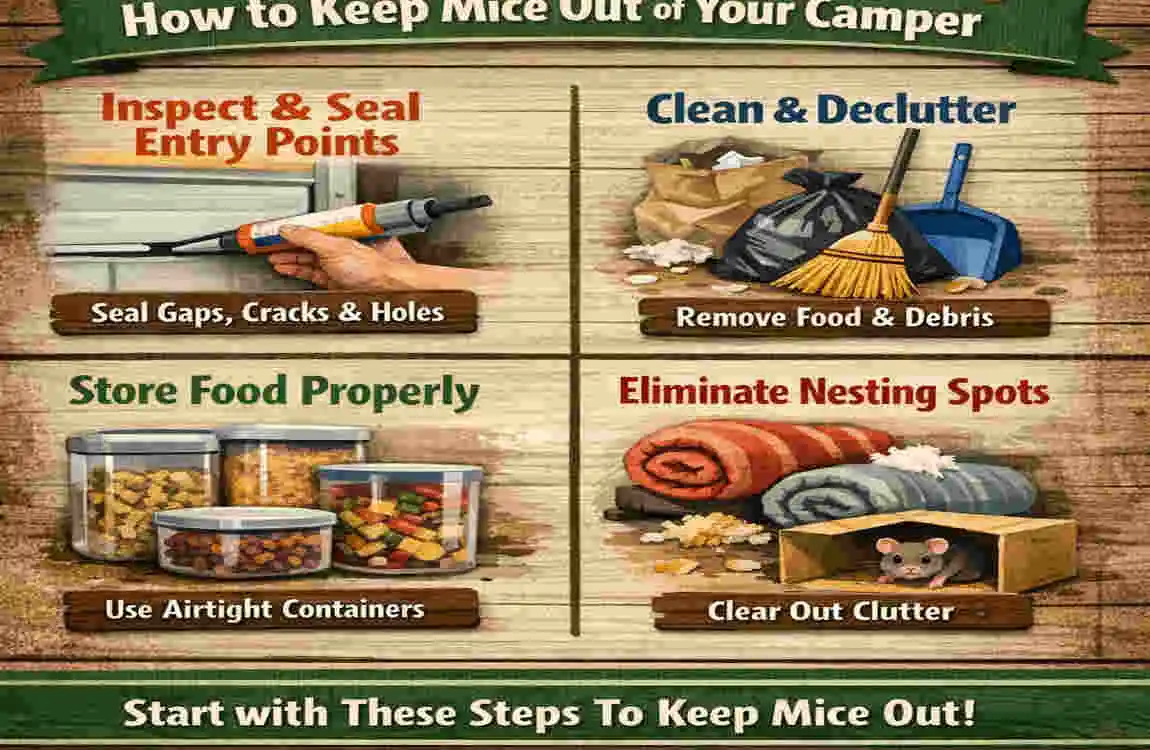
Before using any home remedies, it’s crucial to prepare your camper to maximize their effectiveness. These steps form the foundation for keeping mice out:
Deep Cleaning
Start by thoroughly cleaning your camper:
- Vacuum and wipe surfaces to remove food crumbs.
- Store all food in airtight containers, preferably made of metal or thick plastic.
- Take out the trash regularly and avoid leaving any scraps behind.
Seal Entry Points
Mice are experts at finding their way into campers. To block access:
- Inspect your camper for gaps or holes around vents, doors, and windows.
- Seal holes with steel wool or caulk, which mice cannot chew through.
- Don’t forget to check under the sink and around pipes for hidden openings.
Skirt the RV Base
If your camper is stationary, adding a skirt around the base can prevent mice from accessing the underbelly. This simple barrier is especially helpful during the winter months.
By cleaning, sealing, and skirting your camper, you’re setting the stage for the following remedies to work effectively.
7 Proven Home Remedies to Keep Mice Out of Your Camper
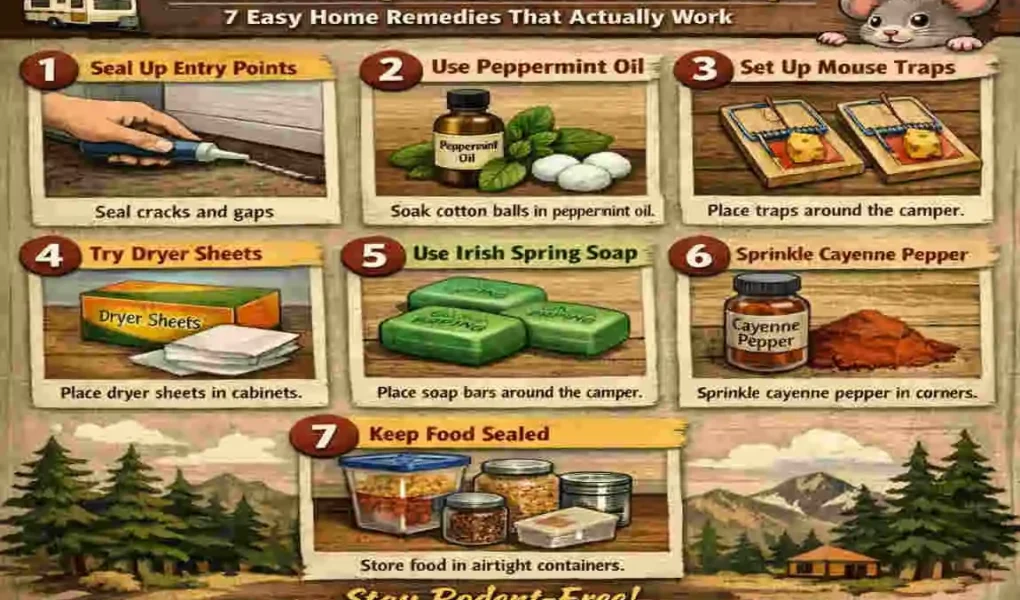
Remedy 1: Peppermint Oil Cotton Balls
Peppermint oil is one of the most popular natural remedies for repelling mice. Its strong, minty scent overwhelms their sensitive noses, driving them away.
How to Use:
- Soak cotton balls with 10-15 drops of peppermint essential oil.
- Place the cotton balls in areas prone to mice, such as cabinets, vents, and the engine bay.
- Refresh the cotton balls weekly to maintain their potency.
DIY Tip: Create a peppermint spray by mixing the oil with water in a spray bottle. Use it to mist surfaces and entry points.
Pros and Cons Table:
Pros Cons
Safe for pets and children. Requires frequent reapplication
Affordable and easy to use , less effective in large spaces
Real users report an 80% success rate with this remedy when applied consistently.
Dryer Sheets Barrier
Dryer sheets, known for their strong fabric scents, can double as a mouse deterrent. Mice dislike the synthetic aroma, making it a cheap and easy solution.
How to Use:
- Stuff dryer sheets (e.g., Bounce) into gaps, under cushions, and around wiring.
- Replace them monthly to keep the scent fresh.
Pro Tip: Combine dryer sheets with peppermint oil for a powerful one-two punch against mice.
Many RV owners have reported zero invasions after using this method, making it a reliable option for camper protection.
Irish Spring Soap Bars
Irish Spring soap is an old-school trick that remains effective today. Its pungent smell keeps mice at bay while doubling as a natural air freshener.
How to Use:
- Unwrap the soap bars and place them in dishes near entry points.
- For wider coverage, shave the soap into small gratings and scatter them around hotspots.
Why It Works: Mice are deterred by the strong, soapy scent, making it a popular choice for stored campers.
Cayenne Pepper & Spices
Spicy deterrents like cayenne pepper, cloves, and cinnamon irritate mice’s noses, keeping them away.
How to Use:
- Mix cayenne pepper, cloves, and cinnamon into small pouches or sprinkle the powder directly in problem areas.
- Refresh after rain or if the scent fades.
Bonus Tip: Star anise, a fragrant spice, can enhance this remedy’s effectiveness.
This remedy is perfect for those who prefer using natural kitchen staples without spending extra money.
Mothballs Alternative with Cloves
Instead of toxic mothballs, use cloves as a safer, natural alternative.
How to Use:
- Fill small jars with whole cloves and poke holes in the lids.
- Place these jars strategically around your camper.
Cloves mimic the scent profile of commercial repellents, making them a popular choice among RV owners.
Ammonia-Soaked Rags
Ammonia mimics the smell of predator urine, which naturally scares mice away.
How to Use:
- Soak rags in household ammonia.
- Place them in bowls outdoors or under your RV.
- Avoid using ammonia indoors without proper ventilation.
Caution: Always use gloves when handling ammonia, and keep it away from food and areas accessible to children and pets.
Lights & Motion Detectors
Mice are nocturnal and fear well-lit areas. Installing cheap solar lights and motion detectors around your camper can work wonders.
How to Use:
- Place solar lights under your RV and near entry points.
- Pair them with ultrasonic plug-in devices for added protection.
Boost Tip: Wipe down surfaces with white vinegar to erase scent trails left by mice.
Maintenance & Long-Term Tips
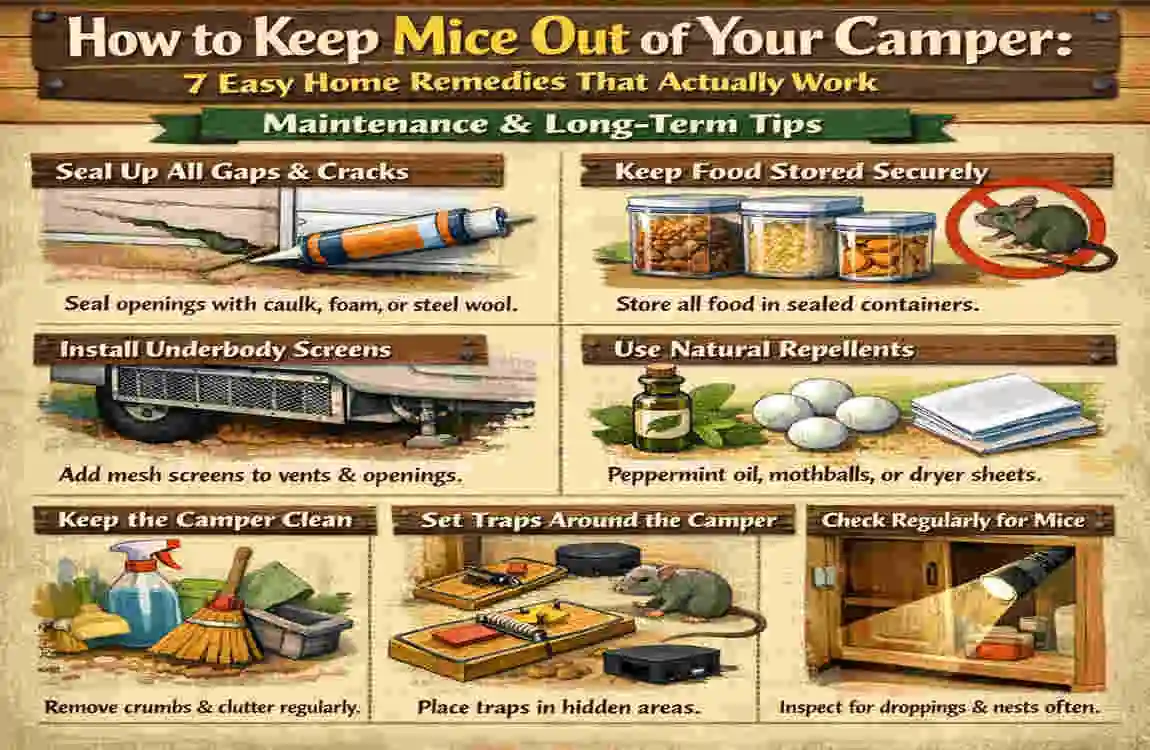
To keep your camper rodent-free in the long run, follow these tips:
- Inspect Monthly: Check for signs of mice and rotate remedies to prevent adaptation.
- Proper Storage: Elevate your camper and use skirting to block access.
- Combine Remedies: Use multiple methods for maximum effectiveness.
Comparison Table:
Remedy Cost Ease (1-5)Longevity
Peppermint Oil $5 5 1 week
Dryer Sheets $1 5 1 month
Irish Spring Soap $2 4 2 months
Cayenne & Spices $3 3 2 weeks
Cloves $4 4 1 month
FAQ: How to Keep Mice Out of Camper Home Remedies
Q: What are some natural ways to keep mice out of my camper?
You can use peppermint oil-soaked cotton balls, dryer sheets, Irish Spring soap bars, cayenne pepper and spices, cloves as a mothball alternative, ammonia-soaked rags, and even lights or motion detectors. These remedies rely on strong scents or deterrents that mice dislike and are safe for your camper environment .
Q: How do I apply peppermint oil to repel mice in my camper?
Soak cotton balls with 10-15 drops of peppermint essential oil and place them in cabinets, vents, and other entry points. Refresh weekly to keep the scent strong. You can also make a spray by mixing peppermint oil with water for easy application .
Q: Are dryer sheets really effective against mice?
Yes! Dryer sheets have strong fabric scents that mice find unpleasant. Stuff them into gaps, under cushions, or near wiring to discourage mice from nesting. Replace them monthly for best results .
Q: How important is sealing entry points in preventing mice?
Sealing gaps and holes is crucial because mice can squeeze through tiny openings. Use steel wool and caulk to block vents, doors, and other potential entryways. This step greatly enhances the effectiveness of home remedies .
Q: Can I use spices like cayenne pepper to keep mice away?
Absolutely! Sprinkling cayenne pepper, cloves, cinnamon, or star anise near suspected entry points irritates mice’s noses and keeps them at bay. Refresh the spices regularly, especially after rain or cleaning .