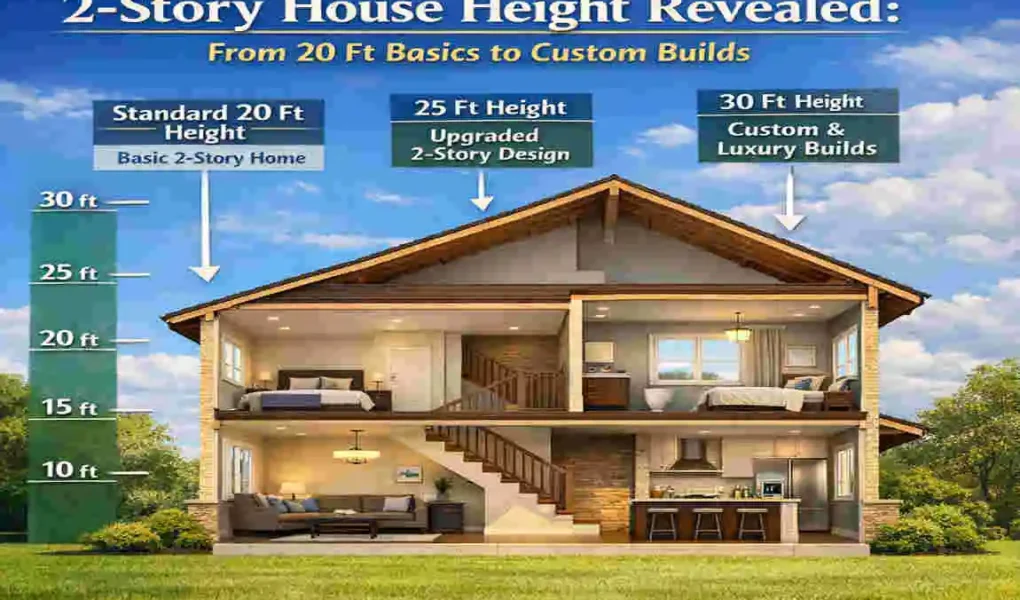
Ever wondered exactly how tall a 2-story house is? Whether you’re planning to build, buy, or just curious about home design, understanding the height of a two-story home is more important than you might think. The height affects everything from zoning approvals and neighborhood aesthetics to resale value and even your home’s energy efficiency.
In the U.S., the average two-story house stands roughly 20 to 22 feet tall, but this can vary widely depending on ceiling heights, roof styles, and custom architectural features.
How Tall Is a 2 Story House? The 20-Foot Standard
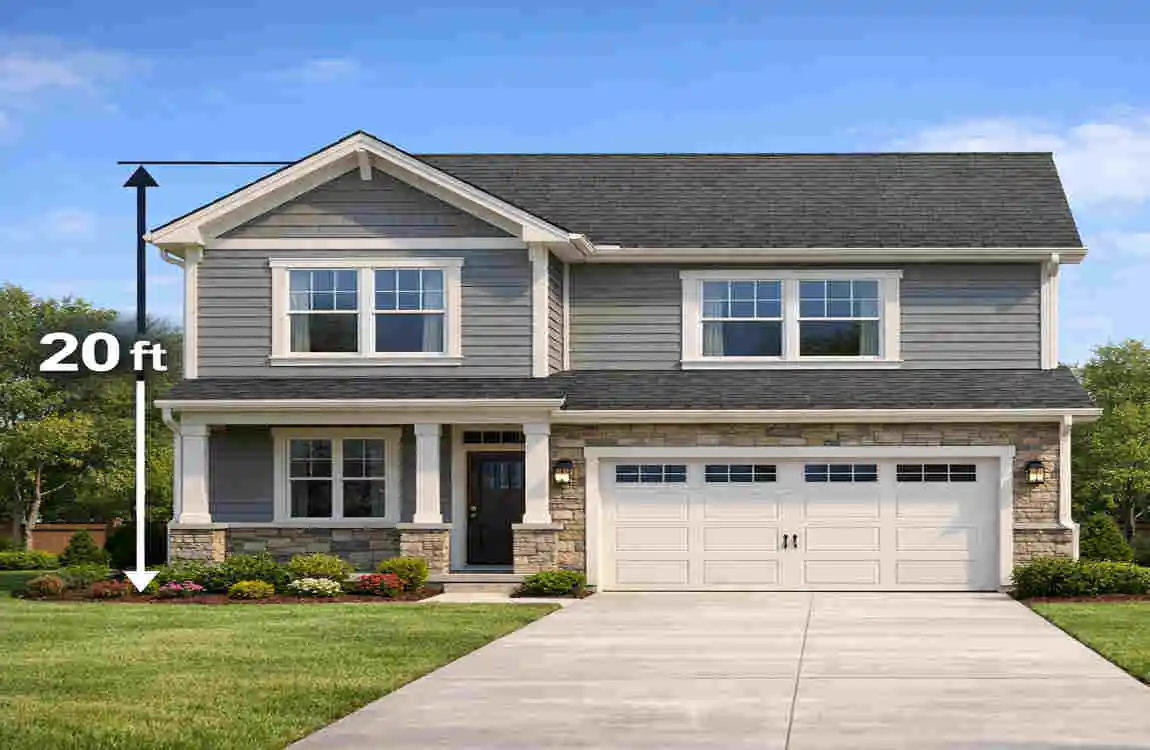
When people ask, “How tall is a 2-story house?” the quick answer is usually between 20 and 23 feet from the foundation to the roof peak. This range covers most typical suburban homes with standard ceiling heights and roof designs.
Breaking Down the Height Components
To understand this better, let’s look at what makes up that total height:
- First Floor Ceiling Height: Usually about 8 feet. This is the vertical space inside your living room, kitchen, or bedroom on the ground floor.
- Floor Joists and Insulation: Roughly 1 foot thick. This is the structural layer between the first and second floors, including the subfloor and insulation.
- Second Floor Ceiling Height: Also around 8 to 9 feet, matching the first floor for consistency.
- Roof Truss and Pitch: Adds about 3 to 4 feet, depending on the roof slope.
Here’s a simple table to visualize this:
Component Height (ft)Notes
First Floor Ceiling 8-9 Standard stud height
Inter-floor Assembly 1 Joists + subfloor
Second Floor Ceiling 8-9 Matches first floor
Roof (4/12 pitch) 3-4 Adds peak height
Total 20-23 Excludes foundation
This means a typical two-story house will stand about 20 to 23 feet tall, not counting the foundation depth below ground level.
Why 20 Feet Fits Most Zoning Rules
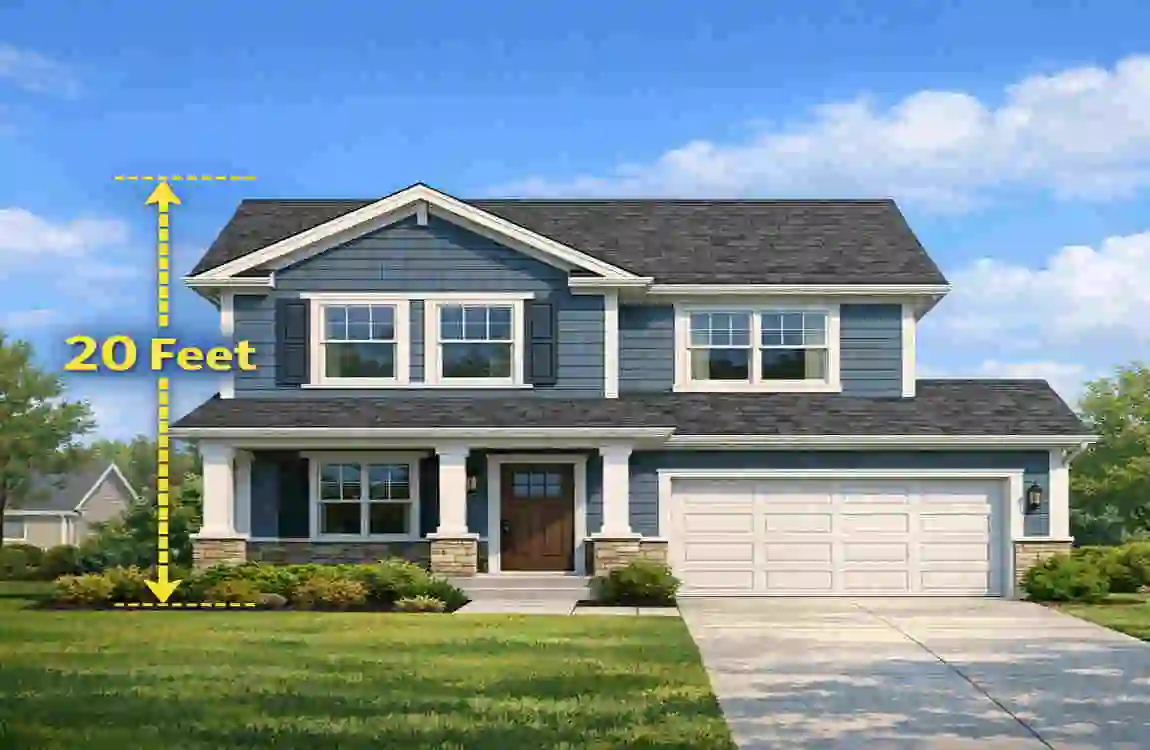
Many local zoning laws set height limits around 20 feet for residential buildings, especially in suburban neighborhoods. This standard height allows builders to maximize living space without running into legal issues.
Example: Typical Suburban Blueprint
Imagine a classic suburban home with 8-foot ceilings on both floors and a modest roof pitch. The total height will hover around 21 feet, making it comfortable, efficient, and compliant with most neighborhood rules.
Factors Affecting 2 Story House Height Beyond Basics
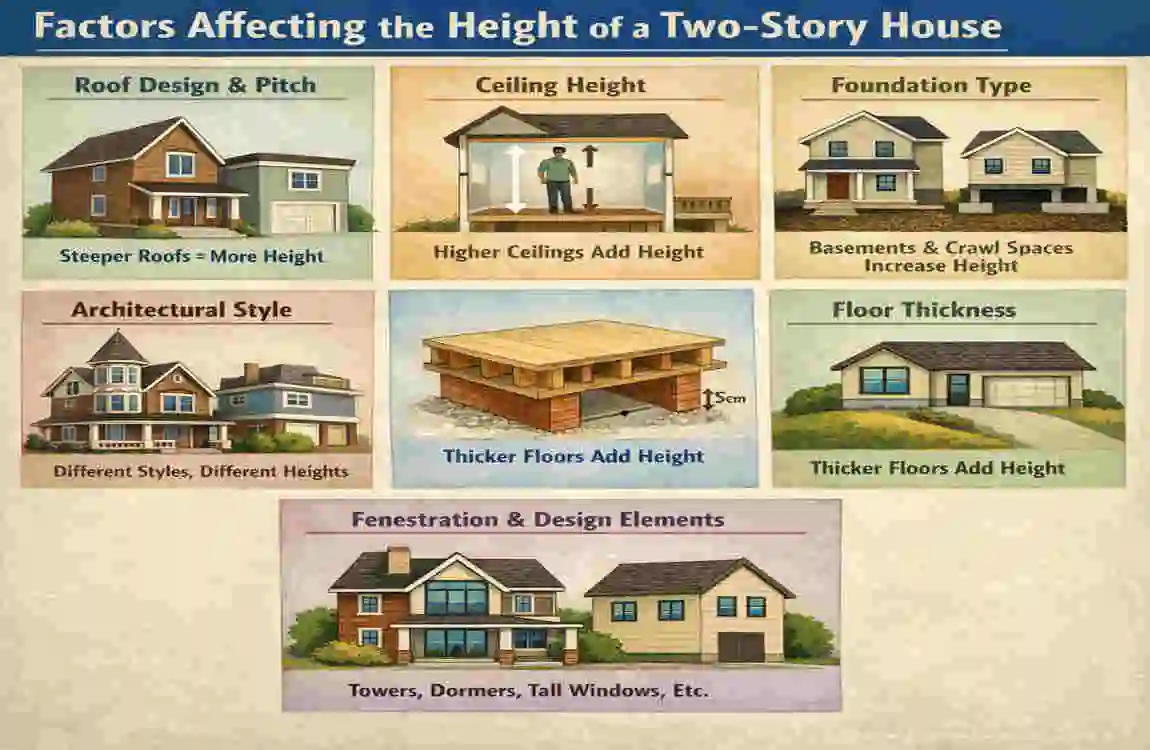
While the 20-foot standard is a great starting point, many factors can push a two-story house taller or shorter. Let’s explore what influences these variations.
Ceiling Height Impact
One of the biggest factors is ceiling height. Higher ceilings create a more spacious feel but add to the overall height.
Ceiling Type Height Per Floor (ft)Total Height (ft)
Standard 8 20
High 10 24
Vaulted 8-12 25+
- High Ceilings (10 ft): Add 2-4 ft to the total height, making the house feel grander.
- Vaulted Ceilings: These can reach 12 to 14 feet on the second floor, pushing total height beyond 25 feet.
Roof Types and Pitch
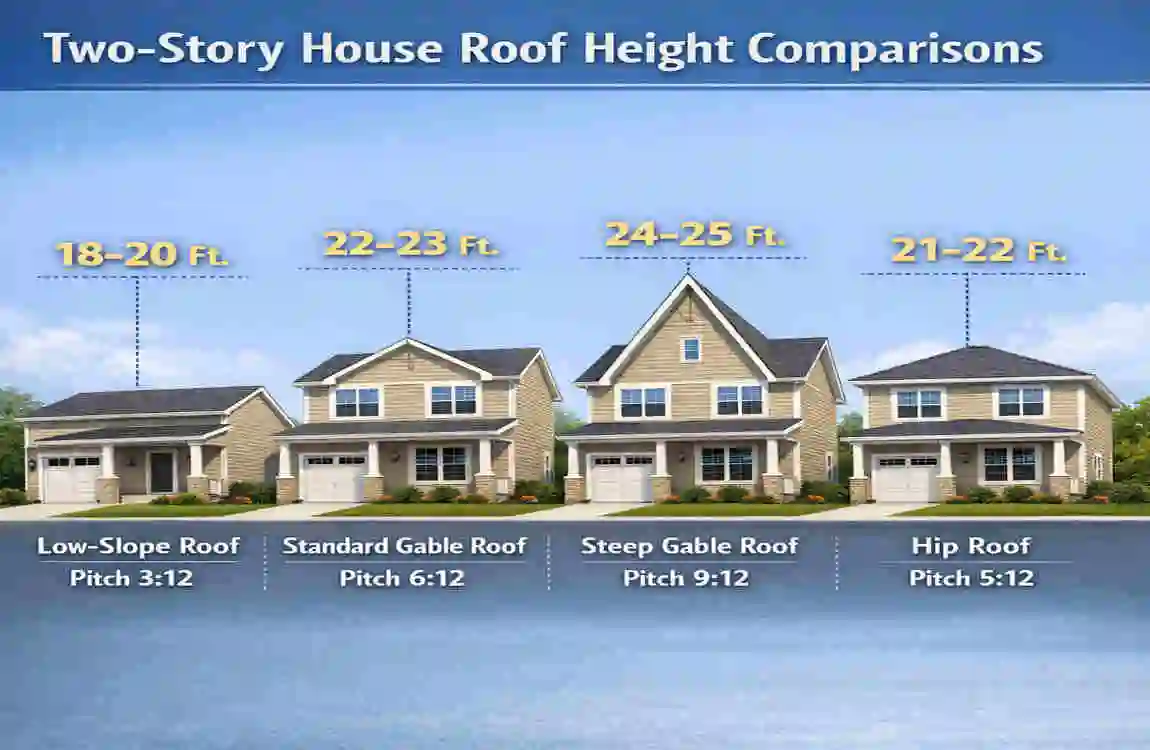
The roof style and slope also play a big role. Steeper roofs add more height, while flat roofs keep it low.
- Flat Roofs: Minimal height addition, often 1-2 feet, but less common in snowy regions.
- Gable Roofs: Typically add about 3 feet.
- Hip Roofs: Similar height to gable but offer more stability.
- Steep Roofs (12/12 pitch): Can add up to 6 feet or more.
Other Influencing Factors
-
- Foundation Type: Slab foundations add almost no height.
- Crawlspace or basement foundations add 1-2 feet above ground level.
- Regional Building Codes:
- Areas with heavy snow loads require steeper roofs, increasing height.
- Custom Features:
- Skylights, dormers, and chimneys can add to the overall height.
How Roof Pitch Changes Your 2 Story House Height
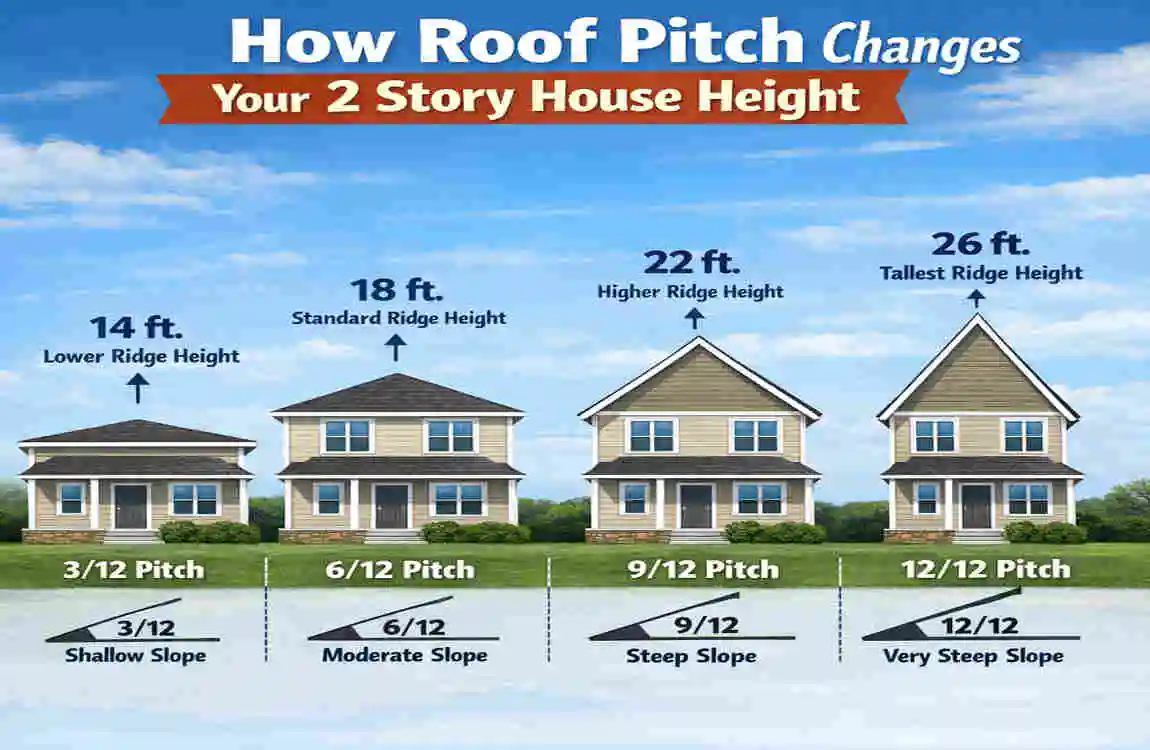
Understanding roof pitch is key to grasping how it affects your home’s height.
What Is Roof Pitch?
Roof pitch is the steepness of the roof, expressed as a ratio of vertical rise to horizontal run. For example, a 4/12 pitch means the roof rises 4 inches for every 12 inches it runs horizontally.
How Pitch Adds Height
The steeper the pitch, the taller the roof peak, which adds to the total house height.
Roof Type: Typical Pitch: Height Added (ft)
Flat 0-2/12 1-2
Gable 4/12 3
Hip 6/12 4-5
Steep 12/12 6+
Roof Styles and Their Height Effects
- Gable Roof: The classic triangle shape adds moderate height.
- Hip Roof: Slopes on all sides, slightly taller but more stable.
- Flat Roof: Minimal height, popular in modern designs but less practical in snowy climates.
Visualizing Roof Pitch
Imagine a right triangle with the base as the horizontal run and the height as the vertical rise. The steeper the triangle, the taller your roof peak.
Custom 2 Story House Heights: 25 Ft and Beyond
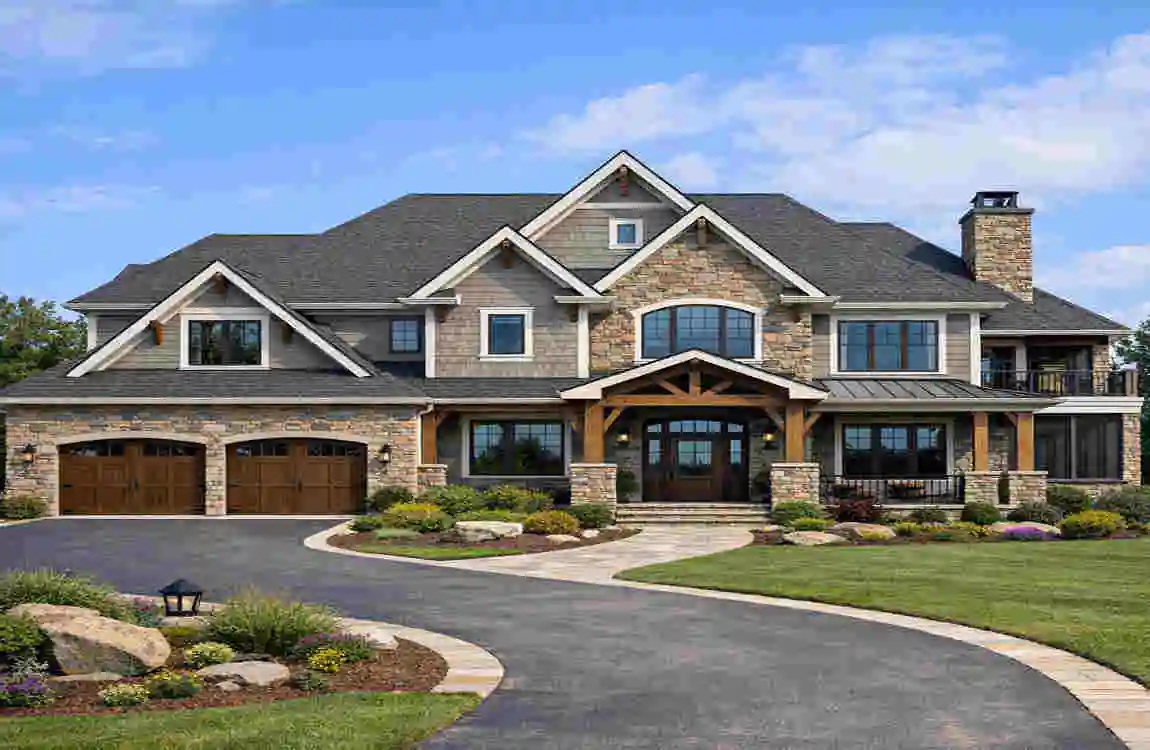
Luxury homes and custom builds often break the 20-25 foot mold, reaching heights of 26 to 30 feet or more.
Why Go Taller?
- Luxury Appeal: Higher ceilings, grand foyers, and elaborate rooflines create a sense of grandeur.
- Architectural Style: Modern estates, mansions, and custom designs often feature vaulted ceilings and steep roofs.
- Additional Floors: Some custom homes add partial third floors or mezzanines.
Celebrity and Luxury Trends
Many celebrity mansions and upscale homes push heights to 28 feet or more, combining high ceilings with dramatic roof pitches and custom features.
Modular and Prefab Homes
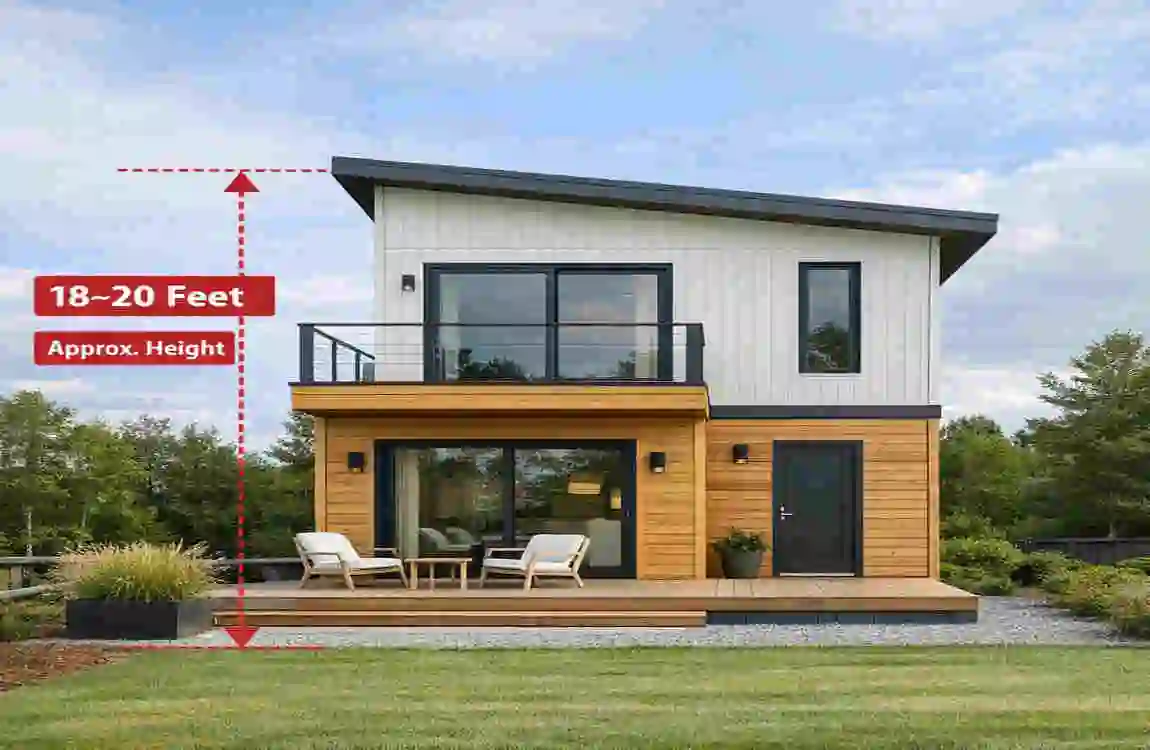
Interestingly, modular and prefab homes often adhere to strict height limits, typically around 22 feet, to simplify transport and installation.
Zoning and Permits: What You Need to Know
Height restrictions vary widely by location. Some areas limit height to the midpoint of the roof, while others have strict caps.
Tips to Navigate Height Limits:
- Use monopitch roofs (single slope) to save height.
- Raise the foundation slightly (+2 feet) to gain interior space without increasing roof height.
- Design sloped or vaulted ceilings that fit under height limits.
How to Measure Your 2 Story House Height Accurately
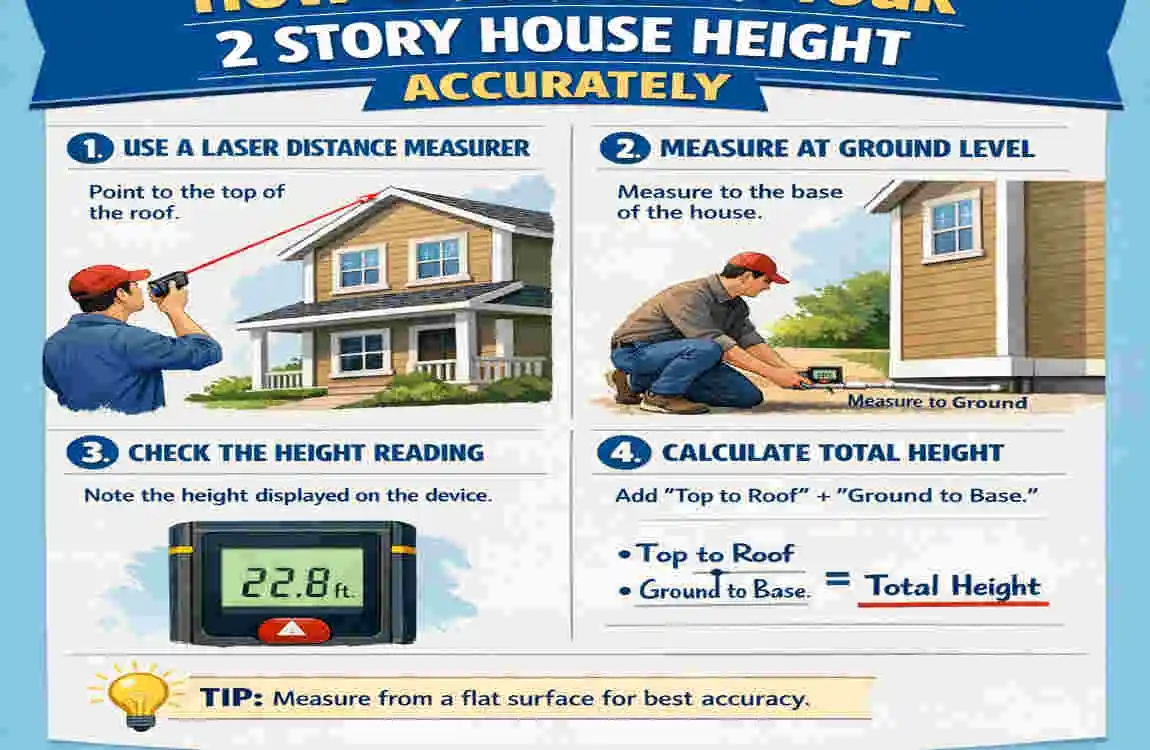
If you want to know your house’s exact height, here’s a simple guide.
Step-by-Step Measurement
- Measure from foundation to eave: The eave is where the roof meets the walls.
- Measure from the eave to the roof peak: this is the roof height.
- Add both measurements to get the total exterior height.
Tools You Can Use
- Laser measurer: Accurate and easy for wall heights.
- Drone: Great for measuring roof peaks safely.
- Tape measure: useful for smaller homes or roofs that are accessible.
Common Mistakes to Avoid
- Ignoring roof overhangs, which don’t count toward height.
- Measuring only interior ceiling heights, which exclude structural layers.
- Forgetting the foundation height if above ground.
Pro Tip
For new builds or legal purposes, hire a professional surveyor. It usually costs around $500 but ensures precise measurements for permits and resale.
2 Story vs. Other Home Types Height Comparison
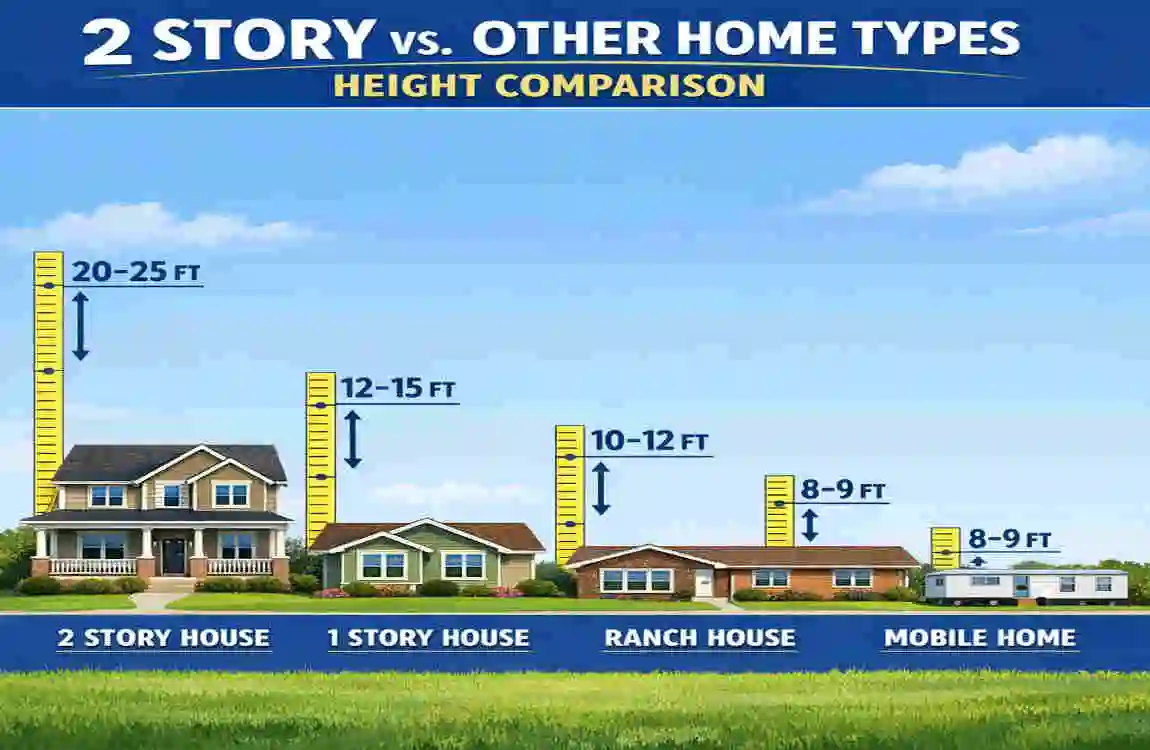
To put things in perspective, here’s how two-story homes stack up against other common house types:
Home Type Average Height (ft)Key Difference
2-Story 20-25 Balanced footprint and height
1-Story Ranch 12-15 Requires wider lot
3-Story Townhome 30-35 Maximizes urban density
Custom Modern 25-32 Vaulted roofs and tall walls
Why This Matters for Buyers and Sellers
Two-story homes offer a balanced footprint, saving lot space while providing ample living area. This often translates to a +10% resale value compared to sprawling ranches or cramped townhomes.
How Tall Is a 2 Story House? FAQs
How tall is a 2 story house on average?
A 2 story house is usually about 20 to 25 feet tall, and many sources place the average around 22 feet. Some homes can be a little shorter or taller depending on the design.
Can a 2 story house be taller than 25 feet?
Yes, some two-story homes can reach up to 30 feet tall. This usually depends on the roof design, ceiling height, and overall style of the house.
Can a 2 story house be shorter than 20 feet?
Yes, some two-story houses can be as low as 16 to 18 feet tall. That usually happens when the ceilings are lower or the roofline is more compact.
What affects the height of a 2 story house?
The height can vary based on design, location, building materials, ceiling height, and roof pitch. In simple terms, the house may look taller or shorter depending on how each part is built.
How tall is each story in a 2 story house?
A typical two-story home often has 8 to 10 feet per story, with the roof adding extra height on top of that. That is why the full house height is usually higher than just the two floor levels combined.
Is a 2 story house always the same height?
No, it is not a fixed height. While many two-story houses fall in the 20 to 25 feet range, the actual height can change quite a bit from one home to another.
| Type | Height Range (ft) | Key Factors |
|---|---|---|
| Standard | 20–22 | 8–10 ft per floor + low roof |
| High Ceilings | 24–26 | 10–12 ft floors + moderate roof |
| Steep/Custom Roof | 26–30+ | Adds 2–6 ft; raised foundation +1–3 ft |