Spotting rolly pollies scurrying in your bathroom can be unsettling. You might instantly wonder if your home is dirty or if you have a massive pest problem. If you are asking yourself, “why are there rolly pollies in my bathroom cleaning tips start with understanding their absolute love for damp, humid spots.
Let us clear the air right away: rolly pollies are completely harmless. These fascinating little critters, also known as pill bugs, roly-polies, or woodlice, are not actually insects at all. They are terrestrial crustaceans. That means they are more closely related to crabs, lobsters, and shrimp than they are to ants or spiders! Because of this unique biology, they have a special trick to protect themselves—they roll up into tight, perfect little spheres when they feel threatened.
While they might be cute outside in the garden, a woodlice infestation inside your clean house is a different story. Nobody wants to share their morning shower with a family of crustaceans.
The Root Causes: Why Rolly Pollies Invade Bathrooms
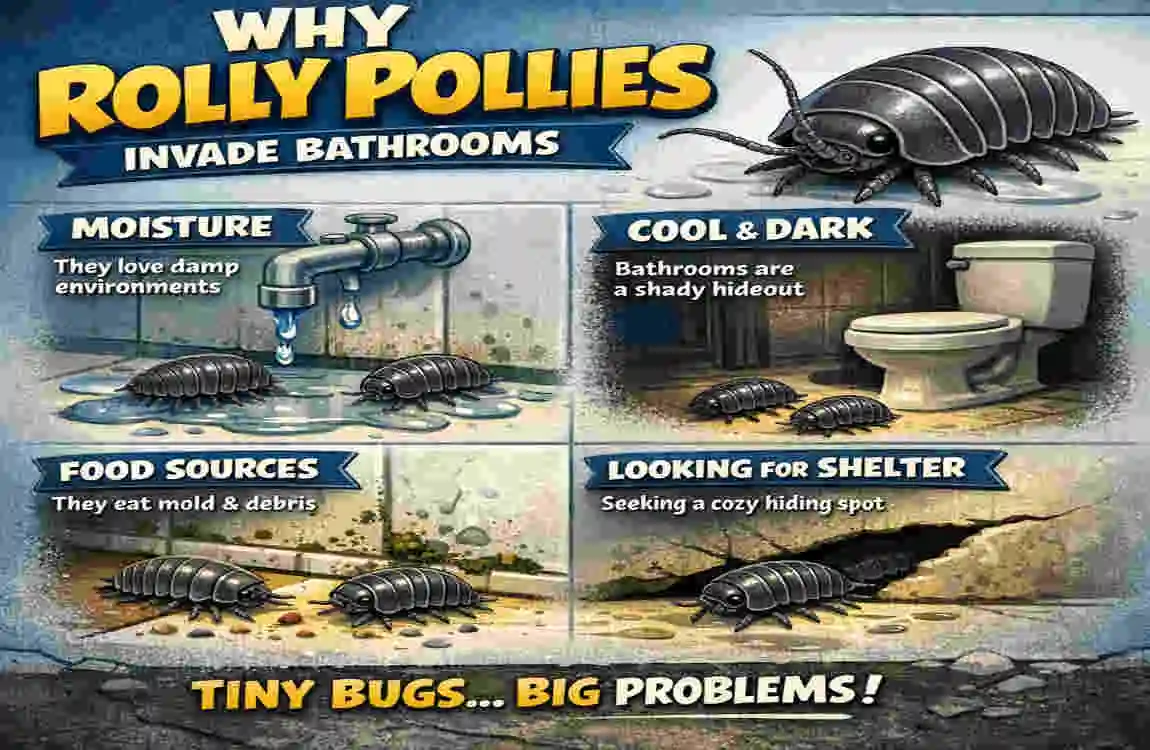
To truly banish these tiny invaders, you first have to understand what makes your bathroom so incredibly appealing to them. As we mentioned earlier, rolly pollies are crustaceans. Because of this, they do not breathe like normal bugs.
Instead, they breathe through tiny, gill-like structures located on their undersides. For these gills to function properly, they require a constant environment of at least 70% humidity. If they dry out, they cannot breathe. Out in nature, you will find them living happily under rotting logs, buried in damp soil, or hiding beneath piles of wet autumn leaves.
Unfortunately for you, a warm, recently used bathroom perfectly mimics their favorite outdoor habitats.
Top Causes of Bathroom Infestations
Let us break down the specific reasons why you are suddenly dealing with damp bathroom bugs.
Excess Moisture and High Humidity This is the number one culprit. Think about your daily routine. Steamy, hot showers, dripping faucets, and damp bath mats all contribute to a incredibly humid environment. If your bathroom suffers from poor ventilation—perhaps your exhaust fan is broken or you do not have a window to open—moisture can get trapped. To a rolly polly, a steamy bathroom feels like a luxurious, tropical paradise.
Hidden Entry Points Rolly pollies do not magically appear in your bathroom; they have to travel from the outside world. They are notorious ground-dwellers. If your bathroom is on the ground floor or in a basement, they can easily wander inside. They look for microscopic cracks in your home’s foundation, tiny gaps under exterior doors, or unsealed vents. If you have garden mulch or damp soil resting right up against the exterior wall of your bathroom, you are practically rolling out a red carpet for them to enter.
Abundant Food Sources You might look around your sparkling bathroom and think, “There is nothing for a bug to eat in here!” But a rolly polly’s diet is very different from ours. They are detritivores, meaning they feed on decaying organic matter. Inside a bathroom, they can feast on hidden mold spores, mildew, decaying wet leaves accidentally tracked in on your shoes, and even organic buildup like dead skin cells and soap scum caught around your baseboards.
Changing Seasonal Factors Sometimes, an indoor invasion is driven purely by the weather outside. During periods of extremely heavy, persistent rain, their outdoor burrows can become completely flooded. To avoid drowning, they migrate to higher, safer ground—which often leads them straight into your home. Conversely, during periods of extreme drought, they might venture indoors desperately searching for the moisture their gills need to survive.
Breaking Down the Causes
To help you visualize the problem, here is a simple breakdown of what attracts these pests and the quick fixes you can anticipate.
CauseWhy It Attracts Rolly PolliesQuick Fix Preview
High Indoor Humidity Their gills require constant moisture to breathe. Run a dehumidifier to reduce humidity.
Leaky Plumbing Fixtures Standing water pools create drinking and resting spots. Repair dripping pipes and faucets immediately.
Poor Exterior Sealing Cracks provide easy access from the outdoor soil. Caulk all gaps and weatherstrip doors.
Decaying Matter : Soap scum and hidden mildew provide an endless buffet—deep-clean corners and under cabinets.
Dispelling the Myths: Are They Dangerous?
When dealing with a rolly polly infestation, it is very easy to panic. However, you can take a deep breath. Let us bust some common myths right now.
Rolly pollies do not bite humans or pets. They do not sting, and they do not carry or transmit harmful diseases. They will not chew through the structural wood of your house like termites, and they will not infest your pantry dry goods like weevils.
However, ignoring them is a mistake. Their presence acts as an environmental alarm bell. If your bathroom is damp enough to keep a crustacean alive, it is damp enough to attract far worse invaders. A high-moisture environment is a breeding ground for toxic black mold, structural rot, and destructive pests like silverfish, centipedes, and cockroaches. Treat the pill bugs as a helpful warning sign that your bathroom’s humidity needs immediate attention.
Crucial Signs of a Rolly Pollie Infestation
Because they are small and naturally shy, you might not notice a massive invasion right away. They prefer to stay out of the harsh light and hide in the shadows. To truly gauge if you have pill bugs in bathroom spaces, you need to play detective.
Keep a close eye out for these five unmistakable signs:
- Frequent Nighttime Sightings: Rolly pollies are primarily nocturnal creatures. If you flip on the bathroom light at 2:00 AM for a glass of water and see tiny gray specks scurrying toward the baseboards, you likely have a hidden population.
- Curled-Up Gray Balls: This is their signature move. If they feel vibrations from your footsteps, they will roll into a tight, armored ball. You will often find these little gray spheres lying in the corners of your room, next to the bathtub, or resting on wet floor tiles.
- Musty, Mildew Odors: While the bugs themselves do not smell, the environment they require certainly does. If you notice a sudden, lingering smell of heavy humidity, wet earth, or mold, it means your bathroom has reached the perfect moisture level for these pests.
- Congregation Near Water Sources: You will rarely find them wandering in the dry center of the room. Look closely around the rim of your shower drain, behind the base of the toilet, or under the sink vanity where condensation drips down the pipes.
- Dead Pill Bugs: Ironically, if they wander too far from the moisture source in your bathroom, they will quickly dry out and die. Finding small piles of unrolled, dead pill bugs along your baseboards is a clear indicator that they are actively trying to nest in your home.
Prevention Basics: Stopping Them Before They Enter
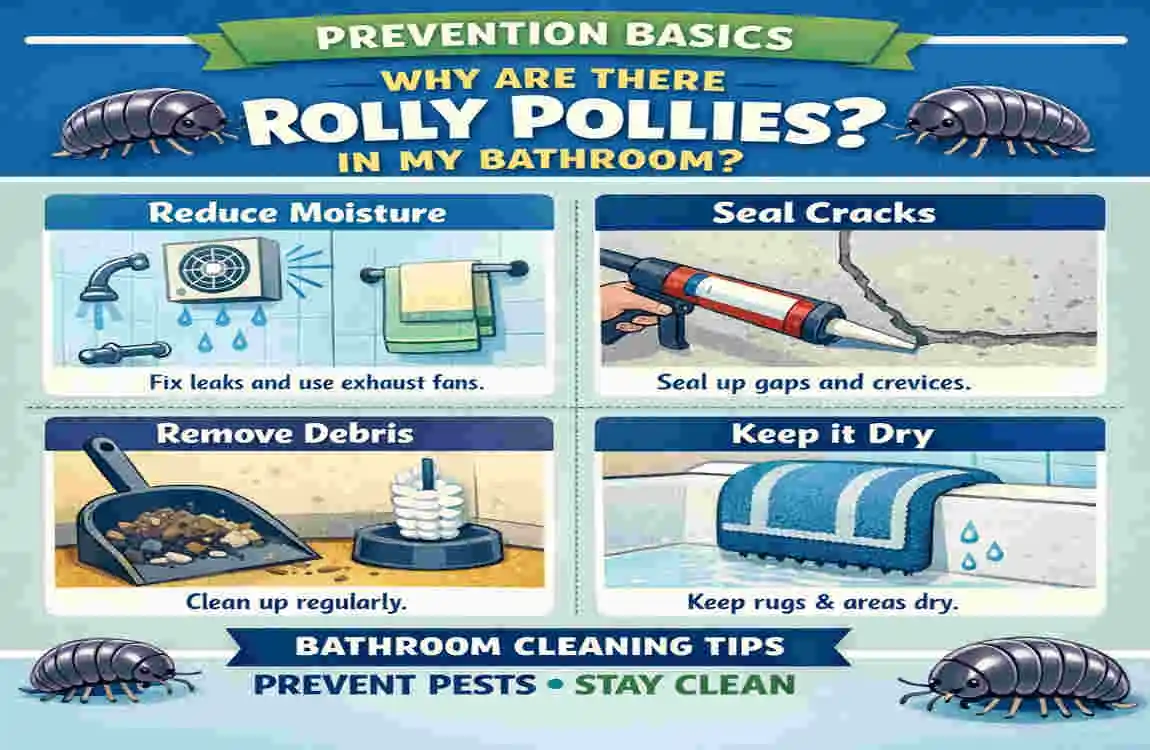
Before we dive into the intense cleaning strategies, we must address the root of the problem. If you wipe up the bugs you see without fixing the environment, a new batch will march right back in tomorrow. Proper pest control for humidity is all about making your home as inhospitable to crustaceans as possible.
Reduce the Humidity Levels
The single most effective way to prevent pill bugs is to dry out the air. Your bathroom should not feel like a sauna hours after you shower.
- Use the Exhaust Fan: Make it a strict household rule to run the bathroom exhaust fan during every shower and leave it running for at least 20 to 30 minutes after you step out. This pulls the heavy, wet air out of the room.
- Invest in a Dehumidifier: If you lack an exhaust fan, a small, portable dehumidifier is a game-changer. Aim to keep the relative humidity in your bathroom below 50%.
- Air it Out: Whenever the weather permits, open a bathroom window to encourage natural cross-ventilation.
Outdoor Landscaping and Maintenance
Remember, these pests originate from the outside. You have to create a dry, unappealing barrier around the exterior of your bathroom walls.
- Clear the Perimeter: Rake away all dead leaves, dense wood mulch, and heavy groundcover plants, keeping them at least 12 to 18 inches away from your home’s foundation. Replace organic mulch with gravel near the siding.
- Fix Drainage Issues: Inspect your gutters and downspouts. Ensure they are actively channeling rainwater far away from the base of your house. Water pooling against the concrete foundation is an open invitation for pests.
Seal the Home Tight
To successfully seal entry points bathroom intruders use, you need to block their tiny highways.
- Caulking: Walk around the exterior of your bathroom and look for any cracks in the brick, stucco, or concrete. Fill these immediately with a high-quality, weather-resistant silicone caulk.
- Weatherstripping: Check the door leading from the outside (or the basement) into your living space. If you can see light peeking under the door, a pill bug can fit through it. Install thick weatherstripping or a sturdy door sweep.
Your Monthly Routine Check
Make prevention a habit! Use this simple step-by-step checklist once a month:
- Inspect the plumbing: Open the cabinet under your sink and check the P-trap and supply lines for any slow, hidden drips.
- Dry daily: Pick up wet bathmats from the floor and hang them over a rod to dry completely. Wipe down heavy condensation on windows and mirrors.
- Check the perimeter: Walk around the exterior and ensure no new leaves or debris have accumulated against your exterior walls.
Why Are There Rolly Pollies in My Bathroom? Cleaning Tips That Work
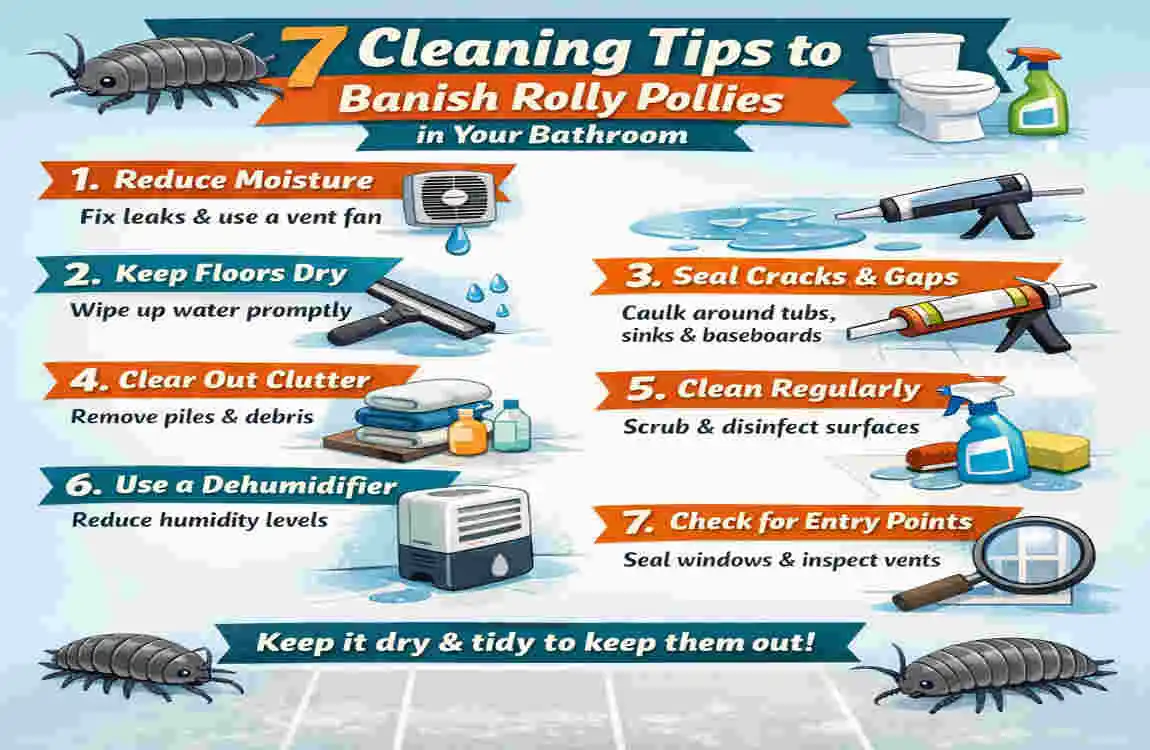
Now that we have secured the perimeter and tackled the humidity, it is time for the main event. If you want to get rid of rolly pollies quickly, safely, and permanently, you need a targeted cleaning routine.
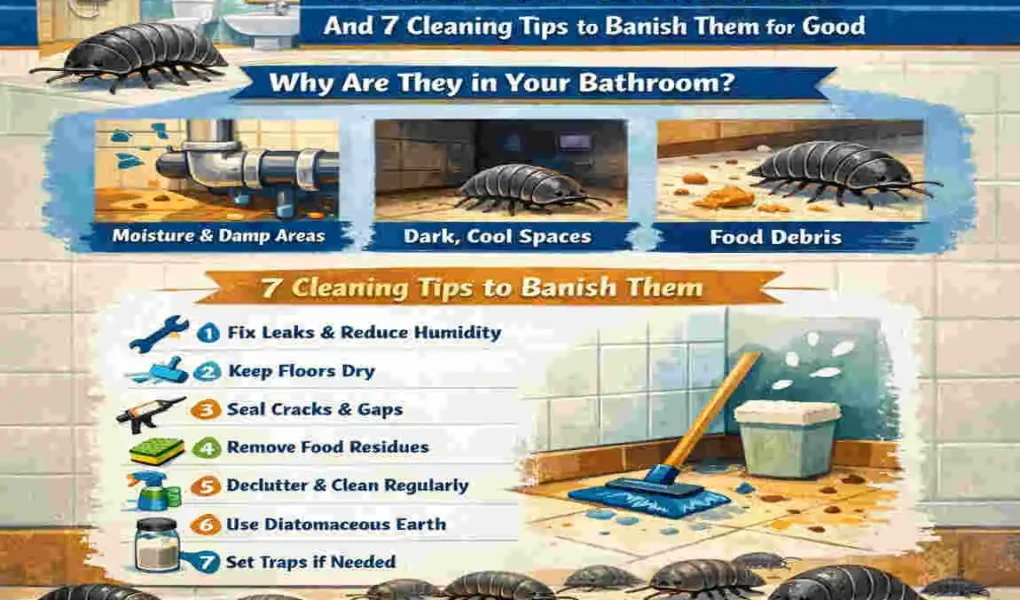
Here are seven detailed, highly effective rolly polly cleaning tips to banish them from your bathroom for good.
Reduce Moisture with Dehumidifiers and Fans
The most aggressive cleaning tactic against a moisture-loving pest is to eliminate their water source. While we touched on this in prevention, it is also an active removal step. By aggressively drying out the room, you force the existing bugs to flee back outside or dry up.
Place a high-capacity, portable dehumidifier directly inside your bathroom. Run it on its highest setting for several days straight. Combine this with running your exhaust fan and placing a small oscillating fan on the floor, aimed directly at damp corners or under the vanity cabinet.
This works because it rapidly changes their micro-climate. You are turning their humid rainforest into a harsh, arid desert. Without ambient moisture to keep their gills wet, they cannot survive in the room.
Tip 1 Summary Details
Pros Completely chemical-free; improves overall home air quality.
Cons Good dehumidifiers can be pricey upfront.
Time to Result You will see a massive drop in bug activity within 1 to 2 days.
Salt Bowls for Condensation Control
If you are looking for a highly affordable, old-school cleaning hack, reach into your kitchen pantry. Salt is a natural desiccant, meaning it actively pulls moisture out of the air.
Find several small, shallow dishes—saucers or ramekins work perfectly. Fill them to the brim with standard table salt, rock salt, or even Epsom salts. Place these bowls strategically around your bathroom. Put one on the windowsill, tuck one safely behind the toilet base, and slide one underneath the sink cabinet.
As the salt absorbs the ambient humidity from your steamy showers, it will begin to clump up and harden. This simple trick lowers the localized humidity in their favorite hiding spots, making the corners of your bathroom incredibly unappealing to them. Dump the hardened salt in the trash and refill the bowls every few weeks!
Tip 2 Summary Details
Pros Incredibly cheap, uses household items, completely safe around pets.
Cons Only works for minor humidity issues in small, enclosed spaces.
Time to Result Noticeable moisture reduction in about 3 to 5 days.
Beer Traps Near Drains
Believe it or not, one of the most effective ways to capture these crustacean invaders involves a cold beverage. Much like slugs and snails, rolly pollies are highly attracted to the strong, fermented scent of yeast.
To create a natural trap, find a shallow dish or a plastic container lid. Place it flat on the bathroom floor, right near the shower drain or wherever you see the most nighttime activity. Pour a small amount of stale beer into the dish—just enough to cover the bottom, about a quarter of an inch deep.
Leave the dish out overnight. The strong yeast aroma will draw the bugs out of their hiding spots in the walls and baseboards. They will crawl into the shallow dish to investigate the smell. Still, because the liquid breaks the surface tension, they will become trapped and unable to climb back out. In the morning, flush the contents down the toilet and wash the dish.
Tip 3 Summary Details
Pros Highly effective for overnight removal; very inexpensive.
Cons Leaves a slight beer odor in the bathroom; requires daily emptying.
Time to Result Immediate trapping overnight.
Citrus Peels as a Natural Repellent
If you want to focus on natural rolly-polly removal without killing the bugs, you can use strong scents to deter them. While humans love the fresh, clean smell of citrus, most pests absolutely detest it. The strong essential oils found in the rinds overwhelm their delicate senses.
The next time you eat an orange, lemon, or grapefruit, do not throw away the peels. Tear them into small, one-inch pieces. Scatter these fresh peels along your bathroom baseboards, near exterior door frames, and around the air vents.
The intense citrus oils act as an invisible, fragrant barrier. When a pill bug approaches the peel, the scent will turn it around and send it in search of shelter elsewhere. To keep this method effective, you must replace the peels every 4 to 5 days as they dry out and lose their potency.
Tip 4 Summary Details
Pros Leaves your bathroom smelling incredibly fresh and clean; non-lethal.
Cons Requires frequent maintenance to keep the scent strong.
Time to Result Acts as an immediate deterrent upon placement.
Diatomaceous Earth Barrier
For a more aggressive, long-lasting cleaning solution, Diatomaceous Earth (DE) is your best friend. Make sure you purchase “food-grade” DE, which is a soft, crumbly, white powder made from the fossilized remains of microscopic aquatic organisms called diatoms.
While the powder feels like soft talc to our hands, to a tiny bug, it is like walking across fields of microscopic razor blades. When a rolly polly crawls through a dusting of DE, the sharp particles cut into the waxy outer layer of their exoskeleton. This causes the bug to lose its internal moisture, leading to rapid dehydration.
After thoroughly drying your bathroom floors, use a small duster or a spoon to sprinkle a very light, almost invisible layer of DE along the baseboards, under the vanity, and behind the toilet. Leave the powder in place for several days, then vacuum it up and reapply if necessary.
Tip 5 Summary Details
Pros Highly effective; safe for humans and pets when used with food-grade products.
Cons The powder must remain completely dry to work properly.
Time to Result Eradicates crawling pests within 24 to 48 hours of contact.
Thorough Vacuum and Wipe-Down Routine
Sometimes, the simplest cleaning methods are the most effective. If you have an active infestation, you need to physically remove them and their food sources daily until the population is gone.
Attach the long crevice tool to your vacuum cleaner. Vigorously vacuum every square inch of your bathroom floor, paying special attention to the deep cracks between tiles, the gap between the baseboards and the floor, and the dusty corners under the cabinets. The strong suction will instantly remove live and dead bugs, as well as any hidden eggs.
Follow up immediately with a strong wipe-down. Mix a solution of equal parts water and white vinegar (or use a mild bleach spray if you prefer). Wipe down the baseboards, the outside of the bathtub, and the floors. This removes the organic decay and soap scum that they feed on, while also erasing the invisible pheromone trails they leave behind for other bugs to follow.
Tip 6 SummaryDetails
Pros Removes food sources, prevents breeding, sanitizes the space.
Cons Requires daily effort and physical labor until the pests are gone.
Time to Result Instant physical removal of the visible bugs.
Seal Cracks and Gaps with Silicone
Our final cleaning tip is actually a long-term maintenance strategy. You can vacuum and trap bugs all day long. However, if the tiny highway leading into your bathroom is still open, they will eventually return.
Purchase a tube of clear, waterproof, bathroom-grade silicone caulk. Get down on your hands and knees and inspect the perimeter of your bathroom floor. Look closely where the flooring meets the bathtub, where the toilet base touches the tile, and where the baseboards meet the drywall.
Carefully apply a smooth bead of silicone to any gaps, cracks, or holes you find. This physically blocks them from entering the room from the wall voids or the subfloor. A perfectly sealed bathroom is a bug-free bathroom.
Tip 7 SummaryDetails
Pros Provides a permanent, long-lasting solution to prevent re-entry.
Cons : Requires some DIY skills to ensure the caulk cures properly.
Time to Result Immediate and permanent blockage of entry routes.
At-a-Glance: Cleaning Tips Summary Table
To help you choose the best plan of attack for your home, here is a quick reference guide to our top removal strategies.
Tip #Strategy NameMaterials NeededTime to See Results
1 Reduce Moisture Portable Dehumidifier, Box Fans 1 to 2 days
2 Salt Bowls Small dishes, Table or Epsom Salt 3 to 5 days
3 Beer Traps Shallow lids, Stale Beer Overnight trapping
4 Citrus Peels Fresh orange or lemon rinds Immediate deterrent
5 Diatomaceous Earth Food-grade DE powder 24 to 48 hours
6 Vacuum & Wipe Vacuum with crevice tool, Vinegar spray Instant removal
7 Seal Cracks Waterproof silicone caulk, Caulk gun Permanent blockage
Frequently Asked Questions (FAQs)
When unexpected house guests arrive, homeowners often have many pressing questions. We have compiled the most common queries to put your mind at ease.
Why are there rolly pollies in my bathroom specifically?
Your bathroom provides the exact environmental conditions they need to survive. Rolly pollies breathe through gills that require high humidity. The steam from hot showers, the dampness of bath mats, and occasional leaks from pipes create an indoor oasis that perfectly mimics the dampness of their outdoor soil habitats.
Are rolly pollies harmful to my home or family?
Not at all. Pill bugs are incredibly docile. They do not bite, they do not possess venom, and they are not known to transmit any human diseases. Furthermore, they will not cause structural damage to your walls or furniture. However, their presence is a strong indicator that you have a moisture control problem that could eventually lead to mold or attract worse pests.
How long will it take for these cleaning tips actually to work?
The timeline depends heavily on the severity of your moisture problem and the specific method you choose. Physical removal methods, such as using a vacuum or setting out overnight beer traps, provide instant results. However, environmental changes, like using a dehumidifier or applying a Diatomaceous Earth barrier, typically take 24 to 48 hours to fully dry out and eliminate the hiding population.
Can I flush them down the toilet?
Yes. Because they are not strong swimmers and cannot survive submerged in deep water without drowning, flushing the bugs you sweep up or capture in traps is a safe, quick, and sanitary way to dispose of them.
Do I need to hire a professional exterminator?
In the vast majority of cases, no. Because these pests do not breed rapidly indoors and do not cause structural damage, you can easily handle the problem yourself. By implementing our moisture-reduction techniques and deep-cleaning tips, you should see them vanish within a week. You only need a professional if you discover a massive, hidden leak causing structural rot.