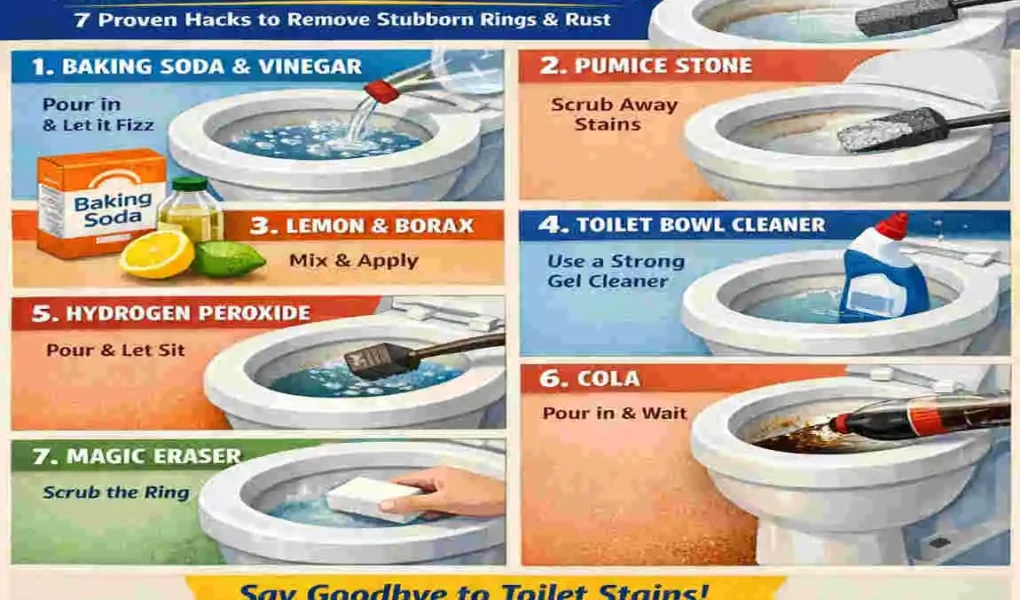
A stained toilet bowl can make your whole bathroom feel dirty, even when you clean it often. Those ugly brown rings, orange rust marks, and chalky hard water stains seem to appear out of nowhere. Then they sit there, refusing to budge no matter how hard you scrub.
If you’ve been wondering what will clean toilet bowl stains fast, the good news is that you usually do not need expensive products or harsh chemicals to get results. In many cases, simple household items such as white vinegar, baking soda, lemon juice, and hydrogen peroxide can quickly and safely break down stains.
This matters because toilet bowl stains are a very common problem. Many homes deal with mineral buildup, rust, or waterline rings, especially in areas with hard water. The faster you remove them, the easier your routine cleaning becomes. You save time, avoid aggressive scrubbing, and keep your bathroom looking fresh without spending much money.
Common Causes of Toilet Bowl Stains and Why They’re So Hard to Remove
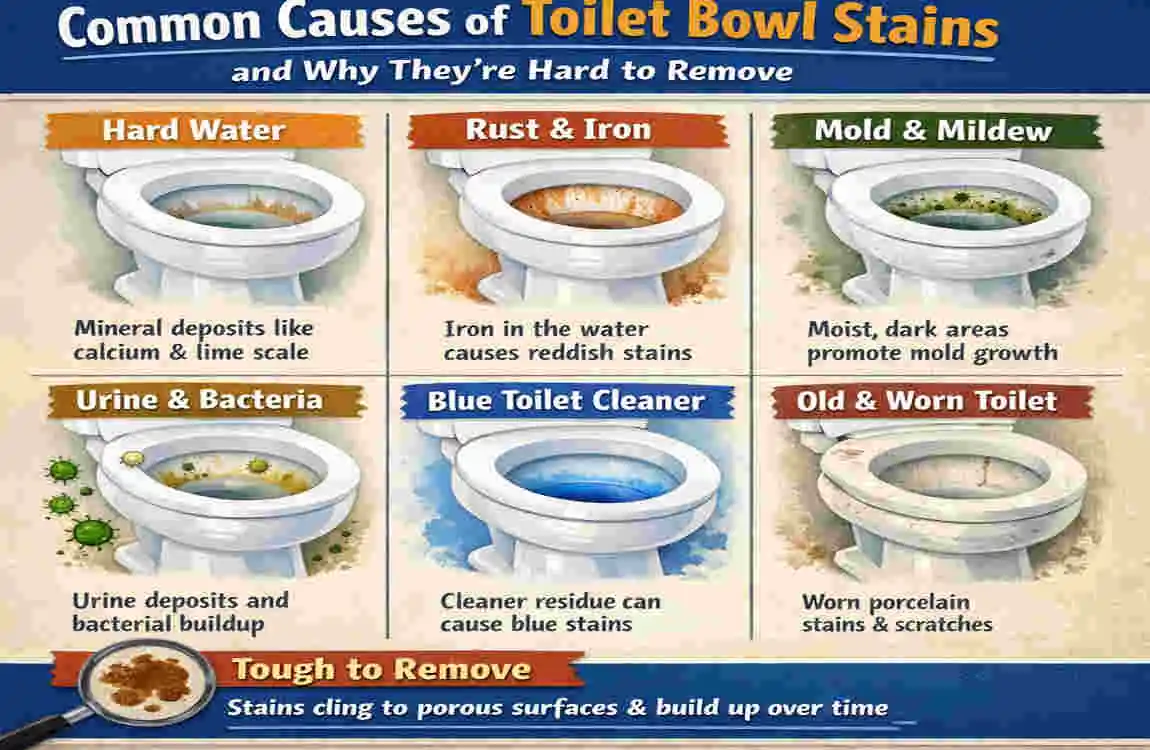
Before you choose a cleaner, it helps to know what kind of stain you’re dealing with. Not every toilet stain comes from the same source, and that’s exactly why one method works better than another.
Hard Water Mineral Buildup
Hard water contains a high concentration of dissolved minerals, such as calcium and magnesium. Over time, these minerals settle inside the bowl and create a rough, chalky ring. That ring often looks white, gray, or tan.
The problem is that mineral stains build up layer by layer. Once they harden, regular soap or light scrubbing usually won’t remove them. You need something acidic, like vinegar or lemon juice, to start dissolving the deposits.
Rust Stains From Water or Old Pipes
If you see orange, reddish-brown, or dark rust-colored streaks, iron in the water is often the cause. In some homes, aging pipes also contribute to this issue. Rust sticks to porcelain and can become harder to remove the longer it sits.
That’s why many people keep asking what will clean toilet bowl stains fast when rust shows up. Rust spreads quickly and makes a clean bathroom look neglected, even when the rest of the toilet is spotless.
Bacteria, Mold, and Organic Stains
Some stains come from organic matter, bacteria, or mold growing in damp conditions. These stains may appear as dark rings, black spots, or slimy buildup under the rim and around the waterline.
These stains are different from hard water marks. They need a cleaner that can both lift the stain and help sanitize the surface.
Why Toilet Bowl Stains Keep Coming Back
Toilet stains return for a few simple reasons:
- Hard water keeps depositing minerals
- Rust in the water continues to flow in
- The bowl is not cleaned often enough
- Stains sit too long and harden
- Under-rim areas are missed during cleaning
Once you understand the cause, it becomes much easier to pick the right hack. Now let’s get into the best answers to the question: what will effectively and quickly clean toilet bowl stains?
Proven Hacks That Clean Toilet Bowl Stains Fast
White Vinegar Soak
White vinegar is one of the best natural answers to the question what will clean toilet bowl stains without bringing harsh fumes into your bathroom. It works because vinegar contains acetic acid, which helps dissolve mineral deposits and hard water buildup.
This is one of the easiest methods because you probably already have vinegar at home. It is affordable, simple to use, and safe for regular cleaning when used properly.
Why Vinegar Works So Well
Vinegar breaks down the minerals that create toilet rings and waterline stains. It also helps loosen light rust marks, leaving the bowl looking fresher. For mild to moderate stains, vinegar alone can make a big difference in just a couple of hours.
If you are dealing with a toilet that has gone too long without cleaning, an overnight soak often gives the best results.
What You Need
- 2 cups distilled white vinegar
- Toilet brush
- Optional: spray bottle
- Optional: lemon juice for extra strength
How to Use It
- Turn off the toilet’s water supply if possible.
- Flush once to lower the water level in the bowl.
- Pour 2 cups of white vinegar directly onto the stained areas.
- Let it sit for 1 to 2 hours. For stubborn buildup, leave it overnight.
- Scrub the bowl with a toilet brush, focusing on the ring and under-rim areas.
- Turn the water back on if needed and flush.
Pro Tip for Better Results
If the ring looks thick or dark, add a little lemon juice to the vinegar. The extra acid gives the solution more cleaning power, especially against mineral stains.
Why People Love This Method
This hack is popular because it is:
- Non-toxic
- Budget-friendly
- Pet-safe when used correctly
- Good for regular maintenance
If you want a gentle but reliable place to start, vinegar is often the first answer for cleaning toilet bowl stains fast without damaging the bowl.
Baking Soda and Vinegar Fizzing Power
If vinegar alone is not enough, combine it with baking soda. This classic cleaning pair is famous for tackling bathroom messes, and it works especially well on toilet rings, light rust, and daily-use stains.
The fizzy reaction helps lift grime from the surface, while the baking soda adds a mild scrubbing effect.
Why This Combo Works
When baking soda and vinegar meet, they bubble up and help loosen dirt and buildup. While the fizz does not magically erase every stain, it does help break apart grime and makes scrubbing easier.
This method is especially useful if you want a natural toilet stain hack that feels stronger than plain vinegar.
What You Need
- 1 cup baking soda
- 1 cup white vinegar
- Toilet brush
- Optional: small bowl for making a paste
How to Use It
- Sprinkle 1 cup of baking soda all around the inside of the bowl.
- Slowly pour 1 cup of vinegar into the bowl.
- Let the mixture fizz and sit for 30 minutes.
- Scrub the bowl well, paying close attention to the waterline and under the rim.
- Flush to rinse away the loosened residue.
For Under-the-Rim Stains
If stains hide under the rim, mix a small amount of baking soda with vinegar to create a loose paste. Spread it under the rim and let it sit for a while before scrubbing.
Best For
This method is a strong answer to what will clean toilet bowl stains caused by everyday use. It works best for moderate stains that have not hardened into a thick, crusty buildup.
You’ll likely notice that the bowl looks brighter right away. It may not remove severe rust in one try, but it is excellent for regular stain control.
Lemon Juice and Salt Abrasive Scrub
If you prefer a fresh-smelling, natural option, lemon juice and salt make a powerful stain-fighting team. Lemon juice brings citric acid, while salt adds a gritty texture that helps scrub away rust and toilet bowl rings.
This method is especially handy if you want a more natural way to deal with rusty stains without reaching for a heavy-duty product.
Why Lemon and Salt Work
Citric acid can help loosen mineral and rust stains, while coarse salt gives you a gentle abrasive action. Together, they create a simple scrub that cuts through discoloration surprisingly well.
It is a great option when you want a natural way to clean toilet bowl stains fast, especially if the stain is small to medium in size.
What You Need
- Juice from 2 lemons
- 1/2 cup coarse salt
- Toilet brush or scrubbing tool
How to Use It
- Squeeze the juice of 2 lemons directly into the toilet bowl.
- Add 1/2 cup of coarse salt over the stained areas.
- Let the mixture sit for 15 to 30 minutes.
- Scrub the stains firmly with a toilet brush.
- Flush to rinse.
A Good Eco-Friendly Choice
Many people like this hack because it avoids strong chemical smells. The bathroom smells cleaner, and the process feels simple and fresh.
When to Use It
Use this method when you see:
- Light to medium rust marks
- Hard water rings
- Mild stain patches around the bowl
If the stain is very old or very dark, you may need to repeat the process several times. Still, this is one of the easiest natural toilet stain hacks to try first.
Coca-Cola Rust Buster
Yes, this one surprises a lot of people. Coca-Cola can help remove some toilet bowl rust and mineral stains because it contains acids that can loosen buildup. It is not the strongest cleaner on this list, but it can be useful for a quick DIY trick using something already in the kitchen.
Why Cola Can Help
Cola contains phosphoric acid, which can help break down rust and some mineral deposits. That said, it works best on lighter stains and often requires a long soak.
Still, if you’re asking what will clean toilet bowl stains, using a simple, unexpected household item, cola is worth trying.
What You Need
- 2 liters of cola
- Toilet brush
How to Use It
- Pour the cola all around the inside of the bowl, making sure it covers the stained areas.
- Let it sit overnight for the best effect.
- Scrub the bowl with a toilet brush the next morning.
- Flush twice to remove residue.
Important Caution
Because cola contains sugar, you need to rinse the bowl well. If you do not flush thoroughly, it can leave a sticky film behind.
Is It the Best Method?
Not always. It is more of a fun backup trick than a top cleaning strategy. But for light rust, it can help. If nothing else, it may soften the stain enough to make your next cleaning step easier.
This hack is best for people who want to experiment with easy home methods before buying a specialty cleaner.
Pumice Stone for Tough Rings
Some toilet stains become so hard that liquid cleaners barely touch them. That’s when a pumice stone can help. Instead of dissolving the stain, this method removes it through gentle physical scrubbing.
If you’ve been wondering what will clean toilet bowl stains without liquids, this is one of the best answers.
Why a Pumice Stone Works
A pumice stone is rough enough to scrub away hardened mineral rings and thick toilet stains. When used correctly on wet porcelain, it can remove buildup left by ordinary brushes.
This method is especially effective for old hard water rings that feel crusty or rough to the touch.
What You Need
- Pumice stone
- Water
- Gloves
- Toilet brush for final cleanup
How to Use It
- Wet the pumice stone thoroughly before you start.
- Make sure the toilet bowl surface is also wet.
- Gently scrub the stained area using small circular motions.
- Rinse the stone often and keep both the stone and bowl wet.
- Flush and inspect the bowl.
Use a Light Hand
Do not scrub aggressively. The goal is to lift the stain, not scratch the porcelain. A wet pumice stone is generally safe for porcelain toilets, but pressure matters.
Best For
This method works best on:
- Thick toilet bowl rings
- Hardened hard water deposits
- Stains that resist vinegar and baking soda
A pumice stone can be the fastest fix when a stain has turned into a physical crust. If the bowl has stubborn rings that seem permanent, this hack often changes everything.
Hydrogen Peroxide Bleach Boost
Hydrogen peroxide is another strong option for cleaning toilet bowl stains when the problem includes organic marks, discoloration, and germs. It helps by oxidizing stains, breaking down the compounds that cause them and brightening the bowl.
It is especially useful when your toilet has stains and visible grime, or when you want disinfecting power at the same time.
Why Hydrogen Peroxide Helps
Hydrogen peroxide can help remove certain organic stains and lighten discoloration. It also bubbles slightly when working, which can help lift grime from the surface.
When paired with baking soda as a separate step, it can boost your cleaning power without the strong bleach smell.
What You Need
- 1 cup of 3% hydrogen peroxide
- Baking soda
- Toilet brush
- Gloves
How to Use It
- Pour 1 cup of hydrogen peroxide into the toilet bowl.
- Let it sit for about 20 minutes.
- Sprinkle baking soda into the bowl.
- Scrub the stained areas thoroughly.
- Flush to rinse.
A Note on Safety
Do not mix hydrogen peroxide with random cleaners. Use it on its own, then follow with baking soda as a simple scrub booster. Keep the area ventilated and wear gloves.
Best For
Hydrogen peroxide works well for:
- Organic stains
- Dingy-looking bowls
- Mild rust and ring discoloration
- Cleaning and brightening at the same time
If you want a cleaner that does more than just target a ring, this is a very practical choice.
CLR or a Commercial Calcium Remover
Sometimes DIY methods are not enough. If you’ve tried the natural options and the stains still won’t move, a commercial product like CLR or a similar calcium, lime, and rust remover may be the right next step.
This is often the strongest answer to what will clean toilet bowl stains fast when the bowl has years of buildup.
Why Commercial Removers Work
These products are designed specifically for calcium deposits, lime scale, and rust. They contain acids and active ingredients that work more aggressively than most homemade solutions.
That makes them useful for severe staining, but it also means you need to use them carefully.
What You Need
- CLR or similar commercial cleaner
- Gloves
- Toilet brush
- Good ventilation
How to Use It
- Read the product label carefully before use.
- Apply the cleaner as directed to the stained parts of the bowl.
- Let it sit for the recommended time, often around 10 minutes.
- Scrub thoroughly with a toilet brush.
- Flush well to rinse.
When to Choose This Method
Use a commercial remover if:
- The bowl has heavy rust
- Mineral rings are thick and old
- Natural methods have failed
- You need faster, stronger results
DIY vs Commercial: Which One Is Better?
Here’s a simple comparison to help you decide:
Method Speed Cost Best For Eco Impact Effort Level
White Vinegar Medium Low Hard water stains, light rings Low impact Low
Baking Soda + Vinegar Medium Low Daily stains, mild rings Low impact Low
Lemon + Salt Medium Low to medium Light rust, fresh stains Low impact Medium
Coca-Cola Slow Low to medium Light rust only Medium Low
Pumice Stone Fast on hard buildup Low Tough rings, crusty stains Low impact Medium
Hydrogen Peroxide Medium Low to medium Organic stains, brightening Low to medium Low
CLR/Commercial Remover Fast Medium Heavy rust, severe deposits Higher impact Low
Commercial products can work fast, but always treat them as a last resort rather than your first step.
Safety Tips and Common Mistakes to Avoid
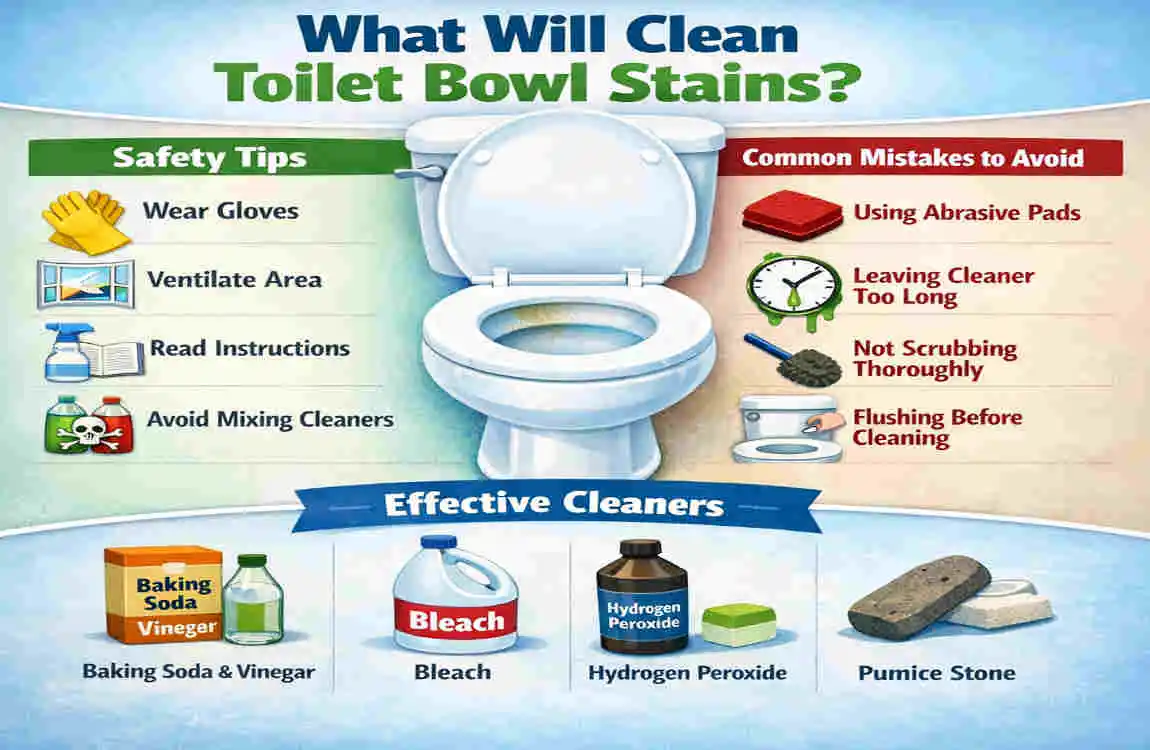
Cleaning a toilet bowl is simple, but you still need to be careful. Some mistakes can damage the toilet, reduce cleaning results, or create unsafe fumes.
Safety Rules You Should Always Follow
The most important rule is this: never mix cleaners. This includes homemade solutions and store-bought products. Some combinations can create dangerous fumes.
Be especially careful with these:
- Never mix bleach with vinegar
- Never mix bleach with ammonia
- Do not combine different commercial cleaners
- Do not mix hydrogen peroxide with other chemical cleaners
Always wear gloves when cleaning, especially when using acidic products or commercial removers. Open a window or run the bathroom fan to keep the air moving.
If you use a stronger cleaner, keep children and pets away until the area is rinsed and dry.
Common Cleaning Mistakes
A lot of people scrub too hard because they want fast results. That can backfire. Aggressive scrubbing with the wrong tool may scratch the porcelain, and scratches make future stains stick even more easily.
Another common mistake is skipping the step of lowering the water level in the bowl. If the stain sits underwater, your cleaner gets diluted and won’t work as well.
People also forget the under-rim area, where bacteria and hidden buildup often collect. If you only clean the visible ring, stains can return faster.
A Simple Toilet Cleaning Checklist
Before you start, make sure you have:
- Gloves
- Toilet brush
- Chosen cleaner
- Good ventilation
- A little patience for soak time
In many cases, the soaking time matters more than intense scrubbing. Let the cleaner work for you.
Prevention: How to Keep Toilet Bowl Stains From Coming Back
Once you remove the stains, the next goal is to stop them from returning. This is where many people struggle. They clean the bowl once, it looks great for a week, and then the ring appears again.
The good news is that a few small habits can make a huge difference.
Weekly Habits That Help
A quick weekly routine keeps stains from turning into stubborn buildup. You do not need a full deep clean every time.
Try this:
- Pour white vinegar into the bowl once a week
- Let it sit for 15 to 30 minutes
- Scrub lightly and flush
- Wipe the rim and seat while you’re there
This simple habit helps prevent hard water deposits from forming a thick ring.
Handle Hard Water Early
If your home has hard water, prevention is even more important. Hard water stains will keep returning unless you stay ahead of them.
You can reduce buildup by:
- Cleaning more often
- Flushing regularly if a toilet sits unused
- Using a water softener if hard water affects the whole house
- Watching for early ring formation and treating it right away
Don’t Ignore Rust Signals
If rust stains keep coming back no matter how often you clean, the real issue may be in the water or plumbing. Repeated rust staining can point to iron-rich water or aging pipes.
In that case, cleaning improves the bowl’s appearance, but it does not address the cause. If the problem is constant, a plumbing check or water test may save you time in the long run.
Build a Routine You Can Stick To
The best cleaning plan is the one you’ll actually do. You do not need a complicated system. A simple repeatable routine works best:
Easy Routine to Follow
- Weekly: Quick vinegar soak and brush scrub
- Monthly: Deeper cleaning under the rim and around the waterline
- As needed: Use pumice or a stronger remover for stubborn buildup
When you stay consistent, you won’t need to keep asking what will clean toilet bowl stains fast, because the stains won’t get bad enough to become a major job.
How to Choose the Right Hack for Your Specific Stain
With seven options available, you may wonder which one you should try first. The answer depends on what the stain looks like and how long it has been there.
If the Stain Is a Chalky White or Gray Ring
Start with white vinegar or baking soda and vinegar. These work best on hard water deposits and mineral buildup.
If the Stain Is Orange or Rust-Colored
Try lemon and salt first for mild rust. If that doesn’t work, move to cola or a commercial rust remover for stronger action.
If the Stain Feels Rough and Crusty
Use a pumice stone carefully. This is often the best fix for hard deposits that feel stuck to the porcelain.
If the Bowl Looks Dingy or Has Organic Discoloration
Go with hydrogen peroxide. It helps brighten the bowl while tackling organic stains.
If Nothing Else Works
Use CLR or another commercial calcium remover as your last step. When DIY methods fail, this is the strongest solution on the list.