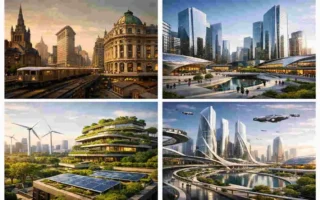
Have you ever stopped to look around your city and realized just how much space is dedicated to massive, sprawling structures? You might be surprised to learn that industrial buildings currently cover roughly 20% of urban space globally. That is a staggering amount of real estate! Over the decades, these structures have evolved dramatically. They have transformed from the gritty, smoke-filled factories of the past into the trendy, light-filled lofts and high-tech warehouses we see today.
But what exactly are we looking at when we admire these buildings? If you want to know what is industrial architecture upfront, it boils down to this: practical, no-nonsense designs that prioritize efficiency, worker safety, and exposed structural elements specifically meant for industrial use.
There is a fantastic reason why this style is trending heavily in 2026 for businesses of all sizes. Today’s industrial designs offer incredible cost savings, unmatched adaptability, and a deep commitment to sustainability. Whether you are a business owner looking to build a new manufacturing hub, a developer planning an adaptive reuse project, or just an architecture enthusiast, understanding these spaces is vital.
Defining Industrial Architecture
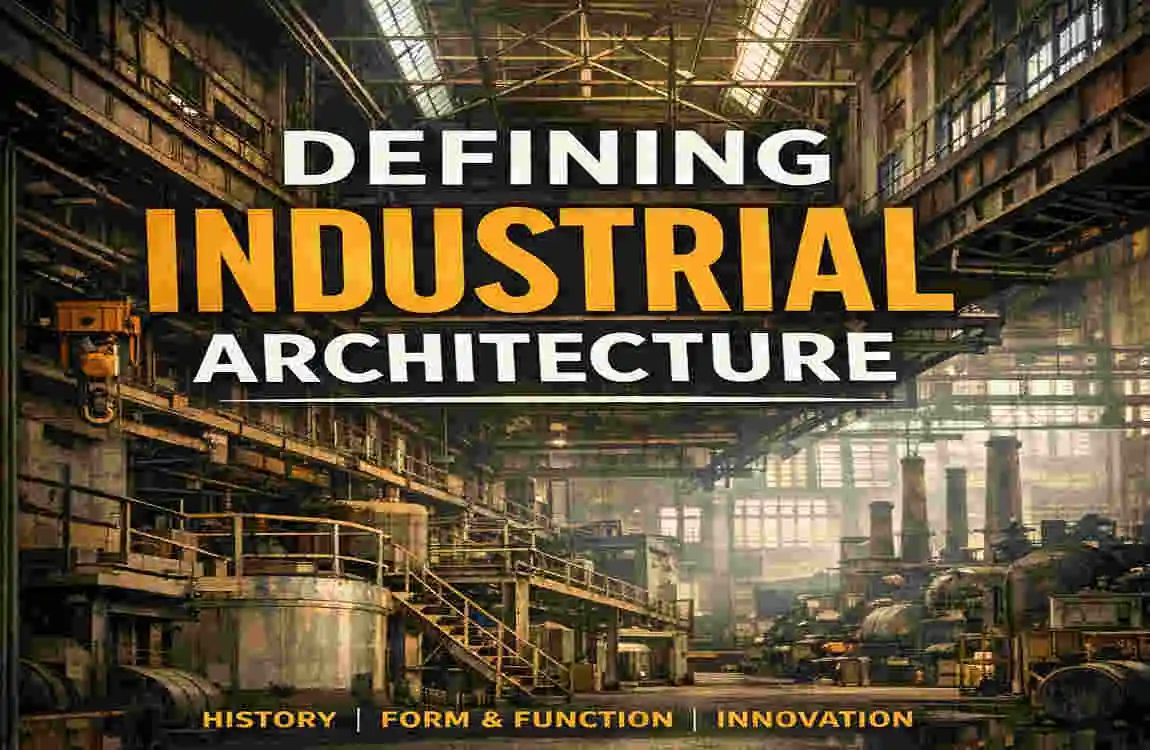
To truly grasp the beauty and purpose of these massive buildings, we have to look back at where they came from and how they have adapted to modern needs.
The Gritty Origins of a Global Movement
The origins of this architectural style are deeply rooted in the 18th and 19th-century Industrial Revolution. Before this era, goods were crafted by hand in small, localized shops. However, the invention of steam power and new machinery changed everything. Suddenly, the world needed massive sites for mass production, such as sprawling textile mills, heavy-duty refineries, and roaring foundries.
Architects and engineers of the time weren’t worried about making these buildings look like grand palaces. Instead, they had to solve a very specific problem: how do we safely house giant, vibrating machines and hundreds of workers? The answer was to build massive, sturdy structures that could withstand the intense vibrations and heat of early manufacturing.
Peeling Back the Layers: The Core Definition
So, what is the core definition of this style? At its heart, it refers to buildings constructed for manufacturing, mass storage, and power generation. The defining characteristic is an intense focus on utility over ornamentation. You will not find delicate crown molding or intricate plasterwork here.
Instead, the style relies heavily on tough, durable materials. Steel, concrete, and brick became the holy trinity of construction. Steel provided the strength to span wide open spaces without the need for dozens of supportive columns. Concrete offered fire-resistant floors that could handle the immense weight of heavy machinery. Brick was used to build thick, insulating walls that could withstand the test of time.
The Modern Shift: From Factories to Fabulous Workspaces
Fast forward to today, and you will notice a massive modern shift. As heavy manufacturing moved out of city centers, it left behind thousands of empty, cavernous buildings. Rather than tearing them down, visionary developers began an era of adaptive reuse.
These old factories were transformed into stunning residential lofts, trendy corporate offices, and bustling community spaces. In new builds, the focus has shifted dramatically toward prioritizing worker safety, optimizing material flow, and ensuring ultimate scalability.
You might be asking, what is industrial architecture today? It is a seamless blend of hardcore function and a beautiful aesthetic revival. It celebrates the “bones” of a building while incorporating modern technology to make the space comfortable and efficient.
Key Features of Industrial Style
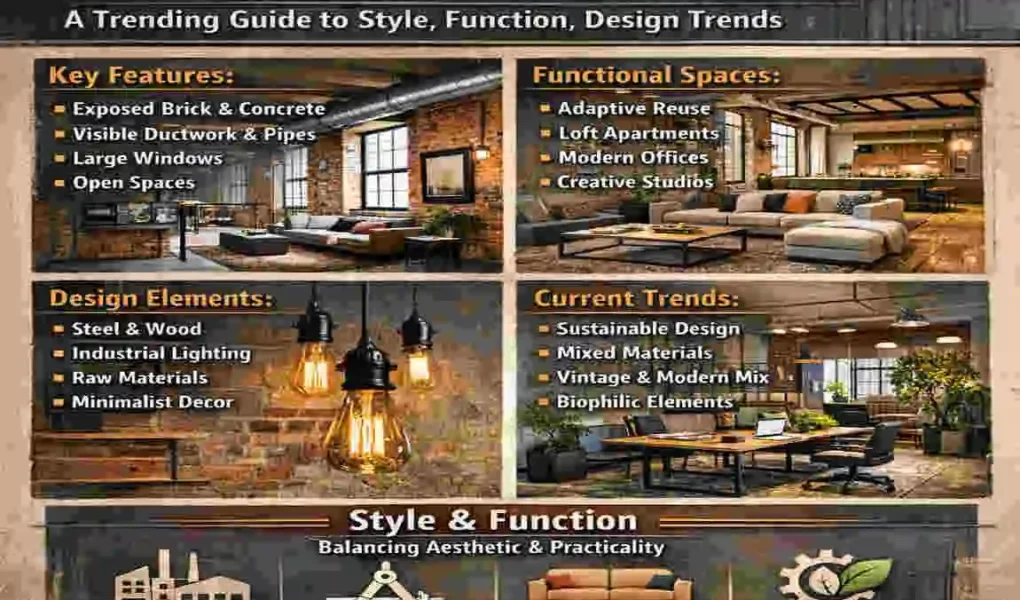
If you want to spot an industrial building in the wild, or if you are trying to replicate the look in your own commercial project, there are several unmistakable hallmarks you need to know.
The Honest Appeal of Exposed Materials
The most iconic feature of industrial architecture style is the use of exposed materials. In traditional homes or commercial spaces, builders go to great lengths to hide the structural elements behind drywall and drop ceilings. Industrial design does the exact opposite.
- Exposed brick walls: These provide a rich, warm texture and a sense of history.
- Visible steel beams: These showcase the true skeletal strength of the building.
- Polished concrete floors: These offer “honest” durability that can withstand heavy foot traffic and machinery without wearing down.
Breathing Room with Open Floor Plans
Another major feature is the open floor plan. Think about the high ceilings and minimal partitions you see in modern warehouses or trendy tech startups. Originally, this open space was necessary to accommodate massive machinery and the complex workflow of assembly lines. Today, that same open space provides incredible flexibility. You can arrange desks, inventory racks, or manufacturing equipment in whatever way makes the most sense for your business, without having to knock down walls.
Let There Be Light: Large Windows and Glazing
Have you ever noticed the massive, grid-like windows on old factory buildings? These large windows and expansive glazing were not just for show. Before the invention of reliable electrical lighting, factories needed as much natural light as possible so workers could see what they were doing.
Furthermore, these large windows often featured functional, pivoting panels that allowed for massive amounts of ventilation—a crucial feature in hot, stuffy mills. Today, this translates to bright, airy spaces filled with natural light without any unnecessary frills.
Robust Simplicity and Utilitarian Charm
Finally, the style is defined by its robust simplicity. There is absolutely no decorative excess. Every single element serves a clear purpose, adhering strictly to the philosophy that “form follows function.”
Visual Suggestion: Picture a classic factory interior: sunlight streaming through massive steel-framed windows, illuminating a vast expanse of scuffed hardwood or poured concrete. Now, compare that to a modern “residential industrial chic” apartment. The same exposed ductwork and brick walls are there, but they are softened with modern furniture, serving as a direct tie-in for businesses wanting to create an inviting yet productive atmosphere.
Traditional vs. Modern Material Use
Feature Traditional Industrial Use, Modern Adaptation & Reuse
Steel Beams: Heavy structural support for factory roofs. Exposed, painted decor in modern lofts and offices
Concrete Floors: Extreme durability to support heavy loads, polished and sealed for sleek corporate offices
Brick Walls: Thermal insulation and critical fire resistance. Sought-after aesthetic texture for interior design
The Fascinating Historical Evolution of Industrial Buildings
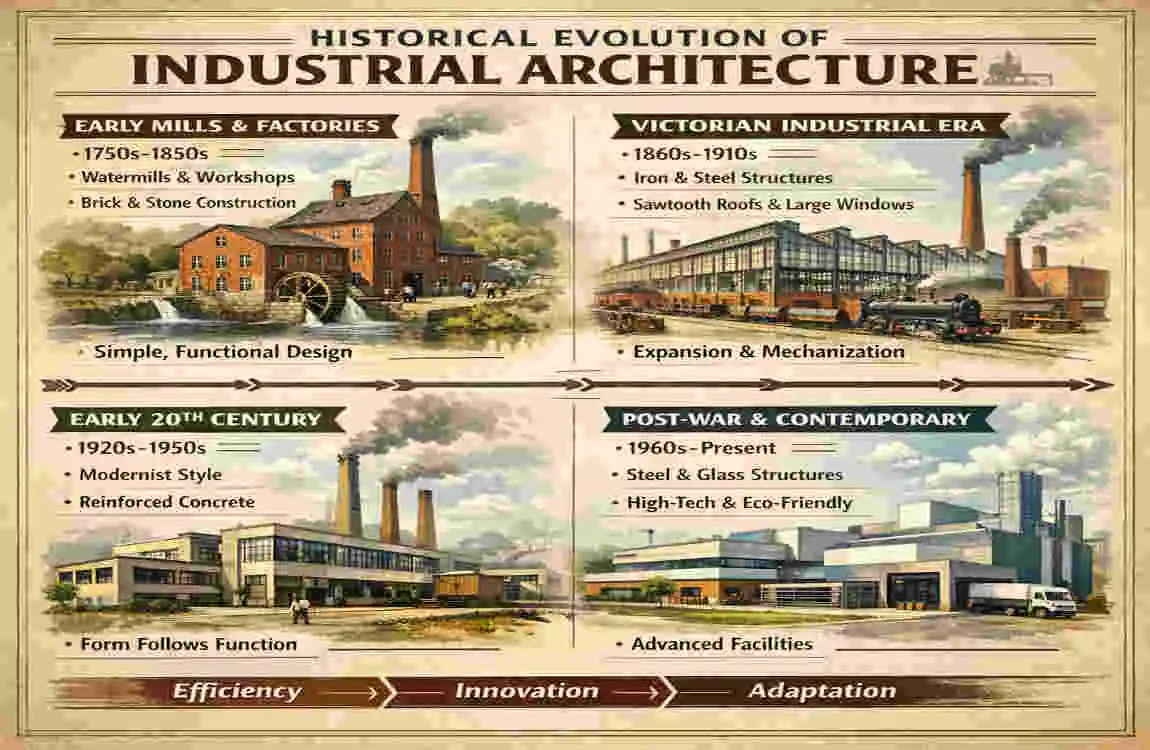
To truly appreciate industrial architecture features, we must take a walk through history. The evolution of these structures perfectly mirrors the evolution of human technology and business.
The 1700s and 1800s: Iron, Sweat, and Steam
During the 1700s and 1800s, the world saw the rise of massive iron mills and multi-story cotton factories. A massive influence during this time was the UK’s Crystal Palace, built for the Great Exhibition of 1851. It showcased how prefabricated iron and glass could be used to create massive, light-filled spaces quickly and cheaply. This era was all about maximizing floor space and finding ways to let in natural light while keeping the rain out.
The Early 1900s: The Dawn of Mass Production
As we rolled into the early 1900s, the invention of reinforced concrete changed the game entirely. Now, factories could be built taller, wider, and stronger than ever before. This was the era of mass production, heavily influenced by companies like Ford. Their automotive plants required incredibly long, uninterrupted floor spaces to accommodate moving assembly lines. The architecture had to stretch out to match the speed of production.
Post-WWII: Reaching for the Sky
Following World War II, the booming global economy required immense storage solutions. This led to the rise of skyscraper warehouses and a shift toward modernism. Buildings became sleeker, utilizing cheaper, mass-produced steel panels and corrugated metal. The focus was on getting buildings up fast to keep pace with an exploding consumer market.
The 2000s to 2026: The Era of Adaptive Reuse and Green Tech
From the early 2000s leading up to today, we have witnessed a massive pivot. The decline of urban manufacturing left many incredible buildings empty. The trend of loft conversions exploded, turning these spaces into highly desirable real estate.
Now, in 2026, the historical efficiency of these buildings is heavily informing how we construct brand new factories for cost-conscious owners. By looking at how the buildings of the 1800s naturally managed light and air, modern architects are building smarter, more sustainable spaces.
Beyond Looks: The Functions and Practical Benefits
While the raw aesthetic is certainly trendy, the true beauty of this style lies in its absolute functionality. These structures are hard workers.
The Beating Heart of Commerce
The primary roles of any industrial building are centered around material processing, mass storage, and rapid distribution. Every square inch of the building is optimized for these tasks.
For instance, you will notice incredibly wide aisles designed not just for humans, but for forklifts and automated guided vehicles (AGVs) to move seamlessly. High vents and advanced HVAC systems ensure proper energy flow and air quality, filtering out dust and exhaust.
Realizing Serious Cost Savings
From a business angle, investing in pure industrial design makes a tremendous amount of financial sense. Modern, modular industrial designs can reduce daily operational costs by a staggering 15-20%. Because the spaces are so open and adaptable, they are incredibly scalable. If you are experiencing an e-commerce boom, an open warehouse allows you to easily reconfigure your packing stations or add new conveyor lines without undertaking major structural renovations.
Prioritizing Safety in Design
Furthermore, these buildings are built with safety at the absolute forefront. Modern designs strictly adhere to OSHA-compliant layouts. They utilize highly fire-resistant materials to protect both the workers and the valuable inventory inside.
A great example of functional safety is the use of sturdy steel mezzanines in modern warehouses. Instead of expanding the footprint of the building outward—which costs a fortune in land—businesses can build upward safely, doubling their inventory space while keeping ground-level workflows clear and hazard-free.
Looking Ahead: The Top 2026 Industrial Design Trends
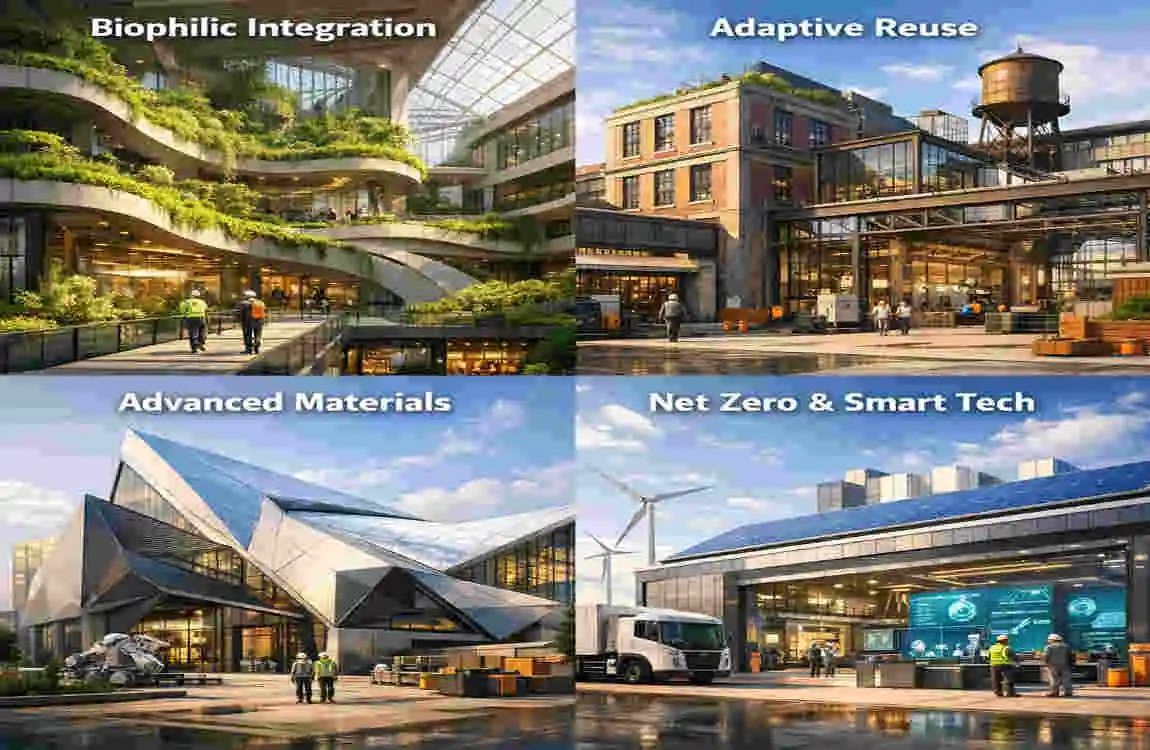
As we move deeper into 2026, the landscape of industrial design trends is shifting rapidly. Businesses are demanding more from their buildings than ever before, looking for smart, fresh, and SEO-optimized designs.
Sustainability Takes Center Stage
Sustainable industrial architecture is no longer just a nice buzzword; it is a financial necessity. We are seeing a massive integration of solar panels covering vast warehouse roofs, transforming these buildings into mini power plants. Green roofs are being installed to manage stormwater runoff and provide natural insulation. Builders are heavily favoring recycled steel and reclaimed bricks. The best part? Businesses are seeing a complete return on investment (ROI) for these green initiatives in just 5 to 7 years.
Building in the Matrix with BIM Level 3
Technology is also reshaping the construction process. Building Information Modeling (BIM) Level 3 is becoming the industry standard. By creating highly detailed “digital twins” of a building before a single shovel hits the dirt, architects and engineers can collaborate in a cloud-based environment in real-time. This sophisticated tech cuts physical construction clashes and costly errors by up to 40%.
The Rise of Hybrid Pre-Engineered Structures
Speed is money in the business world. To keep up with booming manufacturing sectors—such as the massive industrial expansion currently happening in places like India and easily adaptable to the bustling factory context of Lahore, Pakistan—hybrid pre-engineered structures are dominating. These buildings are fabricated in a controlled factory setting and then quickly bolted together on-site, drastically reducing construction time.
Designing for Resilience and AI
Resilient designs are also trending heavily. Buildings are being engineered to be completely earthquake-proof and highly adaptable for “Manufacturing 4.0,” which relies heavily on Artificial Intelligence and robotics. Floors must be perfectly leveled for autonomous robots, and server rooms must be integrated directly into the factory floor to handle massive data loads.
Bringing the Outdoors In with Biophilic Elements
Finally, there is a massive push for biophilic elements. Just because a building is industrial doesn’t mean it has to be cold and sterile. Incorporating greenery, indoor trees, and massive skylights into open spaces drastically improves worker wellness, reduces stress, and increases overall productivity.
Visual Suggestion: Picture a sleek, modern, sustainable factory. The roof is blanketed in solar panels, while the interior features wide, sunlit walkways lined with resilient indoor plants, completely softening the robust steel machinery humming nearby.
Quick Look: 2026 Trends vs. Business Benefits
Trend Business Benefit Real-World Example
Sustainable Layouts , Massive long-term energy savings , Green-certified manufacturing plants with solar arrays
Pre-Engineered Builds Up to 30% faster construction times, Hybrid e-commerce distribution warehouses.
Adaptive Reuse: Highly cost-effective retrofits, historic loft conversions, saving millions in materials.
Iconic Examples of Industrial Architecture Worldwide
Sometimes, the best way to understand a concept is to look at the masterpieces that define it. Around the globe, incredible projects highlight the power of this architectural style.
The Tate Modern, London
One of the most famous examples of adaptive reuse is the Tate Modern in London. Originally the Bankside Power Station, this massive, imposing brick structure was saved from demolition and transformed into one of the world’s most visited contemporary art galleries. The architects brilliantly retained the cavernous Turbine Hall, creating a jaw-dropping entrance that honors the building’s gritty past while serving a beautiful new purpose.
The High Line, New York city
While not a traditional building, the High Line in NYC is a triumph of industrial revival. Originally an elevated freight rail line meant to transport goods directly into factories, it was abandoned and overgrown with weeds for decades. Rather than tearing it down, the city converted the steel structure into a stunning, elevated public park, maintaining the raw iron tracks while integrating lush gardens.
The Revitalized Textile Mills of Lahore
On a more local and culturally rich scale, look at the historic textile mills in cities like Lahore. Once the booming center of the region’s fabric trade, many of these beautiful brick and steel structures are being reborn. Developers are turning these sprawling compounds into vibrant mixed-use spaces, blending modern cafes, artist studios, and tech incubators seamlessly into the historic, weathered brick walls.
The Business Hook: Why does this matter to you? Investing in similar adaptive reuse projects in your local city provides an incredible ROI. Consumers and clients are naturally drawn to spaces with authentic history and raw character.
How to Implement Industrial Architecture in Your Next Business Project
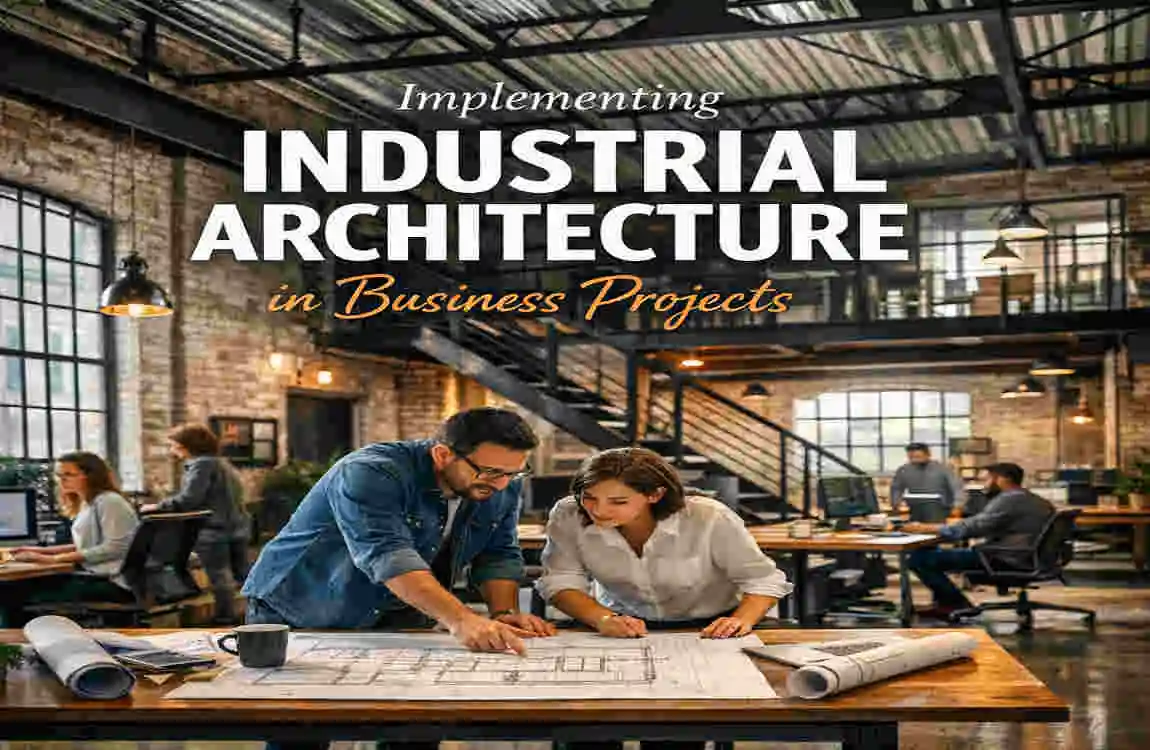
Are you feeling inspired to bring this robust, beautiful style into your own business? Whether you are building a new fulfillment center or renovating a historic downtown office, here are the actionable steps you need to take:
- Assess Your Unique Needs: Before you do anything else, evaluate your space requirements and machinery footprint. Do you need reinforced floors for heavy equipment? Do you need high ceilings for racking systems? Let the function dictate the form.
- Choose the Right Materials: Lean heavily into raw, durable materials. Opt for steel beams to give yourself the ultimate floor-plan flexibility. Leave your concrete floors exposed and polish them for a sleek, low-maintenance finish.
- Integrate Tomorrow’s Trends Today: Don’t build for 2010; build for 2026. Demand that your architects use BIM technology to streamline the build. Incorporate green tech, like solar-ready roofs and smart HVAC systems, right from the design phase.
- Keep an Eye on the Budget: Here is the best news: Embracing the raw industrial look can actually save you money. By eliminating the need for dropped ceilings, excessive drywall, and decorative flooring, you can often bring your project in 10-15% under the budget of a traditional commercial build.
Frequently Asked Questions (FAQs)
What is industrial architecture in simple terms? In simple terms, it is a no-nonsense style of building designed specifically for manufacturing, storage, or production. It focuses purely on function and efficiency rather than decoration, intentionally leaving structural materials like brick, steel beams, and concrete floors completely exposed for a raw, rugged aesthetic.
What are the key industrial architecture style elements? The most defining elements include large open floor plans with minimal walls, incredibly high ceilings, and massive grid-style windows to let in natural light. You will also heavily feature exposed ductwork, raw brick walls, polished concrete flooring, and heavy-duty steel structural supports.
What are the top 2026 industrial design trends? In 2026, the biggest trends include sustainable additions like solar panel roofs and recycled materials. We are also seeing a huge rise in the use of BIM Level 3 software for precise digital planning, hybrid pre-engineered structures for lightning-fast construction, and the inclusion of indoor greenery (biophilia) to improve worker wellness.
Are industrial buildings considered sustainable? Historically, they were not, but today, they are leading the charge in sustainability! Adaptive reuse of old factories saves thousands of tons of construction waste. New builds heavily incorporate green roofs, massive skylights to reduce electrical use, and eco-friendly HVAC systems that minimize the building’s carbon footprint.
Can the industrial style work for small businesses? Absolutely! You don’t need a massive factory to utilize this style. Small coffee shops, boutique retail stores, and local tech agencies frequently use industrial features like exposed brick, pipe shelving, and concrete floors. It creates an authentic, modern vibe that appeals strongly to consumers while keeping renovation costs relatively low.