Ever wondered what is contemporary architecture and why it’s reshaping city skylines right before our eyes? You have likely walked past a building that seemed to defy gravity, or perhaps a structure that curved in ways that felt almost organic rather than artificial. If you stopped to stare, you were likely admiring a piece of contemporary design.
In simple terms, contemporary architecture refers to the innovative building styles of today, starting from the 1980s and continuing into the present moment. Unlike historical styles that followed strict rulebooks, this architectural movement is defined by what it isn’t. It isn’t bound by tradition. Instead, it blends innovation, minimalism, and high-tech engineering to create spaces that are not just buildings, but experiences.
But why does this matter to you? Beyond just looking cool, these designs are incredibly relevant to the business world. Whether it is a commercial headquarters designed to boost employee creativity or a residential complex that commands top-tier market value, the commercial appeal of these sleek designs is undeniable.
Defining Contemporary Architecture
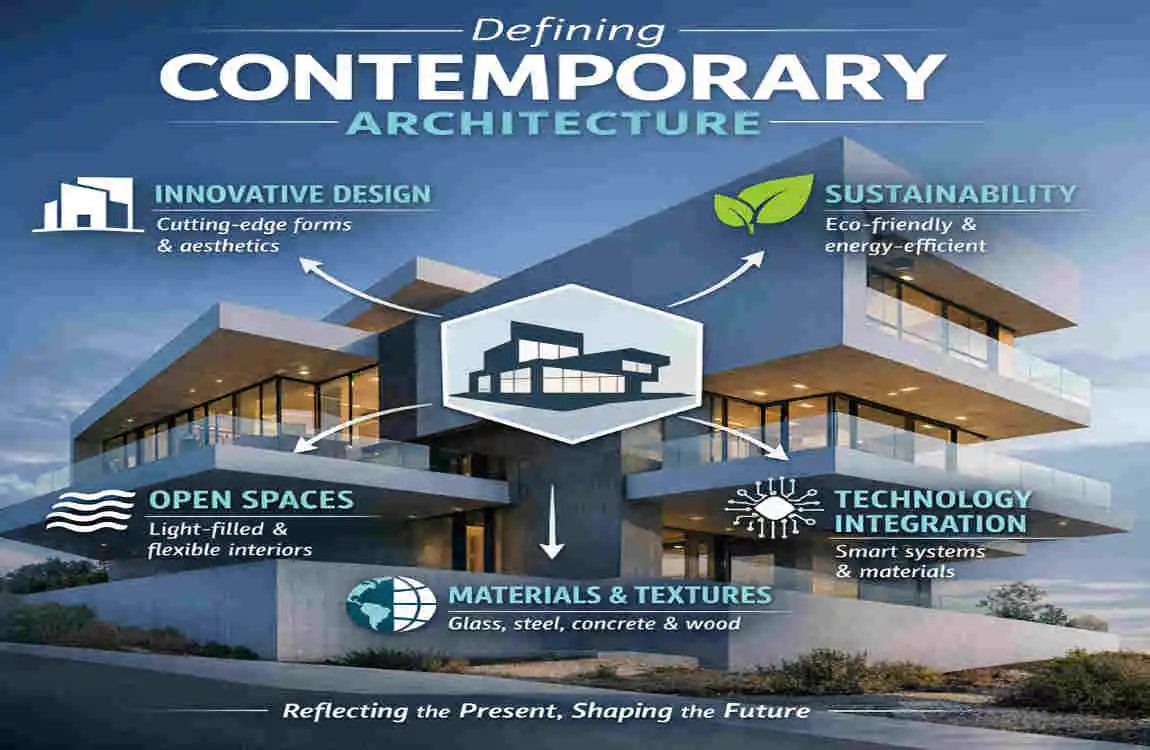
To truly understand what we are looking at, we need to peel back the layers. Contemporary architecture is not just one style; it is a collection of approaches that share a common goal: breaking the mold. It is about using the technology and materials of the 21st century to solve problems and create beauty.
Core Principles
At the heart of this movement, you will find a few guiding principles that architects stick to. First and foremost, you will notice clean lines and asymmetry. Unlike classical buildings that strive for perfect mirror images on the left and right, contemporary buildings embrace the unexpected. They might be heavy on one side, or curve unexpectedly, creating a sense of visual dynamism—a feeling that the building is in motion.
Another major principle is functionality over ornamentation. You have probably heard the phrase “form follows function.” In contemporary design, this is gospel. You won’t find gargoyles or intricate stone carvings here just for decoration. If a feature exists, it usually serves a purpose, whether that is structural support or managing sunlight.
Finally, there is material innovation. Architects today are like kids in a candy store with the materials at their disposal. We are talking about advanced glass, steel, and reinforced concrete. These materials allow for thinner walls, wider spans, and taller towers than ever before.
Vs. Modern Architecture
This is where things often get confusing. People frequently use the words “Modern” and “Contemporary” interchangeably, but in the architecture world, they mean two very different things.
Modern Architecture actually refers to a specific historical period (roughly the early to mid-20th century). Think of the Bauhaus movement or the sleek, boxy homes of the 1950s. Contemporary Architecture is what is happening right now.
Here is a simple breakdown to help you spot the difference:
Aspect Contemporary Architecture Modern Architecture (Mid-20th Century)
Timeline 1980s – Present Day 1920s – 1970s
Style Fluid, curved, and irregular forms Boxy, rigid, and minimalist
Tech Focus Sustainability, smart materials, AI Industrial simplicity and mass production
Examples Heydar Aliyev Center Bauhaus buildings, Fallingwater
While Modern architecture was all about cold logic and industrial efficiency, Contemporary architecture builds on modernism by adding warmth, curves, and a strong focus on the environment. It takes the “less is more” concept but adds a layer of “smarter is better.”
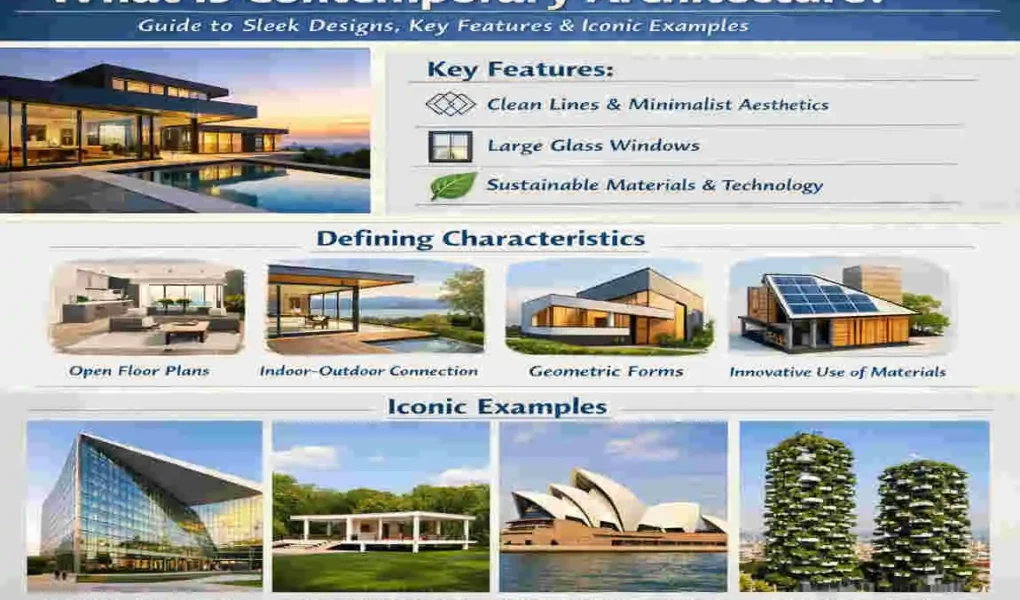
Key Features of Sleek Designs
Now that we know what it is, let’s talk about what it looks like. If you were to walk into a contemporary building, specific features would immediately stand out. These aren’t just aesthetic choices; they are deliberate design moves meant to improve how we live and work.
Minimalism and Open Spaces
The first thing you will notice is the space. Minimalism is a huge driver here. We are moving away from clutter and toward open, airy environments. This often manifests as floor-to-ceiling windows that flood the interior with natural light.
Architects often use white palettes or neutral tones to enhance this feeling of airiness. From a business perspective, this isn’t just about looking fancy. Studies suggest that open, well-lit spaces significantly boost productivity in offices. When you remove visual clutter, you help clear mental clutter, allowing people to focus better on their tasks.
Sustainable Integration
You cannot talk about building today without talking about the planet. Contemporary architecture is deeply married to sustainability. It is no longer enough for a building to stand up; it has to give back.
- Green Roofs: You will often see gardens planted on top of skyscrapers. These aren’t just for lunch breaks; they provide insulation and manage rainwater.
- Solar Integration: Solar panels are no longer ugly add-ons; they are often integrated directly into the roof tiles or glass.
- Natural Ventilation: Smart designs use airflow to cool buildings naturally. This can cut energy costs by 30-50%, which is a massive selling point for developers and business owners.
Technological Advancements
We are living in the digital age, and our buildings reflect that. Technological advancements have allowed architects to dream bigger. We are seeing smart facades—building exteriors that change transparency in response to the sun’s position to keep the inside cool.
We are even seeing 3D-printed elements. This allows for custom shapes that would be too expensive or impossible to build by hand. The benefits here are clear:
- Durability: New materials last longer with less maintenance.
- Cost Savings: While the tech is expensive upfront, the faster construction speeds save developers money in the long run.
Geometric Innovation
Finally, contemporary architecture is known for bold shapes. Thanks to computer software, architects can design structures that twist, turn, and hang in mid-air.
- Cantilevers: Parts of a building that project horizontally without visible support beneath. It creates a thrilling, gravity-defying look.
- Curvilinear Forms: Instead of boxes, think of waves. These fluid shapes mimic nature, making large buildings feel less imposing and more welcoming.
Iconic Examples Worldwide
The best way to understand these concepts is to see them in action. Let’s take a trip around the world to look at 6-8 buildings that have defined this era. These aren’t just buildings; they are landmarks that have changed the fortunes of their cities.
MAXXI National Museum, Rome (Zaha Hadid)
Located in the historic city of Rome, the MAXXI National Museum is a shock to the system in the best way possible. Designed by the legendary Zaha Hadid, this building is a masterpiece of fluid motion.
Hadid avoided the traditional “box” structure of museums. Instead, she created a series of interconnected curves that resemble concrete rivers flowing over one another. The interior creates a journey for the visitor, guiding them through art spaces without rigid barriers. It is a prime example of how fluid forms define contemporary boldness, proving that concrete can look as light as a ribbon.
City of Arts & Sciences, Valencia (Santiago Calatrava)
If you visit Valencia, Spain, you might have landed on another planet. The city of Arts & Sciences, designed by Santiago Calatrava, is a massive complex that combines culture, science, and nature.
The structures feature futuristic shells that mimic skeletons or giant eyes. The use of white concrete and shattered tiles creates a blindingly beautiful reflection in the surrounding pools of water. It perfectly blends science and culture, showing how contemporary architecture can turn a dry riverbed into the country’s most visited tourist attraction.
Guggenheim Bilbao (Frank Gehry)
This is the most famous example of them all. When Frank Gehry designed the Guggenheim Museum in Bilbao, Spain, he didn’t just build a museum; he saved a city.
The building is wrapped in shimmering titanium waves that catch the light in different ways at every hour of the day. Before this building, Bilbao was a struggling industrial port. After it opened, tourism exploded. This phenomenon is now known as the “Bilbao Effect”—the idea that a single piece of amazing architecture can revive a city economically.
Heydar Aliyev Center, Baku (Zaha Hadid)
We have to mention Zaha Hadid again because the Heydar Aliyev Center in Azerbaijan is simply breathtaking. In a city defined by rigid Soviet-era concrete blocks, this building rises like a whipped meringue.
The design features seamless curves with absolutely no sharp edges. The building flows from the ground up into the roof and back down again, blurring the line between the plaza and the building itself. It is an award-winning example of fluidity, representing a break from the past and an optimistic look toward the future.
Seattle Central Library (OMA/Rem Koolhaas)
Libraries used to be dark, quiet places full of dust. Rem Koolhaas and his firm OMA changed that with the Seattle Central Library.
This building looks like a stack of offset boxes wrapped in a glass and steel mesh. It features faceted glass diamonds that let light pour in. The interior is designed around a “book spiral”—a continuous ramp of books that allows you to browse the entire non-fiction collection without using stairs or elevators. It prioritizes intuitive public flow, making the library a social hub rather than just a book warehouse.
CCTV Headquarters, Beijing (OMA)
Skyscrapers usually go straight up. The CCTV Headquarters in Beijing, also by OMA, decided to loop around.
Often called “The Big Pants” by locals due to its shape, this building is a looped skyscraper that defies gravity. It consists of two leaning towers that are joined at the top and bottom. It completely rethinks high-rises, showing that a tall building doesn’t have to be a lonely spike in the sky; it can be a continuous, three-dimensional urban loop.
The Shard, London
Piercing the London skyline is The Shard, designed by Renzo Piano. It is currently one of the tallest buildings in Western Europe.
This structure is a vertical city, housing offices, restaurants, a hotel, and apartments all in one glass spire. Its jagged top, which gives it its name, is left open to the sky, allowing the building to “breathe.” It has become a skyline icon, proving that contemporary architecture can sit side-by-side with historic structures like the Tower of London and still feel harmonious.
Contemporary in Business & Real Estate

You might be thinking, “These buildings are beautiful, but are they practical investments?” The short answer is yes. Contemporary architecture is big business.
Commercial Applications
For companies, occupying a building with a sleek, modern design is a massive branding statement. It screams “innovation.” But beyond vanity, sleekly designed offices and hotels attract Premium tenants.
Companies like Google and Apple invest billions in contemporary headquarters because they know the environment affects the bottom line. Modern builds often yield 20% higher rents compared to older, traditional office spaces. Tenants are willing to pay more for natural light, better air quality, and the prestige of a landmark address.
Home Design Trends
This influence trickles down to our homes, too. We are seeing a massive shift toward open-plan homes inspired by these global icons. Walls are coming down between kitchens and living rooms to create communal spaces.
In rapidly developing urban centers—Lahore is a prime example—new housing developments are moving away from traditional, compartmentalized layouts. Instead, they are embracing the contemporary style of large glass windows, flat roofs, and minimalist facades. Homeowners want that “luxury villa” feel, and contemporary architecture delivers that through clean lines and smart use of space.
Future Outlook
The future of this industry looks incredibly high-tech. We are moving toward AI-driven designs, where computers help optimize a building’s shape to be as energy-efficient as possible.
There is also a massive push for net-zero goals by 2030. This means buildings that generate as much energy as they consume. Contemporary architecture is the vehicle that will get us there, using smart tech to save the planet while saving money.
How to Incorporate in Your Projects
So, you are convinced. You want to bring some of this sleek, modern magic into your own building project, whether it is a new office or a dream home. How do you start?
Here is a simple roadmap:
- Assess Your Site and Climate: Contemporary design is about context. Don’t just copy a picture you saw on Pinterest. Look at your land. Where does the sun rise? Which way does the wind blow? A good contemporary design works with nature, not against it.
- Choose the Right Architects: You need a specialist. Look for firms that specialize in “parametric design” or sustainable building. Do not just hire a general contractor; hire a visionary.
- Budget for Materials: Be realistic. Those floor-to-ceiling glass walls and steel beams come with a Premium price tag. Glass and steel premiums can be high, but remember, you are paying for durability and aesthetics that hold value.
- Add Smart Tech: Even if you can’t build a spaceship, you can install smart systems. Automated lighting, smart thermostats, and energy-efficient windows are small touches that make a home feel “contemporary.”
Business Tip: If you are a developer, partner with local firms that understand these trends. Custom sleek designs sell faster and for more money than cookie-cutter copies.
FAQs
What is contemporary architecture in simple terms? It refers to the building styles of today (post-1980s). It focuses on innovative, minimal designs, using advanced materials like glass and steel, and prioritizes breaking away from traditional rules.
What are the key differences from modern architecture? Modern architecture (mid-20th century) was boxy and rigid. Contemporary architecture features more curves, asymmetry, and a heavy focus on sustainability and eco-friendliness.
Who are some famous contemporary architects? Some of the titans of the industry include Zaha Hadid, Frank Gehry, Santiago Calatrava, and Rem Koolhaas.
What are the cost factors? You will face higher upfront costs due to specialized materials and design fees. However, thanks to energy-efficient systems, you can expect long-term savings on utility bills.