
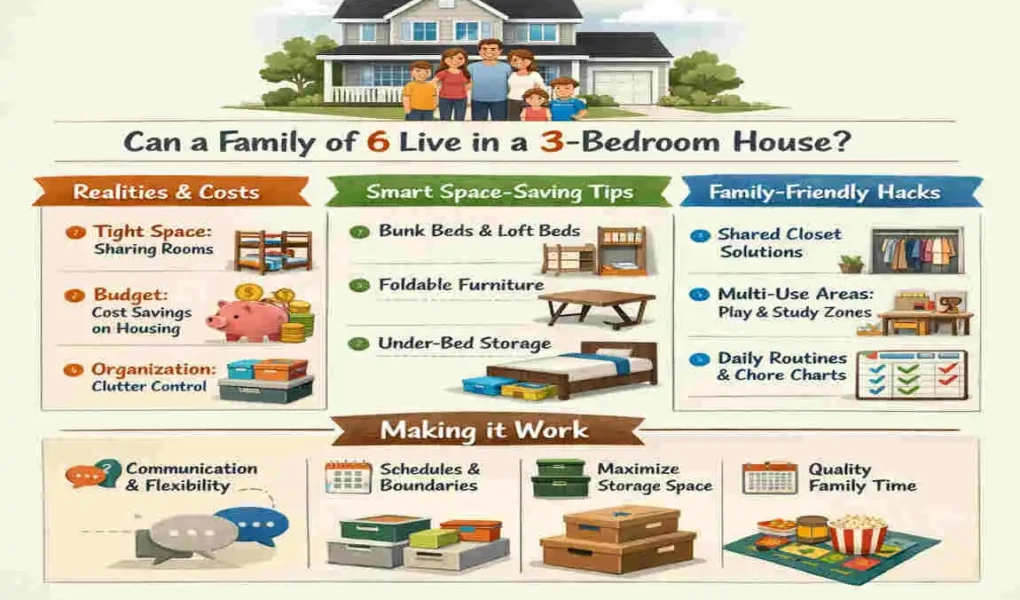
Can a family of 6 live in a 3-bedroom house without completely losing their mind? You are definitely not alone. When you look at towering piles of laundry, shoes scattered by the door, and kids fighting over the television, squeezing a large family into a modest home can feel like an impossible puzzle.
But here is the truth: you absolutely can make it work. In fact, recent census data shows that nearly 40% of urban families in places like the United States and happily squeeze into homes with fewer than four bedrooms. You do not need a sprawling mansion to build a happy, functional life for your kids. You need a solid game plan, some clever organization, and a willingness to rethink how you use your space.
Is It Realistic? Pros and Cons of a Family of 6 in a 3 Bedroom House
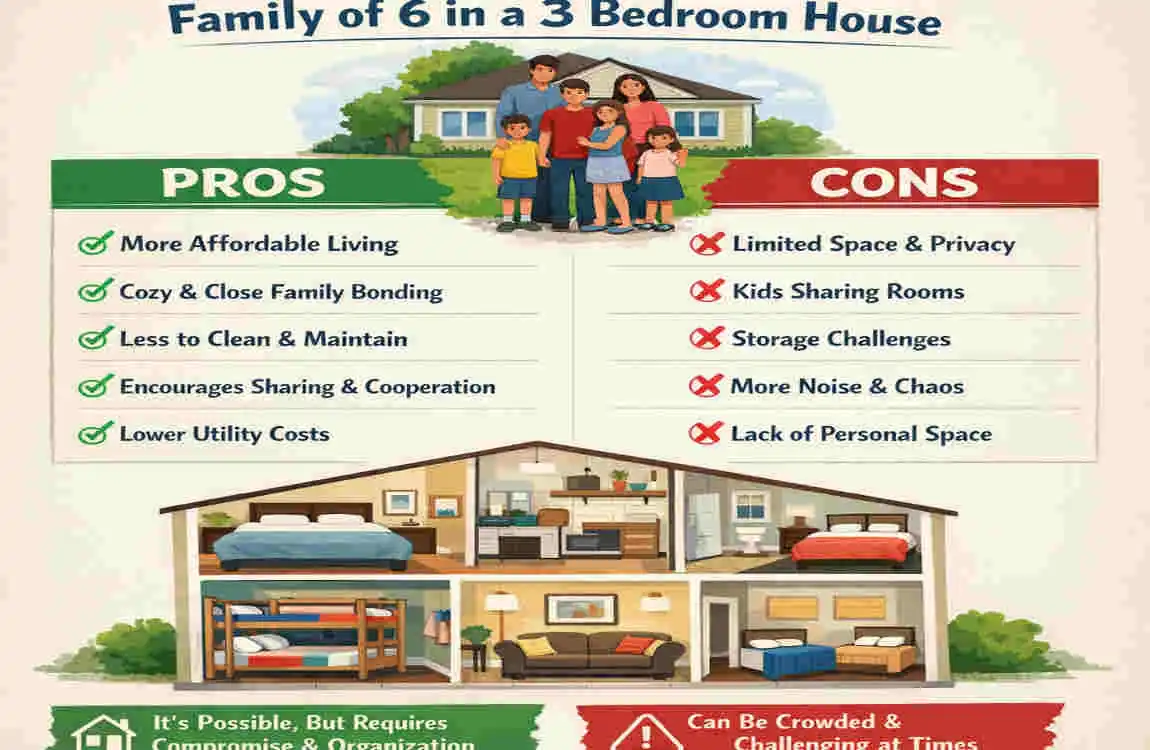
When you picture six people sharing three bedrooms, your mind probably jumps straight to the challenges. Let’s be real—it is not always a walk in the park. But looking closely at the reality of this lifestyle reveals some incredibly surprising benefits, too.
The Challenges: Space, Privacy, and Daily Chaos
Let’s tackle the tough stuff first. The average three-bedroom house offers anywhere from 1,200 to 1,500 square feet of living space. When you divide that up, a family of six ends up with roughly 200 square feet per person. That is tight!
Overcrowding brings some common pain points that you will need to manage. Shared bathrooms often become the biggest battleground, especially during the chaotic morning rush for school and work. Noise is another major factor; with six people breathing, talking, and playing under one small roof, finding a quiet corner can feel like searching for a needle in a haystack. Finally, as your kids grow, teen privacy issues will inevitably pop up. Teenagers naturally crave their own space, and sharing a room with a younger sibling can cause friction.
Surprising Benefits: Bonding, Savings, and Minimalism
Despite the hurdles, the benefits of living small are huge. One of the biggest perks is the impact on your wallet. Smaller homes mean significantly lower utility bills—often 20% to 30% less than what you would pay to heat and cool a four or five-bedroom house.
Beyond the financial savings, living in close quarters fosters stronger family ties. When kids share spaces, they learn essential life skills like compromise, sharing, and conflict resolution at a very young age. You will also find that a smaller home forces you to embrace minimalism. You do not have the space to hoard things you do not need, which naturally leads to an eco-friendly, clutter-free lifestyle.
For example, a typical Pakistani family in Lahore currently thrives in a 3-bedroom row house by focusing on experiences and outdoor activities rather than filling their home with unnecessary material goods.
Quick Pros and Cons of Living Small:
- Pros: Lower mortgage/rent, reduced electricity and gas bills, less square footage to clean, closer family bonding, discourages accumulating junk.
- Cons: Lack of personal privacy, morning bathroom queues, rapid clutter buildup if not organized, and limited space for hosting overnight guests.
Real-Life Stories: Families of 6 Thriving in 3 Bedroom Homes
Sometimes, the best way to believe something is possible is to see how others are already doing it. Here are some real families answering the burning question: Can a family of 6 live in a 3-bedroom house?
Case Study 1: Urban Pakistani Family in Lahore
Meet the Ali family. With parents and four children ranging from toddlers to teens, they share a 1,300-square-foot home in the heart of Lahore. Instead of feeling cramped, they have mastered the art of zoned living.
“We gave the largest bedroom to our three boys,” shares Mr. Ali. They invested in sturdy, custom-built bunk beds made from local Sheesham wood, ensuring the beds would last for years. Their daughter gets the smaller second bedroom to herself, giving her the privacy she needs as a teenager. The parents took the main bedroom. By utilizing every inch of vertical wall space for storage and keeping a strict “one toy in, one toy out” rule, their bustling home remains surprisingly peaceful.
Case Study 2: U.S. Suburban Makeover
Over in the American suburbs, the Smith family faced a similar dilemma. Two parents, four kids, and only three bedrooms. Their house felt like pure chaos until they decided to rethink their layout completely.
They performed a massive decluttering weekend and transformed an unused hallway nook into a dedicated homework station. For the bedrooms, they utilized loft beds for the older kids, placing their dressers and desks directly underneath the beds. This simple switch doubled the usable floor space in the kids’ rooms. They also transformed their chaotic living room into a serene space by hiding all toys inside stylish storage ottomans. The transformation took them from stressed to blessed in just a few weeks.
Global Examples (UK, India)
In places like the UK and India, multi-generational living is incredibly common. Cultural adaptations have long proven that large families can thrive in smaller footprints. Joint families in India often share massive, multi-purpose living areas where communal eating and gathering are the focus. Bedrooms are viewed strictly as sleeping quarters rather than personal hangouts. These global lessons teach us that feeling “cramped” is often just a mindset. If you shift your perspective to view your home as a cozy hub rather than a sprawling retreat, the space suddenly feels much bigger.
Bedroom Breakdown: Smart Sleeping Arrangements for 6
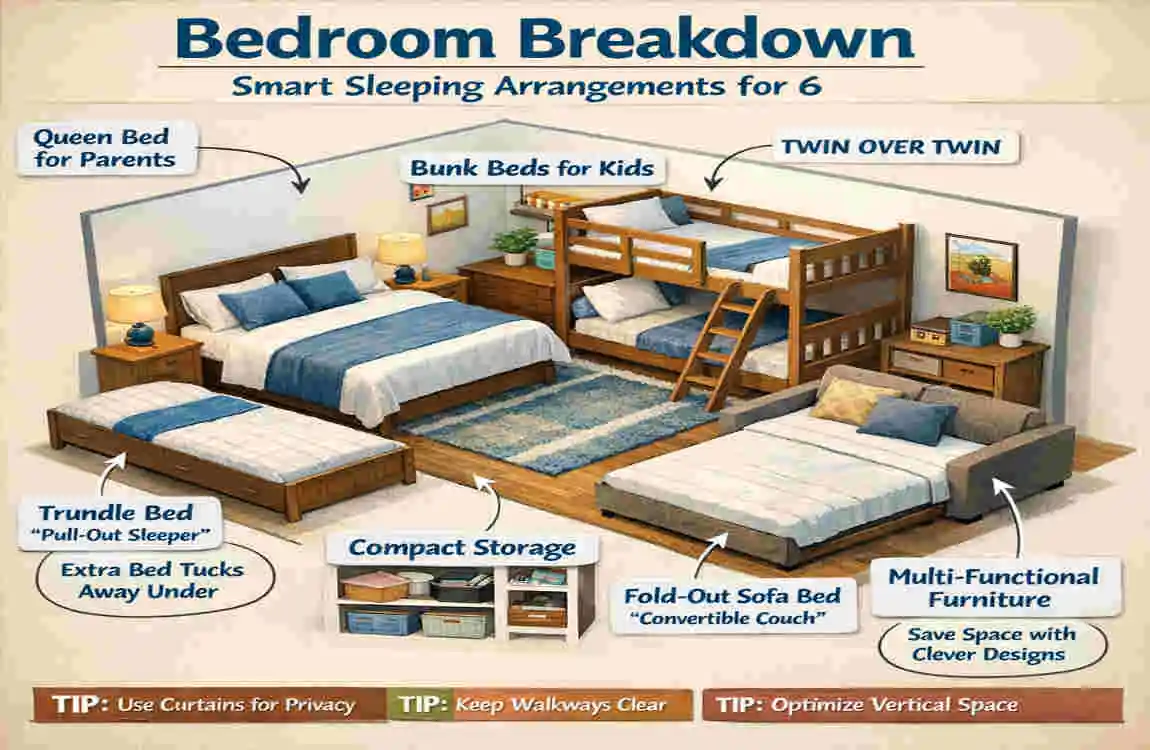
Figuring out who sleeps where is the biggest piece of the puzzle. Here is how you can set up your sleeping quarters to maximize comfort and minimize arguments.
Master Bedroom Setup (Parents)
Parents, you need a sanctuary, but you also need to be smart about your space. If your master bedroom is large enough, consider moving a baby or toddler into your room temporarily. To save space, consider Murphy beds (beds that fold up into the wall) or beds with built-in drawers beneath.
If you use a standard bed, raise it on bed risers and hide your out-of-season clothing in flat, rolling bins underneath. Keep your decor light, airy, and minimal. This is your place to recharge away from the chaos, so banish the kids’ toys from this room completely!
Kids’ Room 1 (e.g., 2 Teens)
Teenagers need their own identity. If you have two teens sharing a room, give them separate zones. Loft beds with desks underneath are perfect for this. Each teen gets their own designated sleeping and studying area.
To create a sense of privacy, install privacy curtains around the bottom bunks or use a simple bookshelf as a room divider. Let them pick their own bedding to express their individuality, even if the patterns clash. Giving them a sense of ownership over their half of the room will drastically reduce sibling bickering.
Kids’ Room 2 (e.g., 2 Younger + Flex)
For the younger kids, floor space to play is the most important thing. Trundle beds—where one bed rolls out from under another—are fantastic space savers. During the day, you roll the bed away, leaving the entire floor open for building blocks and wrestling matches.
If you choose standard bunk beds, make sure they have built-in storage stairs rather than a ladder. You can use a rotating toy bin system in this room. Keep only a few toys out at a time and store the rest out of sight, rotating them every few weeks so they feel brand-new.
Living Room as Bedroom 4
If your kids cannot share, or if you have older relatives living with you, you might need to turn your living room into a makeshift fourth bedroom at night.
Invest in a highly comfortable, durable sofa bed. Use folding Japanese-style room dividers or heavy curtains to section off the sleeping area when the sun goes down. In the morning, everything folds away, and your living room is ready for family time again.
10 Essential Product Ideas for Small Bedrooms:
- Heavy-duty triple bunk beds
- Under-bed rolling storage crates
- Wall-mounted floating desks
- Clip-on reading lamps for bunk beds
- Over-the-door hanging shoe organizers (great for toys!)
- Vacuum-seal bags for winter blankets
- Tension rods with blackout privacy curtains
- Cube storage organizers with fabric bins
- Corner wall shelves
- Fold-down wall tables
Kitchen & Living Room Hacks for High-Traffic Family Life
When you have six mouths to feed and six bodies looking for a place to sit, your common areas take a heavy beating. Here is how you can optimize your main living spaces.
Multi-Use Kitchen Zones
A family of six generates a massive amount of dirty dishes and requires a lot of food. Your kitchen needs to be a well-oiled machine.
Focus heavily on vertical storage. Take your cabinets all the way up to the ceiling. Store items you use rarely on the very top shelves, and keep daily essentials at arm’s reach. Install pull-out pantries in the narrow gaps between your fridge and the wall. Use the inside of your cabinet doors to hang measuring cups, pot lids, and spices.
Create a dedicated “snack zone” in a lower drawer so younger kids can grab their own snacks without bothering you while you cook. This simple hack saves your sanity when you are trying to prepare dinner for six!
Living Room Transformations
Your living room is the heart of the home, but it can quickly look like a tornado hit it. The secret here is hidden storage.
Ditch the traditional coffee table and replace it with a large storage ottoman. You can kick your feet up on it, put a tray on it for drinks, and hide twenty board games inside it. Wall-mount your television to eliminate the need for a bulky TV stand. If you need workspace, use foldable furniture, such as a desk that folds flat against the wall when not in use.
15 Space-Saving Tips for a 3 Bedroom Family Home Common Areas:
- Use nesting tables that slide under each other to save 50% of your floor space.
- Buy a dining table with an extension leaf. Keep it small daily, expand it for guests.
- Use a large rug to define the living space in an open-concept layout.
- Hang pots and pans from a kitchen ceiling rack.
- Use stackable dining chairs that can be tucked away.
- Install magnetic knife strips to clear up counter space.
- Keep your color palette light to make the room feel bigger.
- Use large mirrors on living room walls to bounce light and create an illusion of space.
- Store bulky winter coats in a different room if your entryway is small.
- Use wall sconces instead of bulky floor lamps.
- Choose a sectional sofa that fits perfectly into a corner.
- Add floating shelves above the sofa for books and family photos.
- Use the space above your kitchen cabinets for attractive storage baskets.
- Create a dedicated drop zone by the front door for keys, bags, and shoes.
- Embrace the “clean as you cook” rule to prevent kitchen countertops from overflowing.
Bathroom & Storage Solutions to Avoid Morning Mayhem
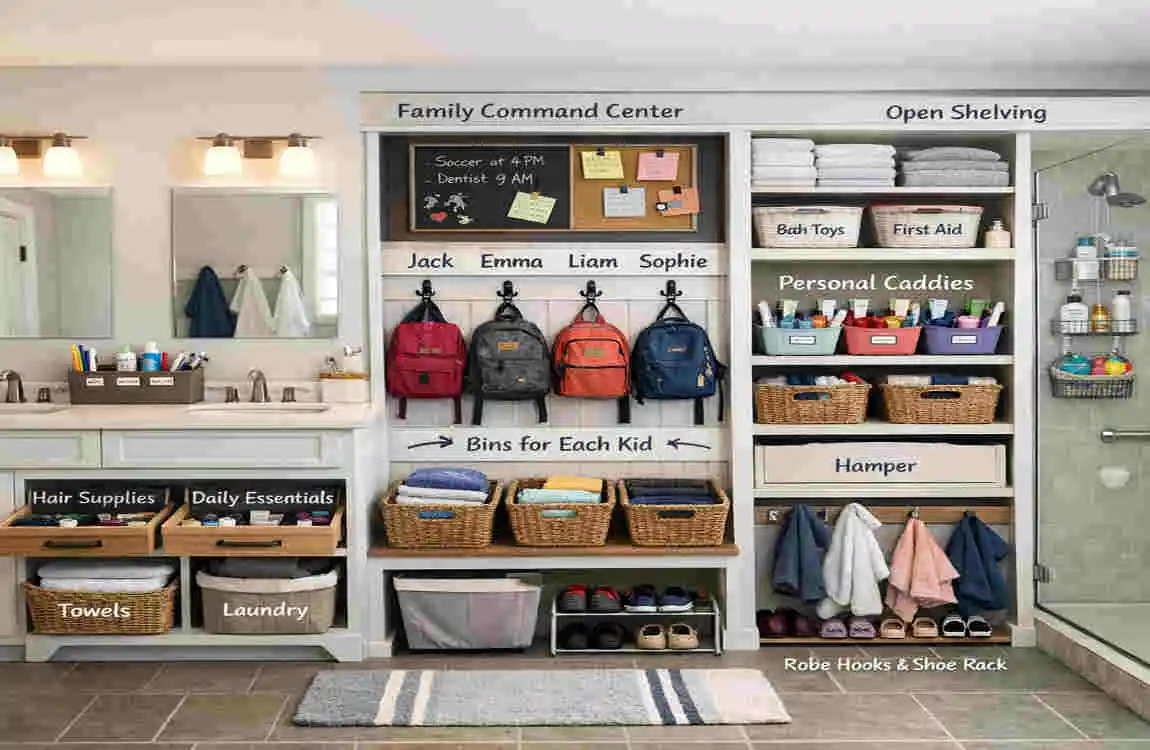
If there is one thing that will test your patience when living small, it is sharing one or two bathrooms with five other people. Morning mayhem is real, but you can conquer it.
Shared Bath Hacks
Organization and scheduling are your best friends here. First, assign everyone a specific bathroom time slot. Stick a waterproof clock in the shower so teenagers know exactly how long they have been in there.
To maximize space, use an over-the-door organizer to hold individual toiletry bags. Each family member gets a bag with their toothbrush, toothpaste, and deodorant. They bring it in when it is their turn, and take it out when they leave. This keeps the sink completely clear! Install an extra tension rod inside the shower, against the back wall, to hang baskets full of shampoo and body wash. Add multiple towel hooks on the back of the door instead of a single towel bar, so everyone has a spot to hang their towel.
Whole-House Storage Wins
You have to get creative to store belongings for six people. Look up, look down, and look behind doors.
Use closet doublers (a bar that hangs from your existing closet rod) to double your hanging space for kids’ clothes instantly. Slide under-bed bins into every single bedroom for shoes and out-of-season clothing. Use the dead space above your bedroom doors to install a simple shelf to hold books or decorative boxes. If you have stairs, turn the awkward space underneath them into a pull-out closet or a cozy reading nook for the kids.
Top Budget Storage Buys (Under PKR 5,000):
- Hanging canvas closet organizers.
- Plastic drawer dividers for socks and underwear.
- Over-the-cabinet-door trash cans to save kitchen floor space.
- Adhesive wall hooks for backpacks and jackets.
- Multi-tier shoe racks for the entryway.
The Real Costs: Budgeting for a Family of 6 in a 3 Bedroom House
Now, let us talk about the money. One of the primary reasons families choose to downsize is to achieve financial freedom. What are the costs of living in a small house with a large family? Let’s break it down using real-world averages, focusing on an urban hub like Lahore.
Rent/Mortgage Breakdown
In a bustling city like Lahore, housing costs vary wildly depending on the neighborhood. However, on average, renting a decent 3-bedroom home or portion in a family-friendly area will cost you anywhere from PKR 40,000 to PKR 80,000 per month.
If you were to upgrade to a 4 or 5-bedroom home in the same area, your rent could easily skyrocket to PKR 100,000 or more. By choosing to stay in a 3-bedroom house, you are saving a massive chunk of your income every single month. You can funnel these savings into your kids’ education, family vacations, or an emergency fund.
Utilities & Maintenance
Smaller spaces are significantly cheaper to run. You have fewer rooms to cool in the blazing summer and fewer rooms to heat in the winter. On average, you can expect a monthly savings of at least PKR 10,000 to PKR 15,000 on your electricity and gas bills compared to a larger home.
Maintenance costs are also drastically reduced. Fewer bathrooms mean fewer plumbing emergencies. Less square footage means replacing the flooring or repainting the walls will cost you a fraction of the price.
Hidden Expenses (Furniture, Renovations)
While the monthly costs are low, you do need to budget for the initial setup. Making a small space work for a large family requires specific furniture.
You should buy new bunk beds, custom storage closets, and space-saving organizers. Expect your “startup costs” to optimize the home to range between PKR 200,000 and PKR 500,000. This might feel like a big number upfront, but remember, the monthly rent savings will pay this off in less than a year!
Monthly Cost Comparison Table (Estimates):
Expense Category 3-Bedroom Home (Family of 6)4-Bedroom Home (Family of 6)
Average Rent PKR 60,000 PKR 110,000
Electricity/Gas PKR 25,000 PKR 40,000
Maintenance PKR 5,000 PKR 10,000
Total Monthly PKR 90,000 PKR 160,000
20+ Budget-Friendly Space-Saving Tips & DIY Hacks
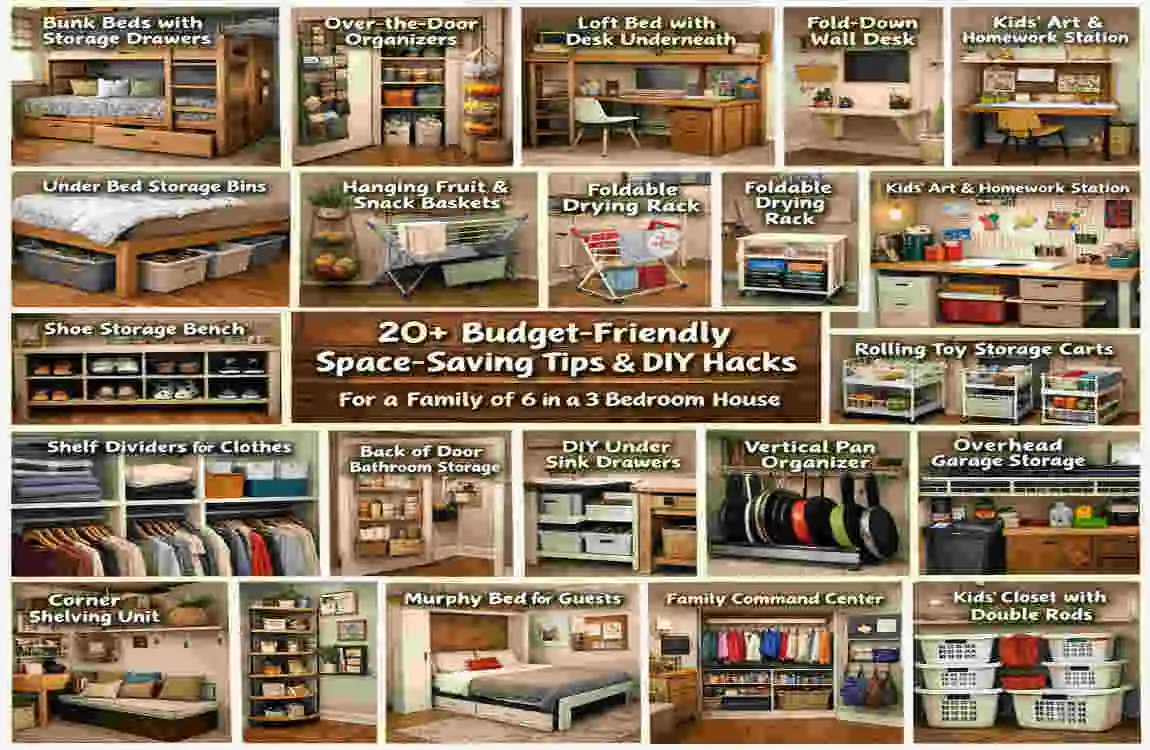
If you are looking for a specific family of 6 in a 3-bedroom house hack, here is the ultimate master list. These 20+ tips will help you maximize your space without breaking the bank.
- Vertical Gardening: Don’t let a small balcony stop you from having a garden. Use hanging planters or a vertical wooden pallet to grow herbs and small vegetables.
- Modular Shelving: Buy shelves that can be stacked or separated. As your family’s needs change, you can easily reconfigure your storage.
- Vacuum Storage Bags: These are lifesavers! Suck the air out of bulky winter blankets and jackets, shrinking them down to slide easily under a bed.
- Over-the-Door Everything: Buy organizers that hang over doors for shoes, cleaning supplies, and toiletries. Every door in your house is a storage opportunity.
- Fold-Down Desks: Mount desks on the wall that fold flat when the kids finish their homework.
- Use Wall Sconces: Clear off your nightstands and side tables by installing plug-in wall sconces for reading lights.
- The “One In, One Out” Rule: For every new item of clothing or toy brought into the house, an old one must be donated or thrown away.
- Digitalize Paperwork: Stop piling up bills and school papers. Scan them with your phone and throw away the physical copies to clear counter space.
- Corner Shelves: Corners are often wasted space. Install floating zigzag shelves in corners to hold books or small baskets.
- Use Baskets on Top of Cabinets: Hide items you rarely use in matching, aesthetic baskets on top of your kitchen cabinets or wardrobes.
- Shower Caddy Tension Rods: Put a tension rod in the back of the bathtub to hang multiple shower caddies so everyone gets their own shelf.
- Magnetic Spice Jars: Stick your spices to the side of your refrigerator instead of taking up valuable pantry shelf space.
- Rolling Cart Stations: Use a 3-tier rolling cart for art supplies or homework materials. Roll it into the living room when needed and into a closet when done.
- Custom Sheesham Wood Built-ins: In places like Lahore, hiring a local carpenter to build custom beds with drawers underneath is often cheaper than buying branded furniture.
- Pegboards in the Kitchen: Hang a large pegboard on a bare kitchen wall to hold frying pans, spatulas, and mugs.
- Color Code Kids’ Items: Assign each child a color. Buy their towels, toothbrushes, and laundry baskets in that color so you always know whose stuff is left out.
- Use the Back of Cabinet Doors: Stick command hooks on the inside of your vanity doors to hold hair dryers and hair straighteners.
- Tension Rod Shoe Racks: Place small tension rods at the bottom of a closet to create an instant, cheap shoe rack.
- Go Digital with Books/Movies: Sell the massive DVD and book collections. Use streaming services and e-readers to free up space on heavy bookcases.
- App-Based Chore Rotations: Keep the house clean without having to shout. Use a family app to assign daily chores so the small space never gets out of hand.
- Maximize Staircase Walls: If you have an indoor staircase, line the wall going up the stairs with family photos instead of taking up table space with picture frames.
Long-Term Solutions: When to Upgrade or Renovate
You can hack your way to success for years, but eventually, your children will grow into large teenagers, and the walls might start feeling a little too close.
Permits for Extensions
If you own your 3-bedroom home, consider renovating before you sell. Adding a small room on the roof or converting a garage can give you that desperate fourth bedroom. If you live in a city like Lahore, be sure to check the local LDA (Lahore Development Authority) rules. You will need proper permits before you start pouring concrete or adding a second story. Adding a single bathroom extension is often the best investment you can make to ease family tensions.
Signs It’s Time to Move
How do you know when it is finally time to pack up? If you find that the lack of sleep is affecting your kids’ school performance, or if the constant clutter is causing severe daily anxiety despite your best organizing efforts, it might be time to upsize. Remember, a home should be a haven. If you have tried all the space-saving tricks and your family is still miserable, moving to a larger space is a valid and sometimes necessary choice.
FAQ: Answering Your Top Questions
Can a family of 6 live in a 3-bedroom house comfortably? Yes, absolutely! With the right organization, decluttering habits, and smart furniture choices like bunk beds and storage ottomans, a family of six can live comfortably and happily in a three-bedroom home.
What is the average cost to furnish a small house for a large family? If you are buying space-saving furniture like loft beds, pull-out sofas, and custom closet organizers, expect to spend around PKR 200,000 to PKR 500,000 initially. However, you will save much more than that on monthly rent.
What is the best furniture for small spaces? Always look for multi-functional furniture. Think beds with drawers underneath, hollow ottomans that open up for storage, fold-down wall desks, and extendable dining tables.
How do you manage one bathroom with 6 people? Create a strict morning schedule. Move all hair and makeup routines to bedrooms by installing small mirrors there. Keep toiletries in personal bags rather than scattered across the bathroom sink.
How do teenagers handle sharing a room? Teenagers value privacy. You can help them by providing a room divider, a bed tent, or a loft bed with an enclosed lower section. Respect their personal space, no matter how small it is.