Imagine stepping through the front door of your dream home. You look around and see a spacious living room, a kitchen filled with natural light, and a hallway leading to three cozy bedrooms. It feels perfect. But before you can turn this dream into a reality, you have to answer a highly practical question. You need to know exactly how much space you actually need to live comfortably.
As we navigate the housing market in 2026, the size of our homes has become a major topic of conversation. Families and buyers are paying closer attention to efficient spaces than ever before. Gone are the days when bigger automatically meant better. Today, soaring land prices, shifting environmental priorities, and new work-from-home lifestyles are prompting us to rethink our living spaces. We want homes that work harder for us without draining our bank accounts.
Average Size Breakdown: What Does a Standard Home Look Like?
When you start looking at floor plans, the numbers can feel abstract. It is hard to visualize what a specific number of square meters actually feels like when you are standing inside it. To simplify things, let us define the standard ranges and break down the global averages.
The Global Baseline
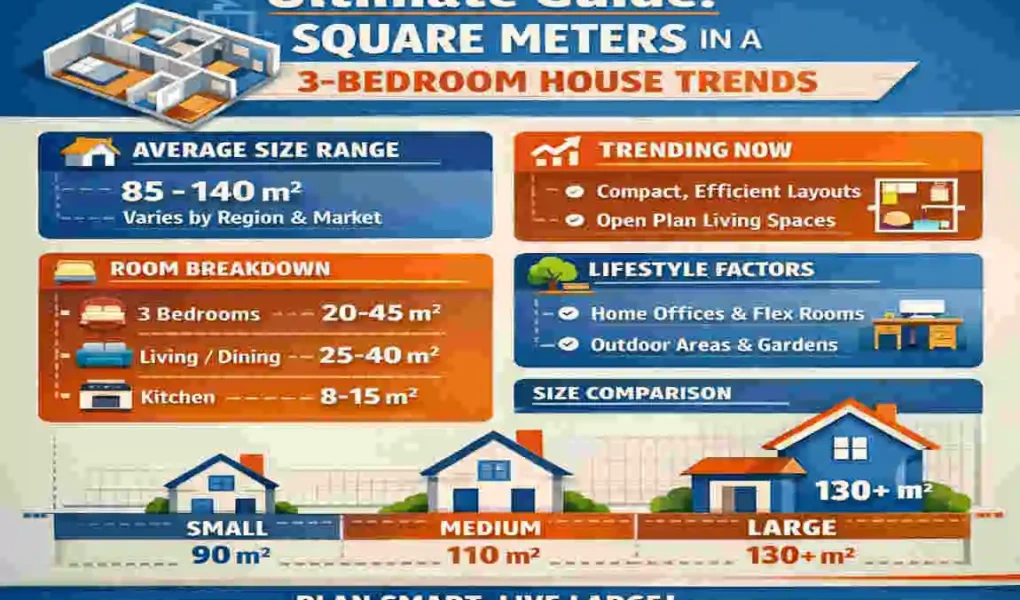
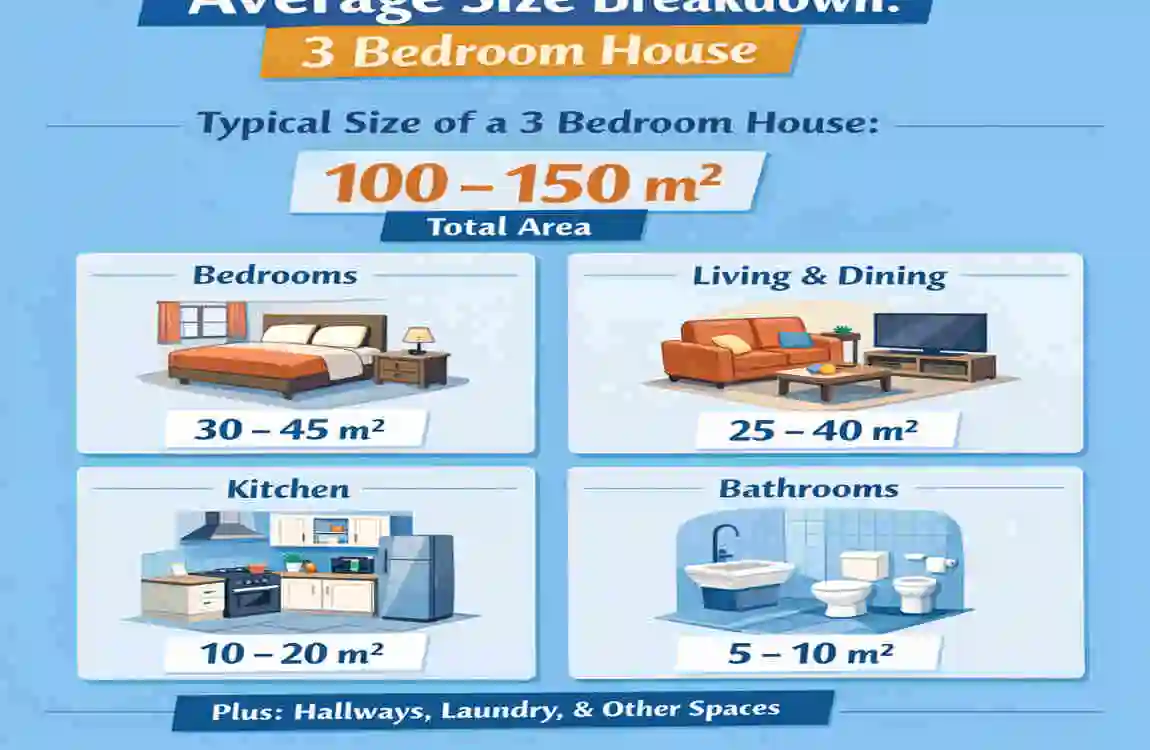
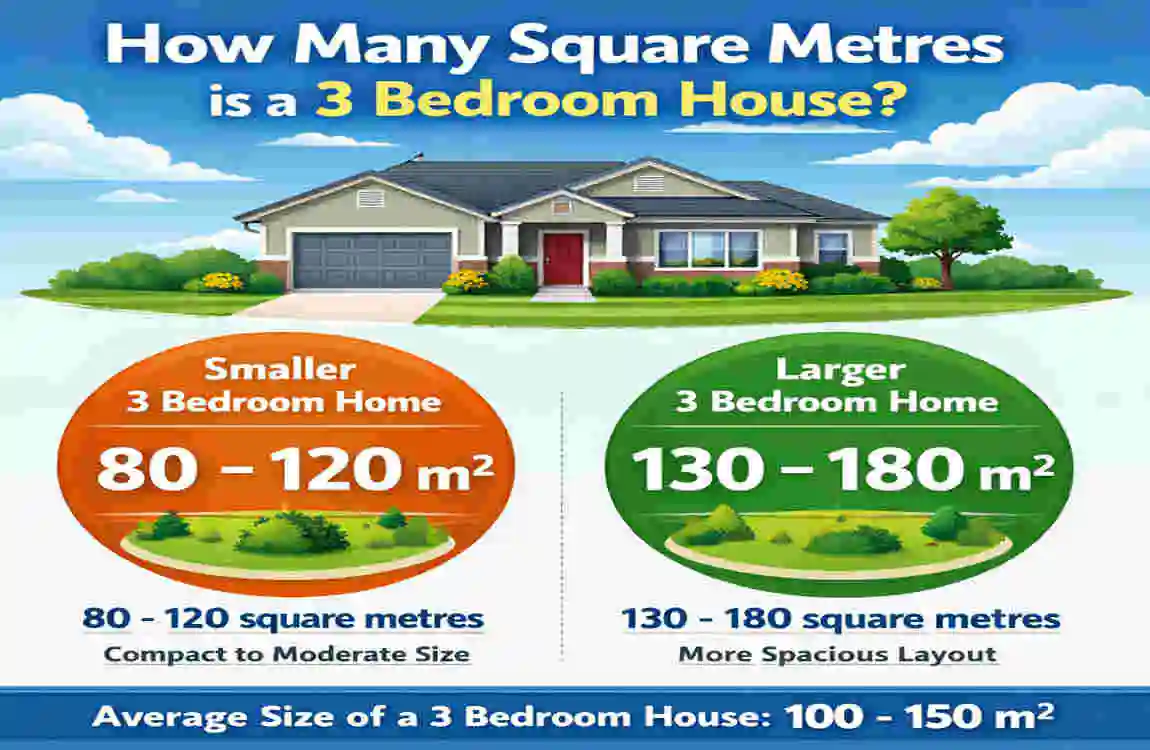
Generally speaking, a standard three-bedroom house falls somewhere between 90 and 150 square meters. This is a broad range, but it covers a massive variety of architectural styles and living arrangements. Within this spectrum, the real estate industry often considers 120 square meters the ultimate sweet spot.
Why 120 square meters? Because this size provides a beautiful balance. It gives a family enough room to stretch out and enjoy their privacy, while remaining compact enough to keep cleaning manageable and heating bills low. When you walk into a 120-square-meter home, you do not feel cramped, nor do you feel like you are echoing in an empty hall.
Breaking Down the Footprint
Let us visualize what actually fits inside this comfortable 120-square-meter footprint. When you distribute this space logically, you create a harmonious living environment.
First, you have your three bedrooms. In a standard layout, these rooms will take up about 12 to 15 square meters each. This gives you enough space for a comfortable double or queen-sized bed, a wardrobe, and maybe a small desk or reading chair.
Next, you move into the shared spaces. Your living room will likely be the largest single area in the house, occupying around 25 square meters. This gives you plenty of room for a large, cozy sofa, a television unit, and a play area for children or a spot for entertaining guests.
Then we have the kitchen, which usually takes up roughly 15 square meters. This allows for ample counter space, essential appliances, and perhaps a small breakfast nook where the family can gather in the mornings.
The remaining square meters are carefully divided among your bathrooms, hallways, storage closets, and perhaps a small laundry room. When you put all these pieces together, you get a fully functional, highly comfortable family home that flows naturally from one room to the next.
Regional Variations: How Location Changes Your Space
While 120 square meters might be a fantastic global average, the reality on the ground changes dramatically depending on where you live in the world. Culture, climate, land availability, and local building costs all play a massive role in dictating the size of our homes. Let us take a fascinating trip around the globe to see how different regions answer the question: how many square meters does a 3-bedroom house have?
Compact Living in Europe and the UK
If you travel across Europe, particularly to the United Kingdom, you will find that homes are remarkably compact. In the UK, the average three-bedroom house measures around 91 square meters.
Why are British homes so cozy? It comes down to a rich history and high population density. Many European cities feature older infrastructures and limited land for new developments. Land is incredibly expensive, forcing builders to build upward rather than outward. European families have adapted masterfully to this compact lifestyle. They embrace minimalist furnishings, utilize clever built-in storage solutions, and design multi-functional rooms. A 90-square-meter home in London or Paris feels incredibly charming and efficient, proving that you do not need a sprawling mansion to live beautifully.
The North American Sprawl
Hop on a plane and cross the Atlantic, and the picture changes entirely. In the United States and Canada, space is historically much more abundant. A standard three-bedroom home in North America typically ranges from 140 to well over 200 square meters.
North American culture places a high premium on personal space. Homes here often feature large master suites with massive walk-in closets, expansive open-plan living areas, and dedicated rooms for specific activities, such as a separate formal dining room or a home theatre. While this offers incredible luxury and breathing room, it also requires more energy to heat and cool, which modern buyers are beginning to reconsider.
Australian Experiences and Asian Urban Optimization
Head down to Australia, and you will find some of the largest homes in the world. A typical three-bedroom Australian house easily exceeds 150 square meters. The warm climate encourages an indoor-outdoor lifestyle, meaning these homes often feature sprawling open-plan designs that seamlessly flow onto large covered patios.
Conversely, look at the rapidly growing urban centers in Asia, including countries like Pakistan. Here, a three-bedroom family home usually ranges from 100 to 140 square meters. In cities like Lahore and Tokyo, land is at a premium. Builders focus on vertical living and highly optimized floor plans. Urban families in these regions prioritize communal family spaces over massive private bedrooms. They cleverly use open-plan designs to allow air to circulate in hot climates, creating homes that feel larger than their actual footprint.
Modern Design Trends: Doing More With Less
As we settle into 2026, the way we design and use our homes is evolving rapidly. We are moving away from the excesses of the past and embracing a smarter, more intentional way of living. Builders and architects are proving that you can squeeze incredible functionality into a smaller footprint. Let us explore the design trends that are reshaping our living spaces today.
The Shift Toward Minimalist Layouts
One of the biggest trends in 2026 is the incredible rise of the minimalist layout. Many modern families are actively choosing to shrink their three-bedroom homes down to 100 square meters. They realize that smaller homes mean less time cleaning, lower mortgage payments, and a reduced carbon footprint.
But a smaller home does not mean a cluttered home. Today’s architects use smart storage solutions to hide the mess. They build drawers into staircase steps, create floor-to-ceiling, invisible cabinets in hallways, and design beds that lift to reveal massive storage compartments beneath. By eliminating dead space—like long, dark hallways that serve no purpose—designers make a 100-square-meter home feel just as spacious as an older 130-square-meter property.
The Rise of the Eco-Home
Environmental awareness heavily influences home designs in 2026. Many new builds now include an extra 10 to 20 square meters dedicated entirely to sustainable technologies.
Homeowners need dedicated utility spaces to house large solar battery banks, indoor heat pumps, and advanced water recycling systems. While these eco-setups require a slightly larger footprint initially, they drastically slash monthly utility bills and future-proof the home against rising energy costs. It is an upfront investment in space that pays massive dividends over the property’s lifetime.
Multi-Functional Spaces and the Home Office
The permanent shift toward remote work has completely transformed how we view our bedrooms. We no longer use our homes just for sleeping and eating; they are now our offices, gyms, and schools.
To accommodate this, modern design embraces multi-functional spaces. Instead of building a completely separate, dedicated home office—which costs extra money and adds unnecessary square meters—families are incorporating workspaces into their existing rooms. A main bedroom might now feature a built-in desk alcove that seamlessly blends with the wardrobes. A guest bedroom might contain a high-quality Murphy bed that folds away into the wall during the day, transforming the room into a spacious yoga studio or a Zoom-friendly office.
Here is a quick look at the pros and cons of choosing a smaller, modern footprint versus a larger traditional home:
- Pros of a Smaller Footprint (100-110 sqm):
- Significantly lower energy bills for heating and cooling.
- Less time spent cleaning and maintaining the property.
- Cheaper to build, buy, and furnish.
- Encourages a clutter-free, minimalist lifestyle.
- Cons of a Smaller Footprint:
- Requires strict organization to avoid feeling cluttered.
- Less privacy if multiple family members are working from home.
- May limit options for hosting large groups of guests overnight.
Room-by-Room Space Allocation: Where Do the Meters Go?
To truly master your understanding of how many square meters a 3-bedroom house is, we need to break the house down, room by room. Every single space serves a unique purpose, and allocating the right amount of room to each activity ensures your home feels balanced and comfortable. Let us take a detailed look at how builders typically divide the space.
Below is a clear, easy-to-understand table that outlines the minimum, average, and maximum square meters you should allocate to each room in a standard three-bedroom house.
RoomMin SqmAvg SqmMax Sqm
Main Bedroom 12 16 20
Bedroom 2/3 9 12 15
Living Room 20 25 35
Kitchen 10 15 20
Bathrooms 4 6 8
Garage 15 20 30
Total 90 120 150
Now, let us walk through these spaces and explain exactly why these numbers matter for your daily life.
The Personal Sanctuaries: Bedrooms
Your Main Bedroom is your private retreat at the end of a long day. At a minimum of 12 square meters, you can fit a comfortable bed and standard wardrobes. However, the average size of 16 square meters is where comfort truly begins. This average size allows you to upgrade to a king-sized bed, add a cozy reading armchair in the corner, and perhaps include a slightly larger closet or even a compact en-suite bathroom. If you stretch this to the maximum 20 square meters, you are entering luxury territory, with ample room for a walk-in wardrobe and a dedicated dressing area.
The secondary bedrooms, often used as Kids’ Rooms or Guest Rooms, require less space. A minimum of 9 square meters works perfectly for a child’s single bed, a toy box, and a small desk. Hitting the average of 12 square meters ensures the room grows with the child, easily accommodating a larger bed and more study space as they hit their teenage years.
The Heart of the Home: Living Rooms and Kitchens
Your Living Room is where life happens. It is where you host movie nights, celebrate birthdays, and unwind with your family. At an average of 25 square meters, you achieve a wonderful balance. You have plenty of wall space for a large television, enough floor area for a spacious sectional sofa, and room for a coffee table without anyone tripping over it. If you love hosting large gatherings, pushing this space to its maximum of 35 square meters gives you a grand, airy environment perfect for entertaining.
The Kitchen is arguably the hardest-working room in the house. A minimum of 10 square meters gives you a functional galley-style kitchen, perfect for quick meal prep. However, aiming for the average of 15 square meters completely changes the dynamic. This size allows you to install a highly desired central kitchen island. An island not only provides vital extra chopping space but also creates a social hub where kids can do homework while you cook dinner.
Practical Additions: Bathrooms and Garages
We often overlook Bathrooms when planning, but they are crucial for a smooth morning routine. A compact 4-square-meter bathroom gives you just enough room for a shower, toilet, and sink. Expanding to the average 6 square meters allows you to add a full-sized bathtub and a wider vanity mirror, making the space feel like a relaxing spa rather than a cramped closet.
Finally, consider the Garage. If you need to park a single car and store a lawnmower, 15 square meters will suffice. But the modern average sits closer to 20 square meters. This extra space is vital. It gives you room to open your car doors fully without banging them against the wall, and it provides a secure zone to store bicycles, holiday decorations, or a small DIY workbench.
Remember, these numbers are highly customizable. If your family loves to cook together, you might borrow some space from the living room to create a massive 20-square-meter kitchen. Design your floor plan around the way you actually live your life!
The Financial Side: Cost Implications of Your Square Meters
We cannot talk about the size of a home without talking about money. The physical footprint of your house directly impacts your wallet in several major ways. Understanding the link between your home’s size and your budget is the most important financial lesson you can learn before buying or building.
Construction Costs Per Square Meter
When you hire a builder, they generally calculate the cost of your project based on the floor area. Every single square meter you add to your floor plan requires more concrete for the foundation, more timber for the framing, more drywall for the walls, and more tiles for the roof.
Globally, construction costs can vary widely depending on the quality of the materials you choose. Still, a safe estimate is between $ 1,000 and $2,000 per square meter.
Let us look at a real-world example to see how this impacts your budget. Imagine you are deciding between a comfortable 120-square-meter home and a sprawling 200-square-meter home. That 80-square-meter difference is not just a little extra space; it is a massive financial commitment. At an average building cost of $1500 per square meter, adding those 80 square meters will instantly inflate your building costs by $120,000!
By keeping your home closer to the 120-square-meter average, you can build a house that costs 20% to 30% less. You can then take those massive savings and invest them back into the home’s quality. You can afford luxury stone countertops, high-end kitchen appliances, or premium hardwood floors—things that make a home feel truly special.
Long-Term Savings on Heating and Maintenance
The financial implications do not stop on the day you move in. A larger house costs more money to run every single day of its life.
When you have a 200-square-meter house, you have to pump heat into all those empty rooms during the freezing winter months. During the summer, your air conditioning system has to work twice as hard to cool down the massive volume of air.
Conversely, a compact, well-designed 100-to-120-square-meter home is incredibly energy efficient. It heats up quickly and holds that temperature well, slashing your monthly utility bills. Furthermore, a smaller home requires less maintenance. You have fewer gutters to clean, less exterior paint to buy, and a smaller roof to replace eventually.
If you want to add value to your home without oversizing, focus on the flow of the layout. High ceilings, large windows that let in abundant natural light, and a seamless connection to an outdoor patio can make a 110-square-meter house feel incredibly luxurious without adding a single dollar to your heating bill.
Looking Ahead: Future-Proofing Your Home
Building or buying a house is a long-term commitment. You are not just creating a space for today; you are building a sanctuary for your future. As we look ahead to the housing trends predicted for 2030, the concept of “future-proofing” your square meters is becoming incredibly important.
Modular Designs and Expandable Living
One of the most exciting predictions for the near future is the rise of the modular home design. Builders are recognizing that a family’s needs change over time. A young couple might only need a compact 110-square-meter house right now. However, ten years down the line, they might have two growing teenagers and desperately need more space.
Instead of forcing that family to sell their home and move to a new neighborhood, future-focused architects are designing homes with pre-planned expansion zones. These modern layouts allow you to easily “plug in” an extra bedroom or a larger living room module in the future. By starting small today, you save money on your initial mortgage. Still, you retain the ultimate flexibility to grow your home precisely when your life demands it.
Assessing Your Long-Term Needs
To pick the optimal number of square meters, you need to sit down and honestly assess your long-term trajectory. Ask yourself some tough questions. Do you plan on expanding your family? Will aging parents eventually need to move in with you? Does your career trajectory suggest you will be working from home permanently, necessitating a dedicated, quiet workspace?
If you anticipate significant changes, it might be wise to build slightly larger than your current needs, or to ensure your property has enough yard space to accommodate a future extension. Do not just buy a house for the people you are today; buy a house that can comfortably support the people you will become tomorrow.
Frequently Asked Questions About 3 Bedroom House Sizes
Even with a detailed guide, you might still have some specific questions. Let us address some of the top queries buyers have when trying to figure out exactly how many square meters a 3-bedroom house is.
How many square meters is a 3-bedroom house in the UK?
If you are house hunting in the United Kingdom, you will find that homes are generally quite compact. The average size for a standard three-bedroom house in the UK sits right around 91 square meters. This highly efficient use of space reflects the high cost of land and the dense, historical nature of British towns and cities.
Is there a minimum legal size for a 3-bedroom house?
Yes and no. The answer depends entirely on your local building codes and government regulations. In many regions, there are strict laws dictating the minimum size a room must be to qualify as a “bedroom legally” (often requiring it to be at least 7 to 9 square meters and have a window for emergency escape). Some city councils also mandate overall minimum sizes for new builds to prevent overcrowding. Always check with your local planning authority before finalizing any blueprints.
Will a smaller 3-bedroom house hurt my resale value?
Not necessarily! In 2026, buyer priorities are shifting heavily. While massive homes used to dominate the market, many modern buyers are actively searching for smaller, energy-efficient homes that are cheaper to heat and easier to clean. If your compact home features a brilliant layout, high-quality finishes, and smart storage, it will be highly attractive to young professionals, small families, and older couples looking to downsize. The quality of space always trumps the sheer quantity.