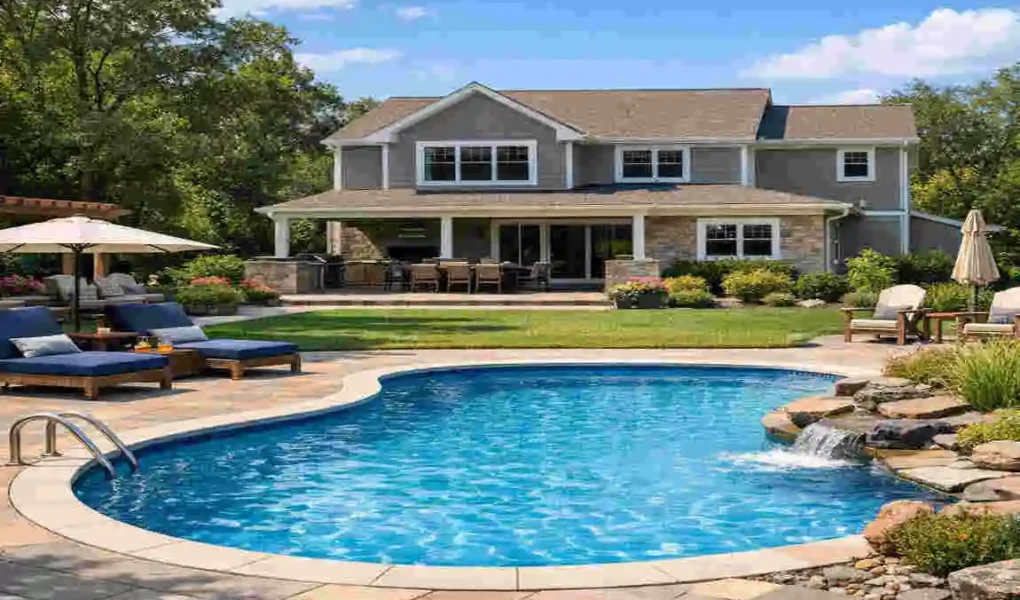
Imagine this: it is a sweltering summer afternoon, and you are ready to cool off. You grab a cold drink, slide open your back door, and step directly into your gorgeous backyard oasis. Adding a swimming pool is a dream come true for many homeowners. It provides a perfect spot for family gatherings, staying fit, and relaxing under the sun.
However, before the excavators arrive and the digging begins, you have to answer a crucial structural and legal question. Exactly how far should the pool be from the house?
This is not just a question of aesthetics or backyard design. The distance between your home and your swimming pool plays a massive role in protecting your property. If you place a pool too close to your living room walls, you risk severe foundation damage, unexpected flooding, and serious safety hazards. In fact, industry statistics show that nearly 20% of major pool installation errors stem from poor spatial planning and ignoring proper setback rules.
You want your backyard to be a stress-free zone, not a source of constant worry. That means finding the perfect sweet spot that balances beautiful design with structural integrity.
Why Distance from House Matters
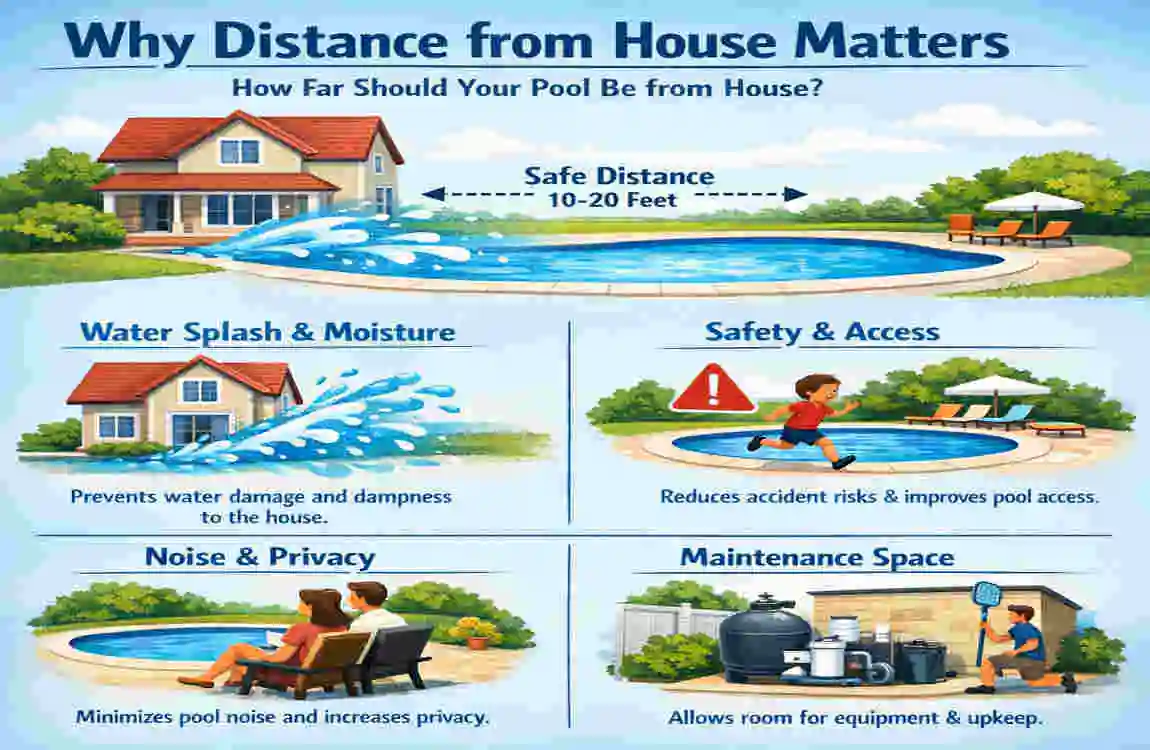
When you start planning your backyard layout, it is incredibly tempting to place the pool just a few steps from your back patio. It looks amazing in magazines, and it feels like the ultimate luxury. But understanding how far the pool should be from the house is vital for the long-term health of your property. Let’s look at exactly why this distance matters so much.
Protecting Your Home’s Foundation
The single biggest reason to maintain a safe distance is to protect your home’s foundation. Pools hold thousands of gallons of water. This creates something called hydrostatic pressure.
In simple terms, hydrostatic pressure is the massive weight of the water pushing outward against the soil. If your pool is built too close to your house, this pressure pushes the soil directly against your basement walls or foundation slab. Over time, this constant pushing can cause your foundation to crack, bow, or even fail.
Preventing Flooding and Soil Erosion
Water constantly splashes out of a swimming pool. Kids do cannonballs, people climb in and out, and the wind blows water over the edges. If your pool sits right next to your house, all that splashed water soaks into the dirt right against your walls.
This leads to soil erosion. The water washes away the dirt supporting your foundation. Worse, if a pipe bursts or the pool overflows during a heavy rainstorm, a pool that is too close can send thousands of gallons of water flooding straight into your living room. A proper setback gives the water room to drain away harmlessly.
Enhancing Aesthetics and Usability
Distance is not just about avoiding disaster; it is also about creating a beautiful, usable space. You want room for lounge chairs, a barbecue grill, and a fire pit.
If you jam the pool right up against the house, you lose valuable patio space. Giving your pool some breathing room lets you design a stunning deck. It also gives you better views of the water from inside your home, rather than just staring at a concrete wall or a pool cover.
Comparing Close vs Ideal Pool Distances
To give you a clear picture of why spacing matters, take a look at this comparison table. It shows the difference between putting a pool too close versus hitting the sweet spot.
Aspect Too Close (<5 ft)Ideal Distance (10-20 ft)
Water Damage: High risk of flooding and foundation cracks. Low risk; plenty of room for proper drainage.
Accessibility Limited walking space; feels cramped. Easy deck access; room for furniture and walking.
Resale Value Potential red flags for home inspectors. Boosts buyer appeal with a well-planned layout.
Building Code Minimums and Pool Setbacks
You cannot just point to a spot in your yard and tell the builders to start digging. Every city, county, and state has specific legal rules about backyard construction. These rules are known as “setbacks.”
When determining how far a pool should be from a house, your local building codes will always dictate the absolute minimum distance you must follow.
The United States Averages
Across the United States, the average minimum distance between a house and a swimming pool is usually 5 to 10 feet. This distance is measured from the water’s edge to the foundation of your home.
However, these rules change dramatically depending on where you live. For example, in heavily populated cities with very small lot sizes, local codes allow you to build a pool as close as 3 feet from your home, provided you use special engineering techniques. In more rural areas or on unstable soil, the minimum distance might increase to 15 feet.
International Building Rules
If you are reading this from outside the United States, the rules vary depending on your country’s safety standards.
- France: French laws are notoriously strict regarding swimming pools. You typically must keep the pool at least 3 meters (about 10 feet) away from your property boundaries to respect your neighbours’ privacy and land.
- New Zealand and Australia: These countries focus heavily on pool barriers. The distance from the house is often dictated by how you plan to fence the pool. If your house acts as one side of the pool barrier, your doors and windows must meet extreme safety and locking standards.
How to Check Your Local Permits
Do not guess when it comes to legal boundaries. Building a pool without checking your local codes can result in massive fines. The city can even force you to fill the pool in with dirt! Here are the simple steps you should follow to find your local rules:
- Visit Your County Website: Search for your local county or city government website. Look for the “Zoning,” “Building,” or “Permits” department.
- Search for Pool Setbacks: Use their search bar to look up “residential swimming pool setbacks.” This document will list the exact measurements you need.
- Call a Zoning Official: If the documents are confusing, call the permit office. Ask them, “How far should the pool be from the house in this specific zip code?” They are usually very helpful and will give you the exact numbers.
- Hire a Local Professional: Local pool builders know the codes by heart. A reputable builder will handle the permit process for you and ensure your design is completely legal.
Safety Guidelines for Families
Building codes protect your house, but safety guidelines protect your loved ones. Swimming pools are wonderful, but they also present a real danger, especially for young children and pets. The distance between your house and your pool directly impacts how safe your backyard is.
Installing Proper Child Barriers
Drowning is a leading cause of accidental injury for young children. To prevent tragedies, safety experts mandate strong barriers.
When you ask a safety inspector how far a pool should be from a house, they will focus on the fencing. You need enough space between your home and the pool to install a proper safety fence. This fence should be at least 4 to 5 feet high. It must feature a self-closing and self-latching gate. The latch should be placed high up, completely out of the reach of little hands.
If your pool is too close to your house, you might not have enough physical space to install this necessary fence.
Setbacks from Doors and Windows
Some homeowners try to save space by using the back wall of their house as one side of the pool enclosure. While this looks sleek, it is highly dangerous if you do not take precautions.
If a pool is right outside a bedroom window or a sliding glass door, a curious child can easily slip outside and fall into the water unnoticed. If you must build close to the house, you must install high-decibel alarms on every door leading to the pool area. You also need to install special locks high on the doors. Maintaining a safe distance of 10 to 15 feet allows you to build a separate, four-sided fence around the pool, which is statistically the safest option.
Emergency Access and Visibility
You always want to maintain a clear, unobstructed view of the pool from your main living areas. If the pool is tucked too close to a side wall or hidden around a corner, you cannot easily supervise swimmers from your kitchen or living room.
Furthermore, you must consider emergency access. Paramedics and rescue personnel need room to move. Safety experts highly recommend leaving at least 10 feet of clear walking space around the pool. If an accident happens, first responders need a wide, clear path to bring in medical equipment or a stretcher without tripping over patio furniture or squeezing past tight house walls.
Soil, Drainage, and Foundation Factors
You cannot see the soil beneath your grass, but it is the boss of your backyard. The type of dirt you have entirely dictates how far the pool should be from the house. If you ignore the soil and drainage, you are asking for severe structural nightmares.
Understanding Your Soil Type
Not all dirt is created equal. The earth in your yard reacts differently to the heavy weight of a pool and the constant presence of water.
- Clay Soil: Clay is highly expansive. Think of it like a dry sponge. When it gets wet, it swells to a massive size. When it dries out, it shrinks and cracks. If you have clay soil, the water splashing from your pool will cause the ground to constantly swell and shrink, putting pressure on your home’s foundation. Because of this, builders usually recommend keeping pools 15 to 20 feet away from houses sitting on clay soil.
- Sandy Soil: Sand drains water very quickly and does not expand like clay. If your yard is mostly sandy, you have more flexibility. You can often build the pool much closer to your home, sometimes as close as 5 to 10 feet, provided you install excellent drainage systems.
The Slope and the 1:1 Depth Ratio Rule
Your yard’s slope and the depth of your pool play a massive role in foundation safety. Engineers use a simple rule of thumb called the 1:1 depth ratio.
Here is how it works: For every foot of depth your pool has, it must be located at least one foot away from your home’s foundation. So, if your new pool features a deep end that goes down 8 feet into the earth, the edge of the pool should be at least 8 feet away from the side of your house.
This rule ensures that the deep excavation required for the pool does not undermine the soil currently supporting your house. If you dig a deep hole too close to your foundation, the dirt under your house could collapse into the hole!
Drainage and Waterproofing Tips
No matter how far the pool is from the house, you must manage the water. Good drainage is non-negotiable.
You need to actively channel rainwater, pool splashes, and overflow away from your home. One of the best ways to do this is by installing a French drain. A French drain is a hidden trench filled with gravel and a perforated pipe that safely collects water and directs it to the street or a safe drainage area. You should also ensure your concrete pool deck slopes slightly away from your house, so gravity naturally pulls the water into your yard, not your basement.
Site Assessment Checklist
Before you finalise your pool’s location, walk through this quick site assessment checklist with your contractor:
- Have we tested the soil composition (clay, sand, rock)?
- Where is the natural water table level in this yard?
- Does the yard slope toward the house or away from it?
- Do we have enough room to install French drains?
- Are we following the 1:1 depth ratio rule?
In-Ground vs Above-Ground Pools
The style of pool you choose completely changes the rules of the game. A permanent, concrete inground pool has very different requirements than a temporary above-ground pool. Let’s break down the spacing needs for both.
In-Ground Pools: The Need for Stability
Inground pools are massive construction projects. Builders must bring in heavy excavators to dig a massive hole in your yard.
Because of the aggressive digging, the minimum safe distance for an inground pool is usually 10 to 25 feet from the house. As we discussed during the 1:1, digging a deep hole right next to your house can cause your foundation to collapse.
Furthermore, inground pools require extensive underground plumbing. You need space to run large PVC pipes from the pool back to the water pumps and filters. Giving yourself 15 to 20 feet of space allows the construction crew to dig safely, lay the pipes securely, and pour a beautiful, stable concrete deck.
Above-Ground Pools: Focusing on Sidewall Pressure
Above-ground pools are much easier to install because there is no heavy digging involved. Because they sit entirely on top of the grass, you might wonder how far a pool should be from a house if it is above ground.
Generally, you can place above-ground pools closer to your home, typically 5 to 10 feet away. You do not have to worry about excavators undermining your foundation.
However, above-ground pools have a different vulnerability: sidewall blowouts. If the metal or vinyl wall of an above-ground pool ruptures, thousands of gallons of water will rush out in a matter of seconds. If the pool is sitting two feet from your back door, that tidal wave will crash straight through your living room. Keeping it 5 to 10 feet away gives the rushing water a chance to spread out and absorb into the lawn before hitting your home.
Comparing Pool Types
Here is a quick look at how the two pool types compare regarding distance and primary concerns:
Pool Type Minimum Distance Key Structural Concern
In-ground 10 – 25 feet Foundation shifting and excavation collapse.
Above-Ground 5 – 10 feet: Sidewall wall integrity and sudden flooding.
Landscaping and Neighbour Considerations
Your house is not the only thing in your backyard that dictates where your pool goes. You have to look up, look down, and look over the fence. Trees, power lines, and your neighbours all have a say in how far the pool should be from the house and property lines.
Managing Trees and Underground Utilities
Trees are beautiful, but they are a swimming pool’s worst enemy. If you place a pool too close to large trees, you will spend your entire summer scooping leaves and bugs out of the water.
More importantly, tree roots are incredibly destructive. Large roots can easily crush your underground pool plumbing or crack the concrete shell of your pool. Experts advise keeping pools at least 1.5 to 3 meters (5 to 10 feet) away from medium- to large-sized trees.
You must also call your local utility company to mark the underground lines. You absolutely cannot dig a pool over buried gas lines, electrical wires, or sewer pipes. The paths of these invisible utilities often dictate your pool’s distance from the house.
Respecting Property Fences and Neighbours
You also have to consider the people living next door. Most zoning laws require you to keep your pool at least 3 to 5 meters (10 to 15 feet) away from your property line fences.
This rule exists to protect your neighbour’s property from water damage if your pool leaks. It also protects your privacy. A pool pump running 12 hours a day can be quite loud. Placing the pool equipment right against the shared fence will likely annoy your neighbours. Keeping a respectful distance reduces noise complaints and keeps peace in the neighbourhood.
Navigating HOA Rules
If you live in a community governed by a Homeowners Association (HOA), you have another layer of rules to follow. HOAs often have strict guidelines about backyard aesthetics. They might demand that your pool be completely hidden from the street or that you install specific types of safety fences. Always submit your pool plans to your HOA board for written approval before you sign a contract with a pool builder.
Ideal Distances by Backyard Size
Every piece of real estate is unique. The perfect distance for a sprawling countryside estate will look ridiculous in a tight, urban townhouse backyard. Let’s explore how to adapt the question of how far the pool should be from the house based on the actual size of your lot.
Designing for Small Yards
If you have a compact backyard, you have to get creative. You do not have the luxury of placing the pool 25 feet away. In tight spaces, the ideal distance often shrinks to about 8 to 12 feet.
To make this work safely, you must focus on compact pool designs. Consider a “plunge pool” or a “spool” (a combination of a spa and a pool). These smaller water features hold less water, resulting in lower hydrostatic pressure on your home’s foundation. In a small yard, you will also need to invest heavily in top-tier drainage solutions, like wrap-around French drains, to ensure splashing water never reaches your back door.
Sprawling Out in Large Lots
If you are blessed with a large, expansive backyard, the world is your oyster. For large lots, experts generally recommend moving the pool back at least 20 feet from the main house.
This greater distance allows you to create distinct “zones” in your backyard. You can have a dining zone right outside your back door, a fire pit zone in the middle, and a dedicated swimming zone further back. Placing the pool further away also creates a stunning visual focal point. You can design luxury features like waterfalls, infinity edges, or massive rock grottos without making the backyard feel cluttered or overwhelming the house.
Professional Measurement Calculations
When professionals visit your property to quote a pool, they use specific formulas to calculate the perfect layout. They measure the distance from the pool edge to the house wall .
They don’t just measure a straight line. They look at the angles. They calculate the exact pitch of your yard’s slope. They measure the distance from the pool’s deep end to the lowest point of your house’s foundation. By trusting these professional calculations, you ensure your pool is placed perfectly for both safety and stunning visual appeal.
Installation Costs and Return on Investment (ROI)
Building a pool is a massive financial commitment. You might be surprised to learn that how far the pool should be from the house actually affects the final price tag of your project, as well as the value it adds to your home.
The Cost of Distance and Drainage
Placing the pool further away from your house requires more materials. You will need longer PVC pipes to connect the pool to your home’s electrical and water systems. You will also need to pour more concrete to create walkways from the house to the pool deck. This extra distance can add a few thousand dollars to your initial quote.
Additionally, if you want to place the pool relatively close to the house (say, 10 feet), you must invest in premium drainage. Adding robust French drains, retaining walls, and moisture barriers can cost an extra $3,000 to $5,000.
However, you must view this as an insurance policy. Spending an extra $3,000 on proper drainage now will save you $30,000 in devastating foundation repairs five years down the road.
Boosting Your Home’s Resale Value
When a pool is installed correctly, it becomes a major selling point. Buyers love a beautifully designed backyard where the pool integrates seamlessly with the patio space.
Real estate experts note that a well-placed, professionally installed swimming pool can boost your home’s total value by 7% to 10%. On the other hand, if a home inspector notices that a pool is built far too close to the foundation, causing minor water damage, buyers will run away fast. Proper spacing guarantees that your pool is an asset, not a liability, when it comes time to sell.
Expert Tips and Common Mistakes
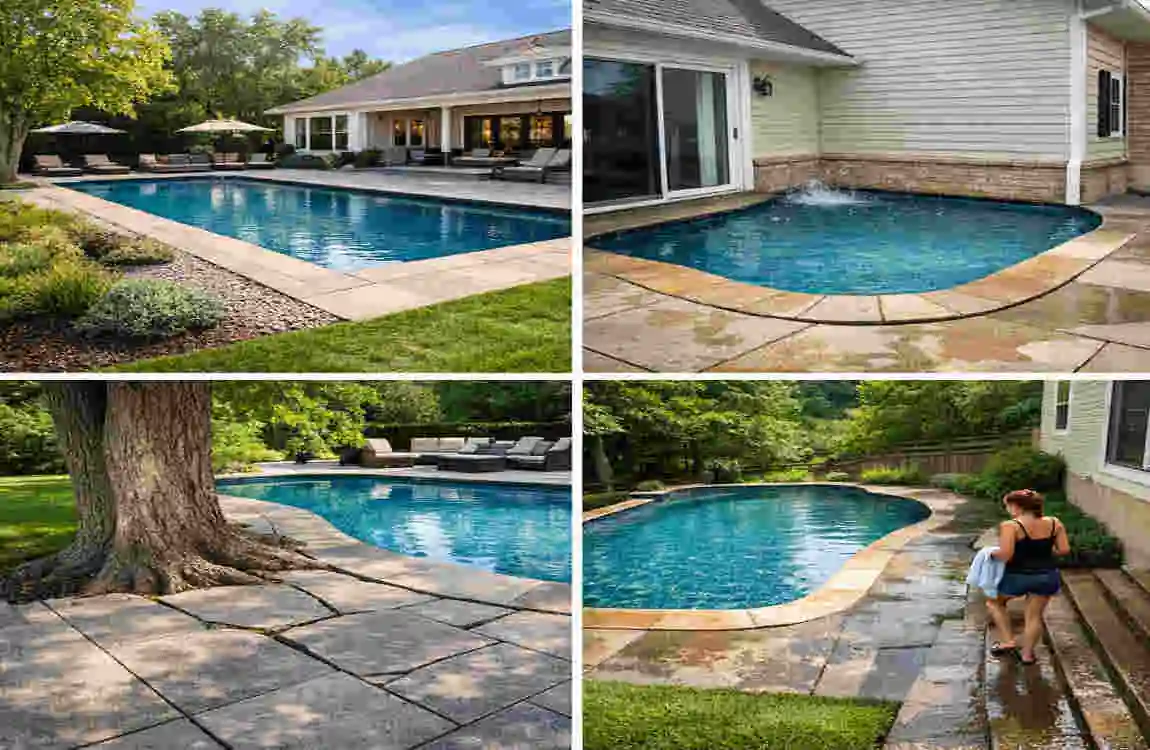
Even with all the rules in front of them, homeowners still make critical errors when designing their backyard layout. Let’s look at the biggest mistakes to avoid and the pro tips for how far a pool should be from a house.
Mistakes to Avoid at All Costs
- Ignoring the Water Table: The water table is the level underground where the soil is permanently saturated with water. If your yard has a high water table, digging a deep pool can literally cause the empty pool shell to pop out of the ground like a boat! You must keep the pool a safe distance from the house and manage groundwater properly.
- Fighting the Natural Slope: Never try to force a pool onto a steep hill right next to your house without massive retaining walls. Gravity always wins. Water will flow down the slope and flood your foundation.
- Forgetting Pool Equipment Space: You need a place to put the loud, vibrating pool pump and the massive water filter. Don’t place these right under your bedroom window. Plan a spot for the equipment pad that is far enough away to keep the noise down.
Pro Advice for a Flawless Layout
- Hire Certified Installers: This is not a DIY project. Always hire contractors who are certified by national pool and spa associations. They understand the complex math behind soil pressure and foundation safety.
- Utilise 3D Modelling Software: Before you let anyone dig, ask your contractor to create a 3D digital model of your backyard. This technology allows you to walk around your yard virtually. You can see exactly how the spacing feels, where the shadows fall, and how the deck connects to your house.
Frequently Asked Questions (FAQs)
As homeowners start planning, a few common questions always pop up. Here are brief answers to the most frequently asked queries about pool spacing.
What is the minimum distance in states like Florida?
Florida is the pool capital of the country. Because of the sandy soil and strict hurricane codes, the minimum distance is generally 5 feet from the property line and the foundation. Still, many counties require 10 feet to accommodate large lanai screen enclosures. Always check your specific Florida county codes.
How do I fix a pool that is built too close to the house?
If you bought a house with an existing pool that sits uncomfortably close to the foundation, you have options. You can hire contractors to install advanced underground French drains between the pool and the house to manage water. You can also apply specialised waterproof sealants to your foundation walls to prevent moisture from seeping into your basement.
Does a pool deck count toward the setback distance?
Usually, no. Building codes typically measure how far a pool should be from a house, starting from the water’s edge, not the edge of the concrete deck. You can usually have a concrete deck that touches your house, as long as the actual water begins at the legally required setback distance.