When it comes to buying or selling a home, one of the most crucial details is the square footage. This measurement determines the size of the property, influences its market value, and even impacts property taxes. However, a common question many homeowners and buyers ask is: Does the garage count as part of the square footage?
This is a valid question because square footage is often misunderstood. Knowing what’s included (and what’s not) is essential for setting the right price, ensuring accurate appraisals, and avoiding misunderstandings during transactions.
What Is Square Footage?
At its core, square footage refers to the total area of a property, measured in square feet. However, in real estate, there are specific rules governing what constitutes square footage and what doesn’t. Let’s break it down.
Definition of Square Footage in Real Estate
In residential real estate, square footage typically refers to the finished, livable space of a home. This means areas that are heated, cooled, and designed for year-round use. For example:
- Bedrooms, bathrooms, kitchens, and living rooms are included.
- Unfinished spaces, such as basements or garages, are typically excluded.
Living Area vs. Gross Living Area (GLA)
Real estate professionals often use two terms to describe square footage:
- Living Area: This is the finished, climate-controlled space in a home.
- Gross Living Area (GLA): This includes all finished spaces, excluding areas such as garages, unfinished basements, and exterior spaces.
Understanding this distinction is key because appraisers and realtors often rely on GLA when assessing a home’s value.
Why Square Footage Matters
Accurate square footage measurements are essential because they:
- Influence home pricing: Larger homes typically sell for more.
- Affect property taxes: Tax assessments are often based on a property’s square footage.
- Impact buyer decisions: Buyers need to know what they’re paying for.
- Play a role in insurance coverage: Insurers use square footage to calculate premiums.
Understanding What Counts Toward Square Footage
Not every part of a home is counted when calculating square footage. Here are the key criteria appraisers and realtors use:
Finished vs. Unfinished Spaces
- Finished spaces are fully completed with walls, flooring, and a ceiling. They’re also climate-controlled.
- Unfinished spaces, such as garages, attics, or basements, are typically excluded unless they are converted into livable areas.
Heated and Cooled Spaces
A key factor in square footage calculations is whether the area is heated and cooled. If your garage lacks heating or air conditioning, it likely won’t count.
Interior vs. Exterior Spaces
Only interior spaces are factored into square footage. For example:
- Enclosed sunrooms may count if they’re finished and climate-controlled.
- Exterior areas, such as patios, porches, and garages, are usually excluded.
Does Garage Count as Square Footage?
Now, let’s address the central question: Does the garage count as part of the square footage?
The Short Answer: No
In most cases, the house garage is not included in a home’s square footage. This is because garages are considered unfinished spaces, even if they’re attached to the house. They’re also not typically heated or cooled, which disqualifies them from being part of the “livable area.”
Real Estate and Appraisal Standards
Both realtors and appraisers follow strict guidelines when measuring square footage. According to these standards:
- Attached garages are excluded because they’re not part of the finished living space.
- Detached garages are also excluded, even if they’re on the property.
How Including or Excluding the Garage Affects Home Value
Including the garage in square footage can create unrealistic expectations for buyers. For example:
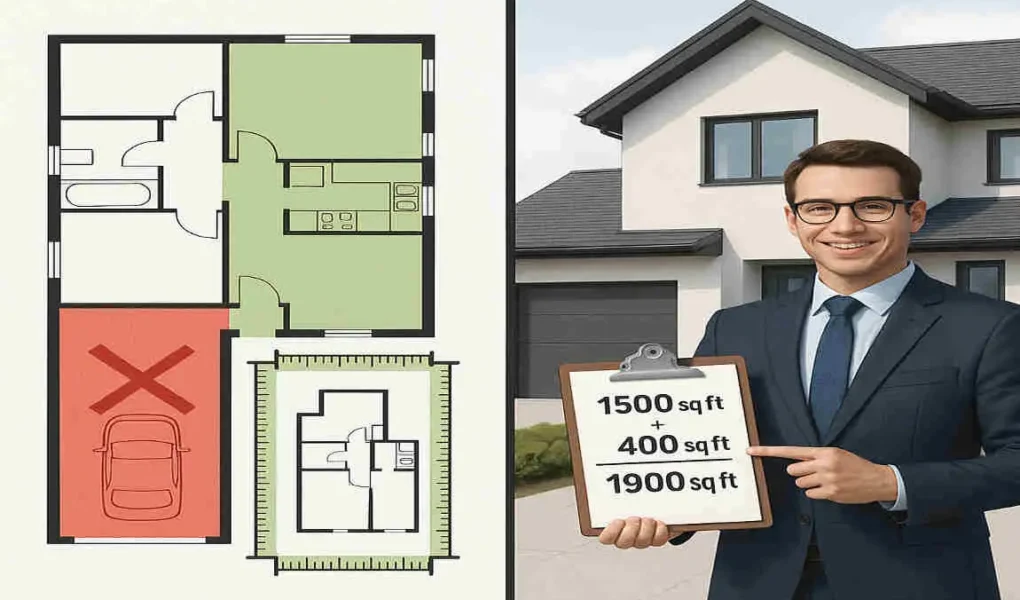
- A 2,000-square-foot home with a 400-square-foot garage might be misrepresented as 2,400 square feet, inflating its value.
- Buyers may feel misled if they realize the garage isn’t part of the livable space.
Real-World Example
Imagine you’re selling a home with a 500-square-foot garage. If you mistakenly include the garage in your square footage listing, you may overprice the property. Buyers expecting a larger home could feel disappointed, leading to wasted time and failed negotiations.
Common Misconceptions About Garage and Square Footage
Why Homeowners Get Confused
Many homeowners assume that because the garage is part of the structure, it should be included in the calculation of square footage. However, this is a misunderstanding of real estate standards.
How Online Listings Handle Garages
Platforms like Zillow or Realtor.com sometimes include garage size separately in the property details. For example:
- A listing might say “2,000 square feet plus a 400-square-foot garage.”
- This ensures transparency and avoids misleading buyers.
Buyer Expectations
Misrepresenting square footage can create unrealistic expectations. Buyers might assume the garage is finished or livable space, leading to disappointment during walkthroughs.
How To Measure Square Footage, Including or Excluding Garage
Measuring square footage is a straightforward process, but it requires attention to detail. Here’s how you can do it:
Step-by-Step Guide
- Gather Tools: Use a tape measure or laser measuring device.
- Start with the Interior: Measure each room’s length and width in feet.
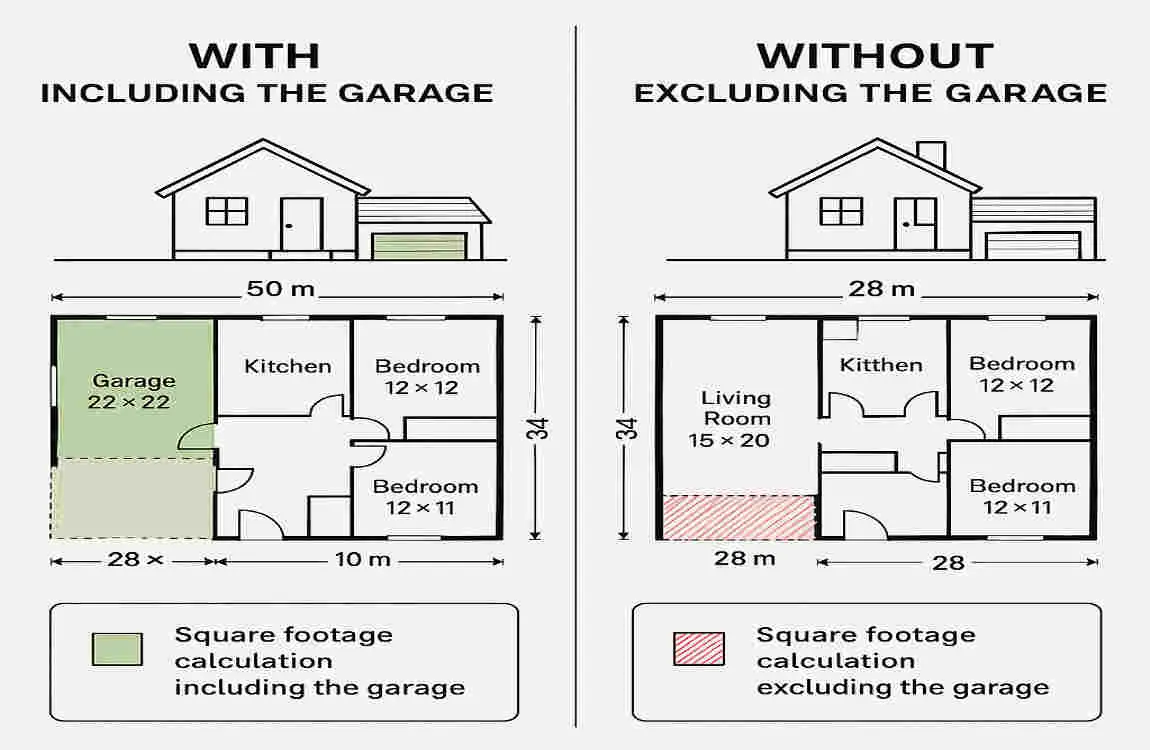
- Exclude the Garage: Leave out the garage unless it’s finished and climate-controlled.
- Calculate Total Area: Multiply each room’s length and width, then add the totals.
Measuring the Garage Separately
If you want to measure your garage space:
- Measure its length and width.
- Record the total square footage separately.
Tools and Techniques
- Laser Distance Meters: These are accurate and easy to use.
- Floor Plans: Use existing blueprints if available.
- Professional Appraisers: They can provide precise measurements.
Sample Calculation
Area Dimensions (ft)Square Footage
Living Room 15 x 20 300
Kitchen 10 x 15 150
Garage 20 x 25 500 (excluded)
Total 450
Why It Matters When Selling or Buying
Impact on Appraisal and Market Value
Accurate square footage helps appraisers determine a home’s value. Misreporting the garage as living space can lead to disputes or delays during the sale.
Legal Implications
Falsely including garage space in square footage could result in legal issues. Sellers must disclose accurate information to avoid potential lawsuits.
Does Garage Space Affect Property Taxes?
Property Tax Assessment Standards
Garages are typically assessed separately from the home’s square footage. However:
- Attached garages may add value to the property, but they can also increase property taxes.
- Detached garages are often considered outbuildings and taxed differently.
Renovating or Converting a Garage: Impact on Square Footage
When Garages Count as Living Space
If you convert your modern house garage into a finished, climate-controlled area, it may qualify as square footage. However, it must meet specific standards:
- Insulation and drywall must be installed.
- The space should have heating and cooling.
- It must be accessible from the main house.
Pros and Cons of Garage Conversions
Benefits:
- Increases livable space.
- Boosts property value.
Downsides:
- Loss of parking/storage.
- High renovation costs.