If you have ever looked at a home listing and thought, “This house says 2,100 square feet, but that number feels bigger than the actual living space,” you are not alone. One of the biggest reasons for that confusion is a simple yet important question: Are garages included in the house’s square footage?
Many buyers assume square footage refers to the entire structure under the roof. Sellers sometimes make the same mistake. Even agents and investors can run into mixed numbers when they compare listings, builder plans, tax records, and appraisal reports. That is why square footage matters so much. It affects how a home is marketed, priced, compared, and appraised.
When people talk about the “size” of a house, they usually mean the amount of usable living space inside it. But that does not always match the building’s full footprint. A garage may occupy a large portion of the structure, especially in suburban homes. Yet, it often does not count the same way as a bedroom, family room, or kitchen.
What Is “Square Footage” in Housing?
Gross Living Area vs. Total Property Area
In real estate, not all square footage means the same thing. That is where much of the confusion starts.
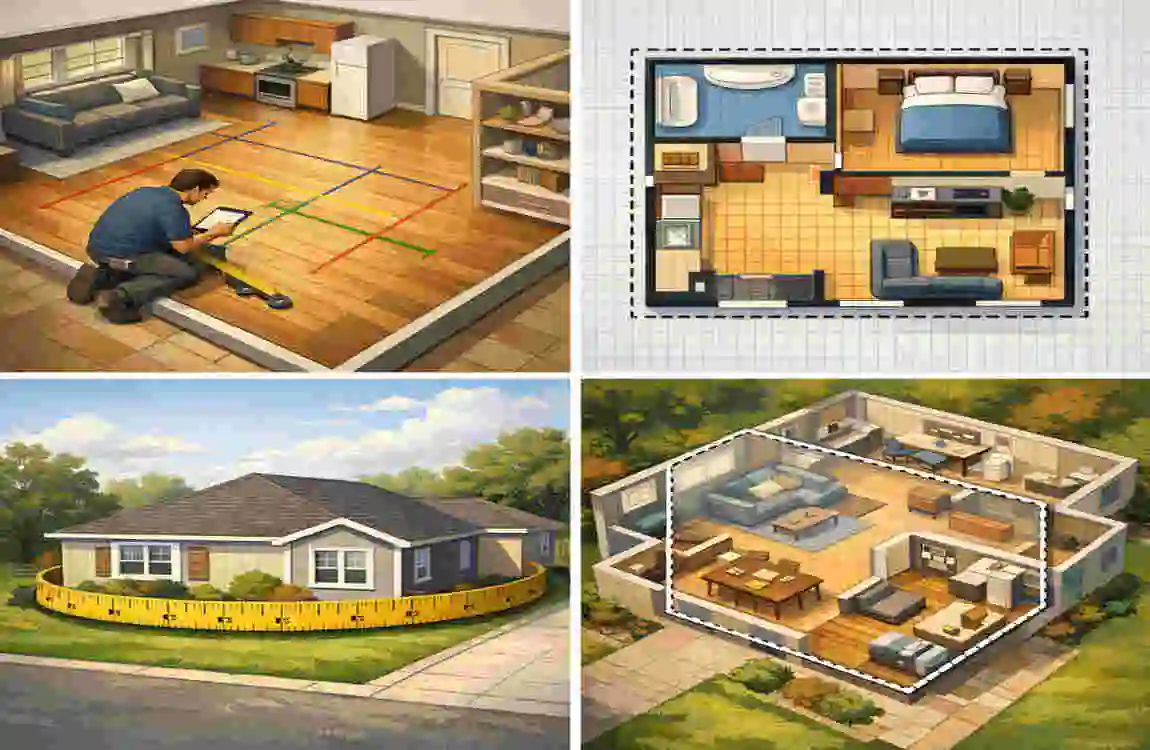
When professionals talk about the size of a home, they often mean the gross living area (GLA). This usually refers to the finished, livable parts of the home where someone can comfortably live year-round. Think of the kitchen, bedrooms, bathrooms, hallways, and living room.
That is very different from the total property area or the building footprint. The total footprint may include spaces like the garage, unfinished basement, utility room, covered porch, or storage area. Those spaces still exist physically, of course, but they are not always part of the official “living area” number.
Why “House Square Footage” Usually Means Livable Space
When a listing says a house is 1,800 square feet, most buyers read that as 1,800 square feet of living space. They do not expect that number to include places used mainly for parking, storage, or unfinished utility functions.
That is why real estate professionals often focus on finished, climate-controlled, year-round usable space. It gives buyers a more realistic way to compare one home to another. A 2,000-square-foot home with four finished bedrooms does not feel the same as a 2,000-square-foot structure where 400 square feet is garage space.
Are There Universal Rules?
Not exactly. There is no single worldwide law that defines square footage consistently. Still, many markets in the United States use ANSI Z765, which is a widely accepted measurement standard for single-family homes. In Canada and other regions, similar principles are often used, even though local boards or provinces may have their own practices.
Because of this, one of the most common questions people ask is: Are garages included in house square footage?
The short answer is usually no, but the full answer depends on how the property is measured, where it is located, and whether the garage has been legally converted into finished living space.
Standard Measurement Rules: ANSI, MLS, and Local Norms
The Common Starting Point
If you want a practical benchmark for measuring a house, ANSI Z765 is one of the most recognized standards in residential real estate. Many appraisers and lenders use it because it creates a more consistent way to measure homes.
Under this type of standard, the main focus is on finished, above-grade, habitable areas. That means rooms that are completed, connected to the rest of the house in a livable way, and suitable for year-round use.
A few basic ideas often apply:
- The home is measured to the outside finished wall surface
- Only spaces that are finished are counted
- Areas usually need to be heated and cooled, or at least properly conditioned for full-time living
- Spaces below grade, like basements, may be measured separately even if they are finished
MLS Rules and Local Board Practices
The MLS, or Multiple Listing Service, often follows accepted measurement standards. Still, local real estate boards can have their own rules. That means one market may display square footage a little differently than another.
For example, one MLS may show only the above-grade living area in the main number. Another may show finished basement square footage in a separate field. Some local systems may rely heavily on tax records, while others prefer appraiser measurements or builder data.
That is why two sources can show different square footage for the same house, and both may still be “correct” based on the method used.
Tax Records, Appraisals, and Listings Can Disagree
This is where many homeowners get confused. A county tax record might show one number. An appraiser might show another. The listing might show something else again.
Why does that happen?
Because each source may be measuring different things:
- Tax records may reflect the structure’s footprint or assessment data
- Appraisals often focus on market-supported living area
- Builder plans may show the total covered area, including garage space
- MLS listings usually emphasize livable square footage
So if you see a mismatch, it does not always mean someone made a mistake. It may mean they counted different categories of space.
How Are Garages Treated Under These Standards?
This brings us to the key issue. Under most common standards, garages are usually treated as separate from the gross living area.
That means even if a garage is attached to the house, under the same roof, and accessible through an interior door, it still normally does not count as part of the official house square footage. It may add convenience and value, but that does not make it a living space.
Are Garages Included in House Square Footage? The Core Answer
The Direct Answer
In most cases, garages are not included in house square footage.
That is the clearest and most useful answer for buyers, sellers, and homeowners. If you are looking at a listing and wondering whether the garage is part of the stated living area, the safe assumption is no, unless the listing or appraisal clearly says otherwise.
Why Garages Usually Do Not Count
A garage may be large, enclosed, and attached to the house, but that still does not make it part of the official living area.
The main reason is simple: garages are usually not designed for full-time living.
Most garages are built for:
- Parking vehicles
- Storing tools, boxes, and outdoor equipment
- Housing water heaters, freezers, or utility items
- Acting as flexible storage rather than daily living space
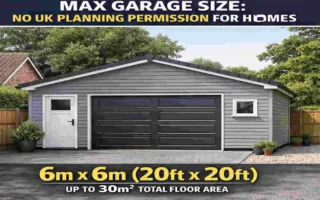
They are also often unfinished or only partly finished. A typical garage may have bare concrete floors, exposed framing, minimal wall finishing, limited insulation, and no full heating or cooling system. Even when a garage looks neat and usable, it often does not meet the same standards as a bedroom, office, or family room.
Attached vs. Detached Garages
Some people assume an attached garage counts because it is physically connected to the home. Others assume only detached garages are excluded.
In reality, both are usually excluded from the house square footage.
An attached garage can absolutely improve convenience and buyer appeal. It may even increase a home’s overall value more than a detached garage in some markets. But from a square-footage standpoint, both types are generally treated as non-living space unless they have been converted and approved as habitable area.
Garage Space vs. Integrated Home Design
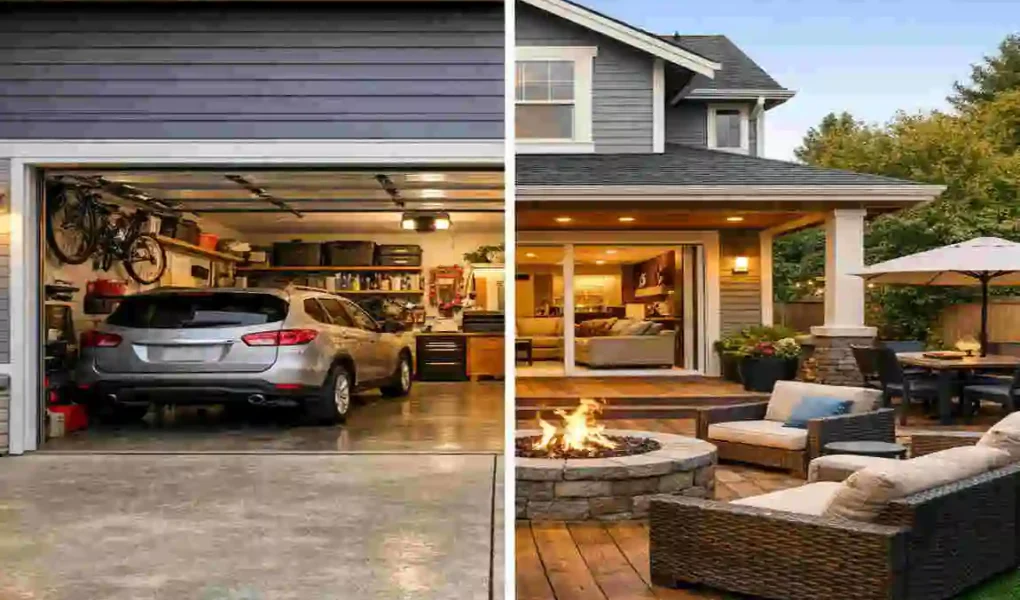
Modern homes sometimes include garages so smoothly in the design that the whole structure feels like one continuous unit. But the design alone does not change the square footage rules.
Even if the garage sits under the same roofline and shares walls with the rest of the home, it is still usually categorized as parking or storage space, not living space. That distinction matters because buyers do not use it the same way they use a kitchen, bedroom, or den.
So if you are comparing homes, remember this simple truth:
House square footage usually means livable interior space, not the full structural footprint, including the garage.
That is why the phrase “are garages included in house square footage” almost always leads to the same answer in normal residential sales: not usually.
When a Garage Can Count Toward Square Footage
The Main Exception
There are exceptions to the rule. A garage can count toward square footage if it has been fully converted into legitimate living space.
But this does not mean someone painted the walls and placed a rug on the concrete floor. For a garage to count, it usually needs to function like the rest of the home in both comfort and compliance with the law.
When “Are Garages Included in House Square Footage” Has a Yes Answer
A converted garage may be included when it checks several important boxes.
First, it usually needs to be fully finished. That means proper flooring, finished walls, a finished ceiling, adequate lighting, and finished electrical work.
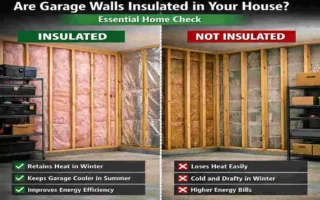
Second, it should be insulated and climate-controlled so it can be used comfortably year-round. In most markets, if the space cannot be heated or cooled like the rest of the house, it may still be excluded from the official living area.
Third, it generally needs to meet local building codes and be approved for residential use. That can include ceiling height, egress, ventilation, electrical safety, permits, and occupancy rules.
Common Garage Conversion Examples
You may have seen garages turned into spaces like:
- A home office
- A guest suite
- An art studio
- A bonus room
- A home gym
- A rental room or in-law area
These conversions can be very useful. In some homes, they add meaningful function and appeal. But here is the important detail: usefulness alone does not guarantee inclusion in square footage.
If the conversion was done without permits, or if it does not meet local code, appraisers and MLS systems may still exclude it from the official house size. It may be described separately as “finished bonus area” or “converted space” instead.
Why the Records May Still Be Outdated
Even if the garage has been legally converted, the square footage in public records, prior listings, or old appraisals may not update automatically.
That means a seller might think the home gained 400 square feet of living space, while the current listing still shows the original number. Buyers need to watch for that. So do sellers and agents.
A newly converted garage should ideally be reflected in updated records, appraisals, and listing details. If not, confusion can follow quickly.
What Spaces Are Typically Included in House Square Footage?
The Areas That Usually Count
To understand why garages are often excluded, it helps to look at what normally counts.
Most markets include the finished rooms that support daily living. These are the spaces where you sleep, cook, relax, get ready for the day, and move through the house comfortably all year long.
Typical examples include:
- Bedrooms
- Living rooms and family rooms
- Dining rooms
- Kitchens
- Finished bathrooms
- Hallways
- Closets
- Staircases
- Finished laundry rooms
- Finished bonus rooms
- Finished attics, if they meet ceiling height and livability rules
- Finished basements, depending on local rules, though they are often reported separately from the above-grade living area
- Enclosed sunrooms, if they are fully conditioned and usable year-round
The “Four Attributes” Idea
A simple way to think about it is this: many standards require four key qualities for a space to feel like a true living area.
The area usually needs:
- A finished floor
- Finished walls
- A finished ceiling
- The ability to live all year round comfortably
If a room checks those boxes and complies with code, it has a much better chance of being included in the house’s square footage.
That is also why garages are often left out. Most of them do not meet all four conditions.
Quick Comparison Table: What Usually Counts and What Usually Does Not
Space Usually Included in House Square Footage? Notes
Bedroom Yes, Standard living space
Living room , Yes, fully habitable area
Kitchen , yes, Core living area
Bathroom : Yes, if finished
Hallway/closet Yes Included in interior living layout
Finished attic. Sometimes, it must meet height, finish, and access rules
Finished basement, Sometimes Often counted separately from above-grade GLA
Enclosed sunroom. Sometimes, it must be heated/cooled and finished
Attached garage. No, usually excluded from the living area
Detached garage, No Separate non-living structure
Carport, No Covered parking, not enclosed living space
Unfinished attic not habitable
Unfinished basement, not useful, but not a living area
Open patio/deck No Outdoor area
Screened porch, usually no, unless fully finished and conditioned
A Simple Way to Remember It
If you are wondering, “Are garages included in house square footage?” remember this: the spaces most often counted are the ones you can truly live in every day, in every season, with the same level of finish and comfort as the rest of the house.
That simple test clears up a lot of confusion.
What Spaces Are Usually Excluded Besides Garages?
Other Common Exclusions
Garages are not the only spaces that get left out of official square-foot counts. Several other parts of a property may add function, comfort, and value without being included in the main living area number.
Common exclusions often include unfinished basements, unfinished attics, carports, open patios, decks, three-season rooms, and some screened porches.
Utility or laundry rooms can also be excluded if they are unfinished or set up more like service areas than livable rooms.
Why These Spaces Still Matter
Just because a space does not count in gross living area does not mean it has no value.
An unfinished basement can provide excellent storage. A screened porch may become your favorite place in summer. A garage may be essential for parking, tools, bikes, and seasonal items. A detached workshop may be a huge selling point for the right buyer.
The important thing is that these features are usually valued differently from a formal living space. They support the home, but they do not always increase the official square footage number.
Why Spaces Like Garages Are Left Out of the Square-Foot Count
The reason is consistency.
Buyers need a fair way to compare homes. If one seller counts the garage, porch, and unfinished basement while another seller reports only finished interior rooms, the numbers become misleading. A home may look larger on paper without offering more actual living space.
That is why real estate standards try to separate habitable square footage from auxiliary space.
A Quick Comparison in Practical Terms
Think of it this way:
A garage stores cars and equipment.
A screened porch gives you seasonal enjoyment.
An unfinished basement offers storage or future potential.
All three can improve a home. But none of them normally functions the same way as a finished bedroom or living room. That difference is exactly why they are often excluded.
Why This Confusion Happens: MLS vs. Tax Records vs. Builder Plans
Different Sources Use Different Definitions
One of the biggest reasons people get mixed up about square footage is that they assume every source means the same thing. In reality, they often do not.
A home can have one number in the MLS, another in tax records, and another in the builder’s plans.
That can feel frustrating, but it usually happens because each source is measuring for a different purpose.
MLS Listings Usually Focus on the Living Area
In many cases, MLS listings are meant to help buyers compare homes fairly. Because of that, they often focus on the living area or finished square footage rather than the total structure size.
So if a home is listed as 2,000 square feet, that often means 2,000 square feet of livable interior area, with the garage described separately.
Tax Records May Include More of the Structure
County or municipal tax records sometimes reflect a broader view of the building. They may include the full footprint, slab dimensions, or assessment categories that do not match buyer-facing listing standards.
This can make a home seem larger in public records than it appears in the listing.
Builder Plans Often Show Total Footprint
Builders and architects also use measurements differently. A floor plan may list:
- Living area
- Garage area
- Porch area
- Total covered area
- Total footprint
Those numbers are all useful, but they are not interchangeable.
A Simple Example
Imagine a house with:
- 2,000 square feet of finished living area
- 400 square feet of garage space
The builder’s total footprint might be 2,400 square feet.
The tax record may reflect something close to that.
The MLS listing may show only 2,000 square feet.
All three numbers can appear in different places, and all three can be based on real measurements. The key is knowing what each number includes.
The Best Habit to Build
Whenever you review a listing, ask one direct question:
How was the square footage calculated?
That one question can save you from confusion, disappointment, or overpaying.
How Misunderstanding This Affects Buyers, Sellers, and Investors
Buyers Can Overestimate the Livable Space
If you are buying a home, square footage shapes your expectations. You may picture a larger living room, more open bedrooms, or more usable daily space than the property really offers.
If the garage, porch, or other non-living areas are mixed into the number, the home can feel smaller when you walk through it. That gap between expectation and reality often leads to frustration.
A buyer who understands that garages usually do not count can compare homes more accurately and make a better decision.
Sellers and Agents Can Create Pricing Problems
For sellers, overstating square footage is risky. Even if it happens by accident, it can still lead to serious issues.
A home priced too high based on inflated square footage may sit on the market longer. An appraisal may come in low. Buyers may challenge the listing details. In some cases, disputes over square footage can even create legal headaches if the difference is large enough.
Clear and accurate reporting protects everyone involved.
Investors Need to Know What Produces Real Utility
If you are an investor, this topic matters even more than you might think. Rental value and resale value often depend heavily on true living space, not just enclosed square footage.
A garage can still be valuable. Tenants may pay more for secure parking or storage. Buyers may prefer an attached two-car garage over no garage at all. But that value is different from the value of a finished bedroom, office, or legal accessory unit.
Knowing the difference helps you analyze deals more clearly.
How Knowing About Garages and Square Footage Protects Your Investment
When you understand the answer to “are garages included in house square footage,” you protect yourself in several ways.
You avoid comparing apples to oranges.
You reduce the chance of overpaying for inflated numbers.
You can spot when a listing is using total footprint instead of the actual living area.
You can also better evaluate whether a garage conversion adds legal, marketable square footage or just extra informal space.
That kind of clarity leads to smarter offers, better pricing strategies, and more confidence in every property conversation.
How to Check or Verify Square Footage for a Listing
A Simple Process You Can Use
To avoid confusion, do not rely on a single number. Verify it.
Use this simple process:
- Read the MLS details carefully. Look for words like living area, finished square footage, above-grade area, or GLA.
- Ask whether the garage is included. Do not guess. A quick question can clear things up fast.
- Check the appraisal if one is available. Appraisals often explain the measurement method used.
- Compare county or tax records. If the number is different, ask why.
- Review builder plans carefully. Separate the living area from the garage area and the covered area.
- Measure rooms yourself if needed. Multiply each room’s length by width, then add the totals for a rough estimate.
- Ask about converted spaces. If a garage was turned into a room, ask whether it was permitted, finished properly, and recognized as a living area.
Why This Matters
You do not need to become an appraiser to understand square footage. You need to ask the right questions.
If you are looking at a property and feel unsure, a good question to ask is:
“Is the garage included in the square footage listed here?”
That one sentence can save you from a lot of misunderstanding. It also helps you confirm whether garages are included in the house square footage for that specific property, not just in general.
Regional and International Variations
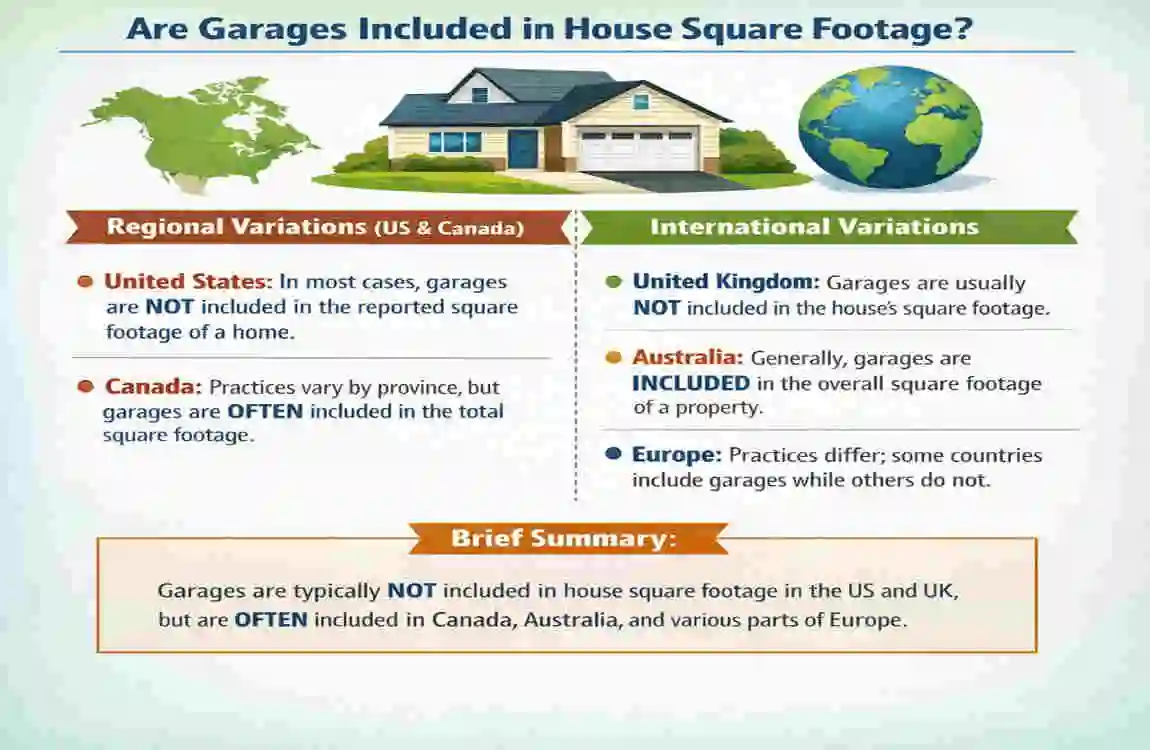
Rules Can Change by Location
While the general answer stays fairly consistent, local practices can still vary.
Some countries define and market home size differently. Some provinces, states, or local boards may treat finished basements one way, while others treat them another way. In some markets, below-grade space is more strictly separated. In others, finished lower levels may be emphasized more strongly in marketing.
That is why you should never assume every area handles square footage the same way.
Garages Are Still Usually Excluded
Even with regional differences, garages are still usually excluded from official house square footage unless they have been legally converted into finished living space.
That pattern stays fairly consistent across many markets because the basic logic stays the same: parking and storage space are not the same as habitable living area.
What You Should Do Locally
If you need a definitive answer in your market, check with:
- Your local real estate board
- A licensed appraiser
- Your city or county building department
- Your local MLS rules
- A knowledgeable real estate agent in your area
Local details always matter, especially when buying, selling, or converting a garage.
FAQ: Answering Common Questions
Are garages included in house square footage?
Usually no. In most markets, garages are excluded from official house square footage because they are not considered finished, habitable living space. They may add value and function, but they generally do not count as gross living area.
Does a finished attached garage count?
Sometimes, but only under specific conditions. If the space has been fully converted, insulated, climate-controlled, finished like the rest of the home, and approved under local code, it may count if it is simply cleaner or more upgraded than a typical garage, which usually is not enough.
Is the garage counted in the property footprint?
Often yes. A garage is usually part of the building’s total footprint or structural area. That means it may appear in builder plans or tax records. But that does not mean it counts as living square footage.
What counts as finished square footage?
Finished square footage usually includes spaces like bedrooms, living rooms, kitchens, dining areas, bathrooms, hallways, closets, stairways, and other completed areas designed for year-round living. Finished attics, finished basements, and enclosed sunrooms may count in some cases, depending on local rules and how the space is reported.