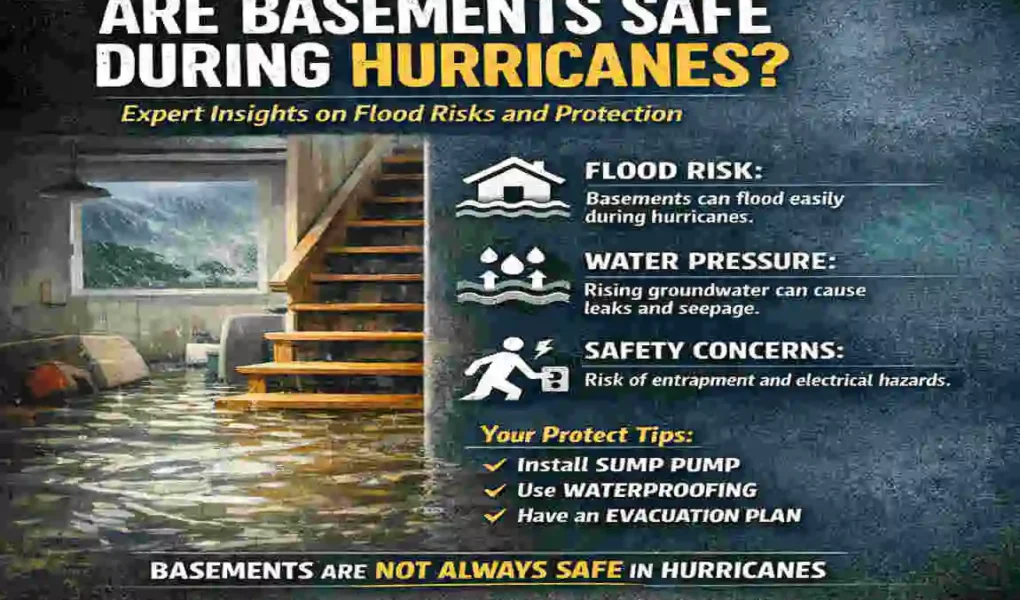
The sky outside your window has turned a menacing, bruised shade of purple. The wind is howling like a freight train, and heavy sheets of rain are relentlessly lashing against the siding of your house. Your local weather station has just issued a severe weather warning. Naturally, your very first instinct is to gather your family, grab your emergency kit, and head down below ground. It makes sense. Getting below the surface feels like the ultimate way to hide from the wrath of nature.
But then, you remember the terrifying news stories from recent years. You think back to the tragic aftermath of Hurricane Ida, where countless families who sought shelter downstairs found themselves trapped by rapidly rising flash floods. The underground sanctuaries they trusted suddenly turned into dangerous water traps.
If you live anywhere near a coast or in a designated flood zone, this is a worry that likely keeps you awake at night. We want to believe that our homes will protect us, but the reality of extreme weather is incredibly complex. The short answer to our big question is this: No, underground spaces are not inherently secure during these specific types of storms. While they might shield you from flying branches and extreme winds, they are essentially concrete bowls just waiting to fill up with water.
Why Basements Seem Like a Safe Haven
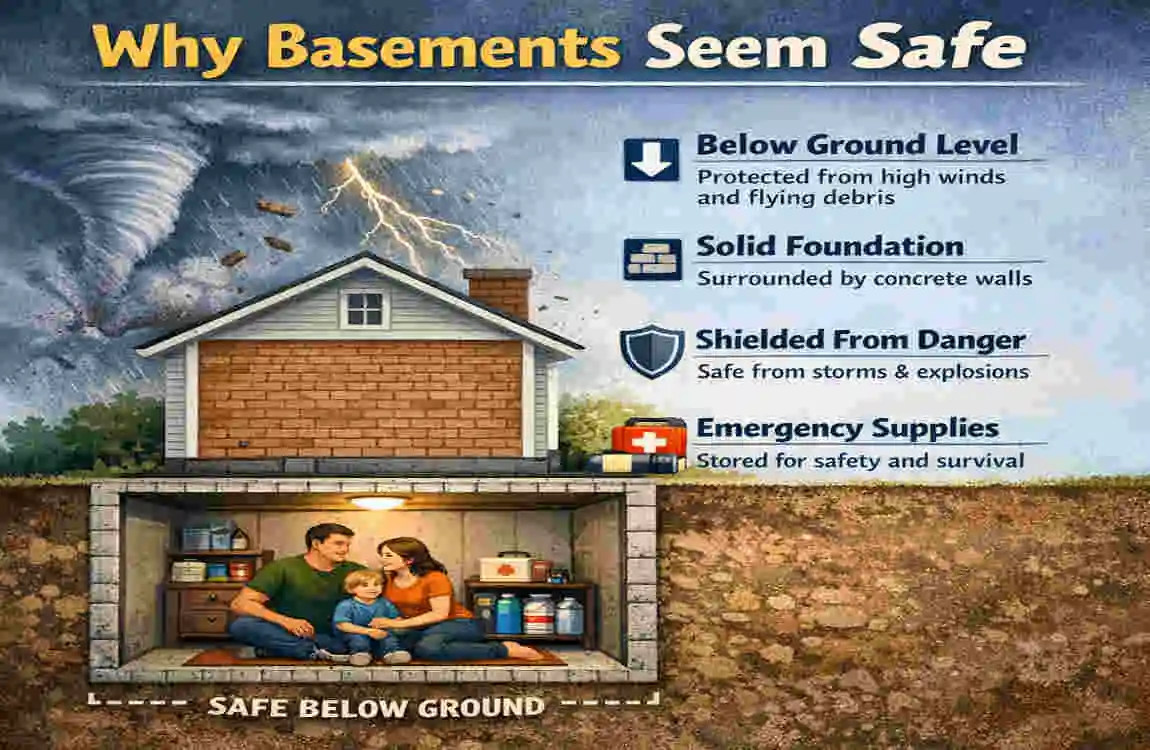
When a massive storm is bearing down on your neighbourhood, human psychology kicks in. We possess an innate, instinctual desire to hunker down and seek cover. To fully understand hurricane basement safety, we first have to understand why going downstairs feels like the absolute smartest move you can make.
The Illusion of Underground Advantages
Think about the structure of a standard house. The roof can be ripped off by gale-force winds. Siding can be shredded, and windows can easily be shattered by flying debris. Above-ground rooms are completely exposed to the violent kinetic energy of the storm.
Downstairs, however, things are totally different. When you walk down those stairs, the roaring sound of the wind is instantly muffled. You are surrounded by thick, poured concrete walls and tons of packed earth. You are entirely protected from airborne hazards like snapped tree branches, flying roof shingles, or even outdoor furniture that has been turned into dangerous projectiles. Because of this profound sense of quiet and physical shielding, it is incredibly easy to assume you are in the safest room in the house.
The Tornado vs. Hurricane Dilemma
A massive part of the confusion surrounding hurricane basement safety comes from how we are taught to survive tornadoes.
If you live in Tornado Alley, the golden rule of Survival is to get underground as fast as humanly possible. Tornadoes are strictly a wind-based threat. They possess the power to level a house to its very foundation in a matter of seconds. In that specific scenario, being below ground level is exactly what saves your life, because the primary danger is the collapse of the structure above you.
Hurricanes, on the other hand, are an entirely different beast. Yes, they bring terrifying, destructive winds. But they also bring millions upon millions of gallons of water. While an underground room might shield you from a hurricane’s wind, it acts as a magnet for a hurricane’s water. A space that protects you from structural collapse can quickly become a deadly trap when water levels begin to rise rapidly.
A Widespread Vulnerability
This is not a niche problem affecting only a handful of people. According to housing statistics, roughly forty per cent of all homes in the United States have some form of a basement or enclosed crawl space. Many of these homes are located directly in the paths of major storm systems, particularly along the Gulf Coast, the Eastern Seaboard, and even further inland, where tropical depressions dump massive amounts of rain.
You will often hear various hurricane basement safety myths passed around by well-meaning neighbours. People rely on the fact that their home has never flooded before. But as one structural engineer so perfectly put it: “Earth cover helps with the wind, but water always finds a way.”
When we are dealing with extreme tropical weather, the threat of water is far more lethal than the threat of wind. Let’s break down exactly why that is.
The Severe Flood Risks in Hurricanes
When we talk about the dangers of extreme weather, we need to understand the mechanics of how water actually behaves. The primary threats to your home do not just come from the sky; they come from the ground beneath your feet and the coastlines near your town.
To truly understand why basement flooding from hurricanes is so incredibly destructive, we need to break down the three primary ways water aggressively invades your home.
The Hidden Danger of Hydrostatic Pressure
You might look at your concrete foundation and see a solid, impenetrable fortress. Water, however, sees a porous sponge full of microscopic pathways.
When a massive storm hits, it drops an immense volume of rain onto the ground surrounding your house. The soil absorbs this water, becoming heavily saturated. As the Earth fills with water, it becomes incredibly heavy. This creates something called hydrostatic pressure.
Think of it like pushing a hollow plastic cup down into a bucket of water. The water wants to push the cup back up, and it pushes against the sides of the cup with immense force. The wet soil pushes against your foundation walls with thousands of pounds of pressure. Eventually, this immense force will squeeze water right through the naturally porous concrete, through microscopic cracks you cannot even see, and up through the joints where the floor meets the wall. Even if your windows are tightly shut, hydrostatic pressure can cause a catastrophic flood from the ground up.
The Terrifying Reality of Storm Surges
If you live anywhere near a coastline, storm surge risks are arguably the most terrifying element of any tropical cyclone.
A storm surge is not just a big wave. It is a massive, sudden rise in the sea level, pushed forcefully inland by the storm’s powerful winds. In a Category 4 or 5 storm, these surges can reach terrifying heights of ten to twenty feet or more.
When a storm surge moves inland, it acts like a fast-moving, incredibly powerful river. It completely overwhelms coastal neighbourhoods in a matter of minutes. If you are sheltering below ground level when a surge hits, the water will violently break through windows and doors, filling the space almost instantly. The most critical thing to know about storm surge risks is that there is virtually no way to out-pump or out-engineer them. When the ocean comes knocking, an underground space is the most dangerous place you can be.
Overwhelming Heavy Rainfall
Even if you live hundreds of miles inland, safely away from any coastal storm surge risks, you are still in danger. Tropical systems are notoriously slow-moving, and they carry an unbelievable amount of moisture. It is completely common for these storms to drop ten to twenty inches of rain in a single 24-hour period.
When this much water falls this quickly, local municipal drainage systems completely fail. Storm grates back up. Small creeks turn into raging rivers. The ground cannot absorb the water fast enough. When surface water has nowhere else to go, it follows the path of least resistance—which often leads straight down your stairwell, through your window wells, and into your home.
Breaking Down the Risk Factors
To help you visualise how these different elements interact with your property, take a look at this breakdown of common risk factors and their impacts:
Risk Factor: Impact on Basements: Hurricane Example
Storm Surge Instant, catastrophic flooding up to 15+ feet; structural failure. Hurricane Irma (2017)
Groundwater Rise Steady seepage driven by pressure through floors and structural walls. Hurricane Ida (2021)
Poor Drainage Surface water pooling around the foundation, flowing into window wells. Hurricane Dorian (2019)
According to extensive data collected by NOAA, historically, a staggering 90% of all hurricane-related damage is caused by water, not wind.
So, let’s address a common question: are basements safe during hurricanes with storm surges? The absolute, undeniable answer is no. Rarely, if ever, is it safe without massive structural elevation and specialised, professional-grade engineering.
Expert Insights on Dangerous Safety Myths
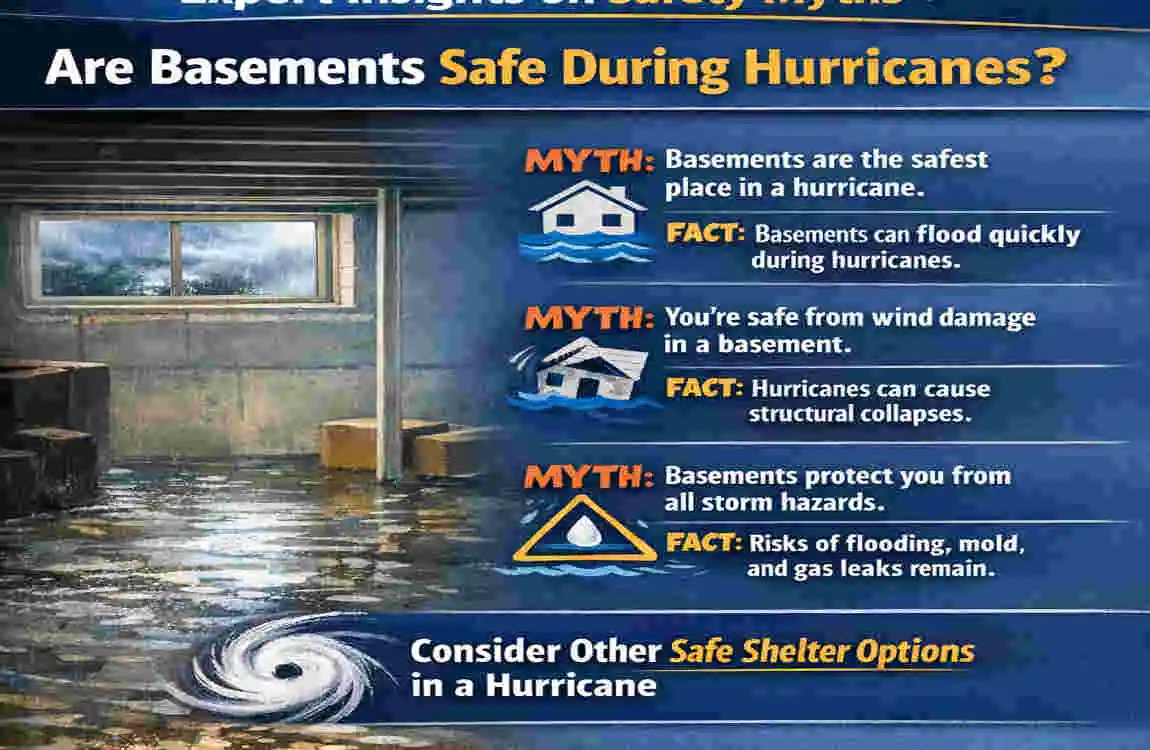
When a storm is approaching, panic often leads to the rapid spread of misinformation. Over the years, countless myths regarding hurricane basement safety have become deeply ingrained in our culture. Believing these myths can give you a false sense of security that puts your family at terrible risk.
Let’s sit down and systematically debunk these myths using real insights from foundation specialists and emergency management experts.
Myth : “My House Is Well Above the Flood Level”
One of the most common things homeowners say is, “I checked the FEMA maps, and I am technically not in a high-risk flood zone. Therefore, my lower levels are perfectly safe.”
This is a dangerous misunderstanding of how extreme weather works. Flood zones dictate the statistical probability of a nearby river or ocean overflowing its banks. They do not account for the localised, flash-flooding caused by twenty inches of rain falling directly onto your neighbourhood.
Experts warn that elevation matters, but it is not a magical shield. Even if your home sits on a hill, if the grading of the soil immediately around your foundation slopes toward your house, you will experience severe pooling. It does not matter if you are above sea level if your immediate yard acts as a funnel channelling rainwater directly against your foundational walls.
Myth : “My Home Is Brand New and Completely Flood-Proof”
It is incredibly tempting to believe that new construction means perfect construction. If your house was built in the last five years, you might look at those pristine, unblemished concrete walls and assume they are totally waterproof.
Foundation experts are quick to burst this bubble. All houses settle into the earth over time. As the heavy structure settles, the concrete naturally develops microscopic hairline cracks. Furthermore, builders often use basic dampproofing on new builds, not comprehensive waterproofing. Dampproofing keeps out soil moisture, but it is completely useless against the extreme hydrostatic pressure generated during basement flooding from hurricanes.
The Wind Versus Flood Reality Check
We often hear folks justify going downstairs by saying, “I’d rather deal with a few inches of water than have the roof cave in on my head.”
This presents a false choice. When you speak to rescue professionals, they will tell you plainly: in a tropical cyclone, the flooding always trumps the wind protection.
If your roof sustains damage, it is a localised structural failure. If your lower level floods rapidly, it becomes a life-or-death entrapment hazard. Unlike a specialised underground bunker, a standard residential space completely fails FEMA standards for water protection. It lacks the watertight sealing, the reinforced doors, and the elevated ventilation systems required to keep occupants breathing safely.
Comprehensive Protection Strategies
Now that we understand the very real dangers, it is time to take your power back. While we have established the risks, you absolutely can take massive action to protect the basement from flood waters.
Preparing your home is not a single action; it is a multi-layered approach. You need to create overlapping systems of defence. Here is a highly detailed, step-by-step guide to fortifying your property before the next storm system forms.
Essential Pre-Hurricane Preparation
Your very first line of defence actually starts high above the ground. You have to control where the rain goes when it hits your roof.
- Clean Your Gutters: It sounds simple, but it is critical. If your gutters are choked with wet leaves and twigs, the massive volume of rainwater from a storm will spill right over the edges. It will cascade down and pool directly against your foundation.
- Extend Your Downspouts: Once the water is in the gutters, you need to push it as far away from the house as possible. Standard downspouts drop water a mere foot away from the wall. You need to attach corrugated extensions to carry that water at least five to ten feet away from the structure.
Mastering Grading and Drainage
The soil surrounding your house should act as a ramp, ushering water away from your walls. Over time, garden beds get compressed, and dirt washes away, causing the soil to slope back toward the house.
- Re-Grade the Soil: Grab a shovel and add dense, clay-heavy topsoil around the perimeter of your home. You want to create a deliberate slope that drops about six inches for every ten feet you move away from the house.
- Install French Drains: If your yard naturally holds water, consider installing an exterior French drain system. This involves digging a trench, laying down a perforated pipe wrapped in landscaping fabric, and covering it with gravel. This acts as a subterranean highway, redirecting surface water away before it ever reaches your foundation.
Interior Waterproofing Tactics
If water manages to get past your exterior defences, you need robust interior systems ready to fight back. This is where you significantly upgrade your hurricane basement safety.
- Seal Every Crack: Inspect your walls with a flashlight. Look for any hairline cracks. Do not just paint over them. Use a professional-grade polyurethane or epoxy injection system. These chemicals expand inside the crack, filling the void all the way through the concrete wall and creating a watertight seal.
- Install a Heavy-Duty Sump Pump: A sump pump is your absolute best friend during a storm. It sits in a pit in the floor and actively pumps out water that gathers under the foundation.
- Mandatory Battery Backup: This is crucial. Hurricanes knock out power lines. A sump pump plugged into the wall is useless if the grid goes down. You must install a battery backup system, or better yet, a water-powered backup pump that runs off your municipal water pressure, ensuring it never stops working even in a total blackout.
Deploying Active Flood Barriers
When a storm is imminent, you need physical barriers to block water from entering vulnerable access points like windows and doors.
- Modern Sandbag Alternatives: Traditional sandbags are incredibly heavy and hard to dispose of. Look into modern, water-activated flood barriers. These are lightweight fabric tubes that you lay out across doorways. When they get wet, they swell up with a specialised gel, creating a heavy, solid dam against rising waters.
- Install Flood Vents: If you have an enclosed crawl space, sealing it tightly causes the foundation to collapse under hydrostatic pressure. Flood vents allow water to flow freely in and out of the space, equalising the pressure and saving your home’s structural integrity.
Elevating Vital Utilities
If the worst-case scenario happens and water does enter, you want to minimise the financial devastation and the risk of electrical fires.
- Move the Mechanicals: Do not leave your water heater, HVAC system, or electrical panels sitting directly on the concrete floor. Have a professional elevate these essential appliances on cinder blocks or custom-built concrete platforms, raising them safely above the anticipated flood line.
Understanding the Investment
Protecting your home requires financial planning. To help you budget for these upgrades, here is a general breakdown of what you might expect to spend:
Protection Method Cost Range (USD)Effectiveness
Heavy-Duty Sump Pump (with backup) $500 – $1,500 High
Interior French Drain System $2,000 – $5,000 Very High
Polyurethane Crack Sealing $300 – $800 Medium
Case Studies and Real-World Examples
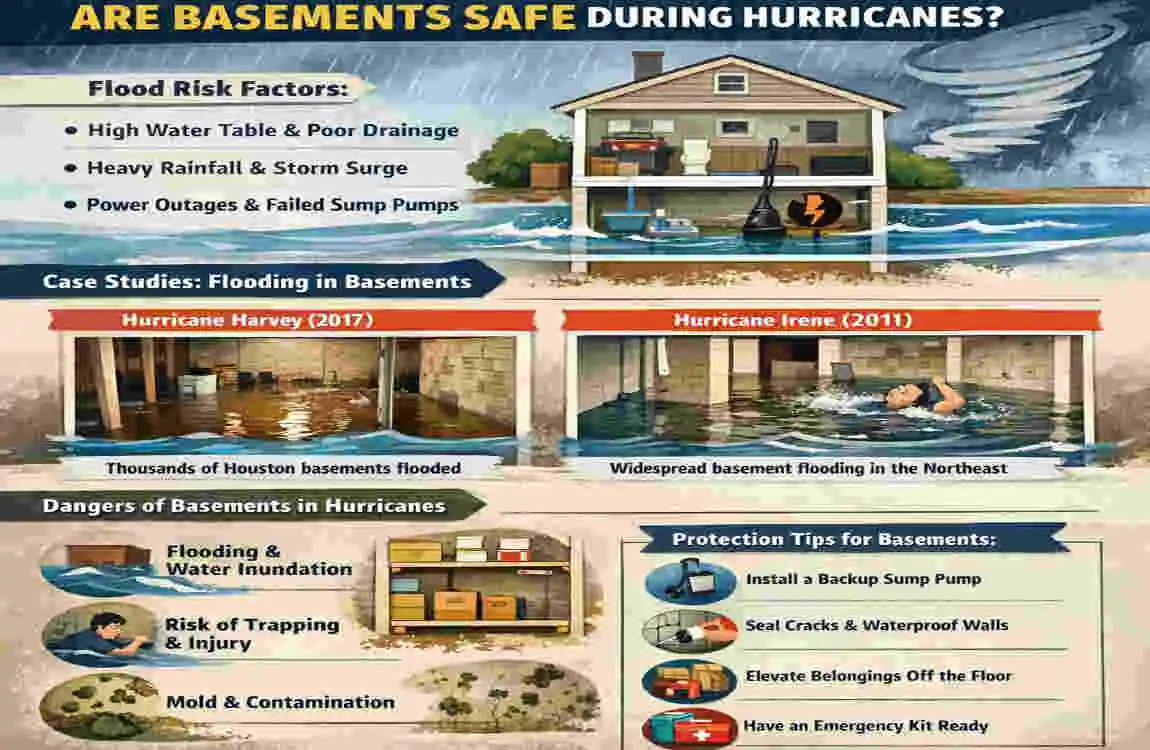
To truly grasp the importance of everything we have discussed, we must look at the historical record. The weather patterns over the last decade have provided us with harsh, unforgettable lessons regarding basement flooding and hurricanes. Examining these real-world events separates theoretical advice from life-saving reality.
The Tragedy of Hurricane Ida
In September 2021, the remnants of Hurricane Ida swept into the Northeast United States. By the time it reached New York city, it had lost its hurricane status, so many residents thought the worst was over. They were tragically wrong.
The storm dumped an unprecedented amount of rain in a shockingly short period. The city’s aging sewer systems were instantaneously overwhelmed. Water geysered out of toilets, blasted through window wells, and cascaded down exterior stairwells. Dozens of people who were sheltering in below-ground apartments were caught completely off guard. The flash flooding was so rapid and violent that many were unable to push open their doors against the weight of the water.
This tragic event serves as the ultimate, heartbreaking warning. It proved definitively that you do not need a coastal storm surge to experience lethal urban flooding.
The Crawl Space Disasters of Hurricane Dorian
In 2019, Hurricane Dorian scraped slowly up the Southeast coast of the United States. In the Carolinas, thousands of homes are built on raised crawl spaces rather than full, deep dugouts.
Many homeowners neglected to prepare these spaces, assuming they were safe because they were not completely underground. However, Dorian brought relentless, driving rain that lasted for days. Without proper grading or functional sump pumps, these crawl spaces turned into stagnant ponds.
While these didn’t result in immediate fatalities like Ida, the aftermath was a nightmare. The trapped water completely ruined HVAC ductwork, destroyed electrical wiring, and led to massive, toxic mould outbreaks that cost homeowners tens of thousands of dollars to remediate. The lesson here is that even shallow, partial underground spaces require aggressive defence strategies.
Success Stories: How Preparation Saves Homes
It is not all doom and gloom. Let’s look at the success stories that emerge after every major storm.
In coastal communities throughout the Carolinas and Florida, there are clear lines drawn between homes that survive and homes that are ruined. During recent tropical storms, homeowners who had proactively invested in their properties saw incredible returns on that investment.
Consider a homeowner who spent the money on a full interior French drain system and a battery-operated sump pump. While their neighbours were furiously bailing water out with buckets, their home remained completely dry. The pump quietly did its job in the dark, pushing thousands of gallons of hydrostatic pressure safely away from the foundation.
When you look at before-and-after photos of these fortified homes, the contrast is staggering. A home without protection shows walls stained with mud, ruined drywall, and floating furniture. A properly waterproofed home looks entirely untouched. The ultimate lesson from these case studies is simple: if you are in a flood zone, early preparation is not just recommended; it is mandatory.
Safer Alternatives for Riding Out the Storm
If we have established that going downstairs is a massive gamble, what are your other options? Where should you and your family go when the sirens start wailing?
You need alternatives that provide the wind protection of an underground space without the terrifying water risks.
Above-Ground Safe Rooms
The gold standard for extreme weather protection is an above-ground safe room that is strictly compliant with FEMA P-320 guidelines.
These are incredibly robust, custom-built steel or heavily reinforced concrete boxes installed inside your home—often in a garage or an interior closet. They are anchored deeply into the foundational concrete slab using massive steel bolts. Because they are located above ground, you eliminate the risk of being trapped by rising ground-level flash floods. Yet, because they are engineered to withstand impacts from 250 mph winds, they offer complete protection from flying debris and structural collapse.
Elevated Homes and Second Floors
If you live in a coastal area prone to surges, the most effective architectural strategy is to elevate the entire living space on sturdy pilings or massive concrete piers.
If you are currently living in a standard two-story home during a hurricane, your safest immediate bet is an interior room on the second floor, ideally one without windows, such as a hallway or a bathroom. You want to put as many walls between you and the outside wind as possible, while staying elevated above any potential water intrusion on the ground floor.
Specialised Underground Shelters
If you absolutely must use an underground shelter, do not rely on a standard residential foundation. Instead, look into specialised, prefabricated fibreglass storm shelters.
These are entirely separate from your house. They are buried in the yard and are designed like a submarine. They have fully watertight, latching doors, marine-grade seals, and elevated ventilation pipes that sit well above typical flood lines. They are specifically engineered to keep water out, entirely bypassing the porous nature of standard concrete walls.
Frequently Asked Questions (FAQ)
Are basements safe during hurricanes in Florida or other coastal states? You must assess your localised flood zone first, but generally, no. Due to the high water table, sandy soil, and extreme risk of storm surges, underground spaces in Florida are highly susceptible to catastrophic and rapid flooding. Above-ground sheltering is strongly recommended.
How exactly do I protect the basement from flood waters before a storm hits? It requires a multi-layered approach. Start outside by extending downspouts and ensuring the soil slopes away from your home. Inside, your best defence is a combination of professional crack sealing and a high-capacity sump pump equipped with an independent battery backup system.
If water starts coming in, should I go down to check on it? Absolutely not. Floodwaters can carry dangerous electrical currents from submerged appliances or downed power lines outside. Furthermore, water can contain toxic chemicals and raw sewage. If your lower level begins to flood, stay upstairs, wait out the storm, and call professional remediation services once the weather clears.