Two-bedroom homes are one of the most practical choices in today’s housing market. They give you enough room to live comfortably without straining your budget. That balance is exactly why so many first-time buyers, small families, couples, and downsizers keep returning to this home size.
If you are shopping for Two-Bedroom Homes, the real question is not just whether the home has two bedrooms. The bigger question is whether the home fits your life. A home can look great on paper and still feel cramped, noisy, or inconvenient once you move in. That is why it helps to know what really matters before you make an offer.
When shopping for Two-Bedroom Homes, prioritize layout, location, and modern amenities. Those three things usually shape your daily comfort more than square footage alone.
| Feature Category | What to Look For | Why It Matters |
|---|---|---|
| Size & Layout | 900-1,400 sq ft; open-plan or split-bedroom design | Maximizes space for families or roommates; boosts flow and resale value. |
| Bedrooms | Primary: 13×13 ft min with walk-in closet; Secondary: 10×12 ft, versatile for office/guest | Ensures comfort, privacy, and multi-use flexibility in two-bedroom homes. |
| Kitchen | Island, quartz counters, pantry (3×3 ft min) | Central hub for daily living; modern upgrades increase appeal by 25%. |
| Bathrooms | 1.5-2 full baths; ensuite + powder room | Prevents morning rushes; adds luxury without excess cost. |
| Outdoor Space | Fenced yard (20×30 ft), deck/patio, 1-car garage | Extends living area; ideal for pets, entertaining, or storage. |
| Energy Efficiency | Energy Star windows, smart thermostat, R-30 insulation | Cuts utility bills 20-30%; appeals to eco-conscious buyers. |
| Location | Walkable amenities, low HOA (<$200/mo), good schools | Drives long-term value; proximity saves time and money. |
Ideal Size and Layout
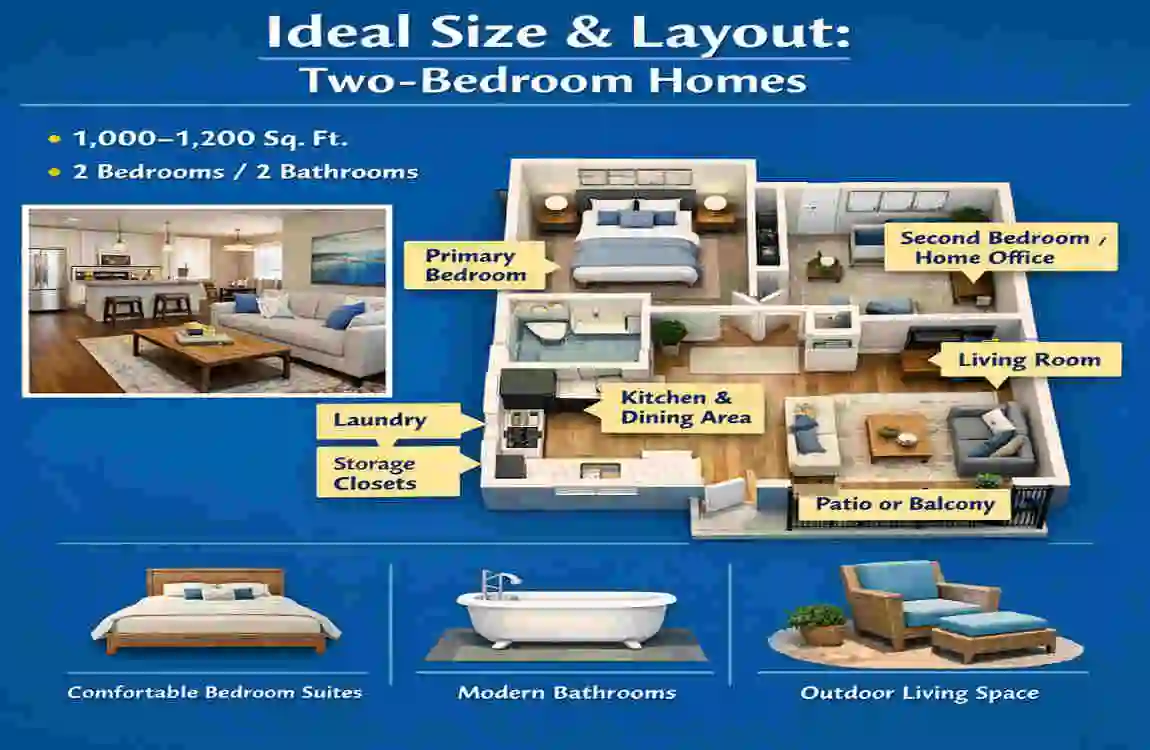
When people compare Two-Bedroom Homes, size is usually the first thing they notice. But size alone does not tell the whole story. A home can be larger on paper and still feel awkward, while a smaller home with a smart layout can feel open, calm, and easy to live in.
The sweet spot for many buyers is a home that offers enough space for daily life without wasting square footage on hallways, oversized entryways, or unused corners. In many cases, Two-Bedroom Homes fall somewhere between 800 and 1,500 square feet, which gives you room to live well while still keeping maintenance and utility costs manageable.
That range can work for many different lifestyles. A couple may want one bedroom for sleeping and the other for an office or guest room. A small family may need one bedroom for parents, one for a child, and a living area that feels open enough for shared time. A downsizer may want a smaller footprint but still needs enough room for hobbies, visitors, and storage.
The key is not just the number of square feet. It is how that space is arranged.
Common Layouts for Two-Bedroom Homes
There are several popular layouts for Two-Bedroom Homes, each suited to a different lifestyle.
Open-Plan Design
An open-plan home combines the kitchen, dining, and living areas into one flowing space. This style often makes the home feel larger because you can see more of it at once. It also works well if you like entertaining, watching kids while cooking, or keeping the home feeling connected.
This layout is especially appealing if you want the home to feel airy and bright. It reduces visual barriers and often gives even modest homes a more spacious feel.
Split Bedroom Layout
A split layout places the primary bedroom on one side of the home and the second bedroom on the other. This design gives more privacy and works especially well for roommates, guests, or families with a child who needs a quieter space.
If you want the second room to serve as a home office or guest room, this layout can be very helpful. It creates separation without needing a much bigger house.
Single-Story vs. Two-Story
Single-story Two-Bedroom Homes are often easier to navigate and can be a smart choice for aging in place. They also tend to feel more accessible and practical for daily routines.
Two-story homes can offer greater design flexibility. They may include loft areas, better separation between sleeping and living spaces, or bonus space upstairs. The tradeoff is that stairs may not suit every buyer.
What to Check in the Floor Plan
A good layout should make the home feel easy to use, not just nice to look at. As you review floor plans, keep an eye on these details:
- Hallways should not waste too much space
- Rooms should connect naturally
- Bedrooms should have enough privacy
- Living areas should feel comfortable, not cramped
- Windows should bring in light where people spend most of their time
A useful rule of thumb is to make sure hallways do not take up too much of the floor plan. If too much square footage is used for passage space, you may end up paying for space that does not improve your daily life.
Table: Common Layout Types for Two-Bedroom Homes
Layout TypeProsConsBest For
Open-Plan Airy feel, good for entertaining, flexible use of space. With less privacy, noise travels more easily. Young families, couples, social buyers.
Split Bedroom More privacy, better separation May cost more to build or buy Roommates, guests, work-from-home buyers
Compact Layout , Lower cost, easier to maintain , Less storage, less room for extras , Singles, downsizers, minimalist lifestyles
Single-Story Easier accessibility, simple flow , Larger footprint on land , Aging buyers, families with young children
Two-Story Better zoning of spaces, often more flexible. Stairs can be inconvenient. Buyers want separation between living and sleeping areas.
The right layout should match how you actually live. If you work from home, host guests, or need quiet during the day, the floor plan matters more than cosmetic upgrades.
Essential Bedroom Features
The bedrooms are the most personal spaces in any home. In Two-Bedroom Homes, these rooms often serve more than just as a place to sleep. One room may be used for sleeping, while the other becomes an office, nursery, hobby room, or guest room. That is why both bedrooms should feel useful, comfortable, and adaptable.
When evaluating bedroom space, think beyond furniture placement. Ask yourself how the room will feel when you use it every day. Will it be calm? Will it fit your needs? Will it still work if your life changes?
Primary Bedroom Must-Haves
The primary bedroom should feel like a restful place. It does not need to be huge, but it should support comfort and privacy.
Walk-In or Spacious Closet
Storage is one of the biggest quality-of-life features in a bedroom. A walk-in closet is ideal, but even a well-designed reach-in closet can work if it provides enough space for clothing, shoes, and seasonal items.
A closet that feels too small will create clutter fast. And once clutter builds up, even a good bedroom can start feeling stressful.
Ensuite or Nearby Bathroom Access
Easy bathroom access is another major comfort factor. An ensuite bath is a strong plus because it adds convenience and privacy. If the primary bedroom does not have an attached bath, at least make sure the main bathroom is close and easy to reach.
Natural Light
A bedroom with good natural light often feels larger and more welcoming. Large windows can improve the mood of the room and make it easier to enjoy during the day.
If you can, look at how much sunlight the room gets. Bright morning light can be wonderful, but too much afternoon heat may not be ideal, depending on the climate and window placement.
Secondary Bedroom Versatility
The second bedroom is one of the most valuable parts of a Two-Bedroom Home because it can adapt as your needs change.
A well-sized secondary bedroom should ideally fit a queen bed, a small desk, or at least one additional piece of furniture without feeling packed. For many buyers, a room around 10 by 12 feet or larger works well.
This room may become:
- A child’s bedroom
- A guest room
- A home office
- A workout room
- A craft room
- A temporary nursery
- A combination space with a Murphy bed or sleeper sofa
The more flexible the room is, the more useful the home becomes over time.
Why Flexibility Matters
Life changes faster than most people expect. A room that seems unnecessary today may become essential later. That is why flexible second rooms are so appealing in the market. Homes with adaptable layouts often attract more interest because buyers see more possible uses.
If you are trying to choose between two homes, the one with a more versatile second bedroom may actually be the better long-term choice. It gives you room to grow, work, or pivot without needing to move again too soon.
Quick Bedroom Checklist
Before you decide, ask:
- Can the main bedroom fit your furniture comfortably?
- Is there enough closet space for daily needs?
- Can the second room serve more than one purpose?
- Are the windows placed well for natural light?
- Is the room quiet enough for sleeping or working?
These details may seem small, but they affect how the home feels every single day.
Kitchen and Living Areas
In Two-Bedroom Homes, the kitchen and living areas often define the entire house experience. These are the spaces where people gather, eat, relax, and spend time together. If these rooms do not work well, the rest of the home can feel less enjoyable, no matter how nice the bedrooms are.
That is why smart buyers pay close attention to how these communal areas are designed. They want spaces that are practical, welcoming, and easy to use.
Kitchen Essentials
The kitchen should support everyday life, not fight against it. Even in a smaller home, a good kitchen can make the whole house feel more functional.
Island or Peninsula
An island or peninsula gives you extra counter space, more prep room, and a place to sit for casual meals or quick conversations. It also helps create flow in open layouts.
If there is room for seating, that is even better. A kitchen that doubles as a casual gathering spot often feels more usable than one that only serves cooking.
Good Cabinet and Pantry Storage
Storage is one of the most important kitchen features in any home. In a two-bedroom house, you may not have the luxury of a very large kitchen, so every cabinet and shelf matters.
A pantry, even a small one, can make a big difference. It helps reduce countertop clutter and keeps your food and supplies organized.
Durable, Modern Surfaces
Stainless appliances, quartz counters, and easy-to-clean surfaces are popular because they look sharp and hold up well. You do not need the most expensive finishes, but you do want materials that withstand daily use.
If you cook often, choose features that make cleanup easy and routine tasks smoother.
Living Room Priorities
The living room should feel like a place where you can actually relax. It should be large enough for your furniture and still leave space for movement.
A living room around 15 by 15 feet or larger often works well for a sectional, a TV, and a few accent pieces. But layout matters just as much as size. A poorly shaped room can feel smaller than it is.
What Helps a Living Room Work Well?
- Enough wall space for furniture placement
- A clear traffic path through the room
- Natural light from windows or doors
- Room for both lounging and entertaining
- A sense of connection to the kitchen or dining space
Features like a fireplace or built-in shelving can make the room feel cozier and more finished. These touches may not be essential, but they can enhance the home’s overall feel.
Open Concepts and Daily Comfort
Open concepts remain popular in Two-Bedroom Homes because they make the home feel larger and more connected. They can also improve how families and guests interact, especially when people cook, eat, and relax in nearby spaces.
Still, open layouts are not perfect for everyone. They can also make noise travel more easily. If one person watches TV while another works or naps, that lack of separation may become frustrating.
So, as you shop, think about your habits. Do you want openness, or do you want some quiet zones? The best home is the one that supports your daily rhythm.
Kitchen and Living Room Checklist
- Is the kitchen easy to move through?
- Is there enough counter space for cooking?
- Is the storage practical and well placed?
- Does the living room fit your furniture comfortably?
- Can you imagine spending real time in these rooms?
If the answer is yes, the home may be a strong fit.
Bathrooms and Half-Baths
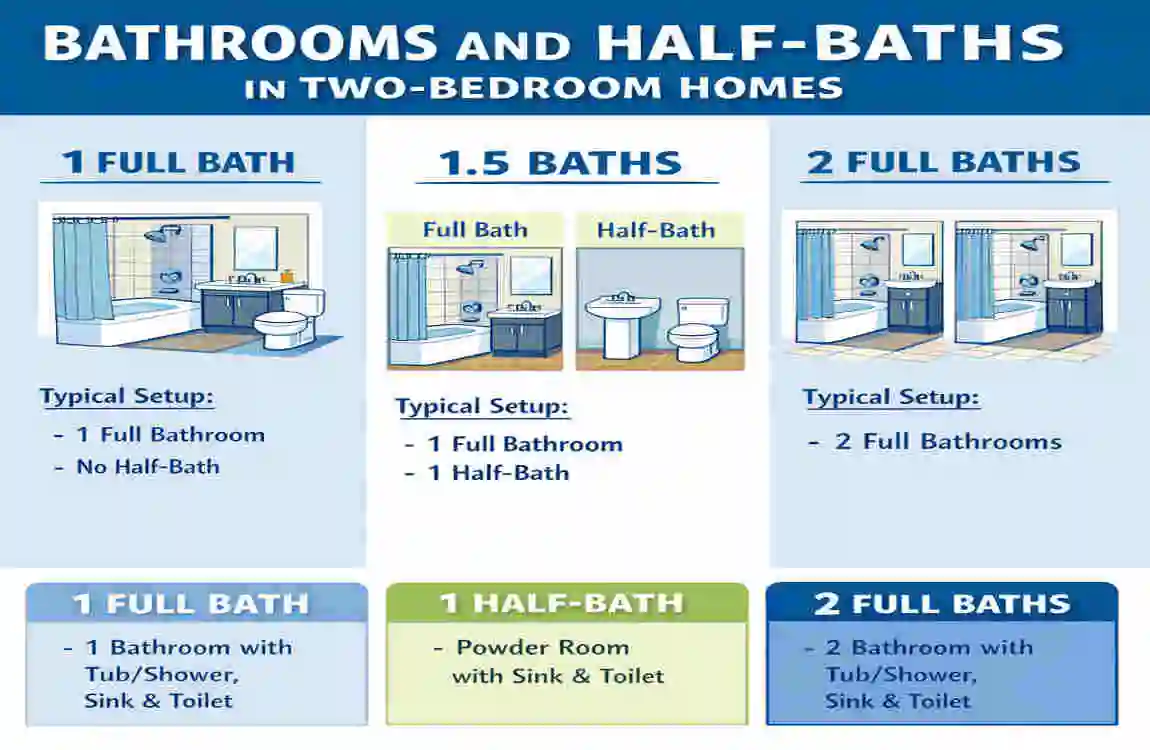
Bathrooms are often overlooked until they become a problem. In Two-Bedroom Homes, the bathroom count can make a huge difference in daily convenience. For many buyers, 1.5 to 2 bathrooms is the ideal target.
Why? Because two bedrooms often mean more than one person living in the home, or at least more than one person using it regularly. One bathroom can work, but it may also create bottlenecks during busy mornings or when guests visit.
Full Baths
A full bathroom should be practical, clean, and easy to use. Features that add comfort and value include:
- Dual vanities for shared use
- Walk-in showers for convenience
- Good lighting around mirrors
- Storage for toiletries and towels
- Easy-to-clean surfaces
If the home has only one full bath, that bath should be placed thoughtfully. It should be accessible without compromising privacy in the bedrooms.
Powder Room or Half-Bath
A powder room is a great extra feature. Even though it lacks a shower, it provides guests with a place to freshen up without using the main bathroom.
In many homes, a half-bath off the living area is one of the smartest additions you can have. It helps reduce traffic in private spaces and makes entertaining easier.
Smart Bathroom Upgrades
Some upgrades make a bathroom feel much better without requiring a full remodel later.
- Frameless glass shower doors
- Heated floors
- Modern faucets and fixtures
- Better ventilation
- Extra linen storage
These details may seem small, but they improve comfort and reduce hassle.
What to Watch For
A bathroom can look nice in photos and still cause issues in real life. Check for:
- Poor airflow
- Weak water pressure
- Limited storage
- Awkward placement near bedrooms
- Signs of moisture or past leaks
Bathrooms should support your routine, not slow it down.
Outdoor and Storage Space
Even though Two-Bedroom Homes are often smaller than larger family houses, they can still feel spacious if they include smart outdoor and storage areas. In fact, these spaces often make the biggest difference in how comfortable the home feels.
A modest home with useful outdoor space may feel far better than a slightly larger one with no yard, no patio, and no room for things like tools, bikes, or seasonal décor.
Outdoor Space That Adds Real Value
Outdoor space should be usable, not just visible.
A small fenced yard can be a huge plus if you have children or pets. Even a simple patio or deck can expand how you use the home, giving you a place for morning coffee, grilling, or relaxing with friends.
Useful Outdoor Features
- Fenced yard
- Space for a small table and chairs
- Deck or patio for entertaining
- Room for a garden
- Easy access from the kitchen or living room
If the yard is too tiny, too sloped, or hard to maintain, it may not be very useful. Think about how much time and energy you want to spend maintaining the outdoor space.
Storage Space Matters More Than You Think
One of the biggest frustrations in a smaller home is not having enough room for belongings. That is why storage should be part of every serious buyer’s checklist.
Look for:
- Closets in both bedrooms
- Hallway or linen storage
- Pantry space
- Garage storage
- Attic or crawl-space access
- Built-in shelving where possible
A home with good storage often feels cleaner and less stressful because everything has a place.
Table: Storage Comparison
Storage Type Benefits Best Use
Attached Garage Secure, easy access, good for tools and seasonal items , Cars, bikes, storage bins
Built-In Shelving saves floor space and looks polished. Books, décor, and daily items.
Attic Storage keeps infrequently used items out of the way, holiday décor, and keepsakes.
Under-Stair Storage Uses forgotten space well : Household supplies, shoes
Closet Systems Improves organization of clothing, linens, and accessories
When storage is planned well, a smaller home can feel much bigger. That is one of the quiet strengths of well-designed Two-Bedroom Homes.
Energy Efficiency and Smart Features
Modern buyers care more than ever about energy use and smart technology. That makes sense. Lower utility bills, better comfort, and easier control all add up over time.
In Two-Bedroom Homes, efficient features can make a real difference because smaller homes often benefit strongly from well-designed systems. If the home is well-sealed and built with energy efficiency in mind, you may spend less each month and enjoy more stable indoor comfort.
Energy Efficiency Features to Look For
Start with the basics. A home that stays warm in winter and cool in summer without wasting energy is valuable.
Good Insulation
Insulation helps control indoor temperatures and supports lower energy use. Walls, ceilings, and floors should all be checked if possible.
Energy-Efficient Windows
Windows that reduce heat loss and block excess heat can make the home more comfortable year-round.
Efficient Heating and Cooling Systems
Look for systems that are newer, properly maintained, and sized correctly for the home. A good system should not have to work too hard to do its job.
Smart Home Features
Smart features are not necessary, but they can make life easier. Popular upgrades include:
- Smart thermostats
- LED lighting
- Motion-sensor lights
- Smart locks
- Video doorbells
These additions can improve both convenience and peace of mind.
Future-Ready Additions
Some buyers also like homes that are ready for future upgrades. For example:
- Solar-ready roofing
- EV charging potential
- Pre-wired internet points
- Extra outlets in useful spots
These features may not be essential on day one, but they can save time and money later.
Why Efficiency Should Matter to You
Energy-efficient homes are often more comfortable, easier to maintain, and less expensive to run. That matters if you plan to live in the home for years.
It also matters if you ever plan to sell. Buyers increasingly notice these features, and efficient homes tend to feel more modern and practical.
Location and Neighborhood Factors
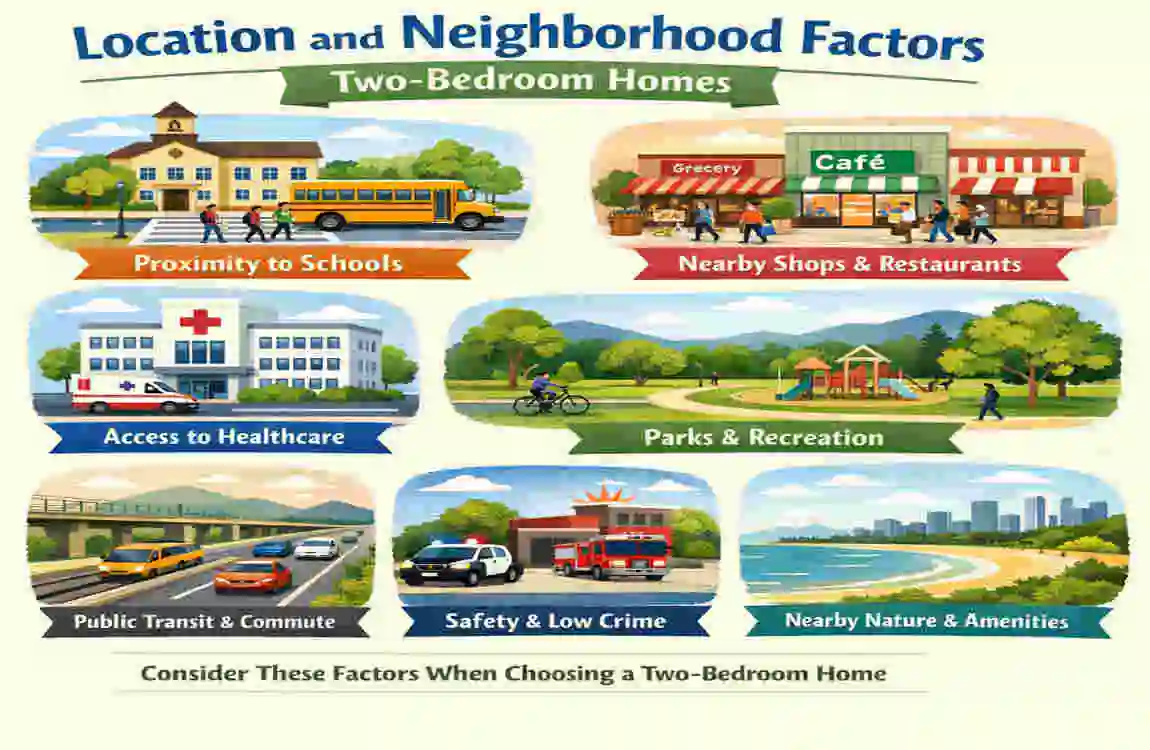
A great home in the wrong location can still feel wrong. That is why location matters just as much as square footage when choosing Two-Bedroom Homes.
In many cases, proximity is more valuable than size. A smaller home in a walkable, convenient area may be a better daily fit than a larger home far away from the places you need to go.
What Makes a Strong Location?
The best location depends on your lifestyle, but some factors matter to almost everyone.
Close to Daily Needs
Think about how far the home is from work, school, shopping, healthcare, and major roads. If you spend half your life driving around, the location may become annoying fast.
Walkability
A walkable neighborhood can make life feel easier and more enjoyable. Being able to reach a grocery store, park, school, or café without driving is a real bonus.
Low Noise and Good Privacy
Even a beautiful home can feel unpleasant if it sits near constant traffic, loud neighbors, or busy commercial areas.
HOA Fees and Community Rules
If the home is part of a community association, check the fees and restrictions carefully. A lower monthly fee can help your budget, while too many rules can limit your freedom.
Resale Potential
Think ahead. Even if you plan to stay for years, it helps to choose a home that others will also find appealing later.
Neighborhoods with steady demand, improving amenities, and good access to services often hold value better over time. That does not mean you need the most expensive area. It means you should look for long-term strength rather than short-term charm alone.
Questions to Ask About Location
- How far is it from your daily routine?
- Is the neighborhood quiet and well-kept?
- Are the nearby services useful to you?
- Does the area feel safe and comfortable?
- Would another buyer want this location later?
These questions help you see the home as part of a bigger picture.
Budget and Financing Tips
Buying a home is exciting, but the numbers matter. It is easy to focus on the sale price and forget about the other costs of ownership.
Many Two-Bedroom Homes are considered more affordable than larger properties. However, the total cost still depends on the market, the home’s condition, and post-closing expenses.
Plan for More Than the Purchase Price
You should budget for:
- Down payment
- Closing costs
- Move-in expenses
- Repairs or touch-ups
- Emergency reserves
- Furniture or appliance upgrades
A home that looks affordable at first may stretch your budget if it needs immediate work.
Table: Budget Breakdown Example
Cost Factor: Estimated % of Budget
Down Payment 20%
Closing Costs 2-5%
Repair/Improvement Reserve 1-3% of home value
Emergency Cash Reserve : About 6 months of expenses
Tips for Staying Financially Comfortable
Keep Some Cash in Reserve
Do not use every dollar you have for the down payment. A home usually brings surprise expenses, especially in the first year.
Compare Monthly Costs, Not Just Price
Taxes, insurance, utilities, HOA dues, and maintenance all matter. A cheaper house can still cost more each month if those expenses are high.
Be Honest About Repairs
If the house needs work, count those costs now, not later. New flooring, paint, appliances, or plumbing fixes can add up fast.
A Smart Buyer Mindset
The best home is not just the one you can afford today. It is the one you can live in comfortably without financial stress. That is why careful budgeting matters so much.
Common Pitfalls to Avoid
Even well-informed buyers can make avoidable mistakes. The good news is that most of these issues are easy to spot if you know what to look for.
Ignoring Structural Problems
Foundation cracks, roof damage, water stains, and sloping floors can all signal serious issues. Some of these problems are expensive to fix, so never skip a thorough inspection of the home’s condition.
Overlooking Noise
Thin walls, street noise, and sounds from neighboring units can affect your comfort every day. If possible, visit the home at different times to better gauge noise levels.
Skipping the Inspection
A home inspection is one of the most important parts of the process. It helps uncover problems you might miss during a quick showing.
Focusing Only on Style
Pretty finishes can be distracting. A stylish kitchen is nice, but it will not make up for a poor layout, low storage, or a bad location.
Forgetting Future Needs
Your life may change. Try to choose a home that can still work if your family grows, your work situation changes, or your habits shift.
A thoughtful buyer looks at the whole picture, not just the first impression.
FAQs
What size is best for two-bedroom homes?
For many buyers, 1,000 to 1,200 square feet is a very practical range. It often gives enough room for comfort without becoming too expensive or hard to maintain.
Are two-bedroom homes good investments?
Yes, they can be. Two-Bedroom Homes often have strong demand because they appeal to first-time buyers, small households, retirees, and renters. Their broad appeal can help support long-term value.
How do I stage two-bedroom homes for sale?
Start with neutral colors, decluttered rooms, clean surfaces, and simple furniture placement. The goal is to help buyers imagine the home as their own. Make each room feel open, bright, and easy to use.
What is the most important feature to look for?
There is no single answer for everyone, but layout is often the biggest factor. A smart layout can make a smaller home feel much better than a larger one with wasted space.
Can a second bedroom be used as an office?
Absolutely. That is one of the biggest strengths of Two-Bedroom Homes. A flexible second room can adapt to work, guests, hobbies, or children as needed.