
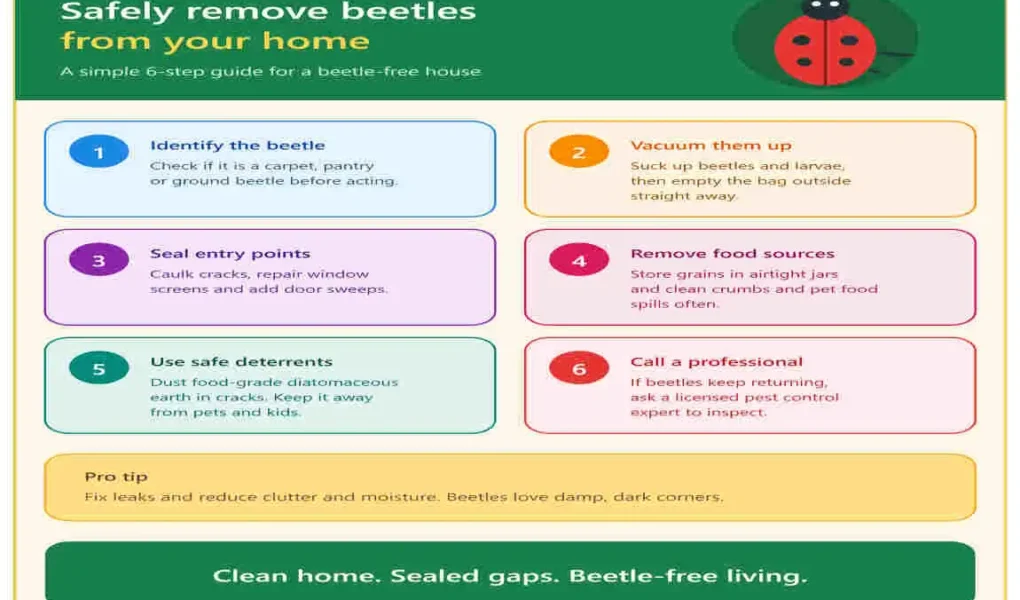
Finding a beetle on the windowsill is one thing. Finding a dozen tiny ones in the back of the wardrobe, or a scatter of fine dust under a wooden chair, is quite another. If you are searching for how to get rid of beetles in house UK, the good news is that most household beetles can be dealt with safely, and without a hazmat suit. The trick is knowing which beetle you are dealing with first, because the right fix for a carpet beetle is very different from the right fix for woodworm.
Identify the Beetle Before You Treat It
It is tempting to grab the nearest spray, but guessing wrong wastes money and can expose your family to chemicals for no reason. Three groups cause most of the trouble indoors in Britain.
Carpet beetles
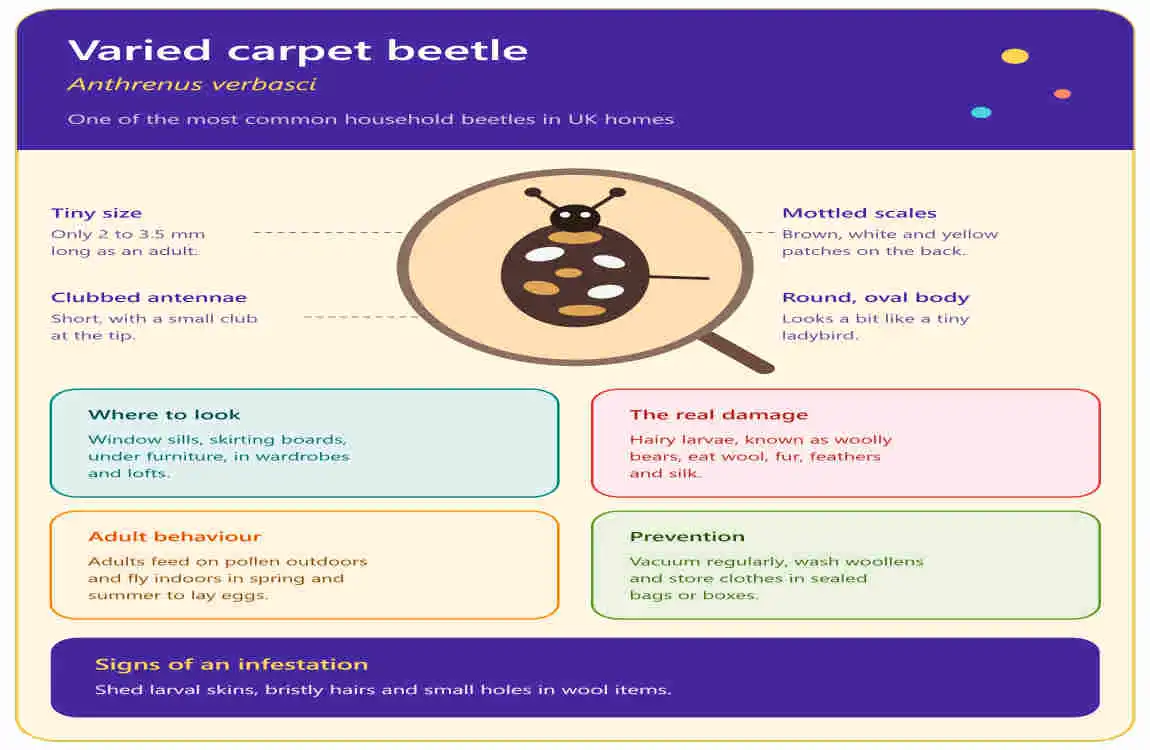
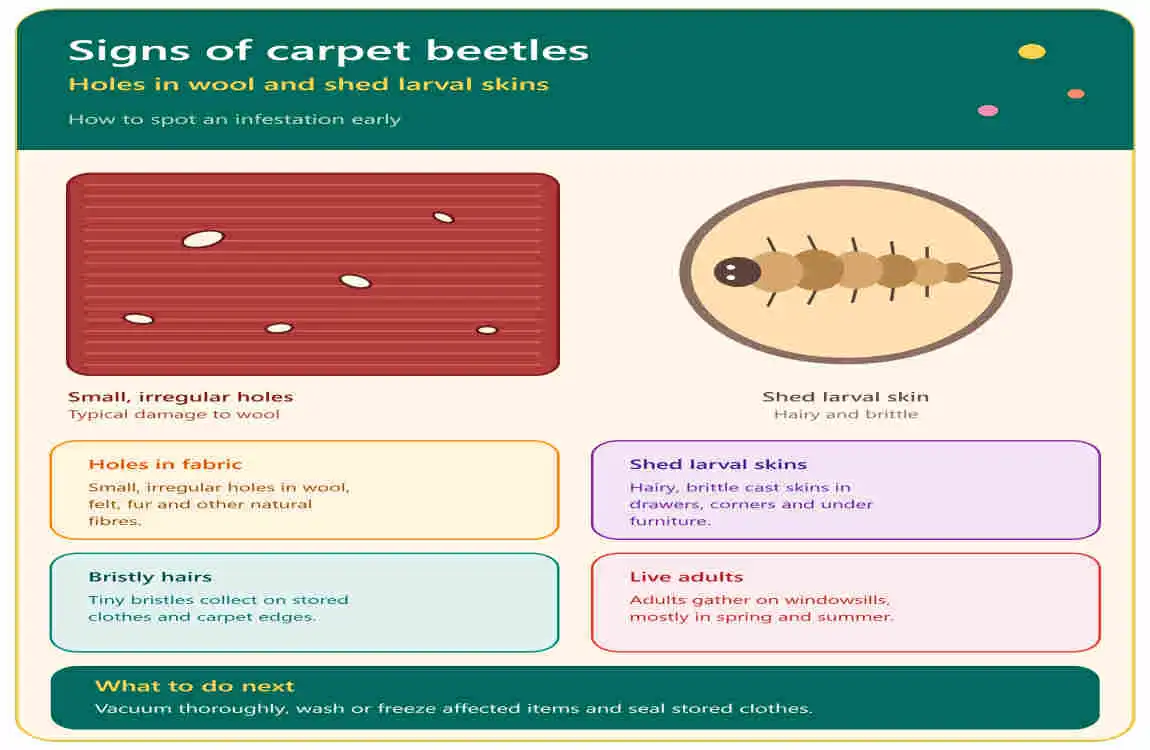
The Natural History Museum explains that several UK species attack natural materials such as wool, silk, fur, feathers and skins, and that it is the larvae, not the adult beetles, that do the damage. The varied carpet beetle is long established here, while the two-spot (or fur) beetle is a frequent find in older houses, often linked to old birds’ nests. If you spot small, bristly, brownish larvae or shed larval skins in wardrobes, under furniture or along skirting boards, carpet beetles are the likely suspect.
Woodworm (common furniture beetle)
Woodworm is not actually a worm. It is the larval stage of wood-boring beetles, and the most frequent offender in UK homes is the common furniture beetle. Telltale signs are small round exit holes and fine, gritty dust (called frass) beneath timber. According to Rentokil, this species accounts for the large majority of woodworm damage in UK buildings, and its eggs will not hatch if the timber is too dry.
Larder and stored-food beetles
Larder beetles, biscuit beetles and spider beetles tend to turn up in kitchens and pantries, or near old animal products. The Collections Trust lists the biscuit beetle and spider beetles among the pests commonly found in UK museums and their stores, and the same insects love a forgotten bag of flour or a pet-food tin at the back of the cupboard.
How to Get Rid of Carpet Beetles Safely
Carpet beetles are the most common reason people search for how to get rid of beetles in house UK, and thankfully the safest methods are also the most effective. Work through these steps in order.
- Find the source. Check wardrobes, under beds, behind radiators, along skirting boards and inside any wool rugs or throws. Also look in loft spaces and old bird or wasp nests nearby, as these can be a reservoir.
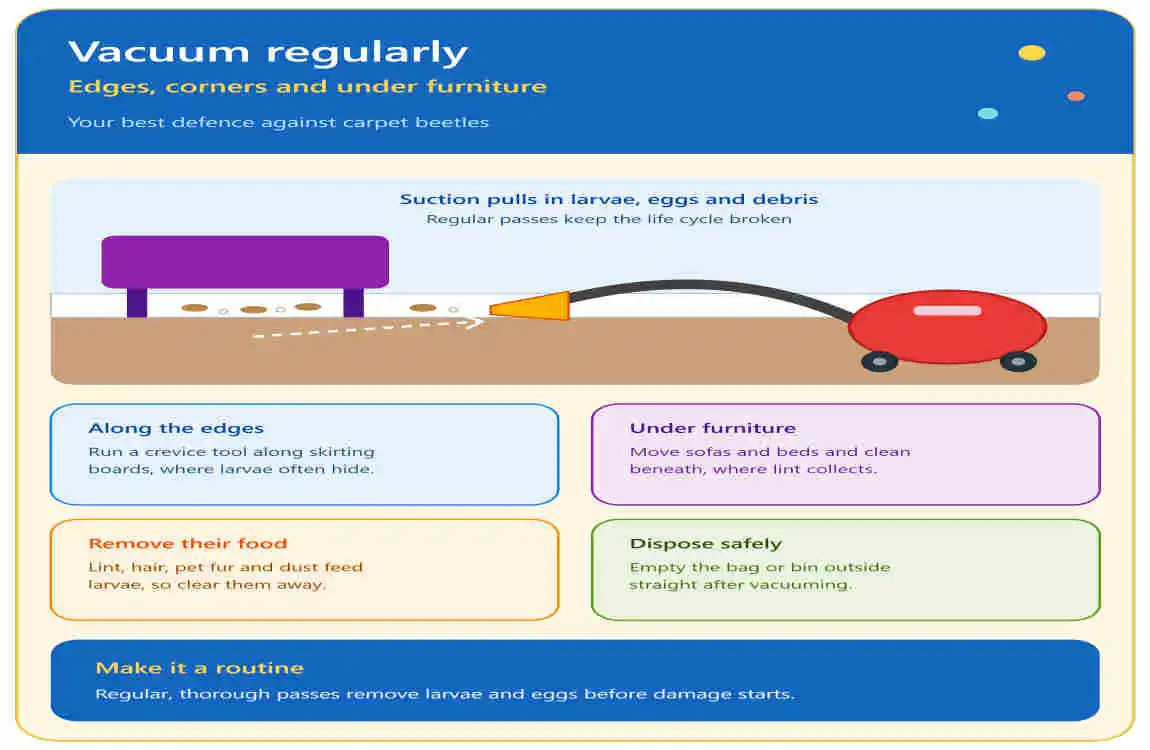
- Vacuum thoroughly. Use the crevice tool along edges, under furniture and inside drawers and wardrobes. Empty the vacuum straight away into an outdoor bin, sealed in a bag.
- Wash what you can. Launder infested clothing, bedding and washable fabrics at the highest temperature the care label allows. For delicate items, many people seal them in a bag and freeze them for a week, which is a standard approach for fragile textiles.
- Treat hard-to-clean items. Rugs, upholstery and antiques may need professional cleaning rather than sprays.
- Use insecticides sparingly. If you do choose a product, buy one approved for UK use and follow the label exactly, keeping children and pets away from treated areas. Never spray clothing you plan to wear without checking the instructions.
- Monitor. Sticky traps placed near suspected areas help you confirm whether numbers are falling.
Expect this to take a few weeks rather than a few days. Adult beetles may live for around three months according to the Natural History Museum, and larvae can hide for long periods, so repeat vacuuming matters more than any single treatment.
Dealing with Woodworm Without Panicking
Woodworm sounds alarming, but the first question is always the same: is the infestation active or historic? The British Pest Control Association stresses that it is essential to establish whether an infestation is active before any treatment. Many old holes are simply the remains of beetles that died out years ago.
Signs of an active infestation include:
- Fresh, pale and sharp-edged exit holes
- Loose, fresh bore dust beneath the timber
- Dead adult beetles on nearby window sills, especially in late spring and summer
Moisture is a major factor. English Heritage guidance notes that active furniture beetle infestation is typically linked to damper conditions, with humidity above roughly 55 to 60 per cent. In practice, fixing leaks, improving ventilation and dealing with damp can stop the problem growing.
For small items such as a single chair, a proprietary woodworm killer applied as directed can be enough. For structural timbers like joists, floorboards and roof beams, do not DIY it. The BPCA recommends that members of the Property Care Association who specialise in timber preservation are the first port of call for wood-destroying insect problems.
Keeping Larder Beetles and Pantry Pests Out
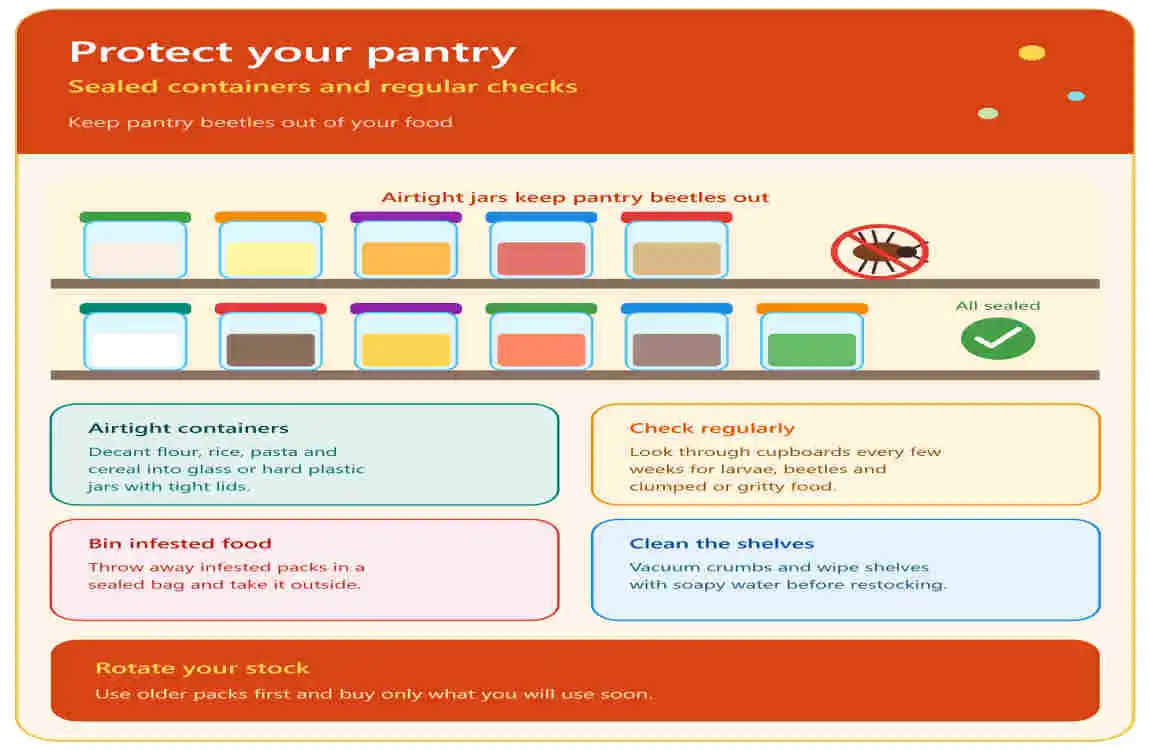
- Check dry goods such as flour, cereals, pasta, nuts and pet food for webbing, larvae or tiny beetles. Bin anything affected.
- Store food in sealed glass or hard plastic containers rather than paper bags or cardboard.
- Wipe shelves and vacuum cupboard corners, where spilled crumbs build up.
- Remove dead insects and old birds’ nests from lofts and eaves, because dead insects are a food source for some beetle larvae.
How to Stop Beetles Coming Back
Once you have cleared an infestation, prevention is mostly about habits rather than products:
- Vacuum regularly in low-traffic areas people forget, such as under beds and behind furniture.
- Store woollens properly. Clean items before storing them, and use sealed breathable bags or boxes.
- Inspect second-hand furniture, rugs and cut flowers before bringing them indoors, since these are common hitchhikers.
- Control damp. Dry timber is far less attractive to wood-boring beetles.
- Seal gaps around windows, airbricks and pipework, and fit fine mesh where needed.
- Keep bird nests away from loft spaces and eaves where practical.
When to Call a Professional
DIY works well for small, caught-early problems. Call a qualified pest controller or timber specialist if:
- You keep finding beetles after several weeks of cleaning
- You cannot find the source
- You suspect woodworm in floors, joists or roof timbers
- You live in a listed or period property, where treatment choices can be more complicated
- Someone in the household has allergies, asthma or sensitive skin
Look for technicians who are members of recognised trade bodies and ask what products they will use and how they will keep your household safe.
Frequently Asked Questions
Are beetles in the house dangerous?
Most are not a direct threat to people, but carpet beetle larval hairs can irritate skin in some individuals, and wood-boring beetles can weaken timber over time if left unchecked.
Can I get rid of beetles naturally?
Thorough cleaning, vacuuming, washing, freezing small items and reducing damp are the safest “natural” tools and are usually enough for carpet beetles. Home remedies using oils or boric acid are often suggested online, but they have limits, and boric acid should be kept away from children and pets.
How long does it take to get rid of carpet beetles?
Plan for several weeks. Larvae can hide in cracks for a long time, so repeating your cleaning routine matters.
Is woodworm always a reason to panic?
No. Plenty of woodworm damage is old and inactive. Confirming activity first can save you from unnecessary treatment.
Final Thoughts
Learning how to get rid of beetles in house UK is mostly about patience and accurate identification. Work out whether you are facing carpet beetles, woodworm or pantry pests, choose the gentlest effective method, and keep up the cleaning habits that starve them out. If it feels bigger than a weekend job, bring in a professional rather than escalating to stronger chemicals yourself.