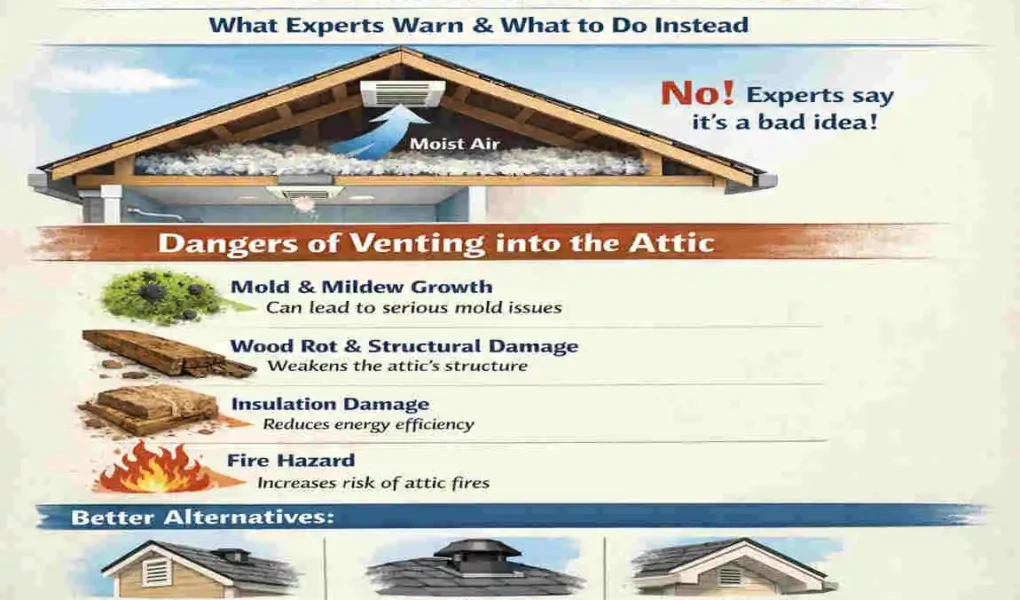
You are buying a new home, or perhaps you are finally getting around to a deep inspection of your current house. You climb up the ladder, poke your head through the access hatch, and shine your flashlight around the dark space. Suddenly, you spot it. A silver, snake-like tube is resting right on top of your insulation, blowing stale air directly into the dark void.
A bathroom exhaust fan cannot safely vent its air into your attic. Doing so is a major recipe for disaster, primarily due to the severe risks of moisture buildup. Every time you take a hot shower, that fan sucks up gallons of steam and pumps it straight into a closed space. Without a proper escape route to the outside world, that trapped dampness will silently destroy the bones of your home.
Why Bathroom Fans Must Vent Outside
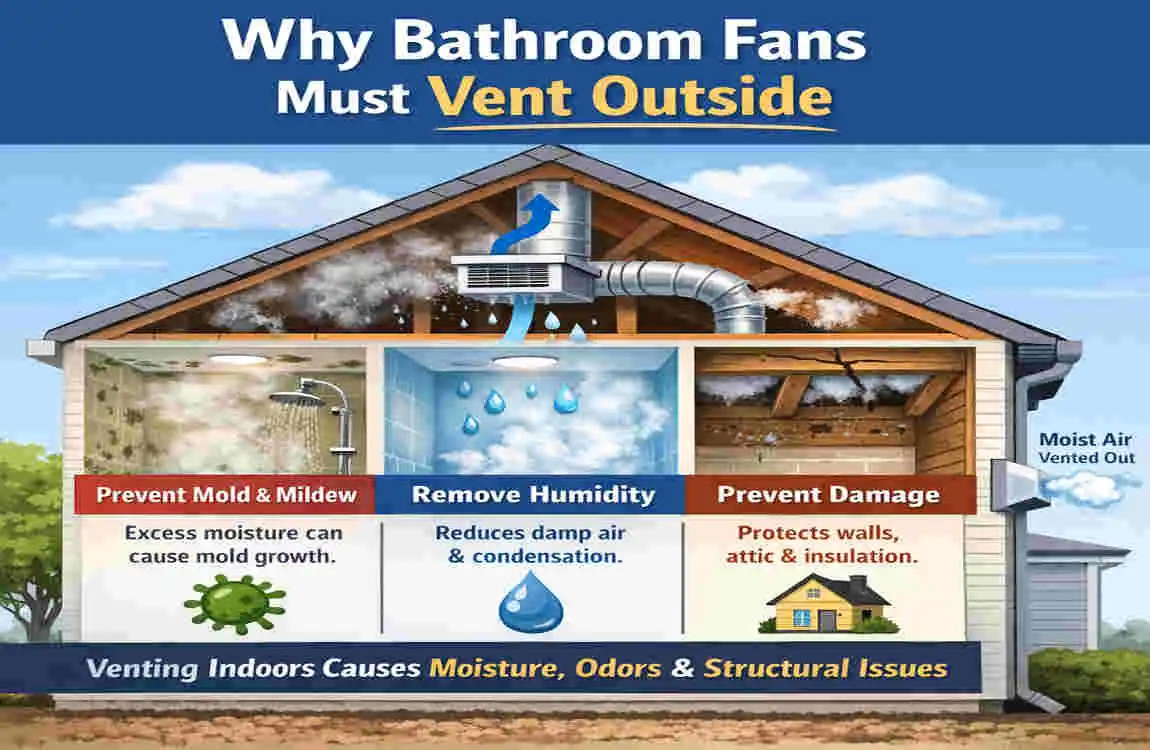
To understand why dumping air into your home’s upper level is a terrible idea, we first need to look at what these machines actually do.
Most people think these fans are just there to remove unpleasant bathroom odors. While they certainly help with that, odor removal is only a tiny part of their job. The main purpose of your exhaust fan is to act as a powerful vacuum for moisture and chemicals.
Every time you run a hot shower or draw a warm bath, you release thick clouds of steam into the air. Along with that humidity, you also spray aerosols, hairsprays, and harsh chemical cleaners. These products contain harmful airborne chemicals known as VOCs (Volatile Organic Compounds). Your fan works hard to suck up this humid, chemical-filled air to protect your indoor air quality.
The Problem with Indoor Trapping
When you ask, “Can a bathroom fan vent to the attic?” you are essentially asking if it is okay to move your bathroom’s garbage air into your home’s storage space. Venting into the attic does not eliminate the moisture; it merely relocates it. You are letting all that heavy humidity trap right under your roof.
Building safety codes exist for a reason. Guidelines such as the International Residential Code (IRC M1505) strictly require that all exhaust air terminate entirely on the outside of the building. These rules are not mere suggestions; they are designed to protect you and your property. Code enforcement agencies demand an exterior exit to prevent the catastrophic indoor air quality issues that arise when damp air is allowed to linger inside your walls.
So, if you are looking for the simplest answer to the keyword “can bathroom fan vent to attic,” the answer from every building expert, inspector, and contractor is a resounding “Never.”
Dangers of Venting Bathroom Fan to Attic
When you ignore the warnings and allow steam to billow into your upper rafters, you are setting a ticking time bomb. The damages might not appear overnight, but they will inevitably show up. Let us explore the serious consequences of this improper setup in detail.
Moisture and Condensation Buildup
The physical science of condensation is the biggest enemy here. When you take a steaming hot shower, the air pulled up by the fan is warm and completely saturated with water.
Now, imagine what happens when that warm, wet air hits the climate inside your roof space. In winter, your attic is cold. When the warm steam collides with the freezing rafters and roof nails, it instantly turns into liquid water. It is exactly like the sweat that forms on a glass of ice water on a hot summer day.
In freezing climates, this condensation actually turns into thick frost and ice on the underside of your roof. Then, when the sun comes out and warms the roof, that ice melts and rains down onto your ceiling. In the summer months, the hot, sticky air creates literal puddles of standing water in the low spots of your ceiling joists. Over time, this constant cycle of freezing, thawing, and puddling leads to significantly weakened insulation and severe structural damage.
Mold Growth and Health Risks
Wherever you find persistent dampness, mold is never far behind. Fungal spores naturally exist everywhere in the air, but they remain harmless until they find a dark, warm, and wet place to settle. An improperly vented space provides the absolute perfect breeding ground for toxic black mold and mildew.
Excess humidity allows mold spores to multiply rapidly. Once mold takes over your rafters and insulation, it does not just stay up there. The spores can easily drift down through recessed lighting fixtures, ceiling cracks, and HVAC systems, making their way into the air your family breathes. This poses serious respiratory risks, especially for young children, the elderly, or anyone with asthma and allergies.
Real-life cases frequently show the horror of this setup. Homeowners often report noticing ugly, brown, and green stains blossoming across their bathroom ceilings. They assume they have a leaky roof, but roofers find out the truth: frozen condensation from the fan melted, mixed with mold, and soaked right through the drywall.
Wood Rot and Roof Damage
Water is incredibly destructive to wood. Your home’s framework—the sturdy rafters, joists, and roof sheathing—relies on staying dry to maintain its strength.
Persistent dampness from daily showers slowly soaks into the wood fibers. Over months and years, this constant wetness causes the wood to soften, warp, and eventually rot away completely. Wood rot is a fungus that eats the wood alive. If the sheathing underneath your shingles rots, your roof will begin to sag, drastically shortening its lifespan and forcing you into a premature, incredibly expensive roof replacement.
Furthermore, we must talk about energy loss. Your attic insulation is designed to act like a fluffy winter coat for your house, keeping heat inside during winter and outside during summer. But what happens when a winter coat gets soaking wet? It stops keeping you warm. Moist air degrades the “R-value” (insulating power) of your insulation. Wet insulation compresses and flattens, forcing your heating and cooling systems to work twice as hard.
Expert Opinions on “Can Bathroom Fan Vent to Attic”
You do not just have to take our word for it. Professionals across the entire housing industry unanimously agree that exhausting humid air inside your home is a major violation of best practices. Let us break down what the leading voices have to say.
HVAC Pros’ Warnings
HVAC (Heating, Ventilation, and Air Conditioning) experts frequently deal with the fallout of poorly routed ducts. Allison Bailes, a prominent building science expert from Energy Vanguard, frequently warns homeowners about the “Stack Effect.”
What is the Stack Effect? Think of your home like a giant chimney. Warm air inside your house naturally wants to rise to the top. As this warm air pushes up into the attic, it creates a slight vacuum in the lower levels of your house, which sucks outside air in through the doors and windows.
If you vent your bathroom exhaust directly into the space above your ceiling, the Stack Effect will often grab that humid, moldy, stale air and suck it right back down into your living spaces through gaps in the drywall or ceiling light fixtures. You end up breathing the same bad air you tried to push away!
HVAC experts also warn against popular DIY “hacks,” such as pointing the exhaust duct toward a soffit vent (the vents under the overhang of your roof) and hoping the air finds its way out. Experts note that this almost always fails because the wind blows the moisture right back inside.
Furthermore, popular home inspection channels on YouTube regularly showcase nightmare scenarios where poorly routed, uninsulated ducts fill with condensation. This water pools in the drooping ductwork until it becomes so heavy that the pipe collapses, completely shutting off the fan and ruining the ceiling below.
Code Enforcement Views
The rules are clear. The Building America Solution Center (BASC), managed by national energy laboratories, strictly dictates that you must create a direct outdoor route for all exhaust air. There are zero exceptions for attics, crawlspaces, or wall cavities.
Even in hot and humid climates, the rules remain strict. Homeowners on popular forums like Reddit frequently report that, in states like Florida, indoor venting amplifies existing humidity issues tenfold. The outdoor air is already sticky; adding shower steam to a sweltering 130-degree Florida attic turns the space into a literal rainforest, complete with dripping condensation and rapid decay.
Table: Expert Consensus on Ventilation
Expert/SourceKey Warning HighlightRecommended Solution
Energy Vanguard The Stack Effect causes moisture and odors to recirculate back into the main living areas of the home. Install a proper roof or gable vent with a dedicated exterior cap.
PNNL BASC Venting indoors is a direct building code violation and leads to rapid structural decay and poor air quality. Route an insulated, rigid metal duct entirely outdoors via the shortest path.
Home Inspectors Drooping, uninsulated flexible ducts fill with frozen condensation and burst, flooding the ceiling and drywall. Use a dampered roof cap to prevent backdrafts and keep freezing air out.
Trusted Plumbing Pumping air into an enclosed space restricts airflow, overworking the fan motor until it burns out completely. Install a sloped, rigid duct that carries water out and away from the house.
Take Action Today: Are you unsure what your current setup looks like? Schedule a free attic vent inspection with our dedicated team. We will safely navigate the dark spaces and give you a transparent assessment of your home’s health.
Proper Alternatives: Where to Vent Bathroom Fan
So, if we have firmly established that the answer to “can bathroom fan vent to attic” is no, where exactly should all that steam go?
You need to establish a dedicated pathway to the great outdoors. There are three primary methods to achieve this, each with its own specific benefits, depending on your home’s layout.
The Roof Venting Method
For most homes, sending the air straight up and out through the roof is the most highly preferred method.
How it works: You run a short, straight duct from the bathroom ceiling directly up to a specially designed roof cap. Heat naturally rises, so pointing the exhaust upward takes advantage of gravity and physics.
The Pros:
- High Velocity: Because the air travels in a straight, upward line, it maintains high velocity, blasting moisture far from your shingles.
- Draft Prevention: Modern roof caps come with built-in spring-loaded dampers. These act like one-way doors that open when the fan is on and snap shut when it is off, preventing freezing winter drafts or pesky bugs from entering your home.
The Cons:
- It requires cutting a hole through your actual roof shingles, which requires careful sealing and weatherproofing to prevent rain leaks.
- It requires safe access to the home’s upper levels.
The Wall Venting Option
If you live in a single-story home or if your bathroom is located on an exterior wall, routing the air through the side of the house is an incredibly effective option.
How it works: A duct runs from the fan, between the ceiling joists, and straight out through a hole cut in the exterior siding of the house. A louvered wall cap is installed on the outside to direct the air downward and away.
The Golden Rule of Wall Venting: If you use this method, you absolutely must slope the duct downward toward the outside wall. Experts recommend a slope of about 1/4 inch for every foot of ductwork. Why? Because when the warm steam eventually cools and turns into water droplets inside the pipe, that slight downhill slope ensures the water harmlessly drips outside onto your lawn, rather than flowing backward into your bathroom fan motor!
Other Approved Paths (And What to Avoid)
There are a few other approved methods, though they require specific conditions.
- Gable End Venting: If your house has a triangular gable end, you can run the ductwork across the joists and out through the siding there.
- Soffit Venting: This involves pushing air down through the roof overhang. However, this is only approved if you use a high-velocity fan and a specialized soffit cap that forcefully shoots the air out. Otherwise, the roof’s natural ventilation will suck the humid air right back inside.
A Crucial Note on Duct Materials: No matter which path you choose, experts strongly warn against using cheap, flexible plastic or foil ducts. Those floppy tubes have ridges on the inside. Those ridges slow down the air, trap lint and dust, and allow water to pool in the sagging sections.
Always use smooth, rigid metal ducting. The smooth interior walls allow air to travel at incredible speed with zero friction, ensuring maximum moisture removal.
How to Check If Your Fan Vents to the Attic
You might be sitting there reading this and wondering, “How do I even know where my air is going?” You do not necessarily need to hire a professional right away to find out. You can perform a simple DIY inspection this weekend. Let us walk through the simple detective work required.
Exterior Walkaround. Turn your bathroom fan to its highest setting. Walk outside your house and slowly walk around the perimeter. Look up at your roof, your side walls, and your soffits. Do you see a small, louvered plastic or metal cap with flaps blowing open? Can you feel warm air coming from a specific vent? If you easily find a dedicated exhaust cap blowing strong air, you are likely in great shape!
The Flashlight Inspection. If you walk around outside and cannot find any air escaping, it is time to grab a sturdy ladder, put on a dust mask, and grab your brightest flashlight. Carefully pop open your access hatch. Safety warning: Only step on the sturdy wooden joists, never on the drywall ceiling, or you will fall right through! Follow the silver pipe leading away from the bathroom ceiling. Does it connect to the roof? Or does it just stop abruptly, leaving an open hole pointing at your insulation? If it ends in the dark, you have a major problem.
The Smoke Test. If the duct disappears under heavy insulation and you cannot see the end, try a safe smoke test. Buy an inexpensive smoke pencil (used for checking drafts). Turn the fan on, hold the smoke pencil near the bathroom grille, and watch it get sucked up. Then have a partner go upstairs to see if they can smell or see smoke billowing indoors.
Step-by-Step Fix: Reroute Bathroom Fan Vent
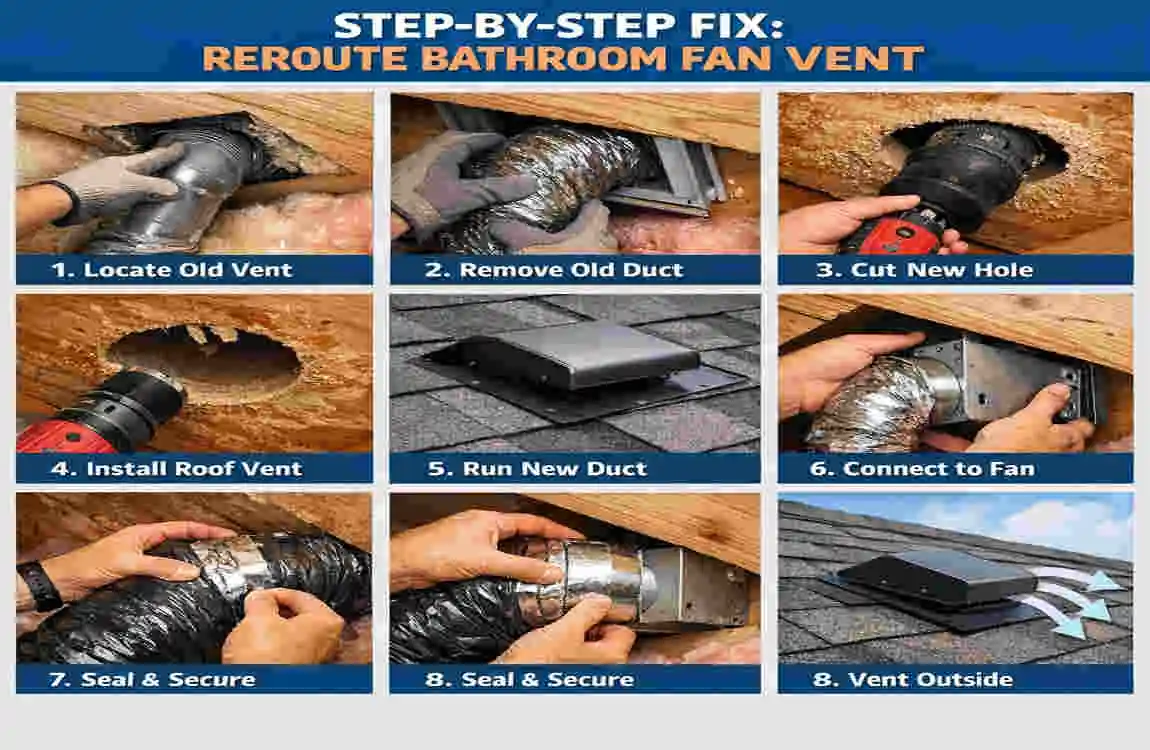
If you discovered that your exhaust ends right above your ceiling, do not panic. While it is a serious issue, it is entirely fixable. Rerouting the exhaust safely outdoors is a manageable project, though it requires precision. Here is how the professionals tackle the job.
Essential Materials Needed
Before you begin, gather the required materials. Skimping on quality here will only lead to leaks later.
- Rigid Metal Ducting (4-inch to 6-inch diameter): Check your fan’s manual for the correct size. Never reduce the pipe size, as it strains the motor.
- A High-Quality Roof Cap or Wall Cap: Ensure it has a built-in damper (flap) and a bird screen.
- Aluminum Foil Tape: Do not use standard cloth “duct tape.” Cloth tape dries out and falls off in extreme heat. Foil tape creates a permanent, airtight seal.
- Duct Insulation Sleeves: Wrapping the metal pipe prevents condensation from forming on the inside during the cold winter months.
- Roofing Sealant/Caulk: Essential for waterproofing the exterior cuts.
The Installation Steps
Disconnect the Old Setup: Carefully detach the old, improper ductwork from the fan housing. Throw away any cheap, flexible plastic tubing. Clean any dust or debris from the fan’s exhaust port.
Map the Shortest Path Outdoors: Identify the quickest, straightest route to the outside. The shorter the run, the harder your fan can blow. Try to minimize the number of elbows (bends) in the pipe, as each turn slows the airflow. Decide if a roof exit or a wall exit makes the most sense for your layout.
Cut the Exit Hole and install the Cap: If venting through the siding, use a hole saw to cut through the exterior wall. Insert the wall cap from the outside and seal it heavily with silicone caulk. If you are going through the roof, this involves lifting shingles, cutting the wood sheathing, installing the roof cap, and sliding the flanges under the shingles to prevent rain leaks. (Note: Roof work can be dangerous and prone to leaks if done incorrectly.
Connect, Seal, and Insulate: Piece your rigid metal duct together, connecting the fan to the exterior cap. Use sheet-metal screws to secure the joints, and wrap each seam tightly with your aluminum foil tape. Finally, slide your fiberglass insulation sleeve over the entire length of the metal pipe.
Test for Proper Airflow: Turn the fan on. Go outside and ensure the damper flap opens fully and that air is blowing strongly. Experts recommend testing to ensure you are getting 50-80 CFM (Cubic Feet per Minute) of airflow at the exit point.
Expert Tip: Cutting into your siding is one thing, but cutting holes in your roof is entirely different. A poorly sealed roof vent will let rainwater straight into your house, causing just as much damage as steam! We highly recommend hiring licensed professionals for any roof penetrations.
Best Bathroom Fans for Proper Venting
Sometimes, the problem is not just the ductwork. If you have an ancient, dusty, rattling fan from 1995, it lacks the power to push the air all the way outside anyway. Upgrading to a modern, efficient unit is a smart investment.
When shopping for a new fan, you need to look at two primary numbers:
- CFM (Cubic Feet per Minute): This measures how much air the fan moves. You need at least 50 CFM for a small bathroom, and 80 to 110 CFM for larger spaces.
- Sones: This measures how loud the fan is. A standard refrigerator hums at about 1.0 sone. Old fans sound like jet engines (3.0+ sones), while modern fans are whisper-quiet (under 1.0 sone).
Top Picks from the Experts
- Panasonic WhisperFit: Widely considered the gold standard by contractors. It is incredibly powerful, highly durable, and so quiet you might forget it is even turned on.
- Delta Breez: These units are ENERGY STAR rated, meaning they use very little electricity. Many models feature smart humidity sensors that automatically turn the fan on when they detect shower steam!
- Broan-NuTone: A classic, reliable, and budget-friendly brand that gets the job done without breaking the bank.
Table: Exhaust Fan Comparison
Model Brand CFM Power Rating Noise Level (Sones)Estimated Price Best Feature / Ideal For
Panasonic FV-0511VKS1 50 – 110 CFM 0.3 – 1.5 $150 Variable speed settings; best overall quality.
Broan-NuTone 688 50 CFM 1.5 $80 Great budget option for small half-baths.
Delta BreezGreen 50 – 80 CFM < 0.9 $120 Built-in moisture sensing technology.
Cost to Fix Bathroom Fan Venting
If you have discovered a venting problem, your next question is likely about the price. How much does it cost to fix this issue? The price varies depending on whether you tackle it yourself or hire a pro.
The DIY Route: If you are handy and comfortable working on ladders, fixing the ducting yourself is quite affordable. Purchasing rigid metal ductwork, heavy-duty foil tape, insulation sleeves, and a quality exterior cap will generally cost between $50 and $200 at your local hardware store.
The Professional Route: If you prefer the peace of mind that comes with licensed expertise (especially when cutting into roofs), hiring a professional will typically cost between $300 and $800.
The exact price fluctuates based on a few factors:
- Roof Complexity: Steep, multi-story roofs require more safety gear and labor time.
- Upgrades: If you choose to replace the old motor with a brand new, high-CFM smart fan at the same time, the cost will increase.
The Return on Investment: While $500 might seem like an unexpected, frustrating expense, you have to look at the big picture. Paying a few hundred dollars today to route your ductwork correctly completely prevents the need for a $2,000 to $5,000+ mold remediation and roof replacement project down the road. It is one of the smartest preventative investments you can make for your property.
FAQs
Even with a detailed guide, homeowners usually have a few lingering questions about their ventilation systems. Let us clear up the most common points of confusion.
Can a bathroom fan vent to the attic in some special cases? No. There are no special cases, exemptions, or loopholes. National building codes (like the IRC) and building science experts unanimously prohibit exhausting indoor moisture into enclosed structural spaces. It must always go completely outdoors.
What if my attic is well-ventilated with ridge vents and soffits? It is still highly risky. Even if you have great airflow up there, dumping concentrated, soaking-wet shower steam into the space overloads the natural ventilation. Furthermore, the “stack effect” we discussed earlier can still draw that humid air back into your home through cracks before the roof vents can clear it out.
How often should I inspect my exhaust fan vents? It is good practice to perform a quick visual check at least once a year, preferably in the fall before freezing temperatures arrive. You should also deeply inspect the ductwork immediately after purchasing a new home, or after any major roof or bathroom remodeling work is completed.
Is flexible plastic ducting OK to use for a bathroom fan? No, experts strongly advise against it. Flexible plastic or foil ducts have ribbed, bumpy interiors that restrict airflow by creating friction. They also sag easily, creating low spots where water vapor condenses, forming heavy puddles that can tear the duct open. Always use smooth-walled, rigid metal pipes for maximum efficiency.
What are the warning signs of attic venting issues from inside the house? Keep your eyes and nose open for these warning signs:
- A persistent, musty, damp smell in your upper hallways.
- Peeling paint or curling wallpaper near the top of your bathroom walls.
- Water stains, brown rings, or black spots appear on the drywall ceiling.
- In winter, frost or ice forms around the edges of your bathroom exhaust grille.