You may have looked at your electric bill after a week of nonstop cooling and wondered if your AC also uses some gas behind the scenes. Maybe a technician mentioned “gas filling,” which only made things more confusing. Or maybe you have heard someone say, “This AC runs on gas,” and you’ve never been sure whether that’s true.
In places where summer temperatures remain high for extended periods, like Lahore and many other cities across Pakistan, air conditioning becomes less of a luxury and more of a daily necessity. And once your AC starts running for hours every day, you naturally want clear answers about how it works, what it consumes, and what is really driving your monthly costs.
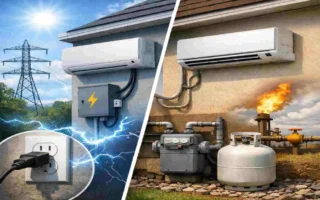
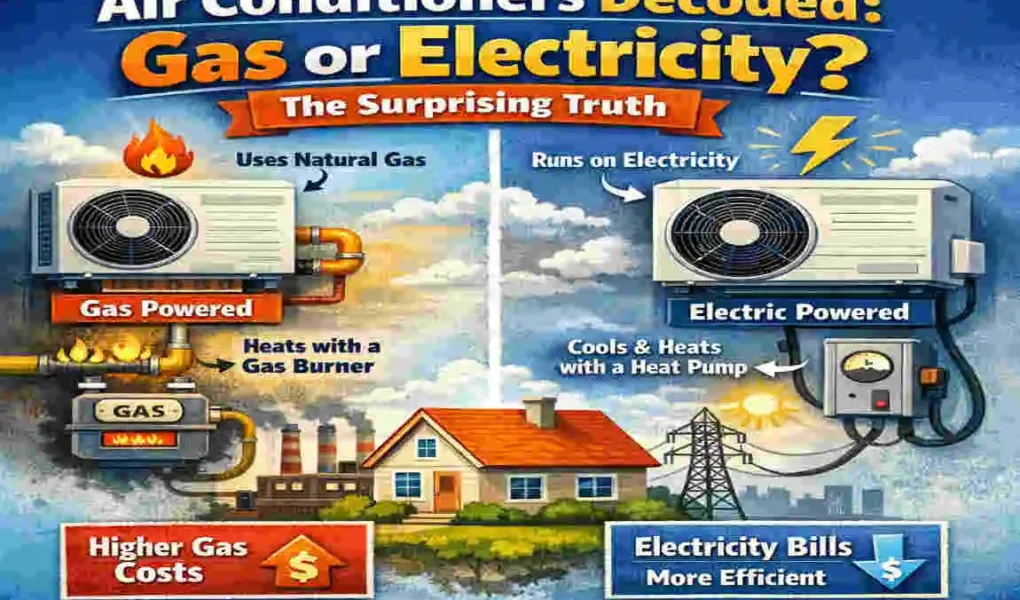
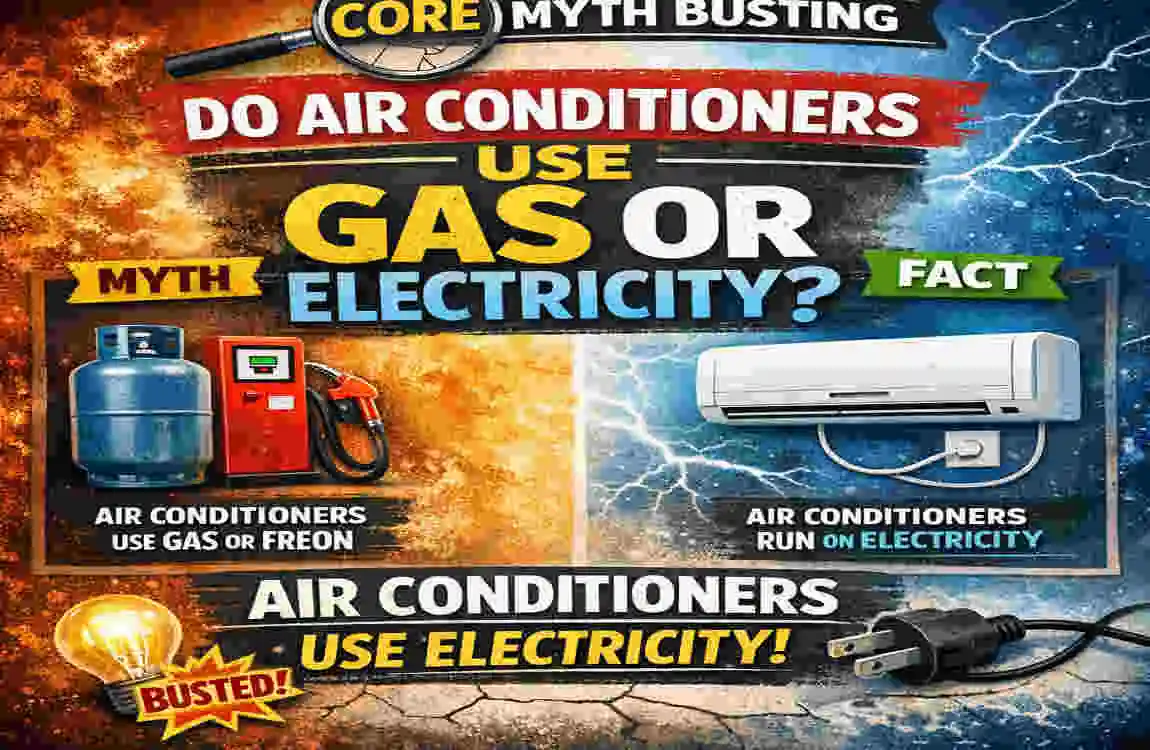
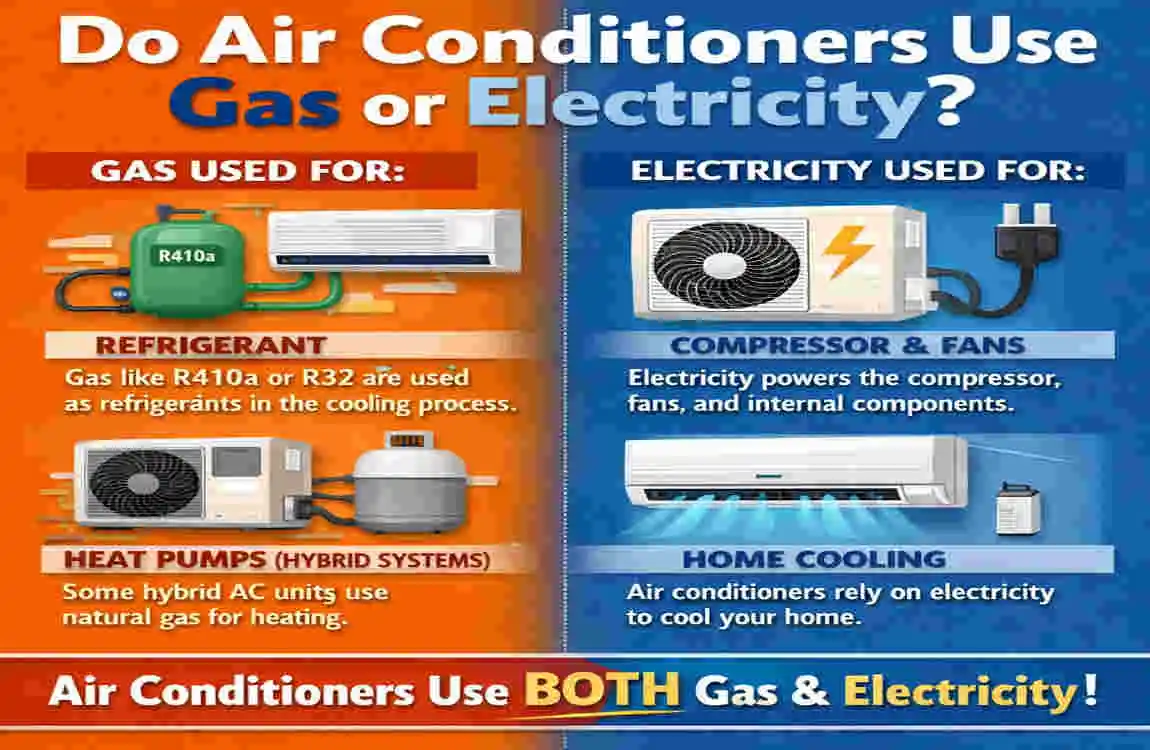
Modern air conditioners primarily use electricity. Electricity powers the compressor, the indoor blower, the outdoor fan, the circuit board, and the controls. That is what actually makes the system run. The “gas” people talk about is usually refrigerant, and it does not act like fuel. It does not burn to create cooling. Instead, it simply moves heat from inside your home to the outside.
Do Air Conditioners Use Gas or Electricity? The Direct Answer
If you want the short version, here it is:
Air conditioners use electricity to operate.
That is the direct and correct answer for standard residential AC systems, including split ACs, central air systems, inverter units, and window ACs. These systems do not burn gas the way a gas stove, gas heater, or gas furnace does.
This is where many people get confused.
Why the Confusion Happens
Many homeowners hear the word ‘gas‘ when talking about AC servicing. A technician might say:
- “Your AC gas is low.”
- “The unit needs gas filling.”
- “There may be a gas leak.”
When that happens, it is easy to assume the air conditioner runs on gas.
But in reality, that “gas” is refrigerant. Refrigerant is a chemical substance that circulates through the AC system, helping absorb and release heat. It is part of the cooling cycle, but it is not the power source.
The system still needs electricity to move that refrigerant through the cycle.
The Real Power Source of an AC
Every standard air conditioner depends on electricity for its major working parts, including:
- The compressor
- The indoor fan
- The outdoor fan
- The thermostat and controls
- The inverter board or electrical components
Without electricity, the system cannot circulate air, compress refrigerant, or remove heat from your room.
So if you are still asking, do air conditioners use gas or electricity, the best answer is this:
They use electricity to run, while refrigerant gas helps transfer heat.
That distinction matters because it helps you understand your bills, your maintenance needs, and the type of system you actually own.
Quick Myth vs Fact Table
MythFact
Air conditioners burn gas like furnaces No. Standard ACs run on electricity. They do not burn gas for cooling.
If an AC needs a gas refill, it must be gas-powered No. Refrigerant is not fuel. It is a heat-transfer fluid inside the system.
Gas ACs are common in homes . No. In most homes, cooling systems are electric. Gas-powered cooling is rare and specialized.
Lower “gas” means higher fuel use No. Low refrigerant usually points to a leak or performance issue, not fuel consumption.
Now that the main myth is out of the way, let’s look at how an AC actually works.
How Air Conditioners Really Work
Many people think air conditioners “create cold air.” That sounds logical, but it is not exactly what happens.
An air conditioner does something different.
It removes heat from inside your home and pushes that heat outside.
That is the heart of cooling.
The Basic Idea Behind Cooling
Your room feels cooler when heat is taken away from the indoor air. The AC pulls warm air from the room, removes heat, and sends cooler air back into the room.
This process keeps repeating until the room reaches the temperature you set on the thermostat or remote.
The Role of Electricity in the Cooling Cycle
Electricity powers the whole cycle. It powers the parts that move air and push refrigerant through the system.
Without electric power, the refrigerant would sit there. The fans would stop. The compressor would stop. And cooling would stop.
Step-by-Step: The Refrigeration Cycle
Here is a simple way to picture it:
- The indoor unit pulls warm air from the room.
- An electric fan draws indoor air across the evaporator coil.
- The evaporator coil absorbs heat.
- The refrigerant inside the coil absorbs heat from the air.
- The compressor pressurizes the refrigerant.
- This is one of the most important parts, and it runs on electricity. It pushes refrigerant through the system at high pressure.
- The outdoor unit releases heat outside.
- The condenser coil and outdoor fan throw the heat into the outside air.
- The refrigerant cools and cycles back into the system.
- Then the process starts again.
That is why an AC is best understood as a heat transfer system powered by electricity.
Diagram Placeholder
[Simple AC Cycle Infographic Placeholder: Indoor air → evaporator coil → electric compressor → condenser coil → heat released outside → cooled air returns indoors]
Why the Compressor Matters So Much
If there is one part that settles the question of whether air conditioners use gas or electricity, it is the compressor.
The compressor is the engine of the air conditioner. It pressurizes the refrigerant and keeps the cooling cycle moving. In residential systems, the compressor is powered by electricity, not gas.
That means when your AC is cooling, it is pulling electrical energy to do the heavy lifting.
What the Fans Do
Your AC typically has two fans:
- Indoor fan to move room air across the evaporator coil
- Outdoor fan to move outside air across the condenser coil
Both fans also use electricity. They may seem like smaller parts compared to the compressor, but they are essential for proper cooling and airflow.
Why AC Bills Can Rise Quickly
Air conditioners can account for a big share of summer electricity use because they run for long periods, especially during extreme heat. The longer the system runs, the more electricity it consumes.
That is why understanding how the system works is the first step toward lower bills.
What “Gas” Means in an Air Conditioner
Now let’s deal with the word that causes the most confusion.
Yes, air conditioners do contain a refrigerant gas. But again, that does not mean the unit is gas-powered.
Refrigerant Is Not Fuel
Refrigerant is a special chemical used to carry heat. It changes pressure and temperature as it moves through the system. At different stages, it may exist as a gas, a liquid, or a mix of both.
Its job is simple:
- absorb heat indoors
- release heat outdoors
It does not burn to create energy.
Think of it like a delivery worker carrying heat out of your house. The worker is important, but the worker is not the power source. The system still needs electricity to deliver.
Common Refrigerants in Modern AC Systems
Depending on the unit and region, you may hear about refrigerants such as:
- R-410A
- R-32
- Older systems may still mention R-22
Newer systems increasingly use options that aim to improve efficiency and reduce environmental impact.
Why People Say “Gas Filling”
In many markets, people casually use the phrase’ gas filling‘ to mean refrigerant charging or a refrigerant top-up. That wording has become common, but it often leads to the wrong assumption that ACs run on gas like a vehicle or heater.
That is not what is happening.
A properly installed AC should not need frequent refrigerant refilling. If refrigerant is low, it often means there is a leak somewhere in the sealed system.
Signs of Low Refrigerant
If your air conditioner is low on refrigerant, you may notice:
- weak cooling
- longer run times
- higher electricity bills
- ice forming on coils
- hissing or bubbling sounds
- warm air instead of cool air
If that happens, the right solution is not just “add gas and forget it.” A technician should inspect the unit, locate the leak, repair it, and then properly recharge the system.
Why This Matters for Homeowners
When you understand the role of refrigerant, you stop thinking in the wrong way.
Instead of asking, “How much gas does my AC burn?” the better questions become:
- Is my AC using too much electricity?
- Is my refrigerant level correct?
- Is there a leak?
- Is the unit sized properly?
- Is my system running efficiently?
Those are the questions that actually save money.
Gas vs Electric HVAC Systems: What Is the Difference?
This is another area where people mix things up.
Sometimes they are not just asking whether the AC uses gas or electricity. They are actually asking about the whole HVAC system.
That is an important difference.
Cooling and Heating Are Not Always the Same Thing
In many homes, the cooling side and heating side can use different energy sources.
For example:
- the air conditioner may use electricity for cooling
- the furnace may use gas for heating
So a person may look at the full system and say, “My HVAC uses gas,” even though the cooling part is still electric.
Electric AC vs Gas Furnace Hybrid
A common setup in some homes is a hybrid system where:
- cooling is electric
- heating is gas
That does not mean the air conditioner itself is gas-powered. It simply means the home uses gas for winter heating.
Comparison Table
FeatureElectric ACGas Furnace Hybrid
Cooling Power Electricity only Electricity for AC; gas for heating
Main Use in Summer Cooling Cooling
Main Use in Winter Electric heating if present Gas furnace heating
Setup Simplicity Simpler for cooling-only needs More complex due to dual energy sources
Energy Planning Works well with solar and inverter upgrades May need gas line access and extra system planning
Best Fit Homes focused on electric cooling efficiency Homes needing both cooling and gas-based heating
Which One Is Better?
That depends on your climate, utility costs, and home setup.
If you mostly care about cooling, an electric AC system is straightforward and widely available. It is also easier to pair with solar power and smart controls.
If you need strong winter heating and already have gas infrastructure, a hybrid setup can make sense. But again, the cooling side is still electric in normal residential systems.
A Simple Way to Think About It
Here is the easiest way to remember it:
- Air conditioner = electric cooling
- Furnace = may be gas or electric heating
- Refrigerant = heat transfer substance, not fuel
Once you separate cooling from heating, the confusion disappears.
What About Truly Gas-Powered Cooling?
There are specialized systems that use gas in commercial or industrial settings, such as absorption chillers. But these are not typical home air conditioners.
For ordinary residential use, the answer remains the same:
Do Air Conditioners Use Gas or Electricity in Pakistan? What Homeowners Should Know
If you live in Pakistan, this question becomes even more practical because your answer affects monthly budgeting, equipment choices, and backup planning.
Why the Question Matters Locally
In Pakistan, cooling demand can remain high for extended periods. That means homeowners often ask about AC power use with very real concerns in mind:
- high electricity rates
- power outages
- inverter compatibility
- solar system sizing
- maintenance costs
When someone asks, do air conditioners use gas or electricity, they are often really asking, “What will this cost me every month?”
The Main Cost Driver Is Electricity
For homes with split, central, or inverter ACs, the biggest running cost is electricity. Refrigerant is not something you buy every day like fuel. If the system is healthy, the refrigerant stays inside the sealed loop.
That means your day-to-day and month-to-month expense mostly comes from:
- how many hours you run the AC
- the unit size
- the efficiency rating
- the room insulation
- outside temperature
- thermostat settings
Why Inverter ACs Are So Popular
Inverter technology has become popular because it helps the compressor run more smoothly, avoiding constant on/off cycling. That often lowers energy use and improves comfort.
For many households, that means:
- steadier cooling
- lower bills compared to older fixed-speed units
- less stress on the system
Solar Compatibility
Another reason electric AC systems matter is solar potential. Since air conditioners run on electricity, homeowners can partially offset cooling costs with solar panels, depending on system size, battery setup, and daytime usage patterns.
That can make a big difference in hot months.
What to Focus On as a Buyer
If you are shopping for an AC, do not get distracted by the gas myth. Focus on what really matters:
- inverter or non-inverter
- energy efficiency
- correct tonnage
- warranty and after-sales support
- installation quality
- ease of maintenance
Those factors will affect your comfort and operating cost much more than the mistaken idea of “gas-powered cooling.”
Energy Efficiency Tips to Lower AC Electricity Use
Once you understand that ACs run on electricity, the next question is obvious:
How do you make them cheaper to run?
The good news is that you have more control than you may think.
Choose the Right Size AC
A unit that is too small will run too long and struggle to cool the room. A unit that is too large may cycle badly, waste energy, and reduce comfort.
Proper sizing matters.
Before buying, it is wise to have the room or home assessed by a professional rather than basing your decision solely on price or brand.
Use Inverter Technology
Inverter ACs are generally more efficient because they adjust compressor speed rather than running at full blast all the time. That can reduce electricity use significantly compared with older conventional systems.
If you run your AC for many hours a day, inverter technology is often worth serious consideration.
Set a Realistic Temperature
A lot of people set the AC to the lowest number possible, thinking it will cool faster. In reality, that often makes the system work harder for longer.
A moderate setting can improve comfort and reduce energy waste.
Keep Filters Clean
Dirty filters block airflow. When airflow drops, the system has to work harder to cool the room.
A clean filter helps with:
- better airflow
- better cooling
- lower power use
- healthier indoor air
Seal Air Leaks
If cool air keeps escaping through gaps around doors, windows, or poorly sealed ducts, your AC must run longer to maintain the same temperature.
Even a good AC can waste energy in a poorly sealed space.
Reduce Heat Gain During the Day
You can ease the load on your AC by reducing indoor heat from sunlight and appliances.
Simple habits help, such as:
- closing curtains during peak afternoon sun
- using blinds or shades
- turning off unnecessary lights
- limiting heat-producing appliances during the hottest hours
Use Timers and Smart Controls
Timers, smart thermostats, and scheduling features can keep the AC from running when you do not need it. This is one of the easiest ways to cut unnecessary usage.
Consider Solar Support
Because ACs use electricity, solar can be a powerful long-term strategy, especially in hot regions with strong sunlight. If your cooling happens mainly during the daytime, solar can be particularly useful.
Quick Efficiency Checklist
- Buy the right size unit
- Prefer inverter models for heavy use
- Clean filters regularly
- Keep doors and windows sealed
- Set sensible temperatures
- Schedule run times wisely
- Service the unit yearly
These small actions add up.
Cost Breakdown: How Much Does It Cost to Run an AC?
Now let’s talk about what most people really want to know: the bill.
The answer varies, but once you know the unit runs on electricity, estimating the cost becomes easier.
What Affects Running Cost?
Several factors influence how much your AC costs to operate:
- AC size in tons
- Power draw in kilowatts
- Hours of daily use
- Electricity tariff
- Efficiency level
- Room insulation
- Outdoor temperature
A larger or less efficient unit running in extreme heat will naturally consume more electricity.
A Simple Example
A typical 1.5-ton AC may draw roughly around the range many homeowners expect from residential cooling systems. However, the exact power consumption depends heavily on the technology, age, and operating conditions.
If electricity is billed per unit and the AC runs for several hours daily, monthly costs can climb quickly during peak summer.
That is why people often feel “shocked” by AC bills during the AC season. It is not because the unit secretly uses fuel. It is because the electrical load can be substantial over time.
Sample Monthly Cost Table
AC SizeApprox Daily UseEstimated Consumption PatternCost Impact
1 Ton 4–6 hours Lower compared with larger units Best for small rooms if sized correctly
1.5 Ton 6–8 hours Moderate to high summer use Common choice for bedrooms and medium rooms
2 Ton 8–10 hours High usage in large spaces Higher bills if insulation is poor
Inverter AC Varies Adjusts power based on load Often lower operating cost than fixed-speed units
Non-Inverter AC Varies Full power cycling is more frequent Can be more expensive over time
Why Efficiency Ratings Matter
Two ACs with the same tonnage can have different running costs. That is because one may convert electricity into cooling more effectively than the other.
In simple terms, better efficiency means:
- more cooling
- less wasted energy
- lower monthly bills
The Best Way to Lower Cost
If you want to control operating expense, focus on these three things first:
- Buy an efficient unit
- Install it properly
- Maintain it regularly
That combination usually saves more money than any shortcut.
Maintenance Tips That Help Your AC Last Longer
A well-maintained air conditioner cools better, uses less electricity, and lasts longer.
That is why maintenance is not just about avoiding breakdowns. It is also about protecting your monthly budget.
Monthly Tasks You Can Do Yourself
You do not need to be a technician to handle a few basic tasks.
Clean or Check the Air Filter
This is the simplest and most important step in the routine. A dirty filter can reduce airflow and make the unit work harder than necessary.
Look for Visible Dirt Around the Indoor Unit
Dust buildup around vents and air outlets can affect airflow and indoor cleanliness.
Pay Attention to Performance Changes
If the AC suddenly starts cooling less, making unusual noises, or running longer than normal, do not ignore it. Small issues often grow into expensive repairs.
Yearly Professional Maintenance
At least once a year, it is smart to schedule a professional tune-up. A qualified HVAC technician can inspect:
- refrigerant pressure
- electrical connections
- fan performance
- drain line condition
- coil cleanliness
- compressor health
Why Refrigerant Checks Matter
People often say “check the gas,” but the real goal is to confirm that refrigerant levels are correct and that there are no leaks.
Low refrigerant hurts efficiency and cooling performance. It can also damage major components if left unresolved.
Seasonal Maintenance Checklist
- Monthly: Clean or replace filters
- Every season: Check airflow and cooling performance
- Yearly: Get a full professional tune-up
- Any time performance drops: Inspect for leaks, electrical problems, or blocked coils
If you run an HVAC business, this is the perfect place to remind customers that preventive service costs much less than emergency repair.
Future Trends: What AC Technology Looks Like in 2026
Air conditioning is changing quickly, and that matters if you are planning a new installation or replacement.
Smarter Controls Are Becoming Standard
More AC systems now include smart features such as:
- app-based control
- energy tracking
- scheduling
- room-based temperature adjustments
- remote diagnostics
These features help users manage electricity use more precisely.
Inverter Systems Continue to Lead
Inverter technology is no longer just a premium feature in many markets. It is increasingly becoming the expected standard because it improves efficiency, comfort, and overall performance.
More Focus on Better Refrigerants
The refrigerant side of AC systems is also evolving. Newer refrigerants are being adopted with stronger attention to efficiency and environmental impact. That means future systems may cool better while also reducing the downsides linked to older refrigerant types.
Stronger Interest in Solar-Electric Cooling
As electricity prices remain a concern, solar-backed cooling is drawing more attention. Since standard AC systems are electric, they naturally fit into the broader push toward renewable energy and smarter household energy planning.
Better Consumer Awareness
The biggest shift is this: homeowners are getting more informed.
People now ask better questions before buying:
- How efficient is this model?
- How much electricity will it use?
- Is it inverter-based?
- Is the room size matched correctly?
- What kind of service support is included?
That is a big improvement over simply asking whether the AC “uses gas.”
FAQs About Air Conditioners, Gas, and Electricity
Do air conditioners use gas or electricity?
Air conditioners use electricity to run. That electricity powers the compressor, fans, controls, and other key components. The gas inside the system is refrigerant, which transfers heat rather than acting as fuel.
Does AC gas get used up like fuel?
Not in normal operation. Refrigerant circulates inside a sealed system. If the level drops, there is usually a leak or a servicing issue that needs attention.
Can an air conditioner run without electricity?
No. A standard residential air conditioner cannot operate without electricity because its main components depend on electric power.
Why do technicians talk about “gas filling”?
They usually mean refrigerant charging. It is a common phrase, but it does not mean the AC burns gas for cooling.
Is a split AC electric or gas?
A standard split AC is electric. It uses electricity for the compressor and fans, while refrigerant moves heat through the system.
Are there any gas-powered air conditioners?
In rare commercial or industrial applications, specialized gas-driven cooling systems do exist. But they are not what most homeowners use. Residential AC systems are generally electric.
Which is cheaper to run: an inverter AC or a non-inverter AC?
In many cases, inverter ACs are cheaper to run over time because they adjust power use more smoothly and avoid frequent full-power cycling.
Does low refrigerant increase electricity bills?
Yes, it can. If the refrigerant is low, the AC may struggle to cool properly and run longer than usual, which can increase electricity use.