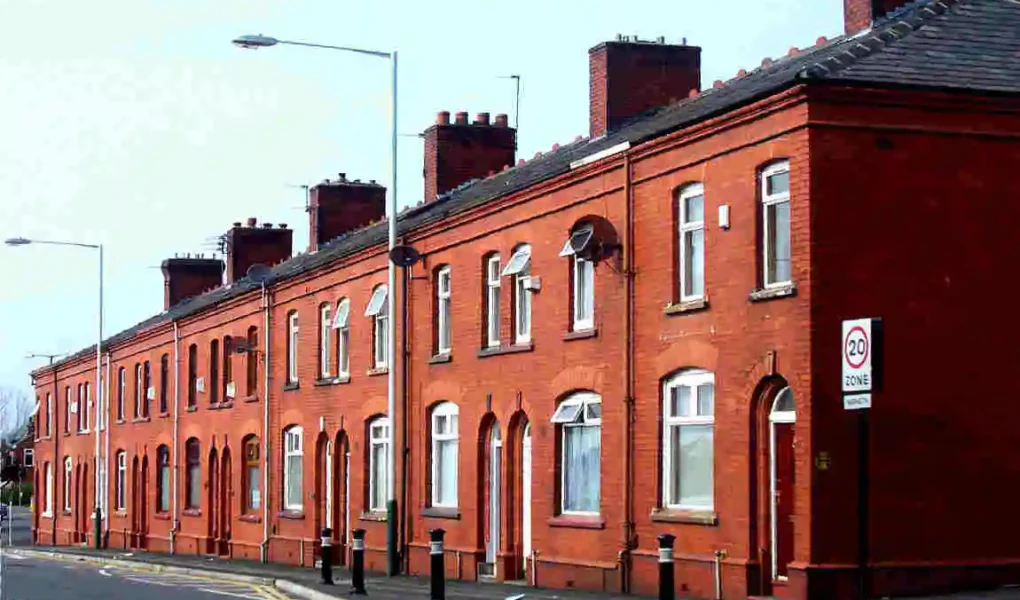
Two-up, two-down houses hold a special place in British housing history. These compact, traditional terraced homes, with their simple yet functional design, have been a staple in northern England cities like Liverpool and Manchester for over a century. If you’ve ever wandered through the older neighborhoods of these cities, you’ve likely seen rows of these charming homes, each telling a story of the Industrial Revolution and the working-class families who once lived there.
At its core, a two-up two-down house is a traditional terraced home featuring two rooms on the ground floor and two bedrooms upstairs. This straightforward layout was designed to maximize space and efficiency, making it ideal for working-class families during the Industrial Revolution. Despite their modest size, these homes have a cozy charm and practical appeal that have helped them endure in the modern housing market.
Historical Origins
The Rise During the Industrial Revolution
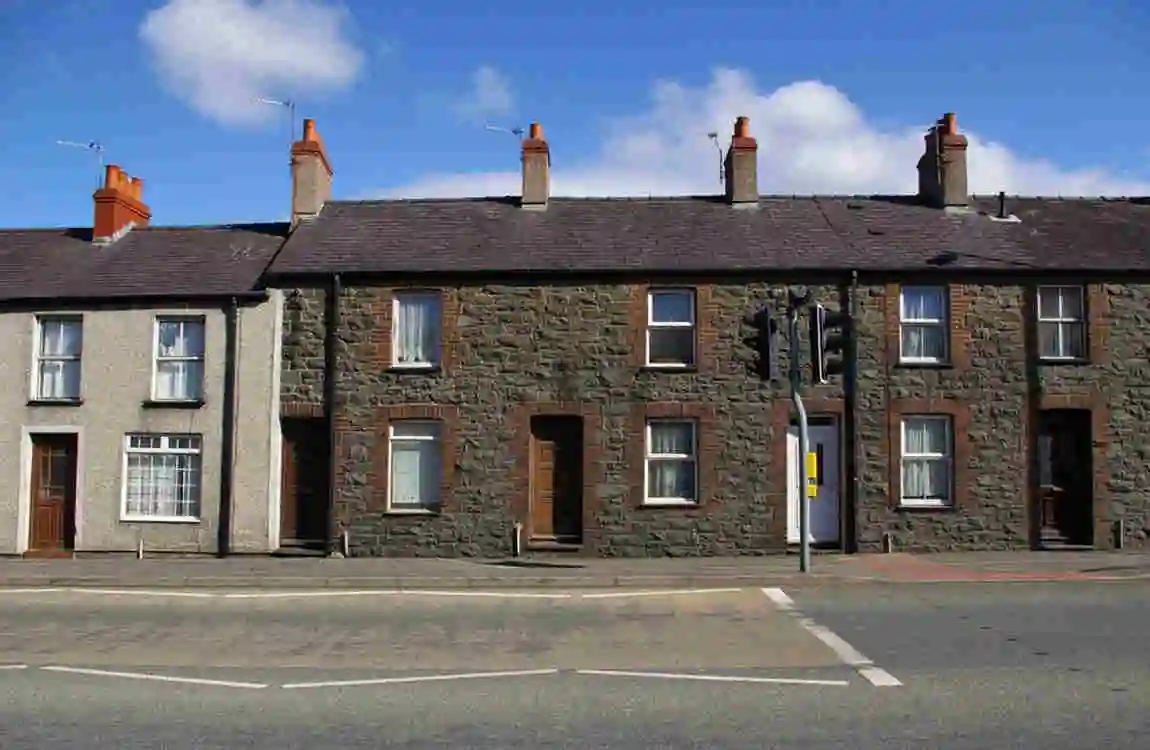
Two-up two-down houses emerged during the 19th century, a time when Britain was rapidly industrializing. The Industrial Revolution brought a massive influx of workers into cities, creating an urgent need for affordable housing near factories and mills. These luxury homes were built quickly and efficiently to meet that demand.
Victorian Architecture Influences
The design of two-up two-down houses reflects Victorian architectural principles, emphasizing practicality and economy. One notable feature was the shared chimney design, which allowed multiple homes to use a single chimney stack. This not only saved space but also improved heating efficiency—a crucial consideration in the often chilly and damp northern climate.
Regional Variations in Northern England
While the basic layout remained consistent, regional variations appeared across northern England. In Liverpool, for example, houses often had narrow frontages and small backyards. At the same time, in Manchester, some terraces featured slightly larger rooms or additional storage spaces. These homes played a vital role in urban expansion, shaping the character of working-class neighborhoods.
Role in Urban Expansion
As cities grew, two-up two-down houses were home built in rows, creating tight-knit communities. Their compact size enabled dense housing developments, which were essential for accommodating the booming population. These terraces became more than just homes—they were the foundation of vibrant neighborhoods where families lived, worked, and socialized.
Classic Layout Breakdown
Understanding the layout of a two-up two-down house helps appreciate its clever use of space. Let’s break down the typical floor plan.
Ground Floor
- Front Parlor (Living Room): This room served as the main social space. It was often modestly furnished, but it was the heart of family life and entertaining guests.
- Back Kitchen/Dining Area: At the rear, the kitchen doubled as a dining space. It was practical and functional, often with a door leading to a small backyard.
Upstairs
- Two Bedrooms: Upstairs, two bedrooms spanned the width of the house. These rooms were typically simple but sufficient for families of the time.
Room Dimensions and Features
Each room usually measures 12 to 15 square meters, making them cozy yet comfortable. The house featured narrow staircases connecting the floors, and fireplaces were common in the main rooms for heating.
Here’s a simple table summarizing the layout:
Floor LevelRoom 1Room 2Key Features
Ground Parlor Kitchen Fireplaces, narrow staircase
Upper Bedroom 1 Bedroom 2 Shared chimney flues
This straightforward design maximized every inch of space, making these homes surprisingly livable despite their small footprint.
Architectural Features
Two-up two-down houses have distinct architectural traits that set them apart.
Narrow Frontages and Brick Construction
Typically, these homes have narrow frontages of 14 to 16 feet. This compact width was a practical choice, allowing many houses to fit along a single street. The walls were usually made of brick, a durable and fire-resistant material common in Victorian-era construction.
Steep Stairs and Back-to-Back Terraces
Inside, the stairs are often steep and narrow, reflecting the limited space. Externally, these houses were built back-to-back or in long terraces, sharing walls with neighbors on either side. This design helped conserve heat and reduce building costs.
Outdoor Yards
Most two-up, two-down houses had small back yards. These spaces were essential for laundry, storage, and sometimes small gardens, providing a bit of fresh air and outdoor space in otherwise dense urban areas.
Early Lack of Indoor Plumbing
Originally, these homes lacked indoor plumbing, with outdoor toilets and shared water sources common. Over time, many have been retrofitted with modern bathrooms and kitchens. Still, the original design reflects the era’s living conditions.
Modern Renovations
While two-up two-down houses are steeped in history, many have been updated to meet today’s standards.
Popular Updates
- Open-Plan Kitchens: Removing walls between the kitchen and dining areas creates a more spacious, modern feel.
- Loft Conversions: Adding rooms in the attic space provides extra bedrooms or home offices.
- En-Suite Bathrooms: Installing bathrooms attached to bedrooms improves comfort and privacy.
Costs and Energy Efficiency
Renovations can vary widely in cost. For example, extensions or loft conversions typically range from £20,000 to £50,000, depending on the scale and location. Many homeowners also invest in energy-efficiency upgrades, such as insulation and double glazing, to reduce heating bills and improve comfort.
Before-and-After Examples
Imagine a once-cramped kitchen transformed into a bright, open space with modern appliances. Or a dark, narrow staircase replaced with a safer, wider design. These changes breathe new life into old homes while preserving their character.
Pros and Cons Table
Here’s a quick look at the advantages and disadvantages of living in a two-up two-down house:
ProsCons
Affordable entry to the property ladder (£150k-£250k avg.) Limited space for growing families
Low maintenance, strong community feel , steep stairs, poor natural light
High rental demand in cities , outdated wiring and plumbing often
These factors make two-up two-down houses ideal for certain buyers, especially singles, couples, or investors looking for rental properties.
Buying and Selling Guide
Tips for Buyers
If you’re considering buying a two-up two-down house, it’s wise to get a thorough survey. Look out for subsidence risks, which can be common in older terraces. Also, consider the location carefully—properties in regeneration areas often see better value growth.
Seller Strategies
Sellers should highlight the home’s character features, such as original fireplaces or exposed brickwork. These details appeal to buyers looking for charm and history.
Market Trends
In northern UK cities, two-up two-down houses have shown steady appreciation, often between 5-10% annually. This makes them a sound investment in many cases.
Living in One Today
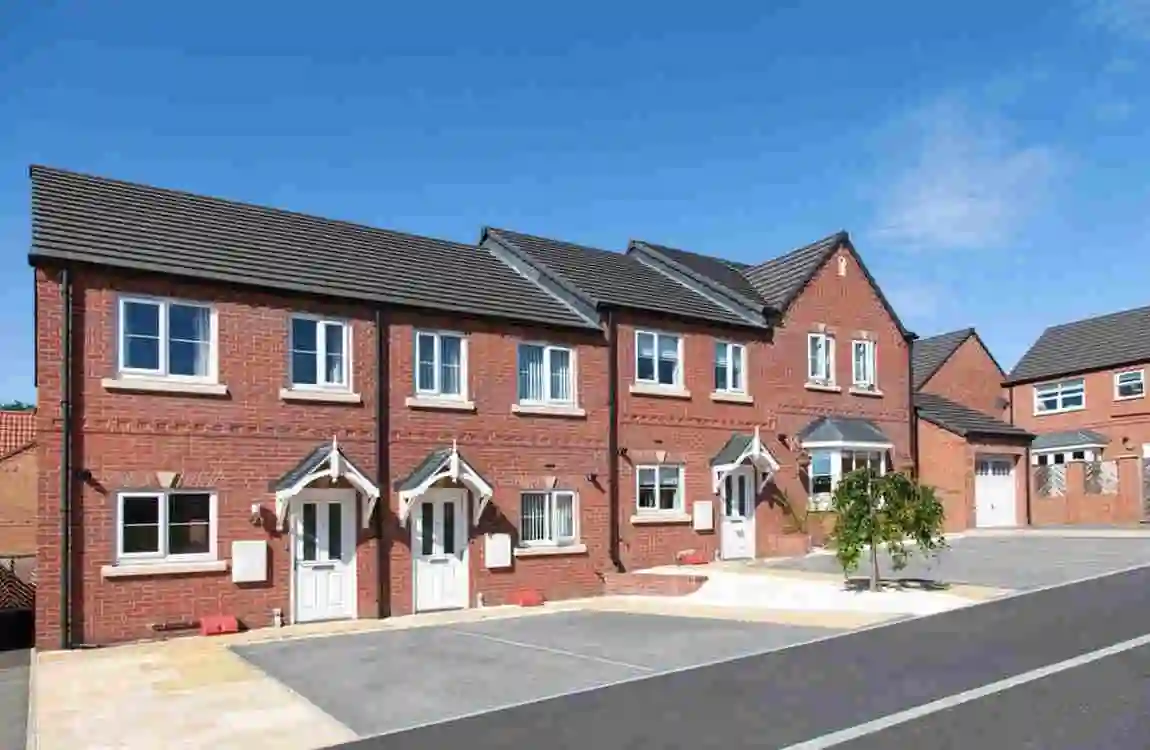
Two-up two-down houses suit a variety of lifestyles. They’re perfect for singles or couples who appreciate a manageable space with character. With the rise of remote work, many have adapted these homes to include home offices or creative spaces.
Community life remains strong in terraces, with neighbors often knowing each other well. Stories from these streets reveal a sense of belonging and shared history that’s hard to find in newer developments.
Comparisons to Other Homes
Compared to three-up, three-down houses or modern townhouses, two-up, two-down houses are smaller and more affordable. They offer more space and privacy than apartments but require less upkeep than larger homes. This makes them especially attractive to first-time buyers who want a balance of cost, space, and community.
What is a Two-Up Two-Down House? — A Quick FAQ
Q: What exactly is a two-up two-down house?
A two-up two-down house is a small, traditional terraced home commonly found in the North of England. It features two main rooms on the ground floor (often a living room and kitchen) and two bedrooms upstairs. This simple layout was designed to be compact and efficient, ideal for working-class families during the Industrial Revolution .
Q: Where are these houses most common?
They are especially prevalent in cities like Liverpool, Manchester, and other northern industrial towns, where they were built in large numbers during the 19th century to house factory workers .
Q: What makes a two-up two-down different from other terraced houses?
Unlike larger terraced homes that might have multiple rooms on each floor or additional floors, a two-up two-down is defined by its two rooms downstairs and two bedrooms upstairs, making it one of the smallest and simplest terraced house types .
Q: Do two-up two-down houses have neighbors above or below?
No, these houses are typically arranged in rows with neighbors on either side but no neighbors above or below, giving them a bit more privacy compared to flats or apartments .
Q: Are these houses modern or outdated?
Many two-up two-down houses were originally built without modern amenities like indoor plumbing or central heating. However, many have been renovated to include modern kitchens, bathrooms, and energy-efficient features while retaining their historic charm .
Q: Why are two-up two-down houses popular today?
They offer an affordable entry point into the housing market, especially for first-time buyers. Their compact size, private front doors, and often small gardens make them attractive alternatives to flats or larger homes .
In short, a two-up two-down house is a compact, charming, and historically significant home with a straightforward layout that continues to appeal to many people in the UK today.