If you are fixing a roof leak, one of the first things you may wonder is how long it takes for roof tar to dry. That matters because roof tar needs time to set before it can properly seal the damaged area.
If you rush the job, the repair may not hold. If you give it enough time, the tar can create a stronger barrier against water and weather. The drying time depends on weather, thickness, and roof conditions, so there is no single answer that fits every situation.
What Is Roof Tar?
A simple explanation
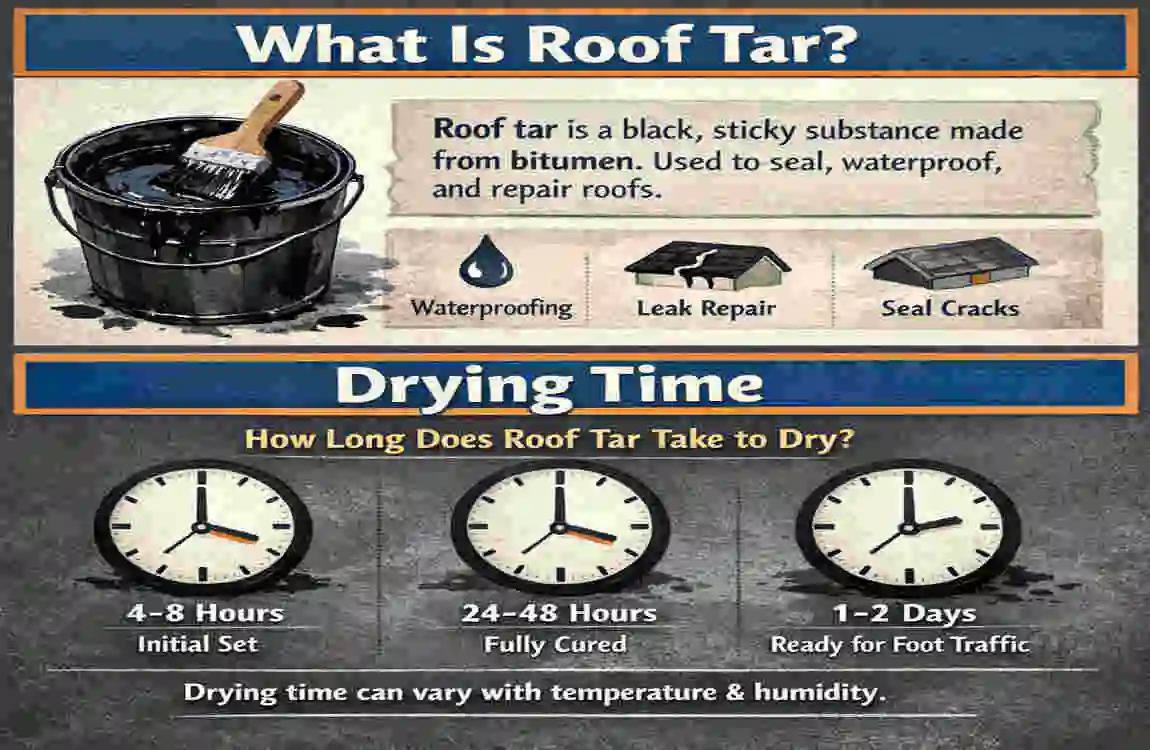
Roof tar is a thick, sticky material used in roof repairs. People use it to seal small cracks, patch leaks, and protect weak roof spots.
Why it matters
When roof tar dries properly, it helps block water from getting inside your home. That is why drying time is so important. If the tar stays soft or sticky for too long, it may not give the protection you need.
How Long Does Roof Tar Take to Dry?
The usual drying time
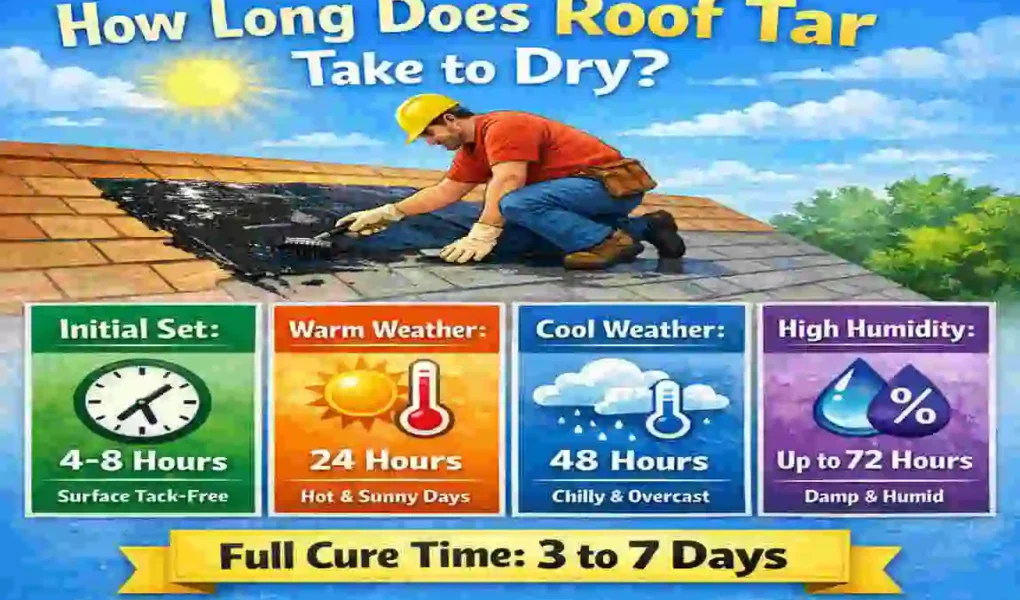
In general, roof tar often needs several hours to set. In warm, dry, sunny weather, it may dry faster. In colder or wetter weather, it can take much longer.
The weather makes a big difference.
Roof tar usually dries best when it gets sunlight and warm air. Cold, humid, or rainy conditions can slow the process down. In fact, when the temperature drops, the tar may stay soft for longer than expected.
A practical rule to remember
Think of roof tar like glue with patience built in. It may look ready on the surface, but it is not fully cured underneath. That is why it is smart to wait longer rather than too little.
Factors That Affect Drying Time
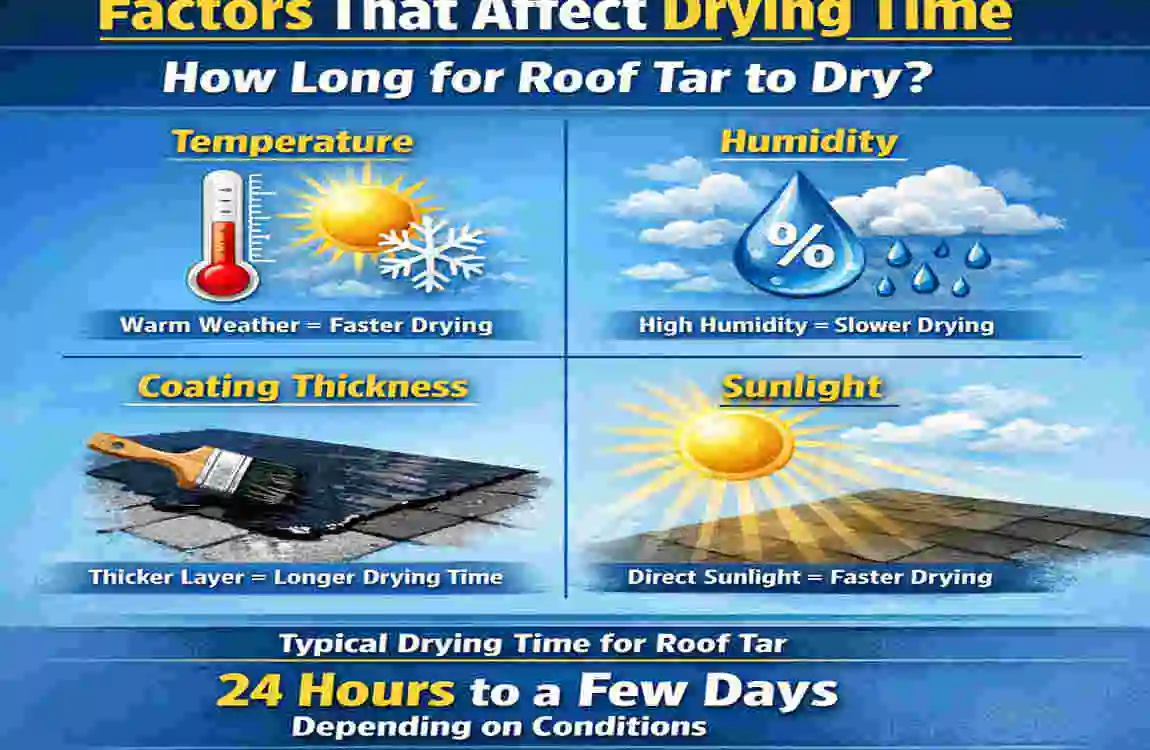
Temperature
Warm weather helps roof tar set faster. Cold weather slows it down.
Humidity
Moist air can keep tar from drying quickly. High humidity often means longer wait times.
Thickness of application
A thin, even layer usually dries faster than a thick one. If you apply too much, the outside may look dry while the inside remains soft.
Direct sunlight
Sunlight helps heat the tar and speed up the drying process. A shaded roof may take more time.
Roof surface condition
A clean, dry surface helps tar bond better. If the roof is dusty, wet, or damaged, drying and sealing may take longer.
How to Tell When Roof Tar Is Dry
Look at the surface.
Dry roof tar often looks firmer and less glossy. It should no longer appear wet or runny.
Check the feel
If it still feels sticky or soft when touched lightly, it probably needs more time.
Watch for a firm seal.
When the tar is dry, it should hold its shape and form a stronger seal over the repair area.
Use common sense
If the weather has been cool, damp, or cloudy, give it extra time before assuming it is ready.
Tips to Help Roof Tar Dry Faster
Here are a few simple ways to improve drying time:
- Apply it during warm, dry weather
- Use a thin, even layer
- Avoid rainy or very humid days
- Follow the product instructions carefully
- Let it sit without disturbing the area
A careful application often works better than a heavy one. More tar does not always mean a better repair.
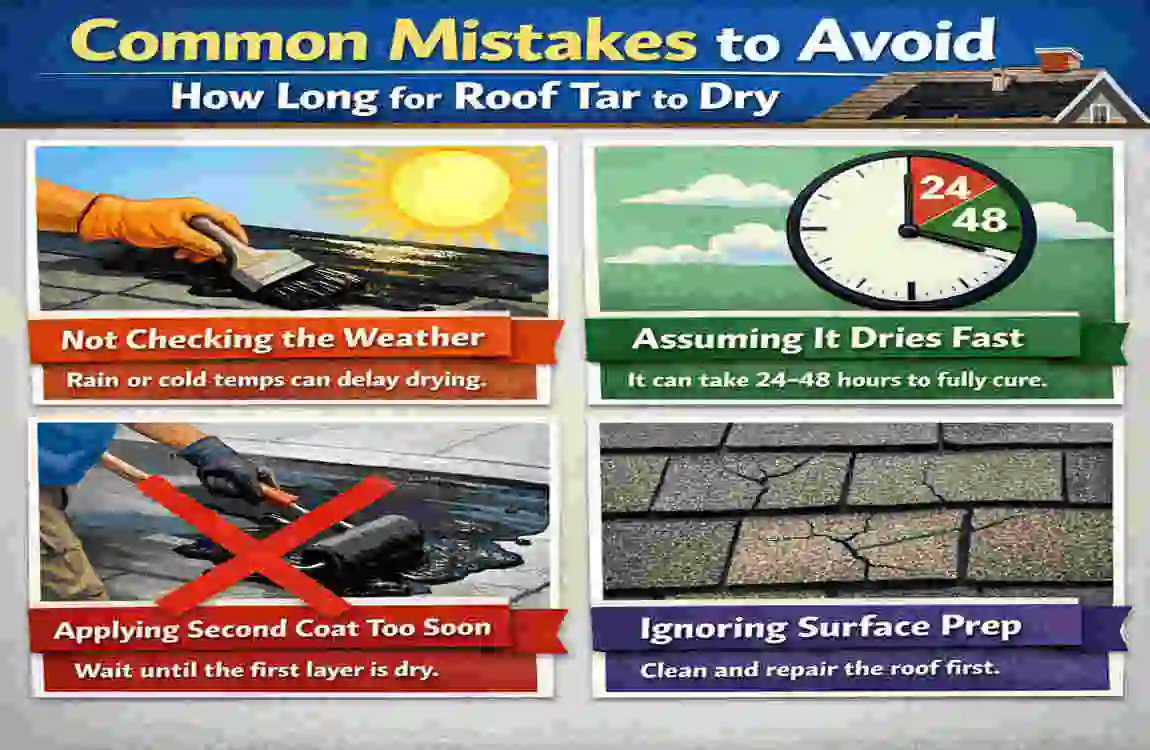
Applying tar before rain
This is one of the biggest mistakes. Rain can interfere with drying and weaken the repair.
Using too much tar
A thick layer may trap moisture, slowing the curing process.
Ignoring weather conditions
Even if the roof needs repair right away, it is better to choose a dry day whenever possible.
Walking on it too soon
If you step on the roof tar before it sets, you can damage the patch and delay drying even more.
FAQ
How long for roof tar to dry in warm weather?
Usually several hours, but the exact time depends on the thickness and the sunlight. Warm, dry weather gives the best chance for quicker drying.
Does roof tar dry in cold weather?
Yes, but much more slowly. Cold temperatures can delay setting and keep the tar soft for longer.
Can roof tar dry overnight?
It may partially set overnight, but full drying depends on the weather, airflow, and the thickness of the layer.
What happens if it rains before the roof tar dries?
Rain can interrupt curing and weaken the repair. If possible, wait for a dry weather window before applying it.
How can I make roof tar dry faster?
Use a thin, even layer and apply it during warm, dry weather. That is the safest way to help it set properly.
| Roof Tar Type | Typical Dry Time | Fully Cured Time | Weather Impact | Best Conditions |
|---|---|---|---|---|
| Asphalt Roof Tar | 8–24 hours | 24–72 hours | Humidity and rain slow drying | Warm, dry weather (70–85°F / 21–29°C) |
| Fibered Roof Tar | 24–48 hours | 2–5 days | Thick application increases drying time | Sunny conditions with low humidity |
| Cold-Applied Roof Tar | 12–36 hours | 1–3 days | Cold temperatures delay curing | Above 50°F (10°C) |
| Wet Patch Roof Cement | 2–12 hours | 24–48 hours | Can dry even in damp conditions | Mild temperatures with airflow |
| Rubberized Roof Tar | 24 hours | 3–7 days | Moisture can extend cure time | Dry climate with direct sunlight |