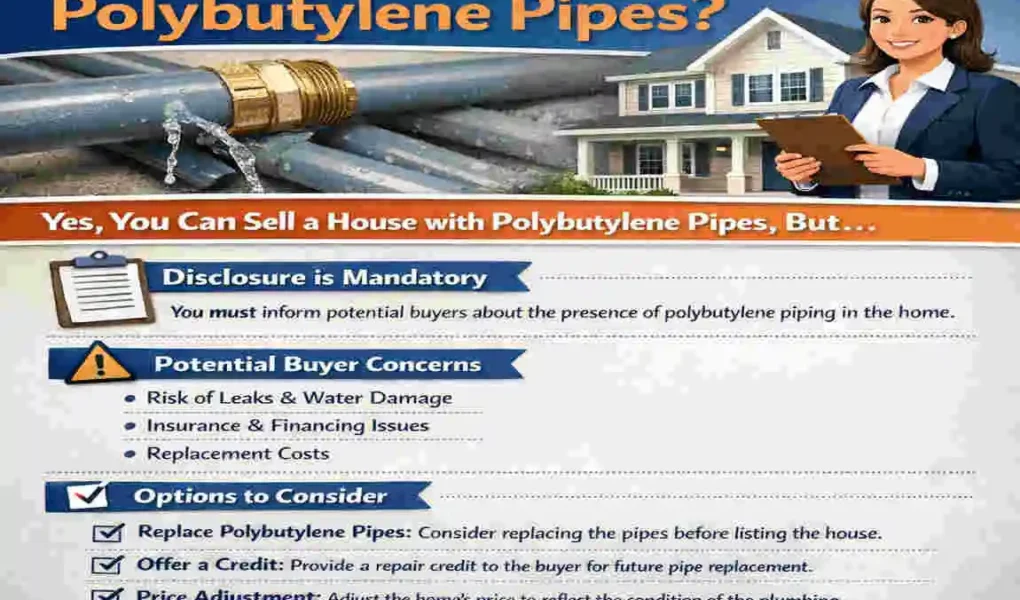
Can You Sell a House with Polybutylene Pipes? Key Risks & Fixes
HOME IMPROVEMENT plumbing REAL ESTATE

Can You Sell a House with Polybutylene Pipes? Key Risks & Fixes

You are days away from closing the deal on your property. You have negotiated the price, packed half your boxes, and you are already mentally decorating your new living room. Then, the phone rings. It’s your real estate agent, and they don’t sound happy.

Does this sound like a nightmare? For many sellers, it is a very real scenario. But here is the good news: Yes, you can sell a house with polybutylene pipes. It is not illegal, and it doesn’t mean your home is worthless. However, it does mean you have some hurdles to jump over. You should expect buyer objections, repair demands, and potentially tough negotiations over the price.

Did you know that polybutylene (PB) pipes were installed in millions of homes between 1978 and 1995? Studies suggest that failure rates can be incredibly high within 10 to 15 years of installation. But don’t let the stats scare you. By the end of this article, you will know the disclosure rules, the cost-saving fixes, and the secrets to closing the deal fast, even with “Project PB” in your basement.

What Are Polybutylene Pipes? A Quick Guide

Can You Sell a House with Polybutylene Pipes? Key Risks & Fixes

Before you can tackle the problem, you have to understand what you are looking at. If you aren’t a plumber, all pipes might look the same to you. But knowing the difference between PB, copper, and PEX is crucial for your sale.

History and Identification

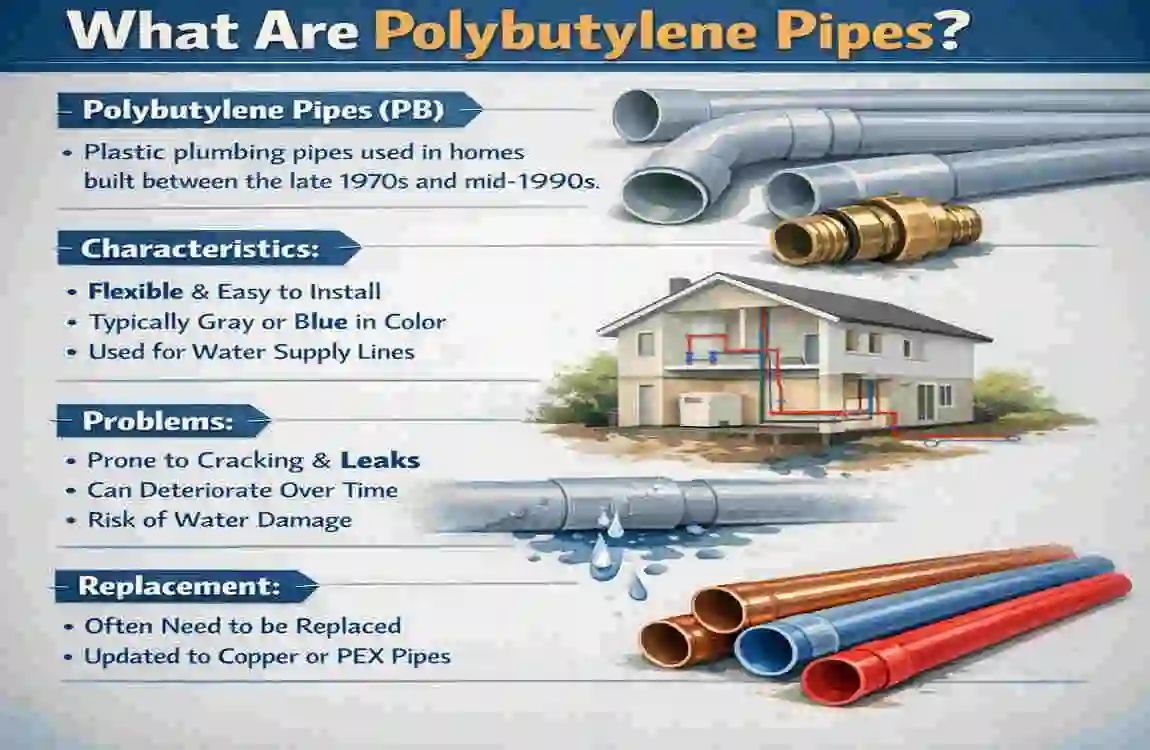
Polybutylene pipes are a type of plastic plumbing that was hailed as the “pipe of the future” in the late 1970s and 1980s. Builders loved them. Why? Because they were significantly cheaper than copper and much easier to install. They are flexible, meaning they could be snaked through walls without needing a soldering torch at every corner.

If your home was built between 1978 and 1995, there is a strong chance you have them.

So, what do they look like?

  • Color: They are usually gray, but can also be blue or black (though black is often mistaken for polyethylene).
  • Size: They typically range from 1/2 inch to 1 inch in diameter.
  • Markings: Look closely at the pipe. You will often see the code “PB2110” stamped on the side.
  • Joints: They are often connected with gray plastic or copper crimp rings.

Why They Fail

If they were so popular, why are they now a red flag? The problem isn’t necessarily the pipe bursting spontaneously; it’s a chemical reaction.

When the water supply—which usually contains chlorine and other oxidants to keep it clean—flows through polybutylene pipes, a reaction occurs. Over time, the chemicals in the water cause the plastic to flake and become brittle from the inside out. You can’t see this damage from the outside. The pipe might look brand new, but internally, the structural integrity is crumbling.

Eventually, the pipe becomes so weak that the water’s pressure causes it to burst. This often happens at the fittings or joints, leading to sudden, catastrophic flooding.

Visual ID Tips

To confirm whether you have them, check your water heater or look under your sinks.

  • Copper: Looks like a shiny (or dull brown) metal penny. Rigid.
  • PEX: Usually white, red, or blue plastic. It looks distinctively different from the dull gray of PB.
  • Polybutylene: Flexible, dull gray, and feels almost “soft” compared to rigid PVC.

Prevalence Today

You might think these pipes are all gone, but that’s not true. It is estimated that polybutylene pipes are still present in over 700,000 homes in the U.S. alone.

But this isn’t just a Western issue. In rapidly developing housing markets like Lahore and suburban Pakistan, where cost-effective building materials were prioritized during certain construction booms, you can find variations of plastic piping that are subject to similar scrutiny today. Whether you are selling a bungalow in DHA or a suburban home in Atlanta, the stigma remains the same.

Key Risks of Selling a House with Polybutylene Pipes

So, you have confirmed you have PB pipes. Why is this such a big deal for the sale? It comes down to risk management—for the buyer, the bank, and the insurance company.

Buyer Inspection Red Flags

The moment a home inspector sees gray pipes, they reach for their red pen. In the real estate world, polybutylene pipes are often categorized as a “material defect.”

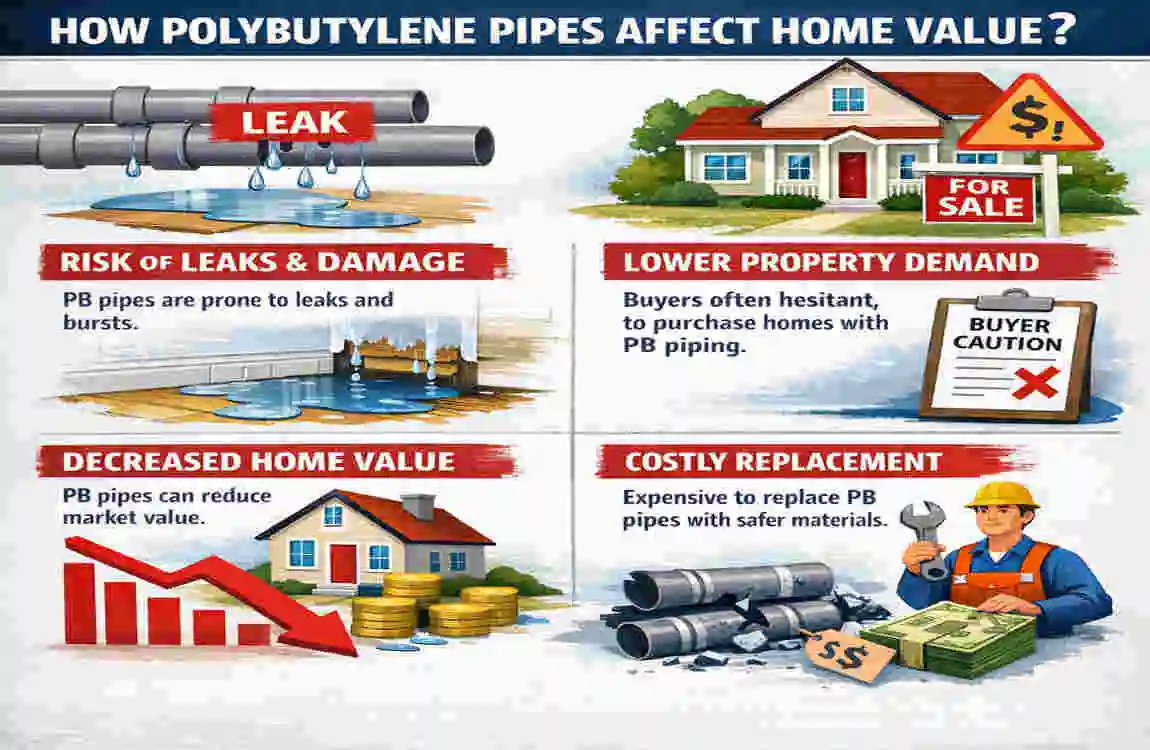
Data suggests that nearly 70% of buyers will either walk away from the deal or demand significant financial credits once they learn about the plumbing. Buyers are terrified of buying a “money pit.” They imagine moving in, only to have a pipe burst while they are on vacation, destroying their new floors and drywall. When an inspector flags this, the emotional excitement of buying the house evaporates, replaced by fear of future costs.

Legal Disclosure Requirements

You might be tempted to keep quiet, but that is a dangerous game. In both the U.S. and increasingly in regulated markets like Pakistan, sellers have a legal duty to disclose known material defects.

If you know you have PB pipes and you don’t tell the buyer, you are opening yourself up to a lawsuit. If a pipe bursts three months after they move in, and they find out you knew about the condition, they can sue you for damages. These lawsuits often average $10,000 or more in legal fees and settlements, far more than it would have cost to fix the pipes in the first place. Honesty is not just the best policy; it’s the cheapest one.

Financial Hits

Even if the buyer loves the house, the math might not work.

  • Price Reductions: You can lower your asking price by roughly 5% to 10% to account for the risk the buyer is taking on.
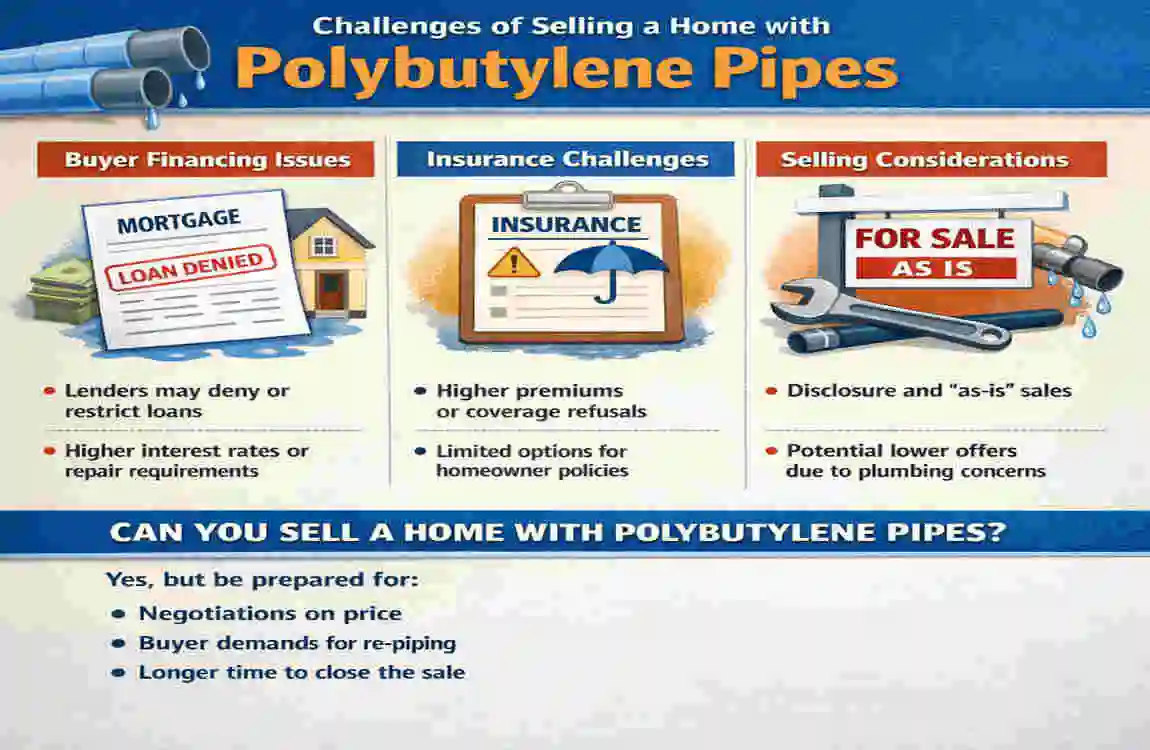
  • Financing Denials: This is a major hurdle. Conventional loans might be okay, but government-backed loans like FHA or VA loans have strict safety requirements. They often reject homes with PB pipes because they view the potential for water damage as a risk to the asset’s value.
  • Insurance Nightmares: Many insurance companies flat-out refuse to write new policies for homes with polybutylene pipes. If the buyer can’t get insurance, they can’t get a mortgage.

Health and Safety Hazards

It is not just about water on the floor. When pipes leak behind walls, they create a damp environment perfect for mold growth.

Mold can start growing within 24 to 48 hours of a leak. Since PB leaks are often slow “pinhole” leaks rather than massive bursts, the water can soak your insulation and drywall for months before you notice. Mold remediation can cost anywhere from $5,000 to $20,000, in addition to plumbing repair costs. This health risk is a major turn-off for families looking to buy your home.

Can You Sell a House with Polybutylene Pipes Without Replacing Them?

Can You Sell a House with Polybutylene Pipes? Key Risks & Fixes

The short answer is: Yes. But you need a strategy. You cannot simply stick a “For Sale” sign in the yard and hope for the best.

Yes, But With Strategies

If you don’t have the cash or time to replace the pipes before listing, you have to be proactive.

  1. Full Disclosure: State right in the listing or the seller’s disclosure that the home has polybutylene pipes. This filters out deal-breaker buyers immediately, saving you time.
  2. Competitive Pricing: Price the home slightly below market value—roughly 3-7% less. Frame this as a “renovation opportunity” for the buyer.
  3. Offer Credits: Instead of lowering the price, offer a “closing cost credit” specifically earmarked for re-piping. This allows the buyer to choose their own plumber after closing.

Market Realities

The state of the market matters. In a “hot” seller’s market—like we are seeing in parts of Lahore in 2026 or high-demand U.S. cities—inventory is low. Desperate buyers are more willing to overlook defects. In these markets, a savvy buyer might accept the house “as-is” if you provide a home warranty that specifically covers plumbing failures for the first year.

Pros and Cons Table

Here is a quick breakdown to help you decide your path:

Option Pros Cons Cost Estimate

Sell As-Is Fastest way to close; No upfront cash needed; No construction mess. Lower sale price; Smaller buyer pool; High risk of deal falling through. $0 upfront (but potential price drop of thousands)

Partial Fixes : Fix visible/accessible pipes (like in unfinished basements); shows effort. Does not solve the core issue; Inspectors will still flag the remaining pipes. $2,000 – $5,000

Full Replacement Commands top-dollar prices; Attracts all buyers; smooth insurance/lending process. Expensive; Disruptive (holes in walls); Takes time to complete. $5,000 – $15,000

Cost-Effective Fixes: How to Replace Polybutylene Pipes Before Selling

If you decide that replacing the pipes is the best way to secure your profit, here is how you do it efficiently.

Inspection First

Before you start tearing down walls, hire a licensed plumber to do a full “PB Scan.” This costs between $300 and $500. They will determine whether the whole house is PB or just a “stub out” (where the pipe comes out of the wall). Sometimes, homes only have PB in specific sections, which saves you a fortune.

Choose Your Materials

Don’t replace plastic with copper unless you have a high budget.

  • Copper: The gold standard, but very expensive and labor-intensive.
  • PEX (Cross-linked Polyethylene): The industry standard for repiping. It is flexible (as PB intended), durable, and much cheaper than copper. It costs roughly $1.50 per foot.
  • PEX-AL-PEX: A multilayer variation that adds an aluminum layer for shape retention.

For most sellers, standard PEX is the best choice. It solves the problem permanently without breaking the bank.

DIY vs. Pro

You might be handy, but this is not a DIY job. Re-piping a whole house involves cutting into drywall, navigating electrical wires, and understanding pressure systems.

  • Professional Cost: In the U.S., a full repipe might cost $6,000 to $12,000.
  • Local Context (Lahore): If you are in Lahore, labor costs are lower. You can repipe a 2,000 sq ft home for about $4,000 (depending on exchange rates and material import costs). Always get three quotes.

Timeline & Disruptions

Be prepared for a mess. A professional crew can usually finish a repipe in 3 to 7 days.

  • Day 1-2: Covering furniture, cutting access holes in drywall.
  • Day 3-5: Running new PEX lines.
  • Day 6-7: Connecting fixtures, testing, and patching drywall. Tip: Do not schedule open houses during this week. It looks like a war zone.

ROI Proof

Is it worth it? Zillow data suggests that homes with new plumbing systems sell faster and often recoup 80-100% of the project cost. You aren’t just selling pipes; you are selling “peace of mind,” which is priceless to a buyer.

Legal and Market Tips for Selling a House with Polybutylene Pipes

Can You Sell a House with Polybutylene Pipes? Key Risks & Fixes

Navigating the paperwork and the negotiation table is just as important as the physical repairs.

Disclosure Best Practices

When you fill out your seller disclosure form, be specific. Don’t just check “Yes” for plumbing issues. Add a note: “Original Polybutylene piping present. No active leaks known.” If you have replaced the fittings (the metal crimps) but kept the pipes, disclose that too. Volunteer this information before the inspection. It builds trust. If the buyer finds it on their own, they wonder what else you are hiding.

Negotiating Repairs

If a buyer demands a lower price because of the pipes, use a script like this: “We understand the concern regarding the polybutylene pipes. Since we have had no issues, we are selling the home as-is. However, we are willing to provide a $8,000 credit at closing so you can choose your own contractor to upgrade the system to your standards.” This puts the control in the buyer’s hands and protects your cash flow until the house sells.

2026 Market Insights: The Lahore Perspective

Real estate in 2026 is evolving. In growing hubs like Lahore, buyers are becoming more educated about construction quality. However, with the rise of eco-upgrades and smart homes, plumbing sometimes takes a backseat to solar panels or insulation. If you are selling in this market, highlight the other upgrades your home has. If you have a brand-new kitchen or energy-efficient windows, use them to offset the downsides of the PB pipes. “The house requires a plumbing update, but the solar infrastructure saves you 50% on bills.”

Pro Tips: Warranties

One of the best tools in your arsenal is a Home Warranty. You can buy a one-year warranty for the buyer (costing around $500-$700) that specifically covers plumbing failures. Warning: Read the fine print. Some warranties exclude “known pre-existing conditions” or specifically exclude PB pipes. You must find a policy that covers polybutylene. Presenting this warranty at the open house can immediately calm a nervous buyer.

FAQ: Selling a House with Polybutylene Pipes

Can you sell a house with polybutylene pipes in Pakistan? Yes, absolutely. There is no law banning the sale. However, under PHA or local housing authority rules in specific gated communities, you must disclose structural defects. Transparency is key to avoiding post-sale disputes.

How much does replacing PB pipes cost in 2026? In the U.S., costs have risen slightly due to inflation, averaging $4,000 to $12,000 for an average home. In markets like Pakistan, labor costs are generally lower, but imported PEX materials are generally more expensive.

Do PB pipes affect home insurance? Yes. Many insurers will charge higher premiums or exclude water damage coverage for homes with PB pipes. Some may require an inspection before binding the policy.

What is the lifespan of PB pipes? While they were designed to last 50 years, the reality is closer to 10 to 15 years in areas with highly chlorinated water. If your pipes are original (30+ years old), they are living on borrowed time.

Can buyers finance homes with PB pipes? Conventional loans usually allow it. However, FHA and VA loans are stricter. If the appraiser notes the pipes as a defect, the lender may require them to be fixed before the loan is approved.

You may also like...

Leave a Reply

Your email address will not be published. Required fields are marked *