
Living the RV lifestyle offers incredible freedom and adventure, but it also comes with unique challenges, particularly when it comes to managing wastewater. One solution that many RV owners are turning to is connecting their RV directly to their house sewer system.
Whether you’re a seasoned RV enthusiast or just starting your journey, understanding the advantages of connecting your RV to your house sewer system can make a world of difference in your overall experience.
What It Means to Connect Your RV to Your House Sewer System
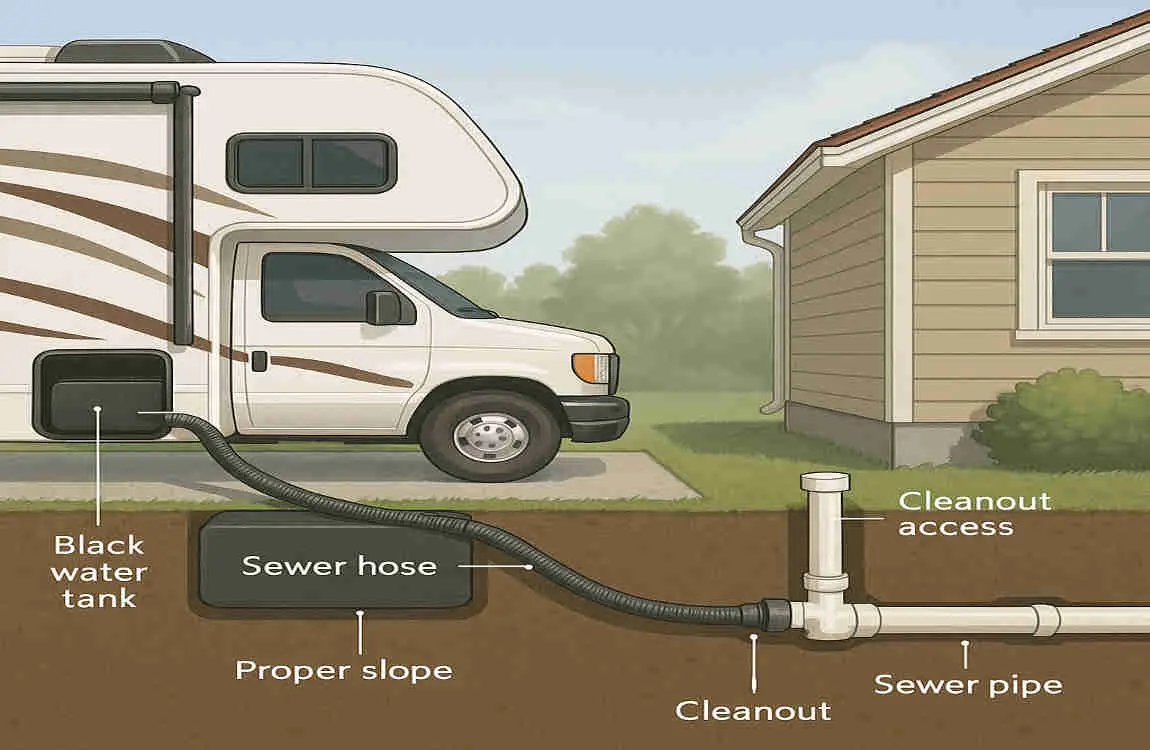
Before we explore the benefits, let’s clarify what it means to connect your RV to your house sewer system. Unlike traditional RV sewer systems, which rely on holding tanks and frequent dumping at designated stations, connecting to your house sewer allows you to bypass these steps and dispose of wastewater directly into your home’s plumbing.
To make this connection, you’ll need a few basic components:
- A compatible sewer hose
- Proper fittings and adapters
- A dedicated sewer cleanout or access point on your property
The process involves securely attaching your RV’s sewer outlet to your house sewer line, ensuring proper venting and slope to prevent backups or leaks. Don’t worry; we’ll cover the step-by-step details later in this guide.
Why Knowing How to Connect an RV to a House Sewer Matters
Now, you might be wondering why learning how to connect an RV to a house sewer is so essential. Well, traditional RV dumping methods come with their fair share of challenges:
- Frequent trips to dump stations can be time-consuming and inconvenient
- Public dump stations may charge fees or have limited hours of operation
- Improper dumping techniques can lead to spills, odors, and environmental hazards
By connecting your RV to your house sewer, you can mitigate these issues and enjoy a more seamless, hygienic, and eco-friendly wastewater management solution. Plus, it can help extend the life of your RV plumbing system by reducing wear and tear from constant tank emptying.
10 Benefits of Connecting Your RV to Your House Sewer System
Convenience and Time-Saving
One of the most significant advantages of connecting your RV to your house sewer is the convenience it offers. No more hauling your rig to the dump station or planning your trips around available facilities. With a direct connection, you can easily dispose of wastewater right from your RV, saving you valuable time and effort.
Cost-Effective Waste Management
In addition to saving time, connecting to your house sewer can also save you money in the long run. Public dump stations often charge fees for each use, which can add up quickly over time. By eliminating the need for these services, you can reduce your overall RV maintenance costs. Plus, you’ll avoid potential fines from improper waste disposal.
Improved Hygiene and Sanitation
Dealing with RV waste can be a messy and unpleasant task, exposing you to harmful bacteria and odors. By connecting directly to your house sewer, you can minimize contact with wastewater and enjoy a cleaner, more sanitary disposal process. This not only benefits your health but also helps maintain a more pleasant environment around your RV.
Environmental Benefits
Proper wastewater management is crucial for protecting the environment, especially when camping or boondocking. By connecting to your house sewer, you can ensure that your RV’s gray and black water waste is safely disposed of, reducing the risk of spills or contamination on campsite grounds. This helps you comply with environmental regulations and contribute to the preservation of nature.
Increased RV System Longevity
Improper dumping techniques and frequent use of public dump stations can take a toll on your RV’s plumbing system. Clogs, leaks, and damage to tanks and valves are common issues that can arise from mishandling wastewater. By connecting to your house sewer, you can reduce this wear and tear, promoting smoother functioning and longer life for your RV’s plumbing components.
Enhanced Comfort and Lifestyle
Having a reliable wastewater management solution can significantly enhance your overall RV living experience. With a direct sewer connection, you can enjoy longer stays without worrying about finding dump stations or constantly monitoring tank levels. This added comfort and convenience can make your RV feel more like a home, whether you’re a full-time RVer or enjoy extended trips.
Ease of Use with Proper Installation
While the idea of connecting your RV to your house sewer might seem daunting at first, with proper installation, it can be a straightforward and user-friendly process. By investing in the right fittings, hoses, and venting solutions, you can create a dedicated sewer connection that simplifies waste management and offers reliable performance.
Compatibility With Home Plumbing Systems
When installed correctly, connecting your RV to your house sewer should integrate seamlessly with your home’s existing plumbing infrastructure. This includes proper venting through your home’s sewer vents and the use of P-traps to prevent odors and backflow. With the appropriate adapters and fittings, you can ensure a secure connection that won’t damage your home’s plumbing or cause any issues.
Increased Property Value and Appeal
For homeowners with RV-friendly properties, adding a dedicated RV sewer connection can be a valuable asset. It demonstrates a commitment to practical improvements and can make your property more appealing to potential buyers or renters who appreciate the convenience of RV living. This is especially true for seasonal or vacation homes in popular camping destinations.
Peace of Mind and Reliability
Finally, connecting your RV to your house sewer offers a sense of peace of mind and reliability that traditional dumping methods can’t match. With a properly installed system, you can reduce the risk of sewer backups, spills, or other sanitation issues. This reliable setup can be especially valuable during extreme weather events or emergencies when access to public facilities may be limited.
How to Connect RV to House Sewer: Step-by-Step Guide
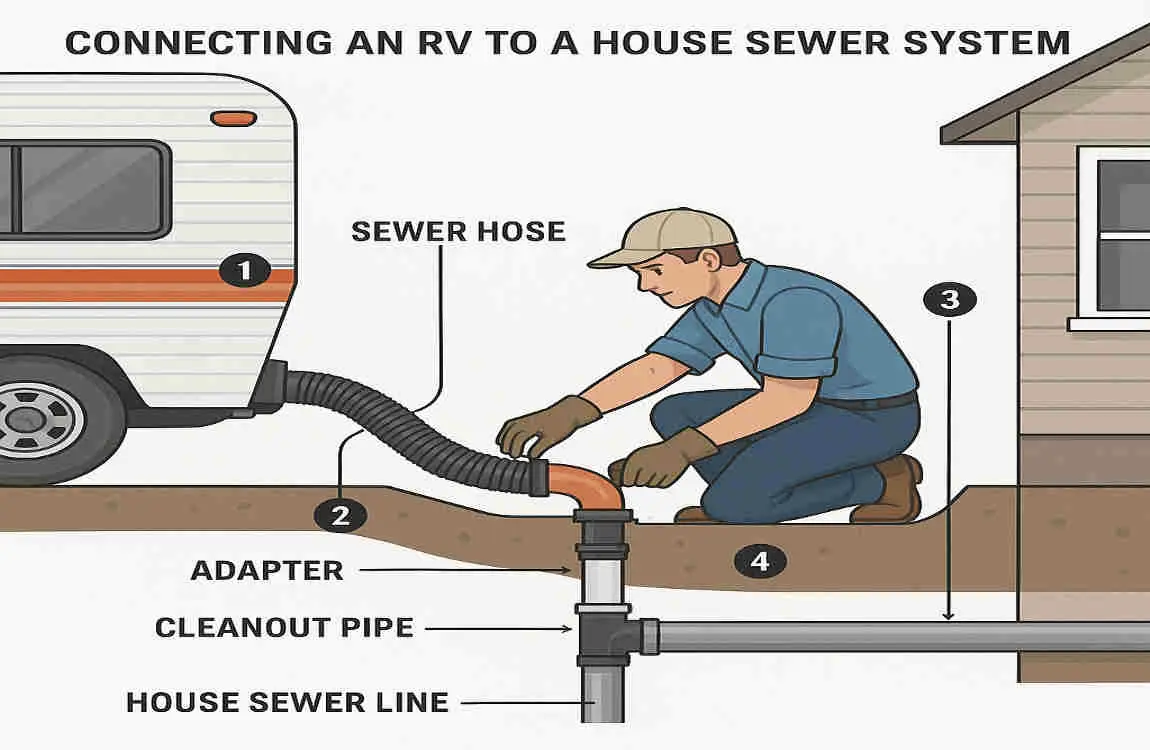
Now that you understand the benefits, let’s walk through the process of how to connect the RV to the house sewer step by step. Before you begin, gather the necessary tools and materials:
- Compatible sewer hose (recommended length and diameter for your RV)
- Sewer hose fittings (e.g., elbow connectors, adapters, clamps)
- Sewer cleanout or access point on your property
- Protective gloves and eyewear
- Adjustable wrench or pliers
Locate your house sewer cleanout or access point
Identify the location of your house sewer cleanout or a suitable access point for connecting your RV. This is typically a capped pipe or valve located near your home’s foundation or in your yard.
Choose compatible hoses and fittings for your RV connection
Select a sewer hose that is compatible with your RV’s outlet size and is long enough to reach your house sewer access point. Ensure that you have the proper fittings, such as elbow connectors and adapters, to create a secure connection.
Install or adapt connections securely to the house sewer line
Attach one end of your sewer hose to your RV’s outlet, securing it with the appropriate fittings and clamps. Then, connect the other end to your house sewer cleanout or access point, again using the necessary adapters and ensuring a tight, leak-proof seal.
Check for proper venting and slope
Proper venting is essential to prevent odors and backflow issues. Ensure that your RV is connected to your home’s sewer vent system or install a separate vent if needed. Additionally, maintain a slight downward slope in your sewer hose to facilitate smooth waste flow and prevent clogs.
Test the system for leaks and smooth flow
Before using your new sewer connection, test the system for any leaks or issues. Run water through your RV’s plumbing and check for any signs of leakage or backflow. If everything is functioning correctly, you’re ready to enjoy the benefits of your RV-to-house sewer connection!
Remember to perform regular maintenance on your sewer hose and connections, such as cleaning and inspecting for wear and tear. This will help ensure your system remains in good working order for years to come.
Common Mistakes to Avoid When Connecting an RV to a House Sewer
While connecting your RV to your house sewer is a straightforward process, there are a few common mistakes to watch out for:
- Using improper or incompatible hoses/fittings: Always use sewer hoses and fittings that are specifically designed for RV use and compatible with your rig’s outlet size. Using makeshift or ill-fitting components can lead to leaks and sanitation issues.
- Ignoring sewer venting needs: Proper venting is crucial for preventing odors and backflow. Make sure your RV is connected to your home’s sewer vent system or install a separate vent if necessary.
- Failing to secure connections: Loose or improperly secured connections can cause leaks and spills. Use the appropriate clamps and adapters to create a tight, leak-proof seal at all connection points.
- Forgetting regular maintenance: Like any plumbing system, your RV-to-house sewer connection requires regular maintenance. Neglecting to clean your sewer hose or check for wear and tear can lead to clogs, leaks, and other issues over time.