Did you know that in Pakistan’s monsoon-heavy climate, poor roofing is responsible for nearly 40% of all structural home damage? That is a staggering statistic that highlights just how critical the roof is to your building’s health. Whether you are constructing a new dream home in a bustling city like Lahore or renovating an older property, the roof is literally the shield that protects your investment.
But here is the big question we need to answer today: What exactly is roofing in construction? It sounds like a simple question. Most people think of the shingles or tiles they see from the street. However, in the world of professional construction, roofing is a complex, multi-layered system designed to battle gravity, wind, sun, and rain. It is not just about slapping material on a building; it is a science of protection.
Understanding What Is Roofing in Construction: The Basics
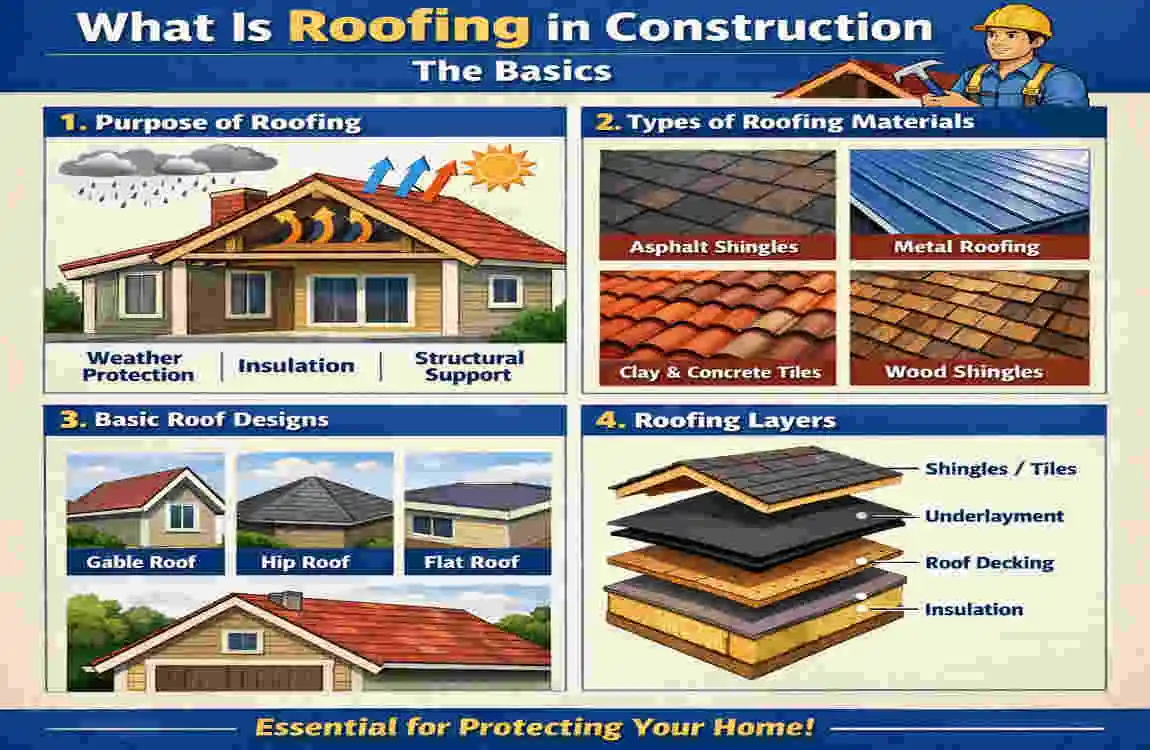
To truly understand what roofing is in construction, we have to look beyond the surface. If you ask a layperson, they might point to the red clay tiles and say, “That is the roof.” But if you ask a structural engineer, they will tell you that the “roof” is a complete assembly.
Definition of Roofing in Construction
In simple terms, roofing in construction refers to the uppermost covering of a building. Its primary job is to protect against the elements—rain, snow, sunlight, wind, and extreme temperatures. But it serves more functions than just acting as a giant umbrella.
A proper roofing system provides structural support to the building, tying the walls together to make the frame rigid. It also plays a massive role in insulation. In a hot country like Pakistan, a well-designed roof stops the scorching summer heat from turning your living room into an oven. Conversely, in the winter, it traps the heat inside.
It is crucial to distinguish between “roofing materials” and the “roofing system.”
- Roofing Materials: These are the visible outer layers, like asphalt shingles, metal sheets, or concrete tiles.
- Roofing System: This includes the skeleton (trusses), the skin (decking), the water barrier (underlayment), the drainage (gutters), and the joints (flashing).
When a contractor talks about “roofing,” they are talking about how all these pieces dance together to keep you dry.
History and Evolution of Roofing in Construction
Roofing has come a long way. Looking back at history, the earliest builders in the Indus Valley region used thatch, mud, and straw. These materials were readily available and cheap, but they leaked like a sieve during heavy rains and were a fire hazard.
As civilization advanced, we moved toward durability. We saw the introduction of fired clay tiles, which became a staple in South Asian architecture because they could handle the intense sun and heavy monsoon rains without rotting.
Fast forward to modern construction in Lahore or Karachi, and we are seeing high-tech composites and polymers. Why does this history matter? Understanding evolution helps us appreciate modern solutions. Today, we aren’t just trying to stay dry; we are trying to be energy efficient. Modern roofing is designed to reflect UV rays to lower air conditioning bills, something the ancient builders didn’t have to worry about!
Pro Tip: Before you fall in love with a specific historical style or modern material, always check your local building codes (like the Pakistan Building Code 2021). Some areas have strict rules about wind resistance and fire safety that might dictate what you can use.
The Anatomy of a Roof
To visualize this better, here is a simple breakdown of the layers you are paying for, from the inside out:
Layer Name: What It Does, Why You Need It
Framing/Trusses: The wooden or steel skeleton. Gives the roof its shape and slope.
Decking (Sheathing) Sheets of plywood or concrete. Creates a solid flat surface to nail things to.
Underlayment: A waterproof membrane. The final barrier against leaks is shingles that break.
Flashing Metal strips at joints/chimneys. Prevents water from sneaking into corners.
Covering Shingles, tiles, or metal. The first line of defense against the weather.
Common Types of Roofing in Construction: Which One Fits Your Project?
Now that we know what makes up a roof, let’s talk about the fashion and function. Choosing the right roofing type is one of the biggest decisions you will make. It affects your home’s look, its value, and how often you will need to fix it. Here is a breakdown of the most popular options available today.
Asphalt Shingles – Affordable and Popular
If you drive through many modern housing societies, you will see asphalt shingles everywhere. They are essentially fiberglass mats covered in asphalt (tar) and ceramic granules.
- The Good: They are incredibly affordable and easy to install. If a branch falls and breaks a few, you can replace just those few without redoing the whole roof.
- The Bad: They don’t last forever. In extreme heat, asphalt can dry out and crack.
- Lifespan: Expect about 20 to 30 years.
- Best For: Budget-conscious homeowners who want a clean, modern look without breaking the bank.
Metal Roofing – Durable for Harsh Weather
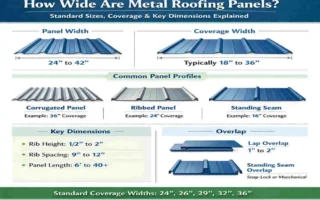
Metal roofing is making a massive comeback. We aren’t talking about the noisy, rusty tin roofs of the past. Modern metal roofing comes in sleek panels (standing seam) or tiles that look like stone.
- The Good: Metal is a beast. It sheds rain and snow instantly. It is fireproof, rot-proof, and insect-proof. Most importantly for hot climates, it reflects sunlight, keeping your home cooler.
- The Bad: It is more expensive upfront. Also, during a heavy hailstorm or heavy rain, it can be noisier than other types, though insulation helps dampen the noise.
- Lifespan: These can last 40 to 70 years. You might install it once and never worry about it again.
- Best For: Areas with extreme weather changes or homeowners who want a “set it and forget it” solution.
Tile Roofing – Aesthetic and Long-Lasting
This is the classic look—clay or concrete tiles curved in a specific shape. This style is deeply rooted in Pakistani architecture and offers a timeless appeal.
- The Good: They are incredibly tough and fire-resistant. Because of their shape, they allow air to circulate under the tile, which acts as a natural insulator against heat.
- The Bad: They are heavy. Very heavy. Your house needs a reinforced structure to hold the weight. They can also be brittle if you walk on them the wrong way.
- Lifespan: Easily 50+ years.
- Best For: Luxury homes where aesthetic appeal and longevity are the top priorities.
Flat Roofing Systems (TPO, EPDM)
You will see these mostly on commercial buildings, plazas, or modern, boxy-style homes in areas like DHA or Bahria Town.
- The Tech: These use large rubber or synthetic sheets (like TPO or EPDM) that are glued or mechanically fastened to the deck.
- The Good: They are great for making use of roof space—you can put AC units, water tanks, or even a roof garden up there.
- The Bad: Water drainage is the biggest challenge. If the slope isn’t perfect, water pools, leading to leaks.
- Best For: Commercial builds or modern residential architecture.
Eco-Friendly and Composite Options
For the environmentally conscious, there are synthetic shingles made from recycled plastic and rubber. They look like slate or wood shake but are much more durable and eco-friendly.
Here is a quick comparison table to help you visualize the choices:
TypeEst. Cost/sq.m (PKR) Lifespan, Weather Resistance, Maintenance Level
Asphalt Shingles 1,500 – 3,000 20-30 Years Good Moderate
Metal Roofing 4,000 – 7,000 40-70 Years Excellent Low
Clay/Concrete Tile 3,500 – 6,000 50+ Years High Low (but fragile)
Flat (TPO) 2,500 – 5,000 30-50 Years Very Good Moderate
Pro Tip: Match your type to your roof pitch. If you have a steep roof, tiles or shingles are great because water runs off fast. If you have a low slope, you must use a flat roofing membrane, or you will have leaks within a year.
Breaking Down Roofing Costs in Construction: Budget Like a Pro
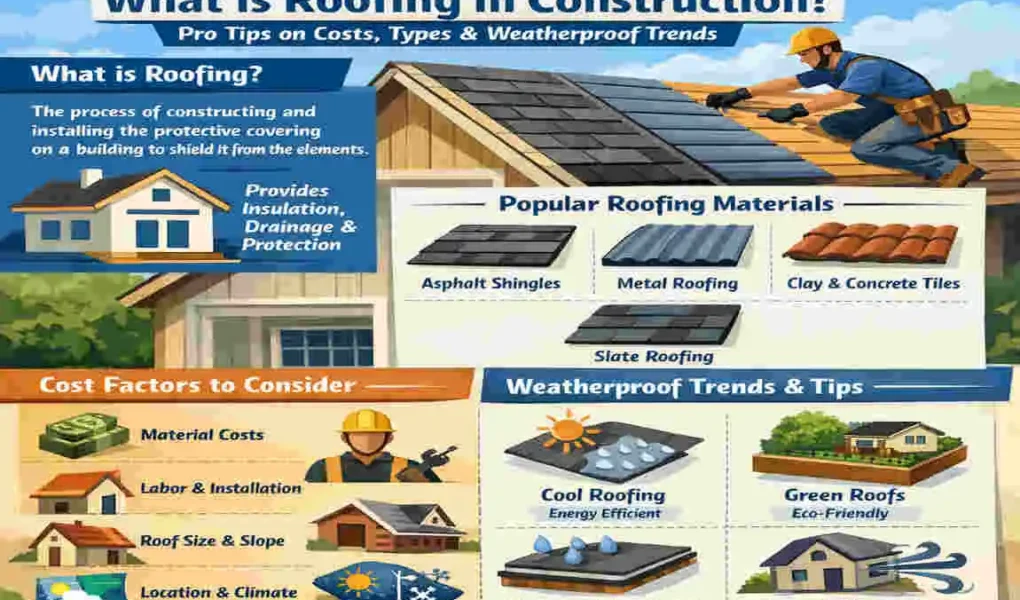
Let’s talk money. Understanding roofing costs is vital so you don’t get taken for a ride. The price isn’t just about the square footage; it is about complexity, waste, and labor.
Average Roofing Costs Per Square Meter in Pakistan (2026)
While prices fluctuate with inflation and the cost of imported materials, here are some realistic estimates for the 2026 market in major cities such as Lahore and Islamabad.
- Asphalt: You are looking at a starting point of PKR 1,500 to 3,000 per square meter. This usually includes the materials and basic labor.
- Premium Metal: If you want high-gauge, rust-resistant metal, expect to pay PKR 4,000 or more. It’s a higher entry price, but remember the lifespan.
- The Big Picture: Generally, the roof will consume about 10% to 15% of your total home construction budget. If you are building a house for 2 Crore, budget at least 20-30 Lacs for a high-quality roof system.
Factors Influencing Roofing Costs
Why does your neighbor’s roof cost less than yours? Here are the variables:
- Material Quality: Not all metal is the same. Thicker gauges cost more. Not all shingles are the same; “architectural” shingles cost more than “3-tab” ones.
- Roof Complexity: A simple gable roof (two sides meeting in the middle) is cheap to build. A roof with valleys, dormers, skylights, and multiple chimneys requires extensive cutting and waste, which drives up labor and material costs.
- Labor: Skilled labor in Lahore might cost PKR 500-1,000 per square meter. Don’t skimp here. A bad installation ruins expensive materials.
- Add-ons: Ventilation is key. Adding ridge vents or solar fans will add about 10% to the cost but save you money on cooling later.
Hidden Costs and How to Avoid Them
This is where people get stuck. They get a quote, sign it, and then get hit with “extras.” Watch out for these:
- Permits: Depending on your housing society, you may need to pay for renovation permits.
- Waste Disposal: tearing off an old roof? Hauling that debris away costs money (truck rentals, labor).
- Rot Repair: If you are replacing a roof, the contractor might find rotten wood underneath. They can’t nail into rot, so they have to fix it. This is usually billed as “time and materials.”
ROI Calculation: Think about value. A metal roof might cost double today, but if it saves you 20% on electricity due to heat reflection and lasts twice as long, it pays for itself in 7 to 10 years.
Pro Tip: Always get at least 3 quotes. And when you budget, add a 20% contingency fund. In the monsoon season, delays happen, and time is money.
Weatherproof Roofing Trends in Construction for 2026
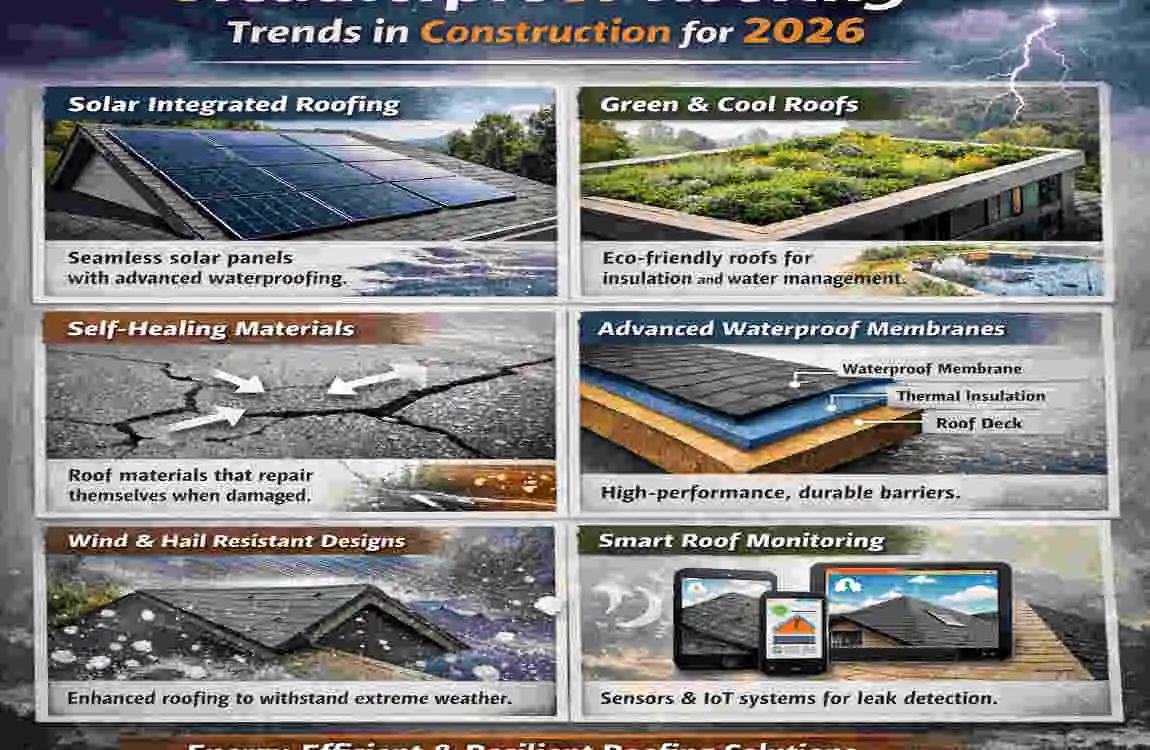
The climate is changing, and so is construction. We are seeing more intense storms and hotter summers. Weatherproof roofing trends are shifting toward resilience and sustainability.
Climate-Resilient Materials Taking Over
In 2026, we are moving away from “looking pretty” to “surviving the storm.”
- Cool Roofs: These are designed with highly reflective paint or granules. They reflect up to 70% of sunlight. In a city that hits 45°C in June, this is a game-changer for indoor comfort.
- Impact Resistance: We are seeing shingles rated “Class 4” for impact. This means they can take a hit from a hailstone the size of a golf ball without cracking.
Smart Roofing Tech and Sustainability
Technology is hitting the roof—literally.
- Solar Integration: We aren’t just talking about big solar panels bolted on top anymore. Solar shingles are becoming available. These are roof tiles that are solar panels. They look sleek and generate power.
- Self-Healing Membranes: For flat roofs, new thermoplastic materials can “heal” minor punctures when exposed to heat. It sounds like science fiction, but it is real.
Top Trends for Pakistani Homes
Specifically for our local context, two things are trending:
- Green Roofs: In dense urban areas like downtown Lahore, people are turning flat roofs into gardens. This isn’t just for vegetables; the soil absorbs rainwater (reducing street flooding) and insulates the rooms below.
- Monsoon-Proofing: Builders are doubling down on synthetic underlayments. Old-school felt paper tears easily. Synthetic underlayment is like a tarp—waterproof and tear-resistant, providing a secondary water barrier essential during monsoon season.
Pro Tip: Look for ENERGY STAR-rated materials. Even if you don’t care about the environment, you care about your wallet. These materials are certified to lower your cooling bills by up to 15%.
Pro Installation Tips: Getting Roofing in Construction Right
You can buy the most expensive tiles in the world, but if the installation is bad, your roof will leak. Whether you are a DIY enthusiast overseeing a project or want to supervise your contractor effectively, here is what you need to know.
Site Preparation and Safety
Before a single hammer swings, the site must be prepped.
- Clear the perimeter. Falling debris can hurt people and damage cars.
- Inspect the framing. Ensure the wooden trusses are straight and free of rot. A wavy roof starts with a wavy frame.
- Safety First: If you are going up there, use a harness. Gravity does not forgive mistakes.
The Essential Steps (Don’t Skip These!)
- Drip Edge: This metal strip goes on the edge of the roof. It stops water from curling back and rotting the wood fascia. Many lazy contractors skip this. Do not let them.
- Underlayment: Roll this out flat. It should overlap significantly so water can’t get under the seams.
- Starter Shingles: You can’t just start with a regular shingle at the bottom. You need a “starter strip” that is sealed down to prevent wind from lifting the roof.
- Ventilation: Ensure you have intake vents (at the bottom) and exhaust vents (at the top). A roof needs to breathe to prevent mold in the attic.
Maintenance is Key
A roof isn’t a “build it and leave it” thing.
- Clean your gutters twice a year. Clogged gutters force water back up under the shingles.
- Inspect after storms. Look for missing shingles or bent flashing.
- Trim trees. Overhanging branches are enemies of the roof. They scratch the surface and drop leaves that rot.
Pro Tip: Hire certified professionals. In Pakistan, check if your engineering firm is registered with the Pakistan Engineering Council (PEC). It adds a layer of accountability.
FAQs: What Is Roofing in Construction?
Here are some of the most common questions people ask when they start digging into this topic.
Q: What is roofing in construction exactly? A: It is the process of planning, assembling, and installing the structural, insulating, and weatherproof layers that cover the top of a building. It includes the deck, underlayment, and outer materials.
Q: How much do roofing costs in Lahore typically run? A: For a standard home, expect to pay between PKR 1,500 and 3,000 per square foot for asphalt or standard tile solutions, depending largely on the quality of materials and labor involved.
Q: What is the best type of roofing for heavy rain? A: Metal roofing and concrete tiles are excellent for heavy rain. Metal sheds water instantly, while concrete tiles are heavy enough to withstand wind and rain, provided the underlayment is high-quality.
Q: How do I know if my roof needs replacing? A: Look for curled shingles, granules in your gutters (which look like sand), daylight showing through roof boards in the attic, or sagging sections. If the roof is over 20 years old, have it inspected.
Q: Can I install a new roof over an old one? A: Technically, yes, sometimes you can put a second layer of shingles over the first. However, pros advise against it. It traps heat, adds too much weight, and prevents you from inspecting the wood deck for rot. It is always better to tear off the old one.