Ever wondered what a .25 bathroom is when you are browsing through real estate listings? You are certainly not alone. Picture this: you are scrolling through your favorite property app, looking for the perfect new home or gathering inspiration for a home addition. You see standard listings mentioning one bathroom, two bathrooms, or even a classic “half bath.” But then, a listing catches your eye with a strange, highly specific number. It boasts “1.25 bathrooms.”
Instantly, questions flood your mind. Is it a typo? Did they build a bathroom for a dollhouse? How can a bathroom be a fraction of a fraction? Real estate terminology can often feel like a secret language, full of abbreviations and numbers that only industry insiders truly understand. However, decoding these numbers is crucial whether you are buying, selling, or renovating a property.
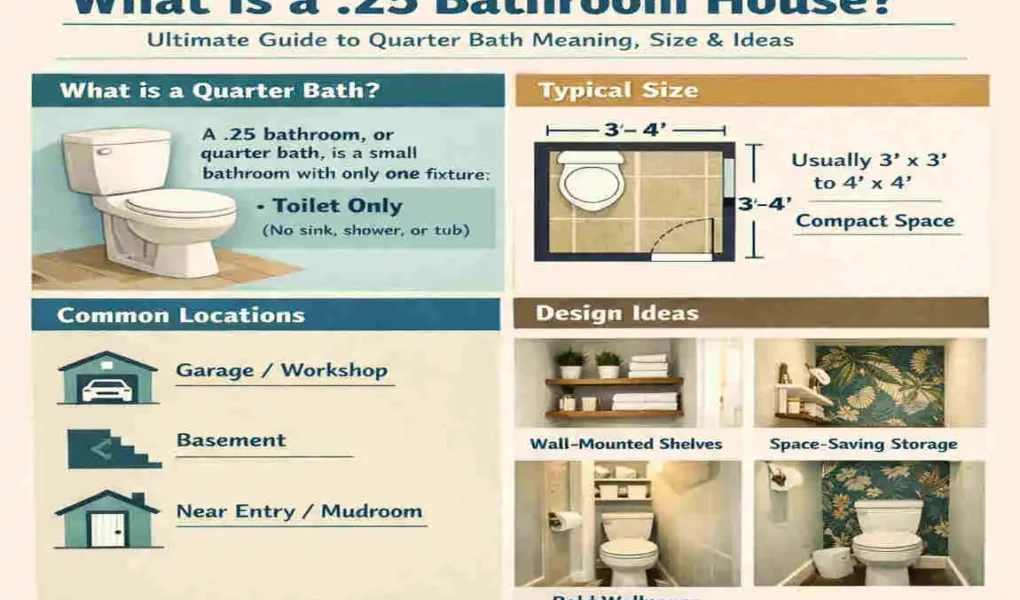
To put it simply, a .25 bathroom—frequently referred to as a quarter bath—is a highly compact room that contains exactly one plumbing fixture: a toilet. There is no sink, no standing shower, and certainly no luxurious soaking tub. It is the absolute bare minimum of what can legally and functionally be called a bathroom space.
While a toilet-only room might sound incredibly basic or even slightly odd at first glance, it is actually a brilliant architectural solution. These ultra-small spaces are perfect for space-strapped homes, tight hallways, tiny basements, or that awkward, unused wedge of space under your staircase. Adding a quarter bathroom to your home saves massive amounts of space and renovation costs compared to building a traditional bathroom. More importantly, it provides a functional convenience that can significantly boost your home’s resale value.
What is a .25 Bathroom?
Quarter Bathroom Meaning Explained
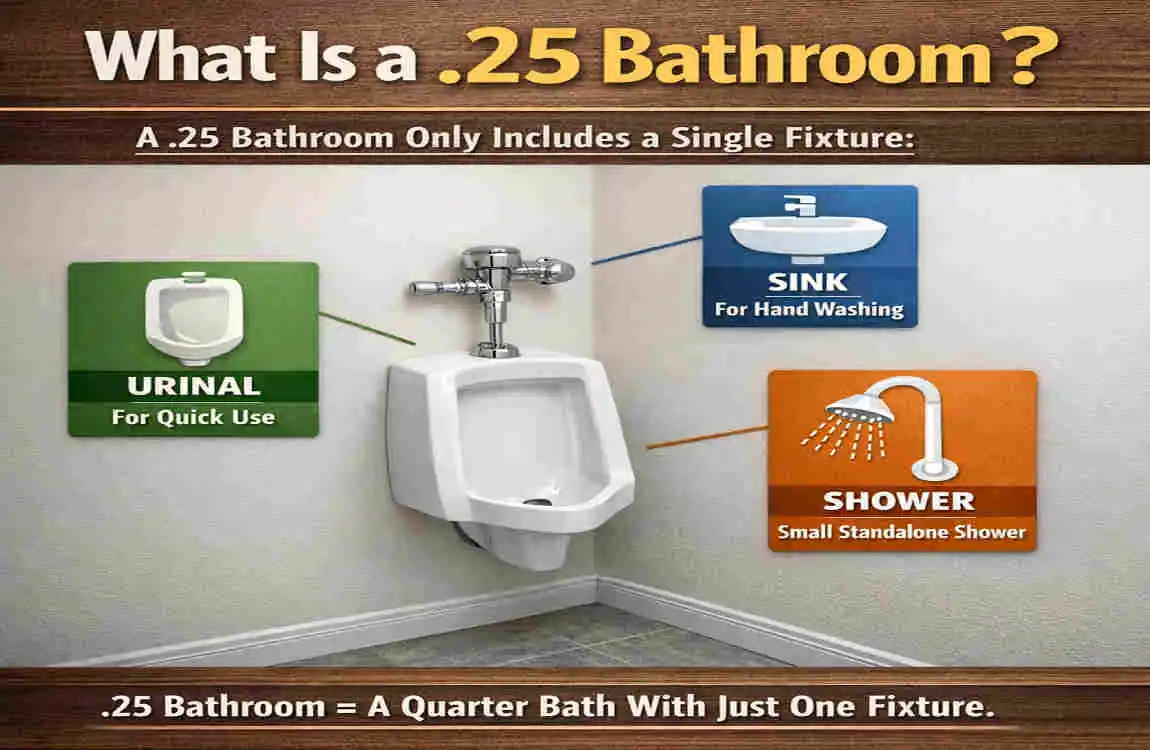
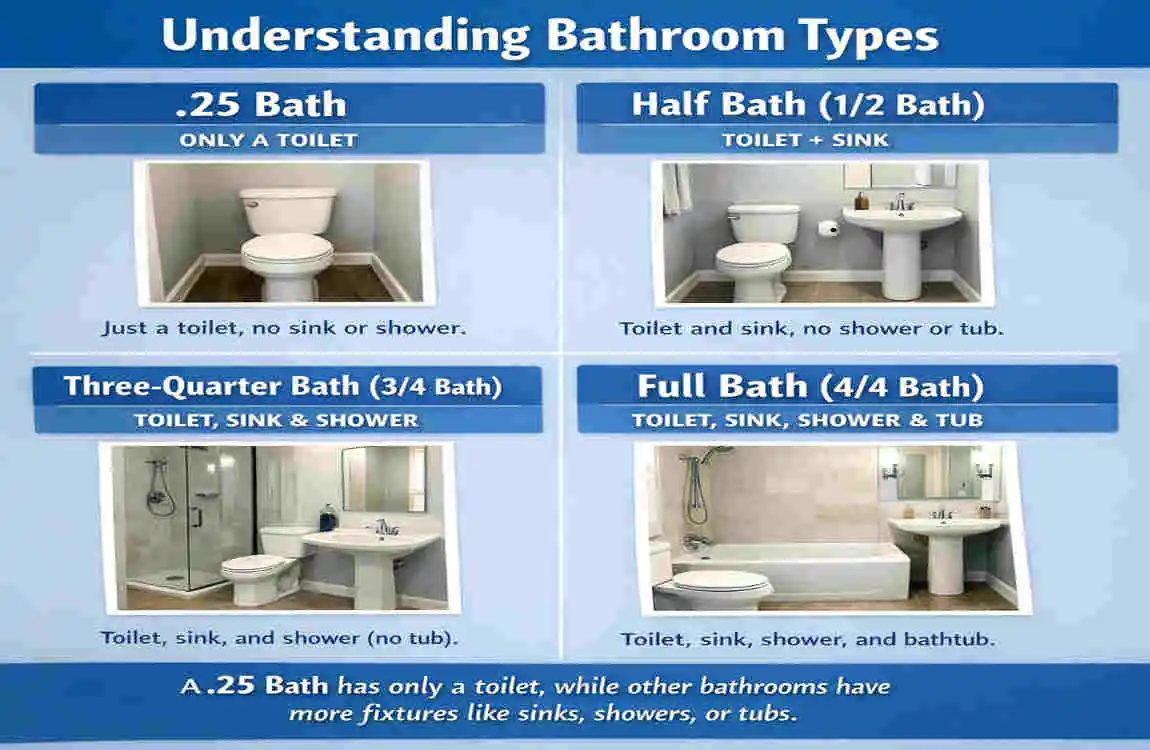
To fully understand the quarter bathroom meaning, you have to break down the shorthand math that real estate agents and architects use to classify home features. In the housing market, bathrooms are categorized by the number of primary plumbing fixtures they contain. The four primary fixtures are a toilet, a sink, a shower, and a bathtub.
If a room has just one of these fixtures—almost always a toilet—it is mathematically considered one-quarter (25%) of a full bathroom. Hence, it earns the title of a .25 bathroom. This compact space exists purely for basic relief and function. Let us contrast this with the other standard bathroom sizes you will typically encounter in homes today.
A .5 bathroom, universally known as a half bath or a powder room, contains two fixtures. This is typically a toilet and a sink. You will usually find half baths on the main floor of a home, designated specifically for guests to use without having to venture into the family’s private bedroom spaces.
A .75 bathroom, or a three-quarter bath, steps things up by offering three fixtures. This usually includes a toilet, a sink, and a standing shower (but no bathtub). These are incredibly common in secondary bedrooms, guest suites, or finished basements.
Finally, a 1.0 bathroom is a full bathroom. It contains all four essential fixtures: a toilet, a sink, a shower, and a bathtub (often combined as a shower-tub combo). These are the primary bathrooms associated with master suites and main family corridors.
Historically, the concept of a toilet-only space isn’t entirely new. If you look back at the history of indoor plumbing, early water closets were small closets with a toilet inside. The sink for washing hands was often located outside the room in a hallway or a nearby bedroom. As plumbing evolved, powder rooms became the standard for guest convenience, but the quarter bath has recently made a major comeback in modern space-saving architecture.
Use this simple table for absolute clarity on how bathrooms are classified:
Bath Type Fixtures Included Common Use Case
.25 (.25 Bathroom) Toilet only , tight hallways, tiny homes, basement corners
.5 (Half Bath) Toilet + sink Main floor guest powder room
.75 (Three-Quarter) Toilet + sink + shower Secondary bedrooms, teen rooms
1.0 (Full Bath) Toilet + sink + shower + tub Master bedroom suite, family bath
Why Call It “.25”?
You may be wondering why we use this rigid fractional system. It comes down to real estate math and standardized property appraisals. A full bathroom equals 1.0 because it offers 100% of standard bathroom functionality. Therefore, each fixture represents 25% functionality.
When an appraiser or a real estate agent assesses your home, they have to be precise. Calling a toilet-only room a “half bath” would be misleading to buyers who expect a sink. By designating it as a .25 bath, agents maintain total transparency about what the buyer is actually getting. It is a highly accurate way to communicate the exact utility of the home’s layout.
Standard Quarter Bath Size
When we talk about the size of a .25 bathroom, we are talking about extreme space efficiency. Because you are only installing one fixture, the footprint required is surprisingly small.
The minimum viable space for a quarter bath usually hovers around 10 to 15 square feet. To visualize this, imagine a rectangle that is 3 feet wide by 4 feet deep, or 3 feet wide by 5 feet deep. This is the size of a small walk-in closet or a standard household pantry. It is just enough room to step inside, close the door, and comfortably use the toilet without your knees hitting the opposite wall.
However, the optimal size for a slightly more comfortable experience is between 11 and 19 square feet. This usually translates to a room width of 2 feet 6 inches to 3 feet 6 inches, and a room depth of 4 feet 6 inches to 5 feet 6 inches. This extra few inches might not sound like much, but it makes a world of difference in preventing the space from feeling like a claustrophobic box.
When planning your quarter bath size, you absolutely must consider local building codes. While codes vary by municipality, most require a minimum clear floor space in front of the toilet. For instance, standard ADA (Americans with Disabilities Act) guidelines often recommend a 30-inch by 48-inch clear floor space to ensure accessibility. Even if you are not building to strict ADA standards for a private home, keeping at least 21 to 24 inches of clear space in front of the toilet bowl is a standard requirement to pass a residential building inspection.
Furthermore, building codes strictly mandate proper ventilation. Because a quarter bath is so small, moisture and odors can become trapped instantly. You will be required to install an exhaust fan that vents directly to the home’s exterior.
Two massive factors will dictate your final dimensions: plumbing access and door swing. If you have thick concrete floors, routing the plumbing might force you to position the toilet in a specific spot, altering your dimensions. Additionally, a traditional door swinging inward will eat up valuable square footage. You must account for the arc of the door, which is why outward-swinging doors or space-saving pocket doors are heavily recommended for a .25 bathroom footprint.
Benefits of Adding a .25 Bathroom
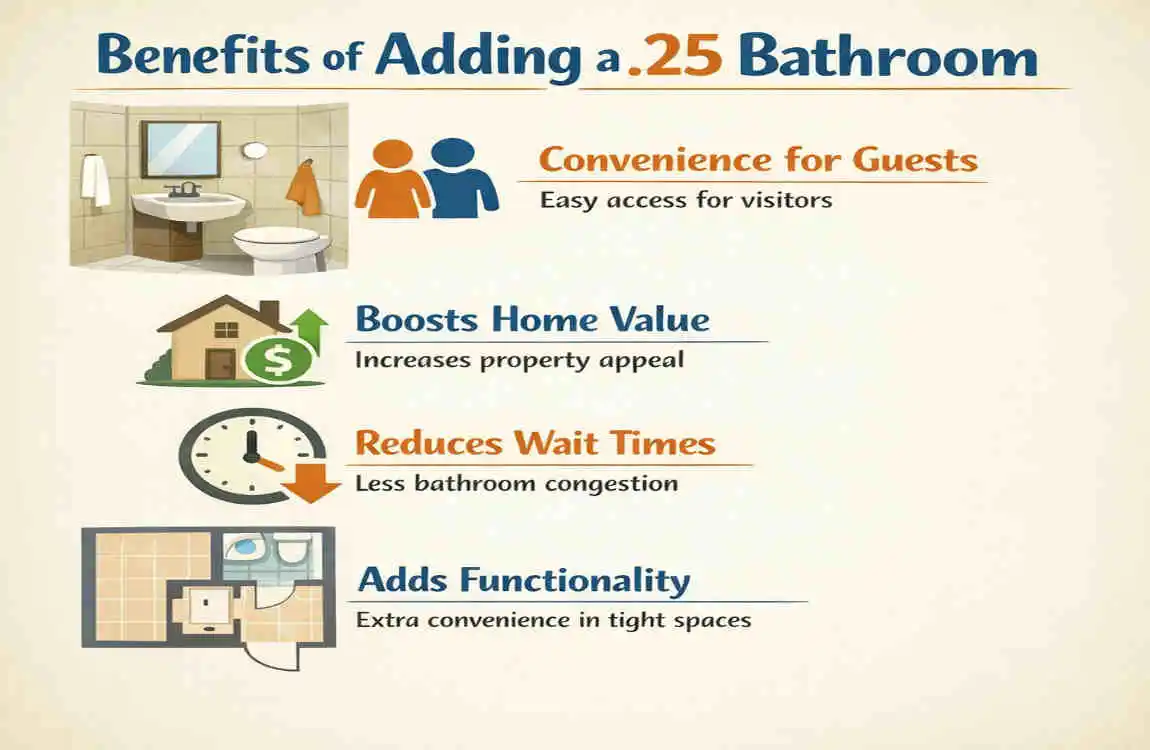
You might be asking yourself, “Is it really worth the trouble to build a room just for a toilet?” The answer is a resounding yes. Adding a .25 bathroom comes with a host of incredible benefits that can transform how your home functions.
Unmatched Space Efficiency: The primary benefit is space efficiency. In tiny homes, older houses with quirky layouts, or dense urban apartments, every single square inch matters. You might not have the 20 to 30 square feet required for a traditional half bath with a sink, but you likely have a 12-square-foot closet under the stairs doing nothing but collecting dust. Converting these dead zones into functional utilities maximizes your home’s usable footprint without requiring an expensive exterior addition.
Significant Cost Savings: Renovating and building bathrooms is notoriously expensive. A standard full bathroom addition can easily cost upwards of $15,000 to $30,000 when you factor in waterproofing, shower pans, tubs, vanities, and extensive tile work. In stark contrast, adding a .25 bathroom typically runs between $3,000 and $7,000. Because you are only buying one fixture, require minimal flooring, and need less complex plumbing, you keep your renovation budget safely in check.
Increases Resale Value: Do not underestimate the power of bathroom counts on a real estate listing. Adding a quarter bath increases your property’s resale value, often yielding a 5% to 10% boost in competitive urban markets. Buyers love convenience. Seeing an extra bathroom option on the main floor or in a finished basement makes your home significantly more attractive than a competitor’s home with fewer facilities.
Ultimate Guest Convenience: If you love hosting parties or having friends over, a quarter bath is a game-changer. It provides essential convenience for your guests without them ever having to invade your private family spaces. They do not have to walk past your messy bedrooms or see the clutter on your main bathroom vanity. It offers basic relief in a private, contained environment.
Quarter Bath Design Ideas
Just because a .25 bathroom is incredibly small does not mean it has to be boring. In fact, tiny spaces are the perfect canvas for bold, expressive design. Because the square footage is so low, you can afford to use Premium materials that would blow the budget in a larger room. Let us explore some fantastic .25 bath ideas.
Layout Essentials
The absolute key to a successful quarter bath is the layout. You want to utilize a linear setup. This means placing the toilet directly against the far back wall, with the entry door located on the opposite wall facing it. This creates a clear, unobstructed walkway. You want to avoid any layout that requires you to squeeze past the toilet to close the door, which creates an immediate, cramped, uncomfortable feeling. Keep the sightlines clean and the floor space clear.
Small Space Hacks
To maximize your limited footprint, employ these clever small-space hacks:
- Wall-Hung Toilets: Instead of a traditional floor-mounted toilet, install a wall-hung toilet. Because the water tank is hidden inside the wall framing, you save several inches of forward projection. It also frees up floor space beneath the bowl, tricking the eye into thinking the room is much larger.
- Pocket Doors: As mentioned earlier, a swinging door is the enemy of a small bathroom. Install a pocket door that slides directly into the adjacent wall. If a pocket door isn’t structurally possible, consider a stylish sliding barn door on the outside of the room.
- Built-in Niches: You don’t have room for bulky storage cabinets. Instead, frame recessed niches into the drywall between the wall studs. These subtle cubbies are perfect for storing extra toilet paper rolls, small air fresheners, or a tiny decorative plant.
Stylish Themes
Since you do not have a sink or vanity to act as the room’s focal point, you must rely on color, texture, and lighting. Here are a few stunning aesthetic themes to consider:
- Modern Minimalist: Lean into the small size by keeping things sleek and uncluttered. Use a stark white wall-hung toilet. Paint the walls a crisp, bright white. Add matte black fixtures, such as a black flush plate and a black toilet paper holder. Install a single, floating wooden shelf above the toilet for a touch of warmth.
- Rustic Retreat: Transform the tiny room into a cozy cabin getaway. Install vertical shiplap paneling on the walls, painted in a soft, earthy green or warm beige. Use rich, reclaimed wood for trim or shelving. Finish the look with warm Edison-bulb sconce lighting and textured stone floor tiles.
- Bright Bohemian: Tiny rooms are perfect for bold patterns! Cover the walls in vibrant, peel-and-stick botanical wallpaper. It creates an immersive, jewel-box effect. Add a beautifully patterned Moroccan rug to the floor, and hang a macrame plant holder in the corner to bring life to the space.
- Luxury Compact: Make the space feel like a high-end hotel amenity. Invest in a smart bidet toilet with a heated seat and automatic lid. Cover one entire wall with a custom-cut mirror; mirrors bounce light around and instantly double the visual depth of the room. Use large-format marble tiles on the floor to reduce grout lines and elevate the luxury feel.
Pro Tip: Remember that when floor space is limited, your only option is to build up. Use vertical storage solutions. Mount shelves high up near the ceiling to draw the eye upward, which makes the ceiling feel taller and the room feel grander.
Cost to Build a Quarter Bath
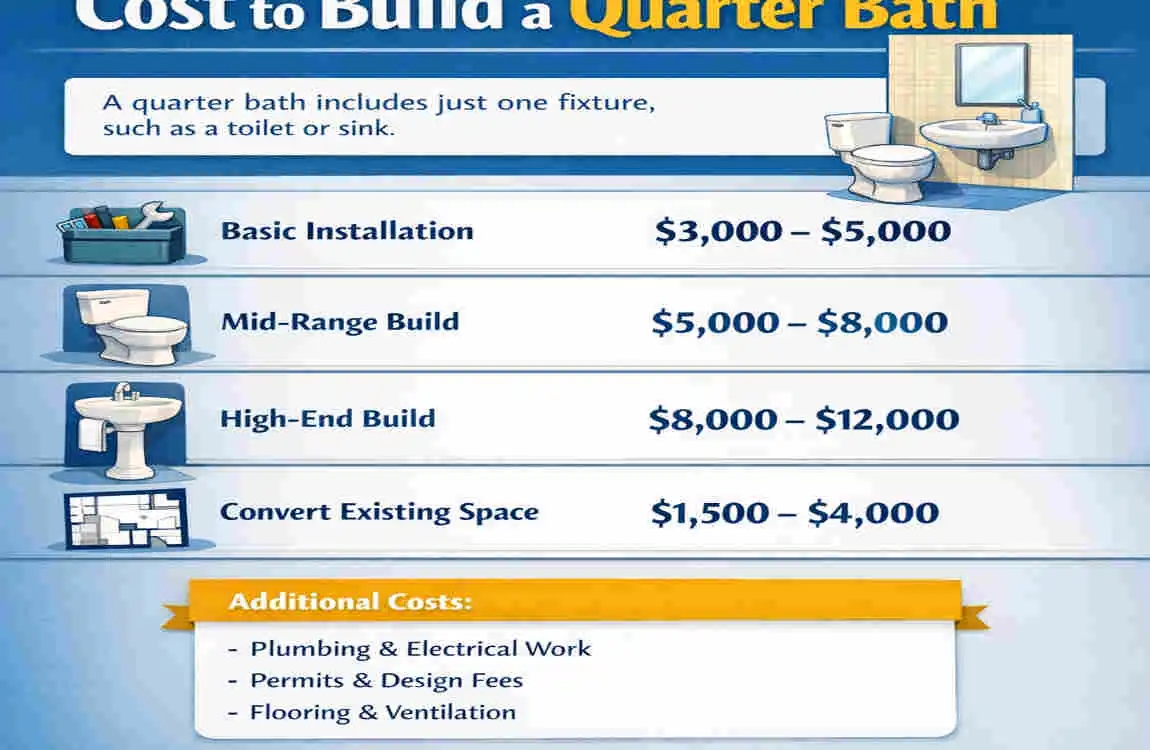
Understanding the financial commitment is a vital step before tearing down drywall. While significantly cheaper than a full bathroom remodel, building a .25 bathroom still requires a solid budget. The exact cost will fluctuate wildly based on your geographic location, the quality of materials you choose, and how close the new room is to your home’s existing plumbing stacks.
Here is a realistic breakdown of average costs you can expect when building a quarter bath from scratch in an existing space:
Renovation Item Average Cost Range (USD)
Toilet & Installation Hardware $800 – $2,000
Plumbing & Electrical Labor $1,000 – $3,000
Framing, Drywall, Flooring, Walls $500 – $1,500
Total Estimated Cost $3,000 – $7,000
The biggest variable in this budget is the plumbing. If you are building this bathroom directly above or adjacent to your home’s main soil stack (the large pipe that carries waste away), the plumbing costs will be on the lower end. However, if you are building this room on a concrete basement slab far away from existing pipes, the plumbers will have to break through the concrete to lay new drain lines, which will quickly push your costs toward the $7,000 maximum.
You must also consider the cost of building permits. Because you are altering the home’s plumbing and electrical systems, local municipalities require permits and inspections. Permit fees generally range from $100 to $500, depending on your city.
Installation Guide: DIY vs. Pro
Building a new room in your house is a thrilling project, but it is essential to know when to grab your tool belt and when to call the experts.
If you are an experienced DIYer, you can certainly tackle the framing, drywalling, painting, and floor installation yourself. This will save you thousands of dollars in contractor labor. However, you must hire a licensed professional for the plumbing and electrical work. Improperly vented plumbing can lead to toxic sewer gases leaking into your home, and poor electrical work in a moisture-prone area is a severe fire hazard.
Step-by-Step Installation Process
If you are managing the project, here is the chronological step-by-step process of how a quarter bathroom comes to life:
- Check Codes and plan Plumbing: Before buying a single piece of lumber, consult your local building authority to understand clearance codes. Have a plumber assess the space to confirm that routing a 3-inch or 4-inch waste pipe to that specific location is actually feasible.
- Frame the Space: Construct the wooden skeleton of the room. This involves building the studded walls and framing the doorway. If you are using a pocket door or a wall-hung toilet, the specific hardware and framing supports must be installed during this phase.
- Install the Rough-Ins: This is where the professionals step in. The plumber will run the water supply line and the waste drain line. The electrician will wire the switches, the overhead light, and the necessary exhaust fan.
- Drywall, Paint, and Finishes: Once the inspector approves the rough-in work, you can close up the walls. Hang the moisture-resistant drywall, apply the mud and tape, sand it smooth, and paint your chosen colors. Next, install your floor tiles or luxury vinyl planks.
- Set Fixtures and Vent: Finally, the plumber returns to set the toilet onto the floor flange and connect the water supply. The electrician finishes the outlet covers and installs the exhaust fan, ensuring it vents properly to the outside roof or wall.
A Crucial Warning: Never cut corners on the ventilation fan. Without a sink to wash hands, people often rely on hand sanitizer in a quarter bath. However, the space is still dealing with human waste. Proper airflow is non-negotiable for odor control and sanitation.
.25 Bathroom vs. Other Options
If you have a bit of flexible space, consider debating between a .25 bath and a slightly larger option. Understanding the differences in size, cost, and functionality will help you make the best decision for your family’s needs.
Here is a quick comparison table to clarify your options:
Feature. 25 Bath (Quarter).5 Bath (Half)1.0 Bath (Full)
Average Size 10 – 20 sq ft 16 – 27 sq ft 40+ sq ft
Relative Cost Low ($3k – $7k) Medium ($5k – $10k) High ($15k+)
Functionality : Basic toilet relief , Guest-ready hand washing , Complete daily hygiene
When to choose a .25 Bath: This is the absolute best option for dense apartments, tiny accessory dwelling units (ADUs), or utilizing the awkward space under a stairwell. If your budget is tight and your space is tighter, this is the winner.
When to choose a Half Bath: If you have 10 extra square feet and a bit more budget, stepping up to a half bath is usually recommended. The addition of a small pedestal sink or corner sink allows for proper handwashing, making it much more comfortable for guests.
When to choose a Full Bath: Full baths require significant square footage and high budgets. You only choose this option when building a new main suite or creating a shared bathroom for multiple daily users who need to shower.
Real Estate Impact
Adding a .25 bathroom dramatically changes how your home is marketed. Real estate listings thrive on numbers. A listing that reads “3 beds, 1.25 baths” sounds infinitely more appealing to a prospective buyer than a simple “3 beds, 1 bath.” It signals to buyers that there is a secondary option, which is a massive selling point for families trying to get out the door on busy weekday mornings.
This is particularly impactful in highly dense, urban real estate markets. For example, in tightly packed, Lahore-style dense areas or busy metropolitan centers like New York or London, square footage is a Premium luxury. Families living in these dense urban environments place a huge Premium on functional utility over sprawling empty space. A cleverly designed quarter bath tucked under the stairs proves to buyers that every inch of the home has been thoughtfully optimized.
Maintenance Tips
Keeping a tiny, toilet-only room fresh and clean requires a specific approach. Because the room is small, odors and dust accumulate rapidly.
First, consider installing a low-flow or dual-flush toilet. Because this fixture is the sole purpose of the room, you want it to be as eco-friendly and water-efficient as possible. It saves money on your water bill and is better for the environment.
Second, you must commit to cleaning weekly. Dust the baseboards, wipe down the toilet exterior, and mop the small floor space. Because ventilation can be a challenge in small enclosed spaces, use mildew-prevention sprays on the walls and baseboards. Always leave the exhaust fan running for at least ten minutes after the room is used to pull out stagnant air and lingering moisture.
FAQ Section
What is a .25 bathroom? A .25 bathroom, commonly known as a quarter bath, is a small room in a house that contains only one plumbing fixture—a toilet. It does not have a sink, shower, or bathtub. The term comes from real estate terminology, where a full bathroom (four fixtures) equals 1.0.
What are the quarter bath size standards? The absolute minimum size for a quarter bath is generally around 10 to 15 square feet (roughly 3 feet by 4 feet). However, local building codes require specific, clear floor space around the toilet, so that dimensions may vary slightly depending on the room’s shape and door swing.
What are some .25 bath ideas on a budget? To decorate a quarter bath affordably, use bold peel-and-stick wallpaper on a single accent wall. Install open floating shelves above the toilet for vertical storage. Focus on high-impact, low-cost upgrades like a stylish toilet paper holder, an elegant mirror to make the space feel larger, and upgraded LED lighting.
Is adding a .25 bathroom worth it? Yes, absolutely. For space savers, it utilizes dead zones (like under stairs) and adds incredible convenience. It is much cheaper to build than a full bathroom and consistently adds measurable resale value to your home.
How do you wash your hands in a .25 bathroom? Since there is no sink, most homeowners provide a decorative dispenser of high-quality hand sanitizer on a small shelf or niche. Alternatively, users must wash their hands in the nearest kitchen or full bathroom after use.
Do I need a permit to build a quarter bath? Yes. Even though it is small, you are adding new plumbing drain lines, water supply lines, and electrical wiring for lighting and ventilation. This requires pulling proper municipal permits and passing safety inspections.