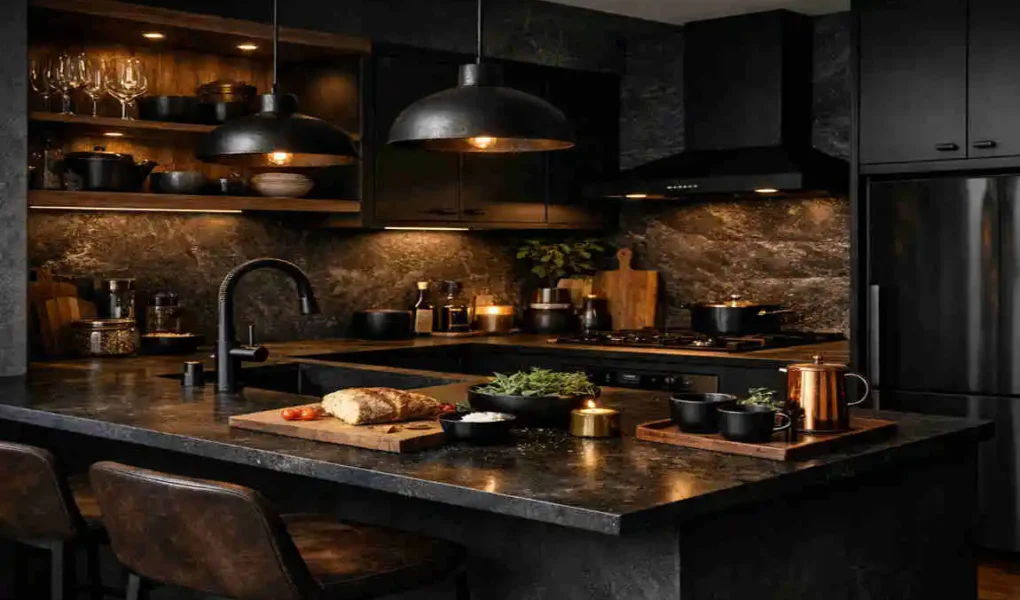
Walking into your kitchen. It’s small, sure, but instead of feeling cramped or cluttered with stark white cabinets that show every splash of spaghetti sauce, you step into a space that feels like a warm embrace. It’s sophisticated, moody, and undeniably cool. The lighting hits a matte black cabinet just right, reflecting off a gold handle. You grab a coffee mug from a charcoal open shelf, and for a moment, you feel like you’re in a high-end boutique hotel, not just the cooking corner of a compact home.
This isn’t just a daydream; it is the reality for thousands of homeowners who are embracing the Dark Kitchen in Small House trend. For years, the golden rule of interior design was “small spaces must be white.” But rules are meant to be broken, especially in 2026. Trends are shifting rapidly, particularly in urban hubs like Lahore, London, and New York, where square footage is at a Premium but style is non-negotiable.
What Is a Dark Kitchen and Why Does It Work in a Small House?
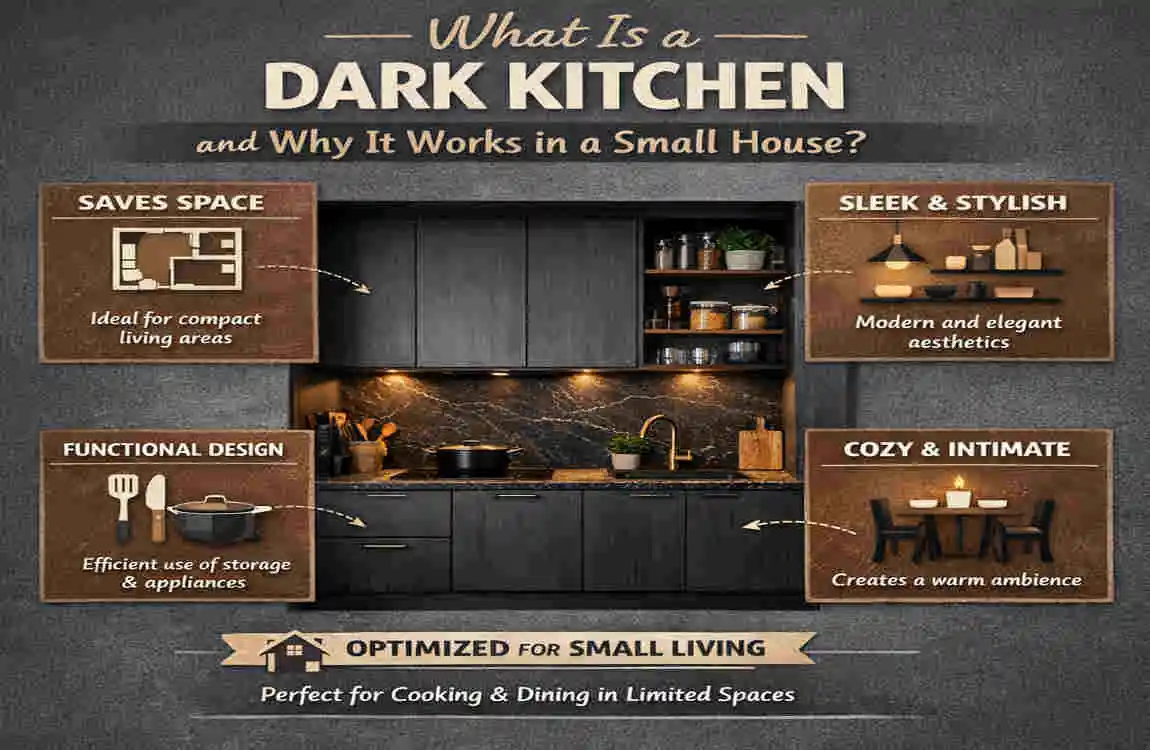
Before we start tearing down cabinets or buying gallons of “Midnight Blue” paint, let’s get on the same page about what a dark kitchen actually is and why—contrary to popular belief—it is a superpower for small homes.
Defining Dark Kitchens: Moody Elegance Explained
A dark kitchen isn’t just about painting everything black. It is a design philosophy that embraces the deeper, richer end of the color spectrum. We are talking about charcoal greys, deep forest greens, navy blues, and arguably the boldest of all, matte black.
The core elements usually include:
- Deep Color Palettes: Cabinets and walls that absorb light rather than reflect it harshly.
- Matte Finishes: Surfaces that don’t shine too much, adding a soft, velvety texture to the room.
- Metallic Accents: This is crucial. When you have a dark background, metals like brass, copper, or gold pop incredibly well, acting like jewelry for your kitchen.
The contrast here is the key. A light kitchen often aims for “clean” and “airy,” which can sometimes drift into “sterile” or “cold.” A dark kitchen, however, aims for coziness, intimacy, and drama. In a small house, where the kitchen often merges with the living area, this “furniture-like” aesthetic blends beautifully with the rest of your decor.
Top Reasons Dark Kitchens Shine in Small Houses
You might be thinking, “But won’t dark colors make my tiny kitchen look even smaller?” Surprisingly, the answer is often no. Here is why:
- The Illusion of Depth: Dark colors blur a room’s boundaries. When corners and shadows are less defined because the walls are dark, the eye has a harder time telling where the room ends. This creates an optical illusion that the walls are receding, potentially expanding the perceived space.
- The “Jewel Box” Effect: Small spaces are great for dramatic statements. A dark theme turns a cramped kitchen into a deliberate, luxurious feature. It feels expensive and curated, rather than just “small.”
- Low-Maintenance Appeal: Let’s be real—cooking is messy. In a compact cooking zone, splashes happen. Dark cabinets and backsplashes are much more forgiving of fingerprints, steam stains, and minor scuffs than high-gloss white surfaces.
- Trend Momentum: Pinterest reports a staggering 55% increase in pins for “dark small kitchen” designs in 2026. This means if you decide to sell your home, a stylish dark kitchen is currently a massive selling point.
Pros vs. Cons Table
To give you a balanced view, let’s look at the trade-offs.
Aspect Pros Cons
Space Feel creates an expansive, infinite-depth illusion. It can feel “cave-like” if the lighting is ignored.
Maintenance : Forgiving of splashes and fingerprints. Dark surfaces can show dust more easily than white.
Style Factor: High-end, luxurious, and trendy. Requires commitment; harder to paint over if you change your mind.
Atmosphere Cozy, intimate, and warm. It can feel heavy if the rest of the house is ultra-bright.
Planning Your Dark Kitchen in a Small House: Essential Steps
You can’t just wing a dark kitchen transformation. Because dark colors are so commanding, they require more planning than a neutral palette. Here is your roadmap to success.
Measure and Assess Your Space
Before you buy a single handle or tile, you need to know exactly what you are working with. In a small house, every inch matters.
- Get the Right Tools: Don’t rely on a flimsy tape measure that bends. Invest in a cheap laser measurer.
- Check the Footprint: Most small house kitchens fall between 50 and 100 square feet. Knowing this helps you buy the exact amount of paint or tile, saving money.
- Identify Natural Light: Note where your windows are. If you have zero natural light, your artificial lighting plan becomes the most critical part of the project.
Choose a Color Palette
“Dark” doesn’t have to mean pitch black. You need to pick a shade that resonates with you.
- The Core Shade: Will it be Navy (classic), Forest Green (organic), or Charcoal (modern)?
- The Accent: You need warmth to balance the cool dark tones. Wood (walnut or oak) is a perfect companion.
- The Pop: Decide on your metals. Brass warms up the space, while Chrome keeps it cool and sleek.
Budget Breakdown
You can achieve this look on a shoestring or a luxury budget. For a typical small-house DIY setup, aim for $2,000-$5,000.
- Paint: $200- $400 (Do not skimp here; get high-quality, scrub-resistant paint).
- Hardware: $150-$300 (New handles change everything).
- Lighting: $300-$600.
- Cabinets/Refacing: The remaining budget.
Lighting Audit
This is the make-or-break step. Dark surfaces absorb light, so you need to put back what the color takes away. You need a layered strategy:
- General Light: To see the room.
- Task Light: To chop vegetables safely.
- Mood Light: To make it look pretty at night.
Pro Tip: Before you start buying, use free online tools like RoomSketcher or HomeByMe. You can build a virtual model of your kitchen and paint it black to see if you actually like the vibe before committing!
Stunning Dark Kitchen Ideas for Small House Layouts
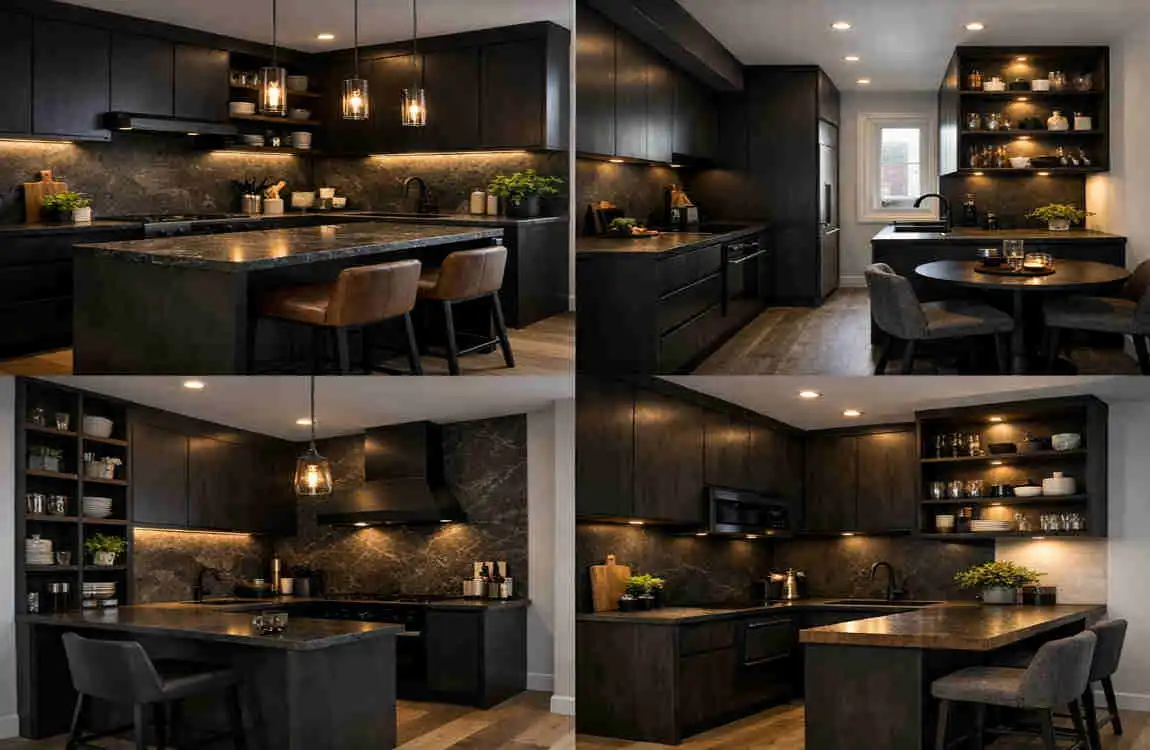
Now for the fun part. Let’s look at specific design concepts that turn a dark kitchen in a small house into a masterpiece. These ideas are tailored to maximize style without sacrificing function.
Minimalist Monochrome Magic
If you hate clutter, this is for you. The monochrome look uses different shades of the same dark color to create a seamless flow.
- The Setup: Imagine matte-black lower cabinets paired with floating shelves in ebony wood, rather than heavy upper cabinets. This keeps the sightlines open, making the room feel wider.
- Why It Works: By removing the upper cabinets, you stop the room from feeling boxed in.
- Real-World Example: We saw a 6×8 ft galley kitchen transformation where the owner painted the walls and cabinets the same shade of “Iron Ore.” It blurred the lines completely, and the floating shelves became a gallery for their white dishware.
Velvet Touch with Textured Backsplashes
Texture is the secret ingredient that keeps a dark room from looking flat or boring.
- The Setup: Combine smooth, matte charcoal cabinets with a glossy, textured backsplash. Think handmade Zellige tiles in dark green or black, catching the light unevenly.
- Add Softness: Incorporate emerald green velvet stools if you have a small breakfast bar.
- Visual Impact: The contrast between the matte cabinets, the shiny, bumpy tiles, and the soft velvet creates a rich, sensory experience. It screams luxury.
Industrial Edge for Urban Small Houses
For those living in city apartments or converted lofts, the industrial look is timeless and edgy.
- The Setup: This involves darker greys rather than pure blacks. Pair dark grey cabinets with exposed brick walls (you can use high-quality wallpaper if you don’t have real brick).
- The Accents: Use copper pipes for shelving brackets or exposed plumbing.
- Space Saver: Incorporate a foldable island made of reclaimed wood and black metal piping. It can be tucked away when not in use.
The Cozy Corner Nook
Sometimes a small kitchen has an awkward corner. In a dark theme, this becomes a sanctuary.
- The Setup: Build a small bench seat into the corner using dark wood. Surround it with floor-to-ceiling dark cabinetry.
- Lighting: install warm under-cabinet LEDs right above the nook.
- Vibe: It creates a “coffee shop” feel right in your home. It’s the perfect spot to curl up with a morning brew while the rest of the house is asleep.
Scandinavian Dark Twist
Scandi design is usually white and wood, but the “Dark Scandi” trend is taking over in 2026.
- The Setup: Use a very deep, desaturated blue-grey for the cabinets. Pair this with light ash wood countertops and flooring.
- Glass Elements: Use smoky glass on a few upper cabinet doors. This reflects light but maintains the moody theme.
- Balance: The light wood prevents the dark blue from feeling too heavy, maintaining that Nordic balance of nature and simplicity.
Luxury Spa Vibe
Who says a kitchen can’t feel as relaxing as a spa?
- The Setup: Go for “Black Ink” cabinets but pair them with a spectacular countertop featuring heavy marble veining. Whether it is real marble or a quartz lookalike, the white veins on a black background look like art.
- Fixtures: Use a matte black faucet to keep it sleek.
- Greenery: Add a few orchids or peace lilies. The green leaves against the black stone are visually arresting.
Budget Bohemian
You don’t need a renovation loan to do this. The Boho look embraces imperfection.
- The Setup: Buy second-hand cabinets or keep your old ones and paint them a dark olive green.
- The Decor: Add macramé plant hangers, thrifted rugs with deep red patterns, and open shelving filled with mismatching jars.
- Why It Works: The darkness grounds the eclectic mix of items, making the clutter look curated rather than messy.
Best Materials and Fixtures for a Dark Kitchen in a Small House
Choosing the right materials is critical. In a dark kitchen, dust and scratches show up differently than in a white one. Here is a cheat sheet for the best materials to use.
- Cabinets:
- Material: Look for Acrylic Matte Black or high-quality laminate.
- Why: Acrylic is incredibly durable. Matte finishes are essential because high-gloss black shows every single fingerprint and scratch. Matte absorbs the light and hides the smudges better.
- Countertops:
- Material: Quartz in Obsidian or Charcoal.
- Why: Quartz is non-porous and heat-resistant. In a small kitchen, you don’t have much counter space, so you might be putting hot pans down frequently. Dark quartz is hardy and sleek. Avoid porous dark granite unless you seal it religiously.
- Backsplashes:
- Material: Subway tiles in Gunmetal or dark mirror tiles.
- Why: Dark mirror tiles are a secret weapon. They maintain the dark color scheme but reflect the room, doubling the visual space.
- Hardware:
- Material: Brushed Brass or Gold.
- Why: You need contrast. If you use black handles on black cabinets, they disappear. Gold or brass acts as a highlight, guiding the eye and adding warmth.
- Appliances:
- Choice: Black Stainless Steel.
- Why: Standard silver stainless steel can look too “bright” and jarring in a moody kitchen. Black stainless blends in. Look for slimline appliances (like 24-inch fridges) to save precious floor space.
Vendor Recommendations
If you are hunting for these items:
- Local Options (e.g., Pakistan): Markets like Liberty Market or Main Boulevard in Lahore are goldmines for custom cabinetry. You can often get custom wood cabinets made for a fraction of the price of imported ones.
- Global Options: IKEA is still the king of budget renovations. Their KUNGSBACKA line (made from recycled bottles) offers a stunning matte black finish. You can do a full IKEA hack of a small kitchen for under $1,000 if you DIY the assembly.
Lighting Hacks to Brighten Your Dark Kitchen in a Small House
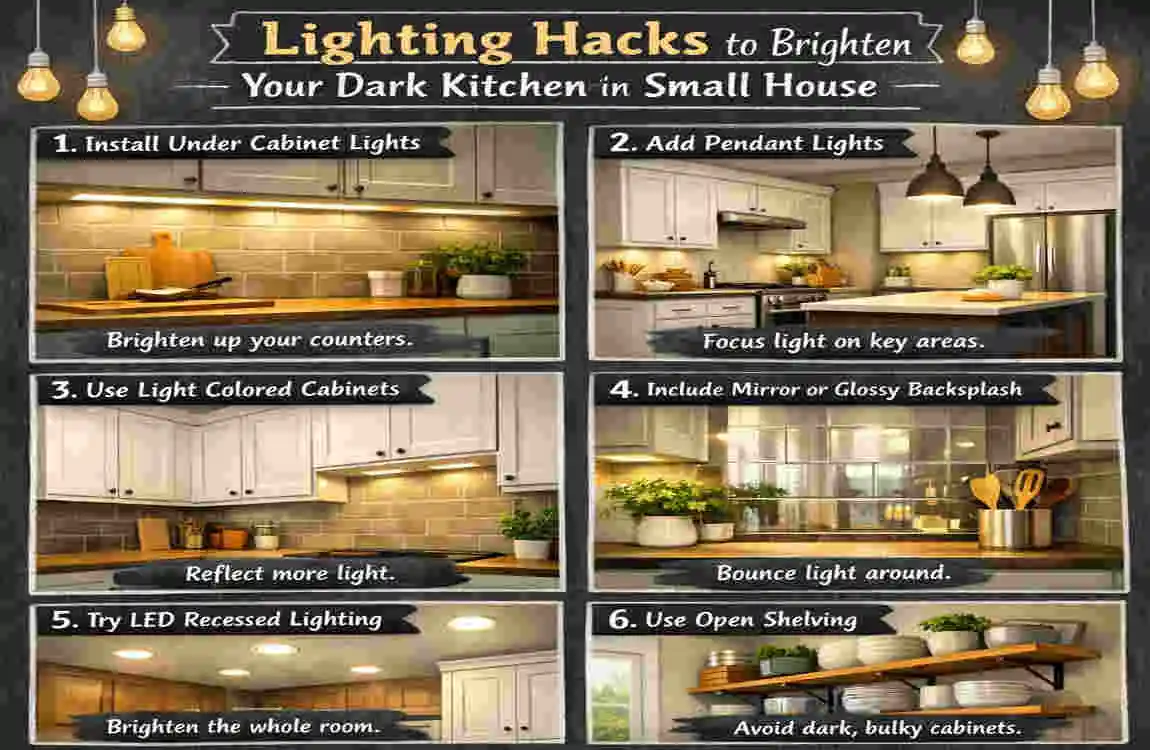
We cannot stress this enough: Lighting is everything. If you paint a small room black and install a single lonely bulb in the ceiling, it will feel like a dungeon. You need to layer your light.
Ambient Lighting (The Foundation)
This is your main light. In a small dark kitchen, avoid a single central fixture if possible. Instead, use recessed LEDs (pot lights) spaced evenly across the ceiling. This washes the dark walls with light, eliminating shadowy corners.
Task Lighting (The Function)
You cannot chop onions in the dark! Install LED strip lights under every single upper cabinet.
- Kelvin Matters: Choose a Warm White (2700K-3000K) bulb. Cool white (4000K+) can make dark walls look blue and clinical. Warm light makes the dark paint look rich and cozy.
Accent Lighting (The Jewelry)
This adds personality. Hang two pendant lights over your sink or small prep area. Go for glass or open-cage metal designs so they don’t block the view.
Smart Tech
Install motion-sensor strips inside your deep pantry cupboards and drawers. Since the interiors will be dark, having a light pop on when you open a drawer is a game-changer. It’s a small luxury that makes a huge difference in daily use.
Real-Life Case Studies: Dark Kitchens Thriving in Small Houses
Theory is great, but let’s look at how real people have pulled this off.
Lahore Apartment Glow-Up
The Challenge: A 60 sq ft galley kitchen in a dense urban apartment block. No direct sunlight. The Solution: The owners ripped out the beige glossy cabinets. They installed locally made plywood cabinets painted in a deep “Midnight Teal.” They used a mirrored backsplash to bounce light from the hallway into the kitchen. The Cost: Approximately $800 (using local labor and materials). The Result: The kitchen went from a forgotten corridor to the most Instagrammable spot in the house. The mirrored splashback made the narrow space feel twice as wide.
Tiny UK Cottage Inspiration
The Challenge: An old, uneven cottage kitchen with low ceilings. The Solution: The owners embraced the “cave” feeling but made it cozy. They used black shiplap walls and open oak shelving. They removed the kitchen door to let light from the living room into the kitchen. The Takeaway: You can adapt this for any small home. Removing physical barriers (like doors) and using vertical lines (like shiplap) draws the eye up, counteracting the dark colors.
Common Mistakes to Avoid in Dark Kitchen Small House Setups
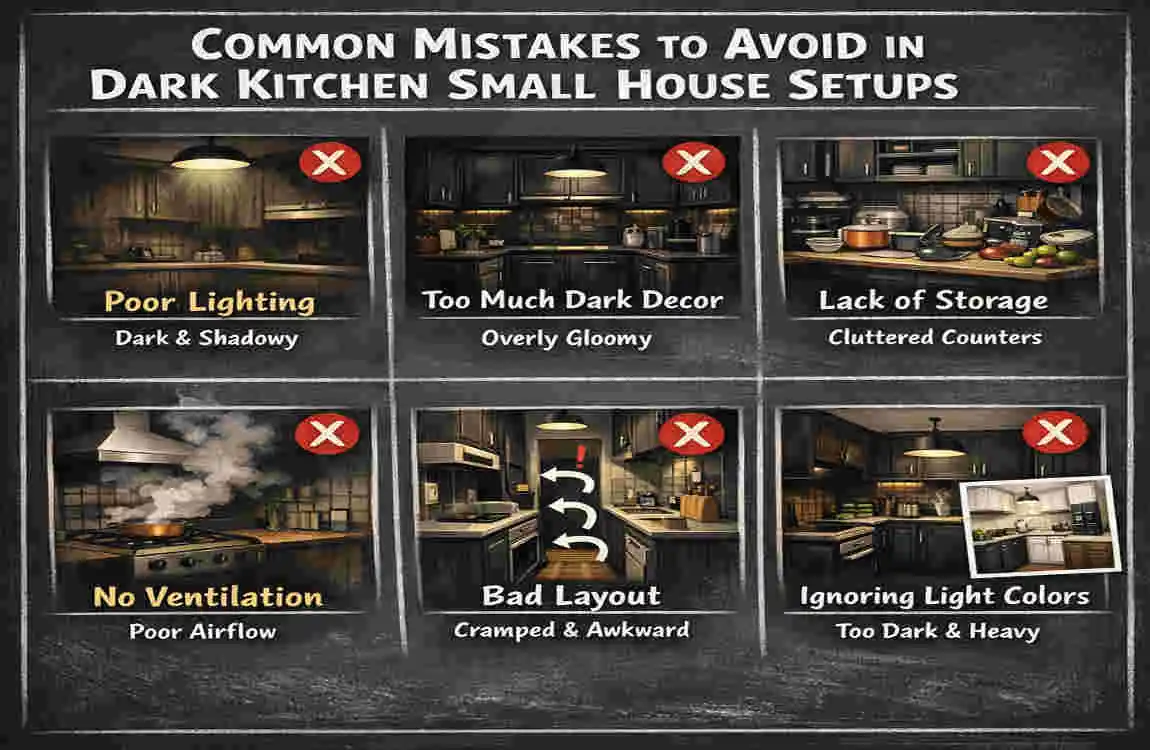
Even with the best intentions, things can go wrong. Here are three traps to avoid.
- Mistake 1: Over-darkening without Mirrors. If you paint the ceiling, walls, and floor black, you will lose your depth perception.
- Fix: Keep the ceiling white or a very light grey to keep the “lid” off the box. Use mirrors or reflective tiles to break up the solid blocks of color.
- Mistake 2: Ignoring Ventilation Dark matte surfaces hide grease well—too well. You might not see the buildup until it is too late.
- Fix: Ensure you have a strong range hood. Because dark kitchens are often small, grease settles quickly. Wipe down your cabinets weekly with a microfiber cloth, even if they look clean.
- Mistake 3: Cheap Paints that Chip. Dark paint shows chips much more than white paint. If you bump a white wall, the white plaster underneath hides it. If you bump a black wall, the white plaster screams at you.
- Fix: Use a high-quality enamel or “cabinet-specific” paint that hardens to a shell. It is worth the extra $50 per can.
Budgeting and DIY Tips for Your Dark Kitchen in a Small House
Ready to start? Let’s talk numbers. Here is a rough breakdown of what this renovation might cost you, depending on your ambition.
Budget TierKey FeaturesTotal Cost (Approx.)
$500 Paint (Walls & Cabinets), New Handles, Peel-and-Stick Tiles Basic Refresh
$2,000 New Plywood Cabinets (Local), LED Lighting, Backsplash, Faucet , Full Setup
$5,000+ Custom Quartz Countertops, High-End Appliances, Premium Hardware Luxury Overhaul
DIY Steps to Get Started:
- Prime Your Walls: Dark paint needs a grey-tinted primer. Do not use white primer; it will take 5 coats to cover.
- Peel-and-Stick: Use peel-and-stick vinyl tiles for your backsplash if you are renting or on a tight budget. They look incredibly real these days.
- Light It Up: install battery-operated puck lights under your cabinets immediately. It is the cheapest way to see if you like the dark vibe.
FAQ: Dark Kitchen in Small House
Can dark kitchens feel spacious? Absolutely. With the right lighting and reflective surfaces (like mirrors or glossy tiles), dark walls recede, making the room feel larger and more infinite.
Best paint brands? Look for brands like Dulux, Farrow & Ball, or Nippon Paint. Their matte finishes are durable and offer rich, deep pigments that cheaper brands cannot match.
Are dark kitchens hard to keep clean? They hide stains better than white kitchens, but dust shows up more easily. A quick wipe down with a microfiber cloth once a week keeps them looking pristine.