We have all been there. It’s 7:00 AM on a Monday. You are trying to brush your teeth, your partner is trying to shower, and maybe the kids are banging on the door. The traditional bathroom setup often feels like a traffic jam in a phone booth.
These clever dividers are becoming a massive trend in interior design, offering a game-changing solution for cramped spaces. According to recent design stats from platforms like Houzz, interest in flexible living spaces has skyrocketed, with homeowners seeking ways to maximise every square inch. Bathroom partitions for home offer enhanced privacy, incredibly easy installation, and a budget-friendly way to upgrade your space without the dust and noise of a full remodel.
Why Choose Bathroom Partitions for Home?
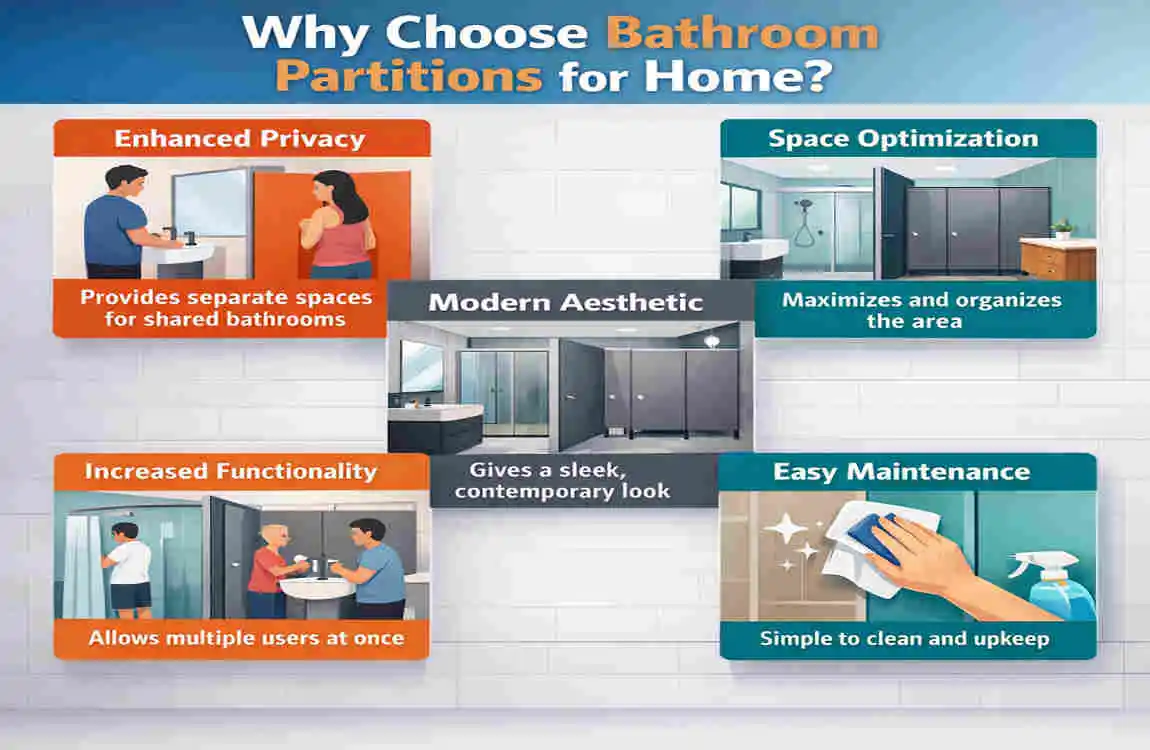
The way we look at our living spaces has changed dramatically over the last few years. The “big boom” of massive suburban homes is slowly giving way to a preference for smarter, more efficient urban homes and compact renovations. As real estate trends shift toward maximising utility in smaller footprints, the rigid, traditional wall is starting to feel a bit… permanent.
This is where the flexibility of bathroom partitions for the home shines.
The Rise of Flexible Living
We are seeing a significant rise in demand for partitions in urban apartments and ensuite renovations. Why lock yourself into a floor plan when you can have a layout that breathes? A partition allows you to separate the toilet from the vanity, or the shower from the dressing area, creating distinct “zones” within a single room.
Key Advantages Breakdown
Incredible Space Efficiency: Traditional walls eat up floor space. A standard stud wall with drywall is roughly 4.5 to 5 inches thick. That might not sound like much, but in a small 5×8 bathroom, every inch counts. Bathroom partitions in homes are often less than an inch thick. Plus, because they aren’t permanent construction, they maintain the room’s visual flow, making it feel larger than it actually is.
Privacy Without Isolation One of the biggest fears people have about dividing a small room is losing light. If you build a wall, you block the window. However, many space-saving bathroom dividers—like frosted glass or slat screens—boost privacy significantly without sacrificing natural light or airflow. You get the seclusion you need without feeling like you are in a cave.
Massive Cost Savings Let’s talk money. A full remodel involving framing, drywall, painting, and tiling can easily run into the thousands. In contrast, installing bathroom partitions for a home is roughly 70-80% cheaper than a structural remodel. It is a high-impact upgrade for a low-impact price.
Versatility These aren’t just for the master bath. They are perfect for powder rooms, separating a laundry nook within a bathroom, or creating a private changing area in a guest bath.
Comparison: Partitions vs The Alternatives
To give you a clearer picture of why this is the superior choice for modern living, let’s look at how bathroom partitions for home compare to flimsy curtains or heavy walls.
Feature: Bathroom Partitions for Home Shower Curtains Full Structural Walls
Privacy Level High (Visual & Physical) Medium (Can blow open/flimsy) Maximum (Sound & Sight)
Install Time 1-2 Hours (Weekend project) 10 Minutes Days or Weeks
Durability High (Glass, wood, metal) Low (Mould, tears easily) Very High
Light Flow Excellent (Depending on material) Poor (Usually blocks light) None (Blocks light completely)
Estimated Cost $50 – $500 $20 – $100 $1,000+
As you can see, space-saving bathroom dividers for modern homes hit that “sweet spot” between functionality, cost, and aesthetics.
Types of Space-Saving Bathroom Partitions for Home
Before we jump into specific products, it is helpful to understand the different styles available. The market is flooded with options, but they generally fall into four main categories. Knowing these will help you decide which bathroom partitions for home fit your specific design vibe.
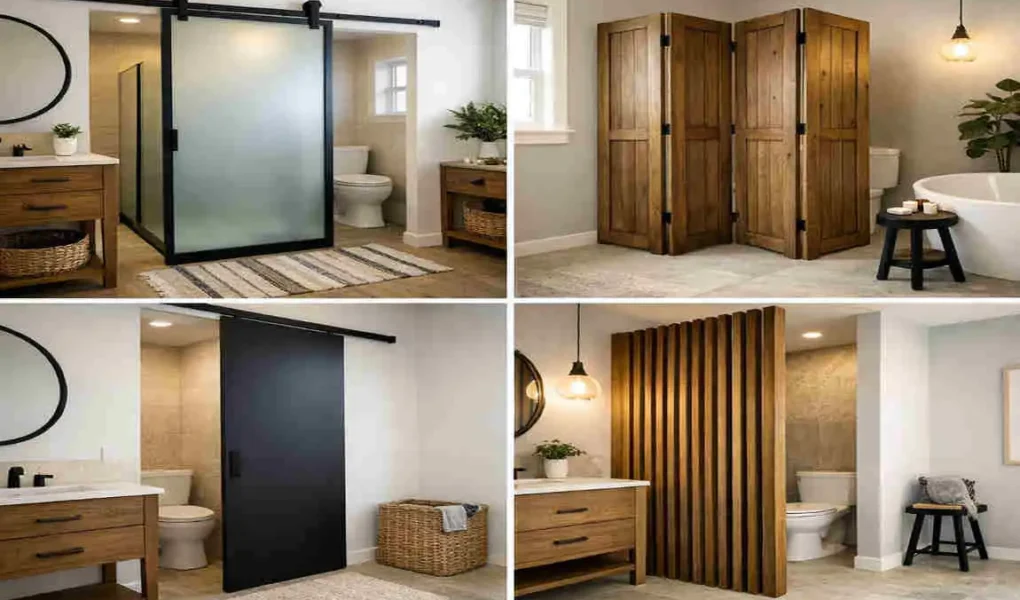
Sliding or Barn Door Partitions
If you love that rustic-modern or farmhouse aesthetic, this is your winner. These partitions slide along a track mounted to the ceiling or wall. Because they slide rather than swing open, they save an incredible amount of floor space—roughly 30-50% more than a traditional swinging door. They are substantial, offering great sound privacy.
Folding Screen Dividers
These are the ultimate renters’ hack. Folding screens are portable, require zero installation (usually), and can be moved aside when not in use. They add an artistic flair to the room. While they don’t offer ceiling-to-floor privacy, they are perfect for visual screening, like hiding a toilet or a hamper area.
Frameless Glass Panels
For those who want a sleek, spa-like atmosphere, frameless glass is the way to go. These create an illusion of openness because they don’t break the visual line of the room. They are humidity-resistant and easy to clean. If modesty is a concern, you can opt for frosted, etched, or textured glass bathroom partitions for your home.
Fabric or Bamboo Privacy Screens
This category is for bohemian souls and budget-conscious shoppers. Bamboo offers a natural, warm texture that resists moisture well. Fabric screens can be hung from tension rods or ceiling tracks. They are soft, absorb sound, and are arguably the most affordable DIY bathroom partition solution available.
Top 7 Best Bathroom Partitions for Home in 2026

We have scoured the market, read the reviews, and tested the durability to bring you this definitive ranked list. Whether you are looking for luxury or a quick fix, here are the best bathroom partitions for the home available this year.
Best Overall: The “Rustic Chic” Mudroom Sliding Barn Door Kit
Ideal For: En-suites and Master Baths.
This is the gold standard for permanent, stylish separation. This kit usually comes with a solid wood door (or a paintable composite) and all the black matte hardware needed for the track. It instantly elevates the room’s value. The sliding mechanism is smooth and silent, perfect for late-night bathroom trips where you don’t want to wake your partner.
- Pros: heavy-duty privacy, adds property value, excellent sound dampening.
- Cons: requires drilling into studs, higher price point.
- Space-Saving Tip: Install this on the outside of a small powder room to reclaim the space usually occupied by the door swing.
Best Budget: IKEA RISÖR Room Divider Style (Natural Wood)
Ideal For: Apartments and Renters.
Inspired by the classic Japanese Shoji screen, this divider style features a lightweight wood frame with semi-translucent panels (often made of paper or a plastic composite). It allows light to filter through beautifully while obscuring the view. It is freestanding, meaning you can buy it, unfold it, and be done.
- Pros: extremely affordable, portable, and no installation required.
- Cons: not waterproof (don’t put it in the shower), less stable than mounted options.
- Space-Saving Tip: Fold it flat and slide it behind a cabinet when you want the bathroom to feel open again.
Best for Small Spaces: Frosted Glass Accordion Panel
Ideal For: Wet Rooms and Tiny Bathrooms.
This is a brilliant engineering feat for tiny homes. It is a wall-mounted panel made of tempered frosted glass that folds against the wall like an accordion when not in use. When extended, it creates a rigid, water-resistant barrier. At only 24-36 inches wide, it is one of the most effective small-bathroom partition ideas available.
- Pros: waterproof, modern look, disappears when not needed.
- Cons: requires professional-level mounting to ensure safety.
- Space-Saving Tip: Use this in place of a shower curtain to instantly make a small tub area look twice as big.
Best Luxury: Custom Frameless Pivot Screen
Ideal For: Modern Renovations.
If you have a bit more room in the budget, a custom frameless pivot screen is the height of luxury. Made from thick, heavy tempered glass with minimal metal hardware, these screens pivot 180 degrees. They provide a high-end hotel feel. The glass is usually treated to repel water spots, making maintenance easier.
- Pros: stunning aesthetics, highly durable, increases light flow.
- Cons: expensive, heavy (needs strong wall support).
- Space-Saving Tip: Because it pivots, you can push it inward to dry over the drain, keeping your floor dry.
Best DIY Friendly: Tension Rod Fabric Partition
Ideal For: Temporary Solutions and Dorms.
Sometimes, the best bathroom partitions for home use are the simplest ones. This involves a heavy-duty tension rod (no drilling!) and a weighted, mildew-resistant fabric curtain. It is not just a shower curtain; it is a room divider you can place anywhere between two walls.
- Pros: cheapest option, installs in 5 minutes, vast design choices.
- Cons: provides visual privacy only (no sound blocking).
- Space-Saving Tip: Choose a light-colored fabric to reflect light and keep the space feeling airy.
Best Eco-Friendly: Sustainable Bamboo Folding Screen
Ideal For: Nature-Inspired Baths.
Bamboo is naturally resistant to humidity, making it a perfect candidate for the bathroom environment. These screens are lightweight, sustainable, and bring a spa-like, organic warmth to cold tiled bathrooms. They allow decent airflow while effectively blocking sightlines.
- Pros: eco-friendly, mould-resistant properties, warm aesthetic.
- Cons: gaps in the bamboo weave can reduce total privacy.
- Space-Saving Tip: Use this to hide a washer/dryer stack in a bathroom laundry nook.
Best Smart Option: Motorised Privacy Screen
Rating: Ideal For: Tech Enthusiasts.
Welcome to the future. These are retractable screens that mount to the ceiling and drop down via a remote control or smartphone app. They are usually made of high-tech fibreglass fabric. It is the ultimate “now you see it, now you don’t” solution for home bathroom partitions.
- Pros: total flexibility, “wow” factor, integrates with smart homes.
- Cons: most expensive option, requires an electrical hookup.
- Space-Saving Tip: Since it rolls into the ceiling, it takes up effectively zero floor space.
DIY Bathroom Partition Ideas for Home
Are you handy with a drill or enjoy a good weekend project? Building your own partition can be rewarding and allows for total customisation. Here are five DIY bathroom partitions for home projects you can tackle.
Pallet Wood Sliding Divider
This is a favourite for rustic decor lovers.
- Materials: Reclaimed pallets, sanding block, wood stain, barn door hardware kit.
- Steps: Disassemble the pallets and sand the wood thoroughly to prevent splinters. Join the planks together vertically using cross-braces on the back. Apply a water-resistant sealant (crucial for bathrooms). Mount the track to a header board on your wall, attach the rollers to your new door, and hang it up. It adds massive character for very little cash.
Tension Pole with Macrame Curtain
A 30-minute hack perfect for renters who cannot drill holes.
- Materials: Two vertical tension poles (floor-to-ceiling), a macrame hanging.
- Steps: Install the tension poles securely between the floor and ceiling. Attach the macrame curtain between the poles using S-hooks or ties. This creates a beautiful, semi-transparent visual break that separates the toilet area without blocking light.
PVC Pipe Framed Screen
Do not let “PVC” scare you; with paint, it looks like industrial pipe.
- Materials: PVC pipes, elbow connectors, spray paint (matte black or gold), and waterproof fabric.
- Steps: Cut PVC to your desired height and width. Assemble a rectangular frame using the elbows. Sew a loop in your fabric and slide it onto the top pipe before closing the frame. Spray paint the plastic to look like metal. This is incredibly lightweight and waterproof.
Repurposed Bookcase Partition
This combines storage with privacy—a huge win for small bathrooms.
- Materials: Tall, narrow open shelving unit (like IKEA KALLAX), L-brackets.
- Steps: Place the shelving unit perpendicular to the wall to act as a divider. Crucial: You must anchor it to the wall and floor using L-brackets so it cannot tip over. Fill the shelves with rolled towels, plants, and baskets. You now have a wall that holds your stuff!
Magnetic Fabric Panels
A clever, removable solution for metal door frames or corner beads.
- Materials: Fabric panels, heavy-duty magnets, hem tape.
- Steps: Sew strong magnets into the hem of a fabric panel. If you have metal corner beads under your drywall (common in newer homes), the magnets might snap right to the corner of the wall. If not, attach a small adhesive metal strip to the ceiling. The fabric snaps on and off for easy washing.
Safety Note: For all DIY bathroom partitions, ensure you use water-resistant sealants on wood and secure all tall structures to prevent tipping.
Installation Guide: How to Install Bathroom Partitions for Home
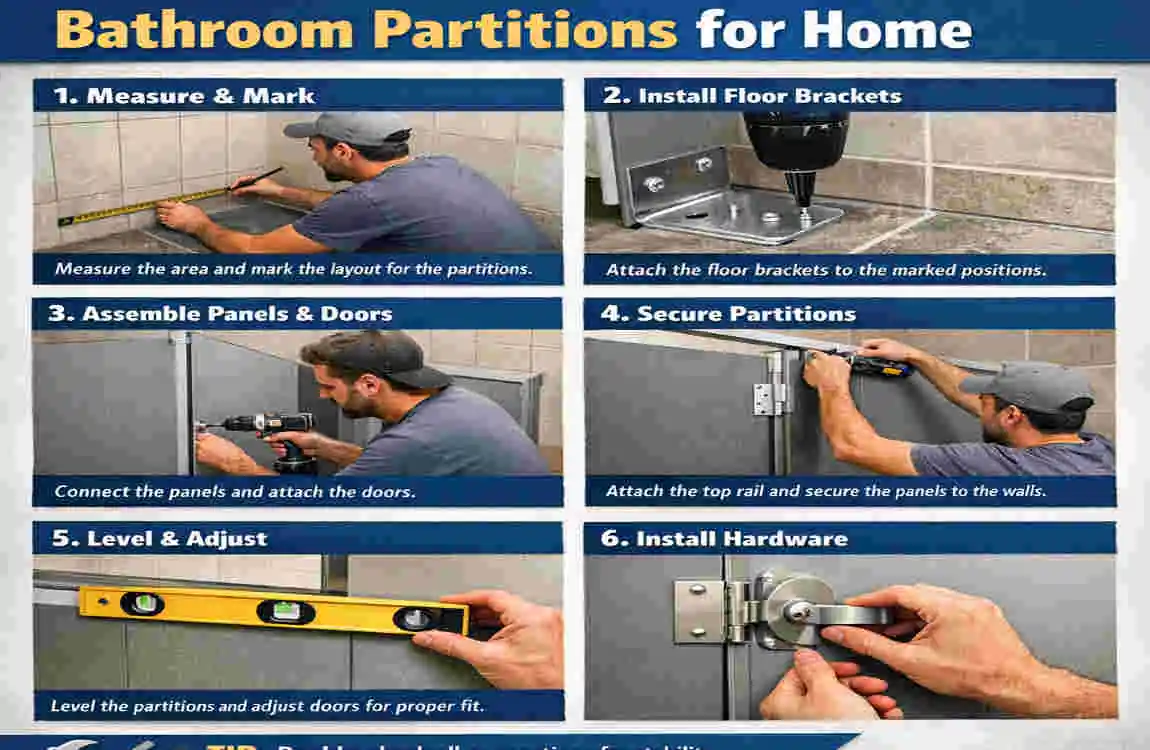
While every product differs, the general process for installing permanent bathroom partitions in the home (such as sliding or fixed glass panels) follows a similar logic. Here is a simplified guide to give you confidence.
Measure Twice, Buy Once. This is the golden rule. Measure the width at the top, middle, and bottom of your space (walls are rarely perfectly straight). Measure the height from the floor to the ceiling. Ensure your partition won’t obstruct the swing of the main bathroom door or hit the vanity.
Gather Your Tools You will typically need:
- Power drill and bits (masonry bits if drilling into tile).
- Level (essential for sliding doors).
- Tape measure and pencil.
- Stud finder.
- Silicone sealant (for wet areas).
Prep the Surface: Clean the area where the partition will go. If you are drilling into tile, apply a piece of masking tape over the spot where you will drill to prevent the drill bit from slipping and cracking the tile.
Mount the Hardware. For sliding partitions, install the track header first. Use your stud finder to ensure you are anchoring into solid wood. If using glass panels, install the U-channels or brackets. Pro Tip: Use a level constantly during this step. A slanted track means a door that slides open on its own!
Install the Panel and Test Hang the door or insert the glass panel. Tighten all fasteners. Test the movement. Does it glide smoothly? Does it stay in place? Finally, apply silicone sealant along the edges if it’s a fixed panel to prevent moisture from getting behind it.
Maintenance and Styling Tips for Long-Lasting Bathroom Partitions
You have installed your affordable home bathroom partitions—now, how do you keep them looking fresh for the next decade?
- Cleaning Hacks: For glass partitions, keep a squeegee in the shower and use it daily. A mix of vinegar and water removes hard water stains better than most chemicals. For wood or bamboo, wipe them down weekly with a damp cloth and mild soap; avoid harsh chemicals that strip the finish.
- Styling: Don’t let the partition stand alone. Integrate it into the room. If it is a wood partition, match your vanity mirror frame to it. If it is a glass screen, place a tall humidity-loving plant (like a Snake Plant) next to it to soften the hard edges.
- Longevity: Check the hardware every 6 months. Tighten any loose screws on sliding tracks and check for rust. With proper care, these partitions can last 5-10 years effortlessly.
FAQ Section
What are the best bathroom partitions for home use in small spaces? The best partitions for small spaces are frameless glass panels or sliding barn doors. Glass keeps the visual space open, while sliding doors eliminate the need for clearance space required by swinging doors.
How much do bathroom partitions for the home cost? Costs vary widely. A simple DIY fabric screen can cost under $50, while prefab folding screens range from $80 to $200. High-end glass or sliding door kits typically range from $300 to $600, depending on materials and hardware.
Are bathroom partitions for the home easy to install? Yes, most are designed for DIY installation. Folding screens require no installation. Tension rod systems take minutes. Even sliding tracks or wall-mounted panels can be installed in a few hours with basic tools like a drill and a level.
Can I use bathroom partitions in a home in a humid environment? Absolutely, but material choice matters. Glass, treated metal, plastic, and sealed bamboo are excellent for humid bathrooms. If using wood or fabric, ensure the wood is sealed with a marine-grade varnish and the fabric is mildew-resistant.
What’s the difference between folding and sliding bathroom partitions for the home? Folding partitions (screens) are usually portable, freestanding, and require no installation, making them highly flexible. Sliding partitions are mounted on a track, are more permanent, offer better sound privacy, and save floor space compared to swinging doors.