Imagine walking into a house that feels like a warm hug. The colors soothe your eyes, the furniture sits exactly where you need it, and every corner tells a story—your story. That is the magic of turning a blank canvas into your dream house. But let’s be honest for a second: standing in an empty room can feel less like magic and more like panic. Where do you start? Do you pick the paint first or the sofa? How do you make sure everything matches?
If you are asking yourself these questions, you are not alone. Without a roadmap, interior design feels overwhelmingly chaotic. But here is the secret that professionals don’t often share: design isn’t just about artistic talent; it is about following a process.
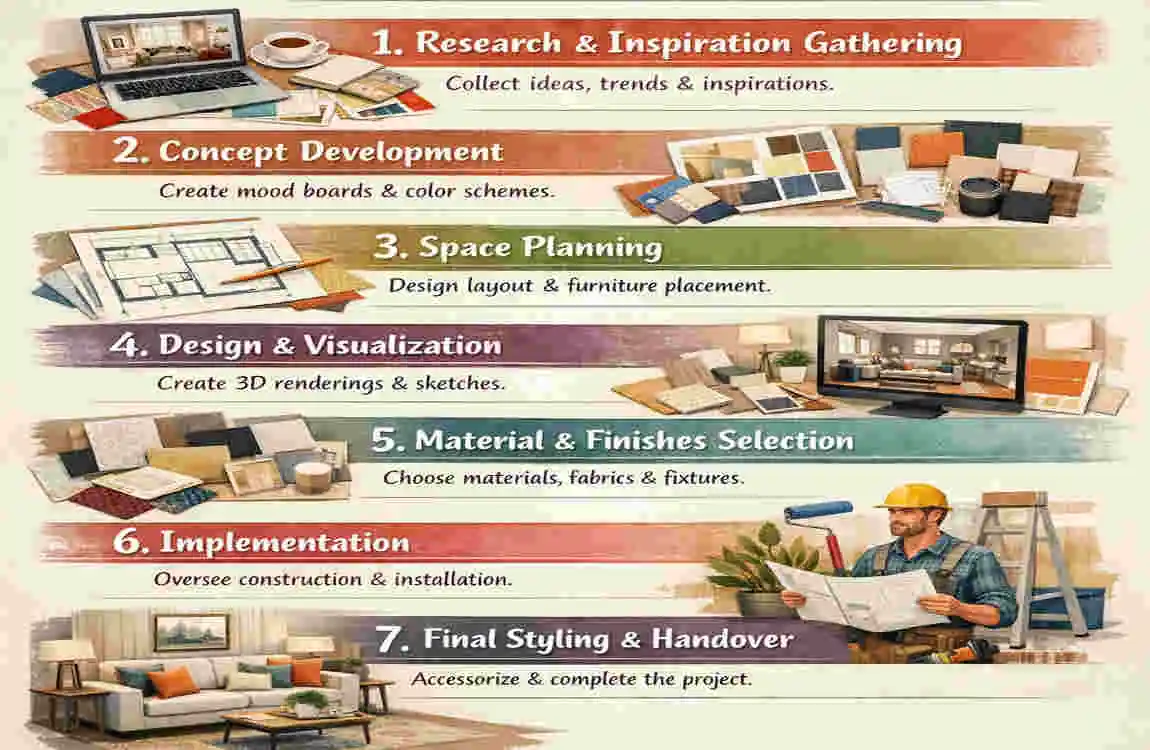
Why Follow the 7 Stages of Interior Design?
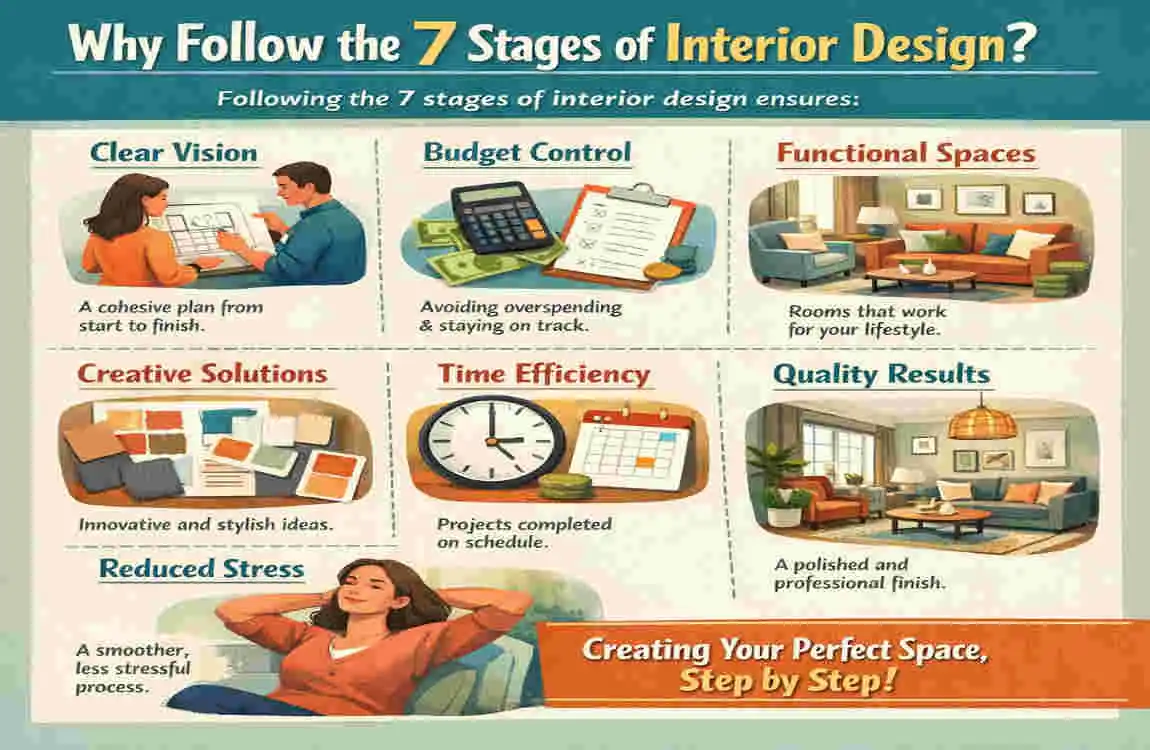
You might be thinking, “Can’t I just buy things I like and put them together?” You certainly can, but that is often how we end up with a room full of beautiful things that just don’t look right together. Following a structured workflow is what separates a cluttered room from a curated dream house.
Building authority over your space means understanding the “why” behind your choices. Unlike DIY guesswork, these stages create functional, beautiful spaces that actually work for your lifestyle.
Here is why sticking to the 7 stages of interior design is a game-changer:
- Budget Control: It is incredibly easy to overspend on small items and run out of money for the big essentials. A structured plan avoids the dreaded 20-30% budget overruns that plague unplanned projects.
- Personalized Results: Following the steps ensures the final look matches your actual lifestyle, not just a picture you saw on Pinterest.
- Timeline Efficiency: A full home project can take 6-12 months. Knowing what comes next keeps the momentum going and prevents stalling.
- Cohesion: It ensures that the flow from the living room to the kitchen feels natural and connected.
Initial Consultation and Vision Setting
What Happens Here? This is the “getting to know you” phase. Before a single paint swatch is picked, we need to define the vision. If you are working with a designer, this is your first meeting. If you are doing this yourself, this is your honest conversation with your family.
Defining the Lifestyle
The first step in what are the 7 stages of interior design is understanding how you live. A beautiful white velvet sofa is stunning, but if you have two toddlers and a Golden Retriever, it is a disaster waiting to happen.
- The Questionnaire: Sit down and write out your needs. Do you host big dinner parties? Do you need a quiet corner for Zoom calls?
- Style Preferences: Are you drawn to the clean lines of Modern design, or do you prefer the eclectic warmth of Boho?
- Pain Points: What do you hate about your current space? Is it too dark? Is there no storage?
The Site Visit
You need to assess the physical space. Look at the architecture. Where does the sunlight hit in the morning? Which walls are load-bearing? Example: Consider a family in Lahore who wants a dream house. During their consultation, they realized their priority wasn’t just “luxury,” but “open-plan living” to accommodate large family gatherings during Eid. By identifying this early, they avoided closing off the kitchen, which would have ruined their hosting experience.
Research and Inspiration Gathering
Fuel Your Creativity. Now that you know what you need, it is time to dream about what you want. This is the fun part! This stage is all about diving deep into ideas without committing to buying anything yet.
Analyzing Trends
Look at what is happening in the design world. For 2026, we are seeing a massive shift toward warm neutrals and sustainable materials. However, be careful not to fall into the trap of “fast fashion” for your home. You want a style that lasts.
Where to Look
- Magazines & Blogs: Flip through Architectural Digest or Elle Decor.
- Digital Platforms: Create boards on Pinterest or save collections on Instagram. Houzz is fantastic for seeing real projects.
- Competitor Homes: Look at virtual tours of celebrity dream houses to see how they mix textures and colors.
The Local Touch
Case Study: A homeowner in Punjab wanted a modern home but wanted to keep a connection to their heritage. During the research phase in the 7 stages of interior design process, they visited local artisans. They found inspiration in traditional hand-knotted rugs. By researching local options early, they planned the room around these masterpieces rather than trying to squeeze them in later.
Warning: Do not try to copy a picture exactly. Use it as inspiration. Your house has different light and dimensions than the one in the photo. Focus on the feeling of the image, not just the objects.
Concept Development and Mood Boards
Bring Ideas to Life. You have your needs (Stage 1) and your inspiration (Stage 2). Now, we blend them. This is where the vague idea of “I want a cozy living room” turns into a visual plan.
Creating the Mood Board
A mood board is a collage of images, materials, and colors that evoke the feeling of the space. It serves as your visual anchor. If you find a lamp you like later, you hold it up to the mood board. If it doesn’t fit the board, it doesn’t buy the lamp.
How to create one:
- Digital: Use free tools like Canva or Milanote. Drag and drop images of furniture, paint blobs, and flooring.
- Physical: If you are tactile, get a foam board. Pin fabric swatches, paint chips, and magazine cutouts to it.
Theme Selection
This is where you commit to a direction. Are you going for “Scandinavian Serenity” or “Industrial Chic”?
- Client Feedback Loop: If you are working with a pro, this is where you tell them what you hate. Don’t be shy! It is cheaper to change a picture on a board than to return a sofa.
Example: Imagine visualizing a 7 stages interior design mood board for a 3-bedroom apartment. You might group earthy greens, light oak wood, and brass accents. Seeing them together confirms that the brass looks good with the green, giving you the confidence to move forward.
Design Planning and Layout
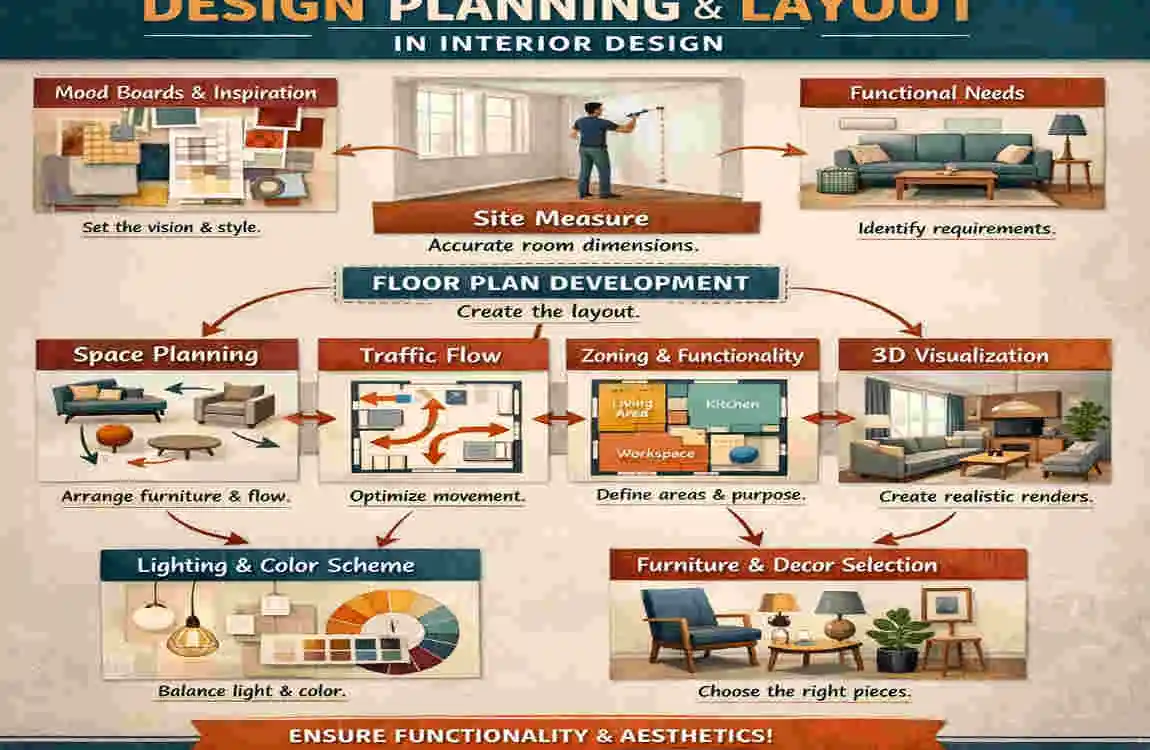
Map the Blueprint. This is the technical phase. We are moving from “pretty pictures” to “engineering and functionality.” This is arguably the most critical step for the livability of your dream house.
Floor Plans and Flow
You need to figure out where things go. This is about traffic flow. Can you walk from the hallway to the window without banging your shin on the coffee table?
- Zoning: Divide your room into zones. In a living room, you might have a “conversation zone” (sofas) and a “reading zone” (armchair and lamp).
- Kitchen Triangles: Ensure the path between the stove, sink, and fridge is unobstructed.
2D and 3D Renders
In the past, we relied on imagination. Today, we use technology.
- 2D Plans: These look like maps. They show you the footprint of the furniture.
- 3D Renders: Tools like SketchUp (which has a free tier) or Roomstyler allow you to build a virtual model of your room. You can “walk through” it on your screen.
Real Estate Tie-In: If you are in a compact urban home, perhaps in a busy city center, optimization is key. Using a 3D planner helps you see if that king-sized bed makes the room feel claustrophobic. Pro Tip: Always factor in resale value. Good layouts—especially open ones—can boost property prices by up to 15%.
Material and Furniture Selection
Choose Your Palette. Now that we know what fits (Stage 4), we go shopping! But we aren’t just buying random things; we are sourcing specific items that fit our dimensions and our mood board.
Sourcing Strategy
- The Big Pieces: Start with the most expensive, largest items. Usually, this is the flooring and the sofa.
- Samples are Mandatory: Never buy paint based on the color on the can. Buy a sample pot and paint a patch on your wall. Watch how it changes from morning to night. Do the same with fabrics.
- Sustainability: Look for eco-friendly options. Recycled wood or bamboo flooring not only looks great but adds a story to your home.
Budget Breakdown
This is where most people get scared. To help you manage your money for your dream house, here is a general breakdown of how your budget should be allocated during the sourcing phase:
Category% of BudgetExamples
Furniture 30-40% Sofas, beds, dining tables, custom cabinetry.
Materials 25-30% Flooring, wall paint, tiles, countertops.
Installation 15-20% Labor costs for painting, electrical, assembly.
Accessories 10-15% Art, rugs, lamps, throw pillows, plants.
Contingency 5-10% The “oops” fund for unexpected costs.
Example: Balancing luxury and affordability is an art. You might spend more on a high-quality sofa (which you use every day) and save money by buying a cheaper side table or rug.
Project Execution and Installation
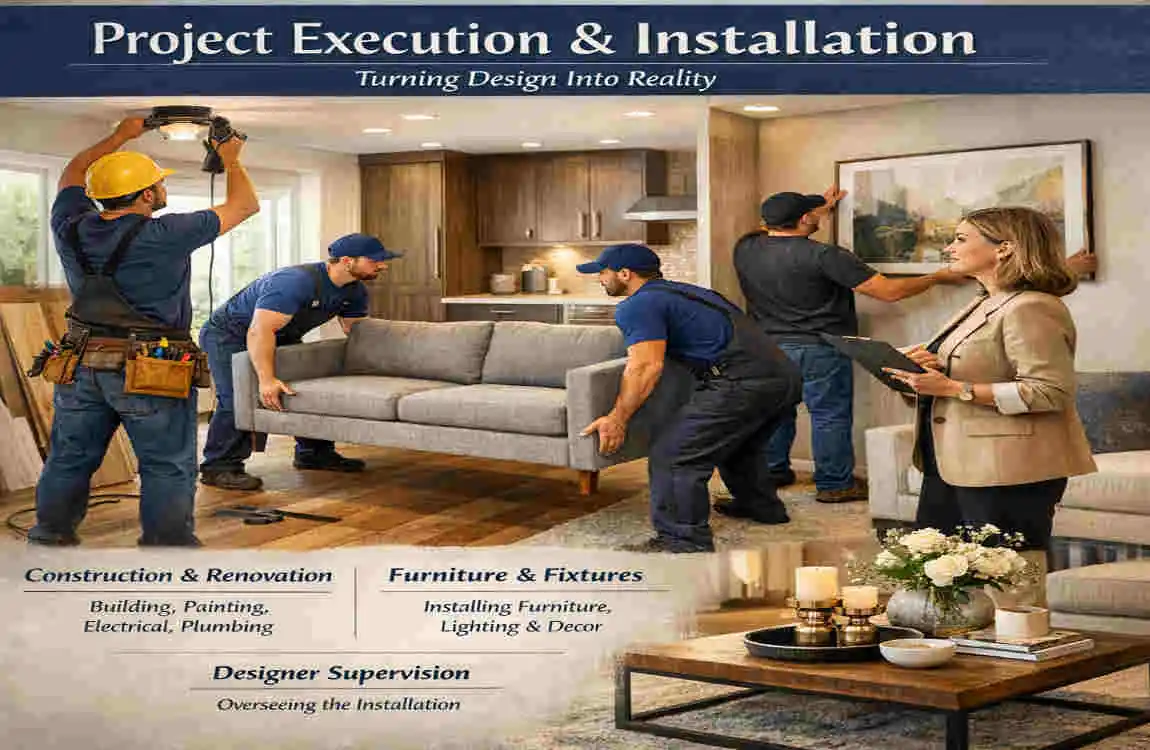
Make It Real. This is the “boots on the ground” phase. It is dusty, it is noisy, and it is exciting. This is where your paper plans turn into wooden and concrete reality.
Contractor Coordination
If you are renovating, this is where the tradespeople come in.
- Sequence matters: You don’t want the carpet installed before the painting is done. The general rule is: Top to Bottom. Ceiling first, then walls, then floors.
- Permits: Ensure you have the right approvals if you are moving walls.
On-Site Supervision
Even if you have a contractor, you (or your designer) need to check in weekly.
- Are the outlets where they are supposed to be?
- Is the tile pattern facing the right way? Catching a mistake now is cheap. Catching it after the grout dries is expensive.
The Reality Check: Delays happen. Materials get stuck in shipping; contractors get sick. Always add a 20% buffer to your timeline expectation. This is the hardest part of the execution stage of 7 home interior design steps, but patience pays off.
Final Styling, Reveal, and Walkthrough
The Grand Finale. The dust has settled. The contractors have left. Now, it is time for the polish. This is the stage that turns a “house” into a “home.”
Accessorizing
This is the layer that adds personality.
- Soft Goods: Add your throw pillows, blankets, and curtains. These soften the hard edges of the architecture.
- Art and Decor: Hang your paintings. Place your books on the shelves (try organizing them by color for a stylized look).
- Greenery: Bring in plants. They add life and oxygen to the space.
The Walkthrough
If you hired a designer, they will walk you through the space. Look for any small scuffs on the wall or loose handles. This is called the “punch list.” Once these are fixed, the project is signed off.
The Reveal
Whether you are showing your family or hosting a party, take a moment to celebrate. You did it! You navigated the 7 stages of interior design and built your dream house.
Long-term Thinking: Ask for a maintenance guide. How do you clean that velvet sofa? How often should the stone countertops be sealed? Knowing this ensures your design lasts for years.
Common Mistakes to Avoid in the 7 Stages
Even with a roadmap, it is easy to veer off track. Here are the pitfalls that catch most homeowners:
- Skipping Stage 1 (The Vision): If you don’t know where you are going, you will end up someplace else. Skipping the consultation leads to mismatched visions and unhappy spouses.
- Rushing Stage 5 (Buying): Impulse buying is the enemy of good design. Buying a rug because it is on sale, even though it doesn’t match the mood board, leads to “Buyer’s Remorse.”
- Ignoring the Budget: If you spend 80% of your money on the kitchen, your living room will remain empty for years. Respect the percentages in the table above.
- Forgetting Function: A white rug in a muddy entryway is beautiful house for about ten minutes. Always prioritize how you live over how it looks.
FAQs
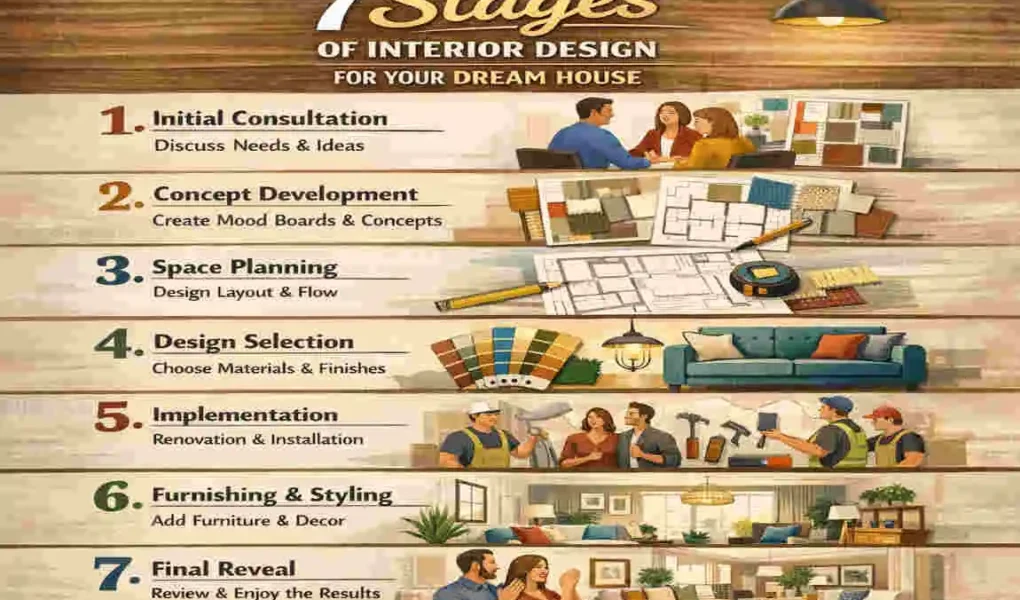
What are the 7 stages of interior design in order? The 7 stages are: 1. Initial Consultation, 2. Research & Inspiration, 3. Concept Development, 4. Design Planning & Layout, 5. Material & Furniture Selection, 6. Project Execution, and 7. Final Styling & Reveal.
How long do the 7 stages take? For a full home project, the process typically takes 3 to 12 months. Single rooms can be faster, taking 6-12 weeks depending on furniture delivery times.
What is the cost for the 7 stages interior design process? Costs vary wildly by location and scope, but professional design fees generally range from $50 to $200 per square foot, or a percentage (10-20%) of the total renovation budget.
Can I do the 7 stages myself? Absolutely! While professionals bring expertise and resources, a dedicated homeowner can follow these steps to achieve a cohesive, professional-looking result.