It’s the middle of September. A hurricane has just swept through your neighborhood in Florida. Your fence is down, your yard is a mess, and worst of all, you spot missing shingles on your roof. In a moment of panic, a roofing contractor knocks on your door, promising a quick fix if you sign right now. Anxious to protect your home before the next rainstorm, you sign on the dotted line.
But a few days pass. Maybe you realized the price was inflated, or perhaps you found out the contractor has a terrible reputation. Maybe you just have a gut feeling that something isn’t right. Now, you are stuck wondering, “How do I get out of this mess?”
You are not alone. Following the 2024-2025 storm seasons, thousands of Florida homeowners found themselves trapped in rushed agreements. The good news? You have rights. Florida has some of the strictest consumer protection laws in the country, specifically designed to help homeowners in situations like this.
Florida Roofing Contract Basics: Know Your Rights Before Exiting
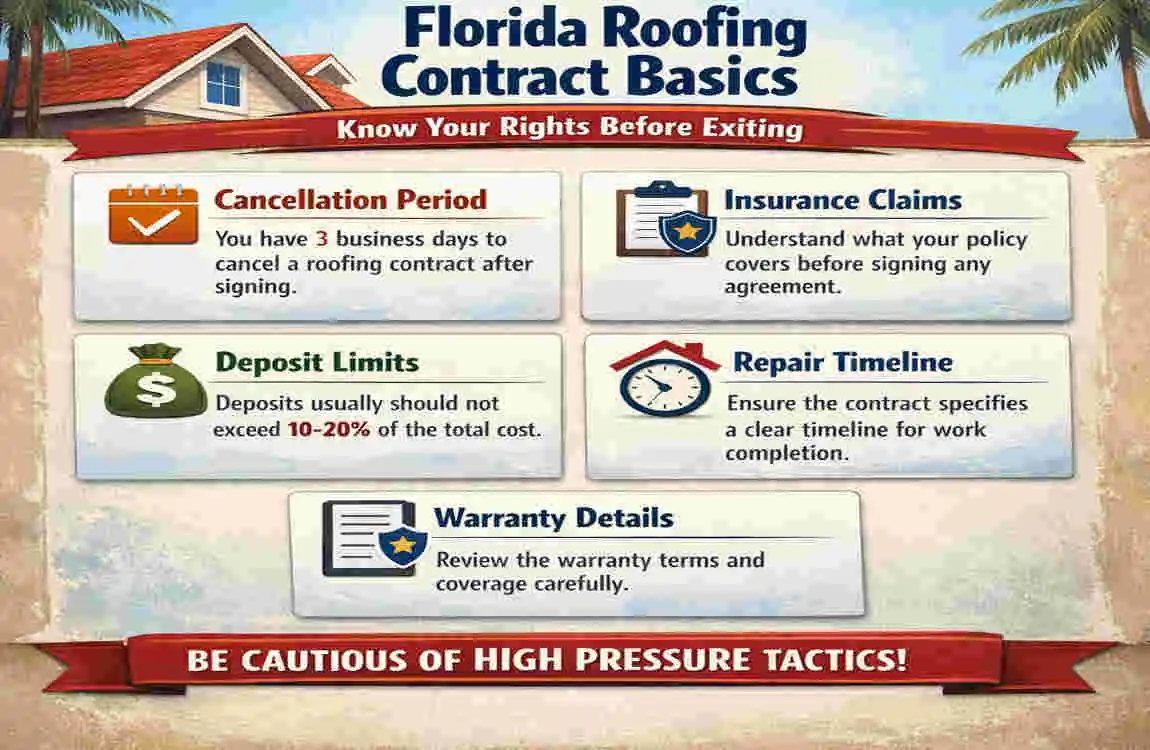
Before we jump into the escape hatches, we need to understand the cage you are in. A roofing contract is a binding legal agreement, but to be valid in Florida, it must comply with specific rules.
In Florida, standard roofing contracts must define the scope of work, payment terms, warranties, and include mandatory disclosures required by the Florida Home Solicitation Sales Act. If a contract is missing these elements, it might be flimsy enough to break.
The “Red Flags” That Signal an Exit
While Chapter 489 of the Florida Statutes sets the rules for construction contracting, many shady operators cut corners. Here are the immediate red flags that might void your contract instantly:
- Verbal Promises: If the roofer verbally promised “premium shingles” but wrote “standard asphalt” in the contract, that discrepancy matters.
- No License Number: Every roofing contract in Florida must display the contractor’s license number.
- Missing Dates: A valid contract generally needs a start and an estimated completion date.
To make this easier to visualize, here is a quick breakdown of standard clauses versus the Florida laws that might override them:
Contract Clause: Florida Legal Loophole
“All Sales Final” 3-Day Right of Rescission (State law overrides “final” claims on solicitations).
“Deposit Non-Refundable” Unlicensed Contractor (If they are unlicensed, they cannot legally hold your money).
“Contractor discretion on materials” Fraud/Misrepresentation (You cannot be sold one thing and given another).
“Binding Arbitration Only” Breach of Warranty (You can still exit if artistry is poor).
Now that we have laid the groundwork, let’s look at the specific loopholes you can use to get out.
Leverage the 3-Day Right of Rescission
This is the “Golden Ticket” for Florida homeowners. If you signed a contract as a result of a door-to-door sale or a solicitation at your home (which is how most post-storm roofing sales happen), you have an automatic 3-day cooling-off period.
Under Florida Statute 501.021, which governs Home Solicitation Sales, you have the absolute right to cancel the contract within three business days. You do not need to prove the roofer did anything wrong. You do not need to give a reason. You have to change your mind.
How the “Clock” Works
This is where people get tripped up. The clock starts ticking the moment you sign the agreement. It stops at midnight of the third business day.
- Example: If you sign on a Tuesday, you have until midnight on Friday to cancel.
- Weekends (Saturdays and Sundays) typically do not count as “business days” for this specific statutory count, nor do legal holidays.
Actionable Steps to Use This Loophole
- Don’t Call, Write: Do not just call the roofer. Verbal cancellations are impossible to prove in court.
- Draft a Notice: Write a simple letter stating: “I am exercising my right to rescind this contract under Florida Statute 501.021.”
- Send via Certified Mail: Go to the post office and send this notice via Certified Mail with Return Receipt Requested. This provides legal proof that you sent the cancellation within the 3-day window.
Real World Context: In 2025, a homeowner in Tampa signed a $20,000 roofing contract. The next day, upon researching the company, she found terrible reviews. Because she sent a certified cancellation letter within 48 hours of signing, the contract was voided, and the contractor had no legal grounds to sue for “lost profits.”
Prove Contractor Fraud or Misrepresentation
What if the 3-day window has passed? Do not worry; you still have options. One of the strongest is proving fraud or misrepresentation.
In Florida, a contract can be deemed voidable if one party was tricked into signing it. Under Florida Statute 812.014 (and related consumer protection laws), fraud isn’t just someone stealing your identity—it includes bait-and-switch tactics.
What Does Roofing Fraud Look Like?
- False Bids: The contractor knowingly underbids to get the job, intending to hit you with “unforeseen costs” immediately after demolition begins.
- Material Swapping: Showing you samples of high-end architectural shingles but delivering cheap 3-tab shingles.
- Insurance Fraud: Suggesting they can “waive your deductible” (which is a felony in Florida) or inflating the damage report to the insurance company.
How to Exit Based on Fraud
If you suspect this is happening, you need to become a detective.
- Gather Evidence: Save every email, text message, and photo. If materials arrive that don’t match the sample, take a picture of the packaging immediately.
- File a Complaint: Submit a formal complaint to the Florida Department of Business and Professional Regulation (DBPR) and the Florida Attorney General’s Office.
- Demand Rescission: Send a formal letter to the roofing company stating that the contract is null and void due to misrepresentation. Cite the specific lie (e.g., “You promised X material but delivered Y”).
If the dispute is for less than $8,000, you can take it to Small Claims Court without an expensive attorney. Often, just the threat of a DBPR investigation is enough to make a shady contractor tear up the contract and walk away.
Unlicensed Contractor = Automatic Void Contract
This is the “Nuclear Option.” In the state of Florida, it is illegal to perform roofing work without a license. Under Florida Statutes 489.105 and 489.128, contracts entered into by unlicensed contractors are unenforceable in law or equity.
If you discover your roofer does not have a valid license, the contract you signed is essentially a worthless piece of paper to them. They cannot sue you for non-payment. They cannot put a lien on your house.
How to Check a License
Never take their word for it. Shady roofers often use a “friend’s” license number.
- Go to myfloridalicense.com.
- Click “Verify a License.”
- Search by the contractor’s name or the business name.
- Check the status: It must be “Current, Active.”
The “Unlicensed” Exit Strategy
If the search comes up empty or the license is “Null and Void”:
- Stop Work Immediately: Do not let them touch your roof again.
- Report Them: Call the DBPR hotline (850-487-1395) to report unlicensed activity.
- Demand Refund: If you paid a deposit, demand it back. If they refuse, you can sometimes recover funds through Florida’s Homeowners’ Construction Recovery Fund if the contractor financially harmed you.
Case Study: In Miami (2024), a group of homeowners realized their “contractor” was using a license number belonging to a deceased person. The state fined the operator $50,000, and the homeowners’ contracts were declared void, allowing them to hire legitimate companies without penalty.
Breach of Implied Warranty of Workmanship
Even if the roofer is licensed and the 3-day window is gone, you expect the roof actually to work, right? In Florida, services come with an implied warranty of artistry (as referenced in statutes such as F.S. 672.312 regarding merchantability and in general common law).
Basically, the law says a roof must be installed in a “workmanlike manner” in accordance with industry standards. If the contractor is doing a terrible job, they are arguably in breach of contract.
identifying a Breach
- Safety Violations: Workers not using harnesses or damaging other parts of your property.
- Code Violations: Failing to nail shingles correctly or ignoring underlayment requirements.
- Leaks: If the “new” roof leaks during the first rain, the warranty is breached.
The “Cure” Notice
You cannot just fire them on the spot for a crooked shingle. You must give them a chance to fix it.
- Hire an Inspector: Get a neutral third-party roof inspector to document the defects.
- Send a 7-Day Cure Notice: Send a certified letter detailing the defects and giving them 7 days to correct them.
- Terminate: If they fail to fix it (or fix it poorly) within that window, you can terminate the contract for cause.
Negotiation Tip: If the work is partially done but poor, you can offer to pay for the materials used so far in exchange for a full release from the contract. This is often cheaper than a court battle.
Force Majeure or Changed Circumstances
“Force Majeure” is a fancy legal term for “Acts of God.” Many contracts have a clause stating that if an unforeseeable event makes fulfilling the contract impossible, the parties can be released.
Utilizing Florida’s Volatile Weather
In Florida, this is highly relevant.
- New Storms: If a second hurricane hits before work starts and destroys the house’s structure, a simple re-roofing contract might no longer be possible or relevant.
- Material Shortages: If global supply chain issues (common after major storms) mean the contractor cannot get the specific tile you ordered for 6 months, you may be able to exit the contract due to “frustration of purpose” or inability to perform.
The Insurance Angle (F.S. 627.701)
Many Florida roofing contracts are contingent on insurance proceeds. If your insurance company denies the claim or approves a significantly lower amount than the contract price, look for language in your agreement that lets you out.
- The “Contingency” Clause: A solid contract often says, “This agreement is contingent upon insurance approval.” If approval doesn’t happen, the contract dissolves. If your contract lacks this but the roofer promised it verbally, refer back to Loophole 2 (Misrepresentation).
Non-Performance or Timeline Violations
Contracts are two-way streets. You agree to pay; they agree to do the work on time. If a contractor leaves you in limbo for months, they may be in violation of the timeline.
While Florida law gives contractors some leeway for weather delays, they cannot delay indefinitely. Florida Statute 95.11 addresses statutes of limitations, but for active contracts, we look to the “a reasonable time.”
How to Enforce the Timeline
- Check the “Time is of the Essence” Clause: If your contract has this phrase, deadlines are strict. A missed deadline is a material breach.
- The Default Notice: If the start date passes with no workers showing up, wait a grace period (e.g., 10 days). Then, send a notice of default.
- Document the Ghosting: Keep a log. Called on May 1st, no answer. Emailed May 5th, no reply.” This log demonstrates abandonment.
Pro Tip: Use technology. Apps like Contractor Foreman or even simple calendar notes help you track every missed milestone. If you end up in court, a detailed timeline is your best weapon.
Mutual Agreement or Buyout Negotiation
Sometimes, the best legal loophole is simply a handshake (or a written version of one). If none of the aggressive legal strategies apply, try the diplomatic route. Contractors are business people. They don’t want to work for a homeowner who hates them, and they definitely don’t want bad reviews or DBPR complaints.
The “Buyout” Strategy
You can propose a mutual cancellation agreement.
- Offer a “Kill Fee”: Offer to pay for any permits they have already pulled plus a small administrative fee (e.g., $200-$500) or let them keep 10% of the deposit.
- The “Walk Away” Deal: Say, “I am unhappy with the communication. I am willing to release you from the obligation to perform this work if you return my deposit minus permit fees.”
Mediation
If they refuse to budge, threaten (politely) to escalate to mediation. You can file a complaint with the Better Business Bureau (BBB) or use the DBPR’s mediation services. Often, just the hassle of mediation will convince a busy roofer to let you go.
Step-by-Step Action Plan: How to Execute Any Loophole Safely
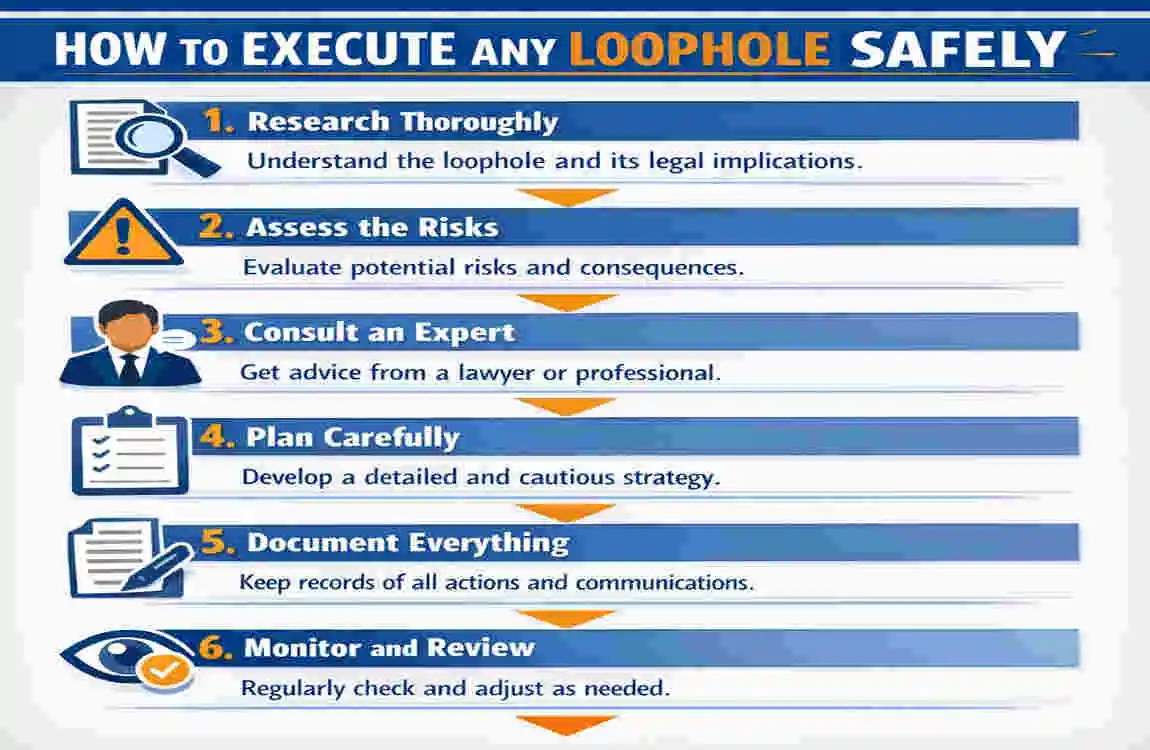
You have identified your loophole. How do you actually do it without making things worse? Follow this checklist to ensure you are protected.
- Review Your Contract: Read every line. Look for the “cancellation” clause and the “notice” requirements.
- Document Everything: Create a folder (digital and physical). Save texts, emails, and call logs.
- Send Certified Notice: Never cancel via text. Always send a formal letter via Certified Mail. This is your proof in court.
- File Complaints: If they fight back, file complaints with the DBPR and the Attorney General immediately.
- Consult an Attorney: If the deposit is large (over $5,000) or they threaten a lien, use the Florida Bar Referral Service to get a low-cost consultation.
- Recover Funds: If they hold your deposit, dispute the charge with your credit card company (if applicable) or file a claim against their surety bond.
- Prevent Future Issues: When you hire the next roofer, verify their license and insist on a “completion date” clause.
Action Step: Why It’s Critical
Certified Mail proves the exact date they received your cancellation.
DBPR Search : Confirms whether they are legally allowed to touch your roof.
Written Log beats “he-said-she-said” in every courtroom.
Common Mistakes to Avoid When Trying to Get Out of a Roofing Contract in Florida
Getting out of a contract is like defusing a bomb—cut the wrong wire, and it blows up. Here is what NOT to do:
- Ignoring Deadlines: The 3-day rescission window is strict. 72 hours and one minute is too late.
- Relying on Verbal Agreements: If the roofer says, “Don’t worry, we’ll tear up the contract,” but doesn’t sign a written agreement, the contract still exists.
- Stopping Payment without Notice: If you stop paying or block the check without a formal breach notice, you become the one in breach of contract. This opens you up to mechanics’ liens on your home.
- DIY Legal Threats: Don’t scream “I’ll sue you!” unless you know the statute. Citing the specific statutes (like F.S. 501.021) shows you mean business.
- Not checking Insurance First: Always resolve the scope of your insurance claim before signing the roofing contract.
FAQs: How to Get Out of a Roofing Contract in Florida
Can I cancel a roofing contract in Florida after 3 days? Yes, but it is harder. You cannot use the automatic “no questions asked” rule. You must prove a breach of contract, fraud, unlicensed activity, or negotiate a mutual cancellation.
What if the roofer is unlicensed? If the roofer is unlicensed, the contract is generally unenforceable under Florida law. You should report them to the DBPR and demand a full refund.
How much does it cost to fight a roofing contract? It depends. Sending a certified letter costs about $4. Filing in Small Claims Court costs under $200. Hiring a specialized construction attorney can run $200-$400 per hour, which is why utilizing the DBPR and free negotiation tactics is better for smaller deposits.
How long does a DBPR complaint take? The DBPR investigation process can take several months. However, simply notifying the contractor that you have filed a complaint often speeds up their willingness to resolve the issue.