A fresh exterior paint job can make an older home look newer, cleaner, and more valuable. It can also protect siding, wood, trim, and masonry from sun, rain, dust, mold, and peeling. But before you start, one big question always comes first: What will it cost?
In 2026, the price to paint a house exterior is not a simple one-size-fits-all number. The final cost depends on your home’s size, the number of stories, the condition of the surface, the paint quality, labor rates in your area, and the amount of prep work the job requires. That is why one homeowner may pay $2,500, while another may get a quote closer to $10,000 or more.
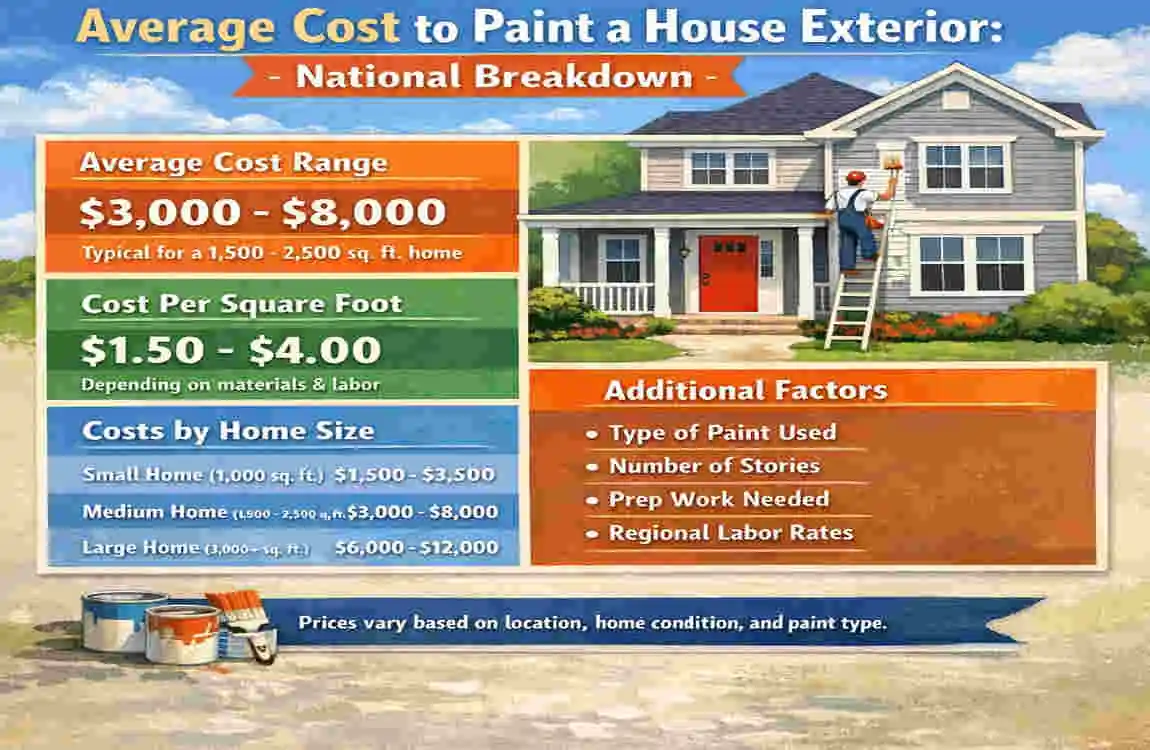
Average Cost to Paint a House Exterior: National Breakdown
Let’s start with the number most homeowners want first.
When people ask how much to paint a house exterior, they usually want a simple average. While every house is different, national pricing data gives a helpful baseline.
For most homes, exterior painting costs are based on surface area, not just interior living space. Painters often estimate the job by square footage, labor hours, and difficulty level.
Typical Price Range by Home Size
Here is a practical cost breakdown for 2026.
House Size (sq ft)Low-End Cost Average Cost High-End Cost
1,000–1,500 $1,500 $3,000 $6,000
1,500–2,500 $2,250 $5,000 $10,000
2,500+ $3,750 $7,500+ $15,000+
These numbers usually reflect standard prep work, common exterior surfaces, and two coats of paint. If your home needs major scraping, wood repair, or hard-to-reach areas, the cost can increase.
House Exterior Painting Cost Per Square Foot
A common pricing method for house exterior painting is cost per square foot.
Most homeowners can expect:
- $1.50 to $4 per square foot total
- $1 to $2.50 per square foot for labor
- $0.50 to $1.50 per square foot for materials
If a contractor gives you a price far below this range, ask questions. A very cheap quote may leave out prep work, primer, caulking, repairs, or even a second coat.
Why Costs Are Higher in 2026
Exterior painting has become more expensive over the last few years. Several reasons explain this:
Material prices have gone up. Better-quality paints cost more than they used to, especially Premium weather-resistant products.
Labor also costs more in many markets. Skilled painters are in demand, and experienced crews charge more for reliable work.
Insurance, fuel, transportation, and equipment costs have also added to the overall price homeowners see in their quotes.
U.S. vs. Pakistan Cost Snapshot
If you are comparing pricing internationally, the numbers can look very different.
In the U.S., most full exterior jobs fall around $2.50 to $4 per square foot in many cities.
many jobs are quoted around Rs. 50 to Rs. 150 per square foot, depending on city, paint brand, prep work, and whether the material is locally sourced or imported.
So if you are still asking how much to paint a house exterior, the best starting point is this: use the national average, then adjust based on your location and your home’s specific needs.
Factors That Determine How Much to Paint a House Exterior
The average price is helpful, but it is only part of the story.
To really understand how much to paint a house exterior, you need to know what drives the price up or down. Some factors have a small effect. Others can change the total by thousands of dollars.
House Size and Number of Stories
This is the biggest factor for most projects.
A larger home needs more paint, more labor, more setup time, and more cleanup. It is not just about the floor plan either. Exterior walls, trim, gables, garage doors, shutters, porches, and other details all add to the work.
A single-story home is usually more affordable because painters can work faster with ladders and basic equipment.
A two- or three-story home often costs 20% to 50% more due to scaffolding, lift equipment, extra safety steps, and slower application.
Paint Type and Paint Quality
Not all paint is the same.
Basic exterior latex paint may cost around $30 per gallon, while Premium products can cost $70 to $90 or more per gallon. High-end paints often offer better fade resistance, stronger weather protection, and longer life.
A cheaper paint may seem like a good deal today, but if it starts peeling or fading after a few years, you will pay again sooner.
Premium paint can often last 8 to 15 years. In contrast, lower-grade paint may need to be refreshed much earlier, depending on climate and surface condition.
Surface Condition
A home with clean, solid, paint-ready siding is much cheaper to paint than one with peeling paint, mildew, cracks, rotten trim, or chalky surfaces.
Before painters can even begin coating the exterior, they may need to:
- Wash the surface
- Scrape loose paint
- Sand rough areas
- Fill holes and gaps
- Replace damaged wood
- Prime bare spots
- Caulk joints and trim
If your house needs a lot of prep, you may pay an added $0.50 to $2 per square foot.
This is one reason quotes can vary so much between homes of the same size.
Siding and Surface Material
The material on your home matters because each surface takes paint differently.
Wood siding often needs the most prep and maintenance. It can absorb paint unevenly, leading to more peeling.
Stucco may require additional paint due to its textured finish.
Brick may need specialty coatings or breathable paint products.
Vinyl and metal siding can be easier in some cases, but they still need proper prep and the right paint system.
If your house has several materials, the painter will spend more time switching between methods and products.
Location and Accessibility
Labor rates vary widely by region.
In major urban areas, painters usually charge more. Homes in dense city locations may also be harder to access due to parking, equipment setup, and tighter workspaces.
Accessibility matters too. If your home sits on a slope, has difficult landscaping, narrow side yards, or many tall sections, the job becomes more labor-intensive.
Prep Work and Add-Ons
Many homeowners focus only on the paint itself. Still, a large share of the cost comes from preparation and extra features.
Common add-ons include power washing, trim painting, door painting, railing painting, garage doors, shutters, fascia boards, and gutters.
Here is a quick look at how strongly different factors affect the final price:
- High impact: house size, stories, surface condition, labor rates
- Medium impact: paint quality, surface material, climate needs
- Low to medium impact: trim color changes, minor repairs, standard add-ons
Color Changes Also Affect Cost
A major color change often increases the price.
If you go from dark to light, or from one strong shade to another very different color, your painter may need extra primer or extra coats for even coverage.
That means more material and more labor.
Climate and Weather Resistance
Homes in harsh climates often need better paint systems.
If you live in an area with intense sun, salt air, heavy rain, high humidity, or a mold risk, your painter may recommend mildew- or UV-resistant paint. These products usually cost more, but they also better protect your home.
When you break it all down, the answer to how much to paint a house exterior becomes much clearer: the price is a combination of size, labor, paint, prep, and difficulty.
Getting Accurate Exterior House Painting Quotes: Step-by-Step Guide
A lot of homeowners lose money not because painting is expensive, but because they accept a vague quote.
If you want to know how much to paint a house exterior with confidence, you need clear and detailed exterior house painting quotes.
Measure the Home Properly
Start with basic measurements.
Measure the length and height of each exterior wall. Then account for the number of stories. Some contractors remove the area of large windows and doors, while others price based on total working surface.
You do not need perfect contractor-level calculations before reaching out. Still, a rough estimate helps you compare quotes more fairly.
Contact Several Painters
Do not stop at the first bid.
Try to get at least 3 to 5 quotes from local painting professionals. A wider range helps you see what the market is charging and what each company includes.
Ask if they have experience with your type of siding and your type of home.
Ask for an Itemized Quote
This step matters a lot.
A good quote should separate the project into clear parts. That way, you can see where your money is going.
You want details on:
- Labor
- Paint and materials
- Prep work
- Repairs
- Primer
- Number of coats
- Trim, doors, and extras
- Estimated timeline
- Cleanup
- Warranty
If one quote says $4,000 and another says $5,200, the higher quote is the better value if it includes washing, caulking, repairs, and Premium paint.
Compare a Sample Quote Breakdown
Here is a simple example for a 2,000-square-foot home.
Quote Item Estimated Cost
Power washing $250
Scraping and sanding $400
Caulking and minor patching $300
Primer $350
Paint materials $900
Labor $1,800
Trim and doors $500
Cleanup and final touch-ups $200
Total $4,700
This kind of breakdown helps you compare one contractor to another without guessing.
Watch for Red Flags
The cheapest quote is not always the smartest choice.
If someone offers a price far below market level, ask why. It may mean:
They use lower-grade paint.
They skip proper prep.
They plan only one light coat.
They are uninsured or inexperienced.
They may add hidden charges later.
As a rough benchmark, if a quote is well under $1.50 per square foot, be careful and review the details closely.
Ask the Right Questions
When reviewing quotes, ask:
How many coats are included?
Who buys the paint?
What brand and finish are being used?
Will damaged areas be repaired?
Is cleanup included?
How long will the project take?
What happens if weather causes delays?
Is there an artistry warranty?
These questions can save you from expensive surprises later.
Make Sure the Scope Matches Your Goal
Some homeowners only want the siding painted. Others want trim, shutters, doors, railings, and garage doors included too.
Before you approve a quote, confirm exactly what is being painted.
This is one of the easiest ways to avoid miscommunication.
When you gather quotes the right way, you stop asking vaguely how much it costs to paint a house exterior and start getting a real number for your actual home.
Labor vs. Materials: What’s Included in House Exterior Painting Costs
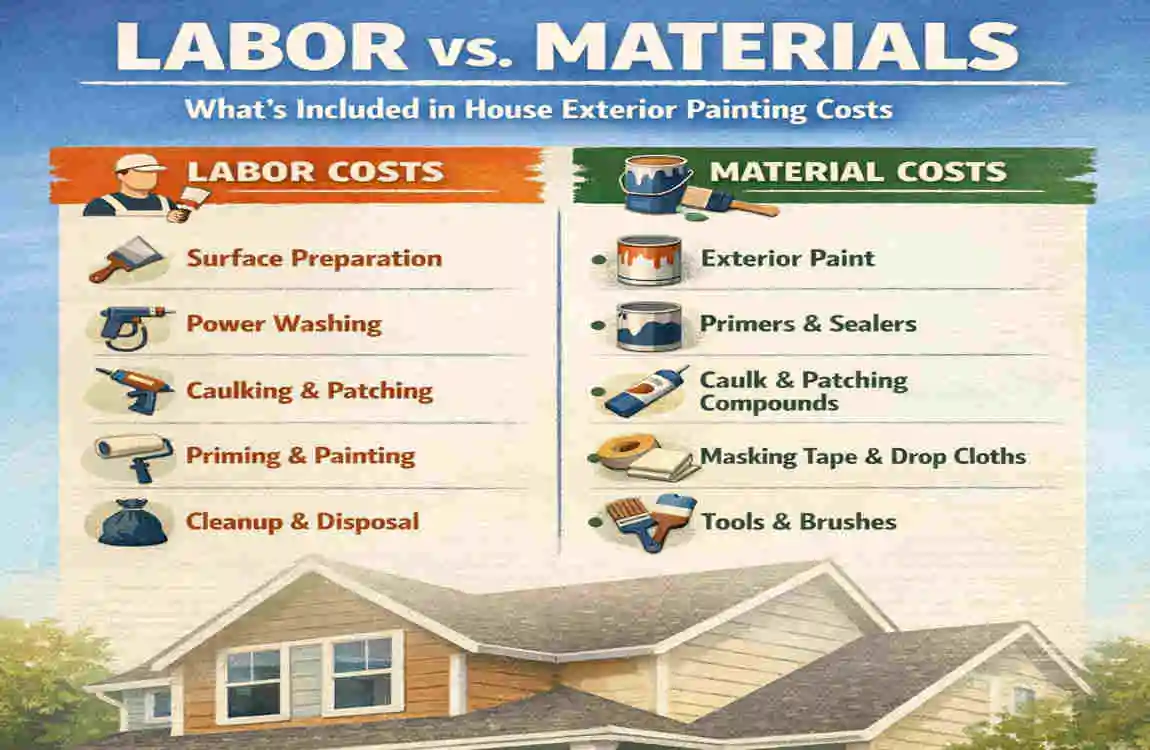
Many homeowners assume paint is the main expense. In most cases, it is not.
Labor Usually Takes the Biggest Share
For a typical exterior painting project, labor typically accounts for 60% to 70% of the total bill.
Professional painters may charge $25 to $75 per hour per painter, depending on location, skill level, and project difficulty. A standard crew may include two or three people working over several days.
Labor covers much more than brushing on paint. It includes setup, masking, washing, scraping, sanding, caulking, priming, painting, and cleanup.
Materials Usually Make Up 20% to 30%
Materials include:
Paint, primer, caulk, tape, masking paper, plastic coverings, patch products, brushes, rollers, sprayer supplies, and other consumables.
Exterior paint coverage is often around 350 to 400 square feet per gallon per coat, but textured surfaces may require more.
If your project needs two coats plus primer, material costs rise quickly.
Prep Work Is a Real Cost Category
Even though prep is often grouped under labor, it deserves attention of its own.
Prep work can be the difference between a paint job that lasts two years and one that lasts ten.
This part often includes washing, mildew treatment, scraping, sanding, sealing gaps, and repairing small damaged areas.
DIY vs. Hiring a Pro
Yes, doing it yourself can reduce the bill.
Many homeowners save 30% to 50% on labor by handling the project themselves. But DIY exterior painting also comes with real challenges: ladders, weather timing, surface prep, safety risks, and the physical time commitment.
If you have a small one-story home and some experience, DIY may make sense.
If you have a tall house, peeling paint, difficult surfaces, or limited time, professional help is often worth the extra money.
Regional Cost Variations: How Much to Paint a House Exterior Near You
Where you live affects prices more than many people expect.
If two identical homes are painted in different cities, the quotes may vary significantly.
United States and Canada
In many U.S. and Canadian markets, the usual range is about $2.50 to $4 per square foot.
In higher-cost areas such as California, New York, Toronto, or Vancouver, pricing may go above that range because labor, insurance, and business overhead are higher.
In smaller towns or lower-cost regions, prices may be more competitive.
Pakistan Pricing
exterior painting is often quoted differently. A common rough range is around Rs. 60 to Rs. 120 per square foot. However, some projects fall below or above this depending on materials and city.
Labor tends to be cheaper than in North America. Still, quality materials can be expensive, especially when Premium or imported paint is used.
Climate Also Changes the Cost
A coastal, humid, rainy, or very sunny area often needs stronger paint products and better prep work.
If your home is prone to mold, salt, dust, or severe heat, your painter may recommend specialty coatings that raise costs but improve durability.
So when you ask how much to paint a house exterior near you, the most accurate answer always depends on both local labor rates and local weather demands.
Proven Savings Tips for Painting Your House Exterior
You do not always have to choose between a good paint job and a manageable budget.
If you plan carefully, you can lower your total cost without sacrificing too much quality. Here are ten practical ways to save money.
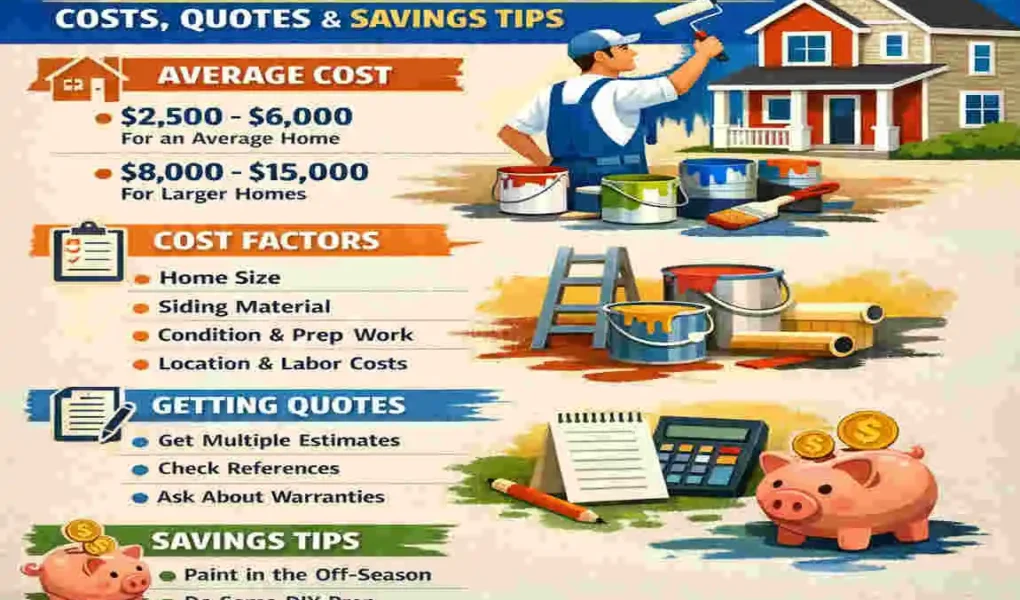
- Paint in the off-season. Many painters are busiest in peak summer months. If you schedule in early spring or fall, you may save 10% to 20%.
- Choose a solid mid-tier paint. You do not always need the most expensive product. A reliable mid-range paint can save $500 to $1,000 on larger homes.
- Get multiple quotes. Comparing bids is one of the easiest ways to avoid overpaying. You may find a price difference of several hundred or even several thousand dollars for the same scope.
- Do simple prep yourself. Cleaning outdoor furniture, trimming plants back, removing obstacles, and handling light cleaning can reduce labor time.
- Bundle services. If you need power washing, minor trim work, or a garage door painted, bundling it into one project can reduce total cost.
- Keep the same color family. A major color shift may require more primer and more coats. Staying close to the current shade can reduce material and labor needs.
- Only paint what needs painting. In some cases, you may not need every fence, wall, trim board, or detached structure included right away.
- Maintain your exterior regularly. Small touch-ups and cleaning help you avoid bigger, more expensive repaint jobs later.
- Negotiate smartly. Instead of pushing only for a lower price, ask whether a painter can adjust the scope, use a different paint tier, or schedule for a slower week.
- Think long-term, not just upfront. Paying more for better prep and better paint can delay your next repaint and save money over time.
The best tips to save on house painting costs are those that reduce waste, minimize repeat work, and help you compare quotes clearly.
Common Mistakes That Inflate Your House Painting Costs
Sometimes the most expensive part of painting is fixing avoidable mistakes.
Here are some of the biggest ones homeowners make.
Skipping prep work is a major problem. Paint does not bond well to dirty, peeling, or damp surfaces. That can lead to early failure and expensive rework.
Choosing the cheapest paint often backfires. Lower-quality products may fade, crack, or peel more quickly, especially in strong sunlight or wet weather.
Hiring based on price alone can also be risky. A low bid may mean the contractor is cutting corners on labor, materials, or safety.
Not getting details in writing creates confusion. If the quote does not specify coats, prep, repairs, and trim work, disputes can arise later.
Ignoring repairs before painting is another costly mistake. Painting over damaged siding or rotten trim only hides the issue for a short time.
If you want to control how much to paint a house exterior, avoid these mistakes early. They are often the reason one project ends up costing much more than planned.
FAQs: How Much to Paint a House Exterior
How much to paint a house exterior per square foot?
The average cost of house exterior painting per square foot is usually $1.50 to $4. Lower-end jobs may fall below that if the home is simple and needs little prep. Higher-end projects can go above that range if the house is large, multi-story, or in poor condition.
What is the average cost to paint house exterior in 2026?
The average cost to paint a house exterior in 2026 is typically $2,500 to $10,000, depending on the size of the home. Small single-story houses may cost less, while large or complex homes may cost $12,000 to $15,000 or more.
How long does exterior house painting take?
A professional crew usually takes about 3 to 7 days for a standard home. Bigger houses or homes needing extra scraping, sanding, and repairs may take longer. Weather delays can also extend the timeline.
Is it cheaper to paint a house exterior yourself?
Yes, it is usually cheaper upfront to do it yourself because you save on labor. You may reduce the cost by 30% to 50%. But you need to factor in your time, safety, equipment, prep work, and the risk of needing to repaint sooner if the job is not done well.
What is the best time of year to paint a house exterior?
The best time is usually mild, dry weather. Many painters prefer temperatures between 50°F and 85°F with low humidity and no heavy rain in the forecast. In many regions, spring and fall are good seasons.
How often should a house exterior be repainted?
Most homes need repainting every 5 to 10 years, but this depends on the surface and climate. Wood may need more frequent attention. Higher-quality paint and better prep often extend the lifespan of the finish.
Why are exterior house painting quotes so different?
Quotes vary because contractors may include different levels of prep work, paint quality, number of coats, repairs, and trim details. One quote may look cheaper simply because it omits important work. Always compare scope, not just price.
Does a two-story house cost more to paint?
Yes. A two-story home usually costs more because of added labor, ladder work, safety setup, and slower application. In many cases, a second story can increase the total cost by 20% to 50%.
Can I save money by using cheaper paint?
You can lower the upfront price, but it may cost you more later if the paint fades or peels early. In many cases, a mid-range or Premium paint gives better long-term value.