Are you planning a fresh look for your 3-bedroom semi-detached in Manchester, or perhaps breathing new life into a terraced home in Bristol? If you are staring at tired walls and peeling skirting boards, you are likely asking the big question: How much to paint a 3-bedroom house inside the UK?
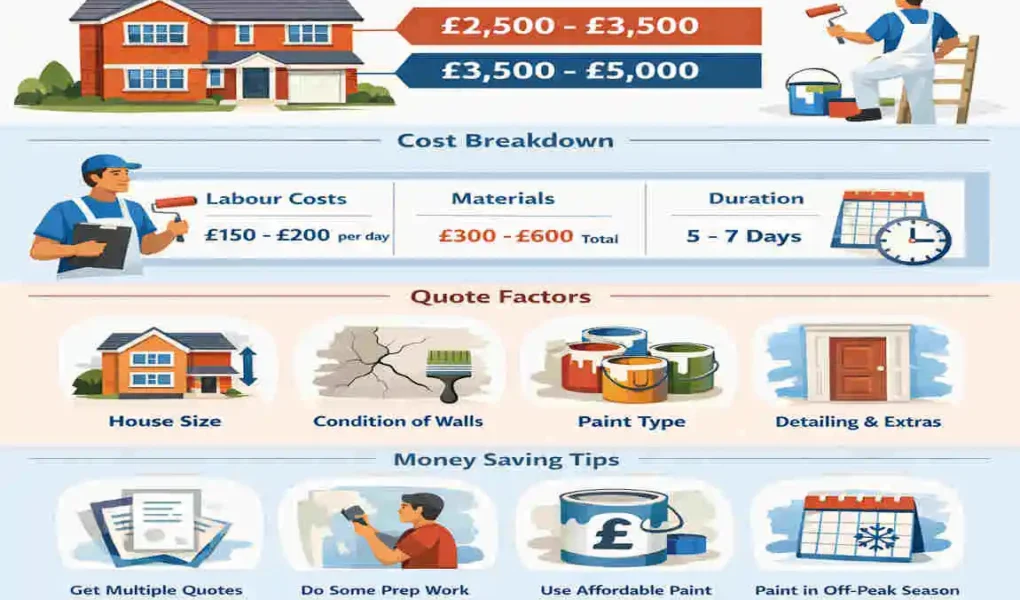
However, that is a fairly wide gap. Why the variation? In 2026, we are seeing inflation significantly impact trades, with costs rising by about 5-7% from 2025,, according to recent Federation of Master Builders (FMB) data. The final figure on your invoice will depend heavily on the condition of your walls, where you live in the UK, and the quality of the paint you choose.
Average Costs Breakdown: Where Does Your Money Go?
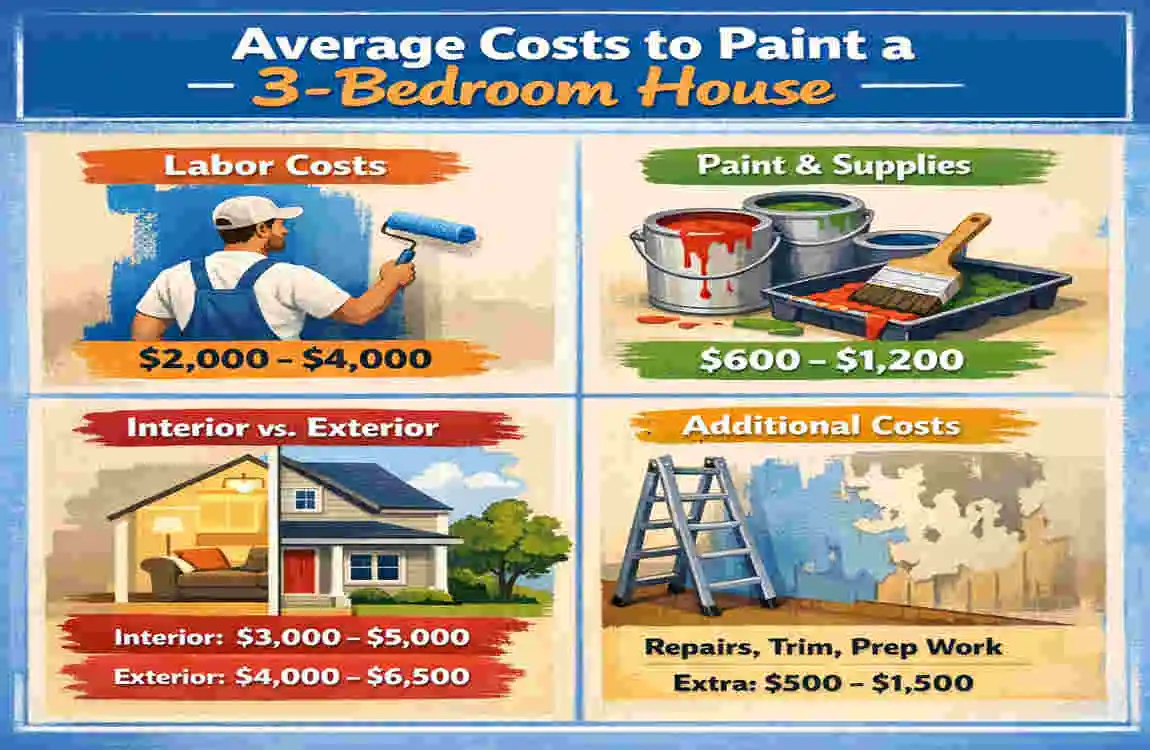
Understanding the bottom line starts with understanding the scope of the job. You aren’t just paying for colour on a wall; you are paying for preparation, skill, and time.
What Influences How Much to Paint a 3-Bedroom House?
Before we look at the price tables, you need to assess your specific property. A “3-bedroom house” is a broad term in the UK.
- House Size: A typical UK 3-bed semi-detached or terraced house usually has a floor area of 90-140 square metres (sqm). However, painters’ prices are based on wall and ceiling surface area, which is usually around 300-500 sqm for a whole house.
- Room Configuration: We are generally talking about 3 bedrooms (averaging 20-25 sqm wall space each), a living room (25 sqm), a kitchen, a bathroom, and the dreaded hallway/landing area.
- Paint Quality: Are you happy with a standard trade emulsion, or would you prefer a high-end designer brand like Farrow & Ball or Little Greene? The price per litre can jump from £5 to £25+, which adds up over a whole house.
- Condition of Walls: If your walls are pristine, it’s a quick job. If they have cracks, holes, or layers of old wallpaper, the labour costs will skyrocket.
Full Cost Table for a 3-Bedroom House Painting
To give you a clear idea of how the budget is distributed, here is a detailed breakdown by room. These figures assume a standard professional standard (two coats of paint plus preparation).
Room/AreaSq Ft to Paint (Approx)Labour Estimate (Days @ £200/day)Materials Estimate (£/sqm)Total Cost Range (£)
3 Bedrooms 1,200 3 – 4 days £0.50 – £1.00 £800 – £1,500
Living Room/Diner 800 2 – 3 days £0.60 – £1.20 £600 – £1,100
Kitchen/Bathroom 400 2 days £1.00 – £2.00 (Specialist) £500 – £1,000
Hallway/Stairs 600 1.5 – 2 days £0.50 – £1.00 £400 – £700
Full House 3,000 8 – 10 days (2 painters) – £2,500 – £5,000
- National Average: According to Checkatrade 2026 data, the “sweet spot” average most homeowners pay is between £3,200 and £4,500.
- Per Square Metre: If you prefer to calculate by area, expect to pay £20-£40 per sqm for labour and £2-£5 per sqm for materials.
Labour vs. Materials Split
It is a common misconception that the bulk of the cost is the paint itself. In reality, the painting industry is service-heavy.
The Labour Share (70-80%)
For a total bill of £4,000, roughly £2,800-£3,200 goes directly to the tradespeople.
- Daily Rates: In 2026, a skilled painter and decorator in the UK charges between £150 and £250 per day.
- Team vs. Solo: A solo painter might be cheaper, but will take two weeks to finish a 3-bed house. A team of two will finish in half the time but cost the same in total person-hours.
The Materials Share (20-30%)
This accounts for £500-£1,200 of the total.
- Paint: Good quality trade paint (like Dulux Trade or Crown) costs £20-£50 per 5 litres. You will need a lot of it.
- Consumables: Don’t forget the “invisible” costs: primer, filler, caulk, masking tape, sandpaper, and floor protection. These can easily add up to £300.
The VAT Factor
If you hire a larger firm or a VAT-registered painter, you must add 20% to the final bill. On a £4,000 job, that is an extra £800 going straight to HMRC. Always ask if the quote includes VAT!
Regional Painting Costs in the UK
Where you live plays a massive role in answering “how much to paint a 3-bedroom house inside the UK.” The local cost of living and demand drives labour rates.
How Location Affects 3-Bedroom House Painting Quotes
If you are reading this in Chelsea, London, your quote will look very different from someone in rural Wales.
- London & South East: This is the most expensive region. High demand, congestion charges, and higher living costs push daily rates to £250+ per day. Expect quotes between £4,000 and £6,500.
- Midlands & The North: Cities like Manchester, Birmingham, and Leeds offer better value. Labour rates hover around £180-£200 per day. Expect quotes between £2,800 and £4,200.
- Scotland, Wales & Northern Ireland: Generally, these areas have the most competitive rates, often dipping below the national average. You might find quotes from £2,500 to £4,000.
Here is a quick reference table for regional variances:
Region Average Cost for 3-Bed House Key Cost Factor
London £4,500 – £6,500 High labour (£300/day typical)
South East £3,800 – £5,200 Material surcharges & transport
North West £2,800 – £4,000 Competitive market quotes
Scotland £2,500 – £3,800 Lower overheads
South West £3,000 – £4,500 Variable (high in cities like Bristol)
Pro Tip: Use online postcode tools on sites like MyBuilder or Rated People to get a baseline for your specific town.
Getting Accurate Quotes for Painting a 3-Bedroom House
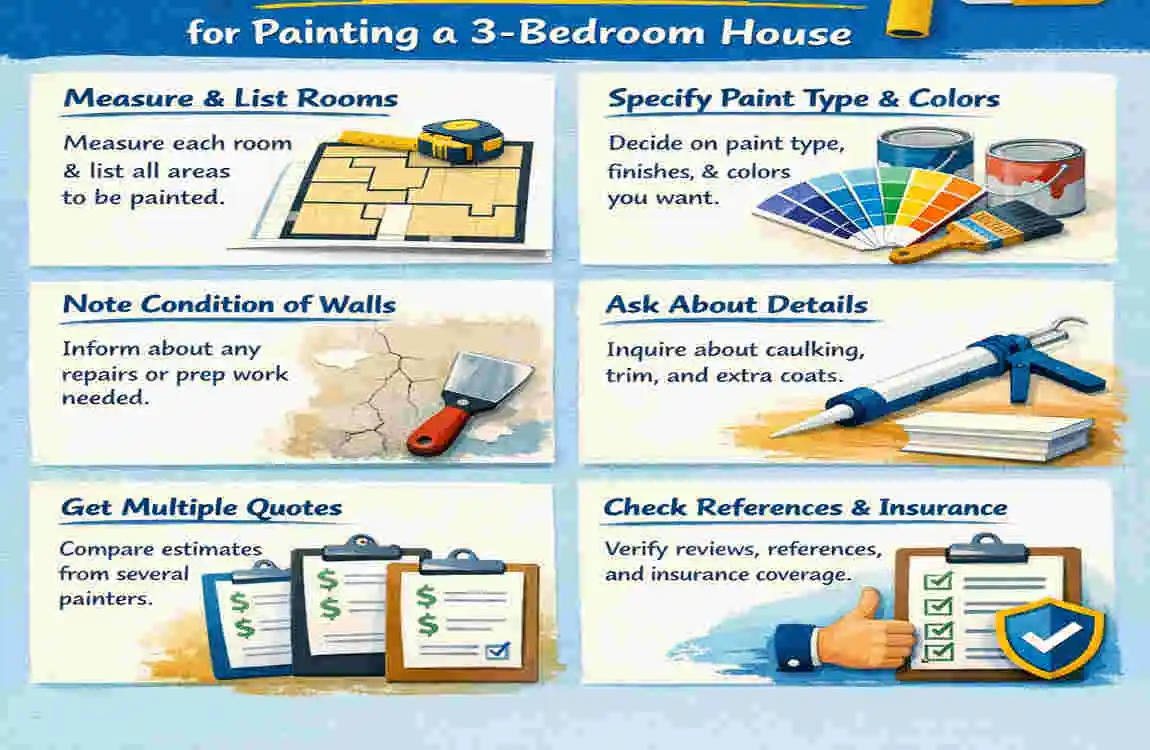
Now that you have a budget in mind, how do you get a firm price? Getting a quote isn’t just about calling a number; it’s about providing the right information to get an accurate figure.
Step-by-Step Guide to Quotes
- Measure Your Surfaces: Don’t guess. Measure the height and length of your walls. Multiply them to get the square meterage, then subtract the area of windows and doors (roughly). Painters love clients who know their measurements.
- Define the Scope: Be specific. Are you painting the ceiling? The skirting boards? The inside of the cupboard doors? The radiators? Each of these adds time.
- Get 3-5 Quotes: Never settle for the first price. Use platforms like Checkatrade, MyBuilder, or Rated People to find vetted locals.
- Ask the Right Questions: “Does this include all materials?”
- “How long will the job take?” (Standard is 7-14 days for a whole house).
- “Is prep work included?” (Crucial!)
- “Do you offer a guarantee?” (2 years is standard for artistry).
- Spot the Red Flags: Be wary of quotes under £2,000 for a whole 3-bedroom house. This usually means they will skip the preparation (sanding/filling) or use cheap, watery paint that will peel in a year.
Sample Quotes Comparison
To help you visualize the difference in service levels, here are three hypothetical quote tiers:
The Budget Quote: £2,600
- Who: A “man with a van” or semi-skilled handyman.
- Materials: Basic retail emulsion (not trade quality).
- Prep: Minimal. Painting over cracks rather than filling them.
- Result: Looks okay from a distance, but won’t last long.
The Mid-Range Quote: £3,800
- Who: Professional painting team (2 people).
- Materials: Dulux Trade or Crown Trade paints.
- Prep: Full sanding, filling of minor cracks, and caulk replacement.
- Result: Smooth finish, durable, clean lines. (Recommended).
The Premium Quote: £5,200+
- Who: High-end décor specialists.
- Materials: Farrow & Ball, Little Greene, or eco-friendly clay paints.
- Prep: “Glass-finish” walls, extensive filling, maybe some skim plastering.
- Result: Showroom quality.
Real 2026 Quote Example:
“£3,450 for a 110 sqm semi-detached in Croydon. Includes 2 painters for 9 days, all Dulux Trade Vinyl Matt materials, and woodwork sanding.” – (Anonymised data from TrustATrader).
Preparation and Hidden Costs
If you want a professional finish, painting is actually 80% preparation and 20% painting. This is often where “hidden” costs appear. If your quote seems cheap, check if these are included.
Prep Work That Adds to Your Bill
You might think your walls are fine, but a professional light will reveal imperfections you miss. Here is what costs extra:
- Filling Cracks & Plastering: Standard nail-hole filling is usually included. However, if you have “blown” plaster or deep cracks requiring mesh tape, expect to pay an extra £300-£800, depending on the severity.
- Stripping Wallpaper: The most hated job in the industry. It is time-consuming and unpredictable. Painters charge by the hour or by the room for this. Expect £200-£500 per room. If the plaster comes off with the paper, you will need a plasterer, which will add further cost.
- Moving Furniture: Most painters expect the room to be clear. If they have to move heavy wardrobes and cover them, they may charge a “labour tax” of £100-£300.
- Woodwork Stripping: If your skirting boards have 50 years of gloss on them, stripping them back to bare wood is a massive job, costing significantly more than a simple “sand and topcoat.”
- Scaffolding: Do you have a high stairwell or a vaulted ceiling? If a standard ladder isn’t safe, internal scaffolding might be needed, costing £200-£400.
Total “Add-ons”: It is safe to keep a contingency fund of 10-20% of your base quote for these unforeseen issues.
Top Savings Tips for Painting Your 3-Bedroom House

Renovating is expensive, but there are smart ways to reduce the cost of “how much to paint a 3-bedroom house inside the UK” without ending up with a bad job.
Ways to Cut Costs Without Compromising Quality
- Do the Prep Yourself: This is the biggest money saver. If you fill the holes, sand the walls, and move all the furniture before the painter arrives, you can save £500+ in labour.
- Book in Winter (Jan-Mar): Painters are busiest in summer. In the post-Christmas slump, many tradespeople offer “winter rates” to keep their diary full. You could secure a 10-15% discount.
- Buy the Paint Yourself: Painters often add a markup to materials. If you catch a sale at B&Q or a Trade Centre, or bulk buy Dulux Trade, you could save £200.
- Stick to White/Off-White: Strong colours require more coats (sometimes 3 or 4) to get coverage. White usually covers in two—fewer coats = fewer days of labour.
- Limit Feature Walls: Instead of painting every room a different colour, keep the hallway and bedrooms neutral. Paint only one or two “feature walls” to save 30% on expensive coloured paints.
- Use Trade Paint: It covers better than retail paint. One coat of trade paint often covers what three coats of cheap retail paint do, saving labour time.
- Go Direct: Hire a painter directly rather than through a building management company or interior designer to avoid the “middleman fee” (saving roughly 20%).
- Bundle the Jobs: If you ask a painter to do just one room, they have to charge for travel and set up. Doing the whole house at once is cheaper per room.
- Remove Radiators Yourself: Painters charge to drop radiators so they can paint behind them. If you are handy with a wrench, do this yourself.
- Keep the Woodwork Simple: If your skirting is white, clean it. Painting woodwork is slow. Only paint it if it really needs it.
- Look for Grants: In 2026, some eco-grants (such as ECO4 extensions) might cover thermal insulation paints for older homes. It’s worth checking Gov.uk.
- Reuse Leftovers: Ask friends or check community apps (like Olio) for leftover high-quality paint.
- Be Flexible: Tell your painter, “I’m in no rush, fit me in when you have a gap.” They might offer a lower rate to fill a cancellation slot.
Case Study:
The Thompson family in Leeds wanted to paint their 3-bed terrace. The initial quote was £3,800. By removing the old wallpaper themselves, buying the paint during a bank holiday sale, and booking the job in February, they reduced the final bill to £2,900—a saving of £900.
DIY vs. Professional: What’s Best?
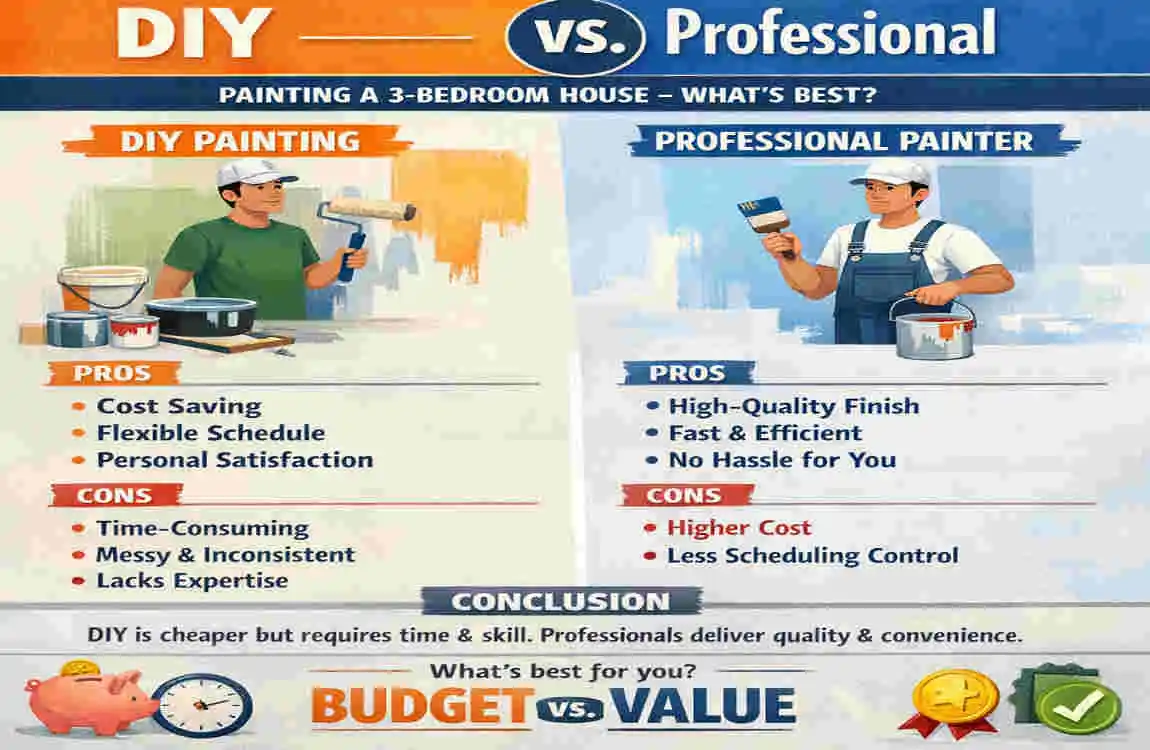
Is saving the money worth the effort? Let’s look at the cold, hard facts.
Pros/Cons Table
Option Estimated Cost (3-Bed)Time Commitment Finish Quality Stress Level
Full DIY £400 – £800 (Materials only) 3 – 4 Weeks (Evenings/Weekends) Variable (Risks drips/streaks) High
Professional £2,500 – £5,000 1 – 2 Weeks High (Smooth, durable) Low
Our Recommendation: If you are painting one bedroom, DIY is a great option. But for a full 3-bedroom house, the scale is massive. Unless you are an experienced DIYer with a lot of free time, the disruption to your life (living in chaos for a month) usually isn’t worth the savings. A professional team gets in, gets it perfect, and gets out.
FAQ Section
People Also Ask
How much to paint a 3-bedroom house inside the UK?
The average cost in 2026 is between £2,500 and £5,000 for a full interior repaint, including labour and materials. This varies based on location and wall condition.
How long does it take to paint a 3-bedroom house?
A professional team of two painters will typically take 7 to 10 days to complete a 3-bedroom house. If you are doing it DIY, expect it to take 3 to 4 weeks of evenings and weekends.
Do painters move furniture?
Most painters expect the room to be clear of small items and valuables. They will usually help move large items (sofas, wardrobes) to the centre of the room and cover them, but you should clarify this in your quote to avoid extra charges.
What is the cheapest time of year to hire a painter?
January, February, and March are traditionally the cheapest months. Trade is slower after the Christmas rush, and painters are often willing to negotiate lower rates to secure indoor work during the cold weather.
Is it cheaper to buy my own paint?
It can be, especially if you catch a sale. However, professional painters often get “trade discounts” of up to 20% at suppliers, which they might pass on to you. Always compare the painter’s material quote with retail prices.